r/AssamValley • • Mar 31 '26

History of Assam | অসমৰ বুৰঞ্জী 🛞🏰 A recent genetic study suggests that the 1,800-year-old admixture of Assamese people facilitated the rise of the Kamarupa Kingdom (4th–12th century CE).

4 Upvotes

I’ve been looking into a recent genetic study from March, 2026, published in the American Journal of Human Biology regarding the genetic ancestry of AANI-shifted Assamese speakers. For a long time, we’ve known Assam is a cultural crossroad, but this research provides a detailed look at how these populations actually formed and how that correlates with our recorded history.

The study uses high-resolution autosomal DNA to suggest that the demographic formation of Assamese speakers through bidirectional migration was a key driver in the establishment of the Kamarupa Kingdom.

As a non expert, I’ve used summaries and NotebookLM to help synthesize the data.

First we have to acknowledge the limitations. The sample size is small (50 people). The study doesn’t specify sub-ethnicities (e.g., Kalita, Koch, Sutia, Bamun/Brahmin, Goriya, Keot, Ahom, etc.). It refers to the individuals as "Assamese Indo-Aryan" and "Caste Assamese." Based on the results, it is likely referring to AANI-shifted Assamese speakers. We should keep this in mind before drawing universal conclusions.

1. The study finds that the genetic makeup of sampled Assamese speakers is roughly:

 76% South Asian (Indo-Aryan/North Indian)

 24% East/Southeast Asian

This unique blend is what distinguishes the population from other groups in mainland India.

2. The most important discovery is the timing. The last major genetic admixture happened roughly 55–61 generations ago. That puts the "mixing" event at:

 1,830-1,650 years ago (2nd to 4th century CE)

This suggests that a significant Indo-Aryan group reached the region just before or during this period.

3. Interestingly, this timeline aligns perfectly with the establishment of the Kamarupa Kingdom, the first documented historical polity in Assam.

Here are some pre existing information which finds similarity with this genetic study:

 i) The rulers of Kamarupa traced their ancestry to Naraka, who supposedly migrated from Mithila, overthrew the Danava dynasty, and established his kingdom.

 ii) Historically, Kamarupa was initially a vassal of the Gupta Empire (as per a 4th century Gupta inscription) and was heavily influenced by it.

 iii) Sanskrit inscriptions on land grants to Brahmins, performance of the Ashvamedha (Vedic horse sacrifice) by many rulers, among others, indicate a settled population of Brahmins. By the 7th century, the traveler Xuanzang noted the local language was already a distinct regional variety of the Indo-Aryan tongues, that differed "a little bit" from that of Middle India.

4. Even though Bengal is the immediate neighbour, the "Indo-Aryan" component of Assamese DNA shares a deeper link with the Central Ganges Plain, specifically groups like the Harijan and Kol. The underlying foundation points toward ancient migrations from the west. While Assamese samples cluster most closely with Bangladeshi Indo-Aryans due to a similar 76/24 proportion, the genetic drift of this Assamese population is closer to these Central Ganges Plains people.

5. This study proves the Assam was a corridor of human migrations:

 Low RoH: The study found low levels of Runs of Homozygosity (identical DNA segments from both parents).

 Diverse Pool: This is a scientific way of saying the Assamese have a very healthy, diverse gene pool because their ancestors were constantly mixing with different groups rather than remaining isolated and that the Assamese maintained a large population throughout history.

 The Corridor: The region acted as a corridor allowing genes and culture to flow between South, East and Southeast Asia.

Sources:

1.“Admixture and Genetic Connectivity: Autosomal Insights Into Indo-Aryan Speakers at the Eastern Edge of the Indian Subcontinent” – American Journal of Human Biology (Wiley Online Library, 2026).

2.“Study finds Northeast India not a barrier but a melting pot of ancient human genes” – The Telegraph India.

3. "Mixed heritage highlights centuries of migration': DNA study highlights Assam as a crucial link across regions." – The Times of India.

4.“Study reveals Assam was a genetic corridor, not a barrier” – EastMojo


r/AssamValley • • Feb 02 '26

Music and songs | সংগীত আৰু গীত/গান 🎶👨‍🎤 অসমৰ জাতীয় সংগীত, সম্পূৰ্ণ শুদ্ধ ৰূপত, অসম সাহিত্য সভাৰ পৰা। Assam State anthem in its correct form by Assam Sahitya Sabha. জয় আই অসম।

Thumbnail
youtu.be
6 Upvotes

r/AssamValley • • 18h ago

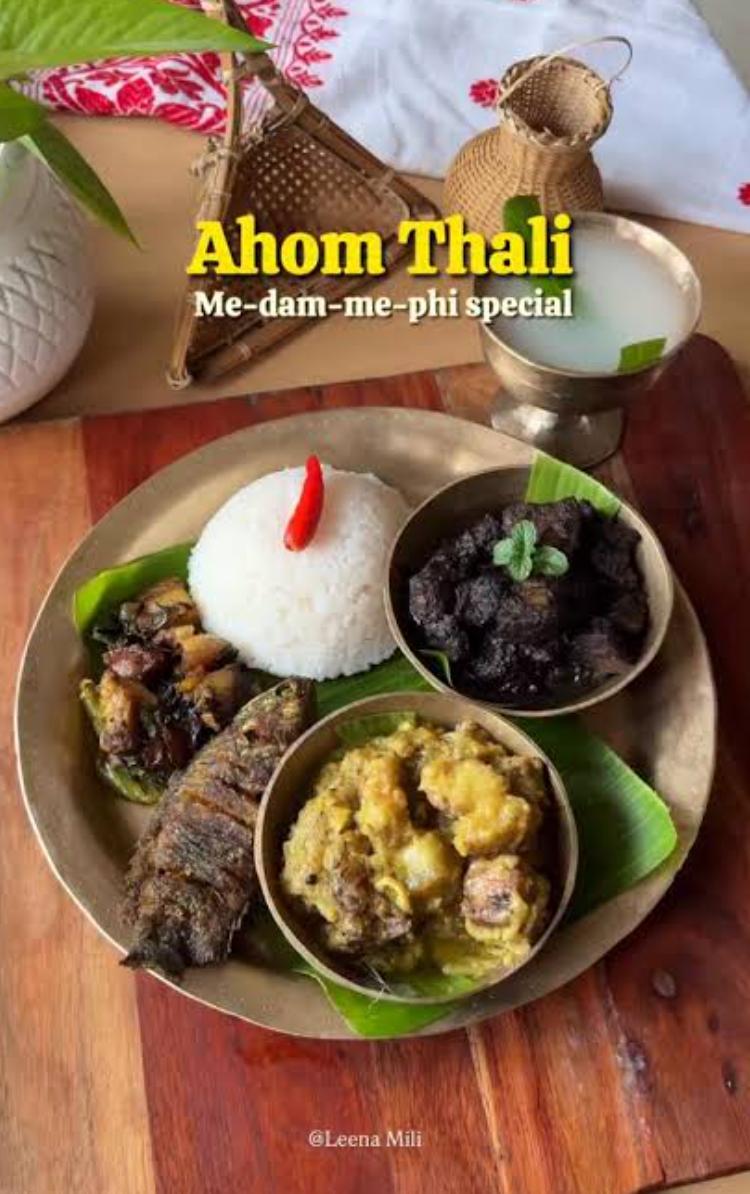
Language & Literature | ভাষা আৰু সাহিত্য 🔤📜 The different words for rice in Ahom.

Post image
5 Upvotes

(Image source: @LeenaMili, Instagram)

The Ahom language makes an interesting distinction between paddy grains, husked and uncooked rice, and cooked rice ready for consumption. These distinctions are reflected in its vocabulary through the use of different words and combinations.

The word for paddy grains, rice and food in general is '𑜁𑜈𑜫' (Khāw). When combined with the Tai word '𑜏𑜃𑜫' (Sān), which has an Austroasiatic origin and is derived from the earlier form 'Sāl' which is the Austroaseatic root meaning 'to peel', it gives us '𑜁𑜈𑜫 𑜏𑜃𑜫' (Khāw Sān), meaning husked and uncooked rice grains.

Next, pairing the Tai word '𑜏𑜤𑜀𑜫' (Suk), meaning 'cooked', with '𑜁𑜈𑜫' (Khāw) gives us '𑜁𑜈𑜫 𑜏𑜤𑜀𑜫' (Khāw Suk), meaning cooked rice. The word 'Suk' has clear cognates in other Tai languages like Thai and Lao, where it carries the meaning of 'cooked' or 'ripe'.

Another word used for rice in general is '𑜍𑜪' (Rām). However, it has other meanings as well, including a sedan or palanquin and a load carried by two persons. Therefore, 'Khāw' is more preferable when referring specifically to rice.

Now, an important grammatical observation, if you're wondering why the adjectives appear after the nouns, it is because Ahom generally follows a Noun-Adjective order. In other words, the adjective or qualifying word comes after the noun it modifies, unlike in English, where adjectives generally precede the nouns they describe.

This is a characteristic feature of Ahom grammar and is also documented in linguistic studies of the language.


r/AssamValley • • 16h ago

Language & Literature | ভাষা আৰু সাহিত্য 🔤📜 What do the names of the Ahom traditional religions Baan Phi and Phura Lung mean?

Thumbnail reddit.com
1 Upvotes

r/AssamValley • • 5d ago

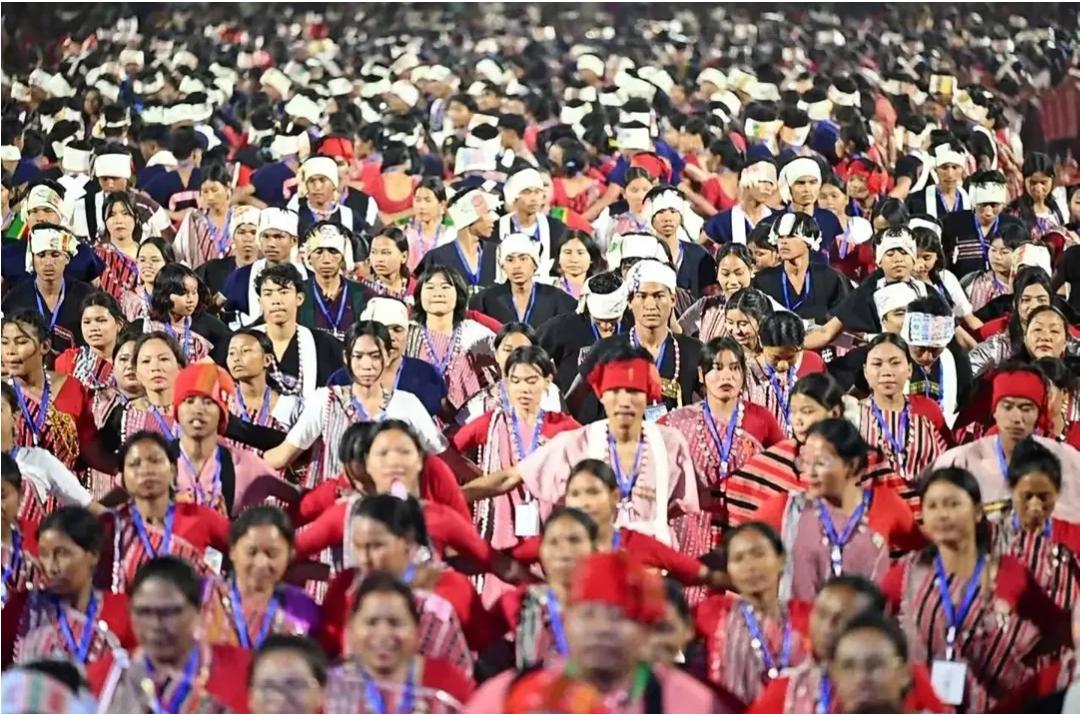
Tribal voices | জনজাতীয় মাত 🏔️🏞️ 15,000 Dancers Come Together in Diphu as Karbi Anglong Creates History with a Guinness World Record

Post image
5 Upvotes

Kardom and Greetings to everyone!

Karbi Anglong has made history! On 16 November 2026, around 15,000 dancers representing 17 indigenous tribes and communities came together at KASA Stadium in Diphu to perform Nimso Kerung, a traditional folk dance of the Karbi community, and set a Guinness World Record for the largest folk dance performance.

The performance was one of the major highlights of the three-day celebrations marking the 75th anniversary of Karbi Anglong, organised by the Karbi Anglong Autonomous Council (KAAC) from 15 to 17 November. The record was announced by Swapnil Dangarikar, Senior Official Adjudicator of Guinness World Records.

For those unfamiliar with the dance, Nimso Kerung is an important part of Karbi cultural heritage. Traditionally associated with Chomangkan, the Karbi death ceremony held in honour of deceased family members, the dance brings young men and women together in a social celebration. Dancers traditionally form circles and move to the rhythms of drums and traditional songs. The name itself is associated with the choosing of a young woman as a dance partner.

The scale of Monday's performance was remarkable. Thousands of dancers performed together in synchronisation, wearing their respective traditional attire and accompanied by traditional Karbi musical instruments. The participation of people belonging to different indigenous communities made the occasion even more special. A traditional art form belonging to one community was presented on an enormous platform with the participation and support of many others.

Karbi Anglong was established as a district in 1951, and the 75th anniversary celebrations were an occasion to reflect on its history, people and cultural heritage. The three-day platinum jubilee programme also brought attention to the region's development and future aspirations.

The achievement received appreciation from Assam Chief Minister Himanta Biswa Sarma and KAAC Chief Executive Member Tuliram Ronghang. The latter described the performance as a celebration of cultural heritage and the collective strength of the people of Karbi Anglong. Guinness adjudicator Swapnil Dangarikar also praised the enthusiasm of the participants.

What makes this occasion particularly meaningful is that it goes beyond the numbers involved. Karbi Anglong is home to several indigenous communities, each with its own traditions, languages and cultural expressions. Seeing thousands of people come together through a traditional Karbi art form was a wonderful demonstration of cultural appreciation and togetherness.

Congratulations to every dancer, cultural practitioner, instructor, organiser and volunteer who contributed to this achievement. It is a proud moment for the Karbi community, Karbi Anglong, Assam and the entire Northeast. May the traditional art forms of our region continue to thrive and receive the recognition they deserve.


r/AssamValley • • 6d ago

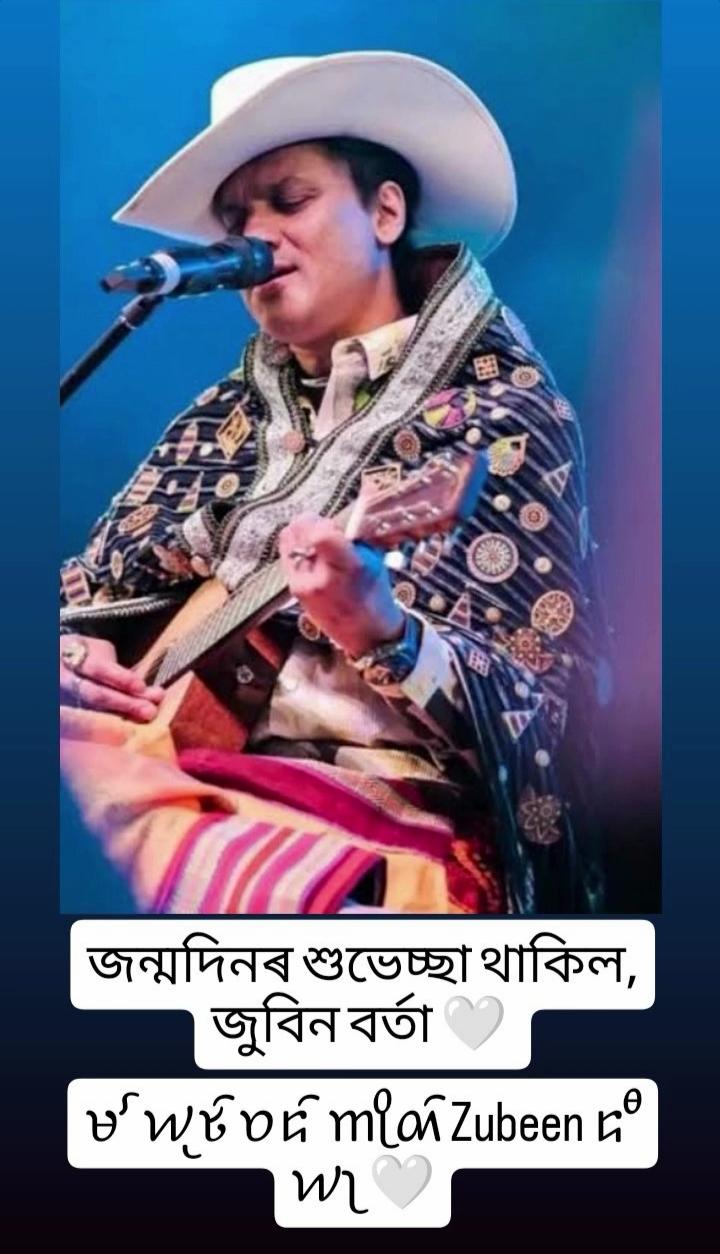
Festivals | উৎসৱ 🎇🏵️ A very happy birthday to our dear legend! 🤍 জয় জুবিন দা 🙏🏻

Post image
7 Upvotes

(I call him বৰ্তা though)


r/AssamValley • • 8d ago

The unknown story of Joymoti Kuwori

Thumbnail
youtu.be
5 Upvotes

r/AssamValley • • 14d ago

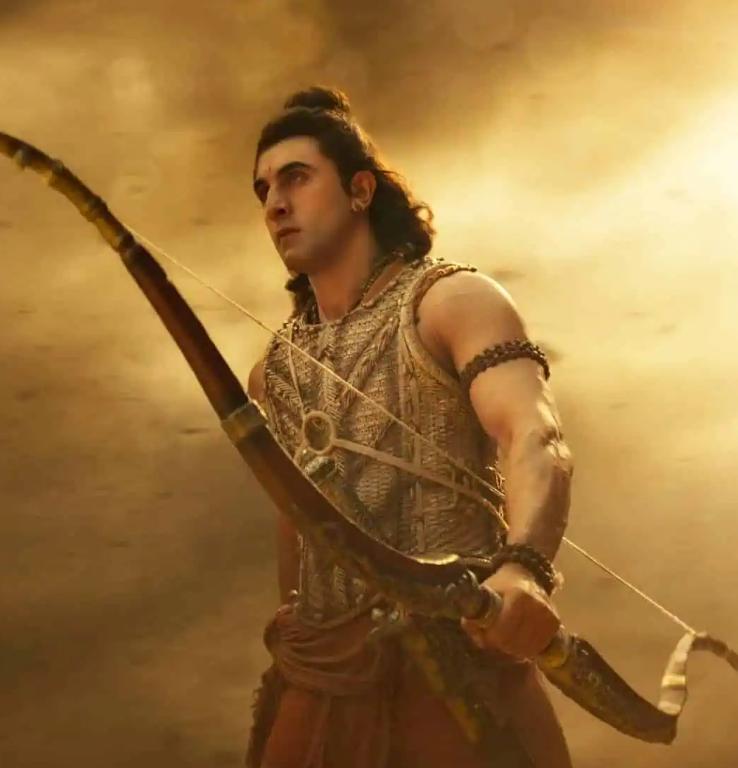
News & Current Affairs | বাতৰি আৰু সাম্প্ৰতিক পৰিস্থিতি 📰🗞️ Did you know Assam's traditional cane and jute craft made it into Namit Malhotra's Ramayana?

Post image
4 Upvotes

The armour worn by actor Ranbir Kapoor as Lord Rāma and Ravie Dubey as Lakshmana in Nitesh Tiwari's Ramayana features traditional craftsmanship from Assam, using Sorapat/Xôrāpāt (সৰা পাট) cane, Morapaat/Môrāpāt (মৰাপাট) jute, and wood.

The project brought costume designer Ajay Kumar and his team to Assam, where they collaborated with local artisans to develop the armour's basic structure. One of the artisans involved was Jaynal Abdin from Jania Banglipara (জাণিয়া বাংলিপাৰা) village in Barpeta district. The structures were developed in Assam before being sent to Mumbai for final finishing.

According to reports, the cane's flexibility made it suitable for shaping the armour, while jute and wooden elements were incorporated into its design. The team also had to adapt the materials to ensure that the costumes were comfortable for the actors during filming.

The film, produced by Namit Malhotra and directed by Nitesh Tiwari, brings Assamese craftsmanship into one of India's most ambitious cinematic productions.

This is a notable example of how traditional skills preserved by artisans in Assam's villages can find a place in large-scale filmmaking, bringing greater visibility to the state's rich heritage of cane and bamboo craft.


r/AssamValley • • 15d ago

Festivals | উৎসৱ 🎇🏵️ Wishing everyone a happy and prosperous Diwali! সকলোকে দ্বীপাৱলীৰ আন্তৰিক শুভেচ্ছা জনালোঁ!

Post image
1 Upvotes

r/AssamValley • • 18d ago

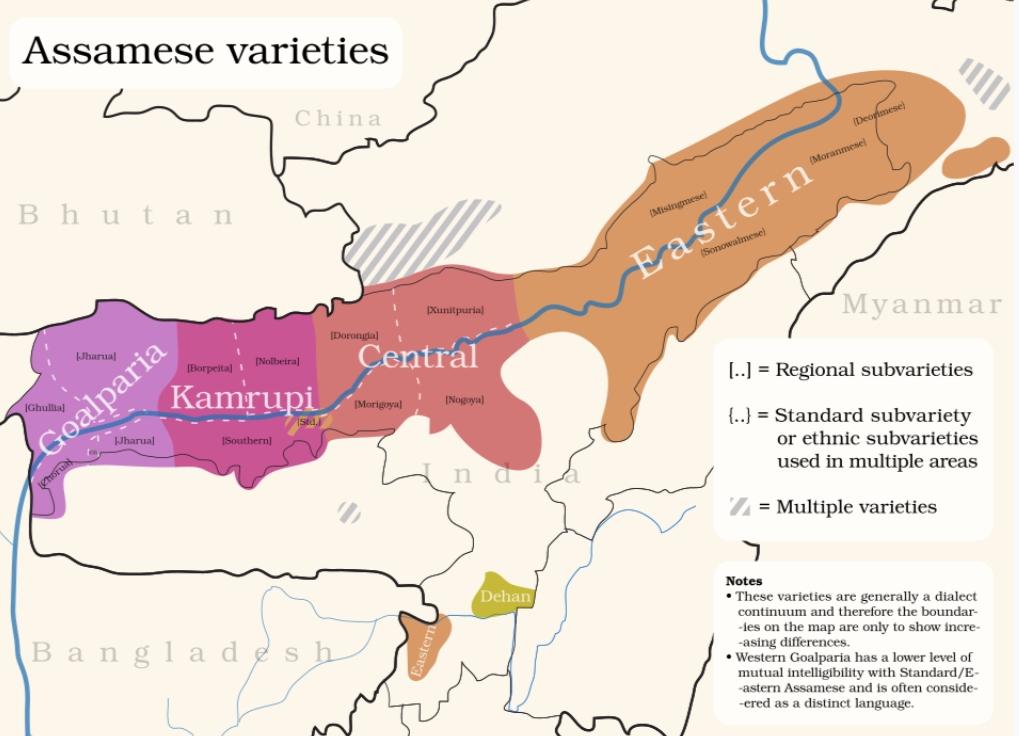
Society & Identity | সমাজ আৰু পৰিচয় 🗺️🚗 A map of the dialects and variants of Assamese spoken natively across Assam. অসমীয়া ভাষাৰ আঞ্চলিক ৰূপসমূহৰ এক মানচিত্ৰ।

Post image
3 Upvotes

Assamese has five primary dialects:

  1. Eastern Assamese or Sivasagariya/Xiwôxāgôriyā (শিৱসাগৰীয়া উপভাষা), is traditionally spoken in Upper Assam and Standard Assamese is based on this dialect. It is also spoken by the Sutiya community in Barak Valley or Southern Assam, which migrated to the region in the early 19th century, in areas like Sribhumi. It is influenced by the historically important Tai Ahom language of the Ahom kingdom, and also by the Mising language spoken by the Mising community in the Northern banks of the river Brahmaputra in Upper Assam.
  2. Central Assamese or Nagaiya/Nôgõyā (নগঞা উপভাষা), is spoken in Central and North Assam divisions, and bears strong similarities with the Eastern dialect. It has some influence from the surrounding tribal languages like Tiwa, Karbi, and Bodo.
  3. Kamrupi Assamese or Kamrupiya/Kāmruipā (কামৰূপীয়া উপভাষা), is the central-western dialect of Assamese, spoken in Lower Assam and has been the historical standard form of Assamese during the medieval period, used extensively in Vaishnavite texts composed in the Koch and Kamata kingdoms. It is also the ancestor of modern Assamese (আধুনিক অসমীয়া) and the Kamtapuri (কামতাপুৰী) language. It is both historically and culturally significant for the Assamese language, with popular folk songs called Kamrupi Lokageet.
  4. Goalpariya Assamese or Goalporiya/Güwālpôriyā (গোৱালপৰীয়া উপভাষা), is the westernmost and most unique dialect of Assamese, spoken traditionally by the Koch-Rajbongshi community residing in Lower Assam. It has similarities with the Kamtapuri language and forms a dialect continuum with it. It is known for its beautiful folk songs known as Goalporiya Lokageet, popularised by Assamese singers like Pratima Barua Pandey.
  5. Dewan Assamese or Dehan/Dehān (দেৱান উপভাষা), is an Assamese dialect spoken by the Koch-Rajbongshi community of Barak Valley, indigenous to the region. It is a descendant of the Kamrupi dialect and reached the region in the 16th century with the celebrated Koch commander Chilarai's campaigns into Southern Assam. It has influences from the surrounding Bishnupriya, Syloti, Meitei and Dimasa languages and preserved features of Medieval Assamese.

Together, these dialects form the easternmost Indo-Aryan language, spoken by around 24 million people, that is Assamese.


r/AssamValley • • 24d ago

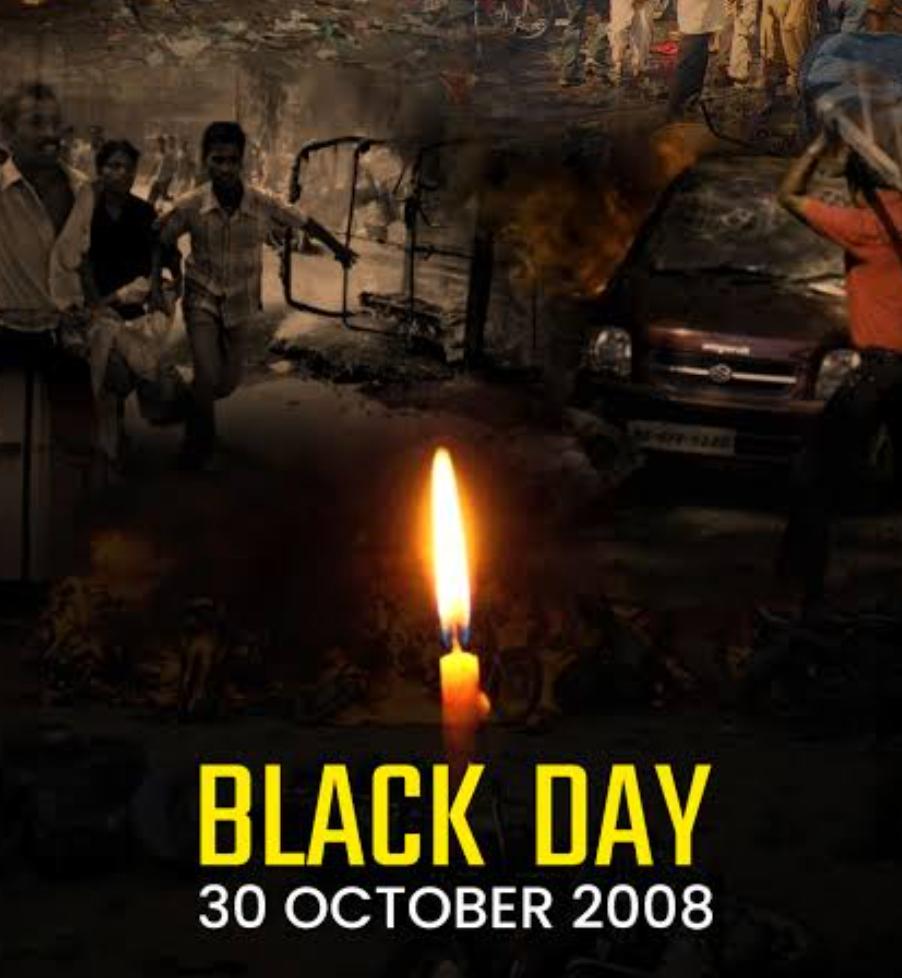
Society & Identity | সমাজ আৰু পৰিচয় 🗺️🚗 18 Years Since the Guwahati Serial Blasts | 30 October 2008.

Post image
5 Upvotes

Eighteen years have passed, but 30 October 2008 remains one of the darkest days in the history of Assam.

On the morning of 30 October 2008, a series of coordinated bomb explosions struck several crowded locations across Assam. Guwahati, Kokrajhar, Barpeta Road and Bongaigaon were affected. What began as an ordinary day for thousands of people turned into a tragedy that would leave a lasting scar on the state.

Between approximately 11:20 and 11:30 AM, nine explosions took place at different locations. Three of the affected locations were in Guwahati: Ganeshguri, the Chief Judicial Magistrate's Court Complex and the Baptist Church Complex in Panbazar. Other locations included markets, a railway crossing and a bus stand in Kokrajhar, Barpeta Road and Bongaigaon.

According to the Gauhati High Court's judgment of 27 September 2022, 88 people lost their lives and around 540 others were injured.

Behind these numbers were human beings. People who had left their homes that morning without knowing that their lives would change forever. Shopkeepers opening their establishments, workers earning their daily livelihood, commuters travelling through the city, students and ordinary families going about their day.

Some never returned home.

For the families who lost their loved ones, the tragedy did not end when the explosions stopped. Parents lost children, children lost parents, spouses lost their partners and families were left to live with an absence that no passage of time could completely erase. Those who survived also had to rebuild their lives while carrying the physical and emotional consequences of that day.

And this was not only a tragedy for Guwahati. People in Kokrajhar, Barpeta Road and Bongaigaon suffered too. The incident belongs to the collective memory of Assam.

The investigation was eventually transferred to the Central Bureau of Investigation (CBI) in December 2008. The investigation identified the involvement of members of the banned National Democratic Front of Bodoland (NDFB), and the case proceeded through a lengthy judicial process.

On 28 January 2019, a special CBI court convicted 14 people in connection with the blasts. The Gauhati High Court subsequently heard appeals and delivered its judgment on 27 September 2022.

The legal proceedings were an important part of establishing accountability for one of the deadliest attacks in Assam's history.

Every year, memorial gatherings take place at locations including the memorial beneath the Ganeshguri flyover. Families, survivors, citizens and representatives of the administration come together to pay their respects through floral tributes, lamps and prayers.

These gatherings remind us that remembrance must go beyond an annual ceremony. The people who lost their lives were not statistics in a newspaper or names in a court judgment. They were individuals with families, aspirations, friendships and futures that were taken away.

Eighteen years later, we owe them more than a passing mention.

We must remember the survivors, acknowledge the grief of their families and preserve the history of what happened. We must also recognise that no political objective, ideological disagreement or demand can justify the deliberate targeting of innocent civilians.

Assam has experienced enough violence, uncertainty and loss. Its people deserve peace, dignity and the freedom to live without fear. Our differences, whether ethnic, linguistic, cultural, religious or political, must never become reasons for violence against one another.

Today, let us remember all 88 people who lost their lives, stand in solidarity with the injured and their families, and pay our respects to everyone whose life was changed by the tragedy.

May the departed souls attain eternal peace. May their families find strength, and may the survivors always receive the compassion and support they deserve.

We remember. We mourn. We must never forget.

30 October 2008 – 30 October 2026.

Sources:

  1. "Gauhati High Court judgment, Ranjan Daimary & Others v. CBI, 27 September 2022" (https://indiankanoon.org/doc/34375909/)
  2. "The Indian Express, 2008 Assam blasts: NDFB chief among 14 convicted, 29 January 2019" (https://indianexpress.com/article/north-east-india/assam/assam-serial-blasts-2008-conviction-cbi-ndfb-5558571/)
  3. "The Telegraph, Gauhati High Court upholds life term for rebel leader, 28 September 2022" (https://www.telegraphindia.com/north-east/gauhati-high-court-upholds-life-term-for-rebel-leader/cid/1889090)
  4. "The Sentinel, Assam: 15 years down, people remember victims of 2008 serial blasts, 31 October 2023" (https://www.sentinelassam.com/amp/story/cities/guwahati-city/assam-15-years-down-people-remember-victims-of-2008-serial-blasts-673216)
  5. "The Assam Rising, Assam CM pays tribute to 2008 serial blast victims on 18th anniversary, 30 October 2026" (https://www.theassamrising.com/assam-cm-pays-tribute-to-2008-serial-blast-victims-on-18th-anniversary/)

r/AssamValley • • 27d ago

Language & Literature | ভাষা আৰু সাহিত্য 🔤📜 Greetings in Róngdani Rabha and Mayturi Rabha

2 Upvotes

r/AssamValley • • Oct 24 '26

Assam board improvement exam for 2026 passing student jossa eligibility

Thumbnail reddit.com
3 Upvotes

r/AssamValley • • Oct 23 '26

Tribal voices | জনজাতীয় মাত 🏔️🏞️ Influence of the Deuri (দেউৰী) language on common Assamese vocabulary.

Thumbnail
gallery
6 Upvotes

As we know that Assamese, historically called 'Bhāxā' (ভাষা) in the Ahom kingdom, written in the Kamrupi script and spoken historically by the Indo-Aryan communities of Brahmaputra Valley and the Kochs of Barak Valley, served as the lingua-franca of the Ahom kingdom and also the Kachari and Koch kingdoms (for a period of time) and was also used for administrative purposes.

Due to the numerous different languages spoken by diverse tribes with Tibeto-Burman, Austroaseatic and Tai-Kadai origins, Assamese served as a lingua-franca for the people of the region. This led to common Assamese vocabulary, later standardised in the Hemkosh dictionary of 1900 written by Hemchandra Barua and later accepted by Asamiya Bhasa Unnoti Sadhini Sabha (Ôxômiyā Bhāxā Unnôti Xādhini Xôbhā) as the standard form of the language, getting influenced heavily by surrounding tribal languages.

Today's Assamese vocabulary has heavy influences from languages like Tai Ahom, Mising, Bodo, Tiwa, Karbi, Rabha, Dimasa, Koch, Persian etc. Deuri is one such, small yet historically important language that has heavily influenced common Assamese vocabulary.

The above images provide a list of common Assamese words that have Deuri origin. It's a perfect example of how even smaller languages can heavily influence much larger ones. The Deuri language historically was used by the priestly class of the Sutiya kingdom of Upper Assam. While the common people spoke Sutiya, Kachari and forms of Assamese, the language of the priests was Deuri. The Deuri language currently is spoken by a small minority of around 30,000 people scattered across Majuli, Lakhimpur, Dhemaji and Tinsukia districts of Upper Assam.

Source: https://en.wikipedia.org/wiki/Deori_language


r/AssamValley • • Oct 22 '26

Society & Identity | সমাজ আৰু পৰিচয় 🗺️🚗 Origin of the popular Assamese slogans 'জয় আই অসম' and 'আমি অসমীয়া নহওঁ দুখীয়া'.

3 Upvotes

Being Assamese, we all might've heard or even used these cultural slogans many times in our lives.

The first one 'জয় আই অসম' or 'Zôy Āi Ôxôm' roughly translates to 'Victory to Mother Assam' while the second one 'আমি অসমীয়া নহওঁ দুখীয়া' or 'Āmi Ôxômiyā Nôhôü̃ Dukhiyā' translates to 'We Assamese shall not be impoverished' (the word impoverished here refers to being deprived of cultural richness).

These are slogans we use with pride regarding our Assamese language, community, culture and our motherland Assam.

Now, some of you might've wondered what might be the origin of these slogans? After all, we were all taught about these slogans and their significance but rarely people know about their origin.

Well, the origin of both these slogans lies in one beautiful patriotic song written by none other than Assamese playwright, poet, essayist and novelist Sahityarathi Lakshminath Bezbarua (Xāhityôrôthi Lôkhmināth Bezbôruwā/সাহিত্যৰথী লক্ষ্মীনাথ বেজবৰুৱা) in his song Assam Sangeet (Ôxôm Xôngit/অসম সংগীত)

where the origins of the first slogan 'Zôy Āi Ôxôm' lies along the lines of:

"বাজক ডবা, বাজক শঙ্খ, বাজক মৃদং খোল।

অসম আকৌ উন্নতি-পথত, জয় আই অসম বোল" (in the conclusion of the song)

Transliteration: "Bājôk dôbā, bājôk xôŋkhô, bājok mridôŋ khül, Ôxôm ākôü unnôti-pôthôt, Zôy Āi Ôxôm bül."

Translation: "Let the drums (dôbā) resound, let the conches blow, let the mridanga and khol resound. Assam is once again on the path of progress,

Proclaim Victory to Mother Assam!"

While the origin of the second slogan 'Āmi Ôxômiyā Nôhôü̃ Dukhiyā' lies along the lines of:

"আমি অসমীয়া, নহওঁ দুখীয়া, কিহৰ দুখীয়া হম?

সকলো আছিল, সকলো আছে, নুবুজোঁ নলওঁ গম।"

Transliteration: "Āmi Ôxômiyā, nôhôü̃ dukhiyā, kihôr dukhiyā hôm? Xôkôlü āsil, xôkôlü āse, nubuzü̃ nôlôü̃ gôm"

Translation: "We are Assamese, we are not deprived. What reason have we to feel poor? All was once here, and all remains here, yet we fail to understand, fail to see."

From here, both slogans became quite popular during the Assam Movement or Assam Agitation of 1979-1985 and since then have become inseparable from the ideas of Assamese cultural pride. Quite fascinating, isn't it?


r/AssamValley • • Oct 18 '26

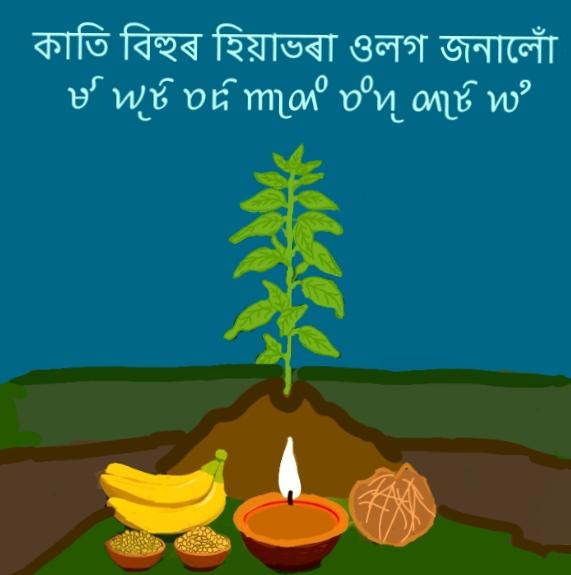
Festivals | উৎসৱ 🎇🏵️ সকলোকে কাতি বিহুৰ হিয়াভৰা ওলগ জনালোঁ। Wishing everyone a happy Kati Bihu!

Post image
1 Upvotes

r/AssamValley • • Oct 17 '26

Festivals | উৎসৱ 🎇🏵️ Happy Durga Puja and Navratri everyone! Drew this btw :)

Post image
7 Upvotes

r/AssamValley • • Oct 17 '26

Language & Literature | ভাষা আৰু সাহিত্য 🔤📜 Do some of the Tea tribes in Assam speak Kurukh (Oraon) or Malto?

Thumbnail reddit.com
2 Upvotes

r/AssamValley • • Oct 15 '26

Guwahati Pandal Hopping

2 Upvotes

Guwahati folks, suggest the best pandals to visit and the perfect route for pandal hopping! Looking for must-visit pandals, hidden gems, and the best time to visit each. Drop your recommendations!


r/AssamValley • • Oct 10 '26

Culture & Traditions | সংস্কৃতি আৰু পৰম্পৰা 🎋🧫 শুভ মহালয়া everyone! Here's a post on some beautiful Assamese Mahalaya traditions.

Post image
6 Upvotes

In Assam, Mahalaya is a day of remembrance, prayer and devotion. For many Hindu families, the morning begins with offerings to departed ancestors, prayers by rivers and the observance of tarpan and shraddha. It is also the time when thoughts turn towards Goddess Durga and the approaching autumn festivities.

One of the places where Mahalaya observances have been documented is Sivasagar. On this day, devotees gather along the banks of the Dikhow and Desang rivers and at the Brahmaputra Triveni Sangam Ghat to offer tarpan and perform parban shraddha in memory of their ancestors.

These rituals carry a deeply personal meaning for families, giving them a moment to remember those who came before them and honour their place in family life.

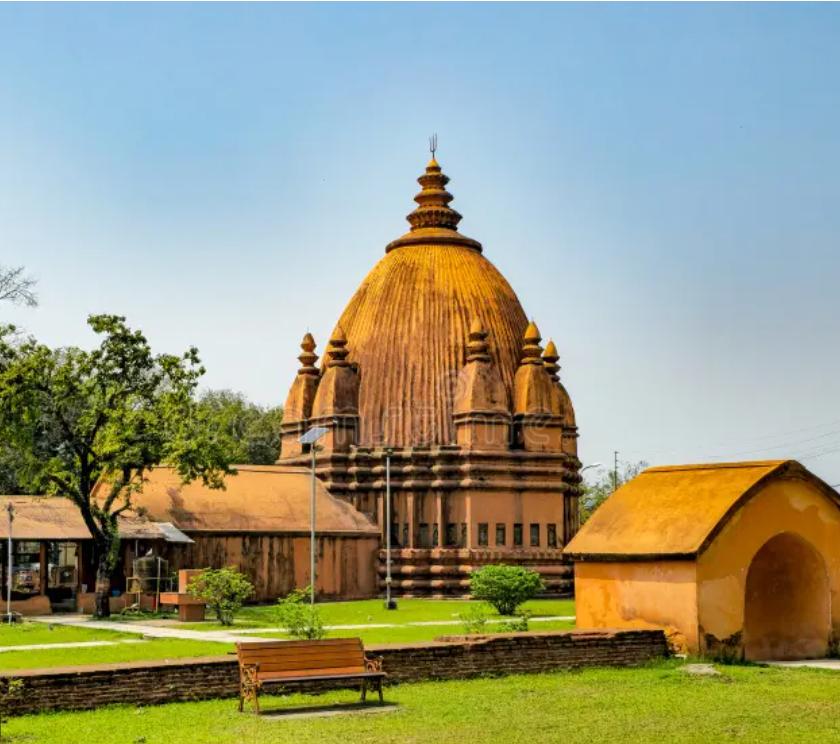
Mahalaya in Sivasagar is also connected with the historic Devidol, a well-known centre of Goddess worship dating back to the Ahom period. The temple is associated with Queen Ambika, the second wife of Swargadeo Siba Singha, and its Durga Puja tradition is an important part of the area's religious heritage.

Devidol is more than a historic temple. It remains a significant place in Sivasagar's devotional life, linking generations of worshippers with the region's past.

Reports on Mahalaya in Sivasagar have recorded religious processions and priests reciting Devi stuti, the Gayatri Mantra and the Chandi Mantra. These prayers bring a devotional atmosphere to the occasion as the community looks towards the worship of the Goddess.

The day brings together two important aspects of religious life, remembering departed family members and offering prayers to the Divine Mother.

At the riverbanks, families perform ancestral rites, around Devidol, the long history of Devi worship gives the occasion a distinct local setting. Both are part of how Mahalaya is observed in Sivasagar.

Across Assam, families may mark Mahalaya in different ways, according to their customs and religious practices. For many, however, tarpan and shraddha remain central to the day.

The observances are a reminder that the arrival of the festive season is accompanied not only by anticipation and celebration, but also by remembrance and gratitude.

The Mahalaya traditions of Sivasagar reflect this combination beautifully. The rivers, the ancestral offerings and the historic Devidol all hold a place in the region's religious life.

Together, they give Mahalaya a meaning that reaches beyond the beginning of Durga Puja, it is a time to remember one's roots, offer prayers and welcome the days of devotion ahead.

Once again, শুভ মহালয়া to everyone! 🪔


r/AssamValley • • Oct 06 '26

Tribal voices | জনজাতীয় মাত 🏔️🏞️ A song in the Tiwamese variant of Assamese, spoken by the plains Tiwa tribe of Central Assam.

2 Upvotes

r/AssamValley • • Oct 05 '26

This community is ours to build. What are your ideas?

Thumbnail reddit.com
3 Upvotes

r/AssamValley • • Oct 04 '26

History of Assam | অসমৰ বুৰঞ্জী 🛞🏰 How Durga Puja came to the Ahom kingdom and the story of Pratap Singha and his fascination with Cooch Behar's traditions.

Post image
5 Upvotes

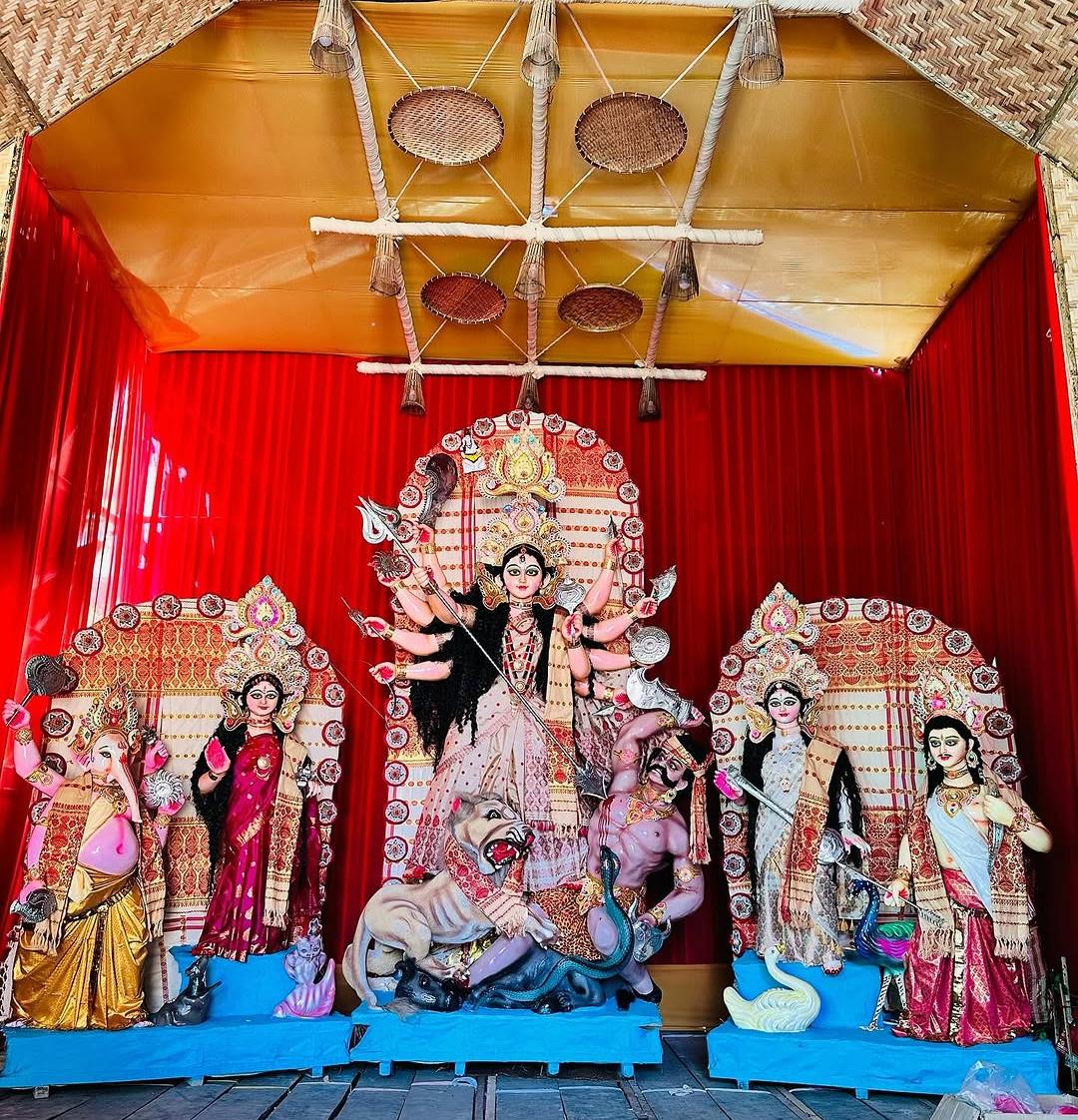
(Pic: A Durga Puja pandal in Dibrugarh, Assam)

With Durga Puja approaching, I thought it would be interesting to look at one of the lesser-known chapters in Assam's history, how the tradition of worshipping Durga through an earthen image became established in the Ahom kingdom.

Assam had traditions of Shakta worship long before the Ahom period. Places such as Kamakhya, Digheswari, Ugratara, Maha Bhairavi and other ancient shrines had long-standing traditions of worshipping the Goddess. So it would be incorrect to say that Durga worship itself was "introduced" to Assam by the Ahoms.

What changed during the Ahom period was the emergence of the earthen-image Durga Puja as a public and royal festival, and one of the earliest accounts connecting this tradition to the Ahom court takes us to the reign of Swargadeo Susenghphaa, better known as Pratap Singha (1603–1641).

The story also connects Assam with the neighbouring Koch kingdom and its famous ruler Nara Narayan.

According to historian Benudhar Sarma, Pratap Singha came to know about the elaborate Durga Puja celebrated by Nara Narayan in Koch Bihar. One of the people through whom he learned about the practice was Sondar Gohain, who had spent time in the Koch kingdom.

The Koch tradition particularly impressed the Ahom king because of the use of earthen images of Goddess Durga and the grandeur with which the festival was celebrated.

Pratap Singha then decided to learn the art himself.

Historical accounts describe him as sending Ahom artisans to Cooch Behar to learn the technique of making earthen images of Durga and other deities. An account reproduced in Assam Buranji specifically says that, after hearing about the use of earthen images in Durga Puja, the Ahom king deputed artists to Cooch Behar to learn image-making. The artisans eventually returned along with Koch envoys named Gaja Singha and Patal Singha.

The first recorded Ahom royal Durga Puja involving an earthen image is associated with Bhatiapara, near present-day Sivasagar. A modern historical account places this tradition in the early 17th century, with the clay images being made by local khanikars following the techniques associated with the Koch tradition.

Bhatiapara itself is not some random name attached to the story. It was an established locality in the Ahom kingdom, and historical records also associate the area with royal public works. The Census of India still records Bhatiapara as a village in the Sivasagar district.

This episode is especially fascinating because it shows how cultural exchange worked between the different kingdoms of medieval Assam and the eastern Himalaya.

The Ahom kingdom and the Koch kingdoms were not culturally isolated from one another. There were wars, alliances, marriages, diplomatic missions, exchanges of hostages and envoys, and movement of skilled people between their territories. Pratap Singha himself strengthened his relationship with the Koch sphere through marriage and diplomacy.

In fact, the reign of Pratap Singha was an important period of cultural and political transformation in the Ahom kingdom. His reign saw growing interaction with the wider Hindu cultural world, the development of new institutions, expansion towards western Assam and increasing contact with the Koch and Mughal powers.

The Durga Puja story fits into that larger picture.

It is also important to understand what we mean when we call this the 'first Durga Puja in Assam.'

That wording can be misleading.

Durga worship was certainly not new to Assam in the 17th century. The Shakta traditions of Assam are much older, and Kamakhya in particular represents one of the major centres of Goddess worship in South Asia.

The actual historical accounts are talking about the beginning of the present-style tradition of worshipping Durga through an earthen image as a major public or royal festival in the Ahom kingdom.

In other words, Pratap Singha did not introduce Goddess Durga to Assam. Instead, the tradition of making and ceremonially worshipping a clay image of Durga, which he had encountered in the Koch kingdom, was adopted and developed within the Ahom kingdom.

The Koch ruler Nara Narayan (r. 1540–1587) was one of the most powerful rulers of medieval northeastern India. His kingdom had extensive political and cultural connections with Assam and Bengal. By the time of Pratap Singha, these connections had already produced generations of interaction between the Koch and Ahom courts.

According to the historical folk tradition, Pratap Singha's curiosity about the Koch form of Durga Puja eventually resulted in him sending craftsmen to learn how the images were made. And from there, the making of earthen images of Durga became part of the religious landscape of the Ahom kingdom.

One account specifically states that the first such celebration took place at Bhatiapara near Sivasagar, and that this was the first time Durga Puja with an earthen image was celebrated for the wider public in this part of Assam, alongside the older temple-based traditions of Goddess worship.

There is another fascinating detail in the historical tradition, the artisans associated with this development are described as Khanikars of Marangiyal. Which means, this was not simply a matter of importing a finished idol from Koch Bihar. Knowledge of image-making was learned and then incorporated into the local craft tradition.

Over the centuries, Durga Puja developed far beyond that original royal setting.

Today, it is celebrated across Assam by communities of many different backgrounds. From the huge celebrations of Guwahati and Silchar to the traditional pujas of Upper Assam, the festival has become deeply woven into the cultural life of the state.

And that makes the old Bhatiapara story especially beautiful.

A tradition that once travelled between neighbouring medieval kingdoms through diplomats, craftsmen and cultural exchange eventually became one of the most recognisable festivals of modern Assam.

So when we see a Durga idol being shaped from clay during Puja season, there is a fascinating piece of Ahom history behind that tradition.

Pratap Singha heard about the magnificent Durga Puja of the Koch kingdom. He wanted his own kingdom to learn the craft. Artisans were sent to Cooch Behar, they learned the art of making earthen images, and the tradition was subsequently established at Bhatiapara near Sivasagar.

And that is one of the many examples of how Assam's religious culture was shaped not only by its own ancient traditions, but also through centuries of interaction with neighbouring kingdoms and communities.

Happy Durga Puja in advance!

Source:

  • E. A. Gait, A History of Assam.
  • Assam Buranji.
  • H. K. Barpujari (ed.), The Comprehensive History of Assam.
  • Benudhar Sarma's historical account.

An article on the history of Durga Puja in Assam: https://aknandy.wordpress.com/2016/10/07/durga-puja-in-assam/

r/AssamValley • • Oct 03 '26

What should r/Dhemajiguys become?

Thumbnail reddit.com
1 Upvotes

A new adda for Dhemaji guys just enjoy here by texting with eachother other and create a positive vibe. PEACE✌️


r/AssamValley • • Oct 03 '26

Music and songs | সংগীত আৰু গীত/গান 🎶👨‍🎤 Rak Changmai, a beautiful folk dance of the Tai Ahom community.

Thumbnail
youtu.be
1 Upvotes