r/Austrohungarian • u/Longjumping-Kale-283 • 1m ago
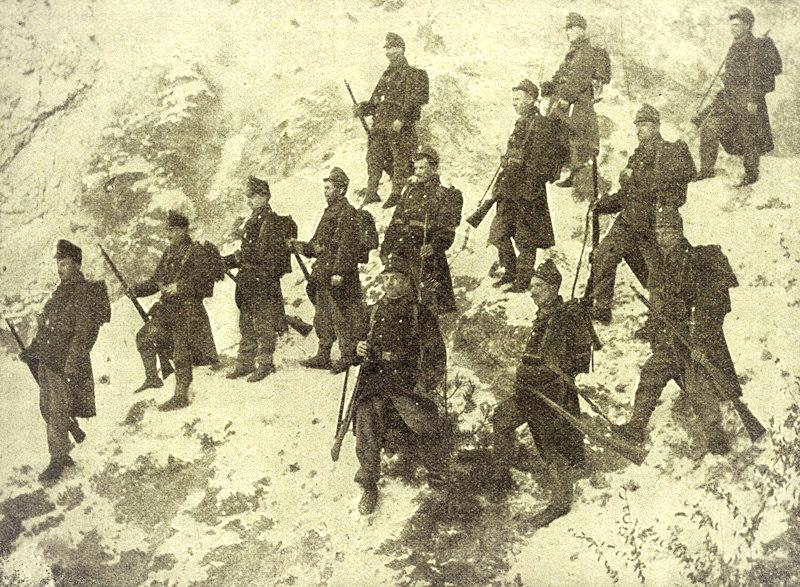
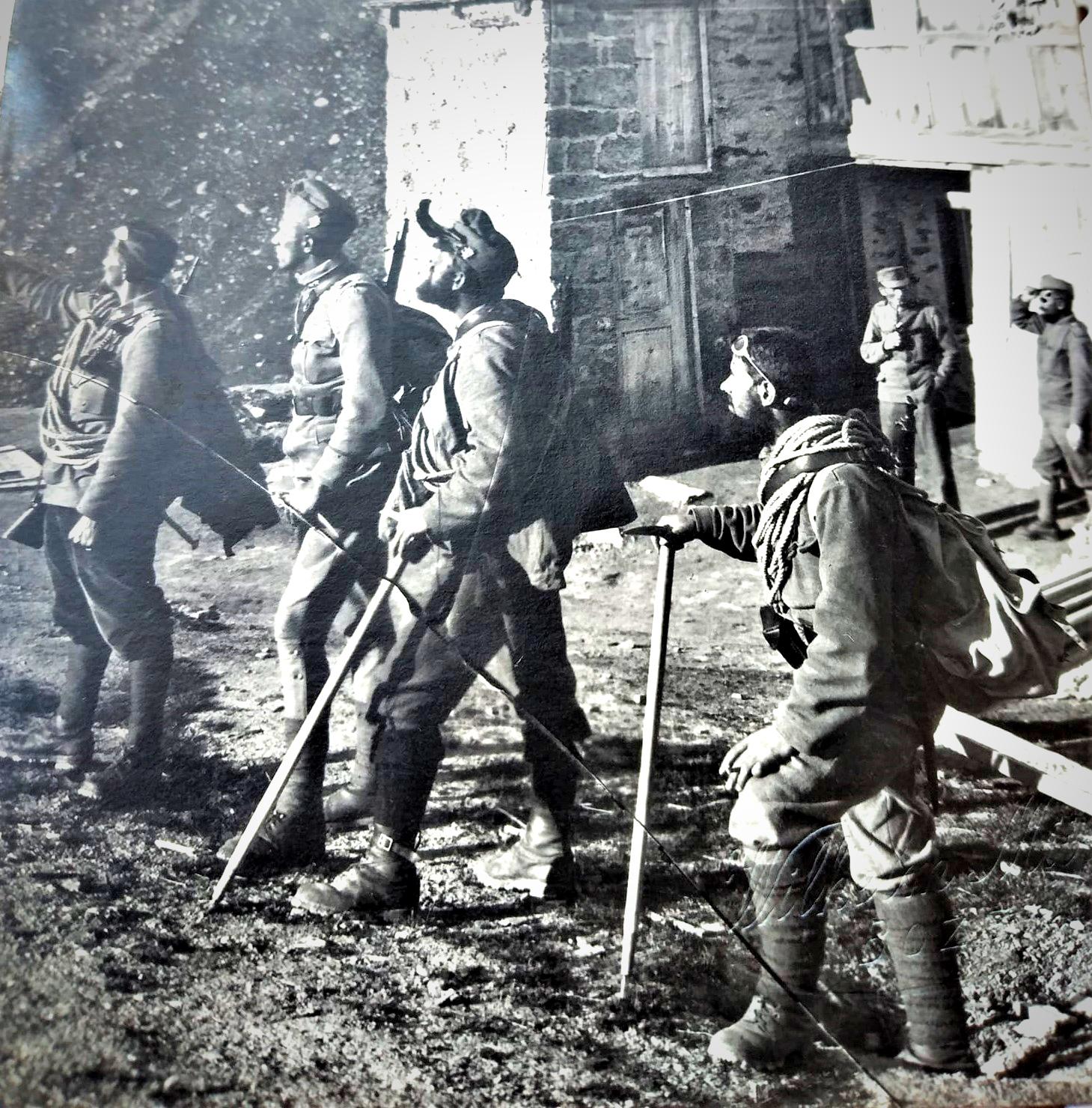
Austro-Hungarian infantry patrol in border territory", during Italian neutrality, photo 1914/15
1
Upvotes
r/Austrohungarian • u/Longjumping-Kale-283 • 1m ago
r/Austrohungarian • u/Longjumping-Kale-283 • 19h ago

The artwork titled “Draft for a war charity brand,” created by Koloman Moser in 1915 in Austria, is executed using Indian ink on paper. This piece, belonging to the Art Nouveau (Modern) movement, serves as a poster and measures 19.7 x 28.5 cm.
Koloman Moser (German: [ˈkoːloman ˈmoːzɐ]; 30 March 1868 – 18 October 1918) was an Austrian artist, who exerted considerable influence on twentieth-century graphic art. He was one of the foremost artists of the Vienna Secession movement and a co-founder of Wiener Werkstätte.
Moser designed a wide array of art works, including books and graphic works from postage stamps to magazine vignettes; fashion; stained glass windows, porcelains and ceramics, blown glass, tableware, silver, jewellery, and furniture.
source: https://en.wikipedia.org › wiki › Koloman_Moser
r/Austrohungarian • u/Longjumping-Kale-283 • 19h ago
r/Austrohungarian • u/Longjumping-Kale-283 • 19h ago

SMS Sankt Georg was an armored cruiser of the Austro-Hungarian Navy and the third and final ship of her type for the empire. Wikipedia
Completed in July 1905 and built at the Pola Arsenal, her design was based on the earlier Kaiser Karl VI but featured upgraded armament, including two 24 cm (9.4 in) main guns. Wikipedia
During her career, she performed several notable roles:
Diplomacy: She participated in the Jamestown Exposition in the United States in 1907 to commemorate the first English colony in North America. Wikipedia
World War I: While the Austro-Hungarian fleet spent much of the war as a "fleet in being," Sankt Georg bombarded the Italian coast in May 1915 and supported raids on the Otranto Barrage in 1917. Wikipedia
The Cattaro Mutiny: In February 1918, she was one of the ships involved in the Cattaro Mutiny, a revolt by crews exhausted by inactivity and the length of the war. Wikipedia
Following the war, she was awarded to Britain as a prize under the Treaty of Saint-Germain-en-Laye, but she was sold to Italian ship breakers and scrapped in 1920. Wikipedia
photo: K.u.k. Kriegspressequartier, Lichtbildstelle - Wien
Österreichische Nationalbibliothek - Austrian National Library
Accession number
WK1/ALB052/14345
r/Austrohungarian • u/Longjumping-Kale-283 • 19h ago
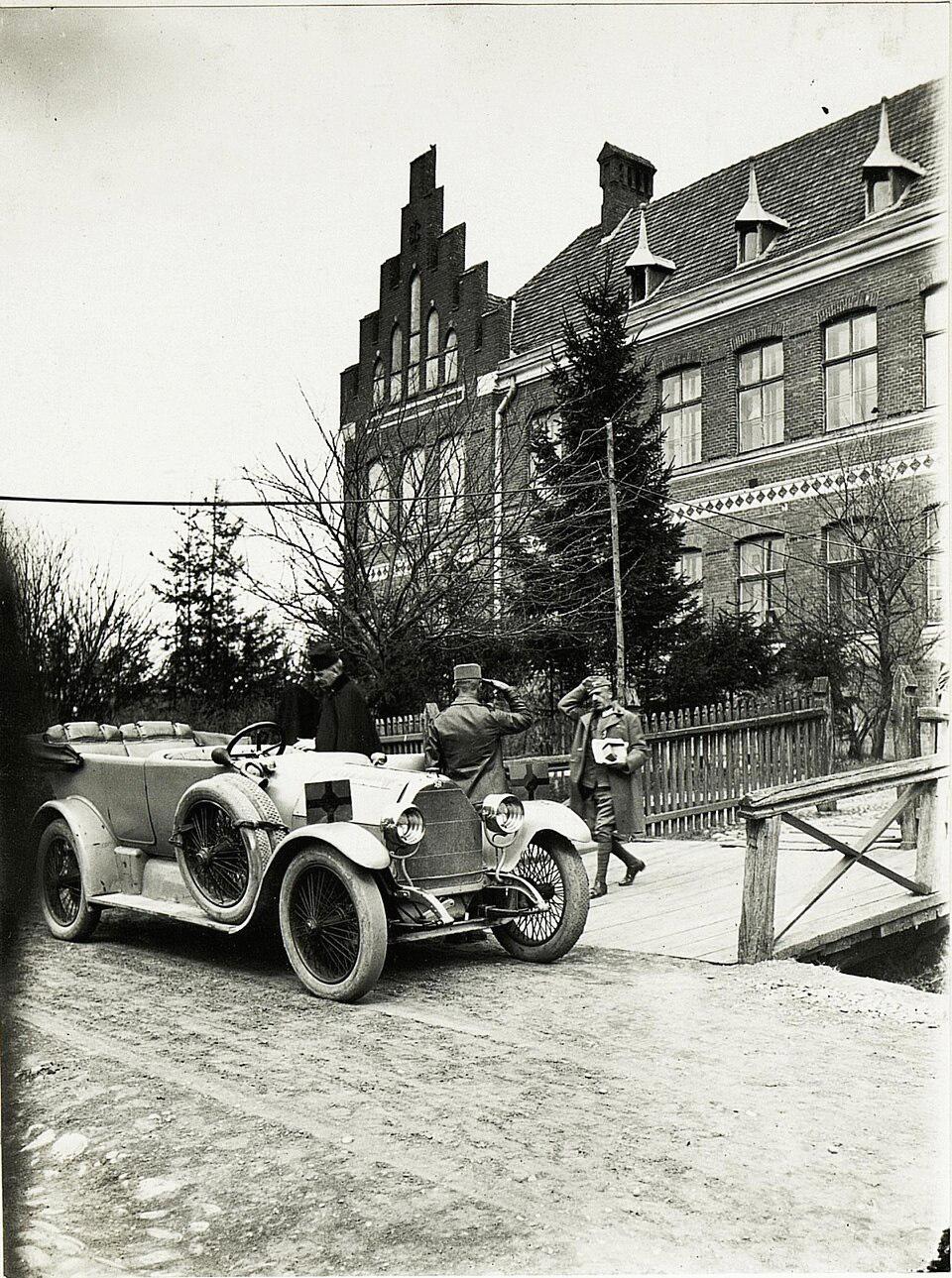
Photo,: K.u.k. Kriegspressequartier, Lichtbildstelle - Wien
Österreichische Nationalbibliothek - Austrian National Library
Accession number
WK1/ALB068/19725
r/Austrohungarian • u/Longjumping-Kale-283 • 19h ago
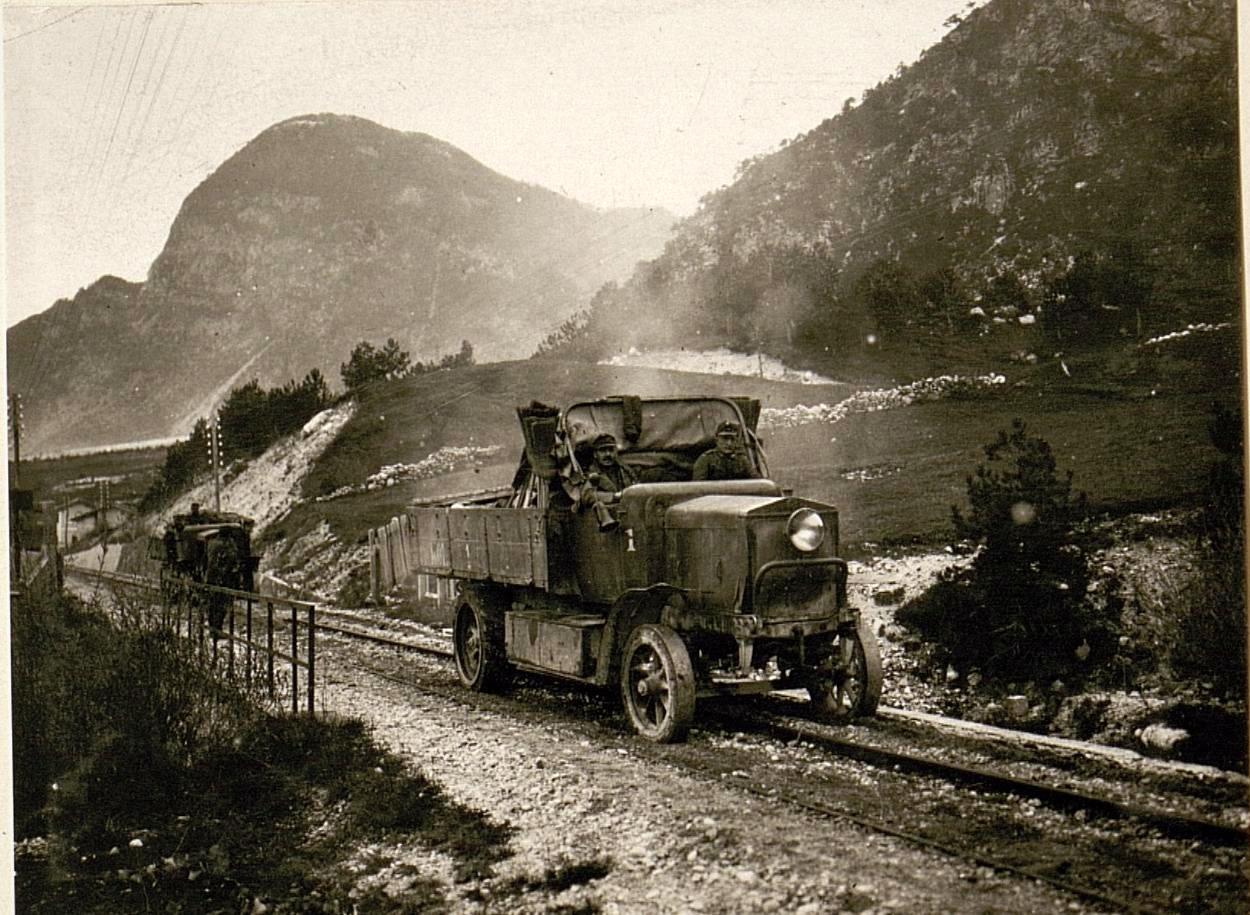
photo:K.u.k. Kriegspressequartier, Lichtbildstelle - Wien
Österreichische Nationalbibliothek - Austrian National Library
Accession number
WK1/ALB043/11830
r/Austrohungarian • u/Longjumping-Kale-283 • 1d ago
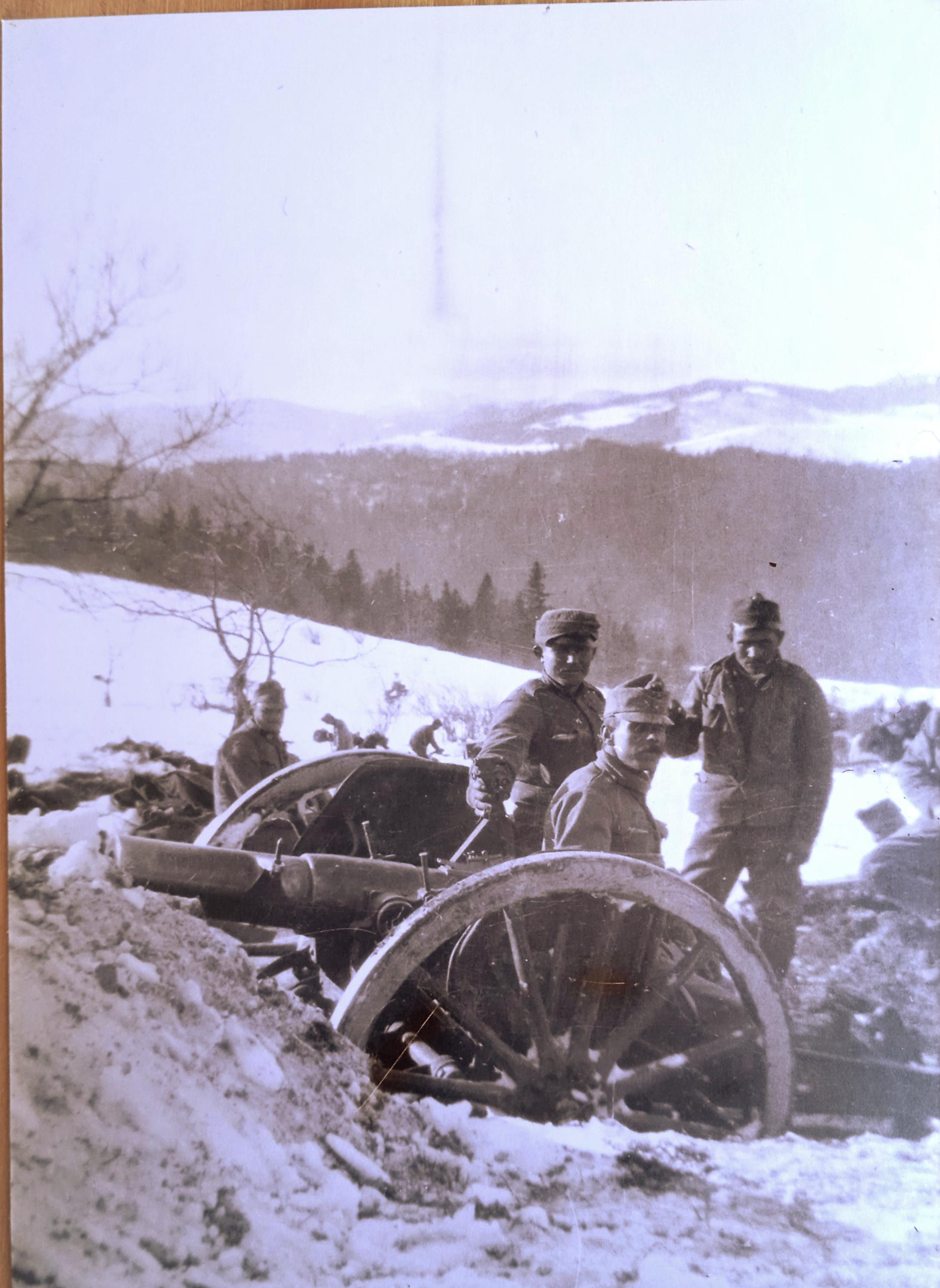
r/Austrohungarian • u/Longjumping-Kale-283 • 2d ago

r/Austrohungarian • u/Longjumping-Kale-283 • 2d ago

Cooks of an Austro-Hungarian unit posing in front of their kitchen barrack. Note the "Eintritt verboten" sign above the door - and all of them proudly posing outside it.
On the back it's a real field postcard, addressed to a Fräulein back home. Can anyone help transcribe the German handwriting?
r/Austrohungarian • u/Longjumping-Kale-283 • 2d ago

This photo comes from the " fototeca storica, consorzio Monfalconese from what I was told, during a reconnaissance flight this Lohner L was hit and forced to land on Lake Doberdò, In the background should be Quota 208 of Bonetti.
The crew survived and reached their own lines. The aircraft was later destroyed by Austro-Hungarian artillery to prevent capture.
I have not found any official historical reference to this loss yet. From what I know, the engine is still on the bottom of the lake.
Has anyone ever heard of this crash, or knows the date / unit?
r/Austrohungarian • u/Longjumping-Kale-283 • 2d ago

From my collection: the Franz Joseph I Kappenabzeichen by R. Marschall, 1915.
Rectangular plaque with the Emperor in profile facing right, flanked by laurel branches. Inscribed FRANC·IOS·I· on the left.
It was mass-produced and worn on the Feldkappe by virtually everyone, which is why it's the most common one you find today. But for me it remains the most iconic - the face of the old Empire on a soldier's cap.
Here I have four examples, all slightly different in patina and wear, plus the back with the original pin still intact.
I never bought mine - I found all of these in the field.
r/Austrohungarian • u/Longjumping-Kale-283 • 2d ago

110 years ago today, 21 November 1916, Kaiser Franz Joseph I died at Schönbrunn after 68 years of reign.
These photos are from the funeral service published in December 1916 in the magazine "Unserer Krieger - Bilder aus grosser Zeit".
From my private collection.
The gallery shows: the Emperor on his deathbed, the lying in state, the Imperial Family at the funeral (Charles I and Zita in the front row), and the long funeral procession through the streets of Vienna to the Kapuzinerkirche.
You can see the heralds, the guards, the horses in white caparisons, and the crowd following the hearse.
Rest in Peace, Kaiser.
You held an empire together for 68 years.
Your subjects never forgot you.
r/Austrohungarian • u/CommitteeAntique3830 • 3d ago
110 years ago today, Emperor Franz Joseph I of Austria passed away at Schönbrunn Palace in Vienna, aged 86, after nearly 68 years on the throne.
His reign had witnessed revolutions, wars, the transformation of the Habsburg Monarchy, and profound personal tragedies.
In this touching photograph from September 1914, the elderly Emperor is pictured alongside young Archduke Otto von Habsburg, son of the future Emperor Karl I.
A photograph of two generations, taken just two years before Franz Joseph's death and four years before the collapse of Austria-Hungary.
An era was coming to an end.
Photograph: Hermann Clemens Kosel, 1914.

r/Austrohungarian • u/Longjumping-Kale-283 • 3d ago
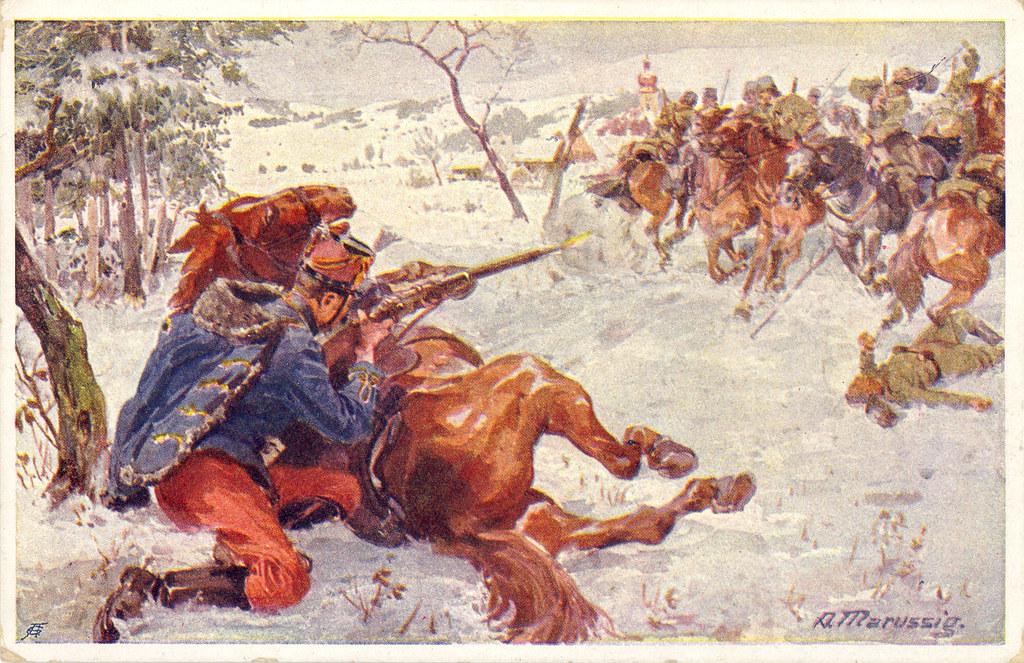
This beautiful postcard was sold to raise funds for the Austro-Hungarian Red Cross during WWI. My flickr friend gps1941 provided the translation for the German text on the back of the card.
"Official Postcard for:
The Red Cross
War Welfare Office
War Support Bureau
No. 197"
"From the Army’s Golden Book, Series 1.
Hussar Samuel Kralik, of the 'Husarenregiment No. 6', was on a reconnaissance ride when he came under intense hostile fire by a suddenly appearing enemy patrol. Using his wounded Horse as a shield, he fired back and forced the enemy to flee. On foot, he then brought his commander an important report on the enemy’s positions."
The location of the scene is not given. However, as the ground is covered with snow and there is an onion-shaped dome on the background, a guess might be made that the action is taking place in the Russian Ukraine as I found information stating that is where Austro-Hungarian Husarenregiment No. 6 was at the end of WWI. I. It may also be that the scene is taking place in some conflict prior to WWI.
Although I could not find out anything on Samuel Kralik nor the wartime incident depicted in the artwork on the front of the card. I did, however, find out a little about the illustrious history of Husarenregiment No. 6.
Hussar Regiment "King William II of Württemberg" No. 6 was originally established in 1734. It existed under various names and affiliations until the end of WWI in 1918, and it fought in the Polish War of Succession, the Russo-Turkish War, the Austrian War of Succession, the Seven Years' War, the Bavarian Succession War, the Napoleonic Wars, the Wars of Liberation, the Sardinian War, the German War of 1866, and various other conflicts.
In 1914 at the beginning of WWI, the regiment was attached to the VI Army Corps - 2 Cavalry Division Troops - 16 Cavalry Brigade. It was made up of 90% Hungarians and 10% soldiers of other nationalities. Hungarian was listed as the Regimental Language. The regiment initially fought as cavalry, but it was also used as infantry during the war.
After the proclamation of Hungary as an independent state in October of 1918, the Hungarian soldiers were called by the interim government to cease hostilities and return home. Husaren Nr. 6 Regiment came back to Hungary from the Ukraine where they had been positioned
The artwork on the card is signed "A. Marussig," who might possibly be the Austrian artist Anton Marussig (1868-1925
source: https://www.flickr.com/photos/sunnybrook100/4123596400/?rb=1
r/Austrohungarian • u/Longjumping-Kale-283 • 3d ago
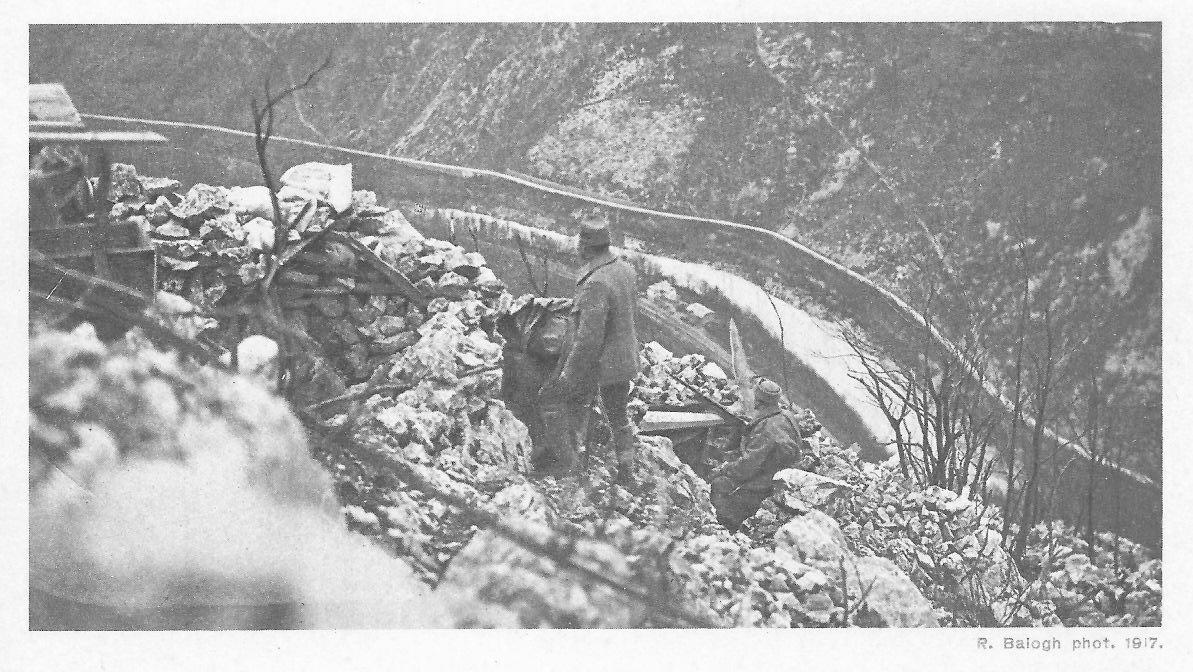
r/Austrohungarian • u/Longjumping-Kale-283 • 3d ago

photo: Rudolf Bruner-Dvořák (1864–1921
r/Austrohungarian • u/Longjumping-Kale-283 • 3d ago

Hi everyone,
I wanted to share these 4 prints with you.
They were printed from original WWI negatives. The negatives belong to a friend of mine, and he kindly gifted me these prints.
They were certainly taken on the Alpine Front, but I don't know the exact location. If anyone can help identify where this could be, the unit, or the weapons, I would be really grateful.
r/Austrohungarian • u/Longjumping-Kale-283 • 3d ago
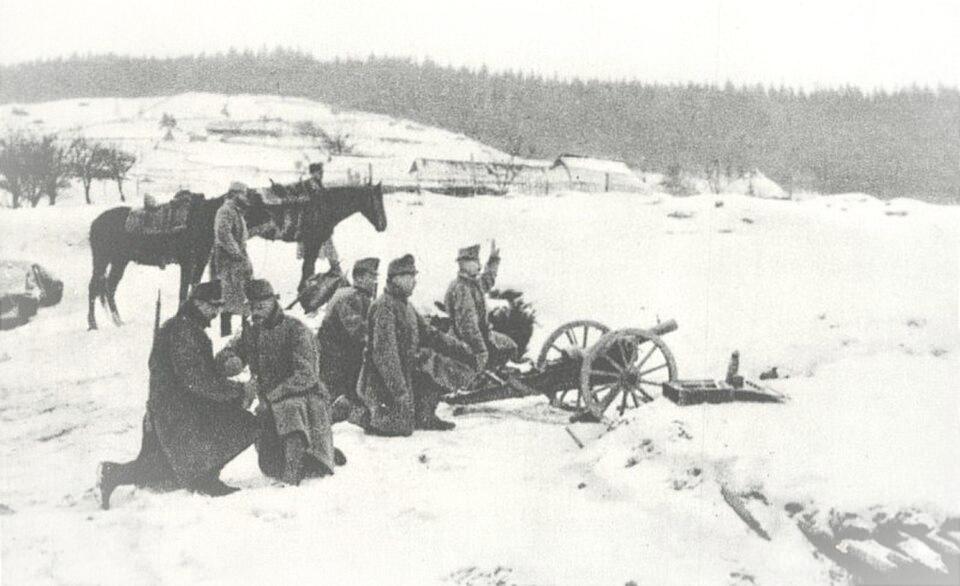
The 7 cm Gebirgsgeschütz M 75 was a bronze-steel mountain gun used by Austria-Hungary during World War I. Despite its 7 cm designation, it actually fired a 66 mm (2.6 in) projectile. The Austro-Hungarian Army used rounded centimeter designations for its artillery pieces.
The gun was equipped with an early form of the Krupp horizontal sliding-block breech and used separate-loading, bagged charges and projectiles. Its low-profile design allowed the breech to recoil into the ground, restricting its elevation and limiting its effectiveness as a mountain gun, where high angles of elevation were particularly important. For transport, the Gebirgsgeschütz M 75 could be broken down into two loads.
source: https://en.wikipedia.org/wiki/7_cm_Gebirgsgesch%C3%BCtz_M_75
r/Austrohungarian • u/Longjumping-Kale-283 • 5d ago

AUSTRO-HUNGARIAN INFANTRY, 1914-1918
1-2. Infantryman in pike-grey [hechtgrau] uniform, in full field equipment. Bayonet fixed on the rifle.
3-6. Knapsack — front, back, and open views.
7. Infantry haversack / bread-bag with canteen.
8-9. Mess tins / field kettle.
10. Canteen, model 1909.
11. Canteen, model 1888, capacity 0.45 litre.
12. Cartridge pouches.
13. Belt buckle.
14. Belt — loop and reverse side.
Plate by L. & F. Funcken, from the Russian magazine Serzhant (Сержант). Translated from the original Russian caption.
r/Austrohungarian • u/Longjumping-Kale-283 • 5d ago
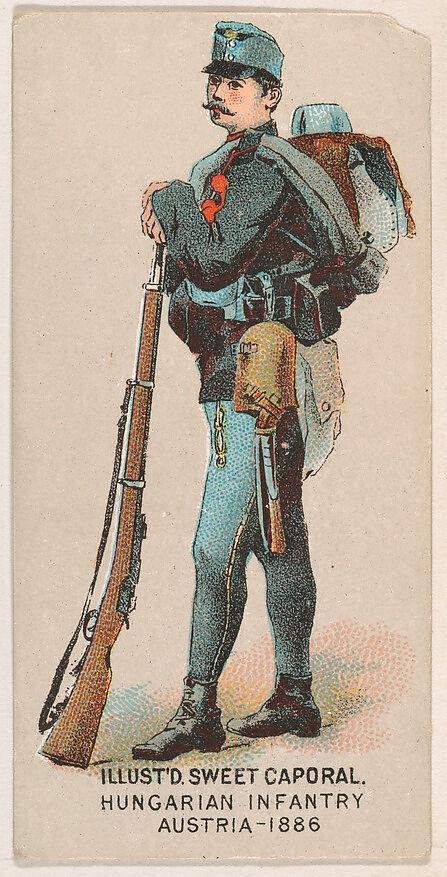
Sweet Caporal was a cigarette brand launched in 1878 by the Kinney Brothers Tobacco Company. It became especially popular in Canada, where it held a large share of the cigarette market in the early 1900s, and was sold there until 2011. Packs also included collectible cards—some featuring baseball players—making the brand notable among card collectors today.
Card:Publisher: Issued by Kinney Brothers Tobacco Company
Date: 1888
Medium: Commercial color lithograph
Dimensions: Sheet: 2 3/4 × 1 1/2 in. (7 × 3.8 cm)
Classifications: Prints, Ephemera
Credit Line: The Jefferson R. Burdick Collection, Gift of Jefferson R. Burdick
Object Number: Burdick 218, N224.656
Curatorial Department: Drawings and Prints
r/Austrohungarian • u/Mundane_Turnover_444 • 6d ago

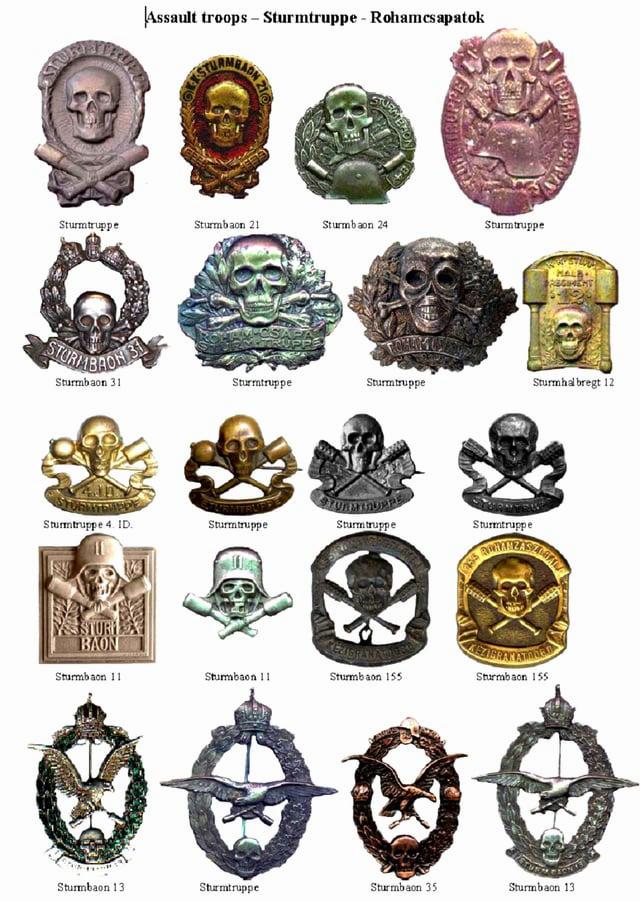
The badge is from my collection.
r/Austrohungarian • u/Longjumping-Kale-283 • 6d ago
r/Austrohungarian • u/Longjumping-Kale-283 • 6d ago
r/Austrohungarian • u/Longjumping-Kale-283 • 6d ago

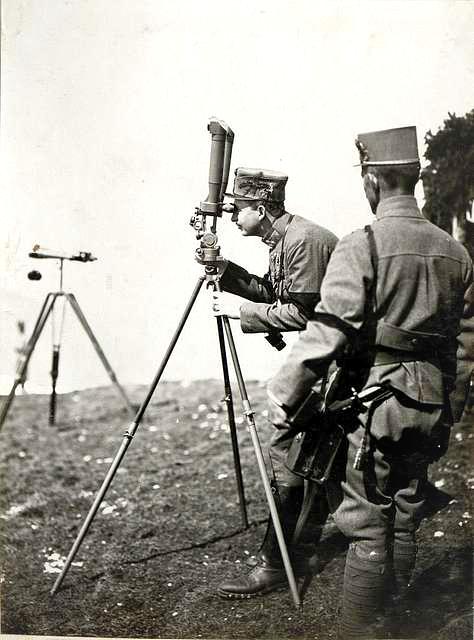
Archduke Friedrich of Austria served as the Supreme Commander of the Austro-Hungarian Army from 1914 until 1917, holding formal responsibility for military readiness across multiple contested fronts. His presence at the alpine garrison in Niederdorf underlines the strategic importance of high-altitude logistics and troop morale during the initial phase of the July Crisis and subsequent mobilization.
photo: Österreichische Nationalbibliothek - Austrian National Library
r/Austrohungarian • u/Longjumping-Kale-283 • 7d ago

Consular Patent / Diplomatic accreditation for Friedrich Heyer as German Consul in Fiume, for Fiume and the Croatian Littoral.
Signed by Wilhelm II at Achilleion, 13 April 1914.
Exequatur by Franz Joseph I, Vienna, 3 August 1914.
From my private collection. Friedrich Heyer was appointed Consul of the German Reich in Fiume, for Fiume and the Croatian Littoral.
Fiume was then the Hungarian port of Austria-Hungary, a key Adriatic hub for German trade, shipping and commerce.
The document orders everyone to recognize Heyer as Consul, to help him in his office, and to grant him all the privileges of consuls of friendly powers.
Countersigned by Chancellor Bethmann Hollweg.
The Austrian Exequatur on the reverse was granted on 20 July 1914 and issued in Vienna on 3 August 1914 - the day before Britain entered the war.
German original (modern transcription):
Wir Wilhelm, von Gottes Gnaden Deutscher Kaiser, König von Preußen etc. Tun kund und fügen hiermit zu wissen: dass, nachdem Wir im Namen des Reichs gut befunden haben, das erledigte Konsulat in Fiume wieder zu besetzen, Wir Unseren Konsul Friedrich Heyer in Gnaden auserlesen und angenommen haben.
Wir tun solches auch hiermit und Kraft Dieses, dergestalt, dass er das Interesse des Reichs, namentlich in Bezug auf Handel, Verkehr und Schifffahrt tunlichst schützen und fördern, die Beobachtung der Staatsverträge überwachen und in allen Angelegenheiten des Reichs, seiner Angehörigen, und seiner befreundeten Staaten in seinen Angelegenheiten Rat und Beistand gewähren soll.
Wir ersuchen übrigens hiermit Alle und Jede, gedachten Friedrich Heyer als Konsul des Deutschen Reichs in Fiume zu erkennen, auf die Vorstellungen, welche er in solcher Eigenschaft tun wird, willfährige Rücksicht zu nehmen, ihm alle zur Ausübung seines Amtes etwa dienliche Hilfe und Beistand zu bewilligen.
Das zu Urkund haben Wir gegenwärtige Bestallung Allerhöchst Selbst vollzogen und mit Unserem Insiegel versehen lassen. So geschehen und gegeben Achilleion, den 13ten April 1914. Wilhelm
English translation:
We, Wilhelm, by the Grace of God German Emperor, King of Prussia etc. Make known and hereby declare: that, having deemed it good in the name of the Reich to fill again the vacant Consulate in Fiume, We have graciously chosen and accepted Our Consul Friedrich Heyer.
He shall protect and promote the interests of the Reich, especially with regard to trade, traffic and shipping, watch over the observance of state treaties, and grant counsel and assistance in all affairs of the Reich, its subjects, and friendly states.
We hereby request all and everyone to recognize the said Friedrich Heyer as Consul of the German Reich in Fiume, to give willing consideration to his representations, and to grant him all help and assistance useful for the exercise of his office.
In witness whereof We have signed this Commission Ourselves and caused it to be sealed with Our Seal. Done and given at Achilleion, 13th April 1914. Wilhelm
Austrian Exequatur (reverse):
Seine K. und K. Apostolische Majestät haben mit Allerhöchster Entschließung vom 20. Juli 1914 dem gegenwärtigen Bestallungsdiplome das Exequatur zu erteilen geruht. Wien, am 3. August 1914.
His Imperial and Royal Apostolic Majesty has been graciously pleased, by Highest Resolution of 20 July 1914, to grant the Exequatur to the present diploma. Vienna, 3 August 1914.