Hello,
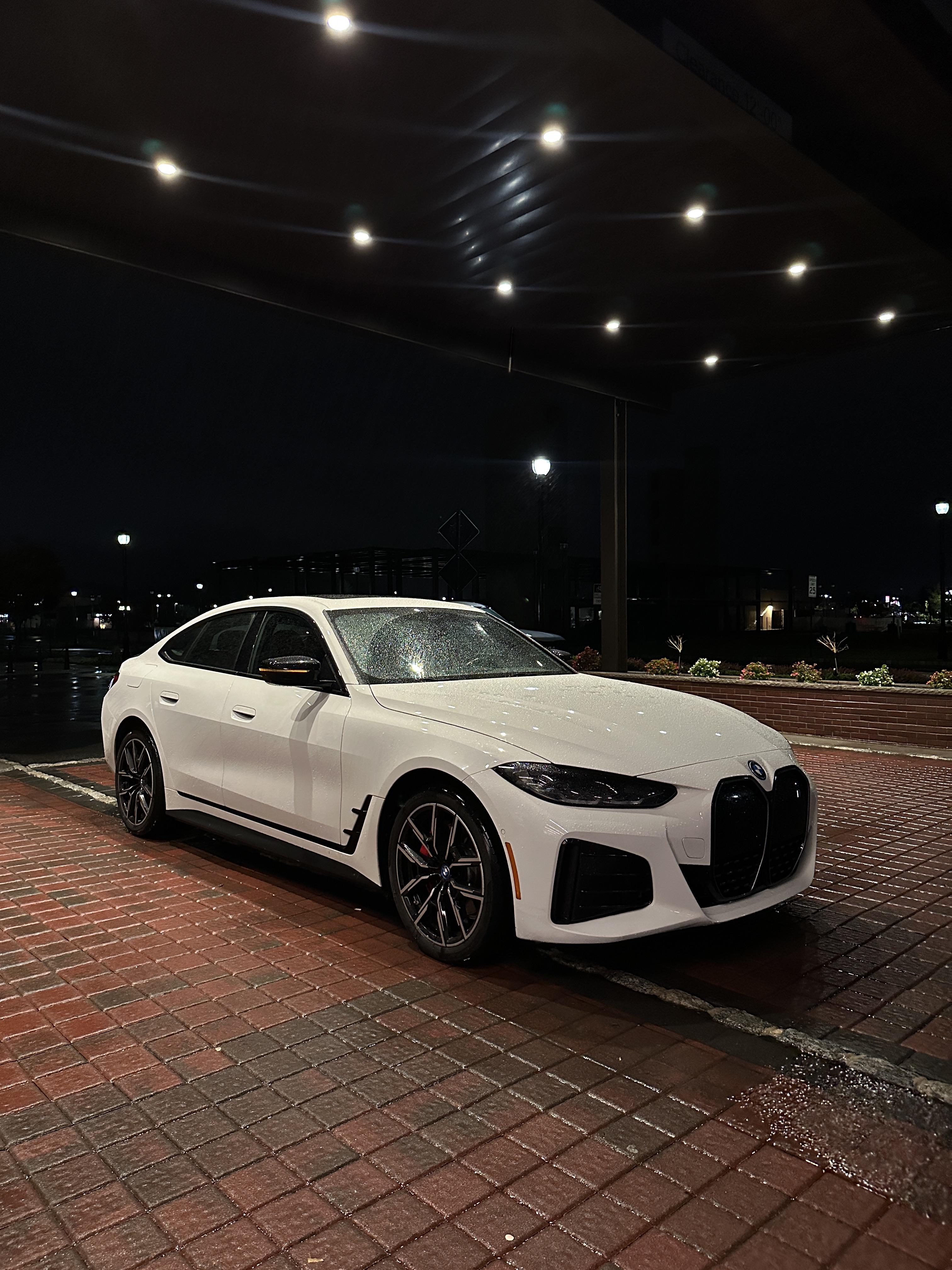
I have an issue on my 2023 BMW i4 M50 (51,000 km) with the classic message: "Drive moderately, drivetrain malfunction".
First, I want to point out that this is my personal vehicle, never been in an accident, and it was working perfectly up until now.
Timeline of the fault and initial diagnostics: One morning, when opening the door, the drivetrain warning popped up on the dashboard. It was still possible to drive normally (no loss of power, the 12V battery was still charging at 14.4V), but I had no A/C or heating anymore, and the high-voltage (HV) battery charge was limited to 20%.
I pulled the car into my garage to scan it with ISTA. Two fault codes came up:
- 0317F1: High-voltage system, isolation fault with contactors closed
- 224F90: Function: urgent repair required
I ran the ABL test plan in ISTA to measure the ohmic resistance of the high-voltage circuit (3 tests):
- Ohmic resistance test of the entire HV system: NOT OK
- Ohmic resistance test with electric motor and A/C compressor: NOT OK
- Ohmic resistance test of the high-voltage battery module: OK
Opening the hood, I found a high-voltage cable bitten by a marten (between the CCU and the A/C compressor). So I lifted the car on a QuickJack and removed everything accessible to inspect the entire harness. I spotted potentially 3 damaged cables:
- The cable going from the CCU to the electric A/C compressor
- The cable going from the CCU to the 2 heating modules
- The cable going from the CCU to the high-voltage battery
High-voltage system lockout: At that point, I got back into the car and turned on the ignition to run another ISTA test. A new warning appeared on the dashboard: "Caution, next restart not possible, continued driving only possible in D". Once the ignition was turned off, it became impossible to enter Ready mode again (there is probably a maximum cycle counter once this type of fault is present i have no idea).
I then put the car into PAD mode to run the isolation test in ISTA again, but the measurement was no longer possible. ISTA simply states:
"The high-voltage system is deactivated. It is not possible to measure the insulation resistance of the high-voltage system."
In its test plan, ISTA also states:
"Instructions for aftersales service: In the event of an isolation fault on both sides, after replacing the defective high-voltage components, the non-volatile memory of the CCU must be cleared so that the fault can be erased and the high-voltage system can start. This can be done, for example, by programming the same software already present on the control unit."
From this point on, the CCU also stopped charging the 12V battery (no more 14.4V).
Repairs performed and CCU flash:
- I powered down the vehicle by disconnecting the high-voltage system via the green service disconnect in the trunk, then disconnected the 12V battery.
- I disconnected the 3 cables mentioned above to test them with a megohmmeter: 2 were indeed defective (the A/C one and the heating modules one), while the one connecting the CCU to the HV battery was OK.
- Just to be completely sure, I ordered and replaced all 3 cables.
- I reconnected the 12V battery and then restored the high-voltage system following the exact procedure.
- Thinking the problem was solved, I hired Bimmer-Remote to perform a flash + Secure Coding 2.0 of the CCU module to clear the non-volatile memory lock as instructed by ISTA.
The flash and coding apparently went through without any errors, but the fault returned immediately. The technician told me, quote: "As soon as I try to clear the fault, it comes right back to its initial state. The CCU is broken it needs to be replaced with a new one and reprogrammed."
My questions:
- Are you sure the CCU module is actually dead, or could this behavior still be caused by an isolation fault on another component or cable?
- What additional tests can I perform?
- I plan to disconnect the high-voltage system again to re-measure the 3 replaced cables, and also test a cable I haven't checked yet (since it looked visually intact): the orange cable with the rectangular plug going from the CCU to the charging port at the rear of the vehicle, to rule out any leakage to ground.
- Could a heating module or the A/C compressor itself be defective and trigger this isolation fault? If so, how can I test/measure it?
I am attaching several photos to illustrate the situation (since I am French, I translated the screenshots using AI, so the translation may not always be perfect).
Many thanks in advance to anyone who had the patience to read all the way through and can offer their help!