Last year, I made a post about Black Friday Binocular Deals that was really popular and I think was really helpful, as everyone in the community got to share and comment on deals they found, highlighting the good and warning people about the bad ones.
So with BF 2025 fast approaching (Starting Nov 20), I thought it would be a good idea to do it again this year:
As many of you may know, I am the binocular reviewer over at Best Binocular Reviews (BBR), so it is hard not to come across as spammy or promotional, but I will do my best as I genuinely want to pass on the good deals I find, steer people away from the ones we as a community feel are bad, but at the same time also I would also appreciate your help in finding any that I have missed so i can include them on BBR:
Leading up to this Black Friday, Cyber Monday, and Holiday season, it is part of my job to look for and highlight on BBR what I feel are the more worthwhile Black Friday binocular deals I’ve come across.
However, I am sure there are many that I have missed. Also, there may be "deals" that you have come across, which you may not be sure about: either the deal may be better somewhere else, or you may not be sure about the binocular - ie, is it a rubbish binocular (Amazon is good at having deals on this!).
So on this post:
Share any binocular deals you’ve spotted, including the retailer and discount details. #SharingIsCaring
If you’ve got your eye on a specific deal but aren’t sure if it’s worth it, feel free to ask! As well as all the other great advice from others on this sub, I’ll do my best to give an unbiased, fact-based opinion and let you know if I think it’s a good buy or if there might be better options.
Good Deals: For context, some of the deals I’ve already found include significant discounts on Kite binoculars (Over 50% off). But I’m curious to see what you’ve discovered!
So, let’s help each other navigate these Black Friday sales and make informed decisions. After all, getting the right pair of optics isn’t just about the price - it’s about the value you get for your money and making sure you get the right binoculars for your specific needs.
Looking forward to hearing what you’ve found or helping with any questions! 😊
Showing the anti-reflection coatings used on the lenses of the Hawke Vantage 8x42 Binoculars
Introduction
I see a lot of questions that relate to the differences between high-end (expensive binoculars), mid-range and entry-level (cheap) ones and whether it is worth it to spend the extra money or not and move up a level. The answer of course is complex as it depends on many personal factors that only you can answer: like how much you can easily afford to spend, how often you will be using your binoculars and what you will be using them for.
After you have thought about these fundamental questions, the next key step is understanding the main differences between binoculars at different price points and how this affects their performance.
Build quality, materials used, different designs... here again, there are many things to look out for, but for me, a major factor that not many of those new to binoculars know enough about, but which really affects the optical performance, makes a noticeable difference to the image and immediately lets you know what level a binocular is at and therefore if the price is worth it is in the level of coatings that are used on the lenses and the prisms:
Overview of Coatings used on the Lenses & Prisms of Binoculars
Optical coatings play a crucial role in enhancing the visual performance of binoculars, monoculars, spotting scopes, camera lenses, night vision equipment and indeed just about any other optical device or instrument.
They are applied to the lenses and prisms to do things like reduce light reflection, increase light transmission, and improve image sharpness, clarity and contrast.
So below I have put together a fairly detailed explanation of the various aspects of binocular lens coatings, including their purpose, materials, application methods, and features (to the best of my knowledge). Please feel free to comment if you spot an error etc.
Why Coatings Are Used
Reduce Light Reflection: Uncoated glass surfaces reflect about 4-5% of light, which can significantly reduce the amount of light entering the binoculars, making images dimmer.
Increase Light Transmission: Coatings increase the amount of light that passes through the lenses, which improves brightness and clarity.
Enhance Image Quality: Coatings reduce glare and internal reflections, resulting in sharper, higher-contrast images.
Improve Color Fidelity: Coatings help maintain the true colors of the observed object by minimizing chromatic aberration and color fringing.
Types of Coatings
Anti-Reflective (AR) Coatings: Reduce reflections from lens surfaces, enhancing light transmission and reducing glare.
Phase Correction Coatings: Applied to roof prisms to correct phase shifts in the light, improving contrast and resolution. Low quality roff prism binoculars may not have these. porro prism binoculars do not need these coatings
Mirror Prism Coatings: High-reflectivity coatings used on roof prism surfaces to increase light transmission. In terms of quality these range from Aluminium, Silver and then the very best Dielectric Coatings used on high-end roof prism binoculars
Scratch-Resistant Coatings: Provide a harder surface on the exterior surfaces of lenses, protecting them from scratches and abrasions. Only found on better quality binoculars
Hydrophobic and Oleophobic Coatings: Also added to the exterior lens surfaces that repel water and oil, making lenses easier to clean and maintain. Usually only found on high and some mid-level binoculars
How Coatings Work
Made up of extremely thin layer(s) of special materials that manipulate light in specific ways, lens & prism coatings mostly work by changing the way light interacts with the lens surface. These coatings are designed based on principles of thin-film interference, which can constructively or destructively interfere with specific wavelengths of light to reduce reflection.
Levels of Anti-Reflection Coatings
This is one of the most important aspects to look out for when selecting binoculars, especially at the lower price points as the level of the optics that are coated is a huge indicator of quality and performance:
Single-Coated (Coated): A single layer of anti-reflective coating, usually MgF2, on at least one lens surface. This provides a very basic reflection reduction.
Fully Coated: All air-to-glass surfaces have a single layer of anti-reflective coating.
Multi-Coated: Multiple layers of anti-reflective coatings are applied to at least one lens surface, significantly reducing reflections.
Fully Multi-Coated: All air-to-glass surfaces have multiple layers of anti-reflective coatings, providing the best light transmission and image quality.
Materials Used in Lens Coatings
As the exact materials used and in which quantities are usually a closely guarded secret between manufacturers, we cannot be sure:
Multilayer Coatings: Modern binoculars often use multiple layers of different materials on their lenses, such as:
Magnesium Fluoride (MgF2): One of the most common materials used for anti-reflective coatings. It is effective in reducing reflections and is relatively inexpensive.
Titanium Dioxide (TiO2)
Silicon Dioxide (SiO2)
Aluminum Oxide (Al2O3) These materials are chosen for their specific refractive indices and transparency to visible light.
Application Methods
Vacuum Deposition: The most common method for applying coatings. The coating material is vaporized in a vacuum chamber and then condenses onto the lens surfaces.
Sputter Coating: Involves bombarding a target material with high-energy particles, causing atoms to be ejected and deposited onto the lens.
Chemical Vapor Deposition (CVD): Uses chemical reactions to produce a thin film on the lens surface. This method is more complex and less common for consumer optics.
Step-by-Step Process of Applying Lens Coatings
Cleaning the Lenses: Lenses must be thoroughly cleaned to remove any dust, oils, or contaminants that could affect the coating adhesion and performance.
Placing in a Vacuum Chamber: The cleaned lenses are placed in a vacuum chamber to remove air and prevent oxidation during the coating process.
Heating and Evaporating the Coating Material: The coating material is heated until it evaporates. In vacuum deposition, the material then condenses onto the lens surfaces.
Layering: For multi-coated lenses, this process is repeated with different materials to build up the required number of layers.
Cooling and Inspection: After coating, the lenses are cooled and then inspected for uniformity and adherence to quality standards.
Conclusions
By reducing reflections, increasing light transmission, and protecting the glass, binocular lens and prism coatings are a vital part as to just how well the instrument will perform optically.
They make a visible difference to image brightness, sharpness, contrast and color fidelity.
The level at which the optics are coated on a binocular is a major indicator as to the overall quality and level of the binocular.
By understanding the materials used, application methods, and the different levels of coatings that can be applied, I hope this helps you to appreciate the technology and work that goes on behind these scenes and thus why some binoculars can cost much more than others, which I hope helps you to make more informed choices when selecting the right pair for your needs and budget.
Hi all! I hope this is an appropriate question here because I need some help. My 23 year old daughter took on the hobby of bird watching over this past year and for this Christmas I bought her the following binoculars: FLYANT 20x50 high powered, waterproof, lowlight vision for bird watching. They were just $28. But crazy enough just as soon as I buy those for her, she sends me a link to a set of binoculars on an online estate sale! The only detail the estate sale says is they are Simmons 10x42 Binoculars. I know both options are probably pretty low quality compared to what this group is probably used to, but in this situation I’m not looking to spend a fortune. So! I’m hoping someone might be able to tell me which set is better. I greatly appreciate your insight!! Thank you.
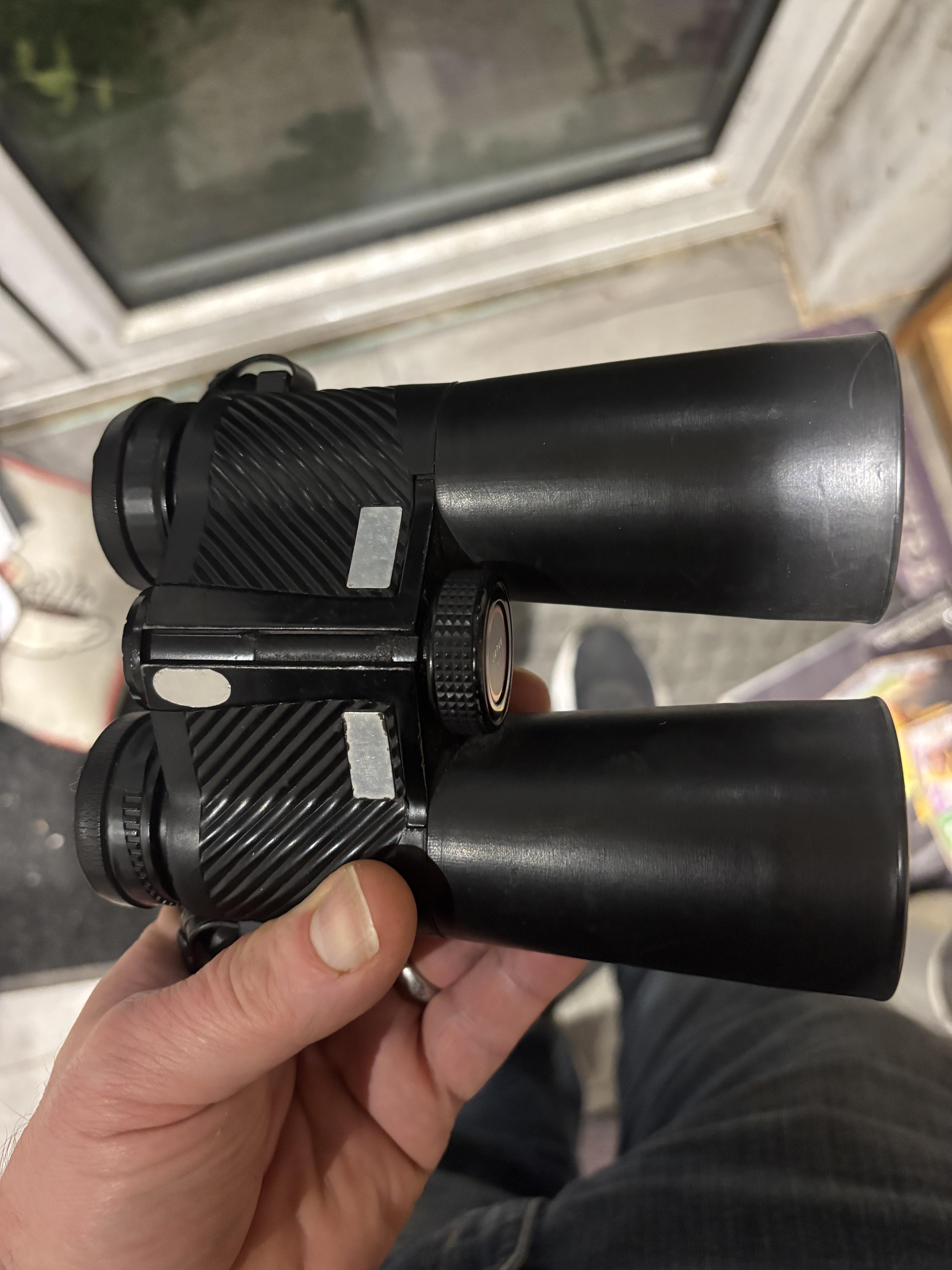
Hi all, I was wondering if I could take advantage of the wisdom of the group in identifying a pair of old binoculars I picked up for my young son.
I found them in a charity shop and was impressed with the solidity and quality of the image, I’m not suggested trinovid quality lol but bright and clear, perfect for a keen 10 year old!
Being nosey I’d be interested to know a bit about them, but they have been well used and writing has worn off… So does anyone recognise them?
I managed to snare a pair of Diamonback HD 8x42 on sale for less than $180. But now I am second guessing that a Nikon ProStaff P7 10x42 for almost same price might be better. Glasses are for my sister to use at her son's crew regattas. So in in daylight and (depending on where they sit) 1.5 mi would be farthest.
I went with 8x42 because of stability, eye relief and FOV but now thinking she might prefer the 10x mag...I could buy both on return the other after Xmas and let her decide.
I wanna do this as safely as possible. Is there any disolvant i could buy or? Would really want some help on this matter. The water is from a boat ride. Salt water
Planning to buy binocularsnfor bird watching and wildlife. I wear specs and have moderate budget. Location Delhi NCR.
Options
Nikon Prostaff P3 8x42.
Saw it with a friend. Extremely good to use with specs. Very clear image. But it's only 8x. Slowly phones will also come with 10x optical zoom. Price is very good.
2) Nikon Prostaf P7 10x42.
I have not used it. But if comfortable with specs. Can opt for it.
3) Celestron Nature DX ED 10x42.
Again, have not used it personally but it might be good. ED glass might be good.
My requirement is clear to see with specs. Tried a model from Olympus but it was not good at all.
Does anyone have experience with purchasing used high end binoculars? Should I look for a used 10x42 NL Pure or stick with getting a new 10x42 EL? The new NL Pure is priced $1200 more than the EL, but there are occasionally used ones that are only about $500 more. I’m not convinced there is a $1200 difference. Unfortunately nowhere within 100+miles has any NL models for me to try in person. I have borrowed a set of the 10x42 EL, and was very impressed. Any thoughts would be appreciated!
I’m looking for a new pair of hunting binoculars. I’d like either 10x or 12x. I’d like something with clear glass, fog proof, and good visibility in low light conditions. Their main purpose will be watching/hunting deer. I’m currently using a pair of 8-10 year old Prostaff 3s and they’re just not very good.
I am in search for some binoculars. My main source would be amazon and my budget is 100 USD tops. I decided to go for a 8x42 as a balance of usability and field of view for everything. From looking from my high rise window at my apt ,to the casual hiking on the mountains for bird watching to just stare ate things far away. A do-it-all.
There are dozens of nobrand with lower price (i wouldnt feel comfortable spending my money on those nobrands). So i would settle for any on the list above.
What do you think? which one would you recommend? is my 8x42 choice the right one? thanks in advance.
I'm looking for a second pair of binoculars and can't decide between 12x and 15x magnification. Could you give me more details on the differences between them? Also, what exit pupil size should I be aiming for? In your opinion, is 15x too extreme for most scenarios?
These were passed down to me by my late Grandfather. He served in the Australian Navy when he was younger so these could’ve been acquired during that time.
I have a pair of Vortex Diamondback HD 10x50. Im going to rural Alaska this March and can expect lows down to around -20 to -40. I know these are argon sealed but theres no published temperature guidelines. Would the binoculars ever recover/dry up if they did get foggy? Will they be useless in extreme cold? Anyone have any wee jackets for their binoculars in the cold?
Hello I want to get my husband a pair of binos as a gift. We travel a lot to many different climates, so it’s important to me that they are light. We would use them mostly for seeing animals, but I imagine some landscapes as well? We also both wear glasses, if that matters. Ideally, I’d avoid using Amazon. Budget is maybe $500, but pretty flexible - I want to have one pair for life. Thanks so much!
Haven't seen anything yet, but does anyone have recommendations of company's to check out that might do a sale? Have been wanting the vortex diamondbacks, seems the lowest I can find them is 200
I posted pics of the Leica Geovid Max 10x42 a couple months ago. After some time using them, my general opinion is that these are the best rangefinder binoculars with Applied Ballistics for competitive shooters. The optical quality is pretty much comparable to the Swarovski EL Range, while having the feature-set close to a Vectronix Vector X.
Crucial Requirement: I wear glasses, so I absolutely need a long eye relief around 17mm to 18mm to prevent tunnel vision. I noticed popular entry options like the Diamondback HD 10x42 only have 15mm, which won't work well for me.
Budget: I am looking for the 'sweet spot' of price-to-performance around $400–$500. I want something high-quality that will last, but I definitely want to avoid the diminishing returns of the $1,000+ luxury glass options while getting something significantly better than a $100 starter pair. Lifetime warranty is desirable. I noticed Vortex provides that but don’t see a product that fits these specs.
Any specific model recommendations that hit these exact metrics? Thanks in advance!
Update: I found a great deal on FocusCamera and got Vortex Viper HD 10x42 for $319 with discount code FCVV319. Will keep looking for any better deals on this or any other models recommended here. Thank you so much all for your help.
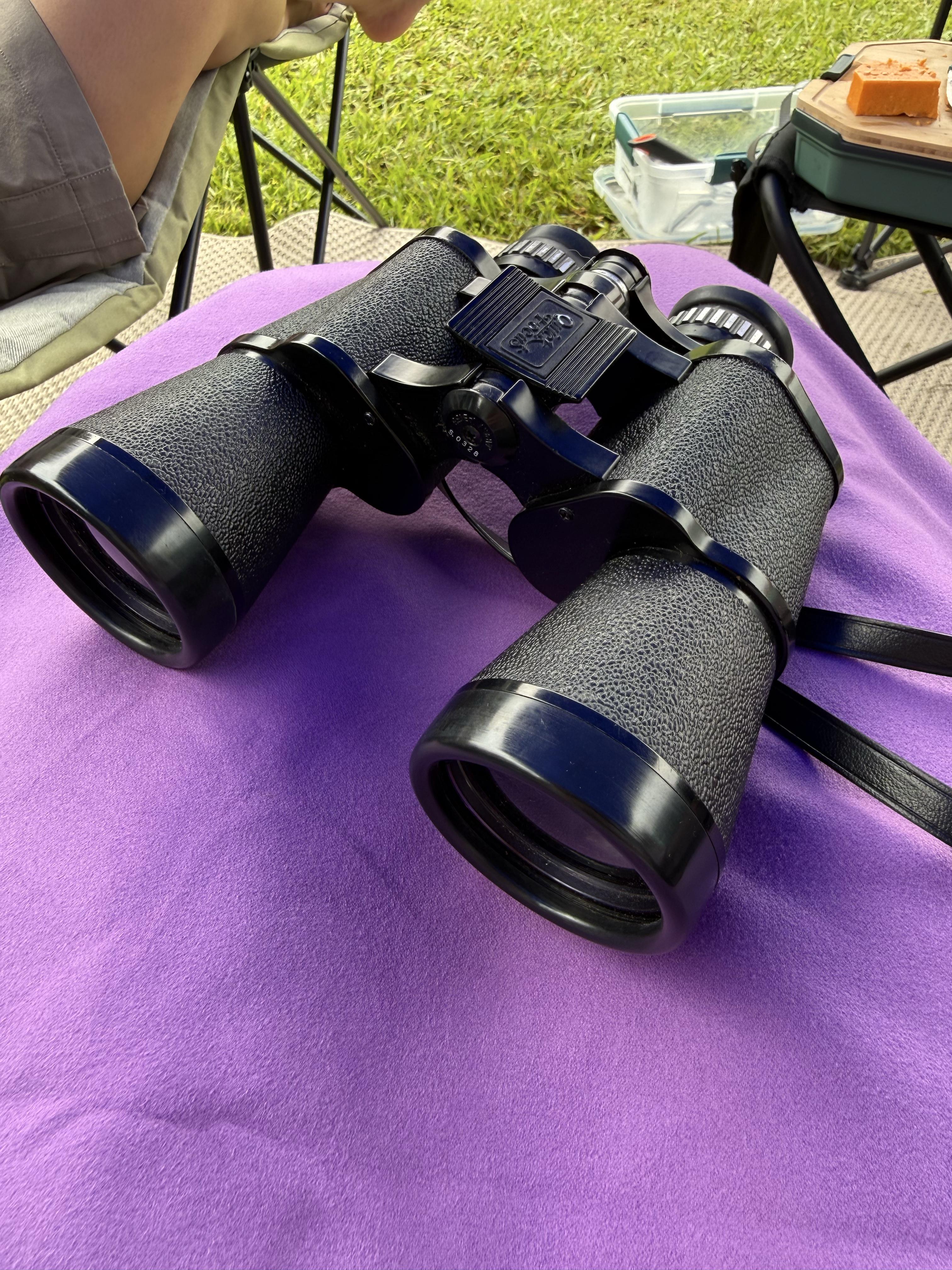
I’m a new hunter and want to date my binoculars. I got these from a thrift store and have used them to go bird watching. Are these good quality for hunting out in SW USA and when were these made?