r/BokuNoHeroAcademia • u/cheatersstealmyname • 18h ago
Anime Why would she not just turn toga into a bomb is she stupid?

431
Upvotes
r/BokuNoHeroAcademia • u/cheatersstealmyname • 18h ago
r/BokuNoHeroAcademia • u/GoldenMilk-8765 • 13h ago

r/BokuNoHeroAcademia • u/Forrealthistime-27 • 12h ago
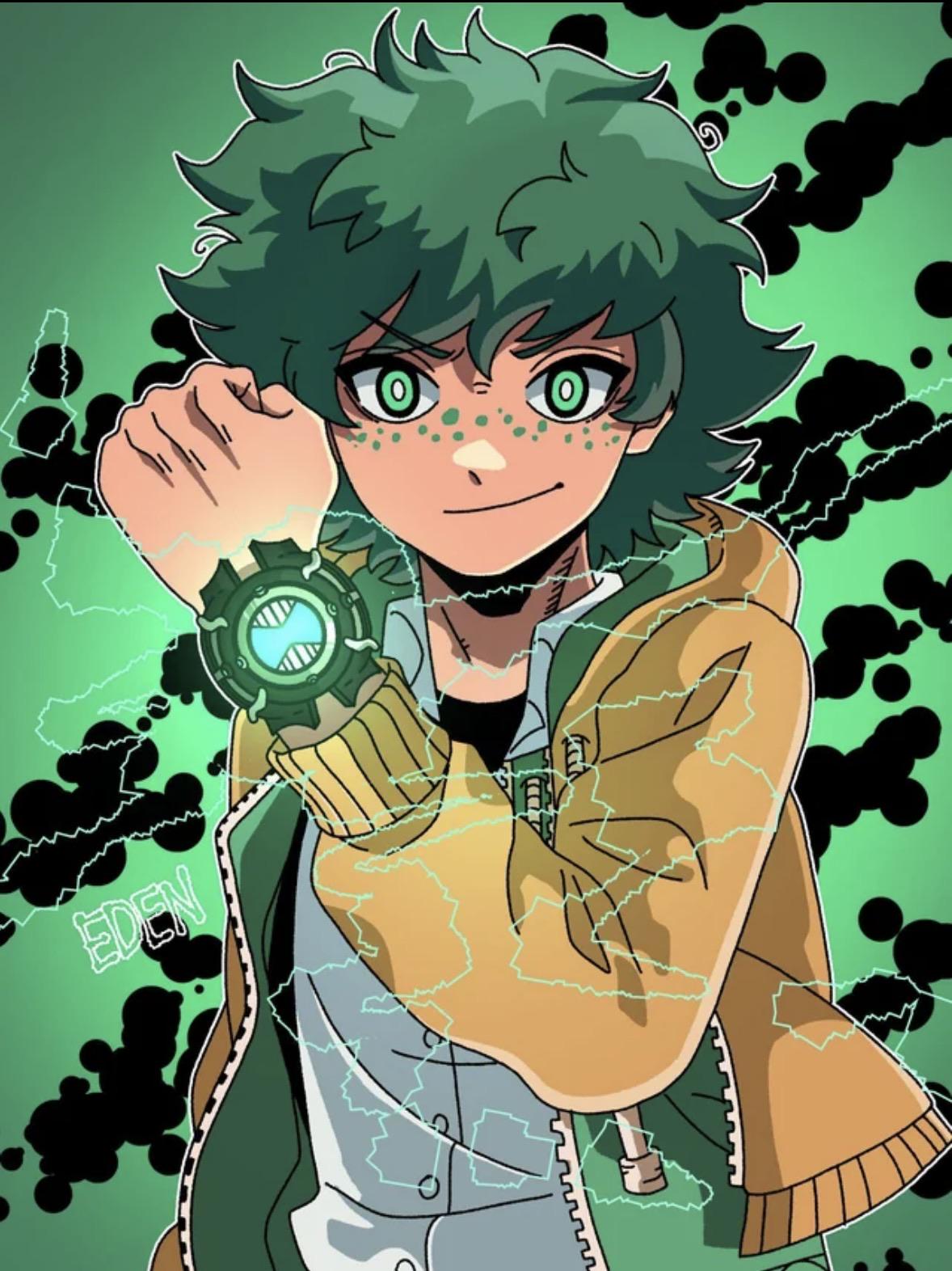
Art by EdenDoesArt
r/BokuNoHeroAcademia • u/No-Brush1587 • 5h ago
r/BokuNoHeroAcademia • u/EntertainmentLow7966 • 10h ago
I've been rewatching and the stretch after he loses his power is where he becomes genuinely compelling. Before that he's the symbol, the goalpost, the guy who always wins. After, he's a man trying to figure out what he's worth when he can't do the one thing he was known for. The way he keeps looking for ways to be useful even when his body won't cooperate. It's a quieter arc than the big fights but it's the one I think about most
r/BokuNoHeroAcademia • u/Born_Usual998 • 17h ago
r/BokuNoHeroAcademia • u/Dependent_Speech_284 • 10h ago
I’m a classically trained musician and shows that have good soundtracks just speak to me. Shows like Death Note and Frieren are like that to me.
I watched MHA when it first came out on my phone without headphones so I never really recognized how good the sound direction is. Watching it this time the music is totally hyping me up!!!
r/BokuNoHeroAcademia • u/flamethrower-nerf • 11h ago

Fan art of all might X the finals Heavy class,
my 2 favorite characters
r/BokuNoHeroAcademia • u/Messengerofhell • 3h ago

In the original series, it all wrapped up over just a period of about a year since Izuku took One for all.
I am imagining a storyline in which things are more spread out. Like if the sports festival takes place at the end of first term. The summer break is reserved for internship in which Izuku interns with Gran torino. Then eventually things develop.
The final exams are at the end of second or third trimester. This will also allow deku to develop his abilities and practice a bit more.
The summer camp actually takes place in either winter or spring break. Maybe the provisional licences will be taken in second year and the second year internship will be under Endeavour.
The whole Paranomial liberation arc can maybe take place at the end of second year or begining of third. Infact they could make Shigaraki go into exile for about a year.
Maybe the dark deku actually can take place after graduation and all of them have become full fledged heroes. You can also have a time skip and show the heroes actually develop physically and mentally.
And they can actually let deku have the final embers last for maybe 10 years or so that we can see him stabilize Japan and actually becoming a symbol of hope.
Anyways these are my thoughts. What do you guys think ?
r/BokuNoHeroAcademia • u/PuzzleheadedBag4866 • 12h ago

r/BokuNoHeroAcademia • u/ResolveUnlikely5542 • 17h ago

r/BokuNoHeroAcademia • u/Opening-Young-5496 • 19h ago

Would they see him as a hero or a villian? Because this Godzilla isn't malicious and protects earth from other monsters.
r/BokuNoHeroAcademia • u/tanama_ • 12h ago
Note: This analysis was inspired by class1akids' post discussing Uraraka's Quirk counseling reforms.
Something that interests me about Quirk counseling is how little we know about it considering the narrative significance of its failures. The manga establishes that counseling begins during childhood, presumably around Quirk manifestation, and that Toga underwent it after her parents became concerned about her fascination with blood. Beyond that, we know little about its methods, or what constitutes successful counseling.
The term itself encourages readers to imagine something resembling psychotherapy, but I suspect Quirk counseling would be closer to developmental support (hattatsu shien, 発達支援) and the behavioral instruction associated with Japanese early childhood education. Quirk manifestation is a near-universal developmental milestone, so it makes sense that services have been developed to help children understand their abilities and manage them in everyday life.
Whether every child receives counseling or whether the service is reserved for children whose Quirks present difficulties is unclear. I lean toward the former, with more intensive intervention available to those who need it. For most children, counseling would be an unremarkable part of growing up: learning appropriate Quirk use, recognizing physical limitations, and managing involuntary activation. Much of this could take place through ordinary classroom activities, with counselors providing support when teachers encounter problems outside their expertise.
Given that BNHA takes place in Japan, I think it's worth considering two concepts from Japanese educational thought: mimamoru (見守る) and shitsuke (躾).
Mimamoru, or "watching over," describes an approach in which adults observe children's activities while allowing them room to resolve difficulties on their own. Japanese early childhood educators sometimes refrain from intervening in disputes between children because these experiences can help them develop social competence. This shouldn't be confused with neglect; educators remain attentive and intervene when circumstances warrant it.
Within Quirk counseling, this might involve supervised experimentation with Quirks, allowing children to discover their capabilities while counselors observe their development. The potential problem is that inadequate intervention can be mistaken for encouraging independence, and children who appear well-adjusted may have just learned to conceal their difficulties.
Shitsuke concerns the cultivation of appropriate conduct through upbringing and discipline. In Quirk society, this would encompass teaching children to regulate their abilities and respect other people's boundaries. A child capable of reading minds would need to understand privacy, just as a child capable of producing flames would need to understand that other people can be burned.
There's nothing objectionable about these principles. The problem arises when adults interpret a child's inability to meet social expectations as a character flaw, or when outward conformity becomes the standard by which successful development is measured. A child who stops exhibiting undesirable behavior hasn't necessarily acquired the skills or received the support needed to manage the underlying problem.
This brings me to the work of Sozo Kurahashi, who is one of the most influential figures in Japanese early childhood education. Kurahashi emphasized children's spontaneous activities and emotional experiences through the concept of kokoro-mochi (心持ち), or their state of feeling. He criticized educational approaches that subordinated children's present experiences to adult expectations about what they should become.
Applied to Quirk counseling, this suggests that understanding the mechanics of a Quirk isn't enough—counselors also need to understand what possessing that Quirk feels like to the child.
Toga is our best (and, unfortunately, only substantial) example. Her attraction to blood appears intrinsic to her Quirk, though the manga never establishes whether it's a biological necessity. Is the sensation comparable to hunger? Does consuming blood provide some type of sensory satisfaction? How did she come to associate blood, and becoming others through her Quirk, with affection? These are questions a competent counselor would need to investigate before determining an appropriate intervention.
Teaching Toga that she can't bite people or obtain their blood without consent is reasonable, but expecting her to eliminate the desire altogether is another matter. Her counseling appears to have treated her attraction to blood as a problem of behavioral conformity without establishing whether the underlying impulse could be extinguished.
There's a related issue in Takeo Doi's concept of amae (甘え), explored in The Anatomy of Dependence, which discusses the desire to depend on another person's affection and acceptance. Doi's broader cultural arguments have received criticism for their generalizations, but the concept offers a useful perspective on the relationship between children and counselors. Young children depend on adults to interpret experiences they don't yet understand. This dependence takes on greater significance when their Quirks produce sensations or impulses their parents have never experienced. If expressing those needs results in disgust or rejection, children may stop communicating them, leaving adults under the impression that their intervention has worked.
Lev Vygotsky's sociocultural theory also offers a useful way of understanding how children acquire Quirk control. His concept of the zone of proximal development describes the difference between what a child can accomplish alone and what they can accomplish with guidance. Later researchers developed the related concept of scaffolding, in which adults provide assistance and reduce it as children acquire the relevant skills.
Consider a child whose Quirk activates during emotional distress: telling them to remain calm accomplishes little if they've never learned to recognize the sensations preceding activation. An intervention might involve identifying those sensations, practicing regulation strategies in controlled environments, and introducing more demanding situations as the child develops those skills. Their progress would be measured by what they can accomplish, rather than whether they've stopped inconveniencing adults.
I don't think Quirk counseling needs to be some elaborate psychological conditioning program to explain its failures. It could be an ordinary educational service staffed by people who care about children and achieve satisfactory results with most of their cases. A system designed around typical developmental needs will encounter children whose circumstances fall outside its assumptions, and the consequences of inadequate intervention can be devastating.
So, what would meaningful reform entail?
I'd start with the concept of kodomo no shutaisei (子どもの主体性), or children's agency. This concerns children's capacity to participate in their own development and influence decisions affecting them. Japan's Basic Act on Children, which came into effect in 2023, establishes respect for children's opinions according to their age and developmental stage as a principle of national child policy.
A reformed counseling service could draw from this principle by giving children a greater role in determining their developmental goals. Consider a child whose skin produces a sticky substance. Their counselor might prioritize preventing unwanted physical contact, while the child is more concerned about classmates refusing to sit beside them. Both concerns deserve attention, but an intervention organized around adult priorities might overlook the latter.
Individualized educational plans, similar to those used in special education, could establish goals and accommodations with input from children, their families, and their teachers. These plans would require periodic review, since Quirks develop alongside their users. A strategy suitable for a five-year-old would be inadequate once that child is a teenager.
Another useful perspective comes from Urie Bronfenbrenner's ecological systems theory, which examines child development through the relationships between individuals and their surrounding environments. His work challenges the tendency to locate developmental difficulties within the child alone. In this case, imagine a student whose Quirk produces an unpleasant smell whenever they're anxious. Their classmates begin avoiding them, increasing their anxiety and causing more frequent activation. Teaching the child to suppress the smell might help, but it leaves the behavior contributing to their distress unaddressed.
This is especially relevant to children with mutant-type Quirks. A child whose appearance frightens their classmates could receive counseling for difficulties with socialization, despite the problem originating in their classmates' prejudice. Counseling can provide coping strategies, but those strategies can't substitute for a school addressing discrimination.
The reverse applies to children with powerful Quirks. Bakugou's childhood is a good example of how adults can reinforce undesirable behavior by praising a child's abilities and encouraging an inflated sense of superiority. An intervention that treats his arrogance as an individual behavioral problem without examining the attitudes of the adults around him would overlook one of its contributing causes.
The people in charge of Quirk counseling should, therefore, have some responsibility for identifying problems that require intervention at the classroom, school, or family level. This also means recognizing the limitations of individual professionals. A society containing millions of distinct supernatural abilities can't expect every teacher or counselor to possess comprehensive knowledge of them.
I'd organize Quirk counseling into three levels of support:
* Universal Quirk education: Beginning around manifestation and continuing throughout schooling. Teachers would provide instruction on safety, bodily autonomy, cooperation, and differences between abilities, with counselors advising them and monitoring children's development. Universal access would also help prevent counseling from becoming associated with dangerous or abnormal children.
* Individualized developmental counseling: Available when a child's needs exceed ordinary classroom instruction. Children, parents, or teachers could request assistance, and a qualified counselor would assess the child's circumstances and develop an individualized support plan. This would include examining their relationships at home and school, identifying accommodations, and reviewing their progress over time.
* Specialist intervention: Access to medical professionals, psychologists, occupational therapists, and child welfare services when necessary. A designated counselor would coordinate educational support with these professionals, subject to consent and privacy safeguards. Children with urgent needs wouldn't have to progress through every level before receiving specialist care.
Japan's Children and Families Agency already emphasizes coordination between developmental support services and consideration of children's wishes and best interests. Quirk counseling could build upon comparable arrangements.
Pro Heroes could contribute through practical demonstrations and supervised mentoring, but their expertise in hero work doesn't qualify them to assess children's developmental or psychological needs. A hero with a powerful fire Quirk might understand its physical limitations while knowing little about how a frightened six-year-old experiences involuntary flame production. Qualified specialists should retain responsibility for assessment and ongoing support.
I'd also consider structured mentoring between older and younger Quirk users. A teenager who has learned to manage a difficult ability might offer insights that adults with different Quirks cannot provide. This could benefit children with rare or stigmatized abilities, provided appropriate supervision and safeguarding exist.
Early intervention would be another component of the service, with developmental monitoring beginning around manifestation and continuing throughout childhood. Counselors would need to distinguish between ordinary developmental variation and difficulties requiring specialist assistance. A kindergartner who activates their Quirk when excited might be demonstrating age-appropriate limitations in emotional regulation, whereas repeated activation resulting in serious injuries warrants intervention.
Given how individualized Quirks are, expecting children to acquire the same degree of control at the same age would be unreasonable. Some may never achieve complete control and will require accommodations throughout their lives. The goal should be helping children participate in everyday life without compromising their safety or that of others.
Neither mimamoru nor shitsuke would need to disappear under this model. Observation remains useful, provided there are clear criteria for intervention, and children still need to learn appropriate boundaries concerning Quirk use. Counselors would, however, need to distinguish justified behavioral expectations from social prejudice. A child with a frightening appearance shouldn't have to conceal their body for other people's comfort, while a child experiencing impulses that could result in harm needs assistance managing those impulses.
Using Toga as a test case, a reformed counseling service would need to investigate the physiological and psychological characteristics of her attraction to blood. Medical professionals could determine whether safe substitutes or controlled access to blood might address any genuine physical need, though we shouldn't assume such a need exists without assessment.
She would also require age-appropriate instruction concerning consent and bodily autonomy. Her attraction to blood could be acknowledged without endorsing behavior that violates another person's boundaries. Her parents would need guidance on responding to her behavior without humiliation, and if the family environment remained harmful, child welfare intervention might become necessary.
None of this guarantees Toga would never become violent. Developmental interventions can't eliminate every risk, and acknowledging the circumstances that contributed to someone's behavior doesn't absolve them of responsibility for their subsequent actions. It would, however, provide a more defensible response to her childhood difficulties.
Evaluating the effectiveness of counseling would also require moving beyond observable compliance. Can the child communicate their needs and request assistance? Have they acquired regulation skills? Are their accommodations working? Has their participation in school improved? The child's own account of their experiences should inform these assessments.
This would require long-term follow-up, manageable workloads, professional supervision, and procedures for investigating complaints about counseling practices. Without those resources, even a sound educational philosophy could deteriorate into superficial activities and reassuring statements.
And this is where I want to bring up the remedial course arc, which I think offers one of the manga's best examples of what effective Quirk education could look like. Bakugou, Todoroki, Yoarashi, and Utsushimi are tasked with winning over a group of children whose powerful Quirks have contributed to their sense of superiority and led to unruly behavior in the classroom and dismissing their teacher's authority. Bakugou recognizes that demonstrating greater strength won't challenge the children's worldview because their problem stems from associating strength with personal worth. He understands their leader's attitude because he once shared it.
The trainees instead construct a playground using their Quirks. This resembles guided play, in which teachers organize an activity around developmental objectives while preserving children's freedom to explore. Cooperation acquires an immediate purpose because it allows the children to participate in something they enjoy.
There's also an element of role relabeling, a concept associated with changing the social meaning attached to an individual's characteristics or behavior. A Quirk valued for its destructive potential becomes useful because it contributes to a shared activity. The children experience their abilities outside the competitive relationships through which they've learned to understand them.
The arc also acknowledges the limitations of short-term educational interventions. Gang Orca reminds the children's teacher that heroes cannot handle everything and that their continued education remains her responsibility. The trainees provide a useful intervention, but the teacher is responsible for sustaining its results.
I bring this up because it offers a point of comparison with Uraraka's reforms in the epilogue. Chapter 430 establishes that Uraraka has expanded Quirk counseling, and chapter 431 shows visiting heroes interacting with elementary school children. Uraraka emphasizes establishing relationships with children so they feel comfortable discussing their difficulties. We also learn that Takami has been working with the Ministry of Education to improve Quirk education.
These are worthwhile developments, but expanding access to counseling and reforming its methods are different things. The manga establishes the former while leaving much of the latter to inference.
During the school visit, Togata challenges the children to hit his backside with their Quirks. One of the kids, a boy named Ooshima, struggles to participate until Uraraka uses Zero Gravity without his apparent knowledge, allowing him to succeed and receive praise from his classmates.
I understand the intended message, and want to note that a positive social experience can greatly help a nervous child develop confidence. However, the activity rewards Quirks suited to direct competition, and Uraraka's intervention does little to challenge that standard. Ooshima receives praise for an accomplishment he may be unable to reproduce on his own, rather than discovering what he can accomplish with his own abilities or through acknowledged cooperation.
Compare this with the remedial course, where the activity changes how the children understand the value of their Quirks. What would Togata's game offer a child whose ability produces an unpleasant odor, or a child like Toga? These are the kinds of children whose circumstances a reformed counseling service should be equipped to address.
My criticism isn't that Uraraka's approach lacks merit. Establishing trust is an essential part of working with children, but what happens after a child discloses their difficulties? Are teachers and counselors involved? Can heroes refer children to specialists? What happens when parents refuse to cooperate? Uraraka's program might address these issues offscreen, but the manga gives us little information about its actual operation.
There's also a problem that even the best counseling service couldn't resolve on its own: the values of a hero-worshipping society.
Children grow up surrounded by hero rankings and public celebrations of powerful Quirks. They learn which abilities confer social status before they're old enough to question those judgments. Children with stigmatized Quirks encounter prejudice from an equally young age, and the epilogue retains much of the system responsible for these attitudes.
Counseling can help children develop healthier relationships with their abilities, but a child whose Quirk is considered useless will continue receiving messages about their supposed inferiority as long as society equates powerful abilities with personal worth. Likewise, children with mutant-type Quirks shouldn't be made responsible for accommodating other people's prejudice.
This is why I think Quirk counseling is more interesting when understood as an educational and developmental service rather than a means of preventing future villains. Its purpose should be helping children understand their abilities, develop appropriate skills, and receive support when their needs exceed their capacities. Sometimes that means changing a child's behavior; sometimes it means changing the environment in which they're expected to function.
r/BokuNoHeroAcademia • u/Sure-Cockroach499 • 17h ago
I've seen on tik tok people making their OCs in mha style and I've made mine on gacha life so I already have a fixed idea on how he is.
I am really bad at drawing and I really don't have the funds to commission anyone since I'm a minor.
So I am wondering, is there any site or app that I can use to make my OC?
Yes I have tried Picrew but it's limited and I most of the templates are women and I need a man T_T
Thanks in advance to anyone!
r/BokuNoHeroAcademia • u/RexSama101 • 19h ago
Say, you ever think of how affected the entertainment industry would be thanks to the rise of quirks? Would they be ruined by the amount and variety and how they would ruin the illusions films provide or would they make movie or tv shows or heck video games easier to produce than ever before? Feel free to give your thoughts about it. Bonus question being if quirks could help keep physical media alive?
r/BokuNoHeroAcademia • u/_orion_star_ • 13h ago
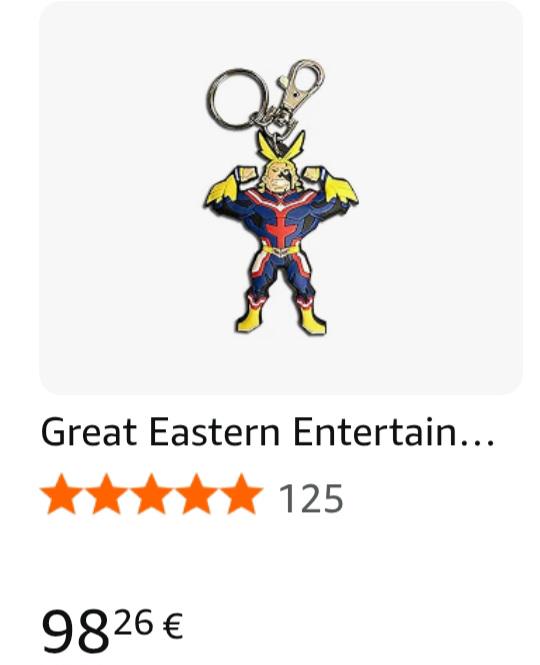
I want to have this keychain but its getting more expensive the more i look for it.
Last time i looked for it it was 70€ (=76$).
Now its 98€ (=107$).
I am pretty sure its the shipping Costs since its probaly coming from the US but man 100$ for a KEYCHAIN that is 10$ in the US (as i was told in another post regarding this) is crazy.
r/BokuNoHeroAcademia • u/MagicalPizzas • 5h ago

r/BokuNoHeroAcademia • u/MagicalPizzas • 15h ago

r/BokuNoHeroAcademia • u/KamiYugure • 17h ago
Hey BnHA Reddit.
I've been trying to get myself back into writing and drawing lately and I watched this whole series from beginning to end for the first time with my siblings a few months ago. So, this is the story/world I'm currently obsessed with while I'm starting to rebuild some creative chops.
Naturally, that means my brain has been itching to really dig into Horikoshi's world and write fanfiction(, maybe even draw manga, but I don't wanna get ahead of myself so maybe I'll just say tentative fanart that might be linked to whatever stories I actually write).
So, I'm wondering, if there's like a good creative community for fanworks in this series, here or if anyone knows where else to look for a hub for that sorta thing. I think connecting with a creative community focused on the fandom in which I'm wanting to create, will really help to push me that lil bit further to really make something (beyond my current daily "write anything (creative)" and "draw for just one minute" habits)
I feel like I've tried finding the fandom on Tumblr but, I guess since the series has kinda ended, maybe things are less active? (but I'm active!!! And really itching to connect and make stuff with the community...)
Let me know.
Oh and anyone got any tips or resources for info for the world of bnha? I really loved the way this series played with each character's super powers and some of the related world building. I also feel like there's a depth to the world that I might need... Other stuff beyond the anime (and maybe even the manga) to really get to the meat of it all so I can play with it all properly, myself. (Also I feel like I've seen mixed reviews on vigilantes- so I've not really dipped into it, but maybe it's worth watching either way for more info on the world and like Aizawa, for instance, etc. ?)
Anyway thanks so much for taking the time to drop by!!
r/BokuNoHeroAcademia • u/AcceptableCourse1244 • 9h ago
r/BokuNoHeroAcademia • u/Amethyst955 • 15h ago
What did yall think about deku becomeing a vigilante? I think is was totally fair, he was just trying to protect the people he cared about. It would've been interesting to see more episodes of him as a vigilante. So im curious, do you think he was justified for leaveing UA?
Edit: thanks to the commenters who reminded me its not vigilanteism because he had his hero license, totally forgot about that since people call it "the vigilante arc" 😅
r/BokuNoHeroAcademia • u/Sindareo • 19h ago
⚡ QUIRKLESS AND QUIRKY ⚡
For all the quirkless heroes and villains!
Looking for a chill, welcoming My Hero Academia community to hang out, chat, and game with? Come join us! Whether you're a die-hard MHA fan or just looking for a friendly place to unwind, there’s a spot for you here.
✨ What We Offer:
🎮 My Hero Ultra Rumble (MHUR) Hub – Dedicated channels and VCs for Ranked, Unranked, Custom matches, news, and sharing your best clips!
📖 Personal Diaries & Journals – Your own forum space to yap, share edits, post art, or just talk about your day.
🎬 Community Watch Parties – Regular movie nights (anime and non-anime!) voted on by the community.
🎲 Fun & Games – Keep busy with counting, quizzes, Would You Rather, bot games, and more.
💙 Supportive Vibes – Daily motivational pings and a friendly, active staff team that actually cares.
🔗 Join the community today:
r/BokuNoHeroAcademia • u/Due_Car_6913 • 12h ago
I’ve never read it before.