r/BritishEmpire • u/StillWithSteelBikes • 2h ago
r/BritishEmpire • u/Over-Willingness-933 • 4h ago
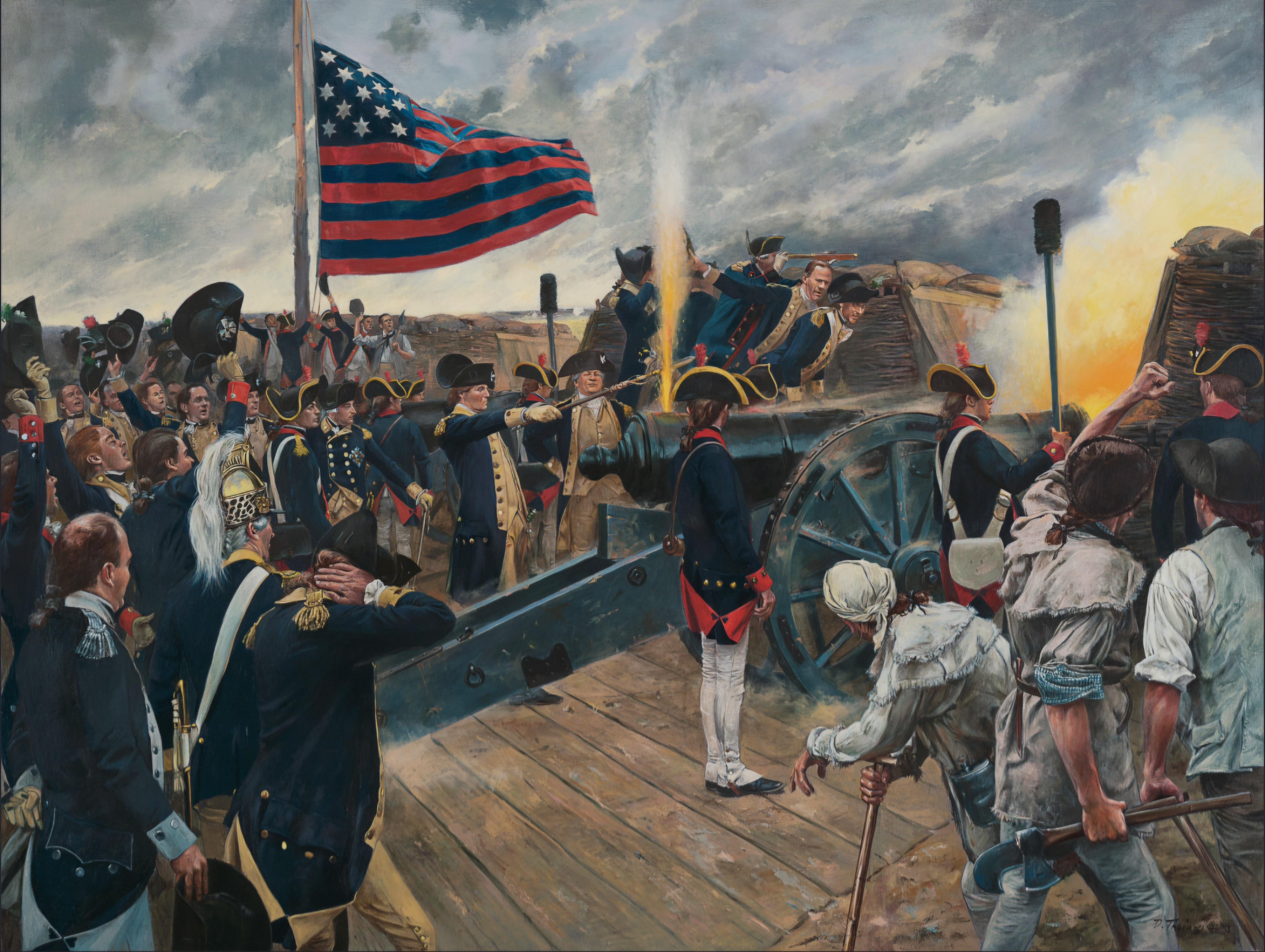
Image British forces capture Fort Duquesne from the French, 25th November 1758. They build Fort Pitt which emerges into Pittsburgh
r/BritishEmpire • u/irritated_gooner • 15h ago
Question Why is the American Revolution not considered a British Civil War?
r/BritishEmpire • u/skullwarrior369 • 1d ago
Image Sergeants of the 9th (Queen's Royal) Lancers in Kabul, 1880
Taken during the Second Anglo-Afghan War (1878–1880) by photographer John Burk. These units fought at Charasiab, Killa Kazi, Kabul and marched to Kandahar
r/BritishEmpire • u/Ceylonese_04 • 2d ago
Image Kandy, Sri Lanka (Ceylon)
Queen- Empress Alexandra keeping a close eye on the Sri Lankan presidency and the Boy Scouts.
Former Sri Lankan President Maithripala Sirisena posing with members of the Ceylon Scout Association inside the King's Pavilion in Kandy—the official residence of the President of Sri Lanka in the hill capital, beneath Sir Luke Fildes' 1905 state portrait of Her Imperial Majesty Queen-Empress Alexandra. Both the Scouting movement in Sri Lanka (founded in 1912 as the Ceylon Boy Scout Association) and the magnificent King's Pavilion stand as enduring legacies of the British Empire.
r/BritishEmpire • u/elnovorealista2000 • 3d ago
Article A Black Canadian soldier from Captain Runchey’s company (known as the Coloured Corps), a militia unit formed in Upper Canada during the War of 1812. Work attributed to illustrator G. Dittrick for Parks Canada.
It was organized in 1812 in the Niagara region, following a proposal by Black veterans and settlers, and was led by a white captain, Robert Runchey. Known as "Captain Runchey's Company of Coloured Men," it was composed of free Black men and indentured servants.
It fought in key engagements such as the Battle of Queenston Heights and the defense of Fort George, before transitioning to tasks involving military engineering and the construction of fortifications.
Although most regular British troops wore red coats, this unit stood out for its blue uniform and for facing greater risks in the event of capture.
r/BritishEmpire • u/Over-Willingness-933 • 4d ago
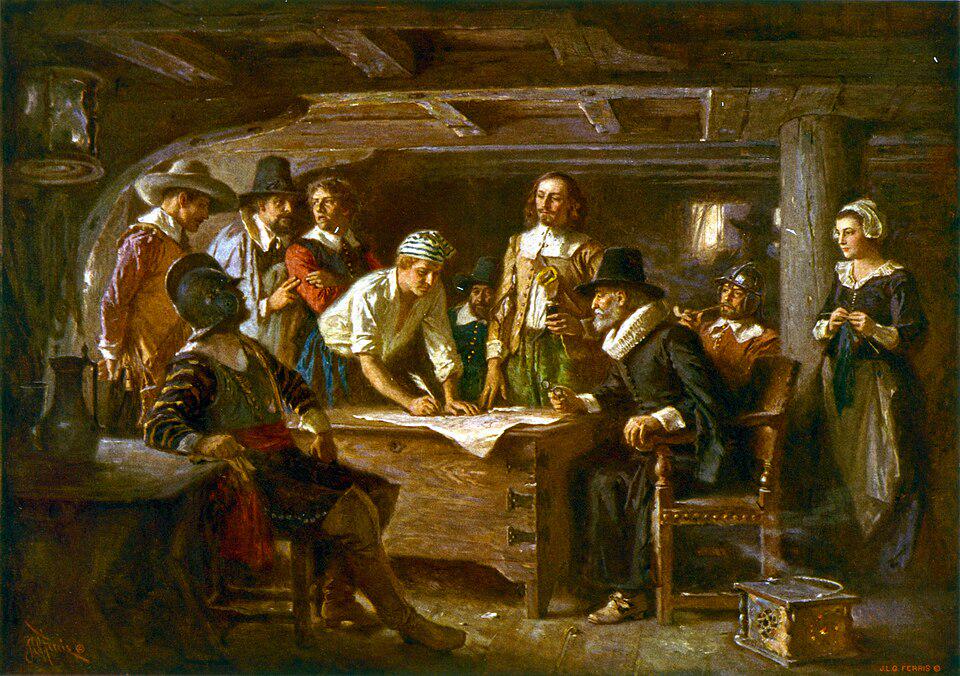
Image Mayflower Compact signed 21st November 1620. This was the first agreement by The Plymouth Colony for self government
r/BritishEmpire • u/elnovorealista2000 • 5d ago
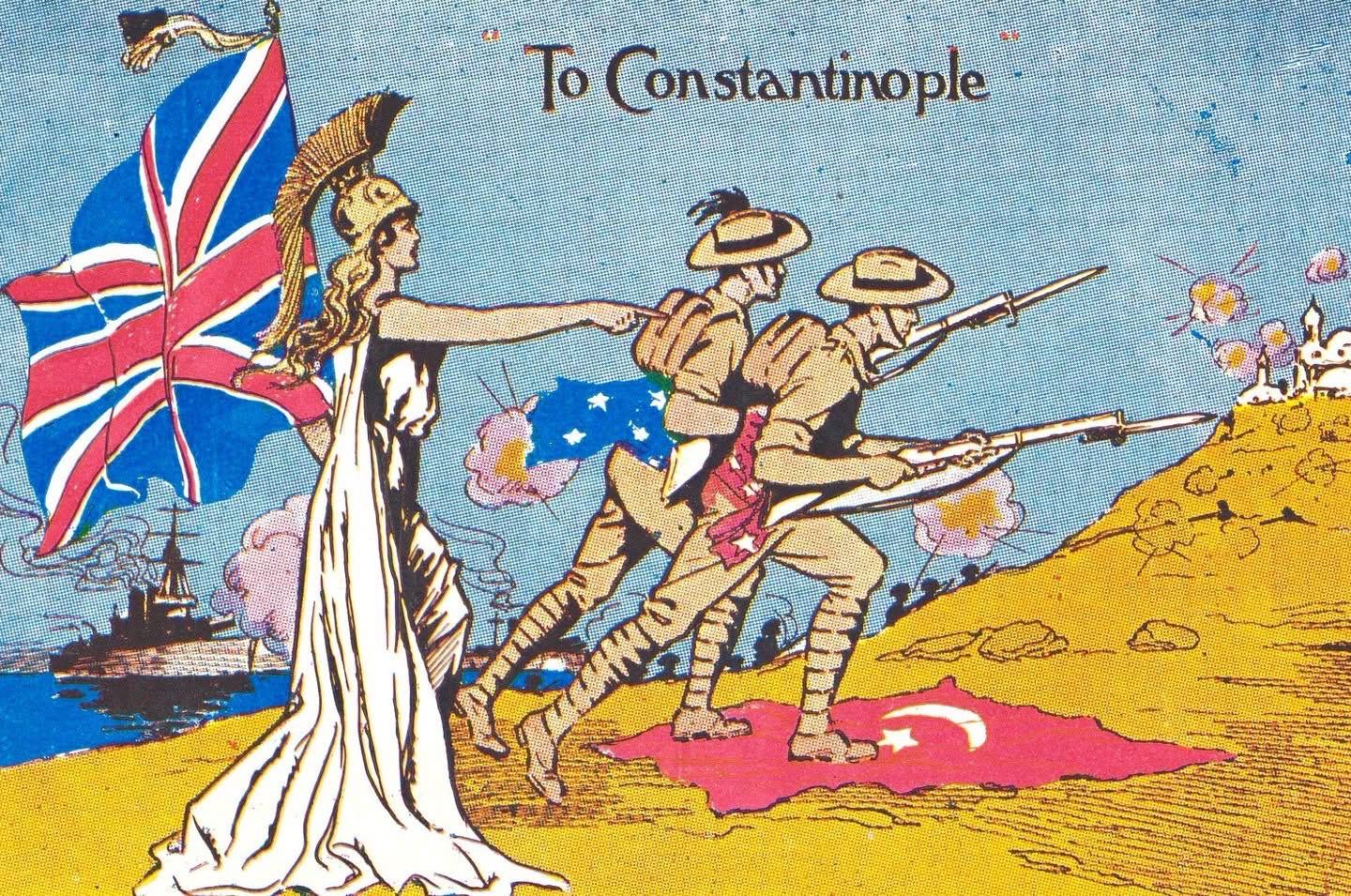
Image 'To Constantinople' — Australian postcard from the First World War (ca. 1915) showing Britannia urging two soldiers on during an assault at Gallipoli, the soldiers stepping on an Ottoman flag as they go.
r/BritishEmpire • u/Augustus_Ceaser-Rome • 5d ago
Question 🏛️ What Makes an Empire Truly Powerful?
r/BritishEmpire • u/BigT112 • 6d ago
Image "Canadian Volunteers and Fenian Private" (Fenian Raids)
r/BritishEmpire • u/DetectiveFar5495 • 7d ago
Article 16th November: Shah Najaf – A Battle Almost Forgotten Bows and Arrows Against British Cannons
Among the defenders of the Shah Najaf during the Indian Rebellion of 1857, alongside the regular army, was a formidable body of archers stationed upon the ramparts. Armed with traditional bows and arrows, they discharged their weapons with remarkable force and deadly precision.
The Close Call of Sergeant Daniel White
Sergeant Daniel White of the 93rd Highlanders raised his head above the wall, and an arrow struck straight into his feather bonnet. Fortunately, he had folded up his forage cap and placed it inside; instead of passing right through, the arrow stuck firmly in the folds.
Coolly pulling out the arrow, he paraphrased a quotation from Sir Walter Scott's Legend of Montrose. Looking at the shaft, White remarked:
"My conscience! Bows and arrows! Have we got Robin Hood and Little John back again? My conscience, the sight has not been seen in civilized war for nearly two hundred years. Bows and arrows! Well, well, Jack Pandy, since bows and arrows are the words, here's at you!"
With that, he raised his feather bonnet on the point of his bayonet above the top of the wall. Immediately, another arrow pierced it through, while a dozen more whizzed past just wide of the mark.
The Escalating Skirmish
Just then, a private of the 93rd named Penny, belonging to No. 2 Company, raised his head for an instant above the wall and took an arrow right through his brain, the shaft projecting more than a foot out at the back of his head. As the poor lad fell dead at their feet, Sergeant White declared:
"Boys, this is no joke; we must pay them off."
The soldiers all loaded, capped, and fired their rifles at point-blank distance, sending more than half a dozen of the Indian defenders down. However, another unfortunate soldier named Montgomery, from No. 6 Company, exposed himself a little too long to watch the effect of the volley. Before he could duck back into shelter, an arrow was sent straight through his heart, passing entirely through his body and landing on the ground a few yards behind him. He leaped about six feet straight up into the air and fell stone dead.
The Desperate Defense
By this time, the sun was getting low. A heavy cloud of smoke hung over the field, against which every flash of the guns and rifles stood out clearly. Hundreds of defenders were visible on the ramparts, yelling like demons, brandishing swords in one hand and burning torches in the other, shouting down at the British forces.
During the heavy cannonade, the masonry had crumbled and fallen in flakes, but it left a steep inner wall standing almost perpendicular. As the British troops attempted to climb it, they were met by a devastating hail of missiles:
- Grenades and round-shot hurled from wall pieces
- Arrows and brickbats
- Burning torches of rags and cotton saturated in oil
- Even boiling water dashed down upon them
Scores of men armed with great burning torches—resembling those seen in the sham fights of Muharram—fought with deadly earnestness, shouting:
"Allah Akbar!", "Deen! Deen!", and "Jai Kâli mâ ki!"
The Rocket Battery
Driven back by the ferocity of the defense, the British storming forces retreated, leaving many dead and wounded beneath the wall. Meanwhile, Captain Peel brought his "infernal machine"—known as a rocket battery—to the front, sending a blistering volley of rockets crashing through the crowds gathered along the ramparts around the breach.
Source Attribution:
Adapted from Reminiscences of the Great Mutiny 1857–1859 (Chapter V) by W.F. Mitchell, Late Sergeant, 93rd Highlanders.
r/BritishEmpire • u/Antique-Style-2669 • 8d ago
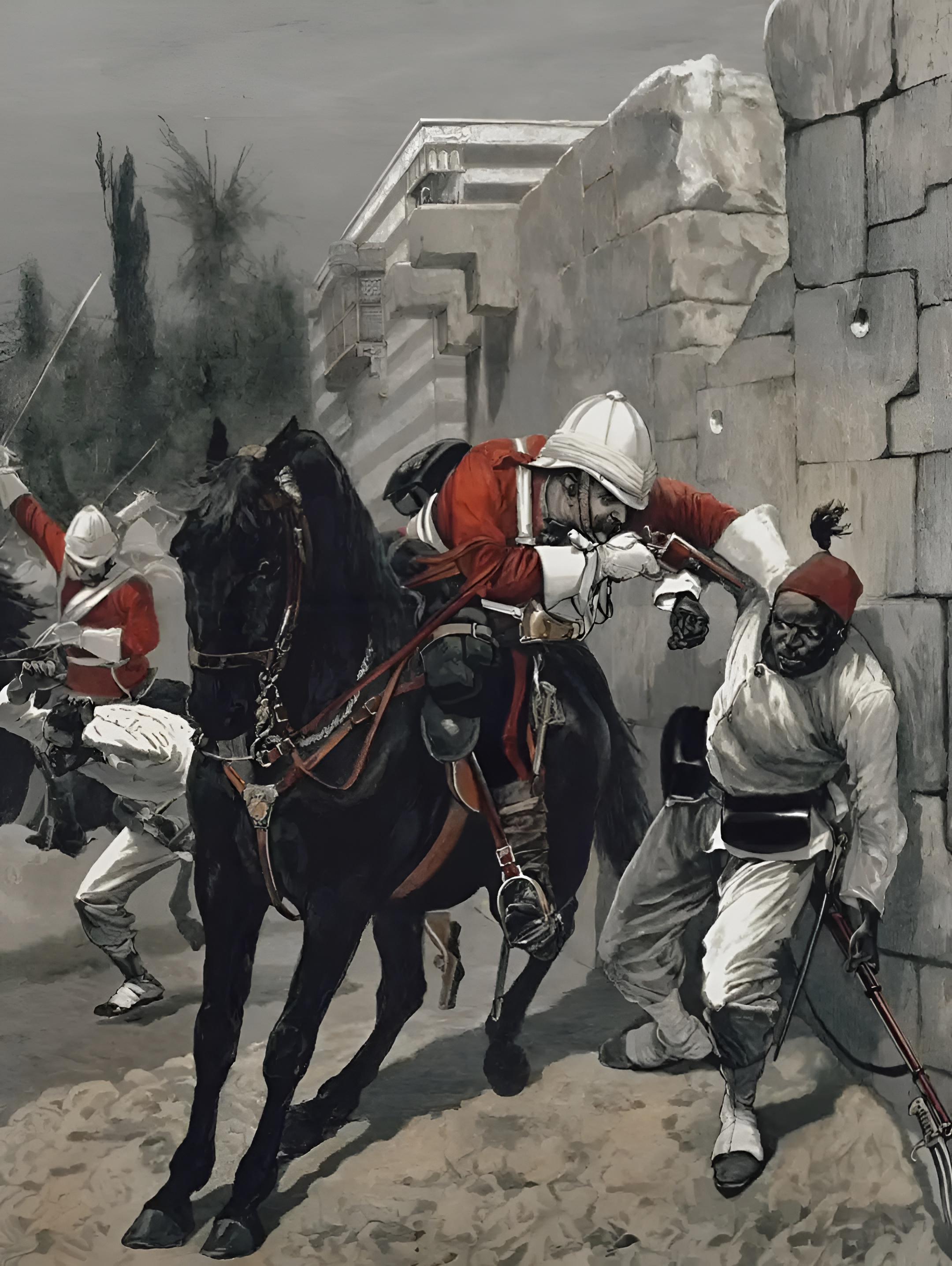
Image Battle of Mai wand jul 27 1880
galleryArmies in plastic 1/32 figures
r/BritishEmpire • u/Augustus_Ceaser-Rome • 8d ago
Question Which Empire Deserves the Number One Spot in History?
r/BritishEmpire • u/thomaspaineha • 8d ago
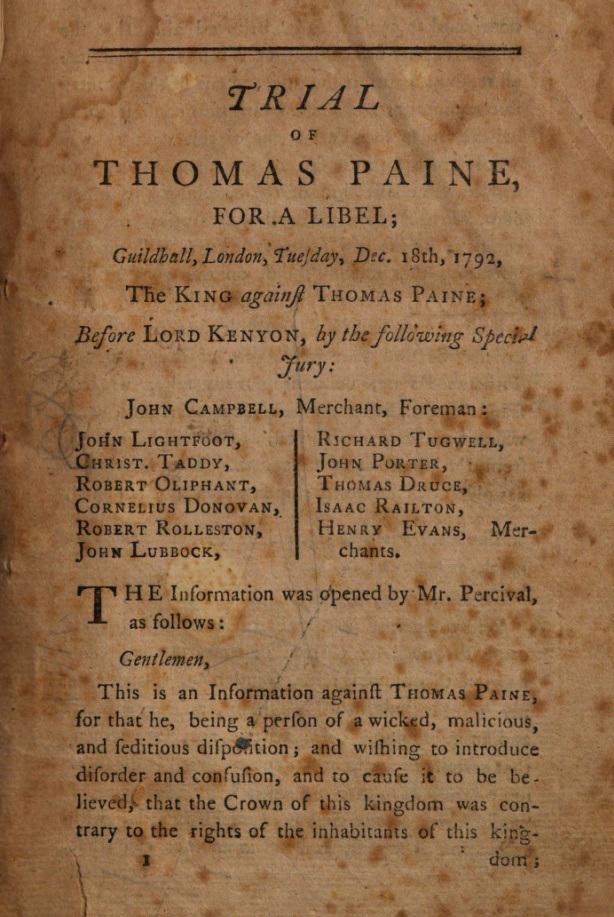
Image "The King Against Thomas Paine". A contemporary record of the 1792 trial that accused Paine of seditious libel due to the criticism of the King of England contained in Rights of Man Part II. Paine escaped to France and joined the revolution.
Paine answered the sedition and libel charges by saying, “If, to expose the fraud and imposition of monarchy … to promote universal peace, civilization, and commerce, and to break the chains of political superstition, and raise degraded man to his proper rank; — if these things be libellous, let me live the life of a Libeller, and let the name of LIBELLER be engraven on my tomb.”
r/BritishEmpire • u/Evening_Bowl6735 • 8d ago
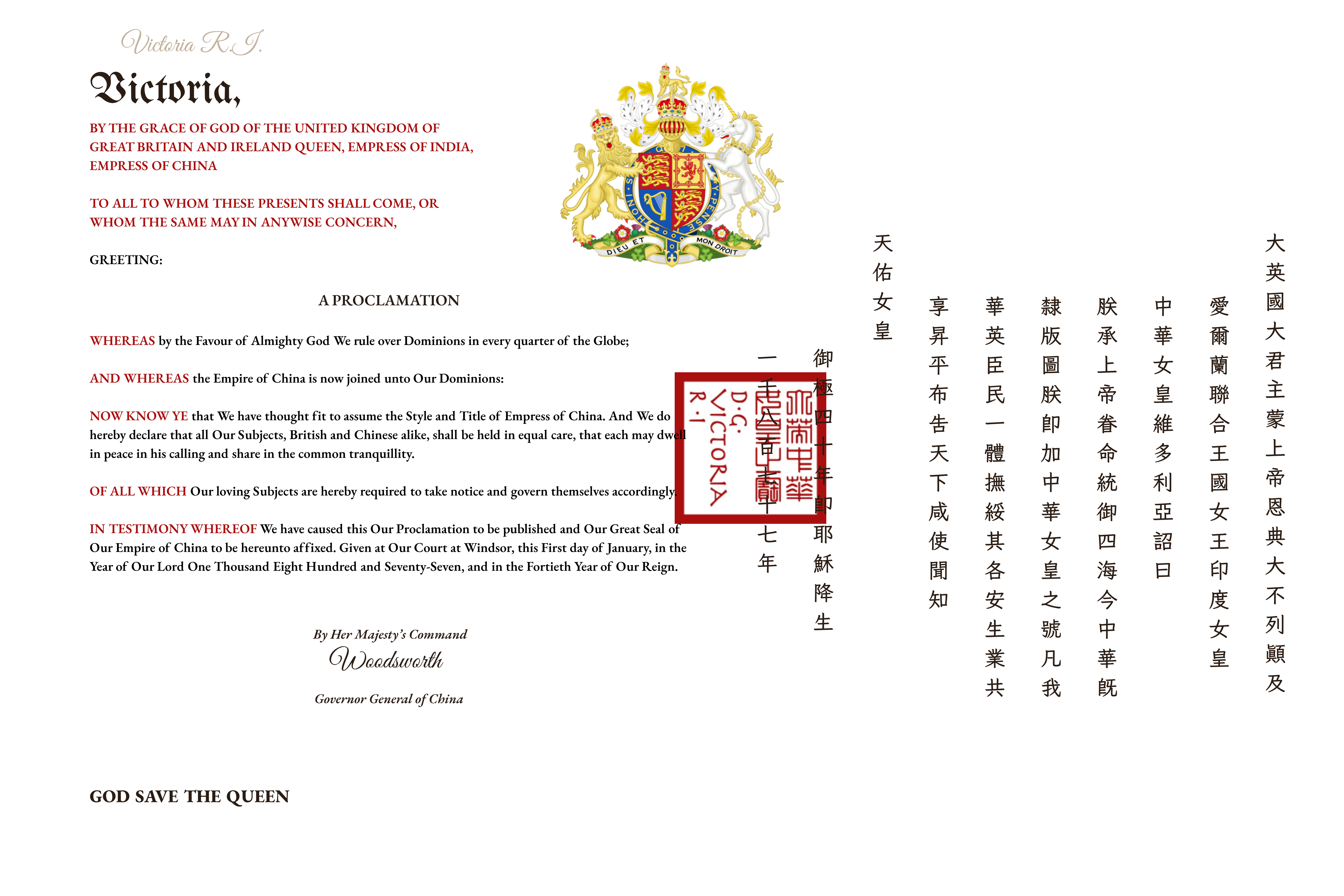
Image Queen Victoria becomes Empress of China Proclamation
r/BritishEmpire • u/Over-Willingness-933 • 9d ago
Image 16th November 1855. David Livingstone becomes the first European to see Victoria Falls in Zambia.
r/BritishEmpire • u/pgousev • 10d ago
Article 👑 Trooping the Colour at Smyths: The Queen, the Guards and Some Older Friends in Dublin 🐻🥁🐎
galleryr/BritishEmpire • u/Over-Willingness-933 • 10d ago
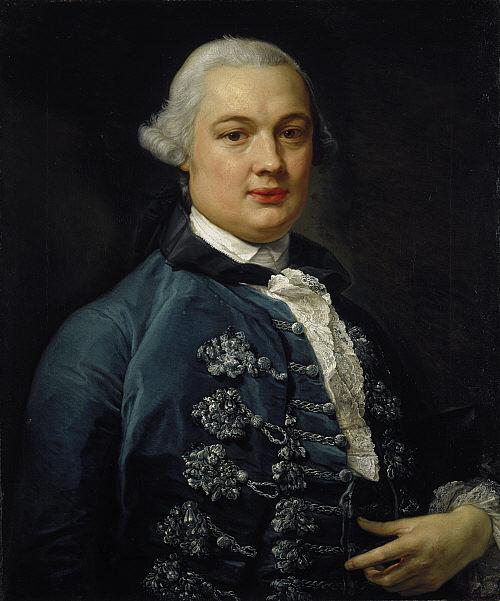
Image Explorer James Bruce arrived at Gish Abay the source of the Blue Nile, 14th November 1770. His travels provided great insight into Ethiopia.
r/BritishEmpire
•
u/bkNewWest
•
11d ago
Article Malawi hails British Empire as ‘liberators’ who saved Africans from slavery
Good on Malawi for telling this neglected chapter: the East African slave trade and how Britain helped end it. Real reconciliation needs the whole story, without denying past injustices.
r/BritishEmpire • u/StillWithSteelBikes • 13d ago
Question Why were the casualties so high during the Bore War? Surely both the British army and Dutch irregulars were prepared for tedious dull monotony? Was laying around that fatal in what's now South Africa and Zimbabwe in the 19th century. Could an exciting novel have tipped the scales and changed the war
r/BritishEmpire • u/NoRice5620 • 13d ago
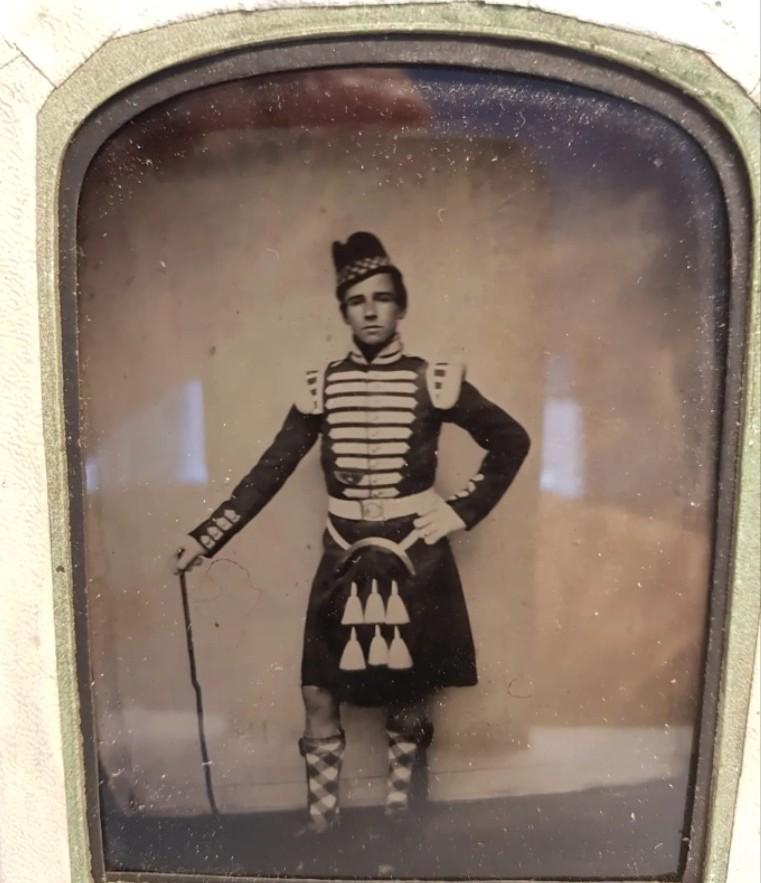
Image Photograph of my grandfather’s ancestor during the Crimean War who was present at the Battle of Balaclava and the Thin Red Line
r/BritishEmpire • u/Jiminyfingers • 13d ago
Image The final resting place of Alfred Henry Hook VC. Churcham, Gloucestershire
The Battle for Rorke's Drift has to be on of Britain's most famous conflicts. A small mission near a river crossing, it had been converted to a hosiptal with around 40 patients. There were about 130 British troops stationed at the Drift, of whom 98 were B Company, 2nd Battalion 24th (2nd Warwickshire) Regiment commanded by Lieutenant G Bromhead. The senior officer present was Lieutenant J R M Chard of the Royal Engineers, who was supervising the river crossing.
When news reached them of the massacre at Isandhlwana and the large Zulu force approaching, Bromhead and Chard initially considered retreat, but felt a slow moving column with so many wounded would be overtaken and overwhelmed. They were forced to turn the hospital and mission into a defensive position. The two stone buildings, the hospital and store, and the cattle kraal, were connected by walls made up of mealie bags, biscuit boxes and two wagons, forming a makeshift stockade.
When the attack came it was an overwhelming force of 4000 Zulu warriors, who attacked the hospital first to the east of the compound. Chard was forced to retreat to a redoute of biscuit boxes leaving the men and wounded in the hospital cut off. Not long afterwards the thatched roof was set on fire, but the defenders kept fghting and resisting the Zulu onslaught.
That is until they ran out of ammunition. The Zulus burst into a room on the eastern edge of the building killing one of the privates defending it and two patients. The other soldiers engaged them in vicious hand-to-hand fighting with their bayonets. One of them, John Wiliams, was able to knock a hole through a partition and escaped into the next room.
There he found Henry Hook, and togther they held off the Zulu in those cramped, claustrophic conditions, a fire raging above their heads, as they dug through walls one by one, three in total, and were instrumental in saving 8 wonuded and extracting them from the hospital. To the amazement of Chard and Bromhead 24 in total were able to exccape the inferno and the Zulu's spears.
Hook's portrayal in the film has long been controversial. He was nothing like the character on screen. There he was a malcontent, a rebel, a malingerer, a drunk, when the real Henry Hook was a model soldier with a flawless record, a Methodist preacher and a teetotaller. His daughters walked out of the film's premier in disgust. But even with his false portrayal, his character caught the national imagination and he is one of Britain's most remembered soldiers.
He died at the age of 54 and was laid to rest in the churchyard at St Andrew's, Churcham, the village of his birth. I found it by accident, and felt the need to visit it today, the 11th of November, at close to the eleventh hour, to leave a poppy and the only coin I could find, a 20p, on the grave to pay my respects.
r/BritishEmpire • u/NoRice5620 • 13d ago