r/Buddhism • • 0m ago

Dharma Talk Concentric Mind

Thumbnail i.redd.it
1 Upvotes

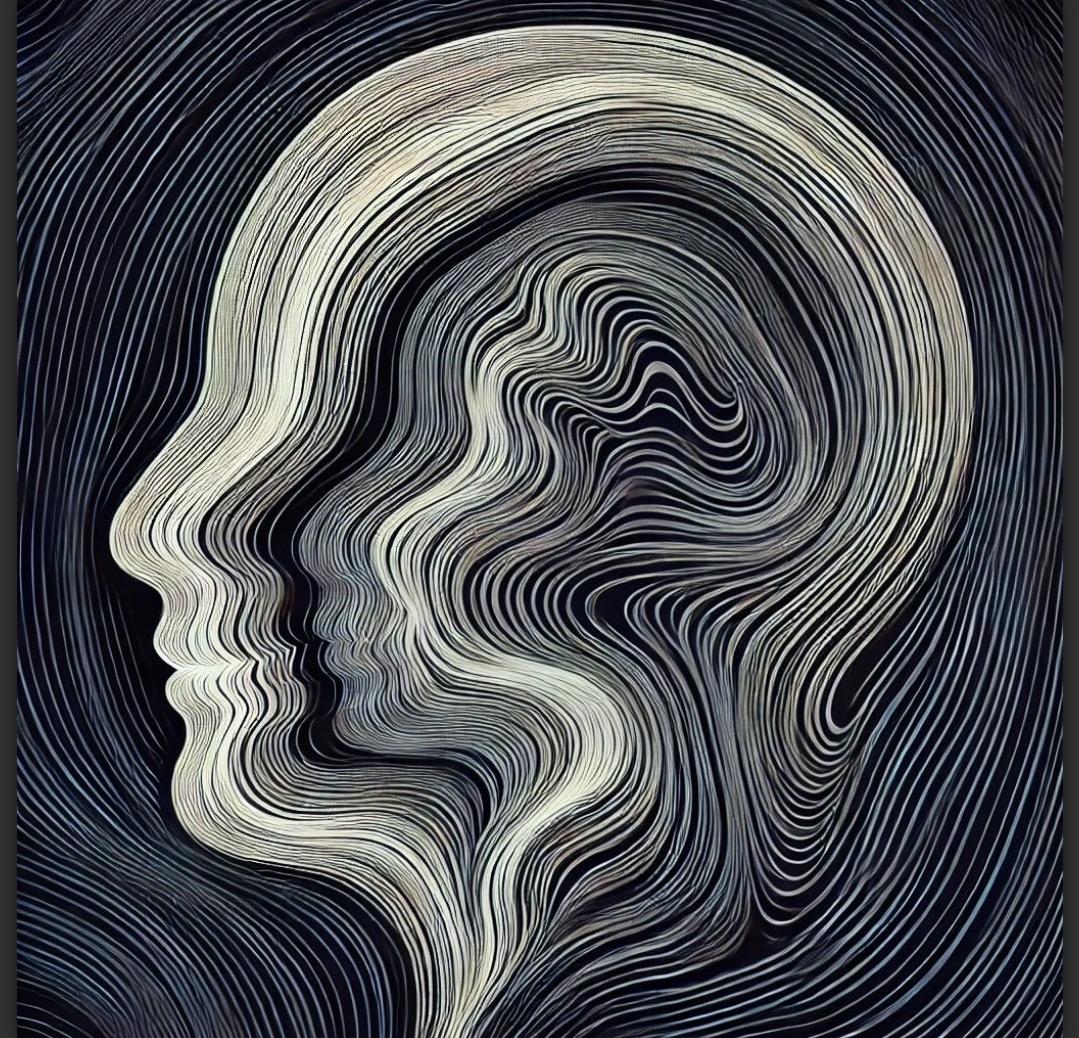
"This image evokes the central concern of Yogācāra: How consciousness shapes what we perceive as reality. The lines form a human head — yet the head is not truly there. It is the mind that assembles the pattern, just as it assembles the world. In this way, the sketch illustrates two key Yogācāra insights: first, that all experience arises through consciousness; second, that what we take as “real” is a projection shaped by habit, memory, and interpretation. Just as we “see” a face in lines, we “see” a world in the traces of our own mind."


r/Buddhism • • 16m ago

Misc. Natural Perfection

Post image
2 Upvotes

Ho! The atiyoga of natural perfection! Dzogchen Ati!
The Great Perfection, in its unbiased inclusivity,
actualizes the meaning of self-sprung awareness;

as the lion overawes all other beasts with his roar,
so the language of Great Perfection commands the gradual approaches;
speaking a tongue of its own, it engenders its own ultimate meaning.

The land of natural perfection is free of buddhas and sentient beings;
the ground of natural perfection is free of good and bad;
the path of natural perfection has no length;
the fruition of natural perfection can neither be avoided nor attained;
the body of natural perfection is neither existent nor nonexistent;
the speech of natural perfection is neither sacred nor profane;
and the mind of natural perfection has no substance nor attribute.

The space of natural perfection cannot be consumed nor voided;
the status of natural perfection is neither high nor low;
the praxis of natural perfection is neither developed nor neglected;
the potency of natural perfection is neither fulfilled nor frustrated;
the display of natural perfection is neither manifest nor latent;
the actuality of natural perfection is neither cultivated nor ignored;
and the gnosis of natural perfection is neither visible nor invisible.

The hidden awareness of natural perfection is everywhere,
its parameters beyond indication,
its actuality incommunicable;

the sovereign view of natural perfection is the here-and-now,
naturally present without speech or books,
irrespective of conceptual clarity or dullness,
but as spontaneous joyful creativity
its reality is nothing at all.

-- Quote from Longchenpa

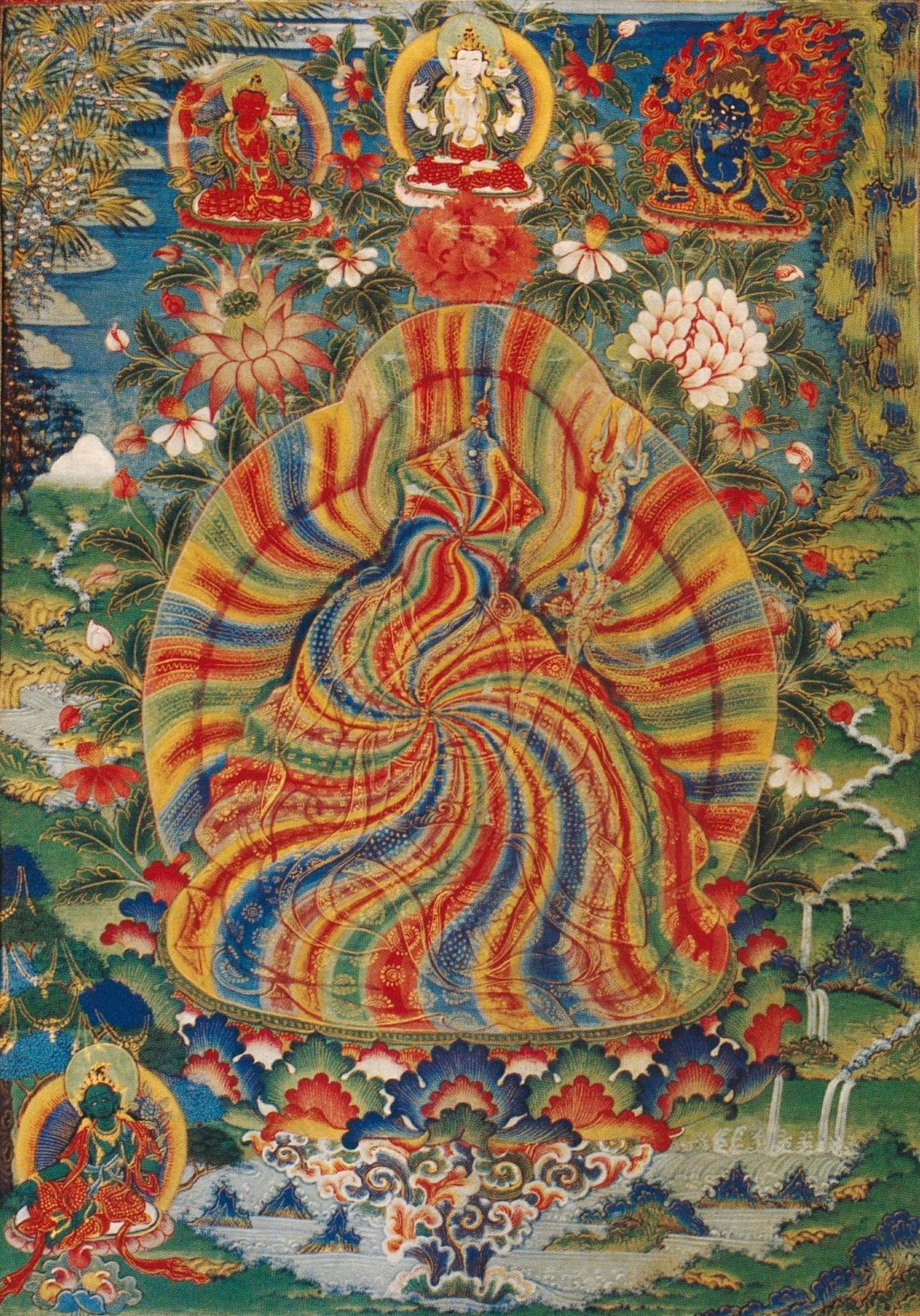
The image shows Padmasambhava's rainbow body with Manjushri, Vajrapani, and Avalokiteshvara above him and Green Tara below him.


r/Buddhism • • 54m ago

Request Help finding a translated sutta

2 Upvotes

Hi guys, on the wikipedia page for Devas there is this intriguing line:

"There is also a humanistic definition of 'deva' [male] and 'devi' [female] ascribed to Gautama Buddha: a god is a moral person.[12] This is comparable to another definition, i.e. that 'hell' is a name for painful emotions.[13]"

The source given is:
[12]the Pali Text Society's Samyutta Nikaya Book iv Page 206

While the PTS books are available online, i can't seem to find a an English version of this topic. I try searching suttacentral without success. If anyone can direct me or has a resource for learning more about buddhist Devas being moral people it is greatly appreciated!


r/Buddhism • • 3h ago

Dharma Talk Daily Quotes of Wisdom

Thumbnail gallery
2 Upvotes

r/Buddhism • • 3h ago

Sūtra/Sutta "Conceiving is a disease, conceiving is a tumour, conceiving is a dart."

8 Upvotes

“Bhikkhu, ‘I am’ is a conceiving; ‘I am this’ is a conceiving; ‘I shall be’ is a conceiving; ‘I shall not be’ is a conceiving; ‘I shall be possessed of form’ is a conceiving; ‘I shall be formless’ is a conceiving; ‘I shall be percipient’ is a conceiving; ‘I shall be non-percipient’ is a conceiving; ‘I shall be neither-percipient-nor-non-percipient’ is a conceiving. Conceiving is a disease, conceiving is a tumour, conceiving is a dart. By overcoming all conceivings, bhikkhu, one is called a sage at peace. And the sage at peace is not born, does not age, does not die; he is not shaken and does not yearn. For there is nothing present in him by which he might be born. Not being born, how could he age? Not ageing, how could he die? Not dying, how could he be shaken? Not being shaken, why should he yearn?

“So it was with reference to this that it was said: ‘The tides of conceiving do not sweep over one who stands upon these foundations, and when the tides of conceiving no longer sweep over him he is called a sage at peace.’ Bhikkhu, bear in mind this brief exposition of the six elements.”

MN 140: Dhātuvibhaṅgasutta—Bhikkhu Bodhi


r/Buddhism • • 3h ago Bravo

Question Is enlightenment possible for gay people, or is it something only straight people experience?

0 Upvotes

I've been thinking a lot lately about spirituality, self-discovery, and enlightenment.

As a guy who's attracted to men, I sometimes wonder whether sexuality has anything to do with reaching a higher level of consciousness or inner peace.

Most of the spiritual stories, teachings, and experiences I've come across seem to focus on heterosexual people, or at least rarely discuss what enlightenment looks like for someone who's gay or bisexual.

And it genuinely makes me curious.

Can someone fully embrace their sexuality, experience love and attraction toward the same sex, and still reach spiritual enlightenment?

Does enlightenment require detachment from sexual desire altogether, regardless of orientation? Or is it more about understanding yourself, accepting who you are, and freeing yourself from fear, shame, and external expectations?

I'm not asking from a religious perspective necessarily, but more from a philosophical and spiritual one.

Can being queer and being spiritually enlightened coexist without contradiction?

I'd genuinely love to hear from gay or bisexual people who have explored meditation, spirituality, Buddhism, or other paths toward self-realization.

Have you ever experienced something you'd describe as a spiritual awakening or enlightenment? And did your sexuality play any role in that journey?


r/Buddhism • • 3h ago

Practice What is your favorite ritual or devotional practice?

6 Upvotes

Studying sutras and writings are important as is actively applying those teachings (such as applying the Eightfold Noble Path) to your life.

Devotional practices and rituals (such as prostrations, spinning a prayer wheel, ritualistically saying a mantra or chant, or an incense ritual) are also important to many Buddhists' religious practice.

What is a ritual or devotional practice that you do that especially appeals to you and why? What lineage or tradition does it come from, what are the parts of the ritual, and what is it's meaning and purpose?

----

For me, I very much enjoy the Oshoko Incense Ritual at my local Shin Buddhist (Jodo Shinshu) Temple. During the middle of service, we stand up, form a line, and approach the incense bowls. In groups of three, we first bow towards the Naijin or shrine, approach the incense bowl, pinch some incense and put it on the coal to burn, we then place out palms together in gassho within our onenju or meditation beads. We say the Nembutsu (the name of Amida / Amitabha Buddha) and bow. We take a step back from the incense bowls and bow again. We then turn towards the minister staff and lay leaders that are standing to the side and bow towards them. They return the bow and we walk away from the incense bowls to allow others to do the same ritual.

I like it because its a quiet moment that we all as a group do together. There is soft music playing and the incense smells lovely. The incense itself can signify a lot of things but for me I focus on the sense of both impermanence as the incense burns away but also the beauty of the moment seeing the smoke flutter up. I like the devotion of saying the Nembutsu while bowing with others. And I very much like the mutual respect we give to our ordained and lay leaders by bowing and the respect they show towards us by returning the bow. It's a wonderful way to feel whole within the sangha.


r/Buddhism • • 4h ago

Question Why should I adopt Buddhist beliefs?

0 Upvotes

Hi there. I’m a Christian, specifically from a Pentecostal background.

Despite my very different cultural background, I was always intrigued by Buddhist philosophy and their view of suffering and how to respond to it.

But however, i find the overall solution to the probelm of suffering to essentially detach yourself from every connection that causes pain, to be somewhat of an unsustainable resolution.

I’m open for my assumptions to be wrong about this. I’m making this with the purpose of hearing Buddhists out on why these teachings are important to them.

Hope that helps.


r/Buddhism • • 5h ago

Question How did you “join?”

2 Upvotes

I have read some books about Buddhist traditions and teachings. I feel such a pull and call to start practicing this religion but idk which part and where to start. I live in El Paso Texas and I’m not sure where the Buddhist temples are. Do I just show up? I’ve been to a few in Miami but I felt very lost. I grew up as a “born again Christian” however, I don’t necessarily feel connected to it anymore. I just had a baby and would like to raise my daughter with Buddhist teachings and give her an opportunity to have a belief system that can free her from the perils of being attached to people, places, and things. Where do I start?


r/Buddhism • • 5h ago

Academic Looking to connect with someone who practices Buddhism

2 Upvotes

Hi! I'm a Muslim university student from Malaysia, and I'm currently working on a university assignment about understanding different religious beliefs and perspectives.

I'm hoping to connect with someone who practises Buddhism and have a friendly conversation about their beliefs, religious practices, and personal experiences.

It's just a casual knowledge-sharing conversation. I'd love to learn from your perspective and share a little about mine too.

Would anyone be interested? Thank you! :)


r/Buddhism • • 6h ago

Dharma Talk Concentric Mind

Post image
20 Upvotes

"This image evokes the central concern of Yogācāra: How consciousness shapes what we perceive as reality. The lines form a human head — yet the head is not truly there. It is the mind that assembles the pattern, just as it assembles the world. In this way, the sketch illustrates two key Yogācāra insights: first, that all experience arises through consciousness; second, that what we take as “real” is a projection shaped by habit, memory, and interpretation. Just as we “see” a face in lines, we “see” a world in the traces of our own mind."


r/Buddhism • • 6h ago

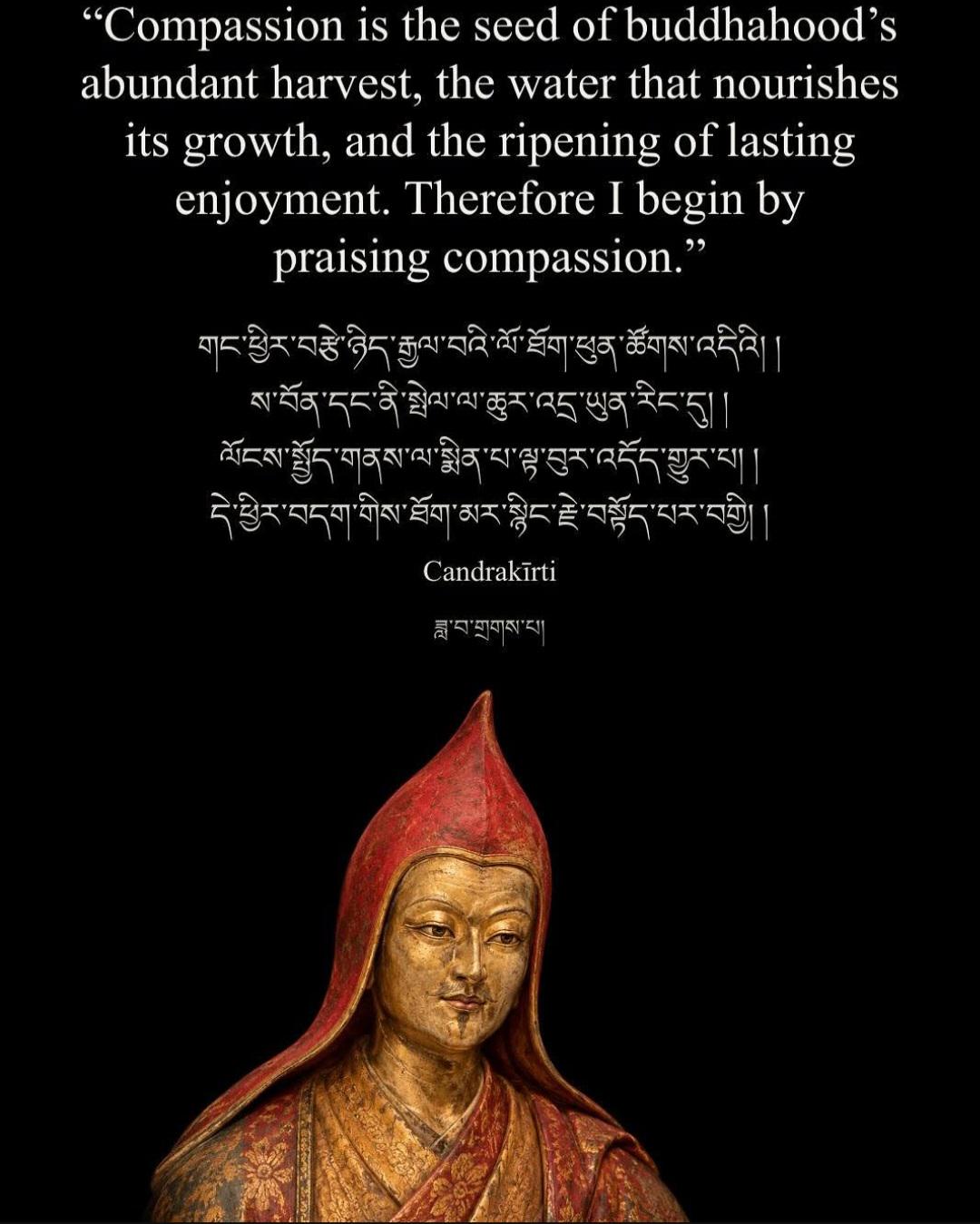
Life Advice Compassion

Post image
49 Upvotes

r/Buddhism • • 7h ago

Dharma Talk Let go of grasping and rejecting

Post image
19 Upvotes

r/Buddhism • • 8h ago

Question Buddhism Karma and Re-birth

0 Upvotes

In my twenties I explored various religions. Driven by the early death of a parent I started searching for meaning.

One teaching that made sense was the Eastern concept of reincarnation. If the purpose of life is learning through experience, perfecting actions thoughts and ultimately enlightenment it made sense that this would take much more than one life in a confusing world. The theory could also explain why Mozart could compose at seven and another is born disabled and dies at seven.

However, further contemplation leads me to struggle.

The population of the earth 20,000 years ago is estimated at 1 million, 2000 years ago 200,000 million and now 8.3 Billion. Where do all these new souls come from?

If these are mostly new souls why is there such separation, hatred, fear and prejudice?

Also, why do some people cause so much chaos, act with such toxicity.

The concept of Buddhist hell is very similar to Christian hell. It causes me a lot of fear.

I understand that I do not need answers for my spiritual practice.

Thanks

Bill


r/Buddhism • • 8h ago

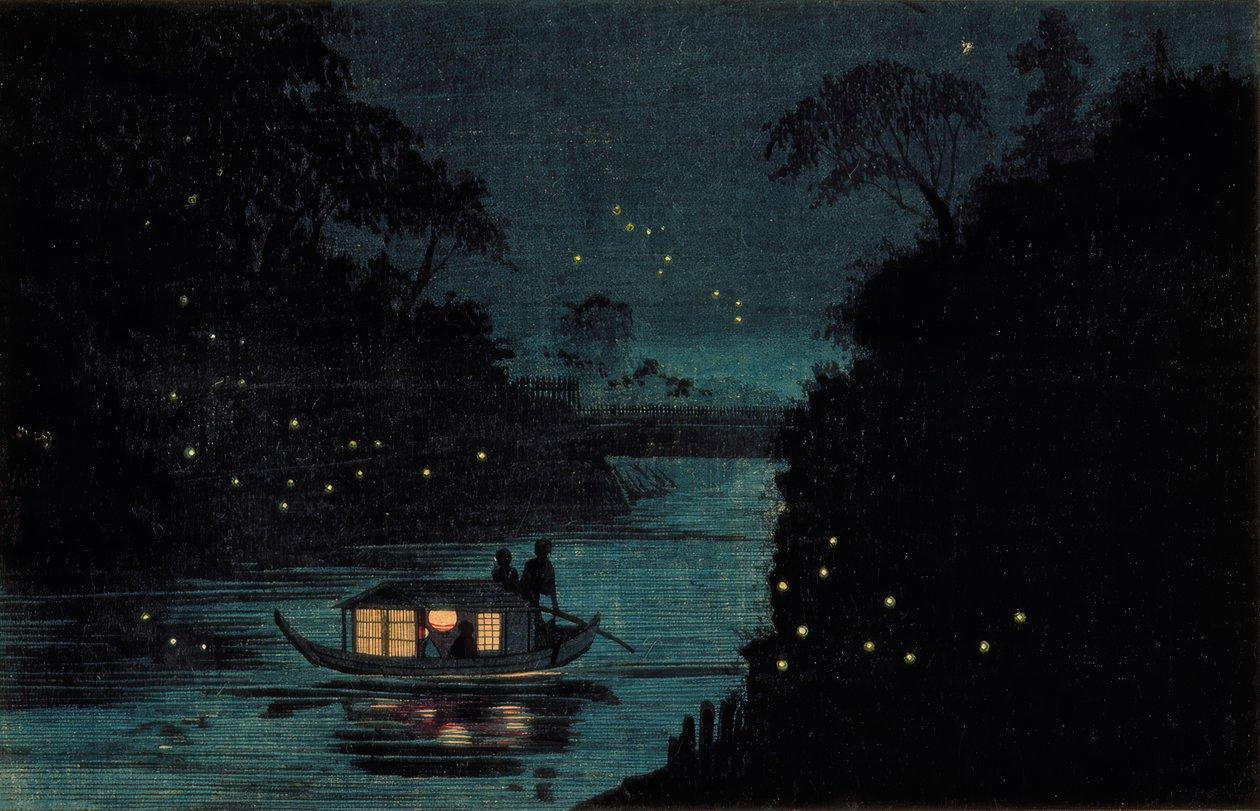
Sūtra/Sutta Fireflies at Ochanomizu, Kobayashi Kiyochika, c. 1880

Post image
5 Upvotes

... The Buddha shares this inspired utterance after venerable Ānanda observes that the speculators receive honor and support only until perfectly Awakened Ones arise in the world.

Thus have I heard—At one time, the Blessed One was dwelling at Sāvatthi, in Jeta’s Grove, Anāthapiṇḍika’s Park. Then, the venerable Ānanda approached the Blessed One; having approached, he paid homage to the Blessed One and sat down to one side. Seated to one side, the venerable Ānanda said to the Blessed One:

“As long, venerable sir, as Tathāgatas, Arahants, perfectly Awakened Ones, do not arise in the world, wanderers of other sects are honored, respected, revered, worshipped, and esteemed. They are recipients of the four requisites: robes, alms food, lodging, and medicines. But when, venerable sir, Tathāgatas, Arahants, perfectly Awakened Ones, arise in the world, then wanderers of other sects are dishonored, disrespected, unrevered, unworshipped, and unesteemed. They are not recipients of the four requisites: robes, alms food, lodging, and medicines. Now, venerable sir, it is the Blessed One who is honored, respected, revered, worshipped, and esteemed. He is a recipient of the four requisites: robes, alms food, lodging, and medicines, and so is the Saṅgha of bhikkhus.”

“That is so, Ānanda. As long, Ānanda, as Tathāgatas, Arahants, perfectly Awakened Ones, do not arise in the world, wanderers of other sects are honored, respected, revered, worshipped, and esteemed. They are recipients of the four requisites: robes, alms food, lodging, and medicines. But when, Ānanda, Tathāgatas, Arahants, perfectly Awakened Ones, arise in the world, then wanderers of other sects are not honored, not respected, not revered, not worshipped, and not esteemed. They are not recipients of the four requisites: robes, alms food, lodging, and medicines. Now, it is the Tathāgata who is honored, respected, revered, worshipped, and esteemed. He is a recipient of the four requisites: robes, alms food, lodging, and medicines, and so is the Saṅgha of bhikkhus.”

Then, understanding the significance of this, the Blessed One at that time expressed this inspired utterance:

“The glowworm shines only so long
as the sun has not yet risen;
but when the radiant sun comes up,
its light is extinguished and it shines no more.

Likewise do the speculators shine
until the perfectly Awakened Ones arise in the world;
the speculators are not purified, nor are their disciples,
those of wrong view are not freed from suffering.”
r/Buddhism • • 8h ago

Question I’m considering practicing Buddhism on my own—how do you think I should go about it?

0 Upvotes

Hello. My parents were Buddhists, so as a child, I would go to temples and pray—though I did so without any real understanding of the meaning or significance behind it; it wasn’t a genuine or well-grounded religious practice. Later, I chose to be baptized into the Catholic Church on my own initiative and attended Mass for a while, but recently, I’ve begun to feel a sense of disillusionment, so I’ve stopped going. Since then, I’ve been feeling anxious, empty, and exhausted. In my search for answers, I’ve become interested in Indian religions, such as Buddhism. However, the mainstream Buddhism practiced here in Korea feels somewhat materialistic, which doesn’t really resonate with me—and it’s difficult to find other, different traditions nearby. Would it be a good idea to begin by studying and practicing on my own? And if so, what kind of approach would you recommend?


r/Buddhism • • 12h ago

Question How do modern Buddhists explain saṃsvedaja and microbe theory

4 Upvotes

Doesnt microbe theory "debunk" saṃsvedaja in some way


r/Buddhism • • 12h ago

Practice Looking for Like-Minded Friends to Explore Meditation, Buddhism & Mindful Living🌱

0 Upvotes

Hi everyone,

New here to the community and if there is anything conflict with the rules, please let me know and I will adjust ❤️

Over the past few years, I've been practicing meditation and studying Buddhism, and both have brought so much meaning, wisdom, and positive changes into my life. The more I learn and practice, the more I feel inspired to explore these teachings and share what I've learned with others.

I'm originally from China, and I'd love to connect with people from different parts of the world who share an interest in meditation, mindfulness, and Buddhist philosophy. As I'm also working on improving my English, I thought it would be a wonderful opportunity to learn, practice, and exchange ideas together in an English-speaking environment.

I'm hoping to start a small, welcoming Online Dharma & Meditation Reading Circle, where we can explore Buddhist wisdom, experience the beauty of Eastern spiritual traditions, and learn from one another across different cultures and backgrounds.

🌿What We'll Do (all free)

We'll meet once a week on Zoom, following a simple and relaxed format:

  1. Watch Together: Watch one episode from Headspace's meditation video series.
  2. Read Together: Explore a short reading related to Buddhism and Buddhist teachings.
  3. Share & Discuss: Exchange thoughts, personal reflections, questions, and experiences. Everyone is welcome to share their own perspectives and learn from one another.

🌏Who Is Welcome?

Anyone who is curious about meditation, mindfulness, Buddhism, or personal growth!

You don't need to be an experienced meditator or have a background in Buddhism. Whether you're just beginning your journey or have been practicing for years, you're very welcome.

I'm hoping to create a small, friendly international community where we can:

  • Learn about meditation and Buddhist philosophy together.
  • Bring more mindfulness, compassion, and wisdom into our daily lives.
  • Explore Eastern spiritual traditions and learn from different cultural perspectives.
  • Support and inspire one another along our journeys.

There is no pressure to have the right answers or agree on everything. Just an open mind, a willingness to learn, and an interest in meaningful conversations.

If this sounds like something you'd enjoy, please leave a comment or send me a message. I'd love to connect and hopefully build this little community together!

Looking forward to meeting you all! ☺️


r/Buddhism • • 13h ago

Question Looking for Book Recommendations on Buddhist Metaphysics and Ontology

1 Upvotes

Hello.

I am interested in Buddhist metaphysics and ontology.

I know that the Buddha generally avoided answering certain metaphysical questions, but I'm interested in exploring the philosophical and ontological dimensions of Buddhist thought, especially how different Buddhist schools approached these questions.

I've come across How Things Are: An Introduction to Buddhist Metaphysics by Mark Siderits, and I'm considering making it my starting point. Actually it is a recommendation by ChatGPT.

I'd appreciate recommendations by you too.

Thank you.


r/Buddhism • • 14h ago Heartwarming

Practice Good Thing You Wore Birkenstocks

57 Upvotes

“It is such a mistake to assume that practicing dharma will help us calm down and lead an untroubled life; nothing could be further from the truth. Dharma is not a therapy. Quite the opposite, in fact; dharma is tailored specifically to turn your life upside down—it’s what you sign up for. So when your life goes pear-shaped, why do you complain? If you practice and your life fails to capsize, it is a sign that what you are doing is not working. This is what distinguishes the dharma from New Age methods involving auras, relationships, communication, well-being, the Inner Child, being one with the universe, and tree hugging. From the point of view of dharma, such interests are the toys of samsaric beings—toys that quickly bore us senseless.”

― Dzongsar Jamgyang Khyentse Rinpoche

My first lama had words like this when I first met him forty years ago. I voiced disappointment that my dharma study and practice was not leaving me blissfully detached and supremely copacetic. In fact, it was extraordinarily painful. Agonizingly so at times.

As my lama said-- good!

The preliminary practices were terrifying to me. Facing the rare fortune that I have with this embodiment, while facing the finitude and impermanence of everything around me. All while facing that there was no "safe" place to hide out-- and while being utterly clueless how to work with karma causes and conditions to create real happiness and peace. The metaphor of the blind turtle in the tempest rising to have a yoke slip across its neck!

And if that weren't enough, meditation really showing me who I was. I was selfish, out of control, weak, petty, materialistic, shallow. All the stories I told myself presented themselves as false, and out of habit, I created more. These arose and fell apart until I was exhausted. Until I learned to hold them back, to feed them with a long spoon.

The basic reality of my grief and pain provoked me. It was searing hot. It was burning cold. It just was-- there was no escape but to sit and feel it. Fully, wholly. Look right at the experience. Who is crying? Who is terrorized? Who is going made? Do you have a mind to lose? As lama would say, think of facing this at death, on your deathbed! or worse yet, in the bardo! All sorts of craziness provoked me. The madness we fill our heads with!

This is all something a young man barely 20 wants to do. That's not what we're programmed to do. We are programmed to follow our dreams, to follow all the stories in our heads. We are so noble, so courageous, selfless. That grade on an essay somehow really matters, as does that promotion at your first job. The beauty of that woman you kissed-- did more than that!-- somehow matters. Those fights, somehow noble, at the bottom a collapsing self. That degree, that thesis-- what an achievement! All of this empty, false, reality of gossamer. A knight with armor of tissue paper, a sword of rock candy.

At some point you just fall.

Thank you lama. Soon will be the 39th anniversary of your opening the Copper Colored Mountain to me!

You really kicked me in the gizzards sometimes. Good thing you wore Birkenstocks!


r/Buddhism • • 16h ago

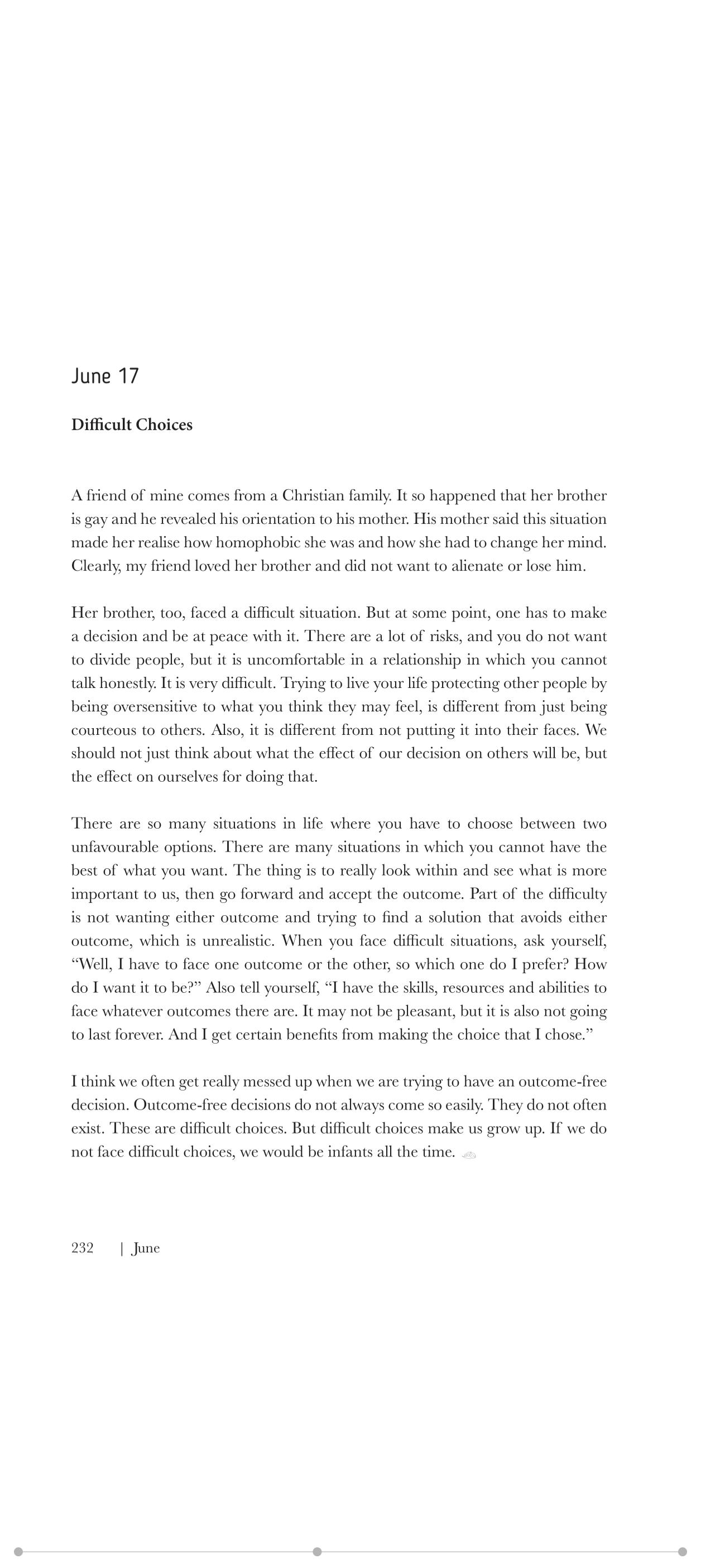
Dharma Talk Day 128 of 365 daily quotes by Thubten Chodron Difficult choices are opportunities to cultivate wisdom and compassion. Act with a pure heart, let go of outcomes, and turn every challenge into the path of awakening.

Post image
9 Upvotes

r/Buddhism • • 20h ago

Dharma Talk Why Is It So Hard to Let Go? By Master Zhisui

7 Upvotes

Why Is It So Hard to Let Go?

By Master Zhisui

We want to be in control of everything. We insist on micromanaging every detail, running the whole show, and doing all the heavy lifting ourselves. The moment you try to control it all, you’re asking for trouble!

If we know we’re bound for the Pure Land, where our true life awaits, we can simply relax and take each day as it comes while we’re in this world. Having food on the table and Amitabha Buddha’s name to recite is more than enough!

Stop worrying so much about what will happen to your kids or your aging parents. Your children have their own lives to live and will find their own way. As for your elderly parents, life is impermanent—when their time comes, they will naturally depart from this world. When you truly see this, you’ll stop holding on so tightly to everything.

Some people say, “Master, I feel trapped. I want to break free.”

Who is tying us down? We are doing it to ourselves.

Amitabha Buddha comes to untie us. Burdened by karma from countless lifetimes, it’s very hard to break free on our own. The Buddha tells us: simply recite “Namo Amituofo,” and he will set us free.

Simply put, the Pure Land path is about letting the Buddha liberate us. All we need to do is turn to Amitabha and entrust ourselves to him. He will carry us across to the other shore, the Land of Ultimate Bliss.

More often than not, life doesn't go the way we hope. Yet knowing the Pure Land awaits us, even those struggles become much easier to bear.

If we’re poor, we make peace with it; if we’re wealthy, we enjoy it.

If we’re healthy, we savor our well-being; and if we’re sick, we learn to live with it.

Master Hōnen once said, “Those who aspire to be reborn in the Pure Land find joy even when illness befalls them.” If we simply shift our perspective and see ourselves as citizens of the Land of Ultimate Bliss, we will find it much easier to get through our days in this transient world.

On the other hand, if we regard this Saha world as our permanent base, insisting on being in charge and trying to shape it into whatever we want, life will only become a constant struggle.

As Amitabha-reciters, we should learn to let go. Let’s loosen our attachment to this world of suffering and turn our hearts toward the Land of Ultimate Bliss, our eternal home.

Namo Amituofo 🙏

(Translated by the Pure Land School Translation Team; edited by Householder Fojin)

#PureLandBuddhism #NamoAmituofo #NamoAmitabhaBuddha
▫️ ▫️ ▫️ ▫️ ▫️ ▫️ ▫️ ▫️ ▫️ ▫️
🏡Pure Land Buddhism
http://www.purelandbuddhism.org/


r/Buddhism • • 20h ago

Question Sobre frequentar um templo de uma tradição diferente da que me identifico pertecente

0 Upvotes

Saudações!

Me identifico muito com a linhagem theravada, porém, onde moro se torna impraticável frequentar o mosteiro mais próximo para ouvir ensinamentos do monge e fico limitado as transmissões online. Há também um grupo de leigos adeptos a esta linhagem que, percebendo esse distanciamento, realiza estudos e práticas na cidade onde moro. Infelizmente eles também estão localizados numa região que é distante da minha e, devido a minha rotina, frequento somente os eventos que ocorrem online. Minha esposa está se interessando no budismo e, para ela, o contato presencial e a prática coletiva é fundamental. Ela tem se mostrado insatisfeita com a dinâmica que assumi para receber ensinamentos e participar de sessões de meditação. Perto de nós existem dois templo: um do budismo tibetano e outro Chan. Qual seria uma boa estratégia para nós dois? Desconheço as práticas de ambas tradições.


r/Buddhism • • 21h ago

Vajrayana The Inner Guru of Our Own Nature

Post image
8 Upvotes

The Inner Guru of Our Own Nature

The final Guru is the Inner Guru, which Yuthok tells us is distinct from all the previous ones. To be connected with the Inner Guru means to be one hundred percent reconnected with yourself. Whether you call it your ‘soul,’ your ‘unconscious,’ your ‘Divine Self,’ or your ‘Inner Buddha,’ to realize the Inner Guru is to be one hundred percent yourself. You can experience yourself one hundred percent. You don’t have dissociate, to block off parts of yourself. Nothing inside you is disconnected or divided. When we divide our self—‘Ah, yes, I’m this, I’m that!’—we let little ‘devils’—little dividers and opposers as I mentioned before—run amok in our head. We split ourselves into pieces. But when the external Gurus are well aligned, we finally realize the Inner Guru which is the realization of our own awareness that our mind, the outer Guru’s mind, and Buddha mind are all indivisible. This type of knowing is beyond logic or rationality, beyond conceptual categorizing. We don’t always actually experience this indivisibility when we sit down to meditate. Usually, it’s more of an intellectual exercise—‘Ah, I know that ultimately there are no divisions.’ You may not truly feel this, but you should trust in that unity.

With the outer gurus, we started with the single Root Guru, a very specific person, and saw how the nature of the Guru expands to include the entire lineage, tradition, and world. The Guru who has the final say is our own life, and the most ultimate Guru—the ultimate Guru—is our own inner awareness. In the end, Guru Yoga is about cultivating self-trust. It is not about wishful thinking—‘Oh, one day I’ll trust in myself, one day I’ll be complete.’ So much of modern life is characterized by mistrust. These days we teach little kids from a very young age not to trust other people, not to talk to strangers and so on. Of course, there are valid reasons for instilling caution, but truly dangerous, criminal people are probably a much smaller minority than our warnings imply. We tend to think the worst of others. We are full of suspicions and doubts and it seems like the world is full of criminals and monsters. An unexpected knock on the door feels terrifying. But helping, trusting in, and sharing with neighbors and strangers is what makes us human. It is a cornerstone of human and humane society. Highly individualized, urban living can feel like a self-imposed prison. All of this can lead to trust issues.

The final drop, the quintessence of the teaching, is that it's all about trust. Trust is not about trusting blindly in somebody or in something. Yuthok’s rebuttal to Sumtön is ‘Don’t get stressed about me being gone—trust yourself because the Innermost Guru is your own mind’s nature.’ The point of Guru Yoga is to not let any little devils hijack your inner peace. This is the core of Vajrayana, the Vajra Vehicle. On the outer level, a vajra is a special weapon that destroys demons or obstructive spirits, but the original meaning of ‘Vajra’ is undivided, indivisible, unbreakable. No divisions, a single indestructible whole or continuum. On an outer, worldly level all our political conflicts arise from constructed divisions—devilish concepts running through our heads, nation fighting nation. Vajrayana is about not dividing our own mind with doubts and fears. Our awareness is seamless; it is one big piece of reality. True Guru Yoga means trusting in yourself and that indivisibility.

~Dr. Nida Chenagtsang, on Yuthok's teachings on the Five Kinds of Guru, in Foundations of Vajrayana Buddhism.

https://skypresspublications.com/product/foundations-of-vajrayana-buddhism

By this merit, may all beings realize their True Natures,

And through this, realize their inseparability with the Dharmakaya.

💫✨🙏✨💫