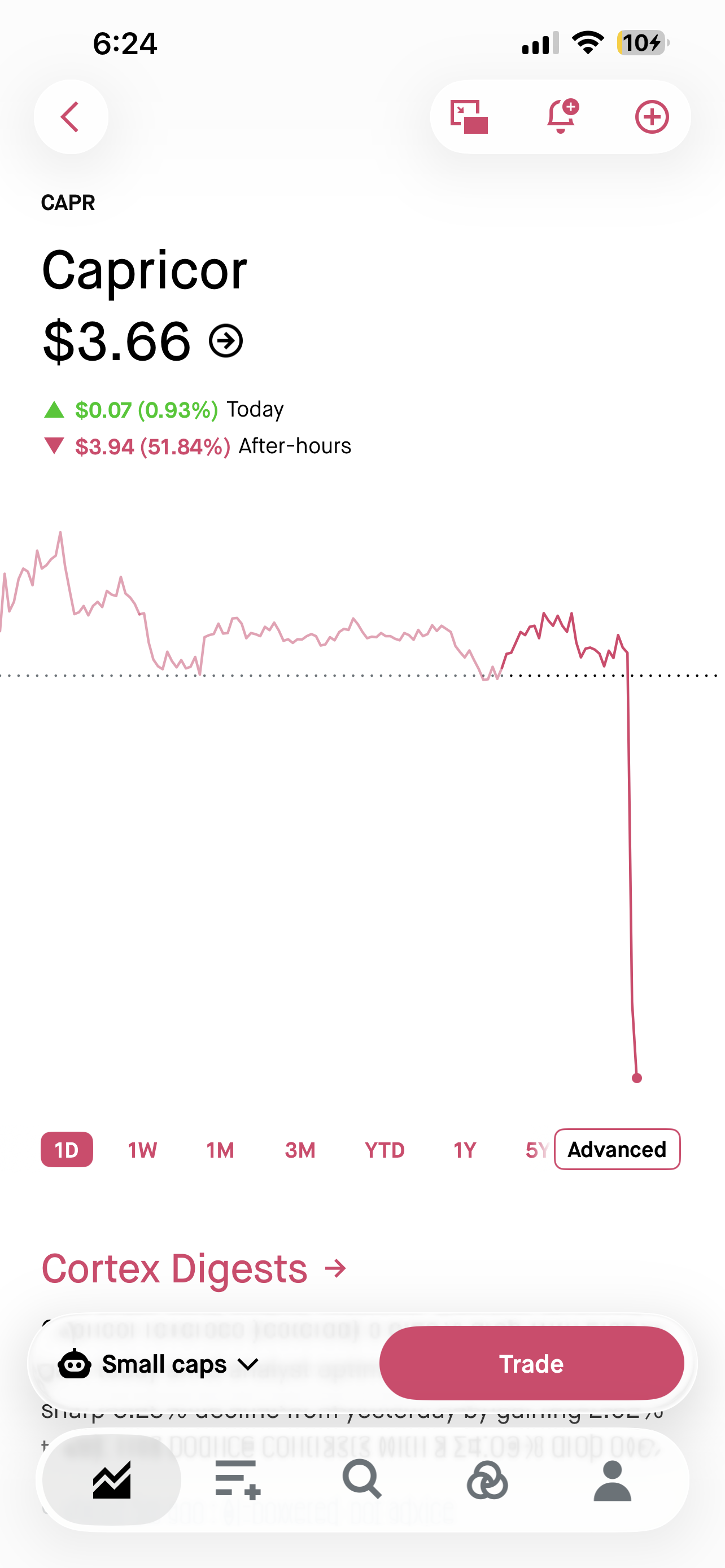
This is something I need to learn from too. I always said CAPR was 50/50. I had already questioned Oppenheimer analyst Leland Gershell’s connection to CAPR in 87 days ago, given that he previously served as Capricor’s CFO. But I never properly investigated the wider financial relationships between Capricor, other investment banks and the authors of The Lancet paper. That was my mistake.
Investment banks and analyst independence
Oppenheimer, Piper Sandler and H.C. Wainwright previously helped Capricor raise capital through various financing arrangements, reportedly including:
* October 2024: $86.3 million capital raise.
* September 2025: Oppenheimer and Piper Sandler acted as ATM share-sale agents.
* December 2025: $172.5 million public offering, with approximately $10.5 million in combined commissions and other offering expenses.
Capricor also reportedly sold approximately 2.68 million shares through its ATM programme, raising $77.5 million and generating approximately $2.4 million in combined fees.
The reported underwriting allocations for the December 2025 base offering were:
* Piper Sandler — 4,050,000 shares.
* Oppenheimer — 1,650,000 shares.
* H.C. Wainwright — 300,000 shares.
These underwriting allocations should not be confused with shares directly owned or retained by the investment banks.
Underwriting is normal industry practice. My concern arises when the same investment banks that financially benefit from helping Capricor raise capital also issue increasingly bullish valuations.
A higher share price allows Capricor to raise capital with less dilution, while investment banks can benefit from future underwriting fees and commissions. Whether we like it or not, there is a commercial incentive.
What triggered these higher valuations in the first place? Was it Oppenheimer’s bullish outlook, The Lancet publication, Capricor’s management, or a combination of all three?
Who initiated the higher price targets, and did other analysts independently assess the clinical evidence before increasing their valuations?
It is important to acknowledge that not all analysts were bullish.
H.C. Wainwright’s Joseph Pantginis reportedly maintained a Neutral rating in August 2026, highlighting regulatory risks, while Roth Capital’s Boobalan Pachaiyappan reportedly maintained a Neutral rating just seven days before the FDA rejection.
Several other analysts initially reduced their price targets before returning to increasingly bullish valuations despite the remaining regulatory uncertainty.
Reported examples include:
* Cantor Fitzgerald — reduced its price target from $62 to approximately $3.50 in July, before increasing it to $28 in August.
* Piper Sandler — reduced its price target from $58 to $2 in July, before increasing it to $25 in September.
* Oppenheimer — returned to an Outperform rating with a reported $54 price target.
* JonesTrading — issued a reported Buy rating with a $25 price target on 11 November.
What new clinical or regulatory evidence justified such dramatic reversals? Had the FDA’s original concerns been adequately addressed, or were analysts placing renewed confidence in management’s assurances and additional clinical analysis?
Simply acknowledging regulatory risks within an analyst report is not necessarily sufficient if the overall recommendation and headline price target continue to communicate strong confidence to investors.
Were realistic downside scenarios incorporated into these valuations? Were the potential risks communicated as prominently as the potential rewards?
The fundamental question is not simply why some analysts got it wrong, but whether previously recognised regulatory risks were adequately reflected in their subsequent valuations.
Investment bank shareholdings and overlapping financial interests
According to previously identified institutional ownership figures for September 2026, reported shareholdings included:
* Morgan Stanley — 377,740 shares.
* Barclays — 275,957 shares.
* Cantor Fitzgerald — 225,000 shares.
* Oppenheimer — 203,781 shares.
* Raymond James — 200,148 shares.
* Bank of America — 156,174 shares.
Shareholdings for Piper Sandler, H.C. Wainwright, B. Riley Securities, JonesTrading and Roth Capital have not yet been established.
What particularly interests me is Oppenheimer’s reported increase in shareholdings from 75,714 shares in June 2026 to 203,781 shares in September 2026, an increase of approximately 169%.
Its reported shareholding history includes:
* June 2025 — 162,536 shares.
* September 2025 — 135,413 shares.
* December 2025 — 80,813 shares.
* March 2026 — 63,666 shares.
* June 2026 — 75,714 shares.
* September 2026 — 203,781 shares.
Cantor Fitzgerald also reportedly established a new position of 225,000 shares during the third quarter of 2026.
There is an important distinction between earning fees from fundraising activities and having direct financial exposure to a company’s share price. Where both interests exist simultaneously, there are additional potential conflicts that deserve examination.
In Oppenheimer’s case, there is also the previous employment relationship between its analyst, Leland Gershell, and Capricor.
This raises several important questions:
* When were shares acquired or sold in relation to analyst recommendations and company announcements?
* Were these financial and commercial relationships adequately disclosed to investors?
The reported shareholdings, financing figures, analyst ratings and dates still require independent verification against original SEC filings, offering documents and analyst reports.
The Lancet publication and potential conflicts of interest
The Lancet paper reportedly had 35 authors, with reported financial connections including:
* Craig McDonald (lead author) — consultancy fees.
* Chet Villa (second author) — consulting fees, honoraria and travel expenses.
* Jonathan Soslow (third author) — consulting fees and travel support.
* Kan Hor, James Signorovitch and Aravindhan Veerapandiyan — paid professional relationships.
* Seven co-authors reportedly employed by Capricor and holding equity, including its own CEO, Linda Marbán.
* Eduardo Marbán — founder’s equity and patents licensed to Capricor.
Capricor also reportedly funded the study. The precise financial disclosures of every author require independent verification.
I fully recognise the experience and scientific expertise of these researchers. It is also normal industry practice for pharmaceutical company employees, paid consultants and clinical investigators to co-author company-sponsored research.
My concern is whether their scientific reputation, combined with their reported financial connections to Capricor, should have prompted greater independent scrutiny.
Did peer reviewers have sufficient access to the original patient-level data? Were sufficient independent statistical checks conducted? Were potential conflicts of interest adequately assessed beyond simply disclosing them?
It is important to acknowledge that The Lancet’s peer-review process reportedly contributed to a revision of the statistical model for a key cardiac endpoint, alongside discussions with the FDA.
The reported p-value changed from 0.04 to 0.09, meaning the result was no longer statistically significant under the revised model. This suggests that some statistical scrutiny took place, although the precise circumstances require verification.
Did analysts adequately reflect this statistical revision in their subsequent valuations?
With the FDA now reportedly raising serious data integrity concerns, I believe The Lancet should explain the extent of its independent review and whether additional scrutiny could have identified these problems before publication.
I recognise that peer review is not the same as an FDA regulatory investigation. Medical journals may not have access to the same clinical records, inspection findings and underlying documentation as regulatory authorities.
Nevertheless, scientific reputation should never replace independent verification.
Management accountability
Capricor’s management must also face scrutiny.
On 10 November 2026, Capricor reportedly acknowledged an FDA inspection observation while maintaining confidence in the integrity and reliability of its clinical data.
Ten days later, the FDA reportedly concluded that serious clinical trial violations had compromised the reliability of the data.
The apparent discrepancy deserves closer examination against the original company disclosures and FDA documents.
When did management first become aware of these issues?
Were shareholders adequately informed of material concerns before additional capital was raised? Did management underestimate the seriousness of the inspection findings?
CAPR’s share price reportedly climbed to around $11 shortly before the FDA rejection. Did analysts independently challenge management’s assurances before reiterating their bullish recommendations?
These are important questions regarding corporate governance, transparency and management accountability.
The illusion of independent confirmation
As retail investors, we did not have access to the full clinical data. We relied on three apparently separate sources of information:
* Capricor’s management and company announcements.
* Scientific research published in a prestigious medical journal.
* Professional analysts from established investment banks.
When all three appeared to support the same positive outlook, it naturally created greater confidence in the company.
But were these genuinely independent assessments, or were they different interpretations of the same underlying clinical evidence, reinforced by overlapping financial relationships and institutional reputations?
What appeared to be multiple independent endorsements may, in reality, have created an illusion of independent confirmation.
The biggest problem is that investment banks can earn millions through financing arrangements, consultants can receive payments, and company employees can potentially benefit from equity ownership, while small retail investors can end up bearing substantial financial losses.
We must also acknowledge our own responsibility.
Why did more cautious analysts appear to receive less attention? Were we giving greater attention to analysts who reinforced our existing beliefs while overlooking those who challenged them?
This is known as confirmation bias, and it is another important lesson to learn from this situation.
I am not accusing anyone of deliberate manipulation, scientific misconduct or collusion. Financial relationships and reported shareholdings alone do not establish wrongdoing, and these activities may operate independently under regulatory safeguards.
But the existence of regulatory safeguards does not mean potential conflicts should be beyond scrutiny.
Data integrity is fundamental to clinical research. No matter how promising the results appear, if the underlying data are compromised, the reliability of those results comes into question. This affects not only investors but also patients, families, doctors and regulatory decisions.
I see a storm is coming, and the potential reputational damage could extend beyond Capricor to The Lancet and the investment banks involved.
A lot questions for need answering.
The FDA identified the following deficiencies in its second Complete Response Letter (CRL) for deramiocel:
•Unauthorised statistical changes: Changes were made to the statistical analysis plan after the fact.
•Violations of study blinding procedures: The procedures intended to prevent knowledge of treatment assignments were breached.
•Additional protocol violations: Other violations compromised the reliability of the clinical data.
•Failure to meet endpoints: The FDA concluded that HOPE-3 failed to meet its prespecified primary and secondary efficacy endpoints.
•Unreliable clinical data: The FDA determined that the deficiencies could not be corrected through retrospective analysis.
•Insufficient evidence of effectiveness: Even after reviewing the additional 24-month data and revised indication, the FDA concluded that approval requirements were not met.
We can learn from this.