r/CanadaPersonalFinance • • Feb 03 '26

What’s the most underrated money-saving hack you’ve discovered in Canada that more people should know about?

94 Upvotes

Living in Canada can get pricey with rising costs of everything from groceries to housing. But sometimes, it’s the small, creative hacks that save the most money. Maybe it’s an unconventional tax credit, an overlooked cashback program, or a local loyalty scheme that works wonders.

What’s one money-saving tip or trick you’ve found that makes a noticeable difference? Share your hidden gems for saving money, building wealth, or getting more bang for your buck in Canada!


r/CanadaPersonalFinance • • 4h ago

Best options for cash/safe investments?

3 Upvotes

Hi folks,

I usually invest in ETFs like XEQT. If I'm expecting a 1-2 year bear market, what are some other savings or etfs options I can consider? I usually do a bank savings related ETF, but have never looked into this further.

Thanks!


r/CanadaPersonalFinance • • 8h ago

Financial Literacy Month Day 27: Don't Let Black Friday Deals Derail Your December Budget

4 Upvotes

Day 27 of our Financial Literacy Month series is here, and today's lesson is particularly timely!

We're continuing our longer-term financial planning week with a look at how to take advantage of Black Friday deals without compromising your finances for December.

It's easy to focus on how much we're saving when something is heavily discounted, but there's another number that's arguably more important: how much we can actually afford to spend.

Consider a simple example:

Imagine you have $900 available in your account after covering your immediate expenses.

You might look at that balance and decide you can comfortably spend a few hundred dollars on Black Friday purchases.

But what if you've already earmarked $450 for upcoming December expenses and another $250 for your financial buffer?

That leaves you with just $200 available for discretionary purchases without disrupting those plans.

The important takeaway is that your spending limit should be based on what you can actually afford after accounting for your financial commitments, not simply your current account balance or the size of a discount.

And don't forget that purchases made through instalment plans can create additional obligations in future months.

Today's article explores how to establish a realistic spending limit, compare total purchase costs and keep track of payments, receipts and returns.

Read Day 27 (free, no signup required):
https://finnomia.ca/blog/black-friday-budget-protect-december

Question: Do you find Black Friday genuinely helps you save money on planned purchases, or does it tend to encourage spending you wouldn't otherwise have made?


r/CanadaPersonalFinance • • 3h ago

Bookkeeping in Canada for Novice

1 Upvotes

Is there a simple bookkeeping program in Canada for someone without a registered business and no accounting experience? I need to do payroll for 2 homecare workers looking after me through a self-managed healthcare program. My current bookkeeper keeps rising cost to over $130 per month for 2 people, and wondering if I could do this myself. I know computers, just not accounting, and don't wish to register a business. Payment would be sent via online banking if possible. Where should I begin? 


r/CanadaPersonalFinance • • 5h ago

Pension deficiency recovered from transfer value

Thumbnail reddit.com
1 Upvotes

r/CanadaPersonalFinance • • 7h ago

I started a job with a nice pension plan. How much of my own money should I be setting aside from retirement?

Thumbnail reddit.com
1 Upvotes

r/CanadaPersonalFinance • • 20h ago

Do you deduct health expenses based on day of procedure or date paid

Thumbnail reddit.com
3 Upvotes

r/CanadaPersonalFinance • • 4h ago

Why are people spending over a thousand for a phone?

0 Upvotes

Like seriously


r/CanadaPersonalFinance • • 21h ago

21 and need advice on buying another car after a bad financing deal (Ontario)

Thumbnail reddit.com
2 Upvotes

r/CanadaPersonalFinance • • 21h ago

Which card issuer is the best for Promotional balance transfer to existing customers?

2 Upvotes

I currently have the MBNA Amazon Mastercard and they offer me a great 10months no interest… all the time!

I like to use this to a max, but unfortunately the time i hold that balance, i can’t make purchases with the card. They have a shady structure which place your purchase underneath the balance transfer so you pay interest on your purchase until you cleared your loan.
I’m “losing” the ability to use my card for the 2.5% cashback on Amazon….

So here I am looking for a card that i’d get frequent great balance transfer promotions deals. Any suggestions?


r/CanadaPersonalFinance • • 1d ago

Help me find the best way to put my money

3 Upvotes

Alright so finally making some cash in my life. I’m 40, no debt, with 60k just chilling in a checking account. I have 5k in a TSFA with TD and I have opened a self managed TFSA and a managed TSFA with WS thinking I was going to switch over. What would you recommend I do with the 60k? Working towards maxing out my TSFA first before RRSP? What TFSA and what threat level could get me the best results?


r/CanadaPersonalFinance • • 22h ago

MBNA 0% balance transfer offer to pay off car loan?

Thumbnail reddit.com
1 Upvotes

r/CanadaPersonalFinance • • 1d ago

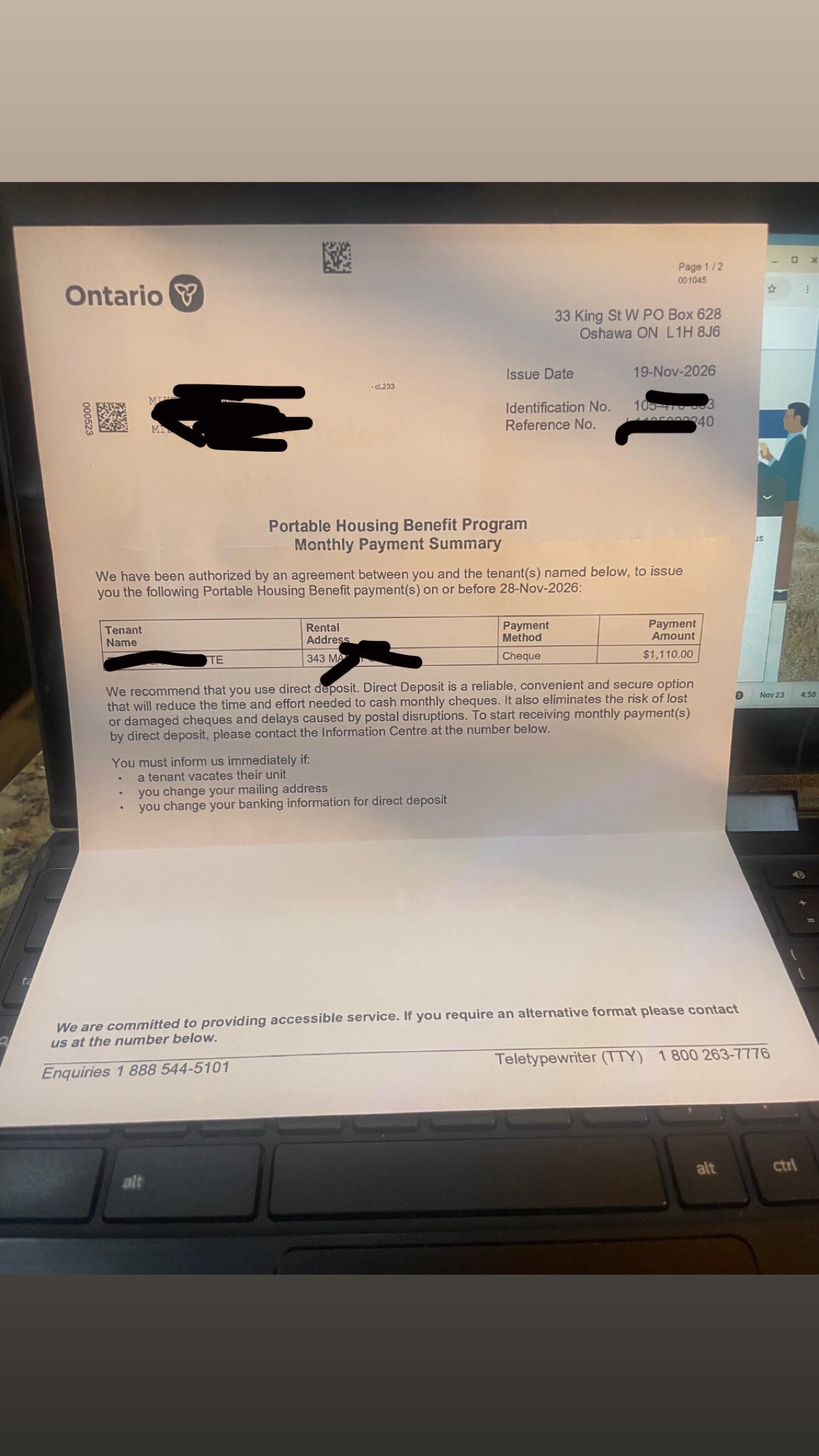
Is this a legitimate program in Ontario? Or is it a fraud!?!

Post image
1 Upvotes

r/CanadaPersonalFinance • • 1d ago

Financial Literacy Month Day 26: Planning Money Together Doesn't Mean Sharing Everything

2 Upvotes

Day 26 of our Financial Literacy Month series is here!

We're continuing our longer-term financial planning week with a look at how couples and families can work toward shared financial goals while maintaining individual financial privacy.

There's sometimes an assumption that managing household finances together requires combining all accounts or giving everyone complete access to each other's financial information.

But sharing financial goals and sharing financial information aren't necessarily the same thing.

Consider a simple example.

Imagine two partners saving $6,000 for a vacation.

They agree on their savings target, how much each person will contribute, and when they'd like to reach their goal.

To coordinate their progress, they might only need to track:

  • Their shared savings target.
  • How much each person has agreed to contribute.
  • Their progress toward the goal.

They don't necessarily need complete access to each other's personal transaction histories or account balances to make that arrangement work.

The important distinction is between ownership, visibility and responsibility.

Who owns an account, who can see its information, and who's responsible for managing a particular financial task are three separate questions.

Today's article explores how to establish shared financial goals, determine what information needs to be exchanged, and review financial software permissions before giving others access.

Read Day 26 (free, no signup required):
https://finnomia.ca/blog/shared-goals-separate-privacy-money-planning

Question: For households managing money together, how do you balance transparency around shared financial responsibilities with individual financial privacy?


r/CanadaPersonalFinance • • 1d ago

Tax impact of moving to Canada.

Thumbnail reddit.com
1 Upvotes

r/CanadaPersonalFinance • • 2d ago

Are you guys investing in canada

6 Upvotes

I can see the logic in adding Canadian stocks to an RRSP that’s heavy on U.S. tech. Owning some banks and railways gives you a different mix of businesses.

The part I’m stuck on is the data centres. Say Nvidia shares fall because people decide the stock got too expensive, but every planned data centre still gets built. Now say the shares fall because two big customers scrap half their projects. Would you expect a Canadian index fund to hold up equally well in both cases?

When you look at an ETF, how do you tell which companies are counting on those projects going ahead?I can see the logic in adding Canadian stocks to an RRSP that’s heavy on U.S. tech. Owning some banks and railways gives you a different mix of businesses.

The part I’m stuck on is the data centres. Say Nvidia shares fall because people decide the stock got too expensive, but every planned data centre still gets built. Now say the shares fall because two big customers scrap half their projects. Would you expect a Canadian index fund to hold up equally well in both cases?

When you look at an ETF, how do you tell which companies are counting on those projects going ahead?


r/CanadaPersonalFinance • • 2d ago

Out of Province Co Signer?

3 Upvotes

I was told by a financial advisor that this is not impossible but I have not been able to find a single dealership that can facilitate a remote co-signer for an auto loan. None of the banks are any help either as they redirect you to the dealership. Even if the bank can do it, I find often the dealership says no.

Guy yesterday looked at me like I had two heads. Truly, has no one ever needed to buy a car that does not have family local?

Does anyone know of any dealerships that do this successfully? Or any other ways to go about this? I know a bank could do it, but most don't do their own auto loans unless it's private. And I don't want a personal loan if I can avoid it.

Important notes:
- My income is good. I need a co-signer because I am on a work permit and not a citizen so my credit history is very young. I would even do a newcomer loan where I pay 15+% upfront but most of those require PR or the term is limited to the duration of your work permit.
- Co-signer is as good as they come. Six figures, never missed a payment, multiple paid off cars and a house, citizen, decades of history
- I can put 15-20% down even with a co-signer, and I plan to
- He is willing to do wet signature in front of a notary or partner dealership/bank in the other province
- Used SUV, 3-8 years old, not looking to get approved for a crazy amount


r/CanadaPersonalFinance • • 2d ago

New article from the Globe. "With the Bank of Canada widely expected to deliver another rate hike on Dec. 9, some stressed homeowners could be hit harder than others"

Post image
32 Upvotes

r/CanadaPersonalFinance • • 2d ago

RRSP VS RPP

2 Upvotes

Hello everyone!

I need your suggestion as I’m currently confused wheather to opt for any of these or not.

I know at the end it all depends on my preferences, but since I’m mee to Canada and recently i qualified for both RRSP AND RPP.

As per my employer’s policy they dont contribute in RRSP; whereas they match 100% contribution in RPP max 6%.

As per my research, the drawback of RPP is that its locked until you retire but I’m confused that will I get my money in one go or on monthly basis after I retire.

For RRSP i used to hear ppl talk that its free money, but if employer is not contributing then how is it free money?

Right now I feel like I should only go for RPP rather than opting for both - not sure if its a wise decision

So far this is what I know if I’m missing something please guide. Up


r/CanadaPersonalFinance • • 2d ago

Financial Literacy Month Day 25: Will CPP, OAS and Your Savings Be Enough for Retirement?

1 Upvotes

Day 25 of our Financial Literacy Month series is here!

We're continuing our longer-term financial planning week with a look at building a retirement income scenario using CPP, OAS, workplace pensions and personal savings.

When people think about retirement planning, the conversation often focuses on how much money they need to accumulate.

But there's another important question worth answering: How much income will you actually need your savings to provide?

Consider a simplified example.

Imagine you've estimated that you'll need $50,000 annually to support your retirement.

After gathering your personal CPP, OAS and workplace pension estimates, you calculate that those sources could provide approximately $30,000 annually.

That leaves a potential $20,000 annual income gap that your personal savings and investments would need to support.

Of course, the calculation is more complicated in practice. You need to account for taxes, inflation, when different pensions begin and how long your savings might need to last. The example assumes the income and spending figures are expressed on a consistent basis.

But it illustrates an important point:

Your retirement savings target should be connected to the income you actually need, not just an arbitrary account balance.

Today's article explores how to gather your personal retirement income estimates, build an initial scenario and identify potential gaps that might require adjustments to your financial plans.

There's also a practical exercise to help you get started.

Read Day 25 (free, no signup required):
https://finnomia.ca/blog/first-retirement-scenario-cpp-oas-savings

Question: When planning for retirement, do you focus more on reaching a particular investment balance or estimating the income you'll actually need each year?

r/CanadaPersonalFinance • • 3d ago

Rbc business account meeting review w/ branch manager.

Thumbnail reddit.com
3 Upvotes

r/CanadaPersonalFinance • • 3d ago

Aging parents money.

8 Upvotes

What is the best thing to do with $120,000 for a 75 year old?
Currently it’s sitting in a savings account. I am completely clueless about investing or anything like that and I’ve been tasked with helping my parent figure out what to do with it. Not sure if it’s relevant but it needs to be able to be willed to one person.