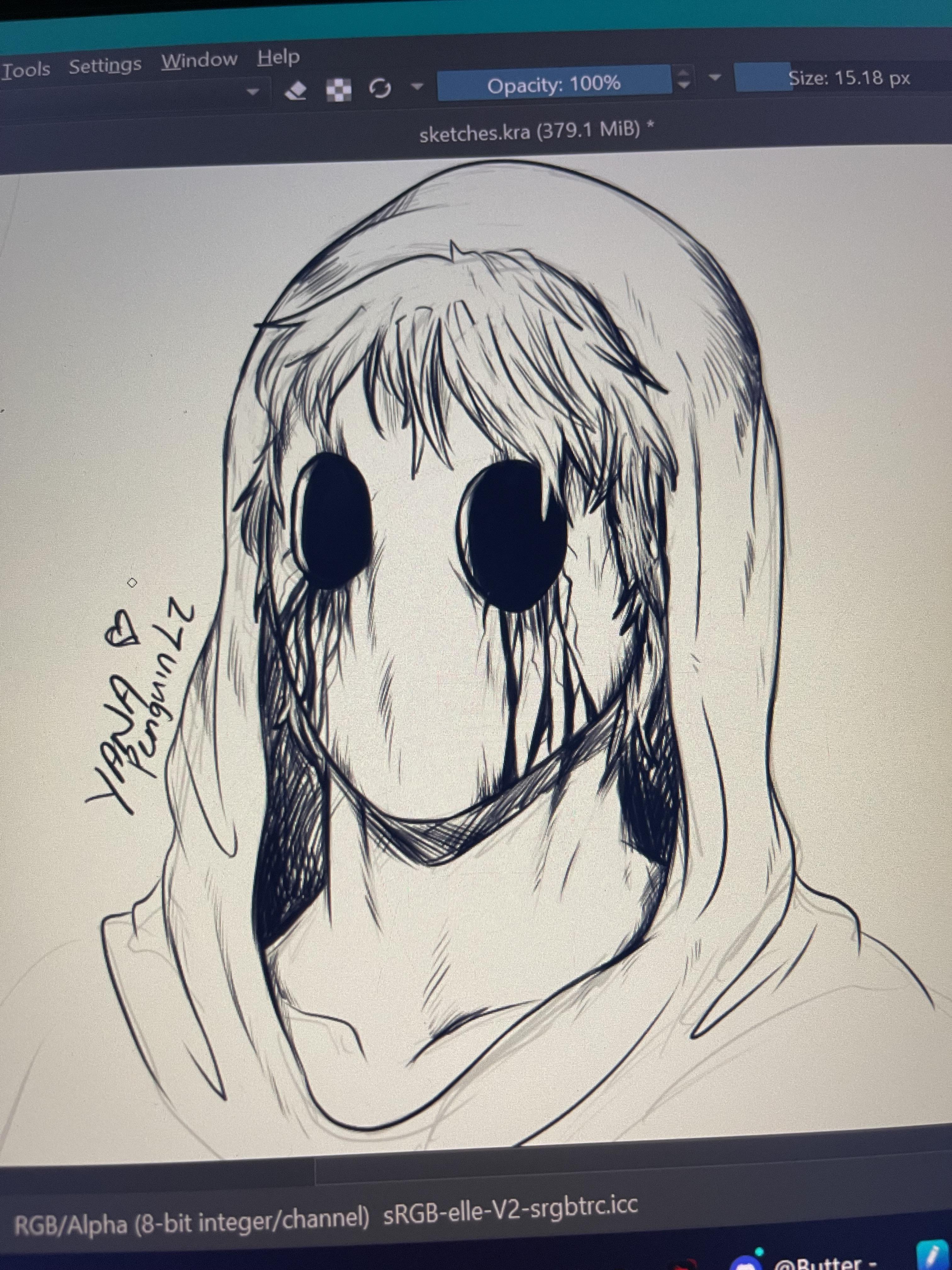
The following confession was the last written correspondence of fransican friar, Pedro Bartolomeo De Rojas y Sandoval, a former captain of his catholic majesty Phillip II of Spain and conquistador of his empire. The letter was addressed to Bartolomeo’s brother, Miguel, who had died two decades earlier during the battle of Armada off the coast of England. The translation given to us by the London mystic, Henry Percival Wycliff, was discovered by a professor from Saint Leo University in Florida. The paper itself was found in the false bottom of an old chest bought from an overseas auction.
It’s an old letter, and some of the old-world sensibilities seep through, but I’ve done my best to censor and re-word some of the harsher language. If you have any connection to this account, information on Bartolomeo, or simply advice on how to best proceed with further research from here, PM me and we’ll talk. Thank you for your support.
ANNO 1590, 5th day in the month of August,
My benevolent, holy brother, I beg your patience once more as I confess with both mouth and ink the sins I have committed in the name of our divine father and his emissary, King Phillip. I hear your moans in the corridors of the abbey. The scraping of your nails upon its stones sends ice down my back that my meager candle cannot warm me from. If I must tell it again, I shall once more and pray it will be the last. No longer shall it exist in the confessional, nor shall I seek absolution for my actions through the rosary of our holy mother, but in plain I shall tell it here. In ink thick as blood, I will explain how I killed them- how we killed them all- and how this curse that afflicts us shall end our line forever unless divine mercy pardons us. Even now, I hear the damned braying like goats. Their anguished moans upon the sands of the Matanzas are piercing still, though decades lay between us.
Perhaps then, you shall rest from your hunt and return to the grave from whence you came, but, on my soul, I shall endeavor not to join you. I cannot become as you are. If that comes to be, then it is worse than Hellfire we shall face. I beg, plead with you, patience, dear brother, that I may explain and with my explanation ease your tormented form.
In the year of our savior, 1565, I sailed with Pedro Menendez de Avilles to Florida to build his city of St. Augustine and to destroy the French Heretics who, like vermin, were festering above St. John’s river in their abominable temple of *la Caroline.* It was of chief interest to Menendez that these heretics be crushed and that the lilies of France not take root in the land rightfully claimed by our righteous fathers before us.
Was it not we who’d brought salvation to the natives? Was it not we who led them to understand the power of our God and folly of their pagan beliefs? Yes, just as Cortes placed the Aztec under his heel, so had we the Timucuan and Guale. We crushed their sinful ways as a man does a beetle, and instructed them in the way of the Holy Church. Yet the French, our catholic brothers and sisters, using the blasphemous hands and tongues of Lutherans, sought to usurp our lands and the souls we’d justly won.
Jean Ribault, that chief of the infidels, was in our sights when first we arrived, and, had he not cut his anchors and fled upriver, we would have caught him. Instead it was God’s will that we turned southward from the river to make landfall. Upon the banks of Florida, we raised up St. Augustine from the muck and mire. Our priests were quick in instructing the natives and faster still in establishing their mission among the palms and oaks of that humid land.
I was a captain, as you know, and held fast to my sinful ways, as did many of the men. How many nights did we spend in wretched bliss, cradling in our arms the divine beauties of that native land? As Adam saw Eve in paradise, so saw we the Timicua women, and knew them all the same. How cheaply we gave ourselves away to vice. We drank smoke from their tobacco and warmed our sweating bodies with rum. Like the judges of old Israel, we did what felt right in our own judgement, not caring for the opinions of God or man.
In this stupor we lounged like seals. Between the building and drilling and unrighteous freedom we utilized, we became slothful and soon banished all thoughts of the honor of God or the glory of Spain. So brazen was one man’s attitude in entitlement to our new land, I recall him striking down a native convert who’d slighted him. With the assistance of another from his rank, they held the crying wretch down and made a eunuch of him! The poor soul survived that evil operation, but deserted his tribe in the night, shamed and fearful of the further actions his christian brethren might do to him.
Menendez handled this incident as he handled many others. He had the men flogged within an inch of their life and ordered them healed with salt. The punishment proved cruel enough that the assistant to the crime died of infection before the week was out. The main offender would have survived as well, had his throat not been mysteriously sliced open in the night. Menendez made no comment on the murder moving forward and had the man buried quickly. He no doubt feared an uprising or betrayal from our native allies and knew no help from Spain would arrive to save us if things went sour.
I suspect, in those days, that emotion did much of his thinking for him. Fear of failure, fear of annihilation, all these and more plagued him. He answered directly to King Phillip, and no doubt the fear of offending him haunted his mind as well. Perhaps those emotions foreshadowed what was to come in the days ahead and the blood that would stain the flowers of Florida.
Weeks went by and the Lord made the heavens speak plainly to us. A hurricane was frothing in the virgin blue skies of the Atlantic, and we made every effort to prepare for its onslaught. In the midst of our work, our guard spotted three french ships coming down from the north, intent on no plainer purpose than wiping us out. Menendez, full of fire at the prospect, ordered what ships we had to flee both the storm and the French by means of Cape Canaveral. We braced ourselves for the fast approaching rain and watched how, like the flash of a gun, the gathering monsoon wiped our adversaries out to sea and delivered us from the fury of the heretics.
When the hurricane had passed and we were once again safe from the threat of invasion, Menendez made plain his intention to march over land to take *La Caroline*. We officers objected fearing that in our absence St. Augustine would fall to the French attack.
“To the Devil with your bloods!” he told us. “Are you all snakes that you run so cold?”
“We do not know the strength of the Lutheran stronghold,” replied Lieutenant Esparza, a thick framed man of forty. He had the arms of a Pikeman and the restraint of a monk when speaking to his superiors, but his own steel tone betrayed the folly he sensed in Menendez’s plans. “Even if we were to find it, there is no telling what their defenses might be. There are some natives who still side with the French and would no doubt warn them of our intentions.”
“I tell you, we strike now,” Menendez stated coolly. “Three ships came from his lands and three have been lost to the Atlantic. Ribault would not have sought to engage us with a force of less than five-hundred unless he had the advantage of his boats. If we move now, we can take *la Caroline* for Spain and stamp out the French claims once and for all!”
“And if we fail?” I recall asking aloud. I wish I had not, for the eyes of Pedro Menendez de Avilles stuck faster into my heart than a speeding arrow or musket ball. His feline, hungry eyes did not waiver as he raised his chin and swallowed his apprehensions.
“Then we shall stand on the gallows as equals,” he said plainly, “but if even one French lily takes root in these shores, then I guarantee you we are already marching straight toward the hangman.”
With that, his mind was set and his orders made clear. We were to prepare a force of 500 men and march to assault the French stronghold. It was a decision I accepted with little enthusiasm, but nonetheless I sharpened my sword and prepared my troops for the journey. As I stropped my blade and polished my cuirass, I saw the eyes of Menendez still glaring back at mine, bent on immolation.
Two days before our trek, our native allies captured a French defector. He’d been living among the Timucuan for weeks by that point and came to us as a gesture of friendship, sensing the turning tide at the loss of Ribault’s ships. He told us, in no uncertain terms, that if we permitted him to live with us and rewarded him for his treachery, he would lead us to *la Caroline*. The eager Judas was promised his reward and, once troops were mustered, we set off Northward.
The sound of marching became deafening in those days. The misery of our damp clothes and rain-soaked tents mingled with the humidity of the wilderness. Four days we marched through marsh and swamp, losing at least two men to drowning in the unforgiving mud of the wetlands. We must have looked wild to any who saw us and our matted beards. We drank rum and water sparingly as we passed through the land, doing our best to make as little noise as possible. Our guns and powder were useless by the time we arrived at the settlement, but it mattered little.
It was night in the settlement by the time we launched our attack, and the rain poured steadily down. The Fort- if it could be called such- was guarded not by cannons, but logs painted black, and its short palisade would prove useless against us or anyone with legs ample enough to climb it. More than anything else, it was made plain to us that the settlement had no defenders, proving Menendez right and emboldening our men as they stood with swords at the ready. Only one small ship lingered in the bay, and one too small to be of use to those who would be slaughtered. Whether it was God’s work that lay ahead, or our own, I know one thing for certain: It was in that place that I would damn our bloodline, my brother, and initiate the curse that stains our name.
We made quick work of it. A flock of pikemen ran through an old farmer tending his lantern, leading to the first chorus of screams for that night. Even with the rain, the houses proved dry enough that fire could take them easily if anointed with oil.
Liberally did we anoint them, so much so that the cries of women and children were not enough to stop our trembling hands. I cut one man down with the swipe of my rapier and ran another through who rushed me with an axe. He could not have been more than fourteen, yet I withdrew my blade from his neck as simply as unsheathing it and continued with my work. Several of the French fled to their one ship, though only forty or so from what I gathered. For every heretic that escaped, the next was dealt with even more harshly. We took the women and children prisoners, but Menendez had made his orders concerning the men clear- hang them all. Any who fight back and any over the age of fifteen, should be hanged from the oaks of the surrounding woods. They would be scarecrows to those who’d try and avenge them, and a warning to all infidels against the one true church. I beheld men already setting to that task as I kicked down the door of each house I came upon.
We cleared them one by one, but on the outskirts of the settlement I found a hut smaller than the rest. It was almost purposely out of the way and seemed to sit halfway between the light of the fleeing moon and the dawning sun. I wish now that I’d turned back from that place and continued on my way, but my hot blood carried me to it with the vigor of a zealot. I kicked down the door and raised my blade to run through any inside, but was met by an unexpected sight.
An old woman holding a candle sat on a simple cot. She wore nothing but her smock and stared directly into a mirror hung on the wall to her side. She seemed transfixed on the light and muttered to herself without looking my way. In my best French, I ordered her:
“Come at once! You are now a Spanish prisoner! Quickly now!”
She did not even flinch as the wick flickered in the darkness of her hut. In its light I began to make out the shapes of odd herbs and substances in jars. She had a shelf against the back wall lined with a mixture of books and jars filled with odd plants and oils. I became irritated and figured her for some crazed wise-woman, so I shouted again.
“Come at once!” I yelled in my wretched French.
“I knew of your coming,” she said in near perfect Spanish. I was so startled that I physically stepped back and tried to process what she said. “They told me of your coming, Spaniard, and what you would do.”
I shook myself, leveled my blade and hissed at her in my native tongue. “You’re a fool, woman! There was none to tell you of our coming or you would have prepared yourselves! Do you hear me? Even now, your hanging men carry faces of shock!”
“I was told by the Earth, foolish Spaniard, and by the princes that reign over them,” said she, wax now running over her knuckles like blood. “In my dreams, they told me I would die by fire, and in my mind I resolved what the punishment for such a crime against me should be.”
“Enough!” I shouted as I grabbed her arm. “You shall come now or die where you are!”
“Bartolomeo De Rojas y Sandoval.”
At the mention of my name, my skin ran cold and my hand began to tremble. Any anger once in me had been quenched in terror. I opened my mouth to ask how she knew me, but she gave no chance for me to reply.
“As I take on this baptism by fire,” she said, “may you receive your final baptism in the waters of damnation. May the inky black waters of that distant sea to which you are bound never wash away your sin, nor let its salt season your foul tainted flesh. May you and all of your line, now until the end of time, suffer likewise in the briny depths.”
At this I drew my knife and slit the old woman’s throat where she sat. She fumbled for her neck as she gurgled and cluttered to the floor. As she did, her candle caught light on the dry straw ground and soon her whole body was covered in flame. I backed out of that house and went to slam the door as fire climbed the walls of her shack, but as I did, I saw her face. The old woman was laughing at me, brother, and her laughter infests your voice.
I hear it like an echo on the wind, and I know your actions are not your own. I know what you plan to do is because of her devil tongue and spell, but please hear me when I beg you to find mercy for me! I cannot delve with you into that abyss. I cannot…
I shall continue before I hear your footsteps again.
Once the women and children had been accounted for and the fort taken, Menendez saw to it that any remaining men were hanged alongside their brethren. In the end, I spent four hours overseeing the deaths of a hundred men and boys alike, watching their feet kick so pitifully against the air as they made their last movements. We took the fort, sequestered some of the prisoners inside, and manned it with four-hundred and fifty of our men. Once secured, Menendez and my men left southward for St. Augustine, but not before leaving a sign dangling from the boots of one hanged man.
“NOT AS FRENCHMEN,” we wrote, “BUT AS HERETICS.”
And with such justification, we wiped our hands of the matter and trekked back.
I wish I could say that the bloodshed ended there, that our atrocities and crimes may stay as vile as they are without being sullied by further sin, but it did not.
Once back in St. Augustine, Menendez was informed by our native allies that French sailors had washed ashore the nearby river inlet, starving and trying to survive off the salvage. With haste, we armed ourselves, took our men and met them at the beach, expecting an engagement, but instead found one hundred and fifty bedraggled men raw from sand and salt shivering on the banks of the river. They were on the opposite side and had the chance to run if they so chose, but they seemed at wits end and almost welcomed the sight of us.
Amongst their ranks was Ribault himself, his long beard matted like ours. He greeted Menendez courteously and Menendez did the same, but all throughout their conversation I could not help but think of the words my commander had spoken to me only the night before.
“We haven’t enough food for ourselves,” he told me, “and there has been no word of resupply coming from Spain as of yet.” We fenced with words that evening as the potential outcomes danced around us.
All the more did those words sting my soul when I heard Ribault ask, “and if we should come to you? What terms may we be promised?”
Menendez stared at his surrendered enemy the same way a man does before killing a horse.
“Submit yourselves unto me,” he told them simply, “and let me do as God commands.”
After feeding them biscuits and some small rations of salt fish we had on us, we bound their hands behind their backs and went to work culling the herd of them.
Around the river bend, down stream as for our actions to not be seen, we went to work. In groups of ten they were led to us, and in groups of ten they were slaughtered. We sparred only a few who were no more than boys, along with some Bretons who professed the true faith. A carpenter here, a caulker there, but despite those few exceptions, we ran them through with our pikes, swords, and daggers before throwing them in the river.
Lastly came Ribault himself, who, like a feeble old man, had reduced himself to muttering. Over and over he prayed and sang hymns as his officers were slaughtered before him. Pitifully he repeated the same old psalm, saying “Lord, remember your servant-” even unto his last moments.
I ran him through with my dagger as another did with a pike. Finally I drew my sword and chopped off his head. It bounced to the ground before his hat could even be removed. With that, Menendez took his dagger and sheared off a piece of the man’s skin and beard. He placed it in a small chest and stared blankly at his horrid prize.
“King Phillip will be pleased,” he said, wiping clean his blade. He stood silent for a moment before finally breaking out. “I think it great good fortune that this man is dead, for the King of France could accomplish more with him and fifty thousand gold coins than with others and five hundred thousand.” He looked at me with those same cold eyes as I stood there over the body of his slain captive. “He could do more in one year than another in ten…”
His words washed hollow over me as I stood above that heretic’s body and wondered how deep a sin I’d committed in the name of God. The old woman’s words came back to my mind in those moments, and I couldn’t help but look to the dark waters of the river. The blood of those damned men filled its open mouth out to sea, turning the waters inky black with its waste.
We named that place *Matanzas* and camped along its banks that night while the blood of a hundred men was still warm on the sand. That night changed me forever, dear brother, and started me on the path I now am repentantly on. I wish I had learned to heed the words of our savior when he cautioned Saint Peter from living by the sword. How deep those words became to me that night along the river.
I awoke from a nightmare in which the crone from the settlement was standing over me in my tent, laughing through the bloody gash in her neck as her charred skin crackled like roasting pork. I was thirsty and paranoid, so I left the camp to sit beneath the stars and pray the rosary over the sins I’d committed. I was on the banks of the river, just out of sight from my men, kneeling with tears in my eyes when I first saw it. At its sight, my cheeks went dry in horror.
Floating in the water, unmoved by the stream, was the body of a headless man. The shirt on it had once been white, but now looked murky rust brown in texture. I backed away from the edge of the water and began to weep once more over the life I had taken, but then, out of the water arose another body, this one as well, headless. Then came another and another. Eight bodies all lingered near each other in the river, each one butted up against the last. They came up like turtles in a pond, forming a long trail in serpentine fashion. Ten bodies, then two more, then-
I know no other way to describe the unholy monstrosity besides satanic and behemoth in size. I fell back upon my seat and stared up at the thing in mortal terror as the sight of a beast from the pits of Hell itself reared up from the stream
Towering above me, dripping blood and water in equal measure, was a tube of human flesh. The bodies of slain and drowned men were fused together to form something like a serpent or wyrm from old myth. It had no discernable eyes, but instead made itself a head and maw from the broken and snapped ribcages of rotting men. I could still see upon its grey-pink flesh where we’d cut and hacked those sailors to death. Like a centipede twisted in a spiral upon its axis, arms sprouted from the deceased. Some arms even had other hands and limbs sprouting from them, but all bore the marks of our sin.
The most horrible detail I noticed last. What I’d mistaken for wounds or divots in the flesh were instead the many human eyes from those we’d killed. They were as grey and cloudy as the dusk sky, yet still they moved and widened with hate upon seeing me.
I wanted to scream but no word or noise could escape my parched throat. I began to choke and croak out in fear, but none of my companions heard me. I held up my Rosary and tried to mutter a prayer as the beast lurched its head forward, but this did little. For a terrified moment, I waited for the inevitable bite of those awful ribs and begged heaven that my death would be quick. Instead, nothing came, and as I opened my eyes, I beheld an even more worrisome sight.
As if it were intelligent, the head of this creature seemed to take me in. Its many eyes looked me up and down, wide with anger and fear, yet it did not pounce. To my horror, it raised a tail from the water and swung it onto the riverbed. I was sure the commotion would alert some of my men and send them to my rescue, but none came. The tail of the beast crept closer and closer to me in the moonlight before taking shape in the form of several arms. I tried to scramble away, but a hand took hold of my shoe and dragged me towards the water’s edge. I finally found the strength to scream, but all too late as a rotting hand clasped shut my mouth.
I expected to feel myself dip into the dark waters of the inlet, but instead felt a burning cut against my forearm. I reared my head through that tangle of that web of flesh and watched as a series of cuts were placed into my arm.
A long finger with a crooked nail placed them, ripping through my linen shirt yet taking care to align the marks up and down either side of my forearm. It finished its work with a mark on my palm. A large X was cut into the fat below my thumb, and at its completion the beast let go. It unfurled me as gently as a flag and laid me to the ground as I bled. I looked up at it, crying through the blood and confused by its decision to spare me. I thanked God and the Holy Mother and named every saint I could think of, but all of this was cut short by a splash in the river before me.
I shot up and scrambled back just in time to see the monster slinking its way into the current. For minutes I watched the ridges of its carrion form slithered out to sea, but could not retain consciousness for long. My bleeding arm grew heavy, and before long, I found myself falling to the ground in exhaustion. Darkness swelled in my eyes, taking me as tenderly as a lover into the sweet oblivion of nothingness.
From there, it is hard to recall what happened. I remember awaking in the St. Augustine encampment with Menendez at my side. He told me one of the camp guards found me by chance on his way to relieve himself, and that my injury become infected. I was plied with kind words by the man, but I knew from his tone he simply wanted to know what happened. I thought of explaining to him the demon and the unholy experience I had upon the banks of the *Matanzas*, but elected instead to spare myself the shame of being called a madman. I lied, and said I was attacked from behind but didn’t know who’d done it. He didn’t pry much more, but gave me a suspicious look before departing. He left me in the care of one of the Lutheran prisoners- a woman he’d taken back with us to wash our clothes and tend to our ailments.
She was kind to me, more than I deserved, and sang to me in a simple, doting voice. In her kindness, I was left crying, and in my crying I demanded her to leave me. She would not. Though I did not know her name, for I made efforts to avoid it, she cared for me as a mother did her child. This woman, whose life I’d burned and bled into nothing, still cared for me and made no look of disgust upon my wretched frame. Her care for me was salt in the wound I’d made for myself, and every warm touch of her hand burned me like hot irons.
It was to her I first laid bare my sins and confessed my actions in detail at *la Caroline*. One night during my recovery I held her hand and wept for forgiveness. She seemed, for once in those many days, hesitant to give me her hand, which I expected and was resigned to accept, but then her cold fingers pricked against my weathered palm.
“The woman at the edge of the village…” she said in her broken Spanish. “This is who you slew?”
I told her yes, and her eyes grew wide with fear. Without any forewarning, she began to gently undo the bandages covering my forearm, which I expected to reek from infection, but found instead a sight which horrified both of us.
In two parallel rows going down my forearm were 12 knicks each as pitch black as ink. She then unfurled the bandage on my palm, and almost recoiled at the dark “X” scratched upon it. She made the sign of the cross, which must have been a relic expression from her days within the Roman church, but she made no attempt to correct her actions. Instead, she only began to pray and lightly hold my hand, as if she were begging heaven above to grant me a feeble mercy. I asked her what it was that scared her so, and hesitantly, she laid bare the truth of my folly.
“When I was a girl growing up near Dieppe, my family knew of this woman and forbade me to interact with her. The women of our village would go to this crone for medicines and potions. My mother once told me that she no longer had a husband because one day he struck her so violently she miscarried their child. This was in her youth, you understand, but the story remained the same, no matter who told it! One day, the old woman received a book from a German merchant who had just been back from the far north, though where exactly I cannot say. From that book, she learned how to speak to the Earth and the many devils that made up its depths.”
She crossed herself again as cold sweat trickled down my forehead in anticipation of her words.
“I do not know much else as I have not heard the story in so long, but her husband died bearing markings similar to this. But not him alone… The man had only three brothers still living in his entire family, and one year after another each of his brothers died.”
“I don’t understand,” I told her. “What does this have to do with the marks? Surely you do not mean to say she killed each one of them before her own husband?”
She shook her head and a tear fell from her eye. “I do not know, but when her husband did finally pass away, he bore an X on his palm. My father said that one night in the tavern he was raving mad and speaking of voices that he could not make sense of. He swore he could hear his brothers beckoning for him from the sea. One day, he went out to fish, and he never returned home. I’m sorry, but this is all I know…”
She began to pray again in French, and would not speak another word to me that I could understand.
My brother, you already know these things. You know, I devoted my life to God. I left to join the Franciscans. You know I have repented of my actions that I may never again see that dreadful beast that I fear you now are a part of.
Over the past two decades, every year, a mark disappears from my arm. Each one without fail has coincided with a death in our family. All of our cousins, our young nephews, all of the men of the de Rojas y Sandoval line- they are all gone. I have found no rhyme or reason, other than that they were related to you and I.
You died in the service to our great king, fighting at sea against the wretched English, but I have sought out and asked those who knew you. They told me how you perished. I’ve heard the testimony of three men who served with you on your boat who witnessed you being pulled overboard by several pale arms. I know now that you are a part of that Leviathan of flesh. I know in my soul for this to be true and beg God that I not be condemned to your fate. But I hear your slinking at the door, and I hear the wet drops of salt water from the ceiling of this room as my candle ripples in the breath of those pendulous rib-jaws.
I see the X upon my palm, standing alone where once it was joined by two dozen cuts.
Let this be my last confession, and may the Lord Jesus Christ, son of David, have mercy on my sinful soul. Let me not be damned forever in the depths of that dark distant sea.