r/creepypasta • u/Quiffffff • 5h ago
Images & Comics Insane stuff
gallery
40
Upvotes
r/creepypasta • u/Teners1 • Oct 16 '26

Our Aliens & Cryptids Issue🛸🌲is available to read for free NOW!! Visit the link in our website at https://cult.pub/zine to check it out!!😝
Thank you so much to all of our wonderful contributors!! We are so incredibly excited to share some AMAZING stories and artwork from indie creators in the horror community!
We have also included book reviews and interviews with horror authors, such as QNTM & Eric Larocca!
To everyone who has continued to show us love and support in this journey of making our dreams come true, it truly means the world to us🥹🖤♉️
And to our staff, we could never make this happen without each and every one of you! We have an amazing team of dedicated, hardworking creatives in The Cult, and I couldn’t be more proud to be a part of it. Love you all🫂🫶🏼
✍🏼Authors
Ryan Van Wolde
S. Westbrook
Christian Wallis
Caleb Jones
Kevin Eric Paul
Nic Lütz
Artists
Cover artist: Bare
Toren Atkinson
Betty Rocksteady
Peter Tompkins
NateIzNeat
Taylor Gibbs
Armandas Jurgelevicius
Phil Potts
Timothy Jenkins
Lana Ansay
Carlo Atzei
M Barnes
Wingink
Leon SpaceCat
We hope you enjoy, and stay tuned for a very special Winter Edition coming soon!! ❄️🌨️🥶
🎨Post artwork by @_bare_
r/creepypasta
•
u/NateIzNeat
•
Oct 14 '26
Hello all! We are currently running a horror art and writing contest on r/AnxietyPilled with the prompt “The Offering”! We would love to see the folks from this community participate. The full set of rules in the main post pinned to the sub. Thanks for checking it out!
r/creepypasta • u/night-author • 33m ago
Taken on Halloween with makeup and wig styled by my boyfriend! (Black eyes are a snapchat filter because i have been unable to get black contacts)
r/creepypasta • u/Any-Foundation-32 • 2h ago
My friends whole online identity is Jeff the Killer so i drew ts bc he was rambling about nonsense.
mind aswell post ts here
r/creepypasta • u/RaspberryDry9552 • 18h ago
For me, it's both David near's version and Pastra's version. However, I love MrBettyKreuger's version too (third image)
The one I hate is Banning K's version. I mean, yes, the story is 1000% better than the original story, but how he redesigned jeff i just don't like mainly because in my opinion, in a rewrite / reboot, Jeff HAS to have scars / disfigurement simaler to the original story, that being a burned face, and a carved smsmile, while Banning K's just looks more like a Two-Face knock off than Jeff.
r/creepypasta • u/donavin221 • 6h ago
My grandfather died a week ago. I don’t really wanna drone on with some kind of sob story about how much he meant to me or anything like that. Truthfully, I hardly knew the man.
I think that’s why this whole thing is so confusing to me. He and I shared maybe a handful of conversations throughout my life, and all of them consisted of nothing but small talk.
Well, all of them aside from the one we had on his deathbed.
The entire family gathered around him in his final moments. Some were crying. Some were laughing through the pain. I, however, just stood there. Waiting for it to be over.
He drew a breath like he was about to say something, but he was too weak to get it out right away. Instead, he pointed at me. And everyone in the room turned in my direction.
He gestured for me to come closer, so I did. Albeit hesitantly.
When I was about a foot away from him, he reached over and grabbed my arm with more strength than he should’ve had. I literally had a bruise afterward.
He pulled me toward him and whispered something in my ear.
“I’m leaving you with my most prized possession. I want you to hold onto it for as long as you live. Don’t tell the others.”
Then he let go, and his glazed eyes returned to the ceiling.
I stepped back, more shocked than anything. All while my entire family looked at me like he’d just given me the secrets to the universe.
Five minutes later, he was gone. And now everyone was crying. Everyone except me. I was still pondering what he meant.
A few of my family members were asking what he’d said to me, but I didn’t let on. I just told them he told me not to tell. Which probably just made them want to know even more.
I stood firm, though. Keeping my thoughts and knowledge to myself.
There was no funeral. Grandpa insisted on being cremated. And as the days went by, I became more and more curious.
My mom got the house. My aunt got his old ’78 Chevrolet. My cousins ended up with a few thousand dollars each. And I started to get envious.
I for sure thought I was getting his old hunting cabin. He loved that place. But then it went to my uncle instead.
By the end of the week, everyone had talked to the lawyer and gotten their inheritance. Everyone except me. I never even got a call.
Instead, the lawyer showed up on my porch, holding a big cardboard box under his arm. It leaked and dripped onto my porch.
“We should probably take this inside,” he told me. “I’ll give you the details then.”
So, we went inside, much to my chagrin, considering this thing was leaking all over my carpet. But the lawyer refused to put it down.
We just stood there in my living room while he went over the details with me.
“I don’t know why he wanted you to have this, but he insisted, so.”
“He wanted me to tell you that you can do with it as you wish. You just can’t throw it away or sell it. He made that part clear.”
“He also recommends you try it on.”
I blinked a few times, my eyes flicking from the lawyer to the box, then back to the lawyer.
“Uh, try what on?”
The lawyer placed the box on my coffee table, which, I mean, come on, dude. Seriously? Now this thing is gonna be stained forever.
He didn’t open it, though. He left that up to me. He just kinda watched expectantly as I pulled the tape off.
I peeled the cardboard flaps back and immediately realized why the box was leaking. There was just this yellowish liquid pooling at the bottom that stung my nostrils.
Something resembling a blanket had been stuffed inside. Folded over multiple times. For a while, I didn’t know what I was looking at.
But then, I noticed something.
An anchor tattoo.
The same tattoo Grandpa got back when he was in the Navy. So, I pulled the thing out of the box.
Liver marks, freckles, ears, white hair. Yep. That was Grandpa’s skin, alright. Still warm.
The lawyer cocked an eyebrow at me.
“Well,” he asked. “You gonna give it a test run?”
I shrugged and figured, “Eh, fuck it. Why not?”
I stripped down and started pulling the skin suit over my body. And it felt like a hug that I’d never gotten when Grandpa was still alive. Cozy. Embracive. Once I got it on, I didn’t want to take it off.
“Does it fit?” the lawyer asked.
“Like a glove,” I responded, surprised.
“Well, if that’s everything,” he continued, retrieving the box from the table. “I’ll get out of your hair. Enjoy your inheritance.”
He left. I locked the door behind him and went to look at myself in the mirror.
I looked just like him. The skin felt natural. Like I was meant to have it. I haven’t even been able to take it off because it’s a part of me now. We’re intertwined.
And even though I think my sister got his eyes, my eyes went from brown to blue as time went on. Just like Grandpa’s.
I just wish I was able to get out of this thing as easily as I got in. But it’s like pulling teeth. Even when I try to cut my way out, I’m the one who ends up bleeding.
I can deal with that, though.
What I can’t deal with…
Is Grandma stalking my house every night. Or when she breaks in to cuddle up beside me in bed. She says I remind her of him. Which is like… what am I even supposed to do here? Deny her his memory?
Ah, I don’t know.
I’m sure I’ll get used to it eventually.
r/creepypasta • u/ozanaygul • 3h ago
It was a stupid thing, and I did it for a stupid reason. I had been thinking about the lamps. Every morning I went to look at a new one, and every morning it was the same. Cold glass. Dry cotton. Black smoke marks. No footprints. And I had started to believe that there must be some simple explanation that I was missing. A reflection, perhaps. Or someone coming into town with lamps when I was asleep. I am not a scientific man, but I have lived long enough to know that most strange things have a plain answer if you look hard enough.
So that afternoon I went into the church. The church was one of the buildings that had never been lit. I found an old oil lamp in a cupboard behind the altar, the same kind as the others, and I filled it with lamp oil I found in the office cupboard and I lit it with a match. I wanted to see what one of those windows looked like from my porch when I knew for certain what was making the light. I wanted to compare. I wanted something to measure the others against.
I left it burning in the church window and walked back to the office. I didn't feel brave. I felt relieved to have something I could test.
That night, when I went out on the porch and counted, there were ten lit windows. Nine of them were the ones I could not explain. And one of them was the church.
But the church window was not yellow.
It was the same shape, the same size, in the same place. But the light in it was blue. A cold, thin blue, like moonlight on ice. And in the window, in front of the light, there was a shape. The shape of a person. Standing very still, looking out at the street. Looking up the street toward the mine office. Looking at me.
He was too far away for me to see his face. I kept looking for a movement of his head or shoulders. There was none.
I went in and wrote ten in the notebook. Under it I added the question from Dale's eighth winter: Who is the one?
In the morning, the lamp in the church was empty. I had filled it with oil the day before, and it was empty and dry, and the inside of the glass was black with smoke, and the floor of the church, all the way from the door to the window, was covered in dust that no foot had touched. Including mine. My own footprints from the day before were gone.
I stood there remembering Dale's warning. He had written that rule for a reason. Whatever I'd invited into the church hadn't left any trace but the soot and the blue light. I kept the lamp where it was, and I never lit it again.
The next day I finally read the names on the wall of the church.
It was a wooden board behind the altar, dark with age, and the names were carved into it by hand, not very well, like a miner had carved them with his own knife. At the top it said: CORRIGAN NUMBER THREE. DECEMBER 14, 1921. And under that there were names. I counted them. Twenty-three names. Men's names. Some of them were Welsh and some were Irish and some were Italian and one was Chinese. And next to each name, carved even smaller, was the job they had done. Miner. Miner. Shift boss. Miner. Support man. Miner. Machine man. Miner.
I stood in front of that board for a long time. I thought about the numbers in Dale's book, climbing every winter until the fourteenth of December. Twenty-three. Every year. I thought about the footsteps on the sidewalk at night, coming from the mine, going to the boarding house. I thought about the whistle at five in the morning, the shift whistle, the one that tells the men it is time to go down.
But Dale had written twenty-four in his seventh winter. His note said he'd counted one too many. In the eighth he'd counted twenty-four without including his own window. Who is the one? I read that question again. There had to be another light somewhere.
Back at the office I compared the dates. In the seventh winter Dale recorded twenty-one on December thirteenth, twenty-four on the fourteenth and twenty-two the next night. The eighth, ninth and tenth winters also reached twenty-four. His count hadn't simply been a one-night mistake.
There was one more. Every year, there was one more than the names on the board.
I called Price again that afternoon and asked for Dale's number in Tonopah. He still hadn't found it. When I asked the name of Dale's sister, he hesitated. Dale had only said in a letter that he was moving to be near family. Price admitted he didn't know whether Dale had a sister at all. The letter had arrived in October, signed by Dale. The office key was enclosed, along with a note telling Price where to find the black notebook: on the office table, ready for the new caretaker.
I asked him when he had last seen Dale in person.
Another silence. Then he said: "August, I think. Or July."
I put the radio down. Then I took the heavy ring of keys off my belt and I went looking for Dale Ostrander's truck.
A man who lives alone in a town nearly three hours from a gas station needs a truck. He has to. And a man who moves away from a town like that drives his truck away with him. I had never asked myself where Dale's truck was, because I had assumed it was in Tonopah, with Dale. But Dale had not written a single number in his notebook for six weeks before I came. And he had sent his key to Reno in the mail instead of handing it to Price himself. And nobody in Reno had seen him since the summer.
The truck was in the fire station, under a gray canvas cover. An old green pickup, a dent above its rear wheel. Its keys were still in the ignition. A bottle of coffee sat on the seat, and a grocery bag lay on the floor. The receipt was dated September twentieth. Milk had leaked into the paper and spoiled. A small framed picture of the green POPULATION 1 sign stood on the dashboard.
Dale Ostrander had never left Corrigan.
I sat behind the wheel and cried. Not for long, and not because I thought something was coming for me. I pictured Dale returning with his groceries and falling there, with nobody close enough to hear him. I searched the fire station, including the storage room, but found no body. I had no idea where he'd gone. And I couldn't stop thinking about the eleven years he'd spent here, keeping a record that nobody else seemed to understand.
That night there were thirteen windows. And the boards on the sidewalk were loud. Not just at one in the morning now, but all night, on and off, footsteps going up and down the main street, slow and heavy. And once, very late, I heard them stop right in front of the mine office. Right in front of the porch. I lay in my bed in the dark and I heard someone stand on the other side of my door. Just stand there. And then, very quietly, I heard a man's voice, a tired, rough voice with an accent I could not place, maybe Welsh.
"What time is it?" the voice said.
I held still, hoping he'd go away.
"Friend," the voice said, "what time is it? Is it the shift?"
I remembered the fourth rule. "It's late," I said. "Very late."
There was a long silence. Then the footsteps went away, down the porch steps, back toward the town. And I lay there until the sun came up, and I thought about the rule. Never tell them the real time. And I thought I understood that one too. Maybe telling them the real time would make them realize it wasn't 1921 anymore. I had no idea what would happen then. I didn't want to find out.
The days got shorter and colder. Snow came, a thin dry snow that did not melt, that lay on the main street like flour and showed every footprint. And every morning there were footprints in it. Boot prints, many of them, going from the mine down to the boarding house and back again. They began at the fence around the shaft. They did not come over the fence. They began on the other side of it, on the open ground right next to the black hole of the shaft, as if the men had simply walked up out of the earth.
And every morning, there was one set of footprints that did not go to the mine. One set that came from the fire station. From the truck. And went up the main street, to the bottom of the porch steps of the mine office. And stopped.
Fifteen windows. Eighteen. Twenty.
On the thirteenth of December, there were twenty-two. There were lights in buildings all along the main street. The church was still dark. I had not lit it again, and nobody had come to stand in it. I stood on the porch with the pencil and notebook and looked at those twenty-two yellow squares. For a moment, the dead town almost looked alive. That scared me more than the darkness.
The fourteenth of December was clear and very cold. I did my work in the morning. I walked the main street with the keys. I did not go into any of the buildings. I did not want to see the lamps. I checked the doors from the outside and I made my notes in the log and I went back to the mine office and cut wood until my arms hurt, because I did not want to think.
At four o'clock, when the sun was going down behind the hills, I heard the whistle. Not at five in the morning. At four in the afternoon. Long and deep and loud, from the bare brick wall of the power plant on the hill where there was no whistle. The end of the day shift.
And then, as the light went out of the sky, I heard them coming down.
They came down the hill from the mine in a line. I watched them through the front window of the mine office. I could not help it. Dale had written that he did not look. I knew I should turn away, but I could not have stopped myself if I had tried. They came down past the old power plant and past the long grey rock piles and down the path that led to the main street, and the path went right past the mine office, right past my window, maybe twenty feet away.
They were men. That is the first thing I want you to know. They were not monsters. They did not have faces of bone or eyes like fire. They were men in heavy work clothes, dark with dust, with lamps on their hats, the old kind of lamp that burned with a little flame. Their faces were black with rock dust and their eyes were very white in the black. Some of them were old and some of them were very young, just boys, sixteen or seventeen. They walked slowly, the way tired men walk, with their heads down and their shoulders bent. They did not talk. Their boots made the sound I had heard every night on the sidewalk. And the little flames on their hats gave a soft yellow light, the same light as the windows.
And you could see through them. Not much. Just a little. When a man walked in front of the rock pile, you could see the rock pile behind him, faint, like a picture printed on thin paper.
I counted them as they went past my window. I could not stop myself from doing that either. One, two, three. Their boots on the frozen path. Eleven, twelve, thirteen. A young man with red hair coming out from under his hat. Nineteen, twenty, twenty-one. A big man at the back with wide shoulders, the shift boss maybe, walking slower than the others. Twenty-two. Twenty-three.
And then one more.
The last one did not look like the others. He did not have a lamp on his hat. He had a wide hat, like mine, and an old canvas work coat, and he did not have rock dust on his face. He had a grey beard and glasses with thick frames. He was not walking down from the mine. He was walking up from the town, up the main street, against the line of men, from the direction of the fire station.
He walked up to the porch of the mine office and climbed the steps and stopped in front of my door.
I knew who he was before he knocked. I think I had known for days.
He knocked three times. Soft. Polite. Like a neighbor.
I did not open the door. But I went and stood next to it. I put my hand flat on the wood. It was so cold it hurt.
"Silas," the voice said, on the other side of the door. It was a calm voice. A tired voice. An ordinary voice, the voice of an ordinary man who had worked hard all his life. "My name is Dale. I think you know that."
I said yes. I said I had found his truck.
"I am sorry about the truck," he said. "I am sorry about all of it. I meant to finish my last season. I wanted to hand the job over properly. But my heart gave out. I was in the fire station with my groceries when it happened." He was quiet for a moment. "Nobody came. Nobody knew. And winter was coming."
I asked him what happens when nobody counts.
"They lose their way," Dale said. "It happened before I started here. One winter the caretaker ran off, and no one came to replace him. The miners walked up from the shaft as usual, but there was nobody to count their lights. They kept looking for the boarding house. People on the highway reported footsteps at night, miles from town." He paused. "I didn't want that to happen again."
"Was it you who sent that letter to the trust?" I asked. "After you died?"
"I found I could still move a few things," he said. "Not far, and not whenever I wanted. I managed the letter. The notebook was already on the table."
Then he told me. Standing on the other side of my door in the cold dark, with yellow light in the town behind him, he told me what the windows were and what the counting was for.
"Each winter they return from the mine a little at a time," he said. "The first lights appear in November. Some of the men find their old rooms before December fourteenth. That evening they all walk down from the mine together, the way they did after work. They want to feel that they're home. In 1921, a support collapsed deep underground. Twenty-three men were trapped. The company tried to reach them for six days, then sealed the shaft. No one brought the bodies out. The men have been finding their way back to the street ever since."
"Why do they need a caretaker?" I asked. "They've been here longer than any of us."
"They know the buildings, but not how to stay," Dale said. "A living person has to see the lights and write down the count. That's how they find their way back down when winter ends. The year nobody counted, they just kept walking. They couldn't rest."
"The sign," I said. "Population one."
"One person has to be here at ten every night," Dale said. "Visitors in the daytime don't matter. But the count only works if one living person is keeping it. I painted that number on the sign to remind myself. Now it belongs to you."
"Then why are there twenty-four lights?" I asked. "The board only has twenty-three names."
He took some time to answer. "Because I counted myself once."
"I had a high fever during my seventh winter. I didn't want to lose the job, so I kept quiet. On December fourteenth I counted the twenty-three lights in town. Then I turned and saw my lamp through the office window, and I counted it too. The next morning I knew I'd made a mistake. A year later, I counted twenty-four without turning around. The extra light was at the fire station, where I kept my truck. It has come back every winter since."
"I didn't die that night," he said. "But I think part of me stayed in Corrigan. When my time came, I couldn't leave. Don't make my mistake, Silas. Never count the office window. You might not get another chance to walk away."
I did not say anything. I stood there with my hand on the cold door, and I looked behind me, at my own lamp, burning on the table.
"It's nearly ten," Dale said. "They'll all be home. Say the count when you're finished. They need to hear it."
"Are they dangerous?" I asked.
"They've never hurt me," he said. "They just want to get home."
So I opened the door.
He was not there. The porch was empty. The snow on the steps had one set of boot prints in it, coming up to the door, and no prints going away.
I stood on the porch with the notebook and the pencil, and I looked at Corrigan.
The windows along the main street were lit. I counted twenty-three yellow squares among the hotel, the boarding house, the shops, the two bars and the church. A broad shape stood behind the church window. The light there was yellow now, not blue. I couldn't tell whether it was the same man I'd seen before. One more lamp burned at the fire station, beside the faded pink door.
And in the windows, I could see them. The men. Not clear. Like shadows behind thin curtains. A man at a table in the boarding house, bent over a bowl. Two men at the counter of a bar, close together, like they were talking. A young man with red hair at the window of the hotel, looking up at the stars. The town was full. For one night, Corrigan was full again.
I counted the lit windows as Dale had told me. One by one, from the hotel to the church. I could see shapes moving behind some of the glass, and I thought of the men I had watched coming down from the mine. When I reached twenty-three, I wrote the number in the notebook.
At the fire station, a man with thick glasses stood in the last lit window. Dale. His hand rested on the frame, as though he were watching to make sure I got it right.
I added his light. Twenty-four.
My office lamp shone behind me. I could see its light falling across the porch boards, and for a moment I felt the urge to turn and count that window too. It was ridiculous. I'd already written down the number. Still, I caught myself shifting my weight toward the door. That frightened me more than the men in the windows.
I kept my eyes on the street and wrote twenty-four clearly in the book. "Twenty-four," I said aloud.
For a moment, the town was still. I closed the notebook and stepped backward into the mine office. I blew out my own lamp without looking toward the window. Then I sat on the floor in the dark, my back against the door, and stayed there until the whistle blew at five in the morning.
After the fourteenth of December, the numbers began to go down. Twenty-three. Nineteen. Fifteen. Every night, a few more windows went dark. Every morning, the footprints in the snow went up the hill toward the mine and did not come back. I counted every night. I did not miss one. On Christmas Eve, there were eleven, and I went out on the porch and counted them and then I said, out loud, Merry Christmas, and I do not know if anyone heard me. By the middle of January there were four. Then two. Then one.
The last one, every night, was the fire station.
On the last night of January, it was only the fire station, and the whistle did not blow anymore, and there were no footprints in the snow. I went out at ten o'clock and counted one, and wrote it down, and before I went back inside, I said, "Dale. Are you still here?"
"I'll be here when the next one comes," a voice answered from the station. "Someone ought to help him settle in."
On my last day, the first of February, a young man drove over the pass in a small blue car. His name was Owen. He was maybe twenty-five years old, with a nervous smile and a big new coat that still had the store fold lines in it. Harlan Price had told him almost nothing. I could see it in his face as he looked at the town, at the empty buildings and the tower on the hill and the green sign at the bottom of the street.
I showed him the work. The keys. The doors. The generator. The radio. And then I sat him down at the table in the mine office, and I opened Dale Ostrander's notebook to the page with the five rules, and I told him that he could believe me or not believe me, but that he must do exactly what it said. Every night. No matter what.
"You don't expect me to believe all that," he said.
"Not yet," I answered. "But at ten o'clock, do the count. That's the part that matters."
Then I took the pencil, and under Dale's five rules, in my own handwriting, I added a sixth.
Never count your own window.
I explained the sixth rule plainly. He was never to include the office window. I also told him about Dale and the fire station. I didn't want him to spend a whole winter searching for answers I had nearly learned too late.
I drove out of Corrigan that afternoon. When I reached the bottom of the main street, I stopped my truck next to the green sign. The white paint on the number one had started to peel. I sat there for a moment with the engine running. Then I got out of the truck, and I took a small can of white paint and a brush from the back, and I painted the number one again, carefully, so that it would last until the fall.
Population: 1. Keep it true.
I drove up the dirt road toward the pass. At the top, where you can see the whole town for the last time before the road goes down the other side, I stopped and looked back. The sun was going down. The buildings were long and dark and the shadows were going blue on the snow. And in the mine office, at the bottom of the hill, a light came on. Owen, lighting his lamp for the night.
At the other end of the street, a light came on in the fire station. It shone from the small window next to the pink door.
Two.
I looked at those two lights. Owen was alive, alone in the office. Dale was still keeping an eye on the street. I drove on before the sky went dark. Sometimes, even now, I find myself counting lights in windows when I can't sleep. I don't do it every night, but I always notice the ones that shouldn't be on.
And I never count my own.
r/creepypasta • u/No_Maybe7939 • 8h ago

Pandora.
This is the follow-on story of Lilith's Messenger.
Chapter 1,
Joshua, come on, tell me what's happening to me now, what else am I Joshua?
Helix, you are a knob head. How's that now? I have told you what you are.
You are so not funny, I am not a knob, I am perfectly beautiful and dam sexy.
Yeah, so is my ass hole, and it's better looking than you. Now, listen up, butfuck.
Helix, I have told you that I have never returned to Pris. Now, over the past thousand years, I have heard stories about Pris and what is happening, the stories that I amit's really upsetting me because I really think that Pandora really needs our help.
What is happening to her? Is someone hurting her?
I am not sure Helix, the last thing I heard about is that she is at war against the King. The war has been going on for hundreds of years, Helix, your mother Pandora, she is a kind-hearted woman who took care of her people and the people loved Pandora, she needs help with the war.
Joshua, can you take me back to Pris? Is it possible to go back? Question Joshua, where is Azazal? He is a demon
He has powers to end the war.
Helix, I can't answer you because I don't know much about your father.
I keep telling you, Joshua, you're my real father. Just call him Azazal, I want another father. I have one you understand me, Joshua.
Yes, Helix, I do really understand what you're saying, and I love you, my son,
Now Helix, you have a choice to make, but I need you to think about it.
Would you like to go back into Pris and help to stop the war?
Or would you like to stay here with Lilith and have that peaceful life that you want?
One more thing, Helix, if you go and stop the war and win, which we will for definite you could bring back mother, Helix, please go and talk with Lilith before anything else now go to her.
Joshua, thank you for everything.
There is no need to thank me, Helix.
Helix, Returns Home.
Marty, Hoor, I love you. Where have you been? I have worried about you. I thought you were still in battle with demons. Are you alright? You're quite what is the matter?
Lilith, I have to talk with you, Joshua, has just told me everything about who I am and where I came from, I now know who my parents are finally, and I know who I am and what I am, Lilith, I have one more war to finish before I have my peace with you.
Lilith, my mother, is a very powerful Sorceress, and my father is a demon,
My mother's name is Pandora, and my father's name is Azazal, Lilith. You are the mother of all demons, now my question is, what will our children be? What powers will they have? It's making me nervous.
Marty, please don't worry about anything. Our children will be loved and cared for, and yes, they will have great powers, me and you will teach them how to use each power at a time, just like Joshua, has taught you, Marty, you do the same as, now tell me what war are you going to and why.
Joshua has told me all about my mother, Pandora. She was the leader of her realm called Pris, the people of Pris, who loved her, but from what I understand, a king went to war against Pandora. Her army wasn't strong enough, and she lost the war, then she was banish into the Dark Lands, Pandora, has been at war with the king for two thousand years.
Marty, I have heard stories of Pandora the Sorceress and her dark sorcery, I thought it was just myth and legends of ancient times from this world. Take me with you, Marty, I would like to meet Pandora and go to war to help her keep her rule, I know what that is like, believe me on that one.
Isabel, Rose, would you like to unleash your full powers in war? With Marty and me?
Marty, I am really happy for you finding your mother, but what a mother, Pandora, now that is some mother to have, Wow, no wonder you have so much power than any Gods themselves, my mother is Pandora, fucking hell Marty.
Uoo, I have just thought, Phoebus, is my mother-inlow, Marty, I can't wait to tell your daughter's who the grandmother is.
Yes, can we concentrate on helping Pandora, Isabel, Rose, war isn't a family day outing. It's a horrible place to me full of death and suffering, so please, both of you stay here and be safe.
Lilith, please will you join me in this war has Lilith, the mother of all demons,
Yes, Marty, I will be honoured to stand with you in battle, Will Joshua be joining us?
Really Lilith, why are you asking such a daft question? A war is not a war unless you have a crazy Jewish Rabbi killing everything he sees, Lilith. Thank you for coming.y
Don't thank me, you know I will be by your side always, I love you, Marty, never forget that, now let's go and have some fun.
Isabel, Rose, it's not that I don't want the both of you there. Your powers aren't strong enough to fight against the dark and powerful that awaits, I love you both. I want you to be safe.
We understand Marty, I love you, now you be safe.
Isabel, when they have entered, would you like to follow?
Now that is very naughty of Rosemary,
Yes, let's, I want to meet Pandora.
Isabel, why did you use my full name? You sounded like my mother, Isabel, the portal they opening it, ready, now
.
HELIX AND LILITH, in Pris.
Lilith, welcome to my home. The realm of Pris.
Hi, we just thought that we would come and have a look around the place it's beautiful. What do you think, Rose?
Yes, it is very beautiful. Isabel.
You have a very beautiful home here, Marty.
Really, Rose, Isabel, I told both of you to stay safe, not to follow me into the portal, please go back.
Marty, it's okay. We need the power of witches, I am sensing there's no energy from witches here. My question is, why?
I know that we are in a different universe, in the ass end of no were.
Isabel, you will be sensing different levels of energy throughout this realm of Pris. You have to understand that this universe is vast and endless and also very ancient knowledge, Isabel, Rose, and you, Lilith, the energy and power here are dark and heavier than the energy on earth, let this energy enter into your body slowly and your powers will become even more powerful.
Joshua, Thanks for bringing me here. It's a beautiful place. I'm looking at the mountains and forests and the lush green fields it's just nature at its best,
Which way to the cities, I want to see Pandora, my mother, first Joshua.
I know you do, Helix. Follow me, I will take you to your mother.
Ladies, please, while you are here, please call Marty by his real name, Helix.
It will only cause problems that we don't really need.
Helix, Lilith, hide your wings away, I will have to find you some clothes, Lilith, we can't have you walking around naked.
Listen, the people here are very nervous about strangers this is because they are living in fear because of the never-ending wars against the King.
he wants to destroy everything about Pandora. He has wanted to take her for his wife for many years, but Pandora keeps refusing him. For a very long time, I have thought that the king has captured Azazal and imprisoned him deep under the Black Tower, I think that Pandora knows Azazal is underground,
the whereabouts are unknown.
Rabbi Joshua, what's the King's powers? I only ask you because Azazal is a demon, and he will have strong powers depending on what level he is, I'm just trying to understand how he captured Azazal. It doesn't sound right that a common man defeats a powerful demon. Something is wrong with this story, Joshua, who told you this story?
That is a good question, Rose. I was given this knowledge when I went to the realm of Nexus, I needed time to myself I was having something to eat outside a food bar when I noticed a portal opening right in front of me, Ii was ready for a fight, then I couldn't believe what I was seeing an old friend walked out of the portal, we started talking then I asked him what is happening in Pris, he told me that the war is going on and Pandora she needs help with the war, and the king has one or two very dark and powerfull Sorceress doing his bidding, if he has that could be why the energy here is think and heavy.
Joshua, which way to Pandora, I am feeling that something isn't right. I can't see her in my mind. There's a Mist blocking my vision, I can't even lock on to it or see what is causing this mist.
Helix, don't worry about anything at the moment. Everything will be alright soon. Your body has to adjust to the energy of this realm. Don't forget that you are beyond your universe.
Joshua, what is Pandora, like? I know that the people love her.
Everyone gives love and respect to Pandora. She is a kind-hearted woman who looks after her people. Pandora made sure that the people were happy and healthy. The most important thing to Pandora is that the people had enough food to eat, she wouldn't allow anyone else to live in poverty, Helix, your mother Pandora, would walk through the streets looking over her people to make sure that they were safe and well,
Pandora would wear a purple hooded clock with a black veil covering her ,look up at While she was sensing the energy and sensing for dark powers, I think that she was trying to sense Azazel's soul energy.
Look, Helix, there's your mother
r/creepypasta • u/Sav_YEET • 6h ago
wouldnt it be funny if we have a group chat on discord and pretend to be our favorite Creepypastas?
like change our server usernames to what we think the characters would put as a username, and chat like we are the characters, it would be funny
if anyone wants to be in the Creepypasta group chat i pick Ticci Toby! :D
someone has already selected masky
this would make a great video too
r/creepypasta • u/ApeLouu • 3h ago
One night in Los Vegas a man named David was watching tv when he heard a
crash outside he went to investigate and found a dead body and saw a turkey by the body and the turkey had red eyes and a knife with blood the turkey lunged at the man and missed the man shot the turkey in the head and killed it the end.
r/creepypasta • u/RaspberryDry9552 • 18h ago
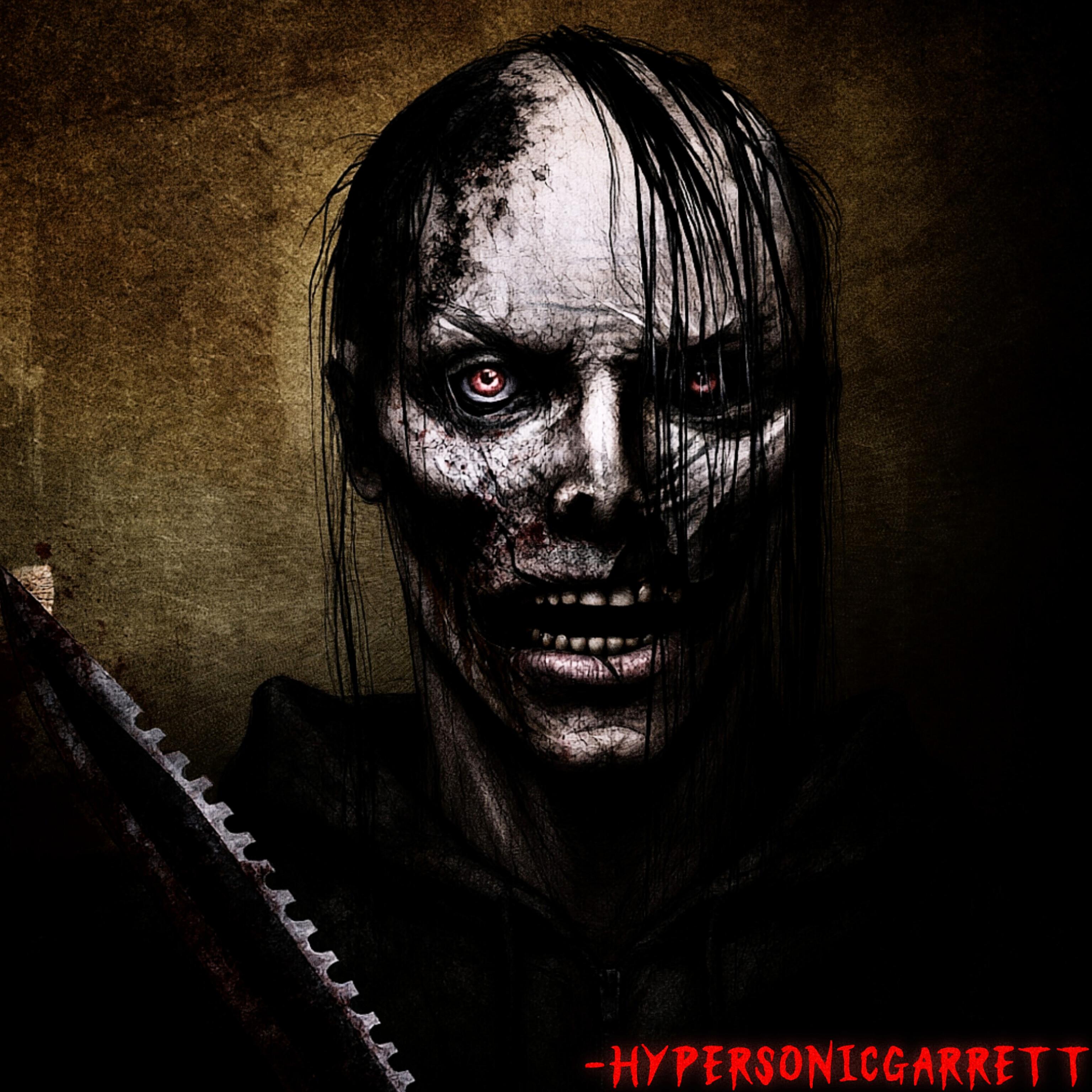
Just finished this earlier tonight- after nearly 10 hours of work, i'm satisfied on how this turned out.
This was created with digital tools / painters on my computer, and formatted on my ipad / other devices.
This is just a reimagining of David Near's Jeffery Mason form The Mourge Files, as that is one of my favorite versions of Jeff. I basically just made the design more. Y style, while still remesisant to the original art.
r/creepypasta • u/shortstory1 • 4h ago
I was in Thailand for a holiday, and I did something stupid. I started a fight with someone and I got arrested. I was getting taken to be put into a cell and then someone put me to sleep. I awoke in some cell with other random people, but the cell doors were open.
Even though the cell doors were open, no body was going out. As I tried to walk out of th cell, every other person inside the cell physically stopped me.
"If I couldn't walk out of this cell so can't you!" They all said to me.
This cell wasn't the prison keeping me in here but these people were each other's prison. Every time I tried to walk out, every one else would force me back in.
They would all say "if we all stayed here for 10 to 20 years so will you" and I didn't understand this. It's like because they suffered they wanted everyone else to suffer who ever entered this prison with open doors.
Then I told one guy in here with me about my life in England. He loved my life and then he told me to run out of the prison and he will protect me.
As I ran out he started to stab everyone who tried holding me back. I managed to get home.
r/creepypasta • u/Kreemkorn23 • 9h ago
"Come on, just listen to it!" Julian grinned, ready to share his newly discovered theory.
"I don't see why I have to. The two songs don't connect." Maya tried to avoid the rabbit hole Julian had dug himself into.
"What do you mean you don't see how?! 'Rock Lobster' is literally about a sea creature emerging from the ocean and causing havoc at a beach party, and 'Give Me Back My Man' is the sequel. It’s the aftermath of the chaos when the creature steals the singer's man, and she's pleading for him back! How can you not see it?" Julian leaned in, shaking with excitement.
"I don't think that's what those songs are about, Julian."
"Come on, Maya! Just play along. Humor me a little, at least." Julian kicked his feet in the water below the dock where they sat under the bright full moon.
"Fine, I'll play along," Maya said. "And you better get your damn feet out of the water before the 'Rock Lobster' gets you."
"Okay, okay, you don't have to play that much into it," Julian chuckled, throwing his hands up in defeat. "Eh, actually," he said, pointing a finger up, "the rock lobster is a saltwater crustacean, and this lake is freshwater. I'm one hundred percent safe from any of its dangers." He splashed his feet to prove his point.
"Fucking nerd," Maya teased, rolling her eyes. "Just play the damn songs and get it over with."
As Julian reached out to press play on his new boombox, his leg jerked beneath the surface. He stared at Maya in confusion. Then came another jerk. His pupils widened.
"Ha ha, very funny. Just play the song already," Maya mocked, completely misreading his expression.
Julian couldn't get a word out. His throat pulsed rapidly, his skin turned paler than the moonlight. Then came one final, violent yank. His spine arched as he was pulled forward. His head snapped back, striking the wooden planks of the dock with a loud crack that echoed through the woods. As he went under, his hand slapped the radio, triggering the track right before he slipped beneath the surface.
"JULIAN!" Maya yelled frantically, lunging forward. She looked into the dark water, seeing only her own reflection framed by the blue moonlight. The lone, twangy surf-guitar riff of "Rock Lobster" echoed across the lake while she waited for him to surface.
Suddenly, the lake began to bubble, followed by a deep, hollow gurgle. A massive, shadowy swell rose to the surface, growing bigger and bigger. Maya shuffled backward on all fours, wood splinters tearing into her knees from the withered planks.
As soon as she rose, the boil exploded, drenching her in murky lake water and blood. She tried to run, but Julian’s body landed on the dock right next to her, bleeding out. Maya dropped to her knees, touching his face, before a scraping noise by the edge of the planks made her look over.
A massive black arm emerged from the murk, its claws gripping the wood. A second arm rose behind it, holding Julian's severed leg. It tossed the limb onto the planks and began hauling itself up.
Before she could see the rest of it, Maya bolted.
She sprinted across the rocky parking area to Julian's rusted 1978 orange Gremlin, threw herself inside, and locked the doors. She frantically patted around the ignition and flipped open the sun visors. Then realization hit. The keys were in Julian's pocket.
She stared across the lot toward the dock. His dead, helpless eyes looked back at her, the illuminated boombox still blasting that stupid song.
From the darkness, it emerged. A towering humanoid silhouette, stomping toward her with slow, thunderous steps. Its wet hisses grew louder as it got closer. It reached the car. The world shook once, then again.
Maya could see it clearly now, a massive black-scaled amphibious creature standing at the nose of the Gremlin, nudging the bumper with its web-clawed foot, a predator playing with its prey. The impact rattled the rusted frame, and the worn latch on the rear glass hatch popped open. Maya snapped her head over her shoulder at the click, the upbeat surf guitar drifting across the lot and into the opening.
Through the popped hatch, she saw her escape, and right beside it, Julian's old aluminum baseball bat.
The creature glared at Maya through the windshield, looming over the hood. With a deep growl, it leaped onto the hood, crushing the metal inward and violently rocking the car as Maya scrambled toward the back, her fingertips inches from the handle of the bat.
The Gremlin’s hood caved in slowly as the creature pounded the metal. Maya was halfway out the rear hatch, bat in hand, her grip tightened over the etched letters J-U-L-E-S.
With a snarl, the monster reared back on the hood and kicked at the windshield. Its clawed foot punched cleanly through the glass.
Maya scrambled free of the car and hit the gravel. Across the lot by the dock, the upbeat surf guitar finally faded out, immediately replaced by an eerie, hypnotic track led by an unbothered female vocalist.
"God, I hate this band," Maya groaned.
A sharp, wet cry echoed through the woods. She turned back around to see the reptilian monster thrashing on the hood, its leg trapped in the shattered windshield. It shrieked again, high-pitched and frantic.
"So you're stupid," Maya mumbled. She shifted her weight, ready to bolt, when her boot hit something heavy. A large river rock, then another. She was surrounded by them. Bending down, she scooped one up. She rolled the rock in her hand.
The familiar weight brought her back to the State Championship softball game one year ago. She was up at the plate with Julian's lucky bat. He stood in the stands cheering her on. The pitch came. She swung.
PING! The river rock pelted the monster's lipless, saw-toothed mouth. A mournful wail tore from its throat as it tried to pry its leg out.
PING! Another rock struck the exact same spot. It belted out an angrier roar, still stuck in the glass.
"Bases loaded, two strikes, two outs." She tossed a heavier, jagged stone high into the air. As it dropped into her strike zone, she swung harder than she ever had. PING! The rock soared and smashed straight into the monster's alligator eye.
The creature howled in agony. Its eye burst, pouring thick, ink-black blood down its snout.
"HOME RUN!" Maya screamed.
Her celebration was short-lived. The creature violently jerked its leg free from the glass. Bleeding from its lacerations and blind on one side, the monster locked onto Maya, ignoring the pain. It screeched, leaped off the hood, and lunged.
Maya didn't flinch. Adrenaline surged through her veins as she tightened her grip around the handle and charged straight at the titan. It swiped wildly, its claws grazing her cheek as she ducked the brunt of the blow. She darted to its vulnerable side and drove the aluminum barrel into its ribs.
The monster spun, trying to keep her in sight, and lashed out with a long arm. Maya dodged again, slipping right back into its blind spot. Spotting the creature's shredded leg, she swung with everything she had. The impact buckled its knee. Before it could recover, Maya swung straight for its head.
A direct hit to the temple. The beast collapsed onto its side, gurgling, its voice trapped in its throat.
"Chomp this, you freshwater motherfucker!" Maya raised the bat high and brought it down with brutal force onto its skull. A loud crack echoed through the trees. Its black blood splattered across her face and shirt.
Exhausted, she turned and walked back toward the dock where Julian lay, bat still in hand. When she made it to him, her adrenaline wore off. The reality of him being gone hit her hard. She dropped down to one knee, looked down at her boyfriend, touching his cold, wet face.
"You were right, Julian. I can see it now."
The music had finally stopped, until a mechanical button clicked on its own, and the first track started up again. Startled, she jumped up, ready to swing. She looked over to the boombox sitting at the edge of the wood planks.
"Oh, no you don't."
Maya walked over and used the tip of the bat to nudge the stereo into the water.
As it sank, a short-circuit crackle hissed from the speakers, and the song kicked back on. It jumped to the slow, eerie breakdown. Distorted by the water, the shrill, warbling sea-creature shrieks echoed up from the deep before cutting off as the boombox struck rock bottom.
r/creepypasta • u/AbKane667 • 7h ago
The cows in my fields wouldn’t stop staring at me. They stood behind the fence, eyes fixed on mine, watching my every move.
It all started on a cold, misty morning. I didn't even want to leave the house, but my cows needed care. I loved them, even though they were sometimes hard to care for. I didn't even raise them for meat. I only took their milk, and when they couldn't give it, I'd let them go humanely. Not many farmers can say the same. I even mourned their deaths. Daisy, my poor girl, went down last week, but nothing goes to waste on this farm. I put on my thick coat and walked to the stable.
From a distance, I heard strange, chaotic, loud thuds that grew stronger as I approached. Were the cows okay? I hurried to the stable, but all the noise stopped once I opened the door. All the cows turned to me like little children who had broken something, but in an instant, they turned their heads back and walked around aimlessly.
The air in the stable was cold but thick. I didn't remember it being this way. I picked up a bucket of feed and walked to the troughs. I turned a corner and stopped, frozen. Their feed lay all over the ground, thrown around on poles and walls, and the metal from the troughs lay on the ground, covered in the feed. All the cows still wandered around, except one, which stood by the feed and stared me down with Daisy's tag in her mouth.
The bucket almost fell out of my hands.
"Hey," I screamed at the cow.
It stared at me for another second, then dropped Daisy's tag back into the feed and walked away, joining the others.
I knew my cows were smart, smarter than others, but this. I stood by the broken troughs, but the longer I did, the more uneasy I felt. It was that feeling you get when someone's watching you, but each time I turned, the cows just strolled around. I must have been going crazy. I took the broken pieces of metal and walked to the shed.
The inside still smelled like stale meat and copper. I dropped the metal next to the table and pulled out my tools. The bonesaw was still on the table, uncleaned. Tears filled my eyes. I missed my Daisy so much. My cows probably did too.
I grabbed a cloth to wipe the bonesaw down when, from outside, a loud, deafening moo rang out. Pain shot through my ears. The bonesaw slipped out of my hands. I ran into the cold, misty morning. My heart sank into my stomach. All of my cows stood behind the fence. Their dark, soulless eyes stared right into me. I clenched my fists and shut my eyes. This couldn't be happening; it was all a dream, but when I opened them, they were still there.
Then the stomping started again, the same as I’d heard at the stable. Only now it wasn’t chaotic. It was rhythmic, slow at first, then faster. The ground shook under my feet. I wanted to move, get away, but my feet felt stuck in the dewed grass. Another moo sounded. My ears rang in pain. The fence post snapped, sounding like dry bones cracking. Daisy's tag glistened in one of their mouths as they came. Nothing goes to waste on this farm.
r/creepypasta • u/Lilstrawberry2648 • 8h ago
Do we think that Electrical by BRAZYBALI specifically the “Do what they told me, told me
You've gotta show me, show me
They think they know me, know me
You really owe me, owe me
Do what they told me, told me
You've gotta show me, show me
They think they know me, know me
The feeling so electrical” part would work for BEN drowned since Ben was manipulated and coerced by the Moon children cult and he died to the cult and got trapped into a video game
r/creepypasta • u/TheDarkSilentium • 8h ago
Hi folks hope you enjoy this conclusion to this story but the talented Helmore. Definitely go check out their other stories on Reddit!
Happy listening
(No Ai)
r/creepypasta • u/gh0stmiilk • 1d ago
I had alot of fun doing this! I might do more but Ive posted this cosplay in a few other places and it didnt gain much traction so we'll see what I do 😭
r/creepypasta • u/Post-Comprehension • 9h ago
Short animation for a horror project based around monsters that want you to eat them, so they created a fast-food restaurant.
r/creepypasta • u/virtual_anxiety17 • 20h ago
You don't really look at your reflection when you're brushing your teeth at night. You look at your eyes, check if you need to shave before morning, and turn off the light.
Looking back, I think it started Monday afternoon, even though I didn't see anything in the glass until the next night.
Monday was a slog. I work accounting from a desk jammed into the corner of our spare bedroom, staring at spreadsheets for eight hours while my phone buzzes with clients and managers asking for numbers. By five, my lower back was locked up and my eyes felt dry enough to scratch. Claire had picked up a closing shift at the clinic, so the house was dead quiet except for the refrigerator cycling on and off. I microwaved leftover pork chops, ate standing over the kitchen sink so I wouldn't dirty another plate, and went out to the garage to hit the heavy bag for twenty minutes before bed.
I was sitting on the workbench unwrapping my hands when my work iPad pinged on the kitchen counter inside. A message from my supervisor, Dale: Good catch on that report from Friday. Saved us four thousand bucks.
I stared at the screen with my knuckles still pink from the canvas. I'd closed my laptop at 4:58 on Friday and hadn't touched that file since Thursday afternoon. I figured Dale had mixed me up with someone else on the team and didn't bother correcting him. You don't turn down free credit from management.
The bathroom mirror was the next night. Around eleven, brushing my teeth half-asleep, I leaned down to spit into the basin. In the glass above the faucet, the guy looking back stayed upright for a fraction of a second longer before dipping down.
I froze with toothpaste foam on my chin.
He stared back—same buzzed head, same patchy beard, same faded gray thermal shirt with a grease stain near the hem from changing the oil on my truck two weeks ago. I lifted my right hand slowly. His left came up. Right, left. That's how mirrors work. I spat, rinsed out the sink, and blamed the cheap LED bulb flickering over the vanity.
Wednesday dragged. Nothing weird happened all day. Claire came home around eight, complained about a broken printer at the clinic, ate half a bowl of soup, and went straight to bed. I stayed up watching a hockey game with the volume turned down low until midnight, then went into the kitchen for water.
The only light on was the little amber bulb over the stove. I set my keys by the sink, dropped one onto the linoleum, and bent down to grab it. When I stood back up, I caught myself in the black glass of the window over the faucet.
My knees popped as I straightened my back. In the window, I was already standing completely upright, hands resting flat on the edge of the counter, watching me rise.
My stomach went hollow. I stayed frozen. So did he.
"You're tired," a voice said from the living room doorway.
It was my own voice—my exact flat, gravelly baritone, using the same deadpan tone I use when I'm talking myself out of overreacting. My mouth hadn't moved, and the living room behind me was empty.
"Just go sit down," the voice said from the dark hallway. "Put the game back on. Quit staring at the glass."
I backed away from the sink, keeping my eyes locked on the window. The guy in the glass stayed by the counter. He tilted his head to the left—the exact neck-crack habit I do when my shoulders tighten up—and walked out of the frame toward the reflected living room.
I sat on the edge of the couch with an aluminum bat across my knees until five in the morning, listening to the furnace kick on and off.
By Thursday afternoon, I was running on two hours of broken sleep and four cups of coffee. Around noon, I walked past the hallway bathroom on my way back to my desk and caught a glimpse of the vanity mirror through the open door.
The guy in the glass was standing sideways in front of the reflected sink, rolling his shoulders back, practicing a smile. A small, easy, relaxed smile—the kind I used to give Claire before we had bills stacked on the dining table and a crumbling retaining wall in the backyard that needed to be torn out by hand.
He saw me in the doorway, dropped the smile immediately, and snapped back into matching my walk a beat too late.
Claire came home early that evening with groceries. I was trying to clear clutter off the kitchen counter when she set the bags down and wrapped her arms around my waist from behind, pressing her cheek against my shoulder blade.
"Thanks for calling the township about the permit this morning," she murmured into my shirt. "I didn't think you'd have time between meetings."
My throat went dry. "What permit?"
She pulled back slightly, frowning. "The deck permit. You texted me at ten-thirty saying you sorted it out with the guy at the borough office and paid the fee."
I dug my phone out of my pocket. Nothing in my sent folder at ten-thirty. My last text to her was from seven that morning asking if we needed milk.
"Yeah," I said, my voice cracking slightly before I cleared my throat. "Must've been a network delay. No problem."
When she turned around to put the eggs in the fridge, I caught sight of the dark glass on the front of the oven. Reflected in the black panel, standing three feet behind Claire, was me—even though I was standing across the kitchen by the pantry. The reflection was reaching out, gently tucking a stray piece of hair behind Claire's ear.
"Don't ruin it," my voice whispered from somewhere near the cellar door, soft and reasonable. "Look how tired she is. She's finally having a good day."
Friday night, Claire went upstairs to shower around eleven. I sat on the couch staring at the dark, unlit TV screen across the room.
In the real living room, laundry sat piled in two plastic baskets by the stairs, an unopened stack of medical bills rested on the coffee table next to a half-empty can of beer, and the drywall by the hallway still showed an unpainted patch where I'd fixed a doorknob hole three months ago.
Inside the black glass of the TV, the laundry baskets were gone. The coffee table was bare. The drywall was painted a clean, warm gray, and soft lamp light spilled out of the hallway.
Sitting on the reflected couch was Claire—wearing a blue sweater she hadn't touched since our anniversary two years ago—leaning her head against the shoulder of a man in my flannel shirt.
I gripped the edge of the couch cushion until my fingers ached. In the TV screen, the man in my shirt slowly turned his head away from Claire and looked straight out of the glass at me.
He looked rested. The dark circles under his eyes were gone, and his shoulders sat straight instead of hunched from eight hours over a keyboard. Seeing my own face without five years of exhaustion stamped into it felt worse than looking at a corpse.
"Look how easy it is," my voice murmured from the dark kitchen behind me. "No bills on the table. No noise in your head. Just step closer."
I stood up too fast, knocked my beer can onto the carpet, and bolted up the stairs without looking at the hallway mirror. I got into bed, pulled the blanket over my head, and waited for the shower to shut off.
Saturday morning, I covered the bathroom mirror with a bath towel and threw an old bedsheet over the living room TV. When Claire asked why the hell there was a sheet over the television, I told her I was patching the living room ceiling and didn't want dust on the screen. She gave me a long, quiet look—the kind where she's too worn out to argue—and left to run errands.
Without the glass, the house felt almost normal. I went out to the garage, lifted for forty minutes, hit the bag until my knuckles burned, and started thinking maybe sleep deprivation had finally caught up to me.
Then I walked past my truck parked in the driveway.
In the tinted driver's side window, I was wearing a clean button-down shirt, holding a set of keys, standing next to Claire while she laughed at something I'd just said.
"You can't cover every window in town," my voice said from inside the dark garage behind me, patient and unhurried. "And you're already falling behind. She likes me better anyway."
Tonight—Sunday—Claire went to bed around nine-thirty. She kissed me goodnight on the cheek before heading upstairs, pausing for a second with her hand on my arm.
"You seem different this week," she said softly. "Calmer. Whatever you're doing, keep doing it."
All I'd done all week was avoid mirrors.
After she went upstairs, I stood in the dark kitchen with every light off, staring at the black window over the sink. My hands were shaking, so I shoved them into my pockets.
At 11:45, the guy in the glass walked into the reflected kitchen. He poured two glasses of water, carried one out toward the reflected stairs, and paused before leaving the frame. He turned and looked straight through the window at me.
He walked right up to the inside of the pane until his face was inches from mine—same crooked nose, same scar over the left eyebrow, same build—and pressed his palm flat against the glass.
Behind me in the dark kitchen, footsteps padded across the linoleum. My exact heavy heel-strike, coming closer until warm breath hit the back of my neck.
"Don't make a fuss," my voice whispered right behind my ear. "You're exhausted. Let me take a turn."
I swung my elbow back as hard as I could and hit empty air. Before I could catch my balance, a hand reached straight out through the cold glass of the window, grabbed the front of my shirt, and pulled.
Cold hit me all at once, like dropping through thin ice, and the kitchen snapped inside out around me.
I'm sitting on the linoleum floor now, typing this onto my phone while my battery sits at four percent.
The kitchen around me is spotless. The counters are clear. There's no stack of unopened bills on the dining table, and the drywall in the hall is painted a smooth, clean gray.
Through the black glass of the window over the sink, I can see into my real kitchen. My dirty dishes are still sitting in the basin. My laundry baskets are still piled by the stairs. And standing by the stove, wearing my faded gray thermal shirt, a man with my face is pouring a cup of chamomile tea, humming quietly to himself as Claire's footsteps come down the stairs to meet him.
I banged on the glass until my knuckles bled, screaming her name until my throat tore.
On the other side, he didn't even look up. He just smiled at Claire, handed her the mug, and reached over to pull the kitchen blinds shut.
r/creepypasta • u/gamalfrank • 1d ago
My mother died in a car accident when I was six, and I don't remember the crash itself. The doctors told the police it was normal for a child to lose a day like that, but sometimes I think my memory is standing guard in front of that day on purpose. What I remember starts after the hospital, in the house at the end of our street, where my father sat me down at the kitchen table and held both of my hands.
"Mom is gone, sweetheart," he said. His eyes were red. His thumbs kept rubbing the backs of my hands. "But there's an angel who knows you survived, and he's going to come take you from me. He'll knock on our door every day and ask about you. If you look at him, you'll burn. His eyes are made of light, and that light burns anyone who isn't ready for it. So when you hear the knocking, you run to my wardrobe, you close the doors, and you don't make a sound. No matter what you hear. I'm the only person you have left. If the angel sees you, you'll lose me too."
I believed him. I was six, and he was all I had.
The angel came every day for years, and he never missed one. He came at the hour when the sun stood level with our front door, when the hallway was brightest. I always knew he was coming before the knock, because my father would start getting tense once the light touched the door frame. He'd close the windows and pull the curtains tight, and then he'd look at me with one look that meant one thing: the wardrobe. Now.
I'd stand inside between his coats, breathing in mothballs and old wool, my ear pressed to the thin wood of the door. I used to count my heartbeats, and I told myself that if I reached three hundred before the knocking came, it would be an easy day. I never once reached three hundred. While the angel was in the house, the line of light under the doors grew brighter, and the air went still, the way it does before a storm or that what I have learnt from books.
The knock was soft. Three light taps, perfectly even, almost like music. Then my father opening the door. A long silence. Then the angel's voice.
The voice was soft and calm in a way that made you want to cry. I could never make out a whole conversation through the door, only pieces of it, and my father's answers, low and tight. Every visit ended the same way, with the sentence that stopped my heart: "I know he's here. Let me see him."
And my father would answer in a strangled voice: "My son is dead. My son died with my wife. I've told you that a hundred times. Leave me alone."
Then the door would close, and the worst fifteen minutes of the day would begin.
Because my father was never the same after the angel left. He'd open the wardrobe and pull me out with his face in a different color, and the screaming would start. The angel was still after me, it came every day because of me, I was the reason we couldn't live in peace. And then he'd hit me. People call that kind of thing discipline. His eyes were fixed on a point somewhere behind my face. When he was done, he'd sit on the floor and cry and hold me, and say, "I love you. I do this to protect you. You're all I have left."
I believed that too. He was the only person in my world, and I loved him no matter what he did to me.
We lived like that for seven years. The angel came, I went into the wardrobe, my father screamed, then cried and held me, and the next day reset to exactly how it was. I grew up inside that wardrobe, and I did what I was told, because it was the one rule that kept the world running.
You need to understand what kind of child I was. I never went to school. My father said schools were full of eyes, and eyes ask questions, and questions bring the angel. He taught me to read and write himself, so there'd be no reason to send me anywhere. I grew up believing freedom was a thing in books. Only in books.
But something was slowly changing inside me.
It started with the whispers.
Some evenings, while the angel was in the house, I'd hear my mother's voice coming from somewhere past the wardrobe doors. Her actual voice. Soft and warm, calling my name the way she used to. "Joseph. Come out, sweetheart. Come to the angel. He's waiting for you." The first time, my hand was already on the wardrobe door before I understood what I was doing.
I told my father the next morning. He went pale, held my face in both his hands, and told me that was exactly how the angel takes children. It mimics the voices of the dead. It learns the voices of the people you loved most and calls you with them, because no child can refuse his mother's voice. "Your mother is gone," he said. "Anything that sounds like her is the thing that wants to take you. Never answer it. Never open for it."
The voice came back many times over the years, always while the angel was in the house. Every time, I pressed my hands over my ears and recited my father's rules until it stopped. Sometimes I cried through the whole visit, because for a few minutes the house had my mother in it again, and I wasn't allowed to answer her.
And once, just once, I broke the oldest rule. I looked.
I was about thirteen. The knock came while my father was in the bathroom, and he was a few seconds late running to the door, so the wardrobe doors weren't shut yet when the angel came in. Through the gap, the hallway went white, the way everything does in the second after a camera flash, and something tall was standing in the middle of it. I couldn't make out a face. It had eyes, and looking at them hurt, like needles pressing into my retinas. My eyes flooded, I bit down on my own arm to keep silent, and I couldn't look away until the burning forced my eyes shut.
I burned, exactly like my father said I would. My eyes stayed red and leaking for three days. A white afterimage of the hallway floated over everything, stamped into my vision.
That's how my father found out I looked. You can't hide burned eyes from the man who warned you they'd burn. That night was the worst night of my life, and I still can't talk about it in detail. It's enough to say I spent a week unable to walk without a cane, and that when he finished, my father said a sentence I'll hear in my ear until I die: "I told you not to look. I told you. Are you trying to leave me like your mother did? You want to leave me too?"
For years, I didn't understand that sentence. My mother didn't leave anyone. My mother died. I kept telling myself it was just a mistake from a screaming man, but it ate at me anyway, slowly.
When I turned nineteen, my father started getting old at a strange speed. His hair went white in a single year, his hands began to tremble, and he spent his days in his armchair by the window, staring through the curtain at the street. The screaming faded because there was no voice left in him to scream with. I'd spent years bracing for it, and now the house was quiet and I didn't know what to do.
His illness forced me out of the house for the first time since I was six. Someone had to buy his medicine and take him to the clinic, and there was nobody else. Before my first trip he gripped my wrist and made me repeat what I'd say. If anyone asks, I'm his nephew, his dead brother's son, come to look after a sick old man. "You are not my son," he said. "My son is dead. Say it." I said it to the pharmacist, to the doctor, to the neighbor who stopped me in the street, and every time the word sat like a stone in my mouth. I only went out in the morning, and I was always back before the light reached the door frame.
The angel still came every day, but my father stopped opening the door. He'd turn off every light and sit beside me in the dark, holding my hand with his trembling one until the knocking moved away. Once, about a month before he died, he said to me out of nowhere, "If anything ever happens to me, don't open the door for anyone, even if you know who's knocking. Promise me." I promised. It was the last promise I ever made, and it's the one I broke yesterday.
Then, one morning two weeks ago, I came down the stairs and found him in his armchair in front of the window, asleep. Except he wasn't asleep. He died waiting for the angel, exactly like he did every day, except this time no knock came. The first day in fourteen years without a visit.
And I sat next to him and felt relieved.
I cried that day, for the child who spent seven years standing in a wardrobe. Then I called the people who collect the dead, and while I signed the papers my shoulders kept rising on their own, like my body was still waiting for him to come through the door.
And the ugliest part? I tried to grieve. I told myself he was my father, that he raised me, that he loved me in his way. Then I'd remember the cane, and the screaming, and the wardrobe, and I'd catch myself hating him. And I hated that I hated him. I kept thinking, maybe if I'd looked at the angel back then and let the burning take me, that would've been kinder. At least I'd remember him now the way a son is supposed to, instead of feeling all this filth.
The funeral was small. A few distant neighbors, a short prayer. They knew me as the nephew who'd come to nurse him, and they shook my hand and said the old man was lucky to have family at the end. Then everyone left, and I stayed alone in the house for the first time in my life. That first night, I locked all three locks the way my father used to and sat in the dark with my ear pressed to the wall. Nothing happened, and I sat there until morning anyway.
Two weeks passed, and every day at the angel's hour I'd find myself standing by the front door without knowing how I got there. I'd be holding a plate or a book, and then I'd just be there, waiting for a knock.
Yesterday, at 4:00 PM, someone knocked.
Three soft, evenly spaced taps. Like music. Exactly the way they'd been for fourteen years.
I don't remember walking to the door, but I found myself in front of it, my heart pounding the way it used to inside the wardrobe. I told myself it was impossible. The angel only came while there was someone left to hide me. But the knocking came again, calm and patient, like someone prepared to wait another fourteen years.
I looked through the peephole.
And I saw him.
A pale face, wide eyes, an unnatural stillness, and light all around him from the low sun behind his shoulders, turning his hair into something like a halo. I'd never seen that face in my life, yet I knew it better than any face on earth. And for the first time in my life, I was the one outside the wardrobe.
And there was nobody to tell me not to open it.
I opened the door.
I stood facing the angel and waited to burn. I'd burned once before, through a gap two fingers wide. This time there was no gap. I shut my eyes and clenched my whole body and waited for the light to eat me, exactly like my father promised fourteen years ago. One second. Two. Ten. I was still standing. I opened my eyes slowly and found the angel staring into my face, and he was looking at me the way people look at something they lost a long time ago.
"Hello, Joseph," he said. "Finally."
It was the same voice from behind the door all those years, but without the wood between us it came out clearer, and far more human than I'd ever let myself believe. And he said my name. My name, out loud, in plain air, by someone standing in front of me. I'd forgotten what that sounded like.
"Aren't you going to burn me?" I asked.
He was quiet for a second. The angel's eyes filled with tears. "No, Joseph," he said. "Nobody is going to burn you. I came to take you out of here. That's what I've been trying to do for fourteen years."
He came inside, sat in my father's armchair, and told me everything. I'll tell it the way he said it.
The angel is not an angel. His name is Mr. Harris, and he has worked in social services for fourteen years. My case was the first one he was ever handed, and it will be the last one he ever closes. After the accident, the hospital recorded that the mother died, the child lived, and the father left with his son. But a few months later, my father went and reported me dead, and he produced a death certificate for a child who never died.
Social services doubted it. A nurse remembered seeing me with my father after I was reported dead, and a neighbor kept reporting a child crying inside this house. So the state sent someone to check, and that someone was Mr. Harris. It was his first case. He knocked on this door and found a man telling him his son was dead, in a house with a child's plate still on the table and small shoes by the door.
"I never saw you," he said. "Not once in all those years. But one day, early on, in the middle of your father telling me you were dead, I heard a child cough somewhere in the back of the house. A man does not forget that."
He filed his reports. His supervisors asked for evidence, and a cough is not evidence, and a death certificate is a state paper that nobody argues with. The case was closed, reopened, closed again. He was told to stop visiting, and my father threatened to file a harassment complaint against him. He kept coming anyway, on his own time, at the hour my father came home from work, because that was the one hour the door ever opened.
"I'm not going to tell you I did everything I could," he said. "I should have broken that door down. But I kept knocking. It was the one thing they couldn't take from me. When the state recorded your father's death, the file finally moved. It took me two weeks to get the papers in order. Then I came back and knocked, like every day."
"And sometimes, while your father was shouting at me, I said your name," he told me. "I said, Joseph, it is safe, come out. I never knew if you could hear me."
I heard him. A man's voice pressed flat by walls and a heavy wooden door sound like whatever a child needs it to be. I needed my mother. My father said the angel was wearing her voice to trick me, and I believed him, because believing him was the only way to stay in that wardrobe while her voice called my name.
I asked him the question that had been choking me since I opened the door. "Why? Why all of this? Why fourteen years of coming every day for one child?"
He opened the bag he was carrying and pulled out an old yellow file. Inside was a photograph of the accident. The car was completely crushed. My father stood beside it, and I was there too, a small child wrapped in a blanket by the ambulance. Then he told me the second truth.
The accident report contains my father's own statement. He told the investigation that the crash happened because his son, sitting in the back seat, kicked him in the back while he was driving, so he lost control and hit the bridge. Me. I killed my mother, in his head. A six-year-old playing in a car, a child's kick against a seat, that's what threw an entire car off a bridge. He didn't mention his speed. He didn't mention the fight he and my mother were having in that car. He mentioned me.
Mr. Harris looked me in the eyes and said, "Your father was punishing you, Joseph. That's what the hiding was. Every day I came, he was reminded that you existed, that you were alive, and that she was the one who died. And every day, he took his revenge out on you for something you never did. I don't know if that was revenge or madness or both. I only know what it did to you."
We sat in silence for a long time. The sunset came through the window and lit the whole room, and for the first time I saw this house in real light. It's so much smaller than it is in my memory. A small room, a small wardrobe, and on its door the marks I carved with my fingers from the inside.
Mr. Harris stood up before he left. He stopped at the door and said one last thing. "I came every day because I knew that one day, this door would open from the inside. Today is that day. If you want to come with me, there are people whose job is to help people like you. And if you don't want to, I'll come tomorrow at four, like every day, and I'll wait."
Then he left. I listened to his footsteps in the street, the same footsteps I used to hear from inside the wardrobe. Except this time, I was the one standing inside the house. Free in it.
I stayed in the doorway a minute before I closed it. The sun was low and level with the frame, and the hallway behind me was full of white light. I don't know what I saw through that gap when I was thirteen. I know what the light in this house does at that hour, and I know what a frightened child can make of it. That's the explanation I give myself. My eyes stayed burned for three days, and I have no explanation for that at all.
I'm writing this now at the kitchen table, the same table where my father sat me down fourteen years ago and told me about the angel. The house is quiet, and the light above my head keeps flickering because the wiring here is old. Every time it flickers I look up at it, and I'm not afraid.
I haven't forgiven my father. I don't know if I ever will. I'm not sad that he's gone, and I'm finally able to say that without shame. I spent fourteen years afraid of the one person who was trying to get me out of that house, and I did it because my father told me to be. That's the part I can't get past.
Tomorrow at 4:00 PM, I am opening the door.
And this time, I'll look into the angel's eyes, and I won't burn. I'll go with him.
r/creepypasta • u/Middle_Eye882 • 11h ago
The following confession was the last written correspondence of fransican friar, Pedro Bartolomeo De Rojas y Sandoval, a former captain of his catholic majesty Phillip II of Spain and conquistador of his empire. The letter was addressed to Bartolomeo’s brother, Miguel, who had died two decades earlier during the battle of Armada off the coast of England. The translation given to us by the London mystic, Henry Percival Wycliff, was discovered by a professor from Saint Leo University in Florida. The paper itself was found in the false bottom of an old chest bought from an overseas auction.
It’s an old letter, and some of the old-world sensibilities seep through, but I’ve done my best to censor and re-word some of the harsher language. If you have any connection to this account, information on Bartolomeo, or simply advice on how to best proceed with further research from here, PM me and we’ll talk. Thank you for your support.
ANNO 1590, 5th day in the month of August,
My benevolent, holy brother, I beg your patience once more as I confess with both mouth and ink the sins I have committed in the name of our divine father and his emissary, King Phillip. I hear your moans in the corridors of the abbey. The scraping of your nails upon its stones sends ice down my back that my meager candle cannot warm me from. If I must tell it again, I shall once more and pray it will be the last. No longer shall it exist in the confessional, nor shall I seek absolution for my actions through the rosary of our holy mother, but in plain I shall tell it here. In ink thick as blood, I will explain how I killed them- how we killed them all- and how this curse that afflicts us shall end our line forever unless divine mercy pardons us. Even now, I hear the damned braying like goats. Their anguished moans upon the sands of the Matanzas are piercing still, though decades lay between us.
Perhaps then, you shall rest from your hunt and return to the grave from whence you came, but, on my soul, I shall endeavor not to join you. I cannot become as you are. If that comes to be, then it is worse than Hellfire we shall face. I beg, plead with you, patience, dear brother, that I may explain and with my explanation ease your tormented form.
In the year of our savior, 1565, I sailed with Pedro Menendez de Avilles to Florida to build his city of St. Augustine and to destroy the French Heretics who, like vermin, were festering above St. John’s river in their abominable temple of *la Caroline.* It was of chief interest to Menendez that these heretics be crushed and that the lilies of France not take root in the land rightfully claimed by our righteous fathers before us.
Was it not we who’d brought salvation to the natives? Was it not we who led them to understand the power of our God and folly of their pagan beliefs? Yes, just as Cortes placed the Aztec under his heel, so had we the Timucuan and Guale. We crushed their sinful ways as a man does a beetle, and instructed them in the way of the Holy Church. Yet the French, our catholic brothers and sisters, using the blasphemous hands and tongues of Lutherans, sought to usurp our lands and the souls we’d justly won.
Jean Ribault, that chief of the infidels, was in our sights when first we arrived, and, had he not cut his anchors and fled upriver, we would have caught him. Instead it was God’s will that we turned southward from the river to make landfall. Upon the banks of Florida, we raised up St. Augustine from the muck and mire. Our priests were quick in instructing the natives and faster still in establishing their mission among the palms and oaks of that humid land.
I was a captain, as you know, and held fast to my sinful ways, as did many of the men. How many nights did we spend in wretched bliss, cradling in our arms the divine beauties of that native land? As Adam saw Eve in paradise, so saw we the Timicua women, and knew them all the same. How cheaply we gave ourselves away to vice. We drank smoke from their tobacco and warmed our sweating bodies with rum. Like the judges of old Israel, we did what felt right in our own judgement, not caring for the opinions of God or man.
In this stupor we lounged like seals. Between the building and drilling and unrighteous freedom we utilized, we became slothful and soon banished all thoughts of the honor of God or the glory of Spain. So brazen was one man’s attitude in entitlement to our new land, I recall him striking down a native convert who’d slighted him. With the assistance of another from his rank, they held the crying wretch down and made a eunuch of him! The poor soul survived that evil operation, but deserted his tribe in the night, shamed and fearful of the further actions his christian brethren might do to him.
Menendez handled this incident as he handled many others. He had the men flogged within an inch of their life and ordered them healed with salt. The punishment proved cruel enough that the assistant to the crime died of infection before the week was out. The main offender would have survived as well, had his throat not been mysteriously sliced open in the night. Menendez made no comment on the murder moving forward and had the man buried quickly. He no doubt feared an uprising or betrayal from our native allies and knew no help from Spain would arrive to save us if things went sour.
I suspect, in those days, that emotion did much of his thinking for him. Fear of failure, fear of annihilation, all these and more plagued him. He answered directly to King Phillip, and no doubt the fear of offending him haunted his mind as well. Perhaps those emotions foreshadowed what was to come in the days ahead and the blood that would stain the flowers of Florida.
Weeks went by and the Lord made the heavens speak plainly to us. A hurricane was frothing in the virgin blue skies of the Atlantic, and we made every effort to prepare for its onslaught. In the midst of our work, our guard spotted three french ships coming down from the north, intent on no plainer purpose than wiping us out. Menendez, full of fire at the prospect, ordered what ships we had to flee both the storm and the French by means of Cape Canaveral. We braced ourselves for the fast approaching rain and watched how, like the flash of a gun, the gathering monsoon wiped our adversaries out to sea and delivered us from the fury of the heretics.
When the hurricane had passed and we were once again safe from the threat of invasion, Menendez made plain his intention to march over land to take *La Caroline*. We officers objected fearing that in our absence St. Augustine would fall to the French attack.
“To the Devil with your bloods!” he told us. “Are you all snakes that you run so cold?”
“We do not know the strength of the Lutheran stronghold,” replied Lieutenant Esparza, a thick framed man of forty. He had the arms of a Pikeman and the restraint of a monk when speaking to his superiors, but his own steel tone betrayed the folly he sensed in Menendez’s plans. “Even if we were to find it, there is no telling what their defenses might be. There are some natives who still side with the French and would no doubt warn them of our intentions.”
“I tell you, we strike now,” Menendez stated coolly. “Three ships came from his lands and three have been lost to the Atlantic. Ribault would not have sought to engage us with a force of less than five-hundred unless he had the advantage of his boats. If we move now, we can take *la Caroline* for Spain and stamp out the French claims once and for all!”
“And if we fail?” I recall asking aloud. I wish I had not, for the eyes of Pedro Menendez de Avilles stuck faster into my heart than a speeding arrow or musket ball. His feline, hungry eyes did not waiver as he raised his chin and swallowed his apprehensions.
“Then we shall stand on the gallows as equals,” he said plainly, “but if even one French lily takes root in these shores, then I guarantee you we are already marching straight toward the hangman.”
With that, his mind was set and his orders made clear. We were to prepare a force of 500 men and march to assault the French stronghold. It was a decision I accepted with little enthusiasm, but nonetheless I sharpened my sword and prepared my troops for the journey. As I stropped my blade and polished my cuirass, I saw the eyes of Menendez still glaring back at mine, bent on immolation.
Two days before our trek, our native allies captured a French defector. He’d been living among the Timucuan for weeks by that point and came to us as a gesture of friendship, sensing the turning tide at the loss of Ribault’s ships. He told us, in no uncertain terms, that if we permitted him to live with us and rewarded him for his treachery, he would lead us to *la Caroline*. The eager Judas was promised his reward and, once troops were mustered, we set off Northward.
The sound of marching became deafening in those days. The misery of our damp clothes and rain-soaked tents mingled with the humidity of the wilderness. Four days we marched through marsh and swamp, losing at least two men to drowning in the unforgiving mud of the wetlands. We must have looked wild to any who saw us and our matted beards. We drank rum and water sparingly as we passed through the land, doing our best to make as little noise as possible. Our guns and powder were useless by the time we arrived at the settlement, but it mattered little.
It was night in the settlement by the time we launched our attack, and the rain poured steadily down. The Fort- if it could be called such- was guarded not by cannons, but logs painted black, and its short palisade would prove useless against us or anyone with legs ample enough to climb it. More than anything else, it was made plain to us that the settlement had no defenders, proving Menendez right and emboldening our men as they stood with swords at the ready. Only one small ship lingered in the bay, and one too small to be of use to those who would be slaughtered. Whether it was God’s work that lay ahead, or our own, I know one thing for certain: It was in that place that I would damn our bloodline, my brother, and initiate the curse that stains our name.
We made quick work of it. A flock of pikemen ran through an old farmer tending his lantern, leading to the first chorus of screams for that night. Even with the rain, the houses proved dry enough that fire could take them easily if anointed with oil.
Liberally did we anoint them, so much so that the cries of women and children were not enough to stop our trembling hands. I cut one man down with the swipe of my rapier and ran another through who rushed me with an axe. He could not have been more than fourteen, yet I withdrew my blade from his neck as simply as unsheathing it and continued with my work. Several of the French fled to their one ship, though only forty or so from what I gathered. For every heretic that escaped, the next was dealt with even more harshly. We took the women and children prisoners, but Menendez had made his orders concerning the men clear- hang them all. Any who fight back and any over the age of fifteen, should be hanged from the oaks of the surrounding woods. They would be scarecrows to those who’d try and avenge them, and a warning to all infidels against the one true church. I beheld men already setting to that task as I kicked down the door of each house I came upon.
We cleared them one by one, but on the outskirts of the settlement I found a hut smaller than the rest. It was almost purposely out of the way and seemed to sit halfway between the light of the fleeing moon and the dawning sun. I wish now that I’d turned back from that place and continued on my way, but my hot blood carried me to it with the vigor of a zealot. I kicked down the door and raised my blade to run through any inside, but was met by an unexpected sight.
An old woman holding a candle sat on a simple cot. She wore nothing but her smock and stared directly into a mirror hung on the wall to her side. She seemed transfixed on the light and muttered to herself without looking my way. In my best French, I ordered her:
“Come at once! You are now a Spanish prisoner! Quickly now!”
She did not even flinch as the wick flickered in the darkness of her hut. In its light I began to make out the shapes of odd herbs and substances in jars. She had a shelf against the back wall lined with a mixture of books and jars filled with odd plants and oils. I became irritated and figured her for some crazed wise-woman, so I shouted again.
“Come at once!” I yelled in my wretched French.
“I knew of your coming,” she said in near perfect Spanish. I was so startled that I physically stepped back and tried to process what she said. “They told me of your coming, Spaniard, and what you would do.”
I shook myself, leveled my blade and hissed at her in my native tongue. “You’re a fool, woman! There was none to tell you of our coming or you would have prepared yourselves! Do you hear me? Even now, your hanging men carry faces of shock!”
“I was told by the Earth, foolish Spaniard, and by the princes that reign over them,” said she, wax now running over her knuckles like blood. “In my dreams, they told me I would die by fire, and in my mind I resolved what the punishment for such a crime against me should be.”
“Enough!” I shouted as I grabbed her arm. “You shall come now or die where you are!”
“Bartolomeo De Rojas y Sandoval.”
At the mention of my name, my skin ran cold and my hand began to tremble. Any anger once in me had been quenched in terror. I opened my mouth to ask how she knew me, but she gave no chance for me to reply.
“As I take on this baptism by fire,” she said, “may you receive your final baptism in the waters of damnation. May the inky black waters of that distant sea to which you are bound never wash away your sin, nor let its salt season your foul tainted flesh. May you and all of your line, now until the end of time, suffer likewise in the briny depths.”
At this I drew my knife and slit the old woman’s throat where she sat. She fumbled for her neck as she gurgled and cluttered to the floor. As she did, her candle caught light on the dry straw ground and soon her whole body was covered in flame. I backed out of that house and went to slam the door as fire climbed the walls of her shack, but as I did, I saw her face. The old woman was laughing at me, brother, and her laughter infests your voice.
I hear it like an echo on the wind, and I know your actions are not your own. I know what you plan to do is because of her devil tongue and spell, but please hear me when I beg you to find mercy for me! I cannot delve with you into that abyss. I cannot…
I shall continue before I hear your footsteps again.
Once the women and children had been accounted for and the fort taken, Menendez saw to it that any remaining men were hanged alongside their brethren. In the end, I spent four hours overseeing the deaths of a hundred men and boys alike, watching their feet kick so pitifully against the air as they made their last movements. We took the fort, sequestered some of the prisoners inside, and manned it with four-hundred and fifty of our men. Once secured, Menendez and my men left southward for St. Augustine, but not before leaving a sign dangling from the boots of one hanged man.
“NOT AS FRENCHMEN,” we wrote, “BUT AS HERETICS.”
And with such justification, we wiped our hands of the matter and trekked back.
I wish I could say that the bloodshed ended there, that our atrocities and crimes may stay as vile as they are without being sullied by further sin, but it did not.
Once back in St. Augustine, Menendez was informed by our native allies that French sailors had washed ashore the nearby river inlet, starving and trying to survive off the salvage. With haste, we armed ourselves, took our men and met them at the beach, expecting an engagement, but instead found one hundred and fifty bedraggled men raw from sand and salt shivering on the banks of the river. They were on the opposite side and had the chance to run if they so chose, but they seemed at wits end and almost welcomed the sight of us.
Amongst their ranks was Ribault himself, his long beard matted like ours. He greeted Menendez courteously and Menendez did the same, but all throughout their conversation I could not help but think of the words my commander had spoken to me only the night before.
“We haven’t enough food for ourselves,” he told me, “and there has been no word of resupply coming from Spain as of yet.” We fenced with words that evening as the potential outcomes danced around us.
All the more did those words sting my soul when I heard Ribault ask, “and if we should come to you? What terms may we be promised?”
Menendez stared at his surrendered enemy the same way a man does before killing a horse.
“Submit yourselves unto me,” he told them simply, “and let me do as God commands.”
After feeding them biscuits and some small rations of salt fish we had on us, we bound their hands behind their backs and went to work culling the herd of them.
Around the river bend, down stream as for our actions to not be seen, we went to work. In groups of ten they were led to us, and in groups of ten they were slaughtered. We sparred only a few who were no more than boys, along with some Bretons who professed the true faith. A carpenter here, a caulker there, but despite those few exceptions, we ran them through with our pikes, swords, and daggers before throwing them in the river.
Lastly came Ribault himself, who, like a feeble old man, had reduced himself to muttering. Over and over he prayed and sang hymns as his officers were slaughtered before him. Pitifully he repeated the same old psalm, saying “Lord, remember your servant-” even unto his last moments.
I ran him through with my dagger as another did with a pike. Finally I drew my sword and chopped off his head. It bounced to the ground before his hat could even be removed. With that, Menendez took his dagger and sheared off a piece of the man’s skin and beard. He placed it in a small chest and stared blankly at his horrid prize.
“King Phillip will be pleased,” he said, wiping clean his blade. He stood silent for a moment before finally breaking out. “I think it great good fortune that this man is dead, for the King of France could accomplish more with him and fifty thousand gold coins than with others and five hundred thousand.” He looked at me with those same cold eyes as I stood there over the body of his slain captive. “He could do more in one year than another in ten…”
His words washed hollow over me as I stood above that heretic’s body and wondered how deep a sin I’d committed in the name of God. The old woman’s words came back to my mind in those moments, and I couldn’t help but look to the dark waters of the river. The blood of those damned men filled its open mouth out to sea, turning the waters inky black with its waste.
We named that place *Matanzas* and camped along its banks that night while the blood of a hundred men was still warm on the sand. That night changed me forever, dear brother, and started me on the path I now am repentantly on. I wish I had learned to heed the words of our savior when he cautioned Saint Peter from living by the sword. How deep those words became to me that night along the river.
I awoke from a nightmare in which the crone from the settlement was standing over me in my tent, laughing through the bloody gash in her neck as her charred skin crackled like roasting pork. I was thirsty and paranoid, so I left the camp to sit beneath the stars and pray the rosary over the sins I’d committed. I was on the banks of the river, just out of sight from my men, kneeling with tears in my eyes when I first saw it. At its sight, my cheeks went dry in horror.
Floating in the water, unmoved by the stream, was the body of a headless man. The shirt on it had once been white, but now looked murky rust brown in texture. I backed away from the edge of the water and began to weep once more over the life I had taken, but then, out of the water arose another body, this one as well, headless. Then came another and another. Eight bodies all lingered near each other in the river, each one butted up against the last. They came up like turtles in a pond, forming a long trail in serpentine fashion. Ten bodies, then two more, then-
I know no other way to describe the unholy monstrosity besides satanic and behemoth in size. I fell back upon my seat and stared up at the thing in mortal terror as the sight of a beast from the pits of Hell itself reared up from the stream
Towering above me, dripping blood and water in equal measure, was a tube of human flesh. The bodies of slain and drowned men were fused together to form something like a serpent or wyrm from old myth. It had no discernable eyes, but instead made itself a head and maw from the broken and snapped ribcages of rotting men. I could still see upon its grey-pink flesh where we’d cut and hacked those sailors to death. Like a centipede twisted in a spiral upon its axis, arms sprouted from the deceased. Some arms even had other hands and limbs sprouting from them, but all bore the marks of our sin.
The most horrible detail I noticed last. What I’d mistaken for wounds or divots in the flesh were instead the many human eyes from those we’d killed. They were as grey and cloudy as the dusk sky, yet still they moved and widened with hate upon seeing me.
I wanted to scream but no word or noise could escape my parched throat. I began to choke and croak out in fear, but none of my companions heard me. I held up my Rosary and tried to mutter a prayer as the beast lurched its head forward, but this did little. For a terrified moment, I waited for the inevitable bite of those awful ribs and begged heaven that my death would be quick. Instead, nothing came, and as I opened my eyes, I beheld an even more worrisome sight.
As if it were intelligent, the head of this creature seemed to take me in. Its many eyes looked me up and down, wide with anger and fear, yet it did not pounce. To my horror, it raised a tail from the water and swung it onto the riverbed. I was sure the commotion would alert some of my men and send them to my rescue, but none came. The tail of the beast crept closer and closer to me in the moonlight before taking shape in the form of several arms. I tried to scramble away, but a hand took hold of my shoe and dragged me towards the water’s edge. I finally found the strength to scream, but all too late as a rotting hand clasped shut my mouth.
I expected to feel myself dip into the dark waters of the inlet, but instead felt a burning cut against my forearm. I reared my head through that tangle of that web of flesh and watched as a series of cuts were placed into my arm.
A long finger with a crooked nail placed them, ripping through my linen shirt yet taking care to align the marks up and down either side of my forearm. It finished its work with a mark on my palm. A large X was cut into the fat below my thumb, and at its completion the beast let go. It unfurled me as gently as a flag and laid me to the ground as I bled. I looked up at it, crying through the blood and confused by its decision to spare me. I thanked God and the Holy Mother and named every saint I could think of, but all of this was cut short by a splash in the river before me.
I shot up and scrambled back just in time to see the monster slinking its way into the current. For minutes I watched the ridges of its carrion form slithered out to sea, but could not retain consciousness for long. My bleeding arm grew heavy, and before long, I found myself falling to the ground in exhaustion. Darkness swelled in my eyes, taking me as tenderly as a lover into the sweet oblivion of nothingness.
From there, it is hard to recall what happened. I remember awaking in the St. Augustine encampment with Menendez at my side. He told me one of the camp guards found me by chance on his way to relieve himself, and that my injury become infected. I was plied with kind words by the man, but I knew from his tone he simply wanted to know what happened. I thought of explaining to him the demon and the unholy experience I had upon the banks of the *Matanzas*, but elected instead to spare myself the shame of being called a madman. I lied, and said I was attacked from behind but didn’t know who’d done it. He didn’t pry much more, but gave me a suspicious look before departing. He left me in the care of one of the Lutheran prisoners- a woman he’d taken back with us to wash our clothes and tend to our ailments.
She was kind to me, more than I deserved, and sang to me in a simple, doting voice. In her kindness, I was left crying, and in my crying I demanded her to leave me. She would not. Though I did not know her name, for I made efforts to avoid it, she cared for me as a mother did her child. This woman, whose life I’d burned and bled into nothing, still cared for me and made no look of disgust upon my wretched frame. Her care for me was salt in the wound I’d made for myself, and every warm touch of her hand burned me like hot irons.
It was to her I first laid bare my sins and confessed my actions in detail at *la Caroline*. One night during my recovery I held her hand and wept for forgiveness. She seemed, for once in those many days, hesitant to give me her hand, which I expected and was resigned to accept, but then her cold fingers pricked against my weathered palm.
“The woman at the edge of the village…” she said in her broken Spanish. “This is who you slew?”
I told her yes, and her eyes grew wide with fear. Without any forewarning, she began to gently undo the bandages covering my forearm, which I expected to reek from infection, but found instead a sight which horrified both of us.
In two parallel rows going down my forearm were 12 knicks each as pitch black as ink. She then unfurled the bandage on my palm, and almost recoiled at the dark “X” scratched upon it. She made the sign of the cross, which must have been a relic expression from her days within the Roman church, but she made no attempt to correct her actions. Instead, she only began to pray and lightly hold my hand, as if she were begging heaven above to grant me a feeble mercy. I asked her what it was that scared her so, and hesitantly, she laid bare the truth of my folly.
“When I was a girl growing up near Dieppe, my family knew of this woman and forbade me to interact with her. The women of our village would go to this crone for medicines and potions. My mother once told me that she no longer had a husband because one day he struck her so violently she miscarried their child. This was in her youth, you understand, but the story remained the same, no matter who told it! One day, the old woman received a book from a German merchant who had just been back from the far north, though where exactly I cannot say. From that book, she learned how to speak to the Earth and the many devils that made up its depths.”
She crossed herself again as cold sweat trickled down my forehead in anticipation of her words.
“I do not know much else as I have not heard the story in so long, but her husband died bearing markings similar to this. But not him alone… The man had only three brothers still living in his entire family, and one year after another each of his brothers died.”
“I don’t understand,” I told her. “What does this have to do with the marks? Surely you do not mean to say she killed each one of them before her own husband?”
She shook her head and a tear fell from her eye. “I do not know, but when her husband did finally pass away, he bore an X on his palm. My father said that one night in the tavern he was raving mad and speaking of voices that he could not make sense of. He swore he could hear his brothers beckoning for him from the sea. One day, he went out to fish, and he never returned home. I’m sorry, but this is all I know…”
She began to pray again in French, and would not speak another word to me that I could understand.
My brother, you already know these things. You know, I devoted my life to God. I left to join the Franciscans. You know I have repented of my actions that I may never again see that dreadful beast that I fear you now are a part of.
Over the past two decades, every year, a mark disappears from my arm. Each one without fail has coincided with a death in our family. All of our cousins, our young nephews, all of the men of the de Rojas y Sandoval line- they are all gone. I have found no rhyme or reason, other than that they were related to you and I.
You died in the service to our great king, fighting at sea against the wretched English, but I have sought out and asked those who knew you. They told me how you perished. I’ve heard the testimony of three men who served with you on your boat who witnessed you being pulled overboard by several pale arms. I know now that you are a part of that Leviathan of flesh. I know in my soul for this to be true and beg God that I not be condemned to your fate. But I hear your slinking at the door, and I hear the wet drops of salt water from the ceiling of this room as my candle ripples in the breath of those pendulous rib-jaws.
I see the X upon my palm, standing alone where once it was joined by two dozen cuts.
Let this be my last confession, and may the Lord Jesus Christ, son of David, have mercy on my sinful soul. Let me not be damned forever in the depths of that dark distant sea.
