r/Dryeyes • • 56m ago

Could this be dangerous? IPL with cosmetic machine Spoiler

Thumbnail
gallery
3 Upvotes

After trying several doctors in my city, i finally found one that has great knowledge on dry eyes. She did several test ( TBUT, schirmer, blood test, and a lot of machines I'm not sure the names).

As per her suggestion (i have MGD) , i started doing IPL with her (on instagram page she advertise "EyeLight" which is a legit IPL machine). When doing the treatment she puts the gel on my eyelids, so i naturally close them, but i realized that i never saw the machine itself).

On my 3rd session, I ask the doctor's helper if she could show me the brand, and it turns out it's some IPL machine used for cosmetic purposes!! (see the second pic)

  • Could this be dangerous?
  • Has anyone done IPL with this machine before?
  • Should i not do the 4th session?

I'm very conflicted on what to do now, she is truly the best dry eye doctor in town, but I'm in shock about this. The price for it was particularly lower than the other doctors, but i trusted she was using the IPL machine shown on the post.

Any thoughts on this are appreciated :(


r/Dryeyes • • 1h ago

Questions on humidifier for eyes

1 Upvotes

I’m finally looking to get a humidifier for my bedroom. I suffer from absolutely terrible nocturnal lagophthalmos and DED, daily pain for approximately 20 years. I think I’ve tried everything in the book except a humidifier.

What are some things I need to look for in a humidifier? I don’t want mold growing in my bedroom or the 3 closet spaces within my bedroom. Winter is quickly coming and the gas heat in my gas tears my eyes to shreds (even harder) in the colder months.

Any tips/recommendations on which humidifier is best or about how to reduce the chance of mold would be EXTREMELY appreciated.


r/Dryeyes • • 7h ago

Scleral Lens wear after IPL treatment

Thumbnail reddit.com
2 Upvotes

r/Dryeyes • • 14h ago

Do you think screen time is a factor that worsens your dry eyes?

14 Upvotes

I think it has quite an impact on me. I try to avoid looking at screens as much as I can. I’ve noticed that I feel better on days after I haven’t looked at a screen. But the days after I’ve spent a lot of time looking at screens—it’s like hell.


r/Dryeyes • • 16h ago

This did help. Spoiler

Thumbnail
gallery
4 Upvotes

am- 2 omega, 1 salmon, 1 blink
Pm- 2 omega, 1 salmon, 1 blink

I have CIRS, I’m blaming my dry eyes on that. These, plus wearing blue light blocking glasses (Amazon) 24/7 helped a lot. Anti inflammatory diet also helped. No eye drops helped at all.


r/Dryeyes • • 17h ago

Redness

4 Upvotes

is there anyone out there that can give some comforting support for redness? I’m not referring to solutions, although I highly doubt there are any, I want emotional support for dealing with chronic redness. Truly, any help will be appreciate, thanks!


r/Dryeyes • • 20h ago

Any suggestions

2 Upvotes

I Need some help whats the best drop for mgd that works the best


r/Dryeyes • • 21h ago

2.5 years post-LASIK. Severe indoor light sensitivity, "pulling" neck & unsteadiness

Thumbnail reddit.com
3 Upvotes

r/Dryeyes • • 23h ago

Got Dry Eyes from Shower Water How to Recover

3 Upvotes

Hello all, about 2 weeks ago i felt something stuck in my eye and i was trying to get it out by flushing it out with water on my eye so I put water in my hand in the shower and kind of poured it on my left eye and i did this a bunch. the next 2 days the eye was hurting badly but the pain stopped after. but i noticed my eyes just felt weird, wokld randomly twitch and felt like i had to blink a bunch. and things just felt blurry so i went to an eye doctor a few days ago and he said it was irritated and dry from what i did. so he gave lubricant drops and it should heal soon after using. i have been using for about 2 days but i was wondering if anyone has had a similar experience and if something like this can even go back to complete normal to how it was and how long it would take to heal or any other ways to help. i notice i cant even look at screens to long cuz i feel like i have to look away and blink a bunch after awhile. Any help is appreciated thanks.


r/Dryeyes • • 1d ago

Scleral lenses 1st day

3 Upvotes

How long did it take you to get used to scleral lenses, and what made you realize that they either weren t fitted properly or simply weren t the right option for you?
I ve only been wearing mine for a few hours, and I ve noticed some slight improvements. However, since they also have prescription correction, i m not sure whether that s the only reason my vision is improving.
I struggle with blurry vision, and even while wearing the lenses, my vision still becomes blurry. Applying serum drops over the lenses doesn t seem to help much either.
Should I give myself another week or two to adjust, or could this be a sign that the lenses aren t fitted properly?
I d really appreciate hearing about your experiences


r/Dryeyes • • 1d ago

Newly Diagnosed Help/advice needed! (newbie)

3 Upvotes

Hi everyone! (29F) - I’ve been dealing with clogged meibomian glands (lower eyelids), irritated dry eyes and eyelids since october.

I’ve been using Hylo Gel drops to hydrate, Blephasol to clean my eyelid margins and using a 55 celcius eye mask to heat up the oils. Nothing seems to be helping so far.

My timeline:

  1. In july, I developed perioculair dermatitis under my left eye.
  2. Online advice is: zero therapy. So I stopped using a cleanser and moisturizer on my face.
  3. Even water was stinging the rash, so I quit using water on the area too.
  4. After a few days, I woke up with a big puffed up eyelid (first signs of blepharitis).
  5. I had no other issues until october. I started cleaning my face again with water.
  6. In october, I was prescribed 6 weeks of 100mg minocycline daily.
  7. After 6 days, I developed incredibly burning dry eyes and painful ‘raw’ eyelid margins.
  8. I hoped it would clear itself up after the minocycline, but nope.
  9. I visited the optometrist who told me my glands are clogged pretty badly. She told me it would be a chronic thing from now on.

And now here we are 😭

I would love to hear your tips and recommendations. Is there anyone who started out the same way?

Ah and I forgot to add: I’ve had rosacea since I was a teenager. Just learned about the oculair part too. But never had eye issues before.

+ I never use make up.


r/Dryeyes • • 1d ago

Received IPL therapy — no eye shields, light was positioned 5 feet away from me?

8 Upvotes

I just started going to a “dry eye clinic” that’s shared with a skincare spa. They claim to have an FDA approved protocol. After my first session I looked up pics online of what IPL looks like and see people wearing protective eye shields and doctors using handheld IPL devices inches from the eye. My IPL lamp looked almost like a large LED lamp that cycled through colors and was positioned maybe 3-4 feet away from me over my whole body/face. The assistant who ran the lamp left immediately after turning it on and the doctor was never in the room.

Does this sound typical for a dry eye treatment protocol? I only specifically started to look into it because I opened my eyes up for a second during it and looked at the light (Lot’s wife parable…) and was concerned about the danger of that. It almost seemed like it was just an LED light. But why would they use that instead of IPL? Thoughts?


r/Dryeyes • • 1d ago

AZR MD 001

11 Upvotes

A doctor just informed me that he had a meeting with the CMO and CEO of Azura Ophthalmics and the FDA submission date they are aiming for is now 2027 with an availability date to market being 2028 in case anyone is following this product. I am going to email their Chief Medical Officer for more information as this is really needed for a lot of us with MGD


r/Dryeyes • • 1d ago

Night time ointment options for recurrent corneal erosions with ABMD.

3 Upvotes

Doctor recommended Muro 128 ointment and I've been using that for about a year, but it's expensive.

Recently I picked up Bausch + Lomb Soothe to try (a mineral oil and white petrolatum based ointment).

It doesn't work as well as I had hoped, I had a mild erosion yesterday morning with it. I feel like it doesn't spread well and it doesn't help the ABMD grittiness like Muro does.

It's half the price but I end up using twice as much because it's less effective, then I end up getting an erosion anyway.

Is there anything that is as effective as Muro 128 for cheaper worth trying? I like the Muro because it actually helps keep my eyes moist at night instead of being a gummy sub par "lubrication"


r/Dryeyes • • 2d ago

Wiki Spotlight Posts r/DryEyes Wiki Spotlight: Corneal Neuralgia / Neuropathic Ocular Pain — When Pain Is Greater Than the Visible Dry-Eye Signs

4 Upvotes

🧠 TL;DR — When the Symptoms and the Examination Do Not Seem to Match

Some people experience:

  • severe burning;
  • raw or searing pain;
  • stabbing or electric sensations;
  • extreme sensitivity to wind or fans;
  • severe light sensitivity;
  • pain from ordinarily mild eye drops;
  • persistent pain despite treatment;

while routine dry-eye testing or corneal staining appears too mild to fully explain what they are feeling.

In some cases, abnormal sensory or pain signaling may be contributing.

Terms used include:

  • neuropathic ocular pain
  • corneal neuropathic pain
  • neuropathic corneal pain
  • ocular neuropathic pain
  • corneal neuralgia

But several cautions are essential:

Severe symptoms with mild staining are a clue—not a diagnosis.

Dry Eye Disease and neuropathic pain can coexist.

Visible ocular-surface disease does not rule neuropathic mechanisms out.

Neuropathic features do not mean existing MGD, aqueous deficiency, exposure, inflammation, or other treatable ocular-surface disease should be ignored.

And:

There is no single gold-standard test that proves neuropathic ocular pain in every patient.

The goal is to understand which mechanisms are contributing to the pain rather than force every patient into either:

“dry eye”

or:

“nerve pain.”

About the r/DryEyes Wiki Spotlight

Each week we feature material from the r/DryEyes FAQ or Treatment Options library.

This week's subject is a useful capstone to our recent Spotlights on:

  • Dry Eye signs versus symptoms;
  • diagnostic testing;
  • MGD;
  • blepharitis;
  • Demodex;
  • ocular rosacea;
  • exposure;
  • tear conservation;
  • blood-derived tears;
  • scleral lenses.

Those topics help explain why severe symptoms sometimes persist even after several obvious ocular-surface problems have been addressed.

But neuropathic ocular pain should not become a diagnosis of exclusion applied simply because treatment has been difficult.

The better question is:

“How much of this person's pain is being driven by ongoing ocular-surface disease, peripheral nerve sensitization, central pain processing, or several mechanisms at the same time?”

➡️ FAQ: Neuropathic Ocular Pain and Dry Eye Disease — What Patients Should Know

➡️ Treatment Options: Neuropathic Ocular Pain / Corneal Neuralgia

First: Not All Severe Eye Pain Has the Same Mechanism

A useful framework separates:

Nociceptive pain

This is pain produced when a normally functioning pain system responds to tissue injury or irritation.

Examples include:

  • tear-film instability;
  • ocular-surface inflammation;
  • corneal abrasion;
  • recurrent corneal erosion;
  • exposure;
  • infection;
  • chemical or medication toxicity;
  • contact-lens injury;
  • severe aqueous deficiency;
  • MGD;
  • conjunctivochalasis;
  • scleritis or uveitis.

This pain can be extremely severe without being primarily neuropathic.

Neuropathic pain

Neuropathic pain involves abnormal sensory or pain signaling.

Possible features include:

  • spontaneous pain;
  • pain continuing after the original injury has healed;
  • exaggerated responses to painful stimuli;
  • pain from ordinarily nonpainful stimuli;
  • persistent pain after visible surface disease improves.

But in ocular practice, a definite nerve lesion may not always be demonstrable with currently available testing.

So the terminology remains imperfect.

Mixed pain

This may be the most useful concept for many dry-eye patients.

A person may simultaneously have:

  • active ocular-surface disease producing pain;
  • sensitized peripheral corneal nerves;
  • central amplification or persistence of pain.

Therefore, the question is not always:

“Is this dry eye or nerve pain?”

It may be:

“How much is coming from tear-film disease, inflammation, eyelid disease, exposure, structural abnormalities, peripheral nerve dysfunction, and broader pain processing?”

What Does “Pain Without Stain” Mean?

You may hear this phrase frequently.

It means:

pain appears much greater than the amount of visible corneal staining.

This mismatch can raise suspicion for altered pain processing, particularly when symptoms include:

  • severe burning;
  • electric or stabbing pain;
  • major light sensitivity;
  • wind or air sensitivity;
  • persistent pain after surgery or injury;
  • pain continuing after surface findings improve.

But:

“Pain without stain” is not a diagnosis.

Severe pain with relatively little staining can also occur with:

  • intermittent recurrent corneal erosion;
  • exposure;
  • conjunctivochalasis;
  • medication toxicity;
  • eyelid or lid-wiper disease;
  • migraine;
  • scleritis;
  • uveitis;
  • pressure problems;
  • orbital disease;
  • referred trigeminal pain;
  • incompletely recognized ocular-surface disease.

A normal-looking slit-lamp examination also does not directly examine the entire sensory nervous system.

Symptoms That May Raise the Question

Features that may justify discussing neuropathic mechanisms include:

  • burning, raw, or searing pain;
  • stabbing, shooting, or electric sensations;
  • severe wind or fan sensitivity;
  • pain triggered by ordinary indoor light;
  • disproportionate burning from eye drops;
  • pain continuing with the eyes closed;
  • persistent pain after surgery, infection, or injury;
  • pain continuing after visible surface improvement;
  • pain much more severe than routine findings suggest;
  • coexisting migraine or systemic neuropathy.

These features can be suggestive.

They are not diagnostic by themselves.

Burning, photophobia, and wind sensitivity also occur in conventional DED.

Allodynia, Hyperalgesia, and Photoallodynia

These terms sometimes appear in discussions.

Allodynia

Pain from something that normally would not hurt.

Examples:

  • mild airflow causing severe pain;
  • a drop touching the eye causing major pain.

Hyperalgesia

An exaggerated response to something that is already painful.

Photoallodynia

Pain caused by light that would ordinarily be tolerable.

These symptoms can help characterize the pain pattern, but they still do not identify one specific cause.

Peripheral and Central Sensitization

Peripheral sensitization

Sensory nerves near an area of injury or inflammation become more responsive.

Continuing:

  • dryness;
  • inflammation;
  • exposure;
  • friction;
  • epithelial injury

may therefore generate stronger pain signals.

Central sensitization

Pain-processing pathways within the trigeminal system and brain may become more responsive or continue signaling after the original trigger has decreased.

Many people may have a mixture of both.

That is one reason dividing everyone neatly into:

“peripheral” versus “central”

may be too simple.

Dry Eye Disease and Neuropathic Pain Can Coexist

Modern DED concepts include neurosensory abnormalities among the processes that can contribute to disease.

Possible patterns include:

Predominantly ocular-surface disease

The tear film, eyelids, exposure, inflammation, or structural disease largely explains the symptoms.

Surface disease plus sensitization

The ocular-surface disorder is still active, but the nervous system has also become more responsive.

Persistent pain after surface improvement

The initiating ocular-surface problem improves, yet pain continues.

Severe pain with limited routine findings

Routine staining and tear testing do not appear sufficient to explain symptom severity.

Neuropathic pain with obvious dry-eye disease

Neuropathic mechanisms do not require a normal-looking surface.

Someone may have:

  • significant staining;
  • aqueous deficiency;
  • MGD;
  • exposure;

and neuropathic pain at the same time.

Do Not Stop Looking for Treatable Ocular-Surface Disease

This is one of the most important messages in both wiki articles.

A neuropathic-pain label should not automatically end the evaluation.

Possible continuing drivers include:

  • aqueous deficiency;
  • MGD;
  • blepharitis;
  • Demodex;
  • ocular rosacea;
  • allergy;
  • exposure;
  • incomplete blinking;
  • nocturnal lagophthalmos;
  • recurrent corneal erosion;
  • conjunctivochalasis;
  • lid-wiper disease;
  • medication toxicity;
  • corneal epithelial disease.

Treating a meaningful driver may reduce the continuing pain signals reaching an already sensitized nervous system.

But the reverse is also important:

Not every abnormal dry-eye test is necessarily the cause of severe pain.

Repeatedly escalating treatment for small abnormalities simply because pain persists can also become harmful.

A useful question is:

“What specific finding is this treatment intended to change, and how will we know whether it worked?”

Neuropathic Ocular Pain Is Not Neurotrophic Keratitis

These two conditions both involve corneal nerves.

But they are very different.

Neuropathic ocular pain

The central problem is abnormal pain signaling.

Symptoms may include:

  • severe pain;
  • burning;
  • allodynia;
  • hyperalgesia;
  • light sensitivity;
  • wind sensitivity.

Corneal sensitivity may be:

  • increased;
  • reduced;
  • uneven;
  • apparently normal.

Neurotrophic keratitis

The problem is inadequate protective corneal innervation and impaired healing.

Possible findings include:

  • reduced corneal sensation;
  • persistent epithelial defects;
  • poor healing;
  • corneal ulceration;
  • stromal damage.

Because sensation is reduced, a seriously damaged neurotrophic cornea may sometimes hurt less than expected.

Oxervate / cenegermin is FDA-approved for neurotrophic keratitis.

It is not FDA-approved specifically for neuropathic ocular pain.

How Is Neuropathic Ocular Pain Evaluated?

There is no single definitive test.

Evaluation begins with the history.

A clinician may ask about:

  • burning versus stabbing versus pressure-like pain;
  • constant versus intermittent pain;
  • spontaneous versus stimulus-triggered pain;
  • sensitivity to wind, light, temperature, screens, drops, or touch;
  • whether pain continues with the eyes closed;
  • one eye versus both;
  • spread into the face or head;
  • impact on sleep, work, driving, reading, and daily activity;
  • surgery, infection, injury, or contact-lens history;
  • migraine, neuropathy, autoimmune disease, or other pain disorders.

Then the eye and ocular surface still need to be examined.

The Surface Examination Still Matters

Evaluation may include:

  • corneal and conjunctival staining;
  • tear-film breakup;
  • tear quantity;
  • eyelid closure;
  • blink completeness;
  • meibomian gland function;
  • blepharitis;
  • Demodex;
  • ocular rosacea;
  • exposure;
  • lid-wiper abnormalities;
  • conjunctivochalasis;
  • recurrent erosion;
  • contact-lens effects;
  • medication toxicity;
  • corneal sensation.

Other painful eye disorders also need to be considered.

What About Corneal Sensation Testing?

Corneal esthesiometry can identify:

  • reduced sensation;
  • increased sensation;
  • asymmetry;
  • changes over time.

But:

Normal sensation testing does not rule neuropathic pain in or out.

Reduced sensation can even occur in people reporting severe neuropathic-type pain.

So corneal sensation is one piece of evidence—not a diagnostic verdict.

What About In Vivo Confocal Microscopy — IVCM?

IVCM can produce high-resolution images of the living cornea, including the subbasal nerve plexus.

Reported findings in neuropathic-pain populations may include:

  • reduced nerve density;
  • increased tortuosity;
  • beading;
  • abnormal branching;
  • dendritiform inflammatory cells;
  • enlarged nerve endings sometimes described as microneuromas.

That sounds highly specific.

It is not.

Similar findings may occur with:

  • ordinary DED;
  • diabetes;
  • infection;
  • surgery;
  • other corneal disorders.

Image acquisition and interpretation are also not completely standardized.

Therefore:

An abnormal IVCM does not independently prove neuropathic ocular pain.

And:

A normal or nondiagnostic IVCM does not exclude it.

Nor can an IVCM scan currently tell us with certainty:

  • which treatment will work;
  • whether a patient will recover;
  • whether pain is predominantly peripheral or central.

What About the Proparacaine / Topical Anesthetic Challenge?

Some specialists use a supervised numbing drop as a localization clue.

Possible interpretations include:

Major relief

Anesthetized ocular-surface pathways appear to contribute substantially.

Partial relief

There may be both peripheral surface input and other pain mechanisms.

Little relief

Central, deeper ocular, headache-related, extraocular, or mixed mechanisms may deserve consideration.

But:

The test is not a definitive peripheral-versus-central test.

Relief does not prove neuropathic pain.

Failure to improve does not prove central sensitization.

And treatable peripheral disease may occasionally remain even when anesthetic does not eliminate the pain.

Important safety point

Topical anesthetic drops should not be repeatedly used at home unless prescribed for a very unusual closely monitored situation.

Repeated use can cause severe corneal injury.

So How Is It Treated?

There is no universal treatment sequence.

The current treatment wiki uses a practical framework:

  1. Rule out dangerous causes.
  2. Identify and treat continuing ocular-surface disease.
  3. Reduce toxic, inflammatory, mechanical, and exposure-related input.
  4. Protect the cornea.
  5. Reassess the remaining pain.
  6. Consider pain-directed treatment when neuropathic mechanisms remain likely.
  7. Address migraine, sleep, systemic neuropathy, mood, and functional impairment.
  8. Avoid costly or invasive treatment without a defined target.

That is more useful than looking for:

“the best corneal neuralgia treatment.”

Lubrication and Environmental Protection

Depending on the underlying problem, supportive measures may include:

  • preservative-free tears;
  • gels or ointments;
  • moisture chambers;
  • wraparound glasses;
  • humidification;
  • avoiding direct fans;
  • nighttime exposure protection;
  • blink and screen adjustments;
  • reducing unnecessary preserved drops.

These measures may reduce:

  • evaporation;
  • mechanical stimulation;
  • ongoing ocular-surface injury;
  • continuing pain signals.

But they do not themselves prove or cure neuropathic pain.

Anti-Inflammatory Dry-Eye Treatment

If active inflammatory DED is present, clinicians may use:

  • corticosteroids for selected short-term situations;
  • cyclosporine;
  • lifitegrast;
  • other diagnosis-specific treatments.

Reducing inflammation may reduce continuing stimulation of sensory nerves.

But:

These medications are not established treatments for central sensitization.

Improved staining also does not guarantee equivalent improvement in pain.

Blood-Derived Tears

Autologous serum and related biologic drops are often discussed in neuropathic ocular pain.

Small retrospective studies have reported major improvements in some patients with:

  • severe photoallodynia;
  • neuropathic corneal pain.

For example, two frequently cited studies each included only 16 patients and reported substantial average improvement.

Some patients became pain-free or nearly pain-free.

Those findings are encouraging.

But the studies were:

  • small;
  • retrospective;
  • conducted in specialty practices;
  • not randomized placebo-controlled trials.

Blood-derived products may be reasonable when severe ocular-surface disease or suspected peripheral nerve injury is present.

They should not be described as:

a proven universal treatment for neuropathic ocular pain.

Amniotic Membrane

Cryopreserved amniotic membrane has also been studied in a very small neuropathic-pain series.

Pain improved substantially in that report.

But it involved only:

nine patients

without a control group.

So amniotic membrane may be relevant in selected cases involving:

  • epithelial injury;
  • inflammation;
  • peripheral nerve abnormalities.

It is not established as a general cure for corneal neuralgia.

Scleral Lenses and PROSE

Scleral lenses may reduce:

  • airflow exposure;
  • evaporation;
  • blink friction;
  • mechanical stimulation.

They may be particularly useful when pain remains linked to:

  • exposure;
  • severe aqueous deficiency;
  • epithelial disease;
  • tear-film instability.

But, as discussed in last week's Spotlight:

Scleral lenses are not a universal neuropathic-pain treatment.

Some patients improve dramatically.

Others find the lens itself intolerable because of:

  • allodynia;
  • lens awareness;
  • compression;
  • insertion/removal discomfort.

A lens can protect the surface without necessarily changing central pain processing.

Systemic Neuromodulating Medications

When neuropathic pain mechanisms remain important, clinicians sometimes use medications commonly used for neuropathic pain elsewhere in the body.

Examples include:

  • gabapentin;
  • pregabalin;
  • nortriptyline;
  • amitriptyline;
  • duloxetine;
  • venlafaxine.

Use for neuropathic ocular pain is generally off-label.

Ocular-specific evidence is limited and comes mainly from:

  • small retrospective studies;
  • case reports;
  • specialist experience;
  • extrapolation from other neuropathic-pain conditions.

There is no established single best medication.

Responses can vary from:

  • complete relief;
  • substantial improvement;
  • partial improvement;
  • no improvement;
  • intolerable side effects.

Medication selection also needs to consider:

  • age;
  • kidney function;
  • heart rhythm;
  • fall risk;
  • existing dry mouth or dry eye;
  • sleep;
  • migraine;
  • other medications.

Low-Dose Naltrexone — LDN

Oral low-dose naltrexone is another off-label approach.

A retrospective study of 30 patients with suspected centralized neuropathic corneal pain found an average pain reduction of roughly 49%.

But:

  • there was no placebo group;
  • patients came from a specialty practice;
  • many used other treatments;
  • some patients worsened;
  • optimal dosing is not established.

So oral LDN is:

an option with preliminary supportive evidence—not an established cure.

Compounded topical LDN is considerably more experimental and should not be assumed equivalent to oral LDN evidence.

What About Oxervate?

Because Oxervate is a nerve-growth-factor treatment, it is sometimes assumed that it should treat corneal neuralgia.

That reasoning goes too far.

Oxervate is FDA-approved for:

neurotrophic keratitis

Its pivotal trials established corneal healing in that condition.

They did not establish effectiveness for:

  • neuropathic ocular pain;
  • Dry Eye Disease generally;
  • MGD;
  • central sensitization.

A nerve-growth rationale by itself does not prove that a treatment reduces neuropathic pain.

What About Meibomian Gland Probing or Other Surface Procedures?

The same principle applies.

If evaluation demonstrates meaningful:

obstructive MGD

then treating that MGD may reduce continuing nociceptive input.

But:

Meibomian Gland Probing should not be presented as a proven general treatment for neuropathic ocular pain.

The question should remain:

“What objective problem are we treating?”

rather than:

“What treatment haven't I tried yet?”

This principle applies to many procedures—not just probing.

Migraine and Systemic Pain Conditions Matter

Neuropathic ocular pain may overlap with:

  • migraine;
  • fibromyalgia;
  • widespread pain;
  • trigeminal disorders;
  • small-fiber neuropathy;
  • sleep disturbance;
  • anxiety;
  • depression.

Recognizing those conditions does not mean:

“the eye pain is psychological.”

Pain is influenced by interacting:

  • tissue biology;
  • nerve biology;
  • inflammation;
  • sleep;
  • stress;
  • attention;
  • mood;
  • coping;
  • broader nervous-system function.

Complex cases may therefore benefit from collaboration among:

  • ophthalmology;
  • cornea or ocular-surface specialists;
  • neurology;
  • pain medicine;
  • primary care;
  • mental-health professionals when appropriate.

Psychological support is an addition to, not a substitute for, proper medical evaluation.

Can Neuropathic Ocular Pain Get Better?

Yes.

This deserves careful wording.

Published studies and case reports include patients who:

  • improved substantially;
  • became nearly asymptomatic;
  • became pain-free.

So:

“There is no cure” should not be translated into “Nobody ever gets better.”

But the opposite claim is also unsupported:

“Everyone can become pain-free if they eventually find the right doctor or treatment.”

Treatment response is highly variable.

Some patients:

  • improve dramatically;
  • improve partially;
  • improve little;
  • do not respond;
  • cannot tolerate otherwise useful treatment.

Symptom Control, Remission, and Cure Are Not the Same

It is useful to distinguish:

Major improvement

Symptoms become much less severe.

Complete symptom control

Symptoms reach zero or nearly zero while treatment continues.

Remission

Symptoms remain absent or minimal for a meaningful period.

Treatment-free remission

Improvement persists after treatment stops.

Cure

A stronger term implying durable elimination of the condition.

Most neuropathic ocular-pain studies have not followed enough patients for long enough to tell us how often complete symptom relief becomes durable treatment-free remission.

So there is room for:

realistic hope

without making promises the evidence cannot support.

When Eye Pain Needs Urgent Evaluation

Do not assume severe or changing eye pain is neuropathic.

Seek prompt evaluation for:

  • meaningful vision loss;
  • severe new redness;
  • rapidly worsening pain;
  • a white, gray, or cloudy corneal spot;
  • major photophobia with redness or blurred vision;
  • contact-lens-related pain;
  • thick or pus-like discharge;
  • chemical injury;
  • trauma;
  • sudden headache, nausea, or halos;
  • new double vision;
  • painful eye movement;
  • shingles involving the eye or eyelid;
  • significantly different symptoms after surgery.

Even someone who already carries a neuropathic-pain diagnosis can develop a new eye problem.

Questions Worth Asking

If neuropathic ocular pain is being considered, useful questions include:

“What ocular-surface or eyelid abnormalities are still present?”

“Could exposure, recurrent erosion, MGD, conjunctivochalasis, allergy, or medication toxicity still contribute?”

“What features make you suspect neuropathic pain?”

“Do you think the pain is mostly nociceptive, neuropathic, or mixed?”

“Would corneal sensation testing add useful information?”

“Would IVCM change management—or only provide supportive information?”

“What would a supervised topical-anesthetic challenge tell us, and what would it not tell us?”

“What exactly is this treatment intended to change?”

“How will we decide whether it worked?”

“Are we treating ocular-surface disease, peripheral sensitization, central pain processing, or several things?”

“Should migraine, neuropathy, sleep, or another systemic condition also be evaluated?”

Bottom Line

Severe ocular pain can occur even when ordinary dry-eye testing or corneal staining looks relatively mild.

That mismatch deserves attention.

But:

symptom–sign mismatch does not automatically diagnose neuropathic ocular pain.

Neuropathic mechanisms can coexist with:

  • MGD;
  • aqueous deficiency;
  • ocular rosacea;
  • exposure;
  • blepharitis;
  • conjunctivochalasis;
  • epithelial disease;
  • other ocular-surface problems.

The most useful framework is therefore not:

“Either dry eye or nerve pain.”

It is:

“Which mechanisms are contributing, which are still treatable, and what is each proposed treatment actually targeting?”

Specialized tests such as:

  • corneal sensitivity testing;
  • IVCM;
  • topical anesthetic challenge

may provide clues.

None is a stand-alone diagnostic answer.

Treatment may involve:

  • treating continuing ocular-surface disease;
  • reducing inflammation and toxic input;
  • protecting the cornea;
  • blood-derived tears;
  • scleral lenses in selected patients;
  • pain-modulating medications;
  • LDN in selected cases;
  • migraine or systemic-neuropathy management;
  • multidisciplinary care.

And perhaps the most important two statements can coexist:

Neuropathic ocular pain can be severe, disabling, and very real.

and:

Meaningful improvement—including complete symptom relief in some reported patients—is possible, but no treatment currently guarantees permanent remission.

The goal should be careful diagnosis, a clearly defined treatment target, and realistic hope without either dismissal or overpromising.

Read More in the r/DryEyes Wiki

🧠 Neuropathic Ocular Pain and Dry Eye Disease: What Patients Should Know

💊 Neuropathic Ocular Pain / Corneal Neuralgia: Treatment Options

Why Dry Eye Treatment Recommendations—and Patient Experiences—Differ

https://www.reddit.com/r/Dryeyes/wiki/faq_why_differing_pov_on_treatments/

Serum Tears (Autologous, Allogeneic, PRP, PRGF) – An Introduction

https://www.reddit.com/r/Dryeyes/wiki/autologous_serum_eye_drops_/

Scleral Lenses...An Introduction

https://www.reddit.com/r/Dryeyes/wiki/scleral_lenses/

This post provides general educational information, not medical advice, diagnosis, or an individualized treatment recommendation.

Comments are open for discussion, personal experiences, questions about the articles, and suggested corrections. Because severe ocular pain can have many causes, please avoid diagnosing another member with “corneal neuralgia” from symptoms alone or telling someone that mild staining proves their pain must be neuropathic.


r/Dryeyes • • 2d ago

Success Stories My Success Story - Trial, Error!

28 Upvotes

TL;DR - Check if youre keeping your eyes slightly open at night. Tape your eyes via eyelid tape.

Moved to NYC 5 months ago, and that triggered dry eye. Unable to wear contacts anymore, horridly swollen eyelids (sometimes only one, which was an awful look)

Diagnosed with MGD but told "its not that bad" which didn't make sense because I felt awful

Tried:
- heat compress (10-20 min 1-2x a day) with eyelid massages
- IPL (one session but the $400 was a lot)
- Systane lipid-based eyedrops (all day)
- Artificial tears
- night eye ointment systane
- eye mask
- Doxycycline

What Finally Worked
- TAPING MY EYES SHUT AT NIGHT

I only thought of this when I recalled that my brother sleeps with his eyes open often... maybe I do too?

Apparently like an absolute FREAK, I keep my eyes open at night. Your eyes don't create tears at night, so they're drying out like spongebob outta water.

I tested it by taping one eye shut with special eyelid tape for ONE NIGHT and it was CURED??

Eyes are SO sensitive and it feels insane that this is all I had to do.

I just got SMILE surgery! I feel great. My tear film looked good, the doctor said my dryness was a 2/10 (10 being most dry)

Taping my eyes shut might not be the sexiest thing so I'll try eye masks. None has worked so far though.


r/Dryeyes • • 2d ago

Can someone help confirm

3 Upvotes

For the past few years I have been dealing with eye issues. About once every 2 months I will get this stinging in my eye. It’s usually only 1 eye. Every time I blink or move that eye it will sting so bad. Almost kinda feels like something is in my eye. This will last anywhere from a few days to a few weeks. I did see an optometrist who unfortunately I feel didn’t do a great job. She kinda rushed me in and outve there and said dry eye and take these eye drops. I do use the eye drops but they only give about 5 mins of relief. I’ve do warm compress as well but again gives me relief for about 10 mins. Not really optimal to to a warm compress every 10 mins while I’m at work. I have booked another appointment with a different optometrist for a better opioion but can anyone weigh in on this. Does this sound like dry eye to you? Is there anything else I can do for better relief. I’m going insane with the constant stinging in my eye.
The drops I’m using are blink tears and gel tears.


r/Dryeyes • • 2d ago

Success Stories Dry eyes after accutane update

12 Upvotes

1 year since I got this disease. It came down on me like a bomb and flipped my life upside down. At my worst I was in so much pain, not functioning at all, not coping at all mentally, for months!

A little info: I got this at 22 after taking low dose accutane, 10 mg for 6 months. No symptoms until after I quit. Also have lagophthalmos (eyes open at night) and an incomplete blink which also attributed. The accutane gave me mgd.

I had intense dryness and eye pain, needed drops every 15 mins and months later even up to 30 times a day, couldn’t read/be outside in the wind/watch tv, couldn’t maintain a social life or work. Sleeping was extremely uncomfortable, and I would wake up scared and in extreme pain multiple times a night. I also had reoccurring eye infections and abrasions from the dryness.

Now, a year later, I can happily say I am functioning again. I’m studying nursing, able to game again and practice other hobbies, traveling, and overal able to enjoy life which is a blessing I’m extremely grateful for. I feel so proud and happy to be able to do all of these things now.

It took a lot of things, medication and treatment-wise, but mostly mentally. The hardest part was trusting the process, I wasn’t sure if a future would even be possible for me and I was feeling so hopeless. I can definitely say I was in depression.

Treatments that helped me: heated compresses (especially an electric one), LLLT red light and gland expression, omega 7 sea buckthorn oil + vitamin d + fish oil supplements everyday, optimel manuka gel for the pain or burning, finding something to be able to sleep (for me any carbomer drops), ointments and drops (I use hylo night, comod and gel, matrix 3, and v rohto premium), punctal plugs, scleral lenses, moisture chamber glasses, humidifiers.

I don’t always use all of these things at the same time and I haven’t always used them in the same frequency, but I definitely feel these contributed. Finding a really good dry eye specialist and eye doctor, and having a nice support system is also important.

It’s not perfect now but I can now manage bad eye days way better, and know not to lose hope when it flares up again. I still have to use eye drops but you get used to it and to me it’s like applying chapstick now. As long as I can enjoy my life I don’t mind and it becomes routine.

But yeah I just hope anyone who is reading this who might be in the trenches like I was, realizes that recovery and improvement is definitely possible. You have to realize dry eye takes a LONG time to improve, and you have to be so patient. It can be scary when you don’t know how things will go, and it’s so hard to stay positive when you’re in the midst of it, but please keep going. I wish everyone well, my empathy goes out to people who are going through this right now and I hope this post was helpful.❤️‍🩹


r/Dryeyes • • 2d ago

Seeking Opinions I’m completely lost.

25 Upvotes

I’m 22 years old and suffering from severe dry eye. My eyes have a constant, searing burning sensation whenever they’re open. This all started in 2024, and since then, I’ve been evaluated and treated by five different specialists, including one at one of the most respected medical institutions in the country.

I’ve tried: Restasis, Xiidra, Miebo, Cequa, and Vevye. I’ve undergone Lacrifill and tried scleral lenses. None of these treatments have helped or have been tolerable. Heat and cold compresses do absolutely nothing. The only thing that provides even temporary relief is steroid eye drops, and even then, the relief lasts only a couple of hours, if that.

What has become increasingly difficult is the cycle of trying another treatment, having it fail, and eventually reaching a point where my specialist simply doesn’t know what else to offer. I feel like each time this happens, I’m left with fewer options, less hope, and a growing sense that I’m being pushed toward accepting this as my reality.

My doctors do not think that IPL or Autologous Serum drops would help if I could even afford them.

I’m exhausted, just starting my career, and trying to navigate life with a condition that makes something as simple as keeping my eyes open uncomfortable. I genuinely cannot envision a future in which my eyes don’t constantly burn, feel dry, and make everyday life difficult.

Do I keep seeing specialists? Do I keep trying treatments? Am I wrong for refusing to accept that “we’ve tried all the commercially available treatments” is the end of the road?

I’m not necessarily posting this because I’m looking for recommendations, although I’m certainly open to hearing them. More than anything, I just need to know I’m not alone in this position. I want to hear from others who have reached this point, who feel completely lost, and who are struggling to see a way forward. It’s incredibly isolating to feel like you’ve exhausted your options at an age when you’re supposed to be just getting started with life.


r/Dryeyes • • 2d ago

Why is it that the condition temporarily worsens after an IPL treatment before eventually improving?

4 Upvotes

I’ve seen many such opinions here, and I’ve had the same experience myself. Why is this happening? By the way, I also get the "Mybo Grande" treatment every single time.


r/Dryeyes • • 2d ago

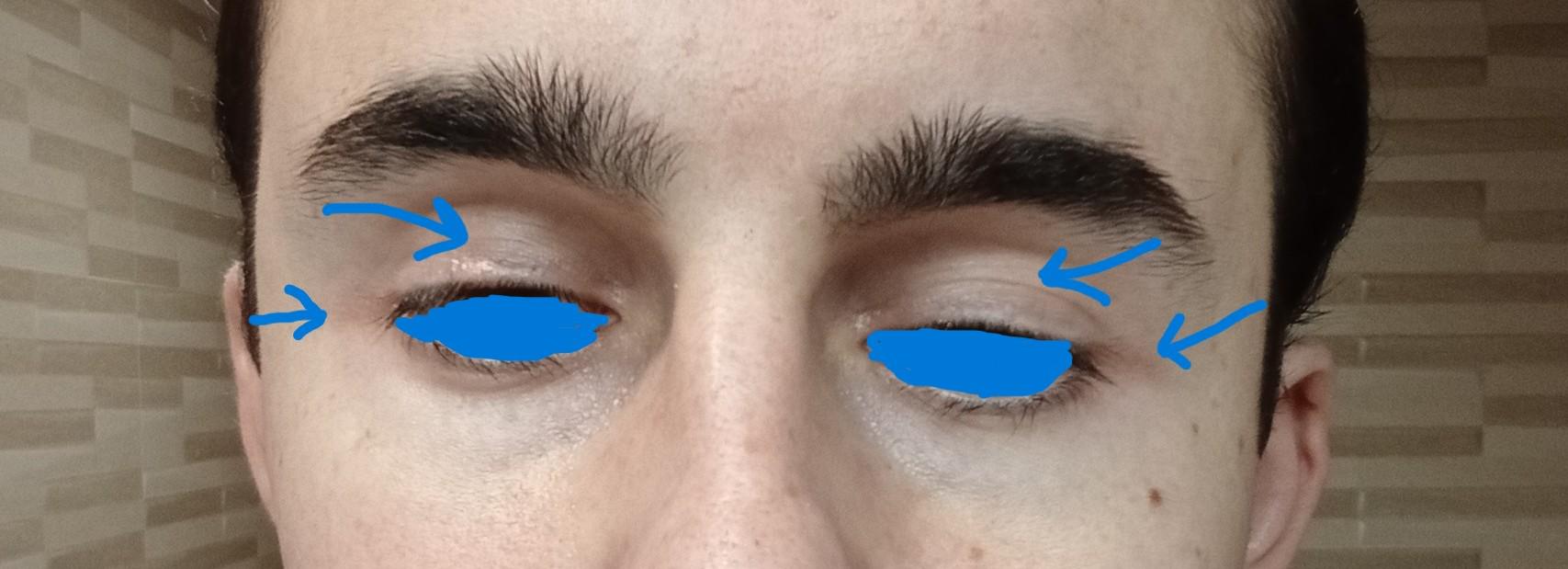
Seeking Opinions How do you tape your eyes shut at night without irritating your skin? I'm desperate for advice. Spoiler

Post image
4 Upvotes

Hey everyone,

I'm 23 years old and have been dealing with severe dry eyes ever since taking Accutane (isotretinoin) about 6 years ago.

My tear production is extremely low (0 mm Schirmer test in both eyes), and I also suffer from nocturnal lagophthalmos, meaning my eyes don't fully close while I'm sleeping.

Because of this, I need to physically keep my eyelids closed at night. Unfortunately, moisture chamber goggles alone aren't enough for me.

I've been struggling with two major problems for over a year now, and I'm honestly exhausted. I'd really appreciate hearing what has worked for other people.

1. How do you tape your eyes shut without destroying the skin around them?

This has been my biggest struggle.

Every morning, I wake up with irritated, red, and sensitive skin around my eyes, especially in the areas I've marked with blue arrows in the attached photo.

I want to emphasize that the photo doesn't really capture how bad the irritation actually is. My upper eyelids and the outer corners of my eyes are literally red 24/7. The redness is constant, even throughout the day, and it's much more noticeable in person than it appears in the picture.

I've tried so many different methods:

  • Glad Press'n Seal: It helps keep my eyes closed, but it severely irritates my skin, particularly around the outer corners of my eyes and my upper eyelids.
  • Medical tapes: I've tried 3M Kind Removal, Transpore, Micropore, and several others. Unfortunately, they all end up irritating my skin to some degree.
  • Vaseline: I've tried applying petroleum jelly to the outer corners of my eyes before sleeping, hoping it would protect the skin, but it hasn't made any noticeable difference.
  • Moisture chamber goggles: Unfortunately, these aren't sufficient on their own because I need my eyelids to remain completely closed.

I also sleep on my side, which I suspect makes everything worse.

One thing I've noticed is that moisture seems to accumulate around the corners of my eyes overnight. I wonder whether the tears, eye drops, or trapped moisture could be contributing to the irritation, although I'm not sure.

My questions are:

  • How do you keep your eyelids completely closed at night?
  • What specific tapes, products, or techniques have worked for you?
  • Do you apply anything to protect your skin before taping?
  • Do you sleep on your back or your side? Does your sleeping position make a difference?
  • Do you also wake up with red, irritated skin around your eyes? If so, how have you managed to prevent it?

I'm especially interested in hearing from people who have severe dry eyes, nocturnal lagophthalmos, or very sensitive skin.

2. Severe dark circles, flaky skin, and worsening appearance around my eyes

My second problem is the appearance and condition of the skin underneath my eyes.

Over time, I've developed very pronounced, dark circles that sometimes look almost black. The skin also gets extremely dry and flaky, and it seems to be getting progressively worse.

What frustrates me is that I actually sleep pretty well. I consistently try to get 7–9 hours of sleep, so I don't think sleep deprivation is the main issue.

I've tried applying Vaseline to the area to improve hydration and protect the skin barrier, but so far, I haven't noticed much improvement.

I'm starting to wonder whether the constant exposure to eye drops, nighttime taping, irritation, or chronic dryness could be contributing to how bad the skin looks.

Has anyone experienced something similar?

  • Have you managed to improve severe dark circles associated with dry eyes?
  • What products have helped with extremely dry or flaky under-eye skin?
  • Could the constant irritation from taping be making things worse?

I'm honestly exhausted

I've been dealing with these problems for years, and it's incredibly frustrating to feel like every solution creates another problem.

If I don't tape my eyes, they dry out overnight. If I tape them, I wake up with irritated skin. It feels like I can't win.

On top of the physical discomfort, the appearance of my eyes has really affected my confidence. I'm tired of people staring at me or looking at me strangely because of how bad the skin around my eyes looks.

If you've dealt with anything similar, please share what has helped you, even if it's something small.

I'd especially appreciate specific product names, taping techniques, or changes to your nighttime routine.

Thank you so much to anyone who takes the time to respond. I really appreciate it


r/Dryeyes • • 2d ago

Questions about scleral lenses

4 Upvotes

Hey everyone,

I´ve been struggling with dry eye disease for a few years now and have not been able to wear contacts for that time. I really miss being able to get through my day without glasses, especially at nice events. My DED (inflammatory, fine Schirmer Test and working glands) is being treated, yet still not to the point where I can even tolerate to wear contacts (even the super fancy and expensive "breathable" ones) for a day. I am aware of the cost and the many other implications with scleral lenses, but a girl is desperate and I´m willing to give it a go. Hence my questions to anyone wearing sclerals:

- Do you "feel" the sclerals when wearing them? Are they something you´re aware of? Is there discomfort? Or do you just get used to them?

- How many hours a day can you wear them comfortably?

- Can you travel with them? Do sports? Just in general any activity that requires you to be outside, physically active and "exposed" for a long time?

- For anyone wearing make-up, like eyeliner, mascara and lashes: Can you still do that? Are there any problems?

- Do you feel like it changes the way your eyes look? Like does the eye look bigger or different?

As sclerals are quite an investment, both time and money-wise, I´d be super thankful for anyone taking some time and sharing their experience!

Thank youuuu :)


r/Dryeyes • • 3d ago

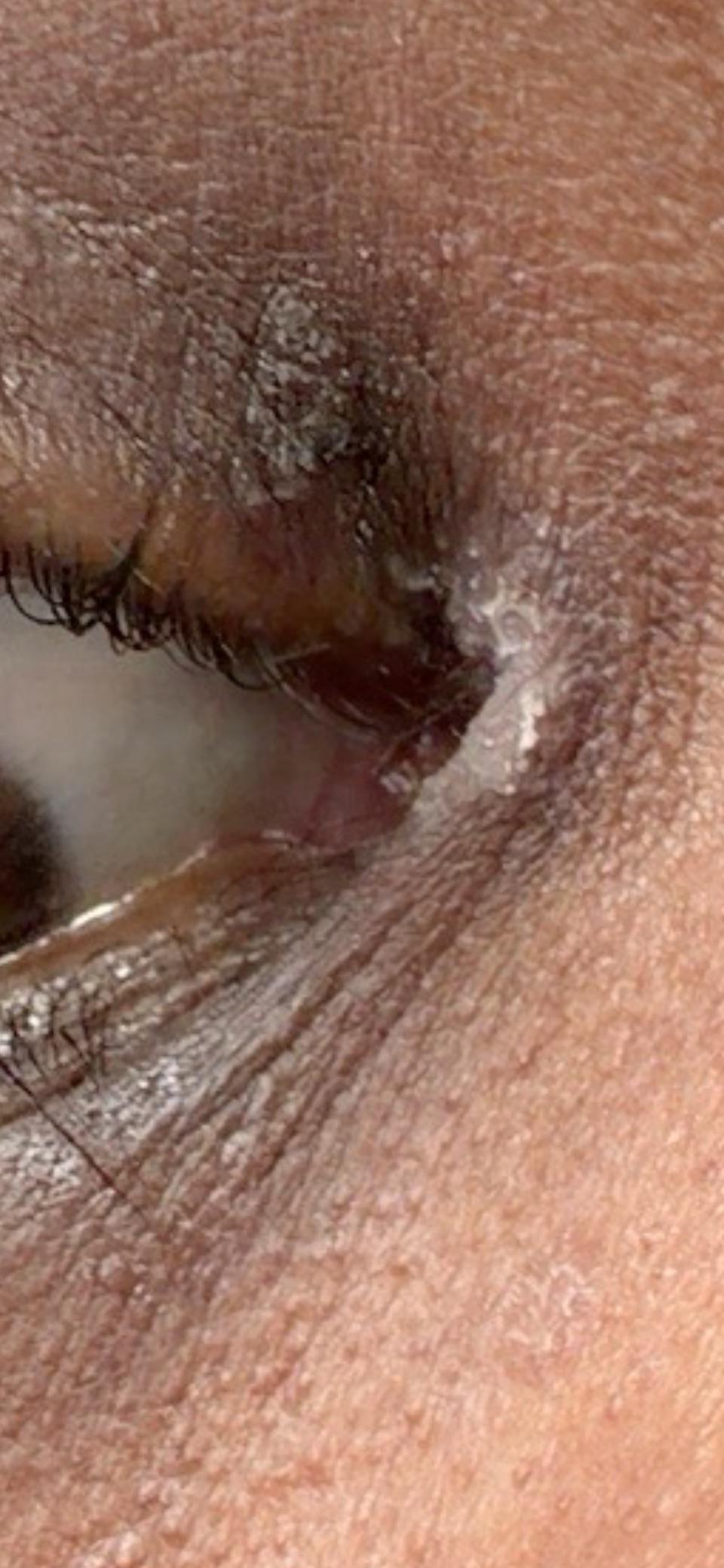
I was diagnosed with anterior blepharitis about a month ago, had symptoms for about 7 years. I can’t find pictures online of anyone’s who presents like I do. Spoiler

Post image
3 Upvotes

Been given hydrocortisone cream, did nothing at all. Told to use baby shampoo, made it worse. Tried Manuka eye drops, helped a little. Artificial tears, helped a little. Anyone got any idea on how to get rid of the crusting, or does anyone have any similar kind of crusting, just knowing that would be a help. Also tried warm compress 3 times a day.


r/Dryeyes • • 3d ago

Retinol & MGD

2 Upvotes

Hi fellow MGD sufferers!
I have recurring chalazions for over 1,5 years and now also after meibography the diagnosis MGD, results were mid severe.
I know vitamin A and retinol / retonoids are real bad for the meibom glands, especially when oral taken as pills but also creams and serums. My question: do you really take a risk when you use it just on forehead and cheeks?
There is just nothing out there working as good as retinol and I’ve stopped taking it for 3 months and I could swear I see the difference already.
Anyone talked to their doctor about the risks?

Also, how are you handling mascara?