r/E30 • u/Western_Giraffe396 • 3d ago
Fixing rust, no welding
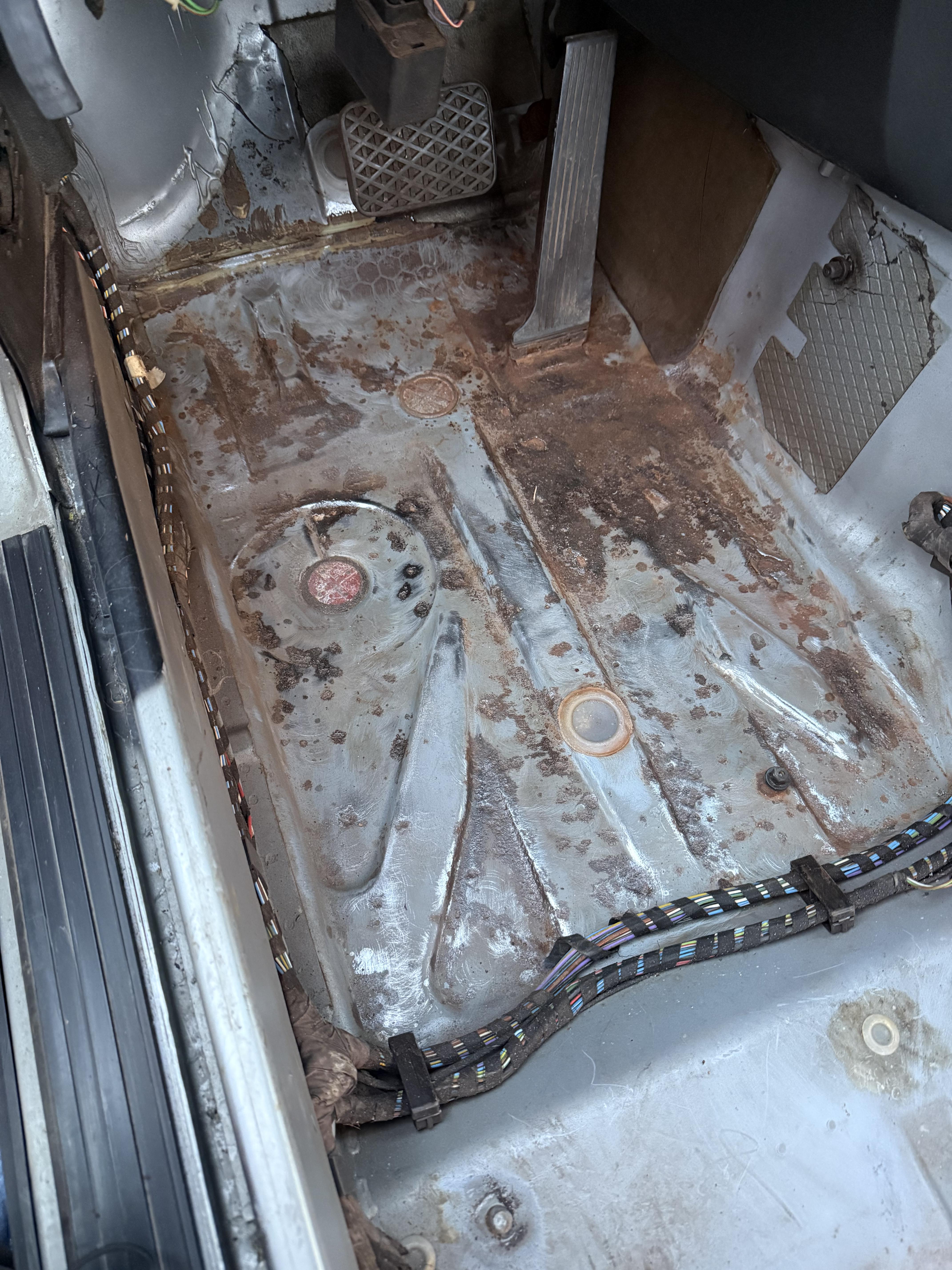


Any advice on fixing rust temporarily. Saving up for welding and bodywork but want to prevent from spreading for a while.
Thinking about getting acid rust remover and then the Eastwood 2x aero spray epoxy primer?
Would applying fiberglass to temporary patch work?
16
Upvotes
8
u/Dieselboy23 3d ago edited 3d ago
You gotta weld brother. Buy a cheap kit and teach yourself. That’s what I did. Valcas Garage has replacement floor pans and a lot of other pre fab metal.
2
u/Western_Giraffe396 3d ago
Or looking for a North Jersey welder that can come to me!
34
u/guvnor-78 3d ago
ain't gonna fix the holes.
7
u/AgitatedTree8278 3d ago
Temporary work only makes the real fix more expensive and difficult, just accept you have to wait. Any raw metal should be sprayed down with wd40 to prevent the rust after cleaning
6
u/TeaCrown 3d ago
You can brass braze it, clean up the rust, prep the surafce, heat up and braze
5
u/Fuzzy_Button6648 3d ago
The best stuff I’ve used for rust is master coat silver stuff. It’s used for bridges and they last without rusting. Did a part of my engine bay after cleaning the rust and scuffing it as much as I could and applied it. Been holding strong since
1
u/kemals-garage 3d ago
If you are at this point where you took out the whole interior, why not weld it ? I mean you could try to get rid of the surface rust with tools and rust converter and delay the process but I, like the others, wouldn’t recommend it.
3
u/Wojtek_PL 3d ago
spray this in all of the rust spots and holes, it will stop the rust from spreading, i think it will work great as a temporary solution for you.
3
u/peedubb Change your Timing Belt 3d ago
Hit that with some POR15
2
u/LordBogus 3d ago
I may be swearing in this sub but these days you can also 'glue' metal parts
Otherwise, any sort of rustconverter is fine
2
u/LevoiHook 3d ago
Apply rust converter liberally.
1
u/Interesting_Rush570 3d ago
Wire brush on drill, shop vac, anti-rust spray. That gas pedal area needs to be addressed asap. I took a nail and hammer and gently tapped into rusted areas to check severity. If the nail easily penetrates to the other side, you need to work fast.
1
u/KingOfTheRetards88 3d ago
Yes welding !
1
u/Standard_Pay_9068 3d ago
You can use Navel jelly to get rid of the rust completely. It will take several applications. Allow about 10-15 minutes between applications and wipe it out completely. You can use tap water initially. "Do not let the Navel jelly dry!" It will form a white powdery crust that is very difficult to remove if you do. Once the rust is cleaned up, use distilled water on the last pass and dry all the metal surfaces immediately. Use a hair dryer. There are also rust stabilizers/primers, but I would only spray that on as the final step.
1
u/Deadlight44 3d ago
I have a floor in my tracker that I cut out the rust spots on, made patches and used rivets and windshield urethane. Prepped and used Chassis Saver paint on any light surface rust areas. Method was to use a few self tapper screws and then drill for rivets, once all the holes were in place I pulled the screws and used the urethane like seam sealer. Went back through and riveted it in for good. Ended up coating the top with lizard skin ceramic heat barrier. Been 9 years, still strong. Is a frame vehicle so not exact apples to apples or the right way either. Just what I could do and it has held up well
1
u/Syygnis 3d ago
That's gonna need more than rust converter unfortunately
1
u/TheB1G_Lebowski 3d ago
Buy those lasers that remove rust. That'll do it.
1
u/Slow_Locksmith8094 3d ago
Grab a sturdy flat head and a hammer, whack every spot with rust and see if it goes thru. If not just ospho it, fiberglass it and call it a day
1
u/bushwood4568 2d ago
Buy a cheap flux core welder and some sheet metal. If you can't afford that clean it up good and put rust encapsulator over it on both sides. Keep the car out of the salt this winter, rain too if you can.
1
u/-ACHTUNG- 2d ago
Ospho.
1
u/Distinct-Salary-6790 1h ago
For converting rust with raw bulk phosphoric acid (typically diluted to 15%–30% concentration), the process relies on controlled dilution, short acid dwell times, thorough neutralization/drying to avoid sticky acid residue, and immediate sealing.
1. Preparation & Safe Dilution
Wear full PPE: Use acid-resistant nitrile or neoprene gloves, splash goggles, long sleeves, and work outdoors or with strong exhaust ventilation.
Dilute properly: Bulk phosphoric acid often comes at 75% to 85% concentration. Dilute it to 15%–30% for rust conversion (roughly 1 part 85% acid to 3–4 parts distilled water).
Always add acid to water: Slowly pour the acid into cold water—never pour water into concentrated acid—to prevent heat buildup and splashing. Use plastic (HDPE or polypropylene) or glass containers, never aluminum or galvanized buckets.
Prep the metal: Wire-brush loose scale and degrease completely with acetone, denatured alcohol, or a strong degreaser so the acid wets evenly.
2. Application & Reaction
Apply or dip: Brush, spray, or submerge the part in the diluted acid solution.
Watch the reaction: Keep the surface wet for 10 to 30 minutes at room temperature (above 50°F / 10°C). Reddish iron oxide will dissolve and convert into a dull gray-to-black iron phosphate layer.
Do not let thick acid dry completely: Raw phosphoric acid does not contain commercial polymers. If a heavy coat dries fully on the surface, it leaves a sticky, gummy, or chalky phosphoric acid crust that traps moisture and causes paint to peel.
3. Post-Treatment Process (Crucial for Raw Acid)
Because raw acid leaves unreacted acid behind, you must clear it before sealing:
Rinse or wipe while damp:
Option A (Water rinse): Rinse thoroughly with clean water (or a mild baking soda and water rinse to neutralize remaining acid, followed by a plain water rinse) before the acid turns gummy.
Option B (Solvent/damp wipe): If avoiding water, wipe the surface down vigorously with a rag dampened with denatured alcohol or mineral spirits to remove unreacted acid and loose gray powder.
Dry immediately to prevent flash rust:
Blow off water with compressed air, wipe dry with lint-free towels, and warm the metal with a heat gun, hair dryer, or oven (around 150°F–200°F) until completely bone-dry.
Remove loose phosphate dust:
Once dry, lightly scuff or wipe away any chalky white or gray powder with a dry Scotch-Brite pad or clean rag so your topcoat bonds directly to the solid conversion layer.
Seal within 1–2 hours:
Raw iron phosphate is porous and will re-rust quickly in humid air. Immediately apply either:
For painted parts: An oil-based or epoxy primer followed by paint (avoid water-based primers directly over raw acid-etched steel).
For bare/oiled parts: A coat of penetrating oil (like boiled linseed oil, fluid film, or machine oil) or paste wax, wiping off excess.
Braze or Mig any small holes! Then do the phosphoric acid treatment! The result converts iron oxide (rust) into ferric oxide! Then use things like Eastwoods! Do NOT just clean it up and encapsulate it! The fix is not permanent!