r/egyptology • • 5h ago

Discussion If your heart was weighed against Maat's feather today, would you pass?

Post image
26 Upvotes

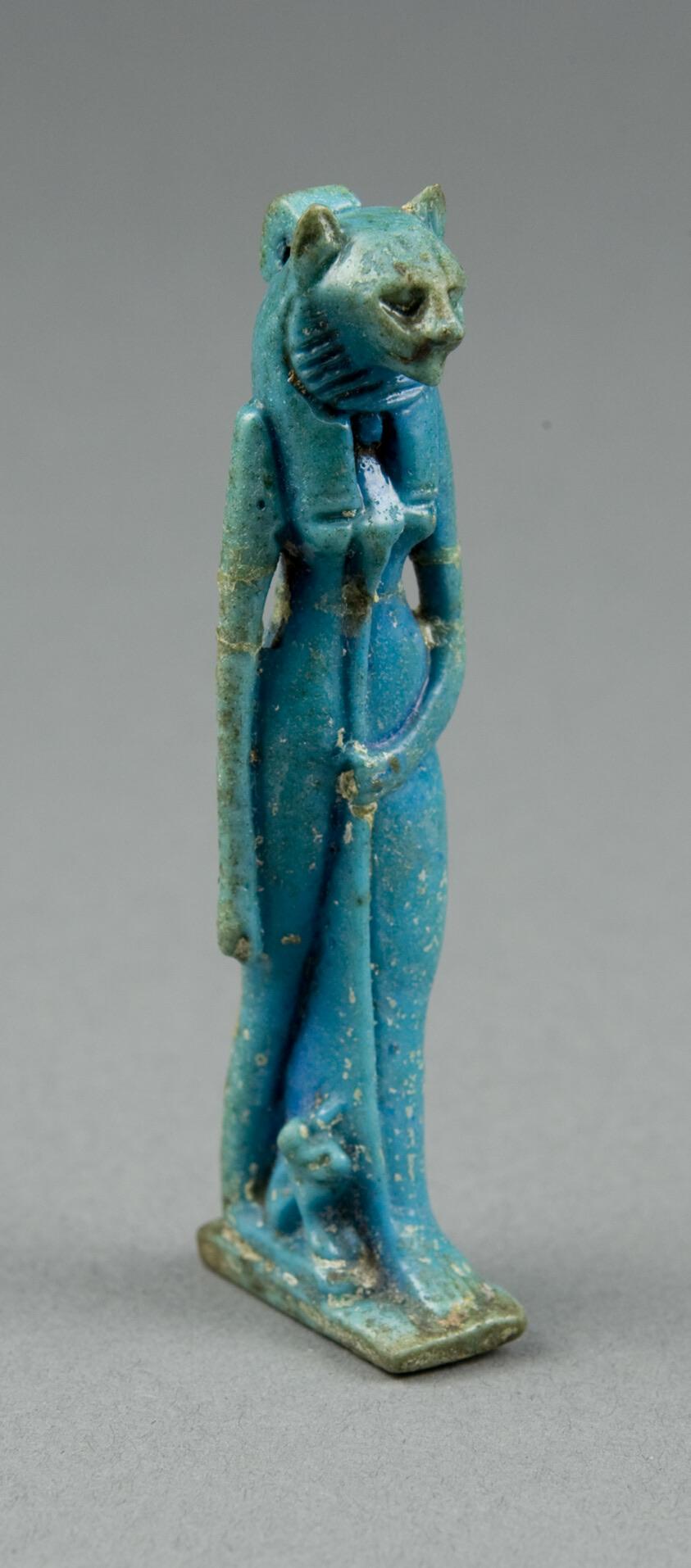
This is the Weighing of the Heart - the most terrifying moment for an ancient Egyptian.

Anubis weighs your heart against the feather of Maat. Thoth records the result. Ammit waits below.

It wasn't about being perfect. It was about being balanced. Your heart had to be lighter than a feather.

Do you think most people today would pass? What would make YOUR heart heavy?


r/egyptology • • 8h ago

Winged Scarab, 332–30 BCE Hellenistic period, Findspot unknown Egypt, Faience, Museo Egizio di Torino

Thumbnail gallery
25 Upvotes

Winged Scarab

Inv. no. :
Provv. 5278

Material:
Faience

Dimensions:
7.1 cm x 4.7 cm
4.2 cm x 2.8 cm
4.4 cm x 2.8 cm

Date:
332–30 BCE

Period:
Hellenistic period

Provenance:
Unknown

Acquisition:
Old Fund, 1824–1888

Museum location:
Museum / Floor 1 / Room 08 / Showcase 13

Title
Winged Scarab, 332–30 BCE Hellenistic period, Findspot unknown Egypt, Faience, Museo Egizio di Torino

https://collezioni.museoegizio.it/en-GB/material/Provv_5278/?description=&inventoryNumber=&title=&cgt=&yearFrom=&yearTo=&materials=cda375308abd422a97d1734e5bceec91&provenance=&acquisition=&epoch=&dynasty=&pharaoh=&searchLng=it-IT&searchPage=96

Museo Egizio di Torino


r/egyptology • • 12h ago

Egypt Temple

Post image
11 Upvotes

r/egyptology • • 1h ago

Discussion I live in Hurghada by the Red Sea. What did ancient Egyptians think about the Red Sea?

1 Upvotes

I live in Hurghada and I see the Red Sea every day.

I always wonder, did ancient Egyptians travel on it a lot? Was it important for trade, or were they more focused on the Nile?

Did they have ports here?


r/egyptology • • 1h ago

Discussion Situla Bearing the names of Kashta and Amenirdis (745-715 BCE) (The Walters Art Museum)

Thumbnail gallery
1 Upvotes

r/egyptology • • 21h ago

Kohl Tube, 1539–1076 BCE New Kingdom Eighteenth Dynasty, Findspot unknown Egypt, Faience, Museo Egizio di Torino

Thumbnail gallery
38 Upvotes

Kohl Tube

Inv. no. :
Cat. 7383/01 + Cat.6329

Material:
Faience

Dimensions:
3.5 cm x 13.7 cm x 2 cm

Date:
1539–1076 BCE

Period:
New Kingdom

Dynasty:
Eighteenth Dynasty

Provenance:
Unknown

Acquisition:
Old Fund, 1824–1888

Museum location:
Museum / Floor 2 / Room 05 / Showcase 11

Title
Kohl Tube, 1539–1076 BCE New Kingdom Eighteenth Dynasty, Findspot unknown Egypt, Faience, Museo Egizio di Torino

https://collezioni.museoegizio.it/en-GB/material/Cat_7383_01_Cat_6329/?description=&inventoryNumber=&title=&cgt=&yearFrom=&yearTo=&materials=cda375308abd422a97d1734e5bceec91&provenance=&acquisition=&epoch=&dynasty=&pharaoh=&searchLng=en-GB&searchPage=85

Museo Egizio di Torino


r/egyptology • • 1d ago

The Weighing of the Heart

Post image
58 Upvotes

r/egyptology • • 1d ago

Cup Decorated with a Double Hathoric Sistrum and Lotus Flowers, 1539–1292 BCE New Kingdom Eighteenth Dynasty, Findspot unknown Egypt, Faience, Museo Egizio di Torino

Thumbnail gallery
17 Upvotes

Cup Decorated with a Double Hathoric Sistrum and Lotus Flowers

Inv. no. :
Cat. 3368

Material:
Faience

Dimensions:
16.5 cm x 5 cm

Date:
1539–1292 BCE

Period:
New Kingdom

Dynasty:
Eighteenth Dynasty

Provenance:
Unknown

Acquisition:
Purchase Bernardino Drovetti, 1824

Museum location:
Museum / Floor 2 / Room 05 / Showcase 11

Selected bibliography:
Christiane Ziegler-Ziegler, Christiane, Queens of Egypt : from Hetepheres to Cleopatra, Monaco 2008, pp. 316–317, fig. p. 316, 319.

Fabretti, Ariodante-Rossi, Francesco-Lanzone, Ridolfo Vittorio, Regio Museo di Torino. Antichità Egizie (Cat. gen. dei musei di antichità e degli ogg. d’arte raccolti nelle gallerie e biblioteche del regno 1. Piemonte), vol. I, Torino 1882, p. 452.

Peck, William H., Drawings from ancient Egypt, London 1978, p. 116, fig. 47.

Vidua, Carlo, “Catalogue de la collect. d'antiq. de mons. le chev. Drovetti, a 1822”, in Ministero della Pubblica Istruzione (a cura di), Documenti inediti per servire alla storia dei Musei d'Italia, vol. 3, Firenze - Roma 1880, p. 275, n. 33.

Title
Cup Decorated with a Double Hathoric Sistrum and Lotus Flowers, 1539–1292 BCE New Kingdom
Eighteenth Dynasty, Findspot unknown Egypt, Faience, Museo Egizio di Torino

https://collezioni.museoegizio.it/en-GB/material/Cat_3368/?description=&inventoryNumber=&title=&cgt=&yearFrom=&yearTo=&materials=cda375308abd422a97d1734e5bceec91&provenance=&acquisition=&epoch=&dynasty=&pharaoh=&searchLng=en-GB&searchPage=75

Museo Egizio di Torino


r/egyptology • • 1d ago

The 22nd and 25th Dynasties were technically related

Post image
8 Upvotes

I've been getting interested in Ancient family trees recently, and I managed to find a link between 22nd Dynasty pharaoh Osorkon II and 25th Dynasty pharaoh Piye. Its honestly not really that impressive, but the fact a link like this still can be traced almost 3000 years later is pretty cool in my opinion.


r/egyptology • • 1d ago

Statuette of Osiris, Late Period, Dynasty 26 or later 664–332 BCE, Findspot unknown Egypt, Copper alloy, Art Institute of Chicago

Thumbnail gallery
32 Upvotes

Statuette of Osiris

Date:
Late Period, Dynasty 26 or later, 664–332 BCE

Artist:
Egyptian

ABOUT THIS ARTWORK
Ancient Egyptian worshippers purchased statuettes like this one from temple workshops and deposited them in temples or shrines. They made such offerings in thanks for answered prayers or to request good health, long life, and other favors from the gods. This finely cast statuette depicts the mummified Osiris, ruler of the underworld. The god holds a shepherd’s crook and a flail, symbols of royal authority that signify his role as Egypt’s first king. The statuette would have been inserted into a rectangular base inscribed for the person who offered it.

Status
On View, Gallery 50

Department
Arts of Africa

Culture
Ancient Egyptian

Title
Statuette of Osiris

Place
Egypt (Object made in:)

Date 
c. 664 BCE–332 BCE

Medium
Copper alloy

Dimensions
27 × 6.8 × 4.5 cm (10 5/8 × 2 5/8 × 1 3/4 in.)

Credit Line
Gift of Henry H. Getty, Charles L. Hutchinson, and Norman W. Harris

Reference Number
1892.130

IIIF Manifest 
https://api.artic.edu/api/v1/artworks/617/manifest.json

EXTENDED INFORMATION ABOUT THIS ARTWORK
PUBLICATION HISTORY

Thomas George Allen, A Handbook of the Egyptian Collection (Chicago: The Art Institute of Chicago, 1923), pp. 102, 105.
Roberta Casagrande-Kim, ed., When the Greeks Ruled Egypt: From Alexander the Great to Cleopatra. Exh. cat. (New York: Institute for the Study of the Ancient World; Princeton: Princeton University Press, 2014), p. 99, cat. 91.
Emily Teeter, “Cat. 28 Statuette of Osiris,” in Ancient Egyptian Art at the Art Institute of Chicago by Emily Teeter and Ashley F. Arico, ed. Ashley F. Arico (Art Institute of Chicago, 2025)

EXHIBITION HISTORY
Art Institute of Chicago, Ancient Art Galleries, Gallery 154A, April 20, 1994 - February 6, 2012.
Art Institute of Chicago, When the Greeks Ruled: Egypt After Alexander the Great, October 31, 2013 - July 27, 2014; traveled to New York City, NY, the Institute for the Study of the Ancient World, October 8, 2014 - January 4, 2015.
Art Institute of Chicago, Life and Afterlife in Ancient Egypt, Feb. 11, 2022 - present.

PROVENANCE
Martin A. Ryerson (1856-1932), Chicago, 1890; transferred to the Art Institute of Chicago, 1892; price reimbursed by Henry H. Getty and Charles L. Hutchinson.

Title
Statuette of Osiris, Late Period, Dynasty 26 or later 664–332 BCE, Findspot unknown Egypt, Copper alloy, Art Institute of Chicago

https://www.artic.edu/artworks/617/statuette-of-osiris

Art Institute of Chicago


r/egyptology • • 1d ago

Tutankhamun as Khonsu and Amun

Thumbnail gallery
22 Upvotes

r/egyptology • • 1d ago

Article The Founding Fathers of Ancient Egypt between Demotic Heritage & Arabian Historiography (Menes Narmer or Manqaus ibn Shaddad)

Post image
12 Upvotes

The concept of “Demotic heritage” refers to that corpus of knowledge and accounts relating to ancient Egypt that passed to Arabian Historians through multiple channels, the most important of which are: (1) late Demotic texts that were still being read in some circles until the early Islamic eras, especially in Upper Egypt; (2) popular oral traditions transmitted by generations about kings, monuments, and wonders; (3) Coptic texts that translated some ancient Egyptian knowledge; (4) Greek and Latin sources that Arab historians translated or knew indirectly; (5) popular interpretations of ancient monuments that people saw in Egypt, such as the pyramids, temples, and statues.

Modern studies, especially the study of Okasha El-Daly (And before him, the Egyptologist Ahmad Kamal) , have indicated that Arab historians were not merely passive transmitters of information, but practiced a kind of historical verification, compared sources, cast doubt on contradictory accounts, and tried to explain strange names in light of their knowledge of the Arabic language and genealogies. Therefore, what appears to us today as “legends” or “distortions” was, in their view, a serious attempt to understand the history of ancient Egypt in light of the cognitive tools available to them.

Hieroglyphic texts had ceased to be directly understood since approximately the fourth century AD, after the link between the sacred script and the late Egyptian language was broken, and knowledge of ancient Egyptian writing became monopolized by a narrow class of priests, then this knowledge vanished entirely with the spread of Christianity and the decline of ancient Egyptian religious institutions.

The researcher Okasha El-Daly indicated in his pioneering study on Egyptology in medieval Arabic writings that these writings, despite their often legendary character, constitute a “missing millennium” in the history of Egyptology, as they preserve echoes of ancient Egyptian knowledge that did not reach us through classical Greek and Roman sources.

In this framework fall the figures addressed by this article (the founding fathers of ancient Egypt) Menes Narmer, Khasekhemwy, Djoser, Khufu, Khafre, Menkaure — and their counterparts in the Arab tradition: Manqaus, Khaslim, Disara, Sourid, Hujib, Karuras.

And what you can notice is that these names and their counterparts are similar in that they are at the beginnings of ancient Egyptian history, the original names belong to the era of the early dynasties, and their Arabian counterparts belong to the period of the kings of Egypt before the Flood of the Prophet Noah.

------------------------

Manqaus ibn Shaddad or Menes Narmer, The Unifier of the Two Lands!

The ancient Egyptian historical tradition, as reflected by Manetho and Herodotus, attributes to Menes (Mina) Narmer the founding of the first ruling dynasty in the history of Egypt, the unification of the two kingdoms of the North (Lower Egypt) and the South (Upper Egypt) under a single central rule, and the founding of the city of Memphis as the capital of the country. Egyptian sources mention that Narmer founded a city called “Inb-Hedj,” meaning “the White Wall,” which later became known as Memphis.

Narmer chose the site of Memphis at the head of the Delta, at a strategic point controlling the movement of the Nile and separating Lower Egypt from Upper Egypt. According to the tradition transmitted by Herodotus, Menes is the one who ordered the diversion of the Nile’s course to build the city of Memphis, so he diverted the Nile from its old course, filled in the bend that was in the river, made the city in the place of the old Nile, and surrounded it with an embankment on the southern side and two lakes on the northern and western sides to protect it from flooding and the enemy.

The founding of a fortress (or fort) at the site of Memphis is also attributed to Mina Narmer, along with the formation of a strong army to protect the unity of the country, and the establishment of royal traditions that continued for thousands of years, among them the celebration of the festival of “the Unification of the Two Lands.”

The figure of Mina Narmer in ancient Egyptian consciousness was not merely a historical figure; rather, it acquired mythical and religious dimensions. Unification itself was viewed in Egyptian belief as the realization of cosmic order (Maat) on earth, and the spread of order at the expense of chaos (Isfet), which was symbolized by the scattered forces of the North. Therefore, unifying kings were often depicted in Egyptian art striking their enemies or controlling wild animals, in reference to subduing the forces of chaos. The Narmer Palette itself is a visual expression of this ideology: the king appears as Horus on earth, subduing his enemies and establishing the cosmic order.

as for the Arabian name Manqaus ibn Shaddad, it appears in a number of medieval Arabic sources, the most important of which are Al-Khitat by al-Maqrizi, Muruj al-Dhahab by al-Mas‘udi (Herodotus of Arabs) , and other books. These sources vary in the detail of his biography, but they agree in attributing him to before the Flood or to the first eras of Egypt, and in attributing to him a group of major architectural works, the most important of which is the building of the city of Memphis.

The first basis for comparison between the two figures is the phonetic similarity between the two names. The name “Mina” (Mena) or “Menes” in Greek transmission consists of the consonantal root m-n-s. The name “Manqaus” consists of the consonants m-n-q-w-s, or m-n-q-s if we drop the long vowel (w). It is noticeable that the two roots are similar in the first two consonants: m-n, and differ in that “Manqaus” adds a guttural sound, q, between the n and the s. This difference can be explained by the q being an intrusive element in the Arabic transmission, either added to facilitate pronunciation, or as a result of scribal alteration, or as a phonetic substitution from another sound.

Some sources mention other forms of the name such as Manaus and Manqaush (and it seems that the name Manaus is closer phonetically to the name Menes than the name Manqaus).

Manqaus is attributed in Arabic sources to Shaddad ibn Adim, a genealogy that resembles the names of pre-Islamic Arab kings, such as Shaddad ibn Aad, which indicates that Arab historians may have tried to integrate the figure into an Arab genealogical framework instead of attributing it to an ancient Egyptian origin. This integration is not unique to Manqaus; rather, it is a general pattern in Arabic historiography of ancient Egyptian figures, where historians sought to “Arabize” these figures or at least link them to Arab/Eastern origins. Some accounts mention that Manqaus was a wise, virtuous king, a priest, who performed wondrous works and built marvelous things, and ruled for ninety-one years.

Other Arabic accounts add that Manqaus built the city of Memphis for his sons or his daughters, that he made it the center of his kingdom, surrounded it with walls and temples, and organized its administrative affairs. The sources also mention that Manqaus is the one who built the city of Ain Shams (Iunu - Un - On - Heliopolis), which was the center of sun worship in ancient Egypt, which makes him a founder of the major religious centers in Egypt.

The division of the land of Egypt into kuras (administrative districts) is also attributed to him, an administrative act that reminds us of what Greek historians attributed to the early kings of Egypt regarding the administrative organization of the Egyptian land. The number of kuras mentioned (one hundred and thirty kuras) may not be historically accurate, but it reflects an Arab awareness that ancient Egypt was divided into administrative provinces, and that the founding king (Manqaus) was the one who established this division.

This correspondence in the founding role is what makes the comparison between them more than a mere passing phonetic similarity. Both are depicted as the founding king who moves Egypt from a state of fragmentation to a state of stable statehood with a fixed capital. This similarity is reinforced by other elements: both are associated with regulating the waters of the Nile or diverting its course. Mina/Menes, in the Herodotean account, diverted the Nile to build Memphis. Manqaus, in some Arabic accounts, is credited with organizing irrigation and building embankments and lakes.

It is noteworthy that the Arab tradition did not preserve the name “Narmer” or “Nermer” in its ancient Egyptian form, but preserved only the name “Manqaus.” This in itself is evidence that the Arab transmission was not direct from hieroglyphic texts, but from oral accounts or from late Demotic or Coptic texts. The name “Narmer” is a Horus name, and it was written inside a serekh, and was not the king’s common name in daily life. As for “Mina” or “Menes,” it was the name more commonly circulated in popular and classical tradition, and it is the one that reached the Arabs through Manetho and Herodotus and others, whether directly or indirectly, and then was altered into “Manqaus.”

Arabic sources give Manqaus personal traits beyond merely being a builder of cities. He is “a wise and virtuous priest,” and this reminds us of the image of the king-priest in ancient Egypt, where the king was the intermediary between the gods and people, and responsible for performing religious rituals and ensuring the continuation of the cosmic order.

The account “he ruled for ninety-one years” also reflects an ancient Eastern tradition of attributing extraordinary ages to founding kings, a tradition we find in the Torah (the ages of the early patriarchs) and in Egyptian myths (where some gods and kings are attributed reigns lasting thousands of years). These traits — wisdom, priesthood, long life, and architectural construction — are the typical traits of the founding king in medieval Arabic literature, and they were all combined in the figure of Manqaus.

This transformation from king-god to king-sage reflects a shift in religious vision, and it seems that Muslim Arabs were not prepared to accept the idea of the king-god, so they turned the first founder of Egypt into a wise king and priest, which is an image consistent with Islamic heritage that knows figures such as Luqman the Wise, al-Khidr, or Solomon and David the prophet-kings.

------------------------

In the next article I will talk about King Khasekhemwy and his counterpart in Arabian history King Khaslim, and it will be a more exciting article, with larger number of historical and literary evidence.


r/egyptology • • 1d ago

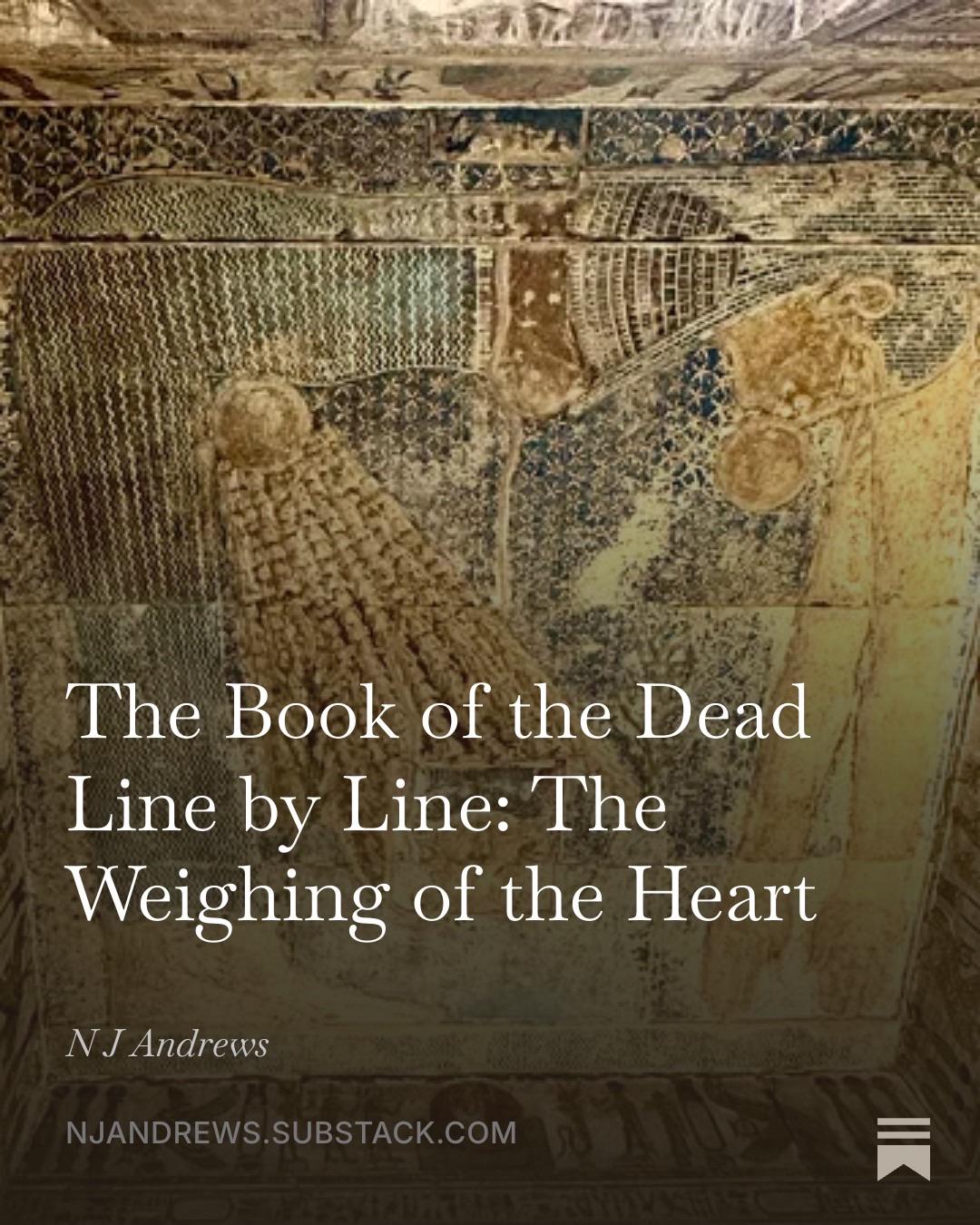
Amulet of a Lion-Headed Goddess with Kitten, Third Intermediate Period Dynasty 21–25 (about 1069–664 BCE), Findspot unknown Egypt, Faience, The Art Institute of Chicago

Post image
65 Upvotes

Amulet of a Lion-Headed Goddess with Kitten

Date:
Third Intermediate Period, Dynasty 21–25 (about 1069–664 BCE)

Artist:
Egyptian

ABOUT THIS ARTWORK
Ancient Egyptians, both living and dead, wore amulets of gods and goddesses to bring protection and health. These small charms depicted deities in their human, animal, or mixed forms. Here, a powerful striding figure draws the eye, but who is the small cat at her feet? This amulet likely represents the lioness goddess Sekhmet or the cat goddess, Bastet. In Egyptian mythology, Sekhmet and Bastet both act as the Eye of Re, the daughter/protector of the sun god, Re. Sekhmet was known for her ferocious nature, while Bastet was thought to be a gentler form of the same goddess. Ancient Egyptians recognized the fickle moodiness of felines, a quality still associated with today’s domesticated cats. The amulet represents this duality by showing the goddess in both her lion and cat forms.

Status
Currently Off View

Department
Arts of Africa

Artist
Ancient Egyptian

Title
Amulet of a Lion-Headed Goddess with Kitten

Place
Egypt (Object made in:)

Date 
1069 BCE–664 BCE

Medium
Faience

Dimensions
7.7 × 1.8 × 2.7 cm (3 1/16 × 3/4 × 1 1/8 in.)

Credit Line
Gift of Charles L. Hutchinson, Henry H. Getty, and Norman W. Harris

Reference Number 1892.5

IIIF Manifest 
https://api.artic.edu/api/v1/artworks/135839/

PUBLICATION HISTORY
Thomas George Allen, A Handbook of the Egyptian Collection (Chicago: The Art Institute of Chicago, 1923), p. 131.

PROVENANCE
Panayotis Kyticas (d. 1924), Cairo; sold to the Art Institute of Chicago, 1892; price reimbursed by Charles L. Hutchinson and Henry H. Getty, 1892.

Title
Amulet of a Lion-Headed Goddess with Kitten, Third Intermediate Period Dynasty 21–25 (about 1069–664 BCE), Findspot unknown Egypt, Faience, The Art Institute of Chicago

https://www.artic.edu/artworks/135839/amulet-of-a-lion-headed-goddess-with-kitten

The Art Institute of Chicago


r/egyptology • • 1d ago

A rare landscape from Description de l’Égypte

Post image
7 Upvotes

r/egyptology • • 2d ago

Tutankhamun as Khonsu and Amun

Thumbnail gallery
110 Upvotes

r/egyptology • • 2d ago

Book of the Dead of Kha, 1425–1353 BCE New Kingdom Eighteenth Dynasty Amenhotep II / Tuthmosis IV / Amenhotep III, Findspot Luxor / Thebes Deir el-Medina Tomb of Kha (TT8), Papyrus and ink, Museo Egizio di Torino

Thumbnail gallery
64 Upvotes

Book of the Dead of Kha

Inv. no. :
Suppl. 8438

Material:
Plant fiber / Papyurs

Dimensions:
1380 cm x 34 cm

Date:
1425–1353 BCE

Period:
New Kingdom

Dynasty:
Eighteenth Dynasty

Reign:
Amenhotep II / Tuthmosis IV / Amenhotep III

Provenance:
Egypt, Luxor / Thebes, Deir el-Medina, Tomb of Kha (TT8)

Acquisition:
Excavation Ernesto Schiaparelli, 1906

Museum location:
Museum / Floor 1 / Room 07 / Frame

Selected bibliography:
Donadoni, Anna Maria (a cura di), Passato e futuro del Museo Egizio di Torino: dal museo al museo (Archivi di archeologia), Torino 1989, pp. 121–122.

Lapp, Günther, Totenbuchtexte 10: synoptische Textausgabe nach Quellen des Neuen Reiches, Basel 2017, p.3,5,7,9,11,13,15,17,41,43,45,47.

Peis, Luca, Il papiro di Kha, s.l. 2017, Passim.

Roccati, Alessandro, “Scrittura e rappresentazione”, Museo Egizio di Torino, Novara 1988, pp. 175–179.

Vassilika, Eleni, La tomba di Kha, Firenze 2010, pp. 70–77, pp.70-77.

Wüthrich, Annik, “"Formule pour ne pas mourir à nouveau": le chapitre 175 du Livre des Morts”, in Lucarelli, Rita, Marcus Müller-Roth, Annik Wüthrich (éd), Herausgehen am Tage: gesammelte Schriften zum altägyptischen Totenbuch, Wiesbaden 2012, pp. 153–228.

Title
Book of the Dead of Kha, 1425–1353 BCE New Kingdom Eighteenth Dynasty Amenhotep II / Tuthmosis IV / Amenhotep III, Findspot Luxor / Thebes Deir el-Medina Tomb of Kha (TT8), Papyrus and ink, Museo Egizio di Torino

https://collezioni.museoegizio.it/en-GB/material/S_8438/?description=&inventoryNumber=&title=&cgt=&yearFrom=&yearTo=&materials=&provenance=Egypt%2C+Luxor+%2F+Thebes%2C+Deir+el-Medina%2C+Tomb+of+Kha+%28TT8%29&acquisition=&epoch=&dynasty=&pharaoh=&searchLng=en-GB&searchPage=25

Museo Egizio di Torino


r/egyptology • • 2d ago

Bowl, Faience with Manganese Black Decorations of Lotus Blossoms and Buds, 1539–1292 BCE New Kingdom Eighteenth Dynasty, Findspot unknown Egypt, Faience, Museo Egizio di Torino

Thumbnail gallery
5 Upvotes

Bowl, Faience with Manganese Black Ðecorations of Lotus Blossoms and Buds

Inv. no. :
Cat. 3369

Material:
Faience

Dimensions:
13 cm x 4.4 cm

Date:
1539–1292 BCE

Period:
New Kingdom

Dynasty:
Eighteenth Dynasty

Provenance:
Unknown

Acquisition:
Purchase Bernardino Drovetti, 1824

Museum location:
Museum / Floor 2 / Room 05 / Showcase 11

Selected bibliography:
Eggebrecht, Arne, Ägyptens aufstieg zur Weltmacht, Mainz am Rhein 1987, p. 169.

Fabretti, Ariodante-Rossi, Francesco-Lanzone, Ridolfo Vittorio, Regio Museo di Torino. Antichità Egizie (Cat. gen. dei musei di antichità e degli ogg. d’arte raccolti nelle gallerie e biblioteche del regno 1. Piemonte), vol. I, Torino 1882, p. 452.

Heimann, Simone (Hrsg.)-Stiftung Historisches Museum der Pfalz, Ägyptens Schätze entdecken: Meisterwerke aus dem Ägyptischen Museum Turin, München - London - New York 2012, p. 61.

Letellier, Bernadette (ed.), Le Louvre présente : la vie quotidienne chez les artisans de Pharaon : Musée Borély, Marseille, octobre 79/31 janvier 1980, Marsiglia 1979, pp. 70–71, n. 100.

Seipel, Wilfried, Ägypten: Götter, Gräber und die Kunst : 4000 Jahre Jenseitsglaube, Schlossmuseum Linz 9. April bis 28. September, 1989 (Kataloge des Oberösterreichischen Landesmuseums 22), Linz 1989, p. 254.

Vidua, Carlo, “Catalogue de la collect. d'antiq. de mons. le chev. Drovetti, a 1822”, in Ministero della Pubblica Istruzione (a cura di), Documenti inediti per servire alla storia dei Musei d'Italia, vol. 3, Firenze - Roma 1880, p. 263, no. 68.

Title
Bowl, Faience with Manganese Black Decorations of Lotus Blossoms and Buds, 1539–1292 BCE New Kingdom Eighteenth Dynasty, Findspot unknown Egypt, Faience, Museo Egizio di Torino

https://collezioni.museoegizio.it/en-GB/material/Cat_3369/?description=&inventoryNumber=&title=&cgt=&yearFrom=&yearTo=&materials=cda375308abd422a97d1734e5bceec91&provenance=&acquisition=&epoch=&dynasty=&pharaoh=&searchLng=en-GB&searchPage=75

Museo Egizio di Torino


r/egyptology • • 2d ago

Book Recommendations!

4 Upvotes

Hello! I am needing some good introductory books to the following:

• Ramses II Egypt - looking specifically at what society and life was like then

• Cleopatra VII

Would love any books that are not a slog to read


r/egyptology • • 2d ago

Bowl Decorated with Lotus Buds and Blossoms,1425–1353 BCE New Kingdom Eighteenth Dynasty Amenhotep II / Tuthmosis IV / Amenhotep III, Findspot Luxor / Thebes, Deir el-Medina Tomb of Kha (TT8), Faience, Museo Egizio di Torino

Thumbnail gallery
42 Upvotes

Bowl Decorated with Lotus Buds and Blossoms

Inv. no. :
Suppl. 8230

Material:
Faience

Dimensions:
15.5 cm x 4.8 cm

Date:
1425–1353 BCE

Period:
New Kingdom

Dynasty:
Eighteenth Dynasty

Reign:
Amenhotep II / Tuthmosis IV / Amenhotep III

Provenance:
Egypt, Luxor / Thebes, Deir el-Medina, Tomb of Kha (TT8)

Acquisition:
Excavation Ernesto Schiaparelli, 1906

Museum location:
Museum / Floor 1 / Room 07 / Showcase 09

Selected bibliography:
Ferraris, Enrico, La tomba di Kha e Merit, Modena 2018, p.128, p.131 fig.154.

Vassilika, Eleni, La tomba di Kha, Firenze 2010, pp. 78–87, p. 87.

Title
Bowl Decorated with Lotus Buds and Blossoms,1425–1353 BCE New Kingdom Eighteenth Dynasty Amenhotep II / Tuthmosis IV / Amenhotep III, Findspot Luxor / Thebes, Deir el-Medina Tomb of Kha (TT8), Faience, Museo Egizio di Torino

https://collezioni.museoegizio.it/en-GB/material/S_8230/?description=&inventoryNumber=&title=&cgt=&yearFrom=&yearTo=&materials=&provenance=Egypt%2C+Luxor+%2F+Thebes%2C+Deir+el-Medina&acquisition=&epoch=&dynasty=&pharaoh=&searchLng=en-GB&searchPage=36

Museo Egizio di Torino


r/egyptology • • 3d ago

Lintel from the tomb of Amenemipet, 1292–1191 BCE New Kingdom Nineteenth Dynasty, Findspot Luxor / Thebes, Deir el-Medina, Limestone, Museo Egizio di Torino

Thumbnail gallery
44 Upvotes

Lintel from the tomb of Amenemipet

Inv. no. :
Cat. 1516

Material:
Stone / Limestone

Dimensions:
91 cm x 32.5 cm x 11 cm

Date:
1292–1191 BCE

Period:
New Kingdom

Dynasty:
Nineteenth Dynasty

Provenance:
Egypt, Luxor / Thebes, Deir el-Medina

Acquisition:
Purchase Bernardino Drovetti, 1824

CGT:
50203

Museum location:
Museum / Floor 1 / Room 06 DEM / Wall

Selected bibliography:
Kitchen, Kenneth A., Ramesside Inscriptions: historical and biographical : vol.1., Oxford 1975, p. 384.

Kitchen, Kenneth A., Ramesside inscriptions translated and annotated. (A) translations 1.: Ramesses I, Sethos I and Contemporaries, Oxford 1995, p. 315.

Kitchen, Kenneth A., Ramesside inscriptions translated and annotated : (B) notes and comments 1.: Ramesses I, Sethos I and Contemporaries, Oxford 1993, p. 281.

Orcurti, Pier Camillo, Catalogo illustrato dei monumenti egizi del R. Museo Egizio di Torino, Torino 1855, ii, pp.18–19, 26.

Tosi, Mario-Roccati, Alessandro, Stele e altre epigrafi di Deir el Medina: n. 50001 - n. 50262 (Catalogo del Museo Eg. di Torino - Serie II. - Collezioni 1), Torino 1972, pp. 176–177, tav. p. 336.

Vandier d'Abbadie, J.-Jourdain, G., “Deux tombes de Deir el-Médineh: La chapelle de Kha - La tombe du scribe royal Amenemopet”, Mémoires publiés par les membres de l'Institut français d'archéologie orientale 73 (1939), pp. 40–3, pls. xxvii, xxviii; fig. 3 p.

Title
Lintel from the tomb of Amenemipet, 1292–1191 BCE New Kingdom Nineteenth Dynasty, Findspot Luxor / Thebes, Deir el-Medina, Limestone, Museo Egizio di Torino

https://collezioni.museoegizio.it/en-GB/material/Cat_1516/?description=&inventoryNumber=&title=&cgt=&yearFrom=&yearTo=&materials=&provenance=&acquisition=&epoch=%2F004DB%2F&dynasty=&pharaoh=&searchLng=en-GB&searchPage=3

Museo Egizio di Torino


r/egyptology • • 2d ago

Ancient Egypt Daily Life Simulator: Live a Day in Thebes

Thumbnail exploreluxor.org
3 Upvotes

r/egyptology • • 2d ago

WHERE THE BOOK OF ENOCH REALLY CAME FROM: A TIMELINE

0 Upvotes

WHERE THE BOOK OF ENOCH REALLY CAME FROM: A TIMELINE

My theory: Enoch is a memory of a real crisis in Egypt's empire, retold for a thousand years and later dressed in Babylonian myth. Here it is in order.

• c. 1800 BCE

A Sumerian temple hymn mentions "the Seven Sages." Then they vanish from writing for about 900 years. Remember this. It proves a tradition can survive just by being retold.

• c. 1350 BCE: THE CRISIS

Pharaoh Akhenaten rules Egypt from his new capital, Akhetaten. In Canaan, warlords like Aziru of Amurru take city after city. Rib-Hadda, king of Byblos, sends more than 60 letters begging Pharaoh for help. It almost never comes.

• c. 1350 BCE: THE GO-BETWEEN

The official who stands between Pharaoh and these rulers is Tutu. The warlord Aziru writes to him:

"To Tutu, my lord, my father... I fall at the feet of my father." (EA 158)

"I am afraid of the king, my lord, and of Tutu... Tutu and the magnates of the king I would put under oath." (EA 164)

A warlord afraid to face the throne. A pact sworn under oath by the king's great men. One trusted man carrying the pleas back and forth.

• c. 1335 BCE: THE ERASURE

Akhenaten dies. Egypt wipes him from history. His city is abandoned, his temples torn down. Tutu's tomb is left unfinished and no burial is ever found. He simply disappears. The letters lie buried until 1887.

• c. 1300–600 BCE: THE MEMORY

Nobody can read the letters, but the survivors keep telling the story. Slowly it turns into myth:

The king's great men who swore the oath become the Watchers.

The warlords become their giant sons.

Rib-Hadda's pleas become the earth crying out.

Tutu becomes Enoch.

• 597–538 BCE: THE WORDS

Judah's scribes are exiled to Babylon. There they learn of the apkallu: sages from before the Flood, called "watchers," some part-human. The old story finally gets its cast and its language.

• c. 300–200 BCE: THE BOOK

The Book of the Watchers is written. Read it next to the letters:

The Watchers swear an oath together (1 Enoch 6). The magnates are put under oath (EA 164).

The sons of God father the giants (Genesis 6). Vassals called Pharaoh "my god," and Aziru calls the king's man "my father" and himself "your son" (EA 158).

The giants fill the earth with violence (1 Enoch 7). The warlords take Canaan.

The Watchers are too afraid to face God, so Enoch carries their petition (1 Enoch 13). Aziru fears the king and pleads through Tutu.

Enoch is "the scribe of righteousness." Tutu's tomb praises his truth.

"Enoch was not, for God took him." Tutu vanishes with no burial.

Babylon explains who the Watchers are. Amarna explains what they did.

This is my theory, not settled history. But the earliest real record of a man doing exactly what Enoch does is Tutu.

Separating myth from memory, one text at a time.


r/egyptology • • 3d ago

Akh iqer en Re stela of Pashed, Date: 1292–1191 BCE New Kingdom Nineteenth Dynasty, Findspot Deir el-Medina, Museo Egizio di Torino

Thumbnail gallery
20 Upvotes

Akh iqer en Re stela of Pashed

The so-called akh iqer en Re (‘the excellent spirit of Re’) stelae were mainly found in the houses of Deir el-Medina, placed in special niches where domestic rituals related to ancestor worship were practised. Thanks to the power gained in the afterlife, the deceased could intervene on behalf of their family as an excellent spirit, responding to pleas addressed to them.

Inv. no. :
Cat. 1570

Material:
Stone / Limestone

Dimensions:
12.3 cm x 17.5 cm x 3 cm

Date:
1292–1191 BCE

Period:
New Kingdom

Dynasty:
Nineteenth Dynasty

Provenance:
Egypt, Luxor / Thebes, Deir el-Medina

Acquisition:
Purchase Bernardino Drovetti, 1824

CGT:
50014

Museum location:
Museum / Floor 1 / Room 06 DEM / Showcase 07

Selected bibliography:
Andreu, Guillemette (a cura di)-Andreu, Guillemette, Gli artisti del faraone: Deir el-Medina e le Valli dei Re e delle Regine, Milano 2003, p. 128.

Demarée, Robert J., The AH iqr n Ra-stelae: On ancestor worship in ancient Egypt (Egyptologische Uitgaven 3), Leiden 1983, p. 53–54, pl. VI.

Orcurti, Pier Camillo, Catalogo illustrato dei monumenti egizi del R. Museo Egizio di Torino, Torino 1855, p. 105, n. 192.

Tosi, Mario-Roccati, Alessandro, Stele e altre epigrafi di Deir el Medina: n. 50001 - n. 50262 (Catalogo del Museo Eg. di Torino - Serie II. - Collezioni 1), Torino 1972, p. 50, tav. p. 267.

Vidua, Carlo, “Catalogue de la collect. d'antiq. de mons. le chev. Drovetti, a 1822”, in Ministero della Pubblica Istruzione (a cura di), Documenti inediti per servire alla storia dei Musei d'Italia, vol. 3, Firenze - Roma 1880, p. 11.

Title
Akh iqer en Re stela of Pashed, Date: 1292–1191 BCE New Kingdom Nineteenth Dynasty, Findspot Deir el-Medina, Museo Egizio di Torino

https://collezioni.museoegizio.it/en-GB/material/Cat_1570/?description=&inventoryNumber=&title=&cgt=&yearFrom=&yearTo=&materials=&provenance=Egypt%2C+Luxor+%2F+Thebes%2C+Deir+el-Medina&acquisition=&epoch=&dynasty=&pharaoh=&searchLng=en-GB&searchPage=4

Museo Egizio di Torino


r/egyptology • • 3d ago

Votive Statuette of Oxyrhynchus, Greco-Roman Period c.332 BC - 395 AD, Findspot unknown Egypt, Bronze copper glass, National Museums of Scotland

Thumbnail gallery
50 Upvotes

Votive Statuette of Oxyrhynchus

Copper alloy votive statuette of the Oxyrhynchus-fish with inlaid glass eyes and headdress of Hathor, supported on sled:

Lower Egypt, Oxyrhyncus, Ancient Egyptian, Greco-Roman Period, c.332 BC - 395 AD

This item is on display

National Museum Of Scotland, Level 5, World Cultures, Ancient Egypt Rediscovered

View museum map

Collection
World Culture

Object number
A.1965.387

Object name
Votive statuette

Production information
Egypt, Northern Africa

Materials
Bronze, Copper alloy, Glass

Collection place(s)
Egypt, Northern Africa

Exhibitions
Ancient Egypt Rediscovered (08 Feb 2019)
National Museum of Scotland

Egyptian Gallery, 2003 - 2008(2003 - 2008)
Royal Scottish Museum

Title
Votive Statuette of Oxyrhynchus, Greco-Roman Period c.332 BC - 395 AD, Findspot unknown Egypt, Bronze copper glass, National Museums of Scotland

https://www.nms.ac.uk/collections/search/object?entry=299568&keyword=Oxyrhynchus&keyword-field=all&page=1&view=cards

National Museums of Scotland


r/egyptology • • 2d ago

Thousands of years of Egyptian history, told through music and an interactive map

1 Upvotes