Vision Eritrea 2030: Constitution, Economic Freedom and Prosperity
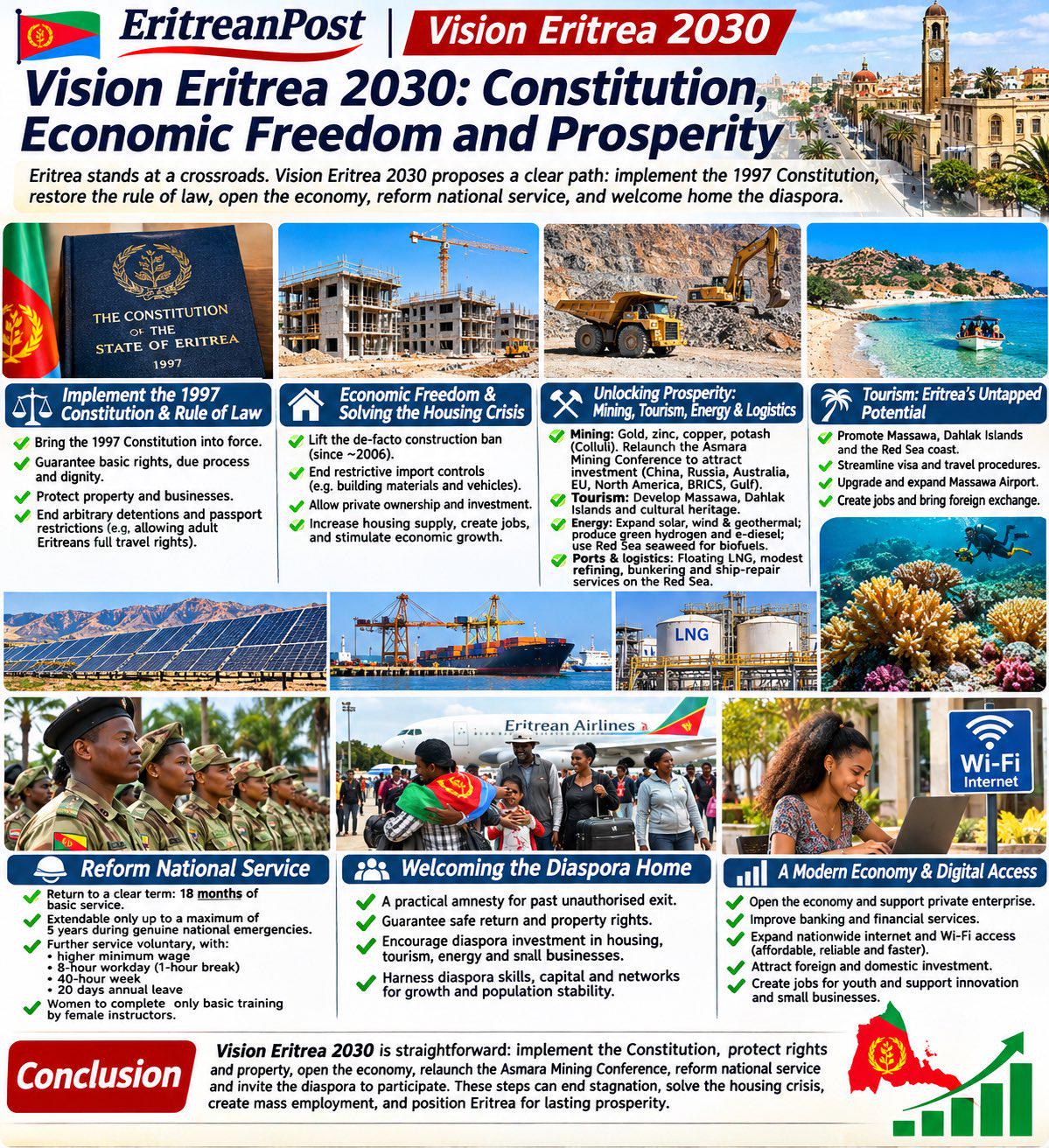
Vision Eritrea 2030: Constitution, Economic Freedom and Prosperity
Eritrea still operates without full implementation of its 1997 Constitution. This leaves citizens without reliable rights, due process or protection of property and businesses. Vision Eritrea 2030 calls for implementing the Constitution, restoring the rule of law, opening the economy, reforming national service and welcoming the diaspora home.
Constitution and Rule of Law
The 1997 Constitution was ratified but never fully applied. People can face long detention without fair trial, young Eritreans are often denied passports until around age 30, and property or businesses can be seized on accusations such as fleeing the country. Full implementation would give everyday Eritreans enforceable rights to liberty, fair process, dignity and security of their property and enterprises.
Economic Freedom and Housing
A de-facto ban on private construction since around 2006 has worsened the housing crisis, leaving most projects to party-linked firms such as Seghen Construction.
Lifting the ban, ending import restrictions on materials and vehicles, and allowing private investment would increase housing supply, create jobs and raise GDP. Expanding reliable WiFi and high-speed internet nationwide is equally vital for small businesses, education, digital services and market access.
Prosperity Sectors
•Mining: Eritrea holds significant gold, zinc, copper and potash (including the large Colluli project). Relaunching the annual Asmara Mining Conference would promote the sector and attract investors from China, Russia, Australia, the EU, North America, BRICS and Gulf nations under transparent rules.
•Tourism: Streamline visas, reopen and expand Massawa airport, and promote the Red Sea coast and Dahlak Islands for beach and diving tourism.
•Renewable energy and e-fuels: With 5.5–6.5 kWh/m²/day solar irradiation and over 3,000 sunshine hours yearly, Eritrea can scale solar, wind and geothermal power. Surplus energy can produce green hydrogen and e-diesel; Red Sea seaweed offers biofuel feedstock.
•Ports and logistics: Develop floating LNG terminals, modest refining, bunkering and ship-repair facilities for Red Sea traffic.
National Service Reform
Replace open-ended conscription with a clear 18-month basic term, extendable to a maximum of five years only in genuine emergencies. After basic service, further service must be voluntary, with higher wages, an 8-hour day (one-hour break), 40-hour week and 20 days annual leave. Women complete only basic training under female instructors.
Diaspora Return
Offer amnesty for past unauthorised exit, guarantee safe return and protect property and investment rights. Eritreans abroad bring skills, capital and networks needed for population stability and growth.
Conclusion
Implement the 1997 Constitution, open the economy (including WiFi access), relaunch the Asmara Mining Conference, limit national service and welcome the diaspora. These steps can end stagnation, solve the housing crisis, create mass employment and unlock Eritrea’s minerals, sunshine, coastline and strategic location.