r/FacialMassage • • 9d ago

Struggling with a specific facial issue and not sure how to fix it? Let’s figure it out together!

Post image
15 Upvotes

Hey everyone!

​I love sharing structural self-work routines, fascia release techniques, and tips here, but I know that every single face is completely unique. Sometimes, generalized advice just isn't enough when you're dealing with a specific, stubborn problem—whether it's chronic tension, asymmetry, posture-related facial changes, or post-procedure recovery.

​If you have a specific facial concern and you're feeling stuck on how to work with it properly, I am always open for personal 1-on-1 consultations!

We can choose the format that suits you best:

- ​In-depth text-based analysis and guidance

- ​A live video call where we can look at your individual case and address your questions directly.

​If you want a personalized approach tailored precisely to your face, just shoot me a DM (Direct Message) here on Reddit, and we can discuss how to help you safely!


r/FacialMassage • • 14h ago

Masseter massage

4 Upvotes

Has anyone noticed less puffiness around their jaw or a visible change in the size of their masseters after doing masseter massages regularly? If so, how long did it take to notice a difference?


r/FacialMassage • • 1d ago

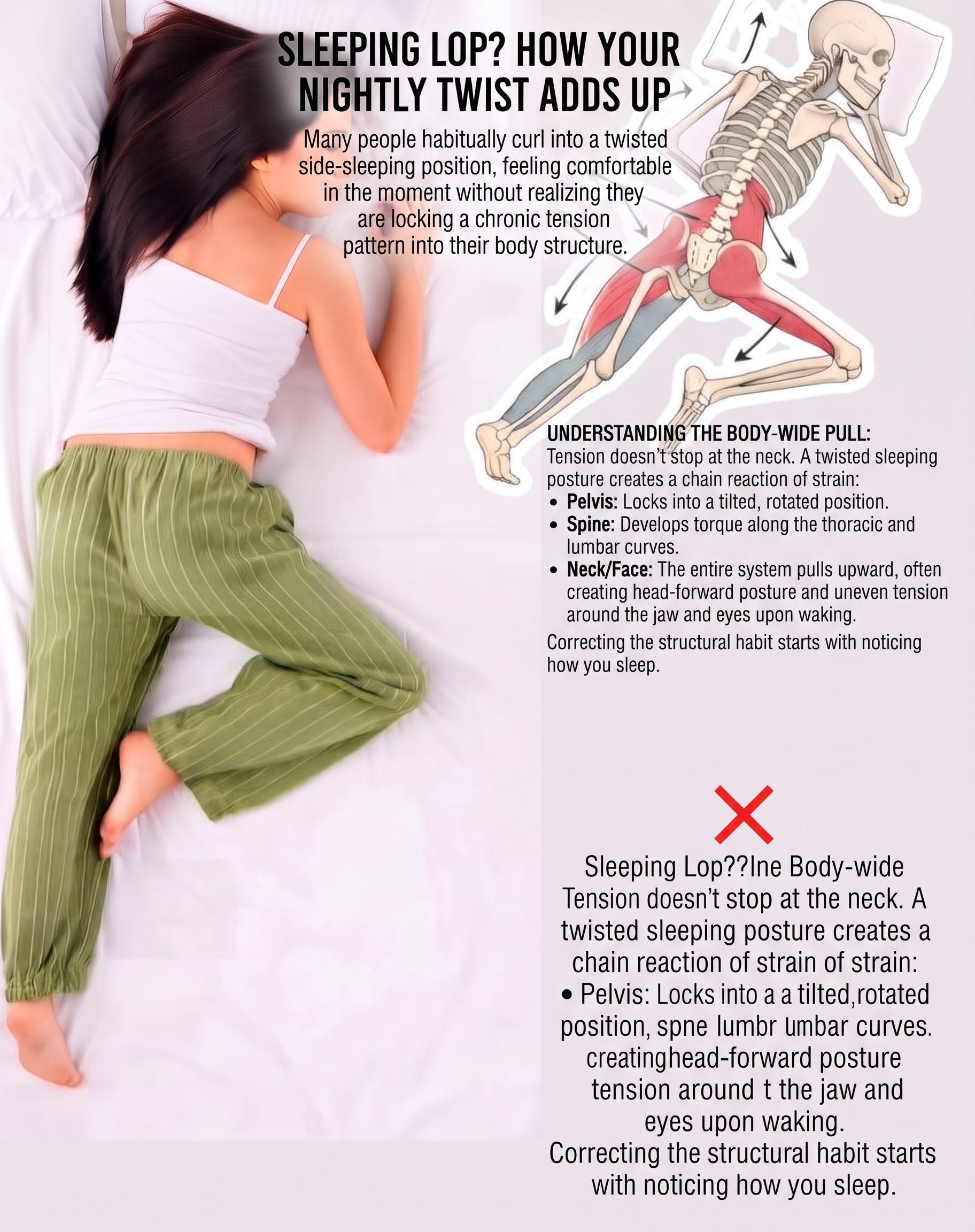
Could a twisted sleeping position be feeding into facial asymmetry?

Post image
12 Upvotes

I see a lot of people focusing only on one side of their face when they notice asymmetry, without thinking about how they sleep night after night.

​Think about that classic curled-up side-sleeping position—one knee pulled up, pelvis slightly twisted, torso turned a bit, with your head resting on a pillow. It feels "comfortable" in the moment because your body is accommodating existing tightness, but holding that lopsided shape for hours every night adds up.

​Because fascia and muscle tension don't stop at the collarbone, rotation or asymmetry around the pelvis and spine can travel up through the torso, shoulders, and neck all the way to the base of the skull and jaw. Over time, one side of the face can end up carrying different tension or looking slightly different from the other—and no amount of spot-working one cheek alone will fix the pattern if you keep sleeping in that exact twist every night.

​I'm not saying you have to force yourself into a rigid statue pose all night, just notice which side you always curl into and how your neck and jaw feel in the morning.

​Do you usually wake up twisted onto the same side, and have you ever noticed it lining up with facial asymmetry?


r/FacialMassage • • 2d ago

If you’ve read my facial structure books — there’s a standalone body book too

Post image
10 Upvotes

If you’ve read my books on structural facial work and want to dig deeper into the bigger picture, there’s a separate book outside that series: Fascial Body Massage: Myofascial Release Techniques for Pain Relief, Posture Correction, and Natural Movement.

​When you spend time working on the face, jaw, or neck, it becomes pretty obvious that nothing sits in isolation. Fascia connects through the whole body, and posture habits or deeper tension patterns often shape how things hold up top. This one stands on its own outside the facial series, focused on myofascial release for pain relief, posture correction, and freer, more natural movement.

​If you’ve been curious about how the body side ties into the facial work, this is where that bigger connection gets unpacked.

https://a.co/d/0biBnlcy


r/FacialMassage • • 2d ago

Anyone else look in the mirror and see downturned mouth corners and lines around the lips?

16 Upvotes

​Is there anyone here who looks in the mirror and sees downturned mouth corners and lines around the lips? I want to explain why this happens and how to work with it, because creams won't do much here.

​A lot of the time, those lines and the downward pull aren't just about skin losing elasticity. The muscles and fascia around the lower face are quietly tugging the tissue down. When the depressor anguli oris (the small bands pulling the mouth corners downward), the chin, or the masseters stay tight from stress or clenching, the corners get pulled down and the skin around the mouth creases much faster during everyday expressions. A tight platysma or forward head posture adds to that drag too, since everything connects lower down.

​Cream helps the surface feel nice, sure, but it can't release a muscle that's subtly pulling on your mouth all day.

​Here is a simple step-by-step release you can try at home:

​1. Start with a completely relaxed jaw—teeth slightly apart, lips soft, no clenching.

​2. Place your fingertips gently just below the corners of your mouth, aiming toward the lower edge of the jaw, without dragging the skin downward.

​3. Let the pads of your fingers sink in with light, steady pressure and take two or three slow breaths while the tissue softens for about 20–30 seconds.

​4. Shift slightly along the lower jawline toward the chin or back toward the jaw angle and repeat on any spots that feel tight or cord-like.

​5. Keep the pressure gentle and slow—if it hurts or makes you tense up, ease off.

​Do you notice the corners dropping more when you're tired or stressed, or is it pretty constant for you?

P.S ​If you want more step-by-step routines and deeper breakdowns, I cover a lot more techniques in my books.


r/FacialMassage • • 2d ago

Please comment- guasha fail

2 Upvotes

Guys I made a mistake and didn’t realize being too hard with guasha was a bad thing. (I’ve been doing this on and off for 5yrs) 7 days ago I was wayyy too hard on my face like deeply massaging the muscles on my forehead etc. and have been feeling SO tight, intermittent numbness, tension headaches, and little burning in between my eyebrows. Anyways I can’t be the only one. Please give tips to heal and words of encouragement.


r/FacialMassage • • 11d ago

Why a tight scalp and back of the head are secretly ruining your eyes

38 Upvotes

Let’s be honest: when we wake up with puffy under-eyes, heavy eyelids, or a tired look, our first instinct is usually to start poking, rubbing, or using expensive creams right under the eyes.

​But more often than not, the actual root cause isn’t there at all—it’s hiding at the back of your head and your scalp.

​Here is how tension in the occipital area directly messes with your eyes:

​1. The Lymphatic Traffic Jam: All the lymph fluid from your face and upper head has to drain down through the neck pathways. If your occipital and neck muscles are tight and clenched (which happens constantly if you stare at screens or your phone all day), they create a physical roadblock. The fluid simply has nowhere to go, so it pools right where the tissue is softest—under your eyes.

​2. The Scalp "Corset": Your scalp (aponeurosis) and occipital muscles are tightly connected to your facial structure. When the back of your head is locked up, it literally pulls the whole tissue framework backward and upward, creating constant strain across your forehead and eye zone and killing microcirculation.

​3. Nerve Tension & Mimics: Tension in the back of your head is directly linked to eye strain and tight facial expressions. When you release the occipital area, you essentially unlock a spasm that keeps your eye muscles overworked all day long.

​What should you do instead? Stop aggressive rubbing or direct pressure under the eyes (which often just triggers more inflammation and swelling). Instead, work with the periphery:

  • Mobilize your occipital area and scalp by moving the skin gently against the bone.
  • Release tension in your temples and neck.
  • Open up your drainage pathways downward.

​Once your scalp and neck finally start to breathe, your eyes and face will instantly respond with lightness and freshness!

​Do you usually feel tension in the back of your head after a long day? 👇

​P.S. If you want to dive deeper into structural self-work, fascia release, and step-by-step protocols, you can find all my detailed guides and books linked in my profile!


r/FacialMassage • • 12d ago

Need your honest feedback! Is this chapter from my upcoming taping book easy for a complete beginner to follow?

2 Upvotes

I’m currently working on updating my facial taping book, and I really want to make sure the instructions aren't overly medical or confusing—especially if someone has never held kinesiology tape in their hands before.

​I’m sharing a raw draft of Chapter 10 below (which focuses on relaxing jaw tension and lifting the cheeks/nasolabial area).

​If you’re a complete beginner to facial taping, could you give this a quick read and let me know:

  • ​Does it make sense on the first read, or do any anatomical terms feel too heavy?
  • Could you picture exactly where to place the tape just from the text alone (even before seeing the step-by-step illustrations)?

​Be completely honest—any feedback on what feels clear or what feels confusing would help me so much! Here is the chapter:

Chapter 10. Middle Third of the Face: Relaxing the Masticatory Muscles, Correcting Nasolabial Folds, and Restoring Volume to the Cheeks

​When working with the middle third of the face, we immediately encounter one of the most common aesthetic concerns: deepening nasolabial folds, flat or sagging cheeks, and a heavy, tense mid-face. In my practice, students and clients frequently ask how to "glue" the nasolabial crease to smooth it out instantly. Yet, as we already know from our core philosophy, trying to flatten a fold directly on the surface is a dead end.

​The nasolabial fold is not a problem in itself; it is a visible consequence of deep structural tension. When the powerful masticatory muscles enter a state of chronic hypertonus, they literally pull the mid-face inward and downward, creating a deep canyon around the nose and mouth. At the same time, the soft tissues of the cheeks lose their volume and slide downward due to fascial restriction. To restore a youthful, lifted, and radiant middle third, we must release the jaw tension and gently redirect the tissue vectors using precise, non-invasive taping techniques.

​Anatomical Focus and Preparation

​Before choosing our applications, let us look at the key muscular players of this zone:

​The Masticatory Muscles (Masseter and Temporalis) are among the strongest muscles in the human body. When we clench our teeth from stress or unconsciously hold tension during the day or night, these muscles shorten and thicken, shifting the entire framework of the middle face inward and dragging the cheeks down.

​The Zygomatic Muscles and Soft Tissues of the Cheeks lose their upward vector when the underlying fascial matrix is bound and dehydrated. Taping here does not "freeze" the face; instead, it acts as a sensory guide, signaling the nervous system to let go of chronic spasms and allowing tissue fluids to circulate freely.

​Ensure your skin is impeccably clean, dry, and free of any residual oils or skincare products. As always, we work strictly with 0% tape tension—letting the natural elastic memory of the cotton weave perform the work dynamically as you move your facial muscles.

​Application 1: Relaxing the Masticatory Muscles to Relieve Mid-Face Pull

​Tape Form: Wide I-tapes (approximately 6–8 cm long).

Tension: 0% tape tension.

Measuring & Preparation: Open your mouth slightly (as if pronouncing the sound "O") to put the masseter muscle into a natural, slightly lengthened state.

The Anchor: Place the anchor without any stretch right at the origin of the masseter muscle near the zygomatic arch (just below the cheekbone).

The Vector: Gently lay the strip downward along the fibers of the masseter muscle toward the jawline, maintaining absolute zero stretch on the tape itself.

Fixation: Smooth the tape thoroughly with your fingertips, using thermal friction to activate the hypoallergenic acrylic adhesive. Repeat symmetrically on the other side.

​Application 2: Softening Nasolabial Folds and Lifting the Cheeks (Y-Tape Technique)

​Tape Form: A Y-tape (a solid anchor of 2–3 cm with two split tails, approximately 6–8 cm total length).

Tension: 0% tape tension.

Measuring & Preparation: Maintain a neutral facial expression, with your skin clean and dry.

The Anchor: Apply the solid base anchor without stretch right over the zygomatic bone (the high point of the cheekbone).

The Vector: Peel the paper off the two split tails. Guide one tail gently along the outer edge of the nasolabial fold and the second tail upward toward the outer corner of the eye, embracing the cheek tissue. Ensure absolute zero stretch on both tails.

Fixation: Gently smooth the application from the center outward with your palm to secure the micro-lifting effect on the cheek volume.

​Pro-Tip for Mid-Face Freedom

​The middle third of the face reflects our daily emotional holding patterns. Beyond your taping routine, consciously check in with your jaw throughout the day: your teeth should be slightly parted, and your tongue should rest gently on the roof of your mouth. Combining this micro-habit with your tape applications prevents the masticatory muscles from re-clensing, keeping your cheeks lifted and your nasolabial zone soft and relaxed.


r/FacialMassage • • 12d ago

Have you read any of my books? I’d love your honest feedback on Amazon

5 Upvotes

Hi everyone! First, thank you so much for making this space so active and supportive, I love reading your messages and seeing your progress.

​If you’ve already read any of my Structural Facial Self-Work books on Amazon and tried the techniques, I’d really appreciate it if you could spare a minute to leave an honest review on the book's page.

​For an independent author, every single review helps so much with visibility and lets others know what to expect. Even a couple of short sentences makes a massive difference!

​Thank you endlessly for supporting my work, and let me know in the comments what area of the face or neck you want us to dive into next!

Also, if you have a paperback copy, I would absolutely love it if you shared a photo of it in the comments! Seeing my books out in the real world in your hands always makes my day.


r/FacialMassage • • 15d ago

Why skinny people still get that soft under-jaw pouch (it’s not fat)

53 Upvotes

I see this all the time: someone is in great shape, low body fat, yet they look in the mirror from the side and see this soft, heavy fullness right under their chin that refuses to tighten up.

​Naturally, the first thought is "maybe it's genetics" or "I need to lose two more pounds." But structurally, that under-jaw area (the submandibular triangle) isn't storing fat—it’s holding onto trapped fluid in a collapsed hammock.

​The floor of your mouth is held up by a network of small muscles that anchor into your hyoid bone. When we spend hours each day with our heads tilted down toward screens, two things happen mechanically: your lower jaw gets shoved slightly backward, and that muscle hammock under your mouth completely slackens.

​Once that hammock loses its natural tension, the deep lymphatic fluid running under your chin has nowhere to drain. It just sits there in the fold.

​Gua sha or aggressive chin scraping won't fix it because you can't push fluid out of a structure that's physically hanging low. You have to re-engage the hammock first.

​Next time you catch yourself sitting at your desk, try this instead:

​Rest your mouth completely loose with your lips soft. Gently place your thumb right in that soft hollow behind your jawbone under your chin. Press upward just enough to feel the tissue layer, and then press the flat tip of your tongue firmly against the roof of your mouth right behind your front teeth. Hold that engagement for 5 seconds, relax, and do it a few times.

​You'll instantly feel that entire submandibular floor lift up against your thumb. If you follow that by sweeping your fingers lightly from the corners of your jaw down the sides of your neck, that trapped fluid finally gets the green light to drain out.

​I cover these deep structural mechanics and fascial release sequences in my self-published book series on Amazon (link is on my profile if you want to dive deeper into root-cause self-work).


r/FacialMassage • • 17d ago

Why eye creams don't drain morning eye puffiness (and the temple blockage causing it)

36 Upvotes

If you wake up with stubborn puffiness under your eyes or feel like your upper eyelids are getting heavier, the automatic instinct is to apply an eye cream or massage right on the delicate eye skin.

​From a structural perspective, the eye area acts like a collection pool. The muscle around your eye (orbicularis oculi) is a circular muscle that tends to contract inward when under strain—from looking at screens, squinting, or holding facial tension. As this circular muscle tightens, it glues to the bone underneath, creating a tight pocket where fluid gets physically trapped.

​To make matters worse, the primary drainage route for the eye area runs sideways toward your temples and down in front of your ears. If your temples are tight from jaw tension or scalp constriction, that drainage gate is locked. No matter how much eye cream you apply, the fluid simply has nowhere to go.

​Here is a quick daily sequence to open that temple gate and drain the eye pool:

​1. Unstick the temple gateway

Place your flat palm or two fingertips right on your temple (just past the tail of your eyebrow). Press in gently to sink past the skin, and make slow, upward circular movements while slowly opening and closing your jaw. This melts the fascia where the eye muscle meets the temporal anchor.

​2. Melt the cheekbone attachment

Place your index fingertip right on the outer lower edge of your eye socket bone (not on the soft skin under the eye, but on the bone itself). Press softly onto the bone and execute tiny, slow micro-circles to release the muscle anchor that holds onto fluid.

​3. Sweep to the ear drain

Finish by gently sweeping flat fingers from the inner corner of your eyebrow, out across the brow bone, over the temple, and down in front of your ear toward your collarbone. Repeat this soft wave 5–6 times.

​Once you open the temple exit, the pressure behind the eyes drops, the heavy eyelid feeling lifts, and morning fluid drains naturally.

​P.S. I cover these structural symmetry patterns, fascial mechanics, and full step-by-step illustrated release guides in my Amazon book series. If you want to learn how to restore your facial balance from the root causes, check out the links right in my profile bio!


r/FacialMassage • • 19d ago

Why rubbing your nasolabial folds won't smooth them out (and the cheek anchor most people miss)

48 Upvotes

​If you’ve started noticing deeper lines running from your nose down to the corners of your mouth, it is very tempting to buy a richer cream or try aggressively rubbing right over the fold to "iron it out."

​From a structural perspective, a nasolabial fold is almost never a skin-surface problem—it's a tissue overlap caused by tension anchors higher up.

​The main muscle involved (the levator labii superioris alaeque nasi) runs right alongside your nose down into your upper lip. When you squint, stress, or carry deep facial tension, this muscle hyper-contract and pulls the center of your face upward. At the same time, tight masseter and cheek fascia block the natural movement of lymph. The heavy tissue of your cheek gets stuck and literally overhangs over that tight muscle anchor, creating the shadow we see as a fold.

​If you don't release the anchor near the nose and open the cheek pathway, rubbing the crease directly just irritates the tissue without fixing the fold.

​Here is a quick sequence to release that anchor before your evening routine:

​1. Unstick the nose bridge anchor

Place your index fingertips right on the sides of your nose nostrils (where the crease starts). Don't slide over your skin—press in gently to hook onto the deeper tissue, let your upper lip relax completely, and make very small, slow circles against the bone for about 30 seconds.

​2. Open the mid-cheek pathway

Place two flat fingers right under your cheekbone near your nose. Slowly slide them outward along the cheekbone toward your ears. This helps lengthen the cheek fibers that are bunched up toward the center.

​3. Clear the lateral drain

Finish by placing your palms on the sides of your face and sweeping downward along your jaw and neck toward your collarbones to drain out the trapped fluid that was pooling over the fold.

​Once that central anchor melts and the cheek tissue sits back where it belongs, the crease naturally softens without needing to force or stretch the skin.

​P.S. I cover these structural symmetry patterns, fascial mechanics, and full step-by-step illustrated release guides in my Amazon book series. If you want to learn how to restore your facial balance from the root causes, check out the links right in my profile bio!


r/FacialMassage • • 21d ago

Why your jawline isn't defined by age (and how your shoulders are pulling it down)

66 Upvotes

If you've noticed your jawline losing its sharp contour, or a soft double chin appearing even when your body weight hasn't changed, it's very easy to assume it’s just collagen loss. But from a structural perspective, your facial contour is directly anchored to your posture.

​Think of your skin and muscle layers as a continuous fabric. Your platysma—that broad, thin muscle covering the front of your neck—blends right into the lower border of your jaw and connects down into your chest fascia.

​When your shoulders roll forward and your head glides ahead of your spine (text neck), that entire front fascial line gets pulled downward. It acts like a tight rope constantly tugging the soft tissues of your cheeks and jawline toward your collarbones. No matter how much face cream or surface massage you do, if your shoulders are anchored forward, the foundation under your jawline physically cannot stay lifted.

​Reclaiming your contour starts by taking the downward pull off the neck foundation. Here is a 2-minute daily sequence to unstick those chest and shoulder anchors:

​1. Release the chest anchor

Place your palm flat on your upper chest, right below your collarbone. Press in gently to hold the tissue layer, then slowly tilt your head up and slightly away from that side until you feel a deep, melting stretch along the front of your neck. Hold for 20 seconds.

​2. Open the shoulder vectors

Interlace your fingers behind your back, keep your elbows slightly soft, and gently roll your shoulders back and down. Instead of forcing your head back, let your collarbones spread wide to create space for your neck to sit back naturally over your spine.

​3. Sweep the neck pathway

Place flat fingers right at the base of your jaw and make soft, slow downward sweeping motions along the side of your neck toward your collarbones. This helps guide out any fluid that was trapped by the tight posture.

​Once you restore that upward alignment from the shoulders, the weight releases off your neck, and your natural jawline structure comes right back out.

​P.S. I cover these structural posture connections, fascial mechanics, and full step-by-step release protocols in my Amazon book series. If you want to master this root-cause approach, check out the links right in my profile bio!


r/FacialMassage • • Oct 21 '26

That tissue buildup at the base of your neck is directly affecting your jawline and facial puffiness

50 Upvotes

If you've noticed a soft, heavy buildup of tissue right where your neck joins your upper back (often called a Dowager's Hump) along with a stubborn double chin or lower-face puffiness, it’s very easy to assume it’s just a weight issue or a sign of getting older.

​From a structural perspective, that hump is a compensation mechanism. When our head constantly glides forward from looking down at phones or laptops, the spine at the C7–T1 junction takes on massive mechanical pressure. To stop your head from literally tipping forward, your body lays down dense connective tissue and fat to stabilize the area.

​Here’s where it impacts your face: that dense blockage at the base of your neck compresses the deep lymphatic vessels and restricts fluid outflow from your entire head. Fluid gets trapped under the jawline simply because the primary exit route at the back is jammed. If that neck base is locked, no amount of jawline scraping or face massage will permanently clear lower-face puffiness.

​Here is a simple structural exercise to release that C7–T1 compression:

​1. Anchor the tissue

Cross your hands and place your flat palms or knuckles right on the soft tissue surrounding that prominent bone at the base of your neck (C7). Apply a firm, grounding pressure—you want to hold the tissue layer, not just slide over your skin.

​2. Slow extension and micro-circles

Keeping that firm hold on the tissue, slowly extend your neck slightly backward while gently making tiny, slow circles with your chin toward the ceiling. You should feel a deep, melting stretch right at the back of your neck.

​3. Sweep the pathway open

After 30 seconds, sweep your hands down from the back of your neck over your shoulders toward your collarbones to help guide the released fluid down.

​Once you open that back exit gate, your neck naturally lengthens, tension drops, and lower-face fluid drains much faster.

​P.S. I cover these structural posture connections, fascial release protocols, and complete illustrated guides in my self-published book series on Amazon. If you want to learn how to fix facial issues from their root structural causes, the links are right in my profile bio!


r/FacialMassage • • Oct 16 '26

Someone asked me how to fix an asymmetric smile, so let’s talk about what’s actually pulling one side down

25 Upvotes

A subscriber recently reached out asking why one corner of their mouth refuses to lift normally while the other side moves effortlessly. It’s such a common frustration, and I wanted to break it down more deeply here instead of just dropping a quick comment.

​When people notice their smile pulling to one side, the most common impulse is to stand in front of the mirror and try "exercising" the weaker side. But forcing a smile against tight tissue almost never works, because the issue is rarely a weak muscle—it’s usually an anchor pulling from below.

​Your main smile muscles (like the zygomaticus) connect into your cheekbone and blend right into the angle of your jaw, overlapping with your masseter and the top edge of your platysma. If you chew mostly on one side, grind your teeth, or carry deep postural tension in your neck, that side locks up. That tight tissue physically pins the corner of your mouth down, making it impossible for it to glide upward naturally.

​If you want to restore balance to your smile, you have to release the anchors first. Here is a quick 3-step sequence to melt that side-hold:

​1. Unstick the upper cheek anchor

Place two fingertips right under your cheekbone, close to your ear. Slightly open your mouth so your jaw is completely relaxed and unlatched. Press in gently and make very small, slow circles against the bone for about 30 seconds. You’re aiming to release the spot where the smile muscles blend into the jaw mechanics.

​2. Melt the jaw angle

Move your fingertips down to the corner of your lower jaw (right where the masseter sits). Keep your mouth slightly open and continue those slow, deep circular movements. If you feel a tender or tight spot, hold soft pressure there for a few seconds until you feel the tissue soften.

​3. Sweep the neck pathway

Finish by placing your flat fingers along the side of your jaw and gently sliding them down the side of your neck toward your collarbone. Repeat this downward sweep 5–6 times to clear out any fluid that was trapped by the tight muscle and release the lower fascial pull.

​Once that downward grip lets go, the corner of your mouth finally gets its normal range of motion back, and your smile evens out naturally without forcing it.

​P.S. I cover these structural symmetry patterns, fascial mechanics, and full illustrated self-work protocols in my Amazon book series. If you want to dive deeper into balancing your face from the root cause, check out the links in my profile bio!


r/FacialMassage • • Oct 14 '26

how can i fix my asymmetrical smile and tilted lips

Post image
3 Upvotes

r/FacialMassage • • Oct 02 '26

Why your 11-lines keep coming back and the 2-minute scalp prep before taping

27 Upvotes

​If you suffer from deep vertical lines between your brows (11-lines) or feel like your brows are constantly heavy, you’ve probably tried massaging your forehead or slapping a piece of face tape right over the furrow before sleep.

​While face tape is incredible for retraining muscle memory overnight, taping a frozen, glued-down forehead muscle rarely gives lasting results.

​Here’s the anatomical reason: your frontalis muscle (forehead) doesn't work in isolation. It is a direct continuation of your galea aponeurotica—the dense tendon sheet covering your entire scalp. When stress or screen time glues your scalp to your skull, it creates a constant downward pull on your forehead and brows. The muscle between your brows scrunches up as a compensation mechanism to stabilize the tension.

​If you don't unstick the scalp, the forehead will just pull right back into that furrow the second you take the tape off.

​Here is a quick, 2-minute prep sequence to do before applying any night application or bedtime routine:

​1. Scalp shift (Unsticking the helmet)

Place your fingers firmly into your hair on top of your head, right at the roots. Instead of rubbing your skin, press into the scalp and physically shift the whole tissue back and forth over the bone for 30 seconds. Do this over the crown and near the hairline.

​2. Lateral temporal lift

Take your palms and press them right above your ears. Slowly glide the tissue in upward circles while letting your lower jaw relax and hang slightly open. This releases the side anchors that pull the outer brow down.

​3. Gentle forehead spreading

Only now, place flat fingers in the center of your forehead and make slow, horizontal sweeping motions outward toward the temples to smooth out the frontalis fibers.

​Once that tendon sheet is mobile and hydrated, applying your nighttime application or simple structural massage will yield ten times better retention.

​P.S. I’m currently completely rewriting my Facial Taping book to include full illustrated anatomical prep protocols like this—making sure every application actually works with your fascia structure rather than just covering symptoms. My other structural self-work titles are available on Amazon through the link in my bio! ✨


r/FacialMassage • • Sep 27 '26 Heartwarming

What "Venus rings" on your neck are actually telling you (and a 2-minute fix)

44 Upvotes

If you look in the mirror and notice horizontal lines across your neck, it’s very easy to assume your skin is just losing its firmness. But from a structural standpoint, those "Venus rings" aren't just superficial wrinkles. They are mechanical creases.

​Think of it this way: your neck skin sits directly on top of the platysma—a thin, broad muscle that stretches from your chest up to your jawline. When we spend hours hunched over phones or holding stress in our shoulders, that muscle shortens and glues itself to the surrounding fascia. Every single time you tilt your head or move, the skin simply folds into those exact same tight grooves underneath.

​If the muscle below is bunched up, the surface on top physically cannot lay flat.

​Here is a quick, 2-minute daily habit to unstick that tissue and give your neck room to stretch out:

​1. Release the top anchors

Place your fingertips right underneath your jawline, close to the chin. Instead of sliding over your skin, gently press in and move the deeper tissue in tiny, slow circles against the bone. Slowly work your way outward toward your ears.

​2. Open the horizontal vectors

Place your flat fingers horizontally across the front of your neck. Gently slide the tissue sideways—moving from the center out toward the sides of your neck. This relaxes the fascial tension and gives the skin space to unfold naturally.

​3. Unclench the collarbones

Finish by placing two fingers right above your collarbones and doing a few soft, pumping circles. This releases the bottom anchor where the muscle attaches to your chest.

​(Important safety note: Always leave the very center of your neck alone—never press on the thyroid gland. Keep every movement horizontal, soft, and gentle).

https://youtube.com/shorts/XPPY-H8GuZM?si=1Tpg1fnfdzYRQ667

​Once you release that constant downward pull from underneath, the whole neck structure opens up and the surface lines naturally soften.

​P.S. I dive way deeper into structural facial self-work, fascia release protocols, and complete illustrated guides in my self-published book series on Amazon.

https://www.amazon.com/dp/B0GHYN7GBM?binding=paperback&qid=1790498941&sr=8-1&ref=dbs_dp_awt_sb_pc_tpbk


r/FacialMassage • • Sep 24 '26

Why facial taping fails for most people (and why it’s not just sticking tape on wrinkles)

27 Upvotes

​I recently decided to take down my taping book to rewrite it from scratch, and it made me think a lot about how misunderstood facial taping actually is. Most people buy a roll, watch a quick 15-second video, and end up disappointed when it either does nothing or leaves their skin feeling worse.

​The truth is, facial tape is NOT a magic lifting band-aid. It’s a mechanical tool, and it only works if you respect how the skin and muscles underneath actually function.

​Here are 3 major mistakes I see all the time:

​1. Pulling the tape (and skin) too hard Facial skin is delicate. If you stretch the tape aggressively to physically "pull" your face up, you’re just causing micro-trauma and stretching out tissue elasticity. Tape on the face should almost always go on with 0% tension. It works by gently lifting the top layer of skin to improve fluid movement and calm down tense muscles underneath—not by forcefully holding things in place.

​2. Taping straight over a line without fixing the root cause Slapping a piece of tape on a forehead line won't do much if your temples are locked in a vice grip. You have to relieve the tension pulling from the sides first, otherwise the middle tissue has nowhere to go.

​3. Ignoring lymphatic drainage and safety Never apply tape directly over the front of your neck (where the thyroid sits), and never tape your face if your collarbone area is blocked with tension. If fluid can't drain down, taping overnight will just trap puffiness right on your face.

​This is the exact anatomical logic I’m embedding into the rewritten version of my guide. Taping is a brilliant tool, but only when you work with your structure, not against it.

​Have you ever tried facial taping? Did it actually work for you?


r/FacialMassage • • Sep 21 '26

I made a tough decision: I’m taking my Taping book down and rewriting it from scratch.

Thumbnail
gallery
39 Upvotes

Being an independent author without a publisher or a team of editors is both a blessing and a challenge. You get to share your raw knowledge, but you also bear 100% of the responsibility when something falls short.

​Recently, I received a 2-star review on my Taping book. At first, it stung—nobody likes to see that. But after looking at it objectively, I realized the reader was completely right.

​What went wrong:

As a specialist who has worked with thousands of faces, certain techniques seem second nature to me. But what is "easy" in my hands didn't translate clearly enough onto the page. My biggest bottleneck has always been illustrations. Since I write, format, and illustrate everything on my own, creating crystal-clear visual guides without an editing team is by far the hardest part of my work.

​If a book causes confusion instead of giving clear results, it shouldn't be out there.

​My decision:

- ​I am pulling this book from Amazon. I’m going to completely rewrite it, refine the theory, and overhaul the visual guides so there is zero guesswork for the reader. I already have a solid chunk of the new theory written!

- ​Free Kindle Access: Before I pull it down permanently, I’m opening a free Kindle promotion for a couple of days. If you're interested in taping mechanics and want to check out the current material anyway, grab it while it's still available.

- ​Why I created my YouTube & Reddit: This is exactly why I try to maintain my YouTube channel and stay active here on Reddit. Since my books are self-published, I want a space where you can directly ask me questions, get personal guidance, and clarify anything that isn't clear on paper.

​Thankfully, my other structural and massage books continue to receive wonderful reviews and genuine feedback from you guys, so those will stay available on Amazon!

​Thank you for holding me accountable. A bad review is just a roadmap for a much better book. I’ll keep you updated on the rewrite!


r/FacialMassage • • Sep 17 '26

3 Critical Mistakes When Working on the Jawline and Lower Face (And How to Fix Them)

28 Upvotes

Working with the lower face and defining the jawline is one of the most requested goals in facial massage. However, I often see people making structural mistakes that either delay their results or create unnecessary tissue tension.

​Having worked with face structures and fascial release for years, here are the top 3 mistakes I see most often—and what to do instead:

​1. Rubbing the Skin Instead of Working the Deeper Fascia

  • ​The Mistake: Applying light surface friction or pulling the skin upward with oil, hoping it will "lift" the jawline.
  • Why it doesn't work: Sagging along the jawline (jowls or loss of definition) is rarely a skin-only issue. It is driven by deep fascial tightness, platysma tension, and fluid accumulation.
  • The Fix: Shift from sliding over the skin to engaging the sub-dermal layer. Use slow, stable pressure to anchor into the underlying tissue and release fascial adhesions along the mandible.

​2. Ignoring the Platysma and Neck Attachment

  • The Mistake: Spending 100% of your time massaging only the jawline itself while completely skipping the neck and collarbone area.
  • Why it doesn't work: The platysma muscle spans from your chest and collarbone up over the jaw. If the neck and chest tissue are tight and contracted, they physically pull the lower face downward like an elastic band.
  • The Fix: Always prepare the neck and chest first. Opening up the collarbone area and releasing platysma tension creates the space needed for the lower face to lift naturally.

​3. Aggressive Upward Dragging Without Proper Drainage Path

  • The Mistake: Forcefully pulling tissue upward toward the ears without clearing the lymphatic pathways first.
  • Why it doesn't work: If fluid has nowhere to drain, aggressive upward scraping just displaces swelling temporarily without solving the structural heaviness.
  • The Fix: Start with light pumping at the venous angle (above the collarbone) and neck nodes. Once drainage pathways are open, move to fascial work on the jaw, guiding fluid down toward the neck nodes at the end of your session.

​What techniques do you currently use for jawline work? Let’s discuss in the comments below!

​(P.S. If you want full step-by-step anatomical diagrams and protocols for lower face structural work, check out the pinned post at the top of our subreddit for my complete book guide series on Amazon).


r/FacialMassage • • Sep 15 '26 Heartwarming

How to distinguish facial muscle tension from lymphatic swelling (and how I fix both without invasive procedures as a bodyworker)

17 Upvotes

Hi everyone! I'm a structural massage therapist specializing in facial fascia and posture balance.

​A common issue I see in my practice is people trying to treat lymphatic fluid retention with heavy muscle massage, or vice versa. This often leaves the face feeling sore or looking even more puffy the next morning.

​Here is a quick breakdown to help you identify what your face actually needs right now:

1. Facial Tension: Feels like tightness around the jaw (TMJ), brow line, or back of the neck. It draws features inward and creates harsh lines.

  • ​Quick fix: Needs gentle fascial release and posture realignment—never aggressive pressure.

2. ​Lymphatic Stagnation: Feels like heavy, soft swelling (especially under the eyes or along the jawline) upon waking up.

  • Quick fix: Needs light, directional fluid drainage targeting the neck and clavicle pathways first.

​The face doesn't exist in isolation—your neck structure and fascia hold the real key to lasting results.

​📌 Join our community r/FacialMassage for daily structural self-care guides, visual diagrams, and holistic techniques.

​If you're new here, check out our pinned Welcome Post for a complete step-by-step roadmap and my self-work book series!


r/FacialMassage • • Sep 14 '26

Creases near your earlobes? Stop ignoring the area around your ears.

10 Upvotes

Have you noticed fine lines or diagonal creases forming right in front of your ears or under the earlobes? Most people think it’s just sleeping on their side or aging skin, but mechanically, it’s usually caused by tension in your masseter (jaw) muscles, tight parotid fascia, and locked temporal tissue pulling on the ear zone.

​When the tissue around the ear gets glued to the bone, it creates constant dragging, causing the skin to fold.

​Here is a 1-minute daily release to clear that tension and keep the ear area smooth:

​1. Unstick the Ear Attachment Take your thumb and index finger and gently pinch the skin right in front of your ear (near the tragus). Don't just pinch the surface—grip the tissue and make slow, tiny circles to move it over the bone. If it feels tender or stuck, that’s your answer.

​2. The Lobe Lift Gently hold your earlobe and slowly roll the tissue right behind and below it using small circular motions with your fingertips. We want to clear the tight junction where the ear meets the neck.

​3. The Up-and-Away Glide Place two fingers right in front of your ear joint. Open your mouth slightly to soften the jaw, then make firm, slow upward strokes along the hairline toward your temples.

​Do this for 30–60 seconds while watching TV or after applying your morning oil. It frees up the tissue, restores drainage around the ear nodes, and stops those creases from setting in deep.

​You can find more techniques like this in my self-care book series on Amazon (just search for Varvara Erel), where I break down structural self-work step by step.

https://www.amazon.com/dp/B0GHYN7GBM?binding=paperback&ref=dbs_dp_awt_sb_pc_tpbk


r/FacialMassage • • Sep 05 '26

Free Gift for the Community: Get my first book for FREE on Amazon (Sept 6–8 only!)

19 Upvotes

Hey everyone!

​As a massive thank you to this amazing community for all your support, questions, and discussions, I’m doing something special this weekend.

​From September 6th to September 8th, my very first book on structural facial self-massage, fascia release, and natural lifting will be available for 100% FREE download on Amazon!

​Most facial care focuses only on the skin surface, but the true shape of the face is built much deeper. This book is a practical, anatomy-based guide on how to work with the deeper layers to restore natural facial mobility and balance.

​What you’ll find inside:

  • ​Fascia as the Facial Framework: Why skin creams can't change facial shape, and how fascial restriction creates heaviness, puffiness, and asymmetry.
  • ​The Neck & Platysma Connection: Why true lower-face lifting begins below the jawline and how releasing the neck restores facial contours.
  • Cranial & Facial Aponeurosis: How deep tension in the scalp (galea aponeurotica) pulls the face downward and how to unlock it.
  • Intraoral (Buccal) Self-Massage: A safe, step-by-step home protocol to release deep cheek and jaw tension from the inside out.
  • Safe Lymphatic & Lifting Routines: How to drain swelling without forcing tissues, plus a structured 10-minute daily routine for long-term results.

​How to get it:

  1. Head over to Amazon between Sept 6 and Sept 8.
  2. Search for Face Massage Beyond Múscles. The Fascial Approach to Lifting, Structure, and Natural Facial Shape or click the link here: https://a.co/d/0hBPws4d
  3. Click "Buy now with 1-Click" for $0.00 to add it to your Kindle library forever! (You don't need a physical Kindle device—just the free Kindle app on your phone or tablet).

​If you grab a copy and find it helpful, leaving an honest review on Amazon would mean the world to me! Independent authors rely heavily on reviews to reach more people who need these structural practices.

​Grab your copy while it’s free, and let me know in the comments if you have any questions about the techniques inside! Happy reading! 💗


r/FacialMassage • • Aug 21 '26

That stubborn furrow between your brows? It’s rarely just a skin issue

39 Upvotes

Hey everyone! It’s been a little while since my last post, so I wanted to pop in with something super practical today.

​We talk a lot about drainage, but let’s talk about another big reason people get stuck: 11 lines (the furrow between your eyebrows).

​Most people try to smooth out between their brows by rubbing directly on the line or applying heavy creams. But the muscle that causes that line (the corrugator) isn't acting alone—it's usually pulled into constant contraction by tension elsewhere.

​Three hidden drivers of the "11 lines":

  • ​A tight scalp (galea aponeurotica): When the top and back of your scalp get glued down and stiff, the forehead muscle loses its elasticity and sags forward, forcing the brows together.
  • ​Unconscious squinting or screen focus: When concentrating, we lock our eye muscles, which cascades straight into the brow center.
  • Jaw clenching: Tight masseter muscles pull the whole facial chain downward, creating compensating tension around the eyes.

​Try this 2-minute soft release instead of rubbing the skin:

  1. Unstick your scalp: Take your fingertips, grip your scalp firmly (don't slide on the hair, move the actual skin over the bone), and massage in circular motions from your front hairline back to the crown.
  2. Loosen the forehead base: Place the flat palms of your hands on your forehead, apply gentle upward pressure, and take 3 deep breaths, letting your eyebrows relax downward.
  3. Pinch the brow muscle softly: Lightly pinch the inner corner of your eyebrow between your thumb and index finger, holding for 10–15 seconds without dragging the skin.

​Consistency with releasing the scalp and forehead tension makes a massive difference over time.