r/Farriers • u/sparkykat • 4h ago
New farrier looking for navicular syndrome advice; help me not ruin my horse!
galleryHello,
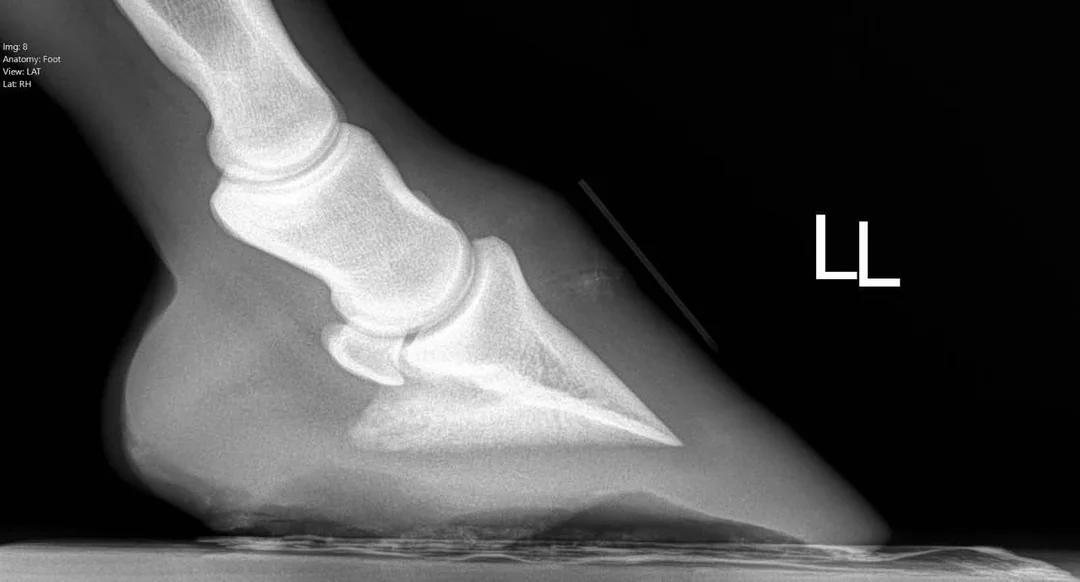
I am a new farrier (1 year 2 months since 8 week farrier school, I apprenticed for 3 months before returning to full time work to pay bills). The most difficult hooves I have to deal with are actually my own horse’s, a pigeon toed 13 y.o. QH gelding with navicular syndrome. He’s thrown me for a loop recently. I would love any advice or help from more experienced farriers. He is due to get updated radiographs in the next few weeks and I’m tempted to have the vet’s specialist farrier (my mentor) shoe him and advise me, but I’m hoping for some clarification before then.
TLDR: My navicular horse did well in shoes until recently and turned into a new horse when I had to keep him barefoot out of necessity for a week; now it’s been three and he’s going strong. Where do I go from here? (I included the horse’s history at the bottom)
This is NOT a barefoot vs shod post btw, I’m just inexperienced and stupid and hoping I don’t ruin my horse. Apologies for the incoming book.
Problem/Confusion:
Starting in August this year, he became uncomfortable more and more frequently at every stage of his shoeing cycle. He became lethargic, adverse to any touching, and by November seemed to be constantly trying to adjust to find a comfortable position. Up to this point, lifestyle and medication changes made his navicular park out stances mild and far between to non-existent, but he would continue to point his iffy FR hoof. Whenever I get a new pair of shoes for him, I pull the fronts off and shape the new to match the old while he gets to wander barefoot in his paddock until I’m ready for him, then tweak the shoes as needed. He was very clearly uncomfortable barefoot and did better in the shoes… until recently.
This month he was due for new shoes but I found out I ordered a size up that wouldn't work. I did a quick “barefoot” fix for him by leveling the foot as best I could without taking off much and rounding off the walls to avoid chipping. It took about a week for the correct shoes to come in and he was barefoot the entire time.
The day I pulled them, he yawned repeatedly. He walked tenderly and struggled to turn, but stood squarely, something he'd stopped doing with shoes on. He got bute for three days. He had some heat in both front feet on day 2 that was gone the next day. By day 7 he became a new horse. He was energetic, trotting and running, seeking human contact, initiating play, and eating slowly and methodically instead of bolting his feed; he was acting opposite of the horse I’d had for a year. He moved the same as he had with shoes before becoming uncomfortable and didn’t struggle on turns.
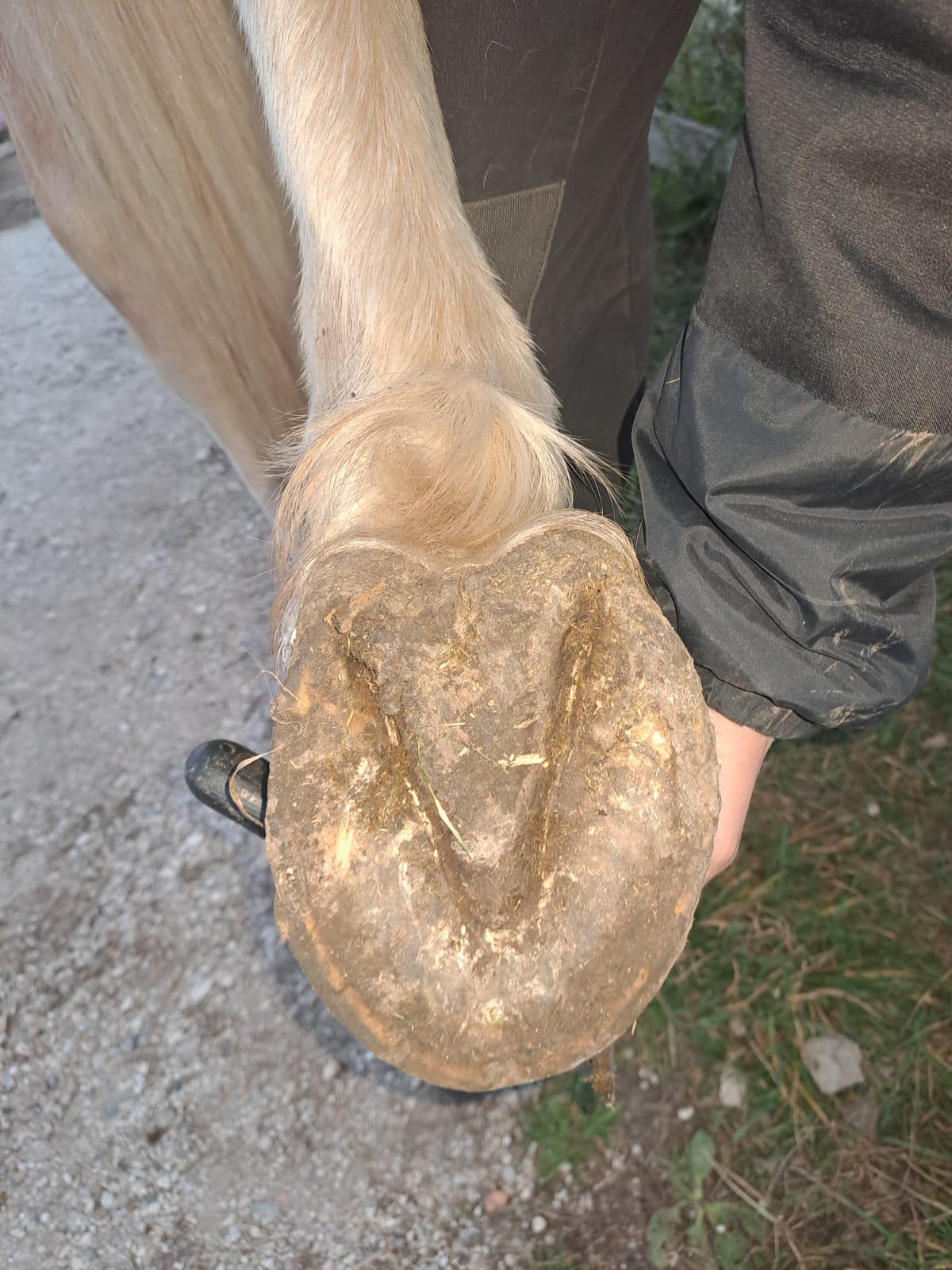
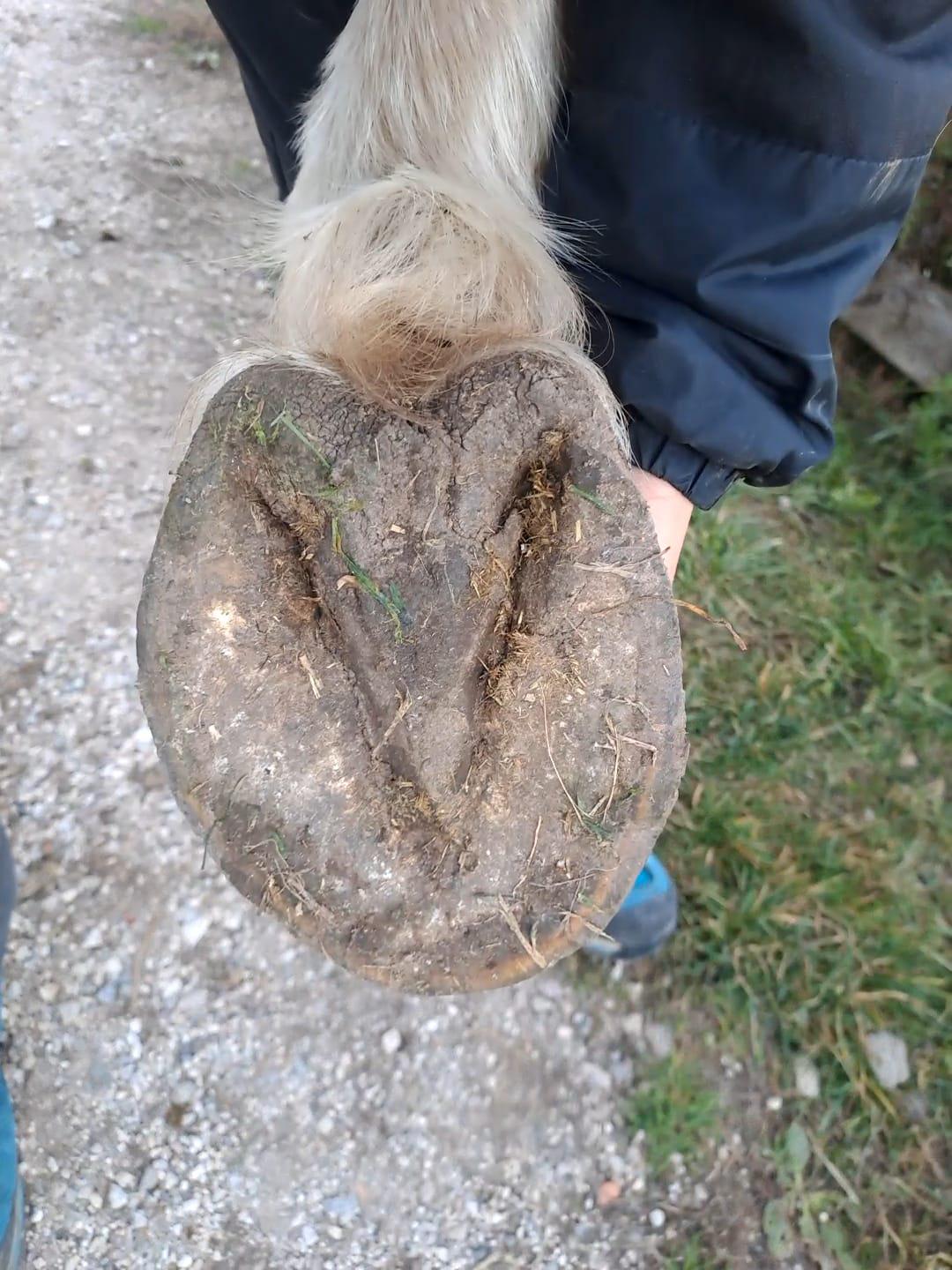
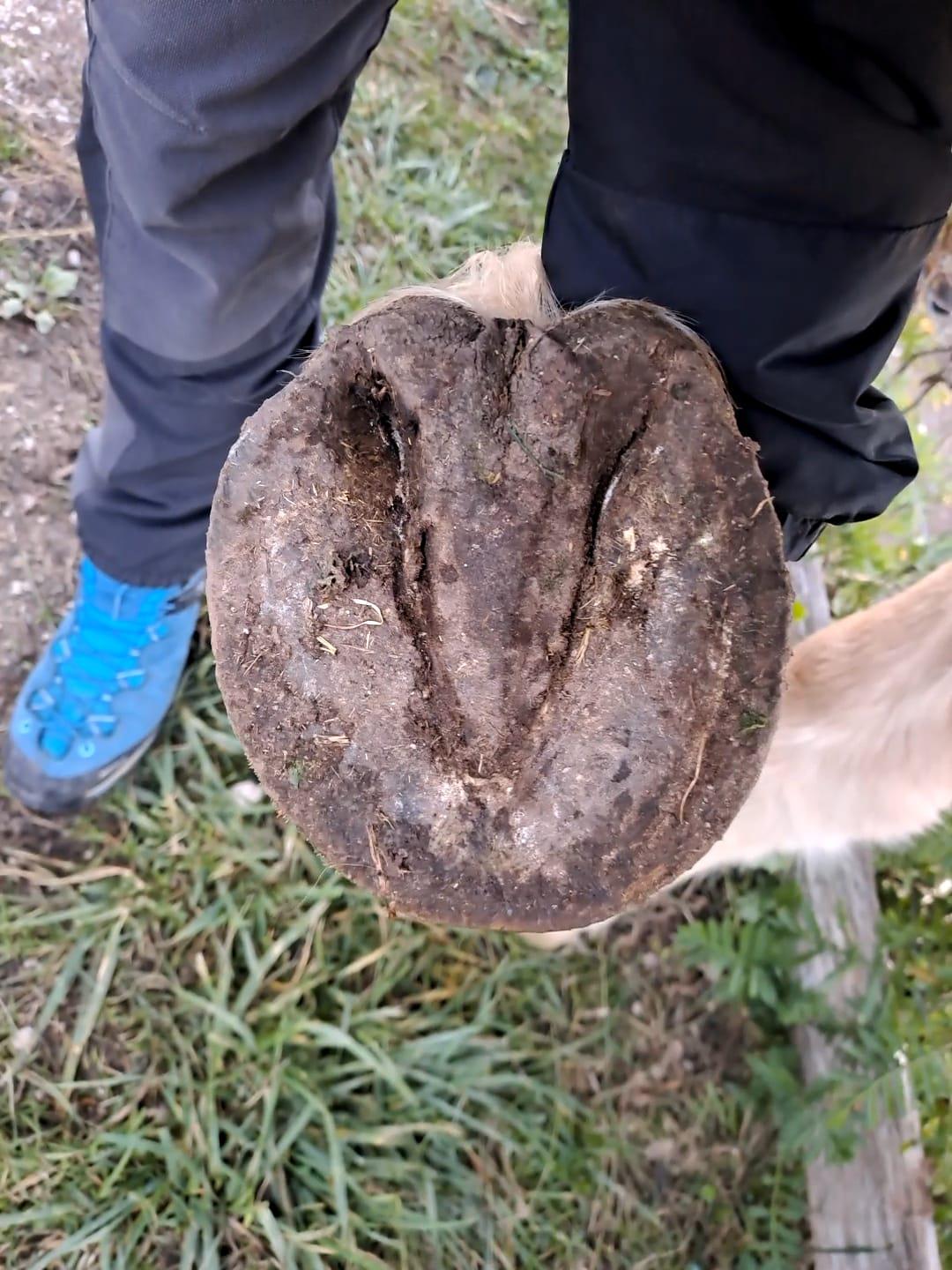
It was such a drastic change that I’ve been watching him day by day with his new shoes ready to go on when he tells me enough is enough. I’ve been handwalking him 30 minutes 2-3x a week for exercise and he does not react to gravel, barely reacts to asphalt (toe landing on the FR, flat landing on FL), and doesn’t stumble or tip toe on tight turns. I lightly rasp his front hooves once a week to keep them in balance since he is wearing out the lateral toe quarters. (I’ve been using this time to fight his daggum FR medial heel too.) It’s been three weeks now and he has only shown a faint park out on a day that flies kept him stomping for hours and after I didn’t handwalk him for a few days.
QUESTION: Do I ignore the horse in front of me and put his shoes back on since the vet urged it and I’m inexperienced? Or do I keep managing him barefoot and wait for the inevitable earful?
Any advice for managing a contracted/sheared heel?
I worry this could be another case of a navicular horse doing better only to suddenly take a bad turn again later in the future. I’m also concerned about complications like pedal osteitis in the long term.
History:
This horse came to me on 08/2025 fully shod wearing omnidirectional/rail steel shoes on the fronts (Avanti PLRs), received yearly coffin joint injections, and lived in essentially an XL outdoor stall. He had the classic navicular bone remodeling in his 7 y.o. radiographs that showed synovial invaginations; not full blown lollipops but probably on the way to being so. Upon arrival he would frequently stand in an exaggerated parked out/downward dog position, I assume to relieve his discomfort. This was especially the case on hard surfaces, and he would tip toe on asphalt. He would always point with his FR hoof, which has an old injury on the medial bulb, is contracted, and struggles with thrush. He was also bad about forging at the walk and trot.
Since I bought him, I pulled the hind shoes but kept him in the Avanti PLR shoes per the vet’s strong recommendation, and we switched his injections from the previous vet’s sterile *topical* hyaluronic acid (!!) plus corticosteroids to a higher viscosity HA injection designed for intraarticular use. He now lives in a spacious paddock with daily pasture turnout and gets to move about daily. Until recently he was ridden lightly in a fitted saddle 2-3x per week and did well at walk and jog, but occasionally braced and stepped oddly on the left rein and left lead. I’ve also managed to get him to stop forging.
I reset his shoes every 6 weeks but since he grew a LOT of foot in the warmer months, I switched him to every 4 weeks and he seemed to respond really well to the change. He is pigeon-toed and I struggle to keep up with his inner heel, especially the FR that’s always threatening to shear, but he always breaks over on his lateral toe quarter rather severely no matter what.