r/FascistItalyPhotos • u/Calamai_Barents484 • 8h ago
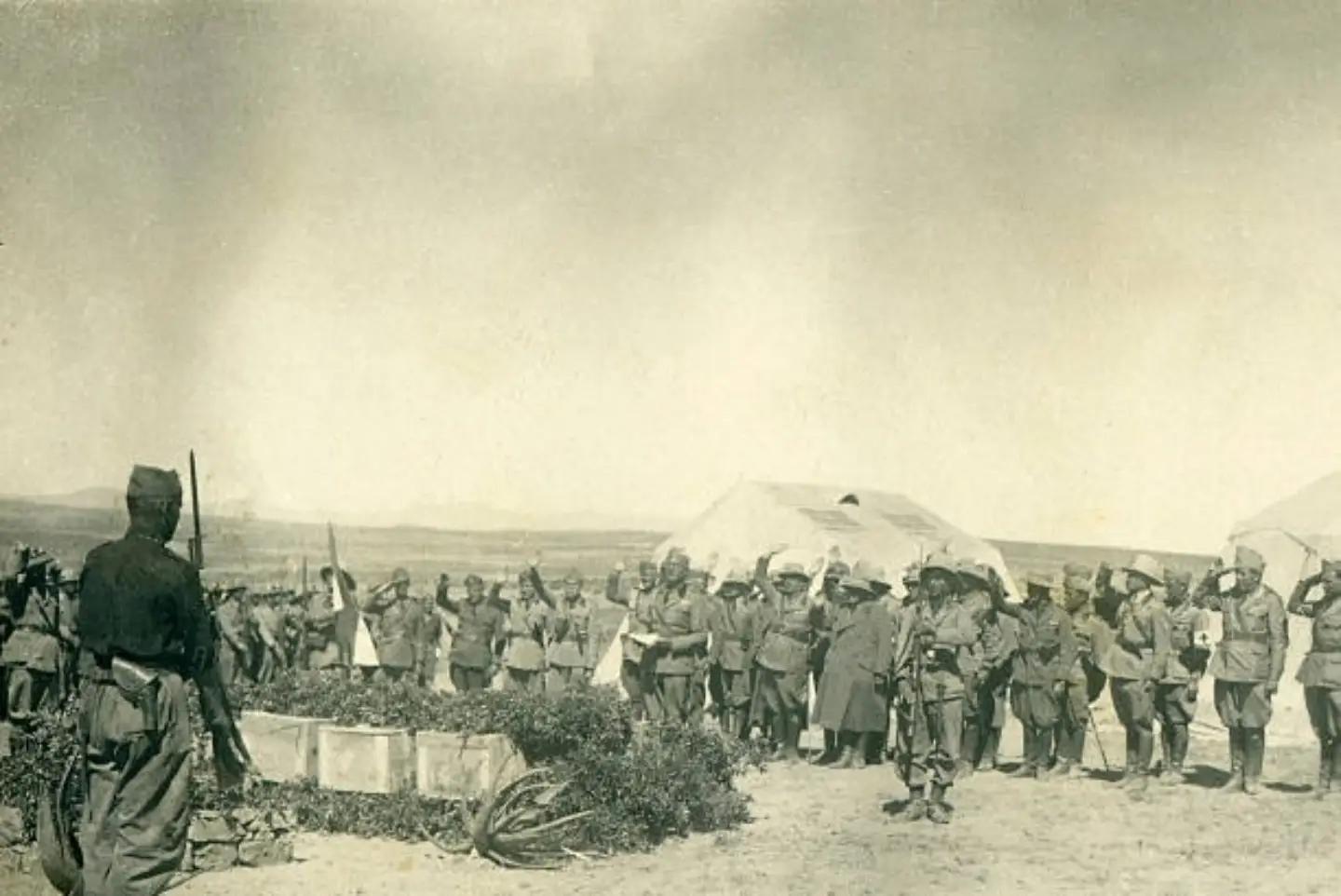
Second Italo-Ethiopian War The funeral of four soldiers who fell in Dessié, Ethiopia, 1935.
34
Upvotes
r/FascistItalyPhotos • u/Calamai_Barents484 • 8h ago
r/FascistItalyPhotos • u/waffen123 • 1d ago

r/FascistItalyPhotos • u/the_giank • 1d ago

r/FascistItalyPhotos • u/_Chleb • 2d ago

r/FascistItalyPhotos • u/DavidJGill • 2d ago

I picked up this vintage postcard in Italy years ago. "Torre di Manovra, Scuola Centrali Antincendi"
It is the firefighting training school in or near Rome, designed in 1939 by architects Carlo Di Maria, Claudio Longo Gerace, and Dagoberto Ortensi, and built in 1940-41 when Mussolini came for a visit (from an article on the history of the school and its buildings) As originally built, the complex was an impressive, monumental statement of Italian Rationalist architecture, despite its straightforward purpose. A few photos I've found suggest that it still stands, though considerably altered.
r/FascistItalyPhotos • u/the_giank • 3d ago

r/FascistItalyPhotos • u/waffen123 • 4d ago

r/FascistItalyPhotos • u/Fiff02 • 5d ago

If the date is correct, then these could be the rearguard units left behind to cover the German retreat. In fact, the mortar appears to be aimed toward Via Casilina – the old Via Casilina.
r/FascistItalyPhotos • u/Calamai_Barents484 • 5d ago

r/FascistItalyPhotos • u/waffen123 • 6d ago
r/FascistItalyPhotos • u/the_giank • 8d ago

r/FascistItalyPhotos • u/Trador000 • 9d ago

The 29th Waffen Grenadier Division of the SS (Italian No. 1), known as the Italian SS Legion, was officially established on February 10, 1945, from the brigade originally formed in November 1943. Composed of Italian volunteers from the Italian Social Republic (RSI), it fought against the Allies at Anzio and Nettuno, and later took part in anti-partisan operations and combat on the Italian Western Front. In April 1945, it fought in Piedmont and Lombardy.
r/FascistItalyPhotos • u/Calamai_Barents484 • 9d ago
r/FascistItalyPhotos • u/waffen123 • 12d ago

r/FascistItalyPhotos • u/Fiff02 • 12d ago
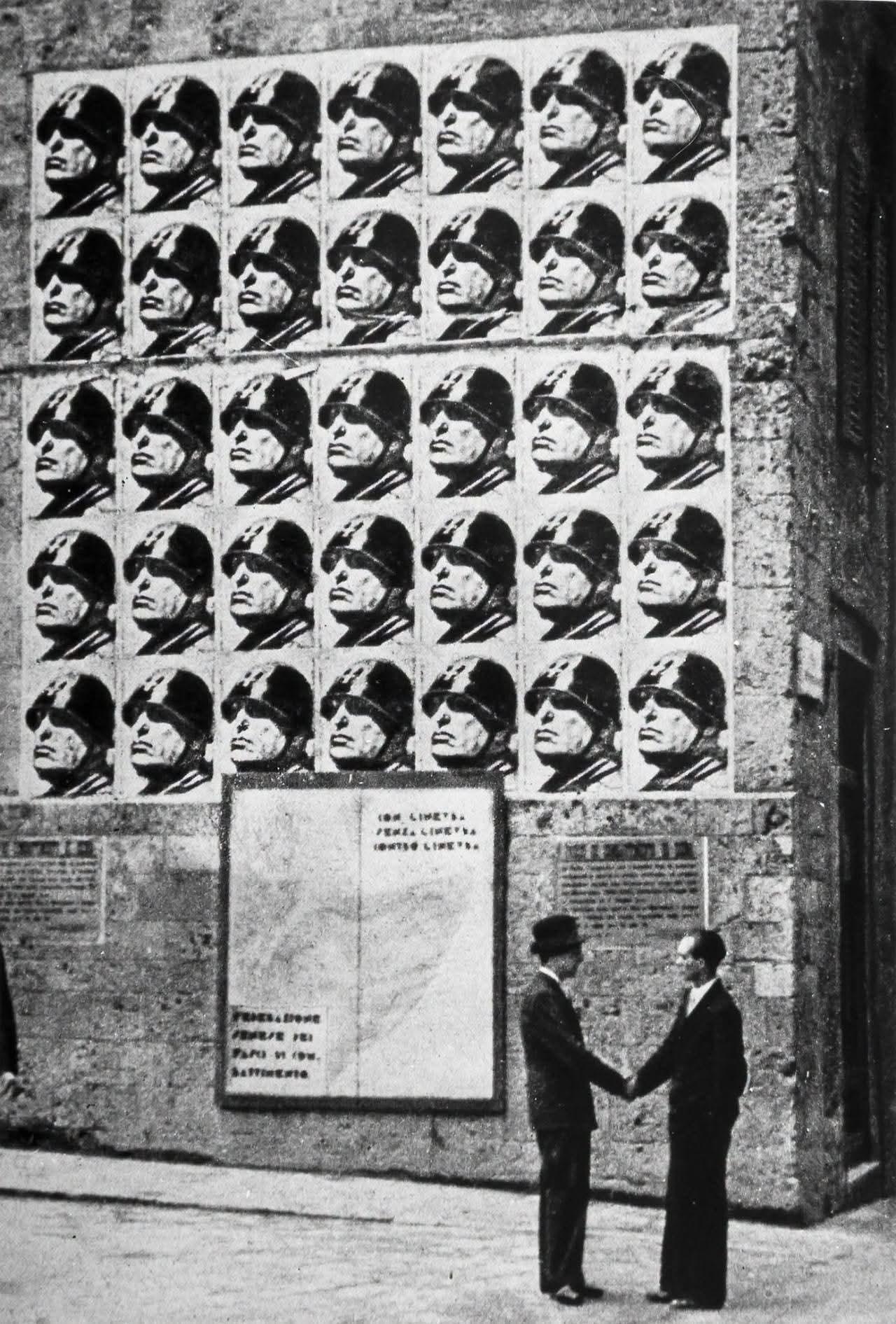
The photograph was taken by the German photojournalist Tim Gidal, apparently in Florence.
r/FascistItalyPhotos • u/Calamai_Barents484 • 13d ago

r/FascistItalyPhotos • u/Fiff02 • 13d ago
r/FascistItalyPhotos • u/the_giank • 13d ago
r/FascistItalyPhotos • u/waffen123 • 13d ago
r/FascistItalyPhotos • u/Fiff02 • 14d ago

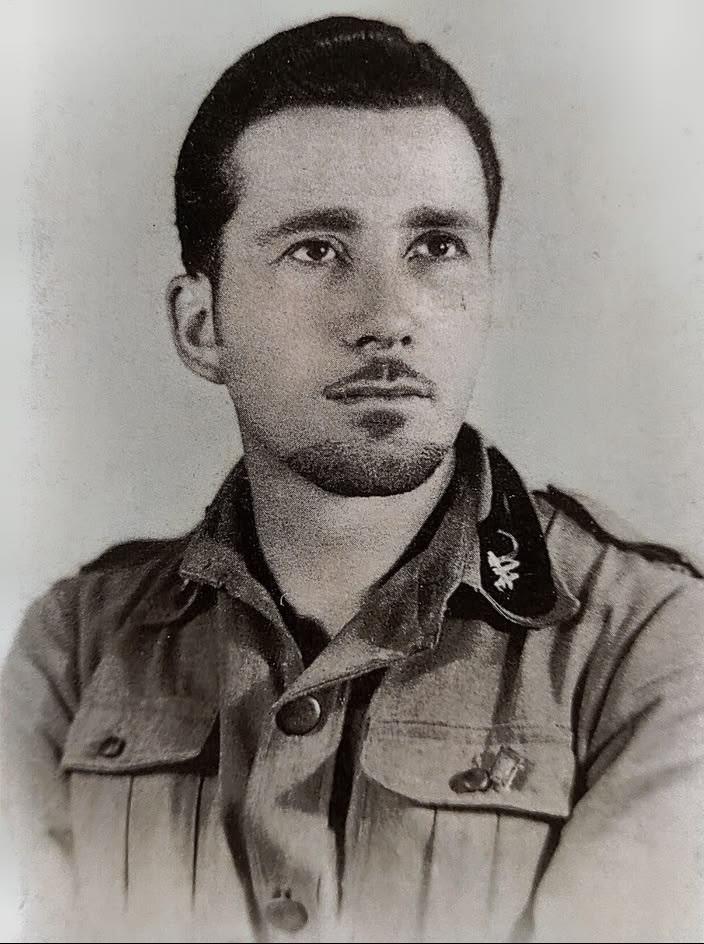
Does anyone have more information about this photograph?
r/FascistItalyPhotos • u/CuntaChinte • 16d ago
r/FascistItalyPhotos • u/CuntaChinte • 17d ago

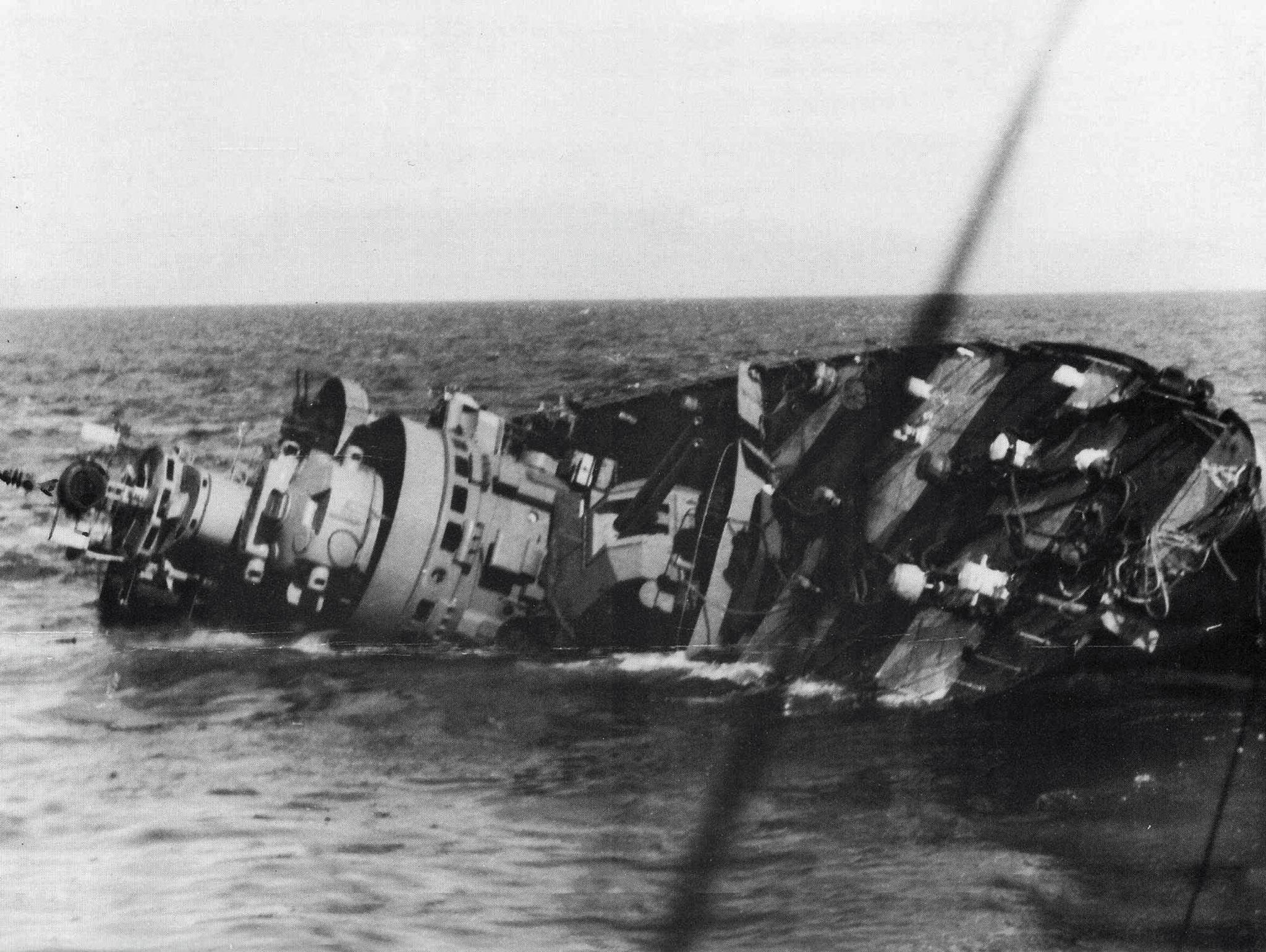
Photo from www.naviearmatori.net/Giorgio Parodi.
The fall of Italian East Africa, in 1941, resulted in over 150,000 Italian civilians finding themselves in territories under British occupation. These people were a considerable burden for the British, who had to feed them and keep them under guard, as some may be supportive of Italian guerrillas (some thousands Italian servicemen, even after the formal end of the campaign, remained at large and waged a guerrilla warfare that in some cases lasted until 1943) or otherwise acting as spies or saboteurs (one such example was Rosa Dainelli, a doctor who was recruited by the Italian secret service and blew up an ammunition depot in Addis Ababa). Many of these civilians were thus placed in internment camps, where their situation was rather dire; having had to leave behind all their belongings, the internees were housed in improvised tent camps in precarious hygienic conditions, receiving insufficient food. After a few months, proposals were made for their repatriation; the United States (then still neutral), Switzerland, and the International Red Cross acted as liaison between the British and Italian authorities. In the end, in November 1941, a plan was agreed by both countries. Women, children, and elderly people (men of military age would not be released, as the British of course did not want to send potential soldiers back to Italy) would be repatriated from East Africa by four Italian liners, which had been laid up in Genoa and Trieste at the beginning of the war: Giulio Cesare, Duilio, Saturnia, and Vulcania. The ships underwent some modification work, which increased their capacity to 2,500 passengers each; a hospital with 150 beds was created on each liner, as well as a delivery room, two operating rooms, a pharmacy.
As the British vetoed the use of the Suez Canal (fearing that one of the Italian ships might scuttle itself while crossing it, thus blocking this vital line of communication), the liners would have to leave the Mediterranean through the Straits of Gibraltar and circumnavigate Africa, a voyage of 10,400 miles, which would last fifty days. The British granted them safe passage; for recognition, they were panted white with large red crosses on the sides and funnels, similar (but not identical) to hospital ships. An Italian tanker, Lucania, was likewise granted safe passage to act as a replenishment oiler for the liners; she was scheduled to sail from Genoa to Iran, where she would load the oil needed for the resupply of the liners. Lucania, too, was painted with recognition markings, different from those worn by the liners: black hull, funnel, and superstructures, with Italian flag painted on the sides, and large white circles on the sides and the funnel. Both Lucania and the liners, moreover, would keep their lights on at night, like neutral ships and unlike vessels of belligerent countries. Finally, Lucania would carefully follow a prearranged course, agreed between the Italians and British. In spite of all this, on 12 February 1942, a mere five hours after departure, Lucania was torpedoed and sunk by HMS Una, whose commander, perhaps owing to his bad health (he had come down with high fever and pneumonia), had failed to recognize her markings. Una escaped detection, while the Italian A/S reaction ended up sinking another British submarine, Tempest, which was operating nearby. This incident caused vehement protests by the Italian authorities; after some discussion the British agreed that an Italian tanker that had been interned in Spain at the outbreak of the war would be allowed to sail to Italy unmolested, as a form of reparation for the loss of Lucania, while another two tankers, Taigete and Arcola, which had been likewise interned in the Canary Islands in June 1940, would fulfill the same role as the lost tanker, bearing the same recognition marks and loading the required oil in Curaçao.
The operation finally got underway on 2 April 1942, when the four liners sailed from Genoa and Trieste. During each voyage, the liners embarked in Gibraltar a British party of thirteen men each (one senior officer, one junior officer, six soldiers and five sailors), tasked with ensuring that all terms of the agreement were respected (among other things, the sailors included three wireless operators who were tasked with guarding the radio rooms and make sure that there were no radio contacts with Axis ships or commands). These parties remained onboard during the voyage to East Africa and back, and were disembarked in Gibraltar during the return voyage. Additionally, the ships carried medical personnel (on each ship, seven doctors, a pharmacist and fourteen volunteer nurses, all specifically trained in tropical medicine for this mission) tasked with assisting the refugees, many of whom were weakened by the stay in the improvised and overcrowded internment camps and sick with tropical diseases, which caused a number of deaths, especially among the children. General Alcibiade Andruzzi of the naval medical corps was given overall command of the medical personnel on the four ships; Francesco Saverio Caroselli, former civilian governor of Somalia, was given command of the expedition, sailing in Saturnia.
After leaving Gibraltar and the Mediterranean, the liners made call in Sao Vicente (Cape Verde, where they were refuelled by Taigete and Arcola) and Port Elizabeth (South Africa) and finally reached Berbera, British Somaliland, where Saturnia and Vulcania embarked 5,000 refugees. Upon arrival to the ships, the refugees were registered and deloused, then they received some sandwiches and beverages and finally they were assigned to cabins or dormitories. Some rooms on each ship had been closed off and turned into wards for people sick with infectious diseases, such as tuberculosis. There were some attempts by soldiers, who had escaped from POW camps, at stowing away on the ships, but they had to be turned away as their discovery by the British would have jeopardized the entire mission (it had been agreed that if military personnel had been found onboard, the ships would have been seized and the crews interned). Giulio Cesare and Duilio, meanwhile, proceeded to Massawa, where they embarked their quota of refugees. Then the return voyage began; some children were born aboard the ships, some of the sickest refugees died and were buried at sea. The ships reached Italy in June; Saturnia reached Naples on 21 June and was visited by the King and Queen of Italy and by the Duchess of Aosta, whose husband, Amedeo of Savoy (the viceroy of Ethiopia), had died of tuberculosis while a prisoner in Kenya a few months earlier.
The second mission took place between September 1942 and January 1943; the third one, between May and August 1943. The fall of the Fascist government, on 25 July 1943, resulted in the ships being ordered by radio by the new government to remove all Fascist symbols, such as the bust of Mussolini in one of Vulcania’s salons. During the final call in Gibraltar, in August, a British naval officer came onboard and stated that the Germans would soon invade Italy as enemies (he was presumably aware of the ongoing negotiations between the new Italian government and the Allies, and of intelligence aboth the preparation of Operation Achse), offering the ships to reach a neutral port of Allied-occupied Sicily instead of mainland Italy. The offer was turned down, however, and the ships continued their voyage to Taranto.
Overall, the four liners made three repatriation voyages from East Africa to Italy between April 1942 and August 1943, bringing back over 25,000 refugees. Among them was future comic book creator Hugo Pratt, then sixteen years old, who was repatriated with his mother (his father, a non-commissioned officer in the MVSN, had died of illness in a POW camp a few months before).
A planned fourth repatriation mission never took place, as a result of the Armistice of Cassibile in September 1943 and the German occupation of most of Italy. Giulio Cesare, Duilio and Vulcania were all captured in Trieste and Brioni, with only the latter surviving the war (Cesare and Duilio were sunk by Allied air raids in Trieste in 1944), whereas Saturnia managed to escape to southern Italy and was chartered by the United States first as a troopship and later as a hospital ship. After the wars, Saturnia and Vulcania would go back to their peacetime transatlantic service, sailing the oceans for another two decades.
r/FascistItalyPhotos • u/_Chleb • 19d ago
r/FascistItalyPhotos • u/phaeaprofech • 19d ago

