r/FastWriting • u/NotSteve1075 • 1h ago
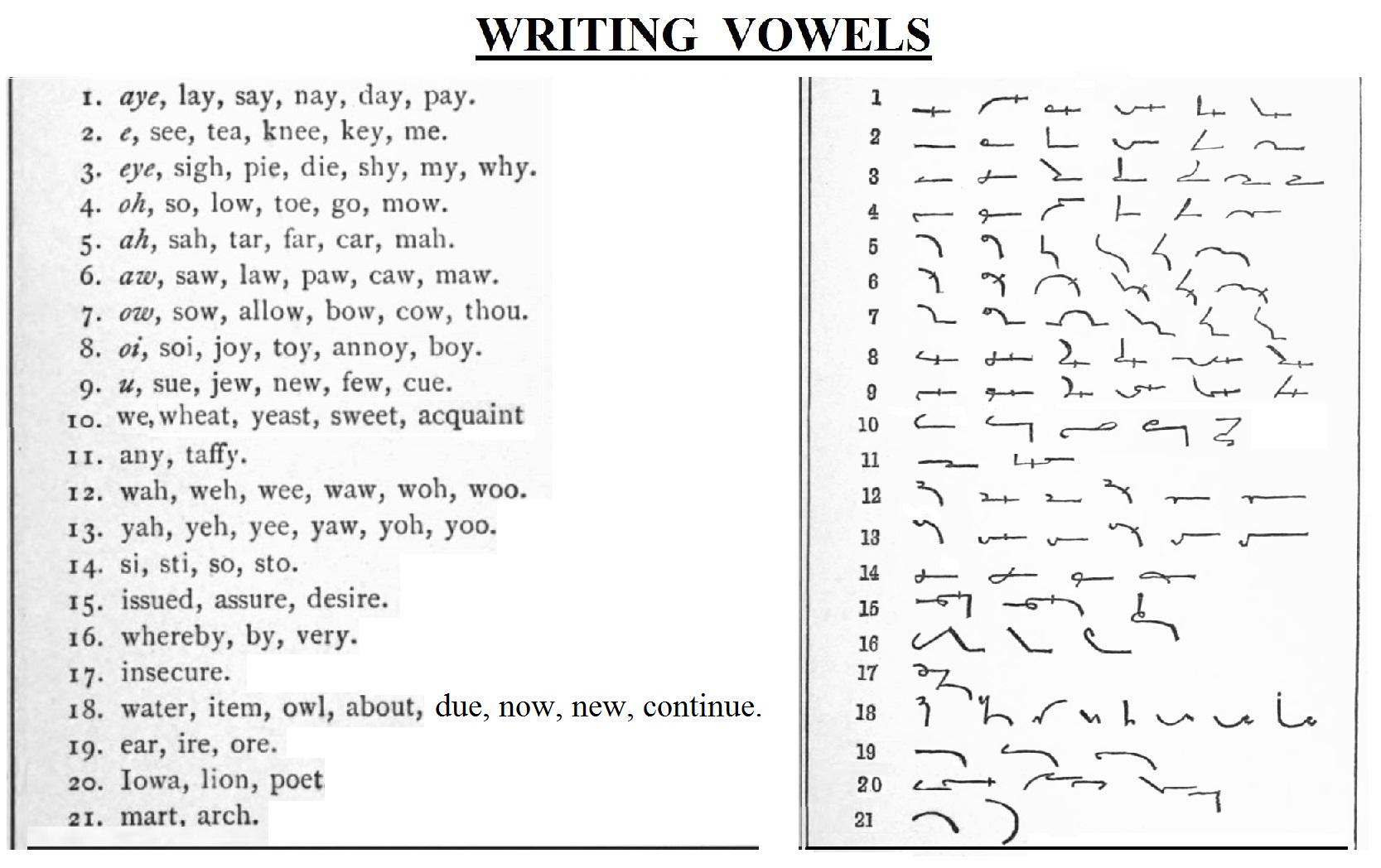
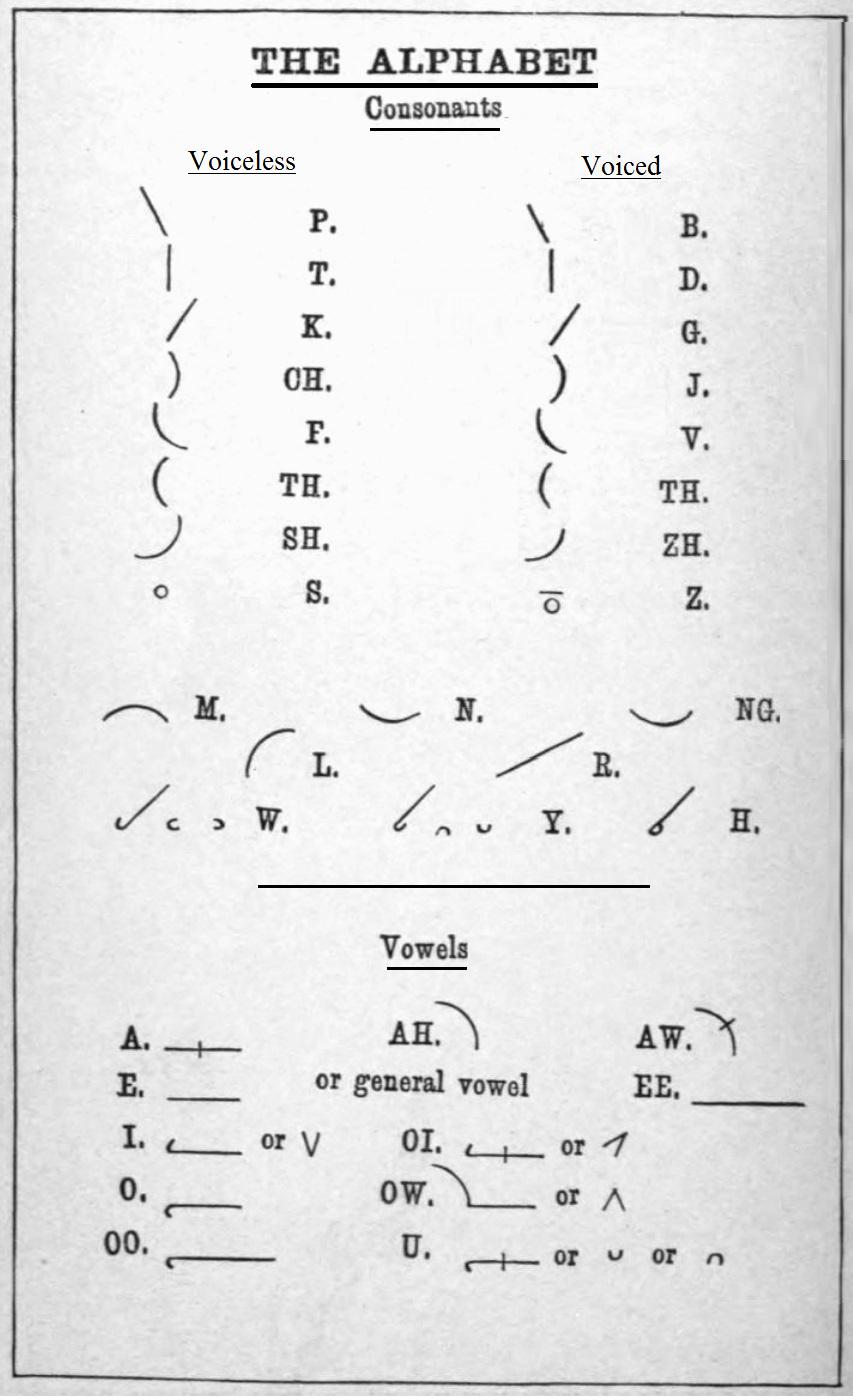
Breviscript (1906) - Part 1

3
Upvotes
r/FastWriting • u/NotSteve1075 • Feb 27 '26
Hi everyone! I'm u/NotSteve1075, the founding moderator of r/FastWriting.
Do you want to be able to write whatever you want FASTER? Do you like the idea of writing things that only you will be able to read? When very few people know shorthand, it's easy to do. There are HUNDREDS of different systems to choose from, only a very small fraction shown on the banner above.
Browse through this board and look at samples, with new examples posted three times a week, and see which one(s) appeal to you. You might like CLARITY of a geometric system, or the EASY FLOW of a cursive one. Or just pick one that appeals to you based on calligraphy, and what appeals to your eye. With so many systems that have been written over the centuries, you'll probably find one you like and you can learn more about each one. (Thousands of full books are linked on Stenophile.com.)
r/FastWriting • u/NotSteve1075 • May 19 '21
A place for members of r/FastWriting to chat with each other
r/FastWriting • u/NotSteve1075 • 47m ago

r/FastWriting • u/New_Pop6258 • 1d ago
Pretty sure the body of text will transfer over when cross posting...
r/FastWriting • u/NotSteve1075 • 2d ago

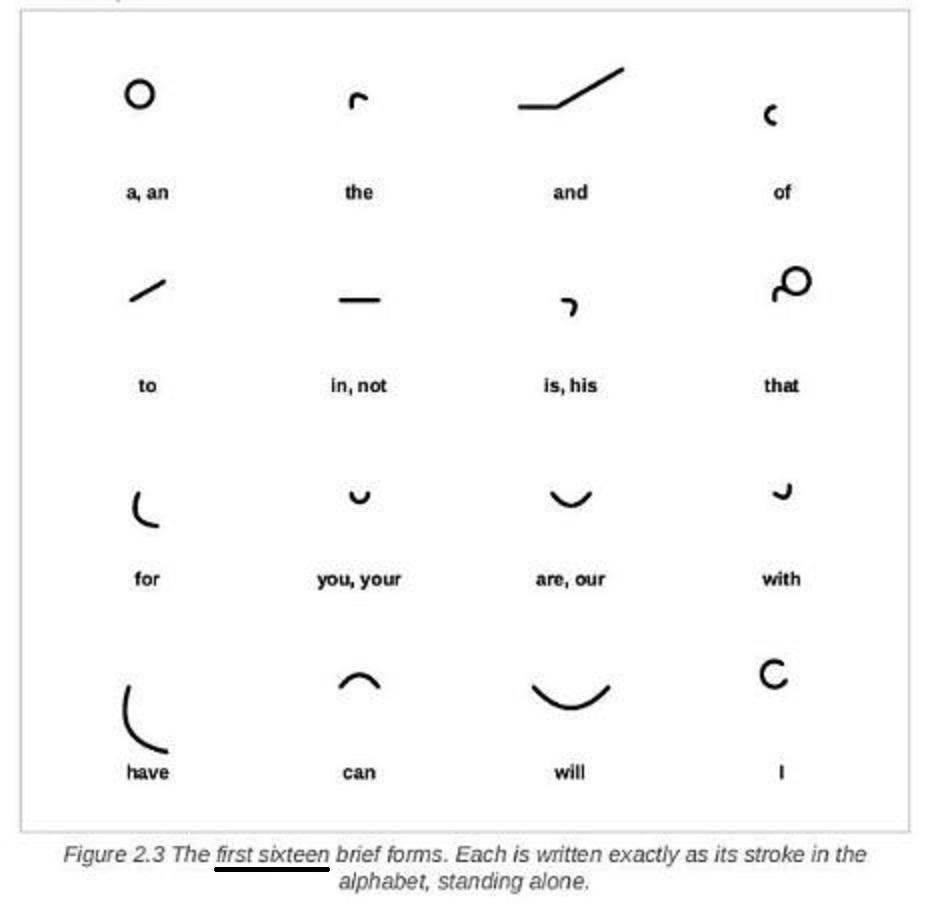
This is the first of three pages of "grammalogues" which, as he explains in the second panel, make up very common words in reporting English. Notice that they show that the SHADING used is really unnecessary, because each form is unique enough that it's clear what the word is without it.
And notice that many of them are in reality quite fully written, while still being brief and quick enough to write at a good speed. That's a much better plan than coming up with HUNDREDS of abbreviated forms to cover commonly used words.
r/FastWriting • u/NotSteve1075 • 2d ago

r/FastWriting • u/LeadingSuspect5855 • 3d ago
Learn about Flow Shorthand and watch Lesson 1 in Flow shorthand !
Further Lessons will appear under my Videostreaming account (Shosho)
You can also download the video, the script and notes (hand writing and lesson materials written in rnote) for the lesson here: gitrepo on nostr (leadingsuspect).
----
I am using a locally generated artificial voice, so I can stay anonymous. That is the only thing I let AI do and as long as my brain works decently, it will remain so.
r/FastWriting • u/licxjo • 6d ago
I've collected the ten sets of terminology from the 1961 "Essentials of Gregg Notehand" in one folder, available in Dropbox here:
r/FastWriting • u/ElectronicGift2834 • 9d ago
Reduced Ideas From before
Symbolic Functional Mapping
For the core ideas that constitute this formal method of writing, we can observe how replacing the usual connections in natural language with functions that process arguments produces a better, more efficient way of saving information.
However, that alone is an incomplete solution. For the answer to be fully complete, we need to define what it actually means to have a rule for a function and how to produce compositions—what we can think of as operations between functions.
Why do we want to do this? Imagine you have a function and you set a specific quantity of arguments for it, and those arguments generate what we call a sentence, a paragraph, or a full text.
If you have been living in complete disorder like I have for the last 4 years, you will appreciate a way of ordering things. That ordering comes from realizing that what we call functions generate compositions of words—and those compositions follow a set of rules. Sound familiar? It should, because essentially what we are saying is that text structures are functions.
At the moment of writing this (November 14, 2026), you might initially think these functions are of only one kind. Why only one kind of rule? Because if you remember high school, you were taught to look at a dictionary: by reading the definition of a word you didn't know, those few letters allowed you to picture what the object was.
Because of this, definitions feel like the single, foundational root of everything important.
Until you ask: How do you write a story, then?
You cannot define a story—you have to tell it.
That realization bugged me and forced me to revise my first assumption. For the actual usage of this tool, you need at least three kinds of functions—or what I call operators. These operators are the objects that hold your ideas steady so you can actually relate them to one another inside a text:
* Definitions
* Telling
* Composition of paragraphs
To understand how they work together, look at the difference in how they handle arguments:
A Definition is an operator with a minimal quantity of arguments. Its only job is to isolate an object and establish its static boundaries so you know what it is.
Telling, by contrast, takes a free quantity of arguments. Because telling a story means capturing raw, direct ideas, the way you write these arguments is fundamentally different: you strip away articles and connectors, leaving only nouns, objects, adjectives, and verbs. At its core, telling is simply feeding an unordered set of nouns, verbs, and adjectives into the function.
If we carry this idea to its logical conclusion, you must treat a verb as a low-level operator—because its specific job is to define how something is changing. Naturally, this raises a question about ambiguity: without articles or connectors, how do you separate what is doing what? There are two ways to fix this: you either impose order from the beginning of your transcription, or you impose order at the end.
Naive approach:
Write, but write using a little bit of math notation. You want to use functions f(x) they taught you on school to actually make a paragraph or long text with arguments (the x in f(x)) or what basically are to us (words)) and compositions basically connecting a lot of different words in some direction... I.E compose(tell(...), def(...)).
So here you are saying that your first argument is whatever you want to tell and the second argument is what ever you want to define this creates a bigger text.
In a symbollic way you just added those two texts by simply calling somthing as: t_1 [given by tell(...)] and t_2 [given by def(...)] So you for example have somthing like: [tell(I store grocery bought went things some car stored when was christmas tree home quiet nothing do them saw day ) as you see that looks in a complete disorder but, how do you put that in order? Look at the arguments you can have different configurations let me show you one of them. "I went to the grocery store, I bought some things. I stored them at the car when I was at home it was quiet I saw the christmas tree there was nothing else to do that day".] That is what I'm talking about.
Also there are different ways of nesting and connecting things you could use logic operators as: and, or, implies or if... then, and if and only if. This could help you to connect paragraphs as the one I showed to you before... I don't intend to create something specially for logic but you are able to experiment and do what ever you want.
Note: For the record I wrote this stuff myself, it sounds easier in spanish, so translating it is hard without loosing some information. Yes I need it to use some kind of help, the bad one I supposse, whatever. Againg you can integrate this ideas on your shorthand if you wish I'm sorry if my tone goes up I take my time writing this to be simply reduced to that comment.
r/FastWriting • u/NotSteve1075 • 10d ago

r/FastWriting • u/NotSteve1075 • 10d ago
r/FastWriting • u/licxjo • 10d ago
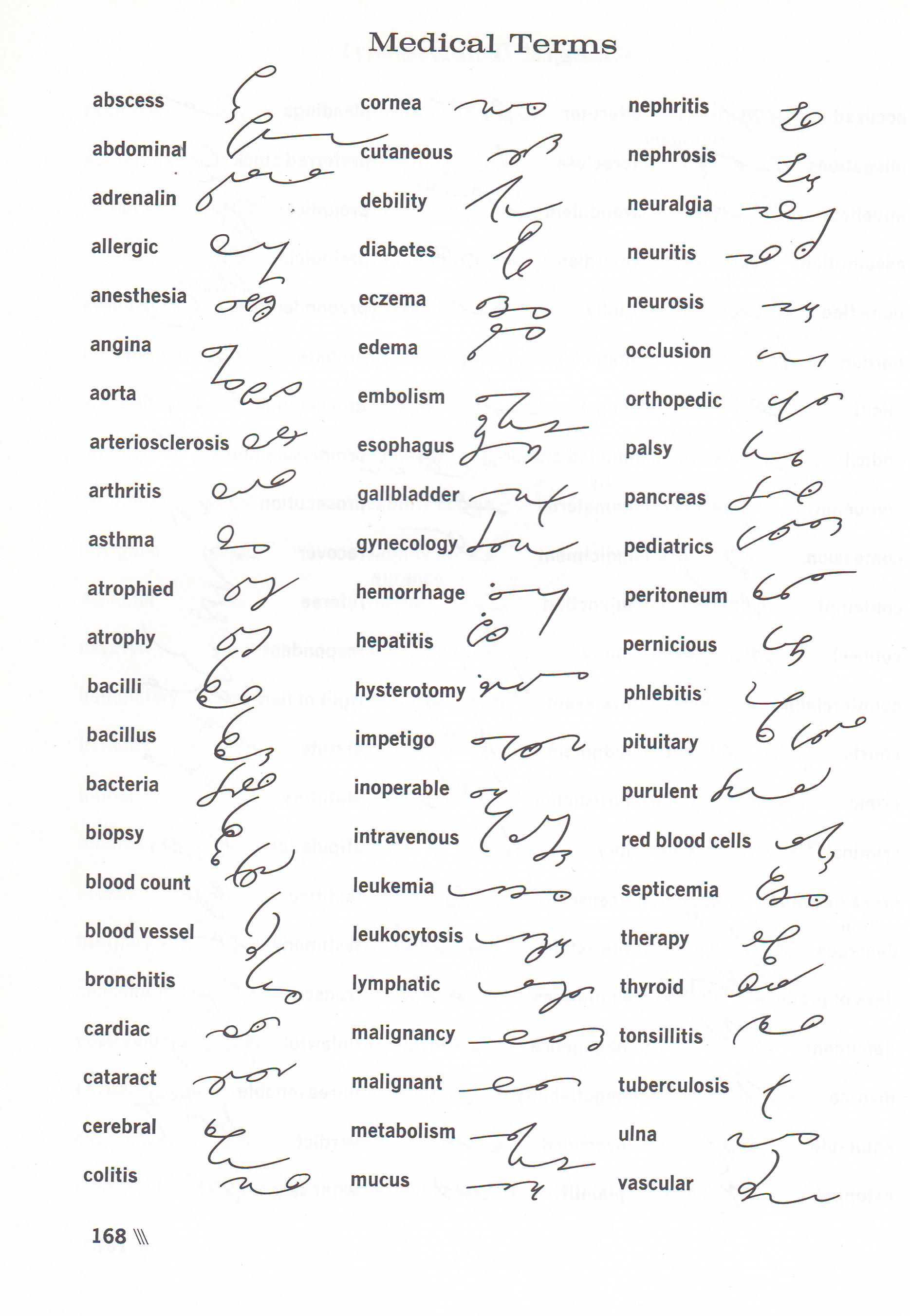
From Essentials of Gregg Notehand, 1961.
r/FastWriting • u/LeadingSuspect5855 • 10d ago
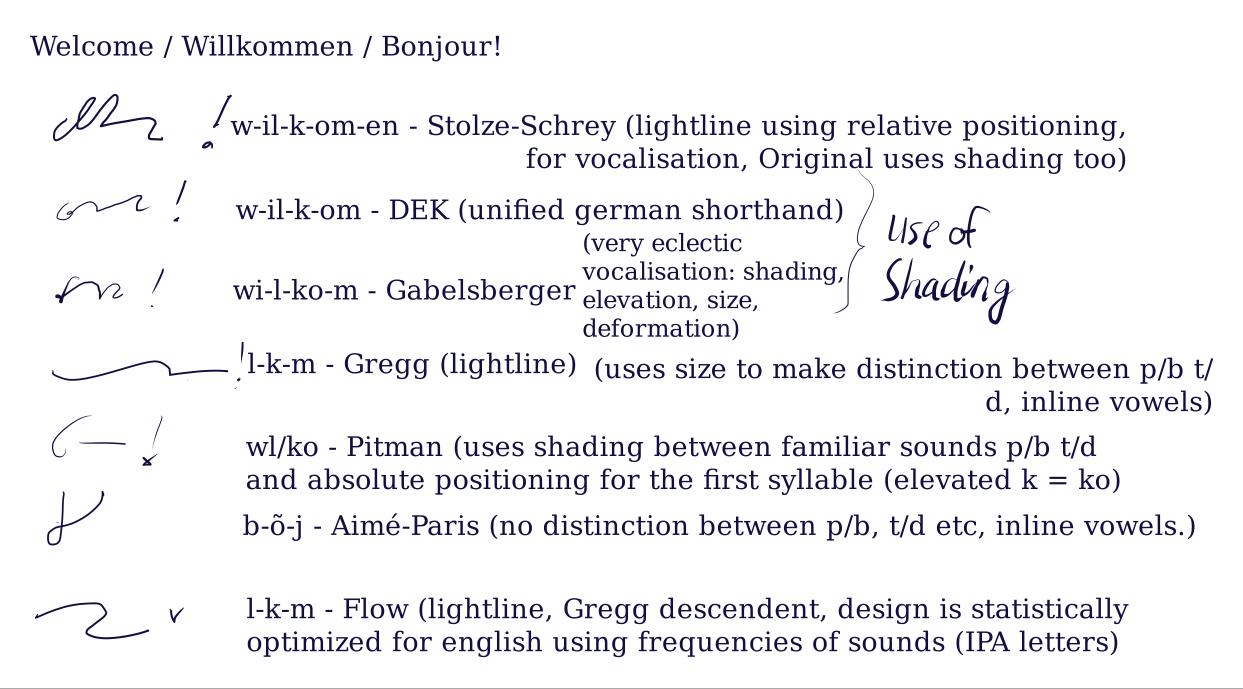
Pretty sure, that we have newcomers on fastwriting, and daily visitors lurking in the shadows, so I thought it might be nice to give them a welcome and give you guys the opportunity to come say hello too - but you don't have to!
And it's a perfect opportunity to show some differences in style!
r/FastWriting • u/NotSteve1075 • 12d ago

r/FastWriting • u/NotSteve1075 • 12d ago