r/ForgottenMen • • 1d ago

Blind Tom Wiggins

Post image
40 Upvotes

Tom was born on the Wiley Edward Jones Plantation and named Thomas Greene. He was blind at birth and he and his parents were sold in 1850 to a lawyer called General James Neil Bethune. Because he was blind he couldn't perform slave labour and he wandered the Bethune plantation alone. When he was small he heard the sound of one of Bethune’s daughters playing the piano and he acquired some skill by listening when he was only four. And when he was five years old he composed something called The Rain Storm after a downpour fell on his tin roof.

General Bethune recognized his skills and allowed Tom to live in a room attached to the family house with his own piano. A neighbour wrote about Tom in the Atlanta Constitution in 1908 saying, "Tom seemed to have but two motives in life: the gratification of his appetite and his passion for music. I don't think I exaggerate when I state that he made the piano go for twelve hours out of twenty-four.”

Tom used to mimic sounds he heard. The crow of a rooster, the singing of a lark. He could repeat ten minutes worth of conversation that he heard but could barely speak of his own desires. He repeated a whole speech said by Douglas Addams after attending a rally.

Tom performed publicly for many years, although historians cannot agree on when he began. General Bethune accompanied him on tours and performances that were given favourable reviews in newspapers. He was first called Blind Tom Wiggins by Perry Oliver, a travelling showman who managed Tom under a three-year contract and developed the stage name in 1858. He used to refer to himself in the third person saying things like “Tom is pleased to meet you.”

Tom’s stage performance also included his voice mimicry talent. A soldier wrote a letter in 1862 talking about some of Tom's abilities, "One of his most remarkable feats was the performance of three pieces of music at once. He played 'Fisher's Hornpipe' with one hand and 'Yankee Doodle' with the other and sang 'Dixie' all at once. He also played a piece with his back to the piano and his hands inverted.” And the audience would challenge him to play new things all the time.

After decades of performing music Tom reached his final years with decreasing popularity. His last performances happened in Boston in 1905. Tom eventually settled in Hoboken, New Jersey, with Eliza Bethune Lerche, John Bethune’s widow. Eliza had won legal control over Tom following a lengthy custody dispute within the Bethune family. This is very tragic because despite slavery being abolished decades earlier Tom never gained independence. His blindness was used to justify keeping him trapped. And The Bethune family had accumulated considerable wealth from his performances.

As he grew closer to the end he experienced a paralytic stroke that affected his right arm and upper body. And reportedly said, "Tom's fingers won't play no mo'.” And he died of a stroke in 1908.

r/ForgottenMen • • 3d ago

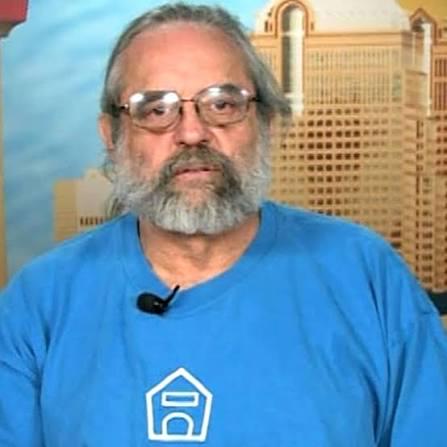
John Harrison

Post image
25 Upvotes

Sailing was a difficult thing in the 18th century. One problem for people going out to sea was that their latitude could be determined reasonably well but they struggled to establish their longitude. This made things very dangerous. Without that information, they could miscalculate their position and sail straight into rocks, islands or coastlines. Harrison invented something that changed sailing forever. Born in 1693 in Foulby in the West Riding of Yorkshir, Harrison was a self-taught craftsman who solved a problem that frustrated intelligent men for a long time. He spent decades developing increasingly accurate marine clocks. These chronometers allowed sailors to calculate longitude by comparing the time at their current location with the time at a known reference location. He invented something called the H4, a remarkably accurate clock that could continue keeping time aboard a moving ship. He has saved countless lives with this. And the technology continued to get better in the 19th century.


r/ForgottenMen • • 5d ago

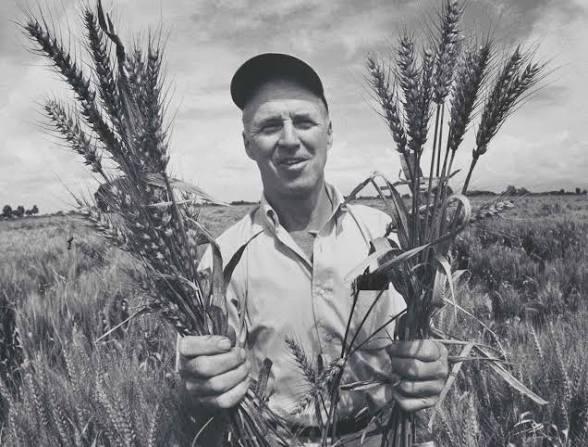
Norman Borlaug and the Green Revolution

Post image
37 Upvotes

Borlaug spent several years studying plant science and genetics. In 1944 when he was 30 years old, Borlaug went to Mexico. There he used his knowledge on plant genetics to produce more disease resistant and high yield wheat varieties. And in the mid-20th century, he brought these new plants as well as new agricultural techniques to Mexico, Pakistan and India. Mexico became a net exporter of wheat by 1963 which made them richer and saved them from food insecurity. Borlaug became the father of the Green Revolution. It is estimated that he saved a billion people from starvation. He won the Nobel Peace Prize in 1970.

At the University of Minnesota, Borlaug also became an accomplished wrestler. the Big Ten wrestling semifinals and was eventually inducted into the National Wrestling Hall of Fame. He also loved baseball. And while he lived in Mexico he and fellow scientist John Niederhauser helped introduce organised youth baseball to Mexico City. And Borlaug said it was his proudest moment.


r/ForgottenMen • • 11d ago

Earl Silverman and the first DV shelter for men

Post image
101 Upvotes

When Silverman was being abused by his wife in the 80s, there were no domestic abuse shelters for men in Canada. Not a single one. Women had DV shelters but men only had spaces for anger management. Silverman escaped his abusive partner in 1991 but was ridiculed by police. Silverman said to the National Post “As a victim, I was re-victimized by having these services telling me that I wasn't a victim, but I was a perpetrator.” No one would believe that a man needed help. He spiraled into alcoholism and self-abuse and almost killed himself.

Then something happened within him and Silverman soon became the change he wanted to see. He founded the Family of Men support society in 1992 and served as its president. He maintained a crisis line for over a decade to assist abused men mostly on his own but he did receive some money from MCFM: National Coalition For Men. The president, Harry Crouch, encouraged his people to donate to Silverman. The organization offered him $100.

A man called Mark Rosenthal who knew Silverman through his advocacy work, said that he was very funny. You tend to develop a sense of humour when you go through shit.

Then in the early 2000s Silverman started MASH: Men's Alternative Safe House. He was left hung to dry by the government and the only place he could offer male victims of abuse to stay was his own house in Calgary, Alberta. His own house was the only domestic violence shelter for men in the country. Silverman was only given $1000 from the Alberta provincial government to accommodate him. It was at least official political recognition. But it wasn't enough.

MASH hosted about 20 fleeing men and children in the first four months of 2013 before being shut down. With no public funds to help or more assistance from the government, Silverman was taking care of costs alone and it was not working. Silverman said in an interview “Family violence has gone from a social issue to only a woman's issue. So any support for men is interpreted as being against women.”

He really tried to help men but he just couldn't do it on his own. After those 4 months had passed in 2013, Silverman sold his house to a man called Steven Howitt and the next day he took his life.


r/ForgottenMen • • May 02 '26

René Crevel - french Author

Thumbnail
gallery
34 Upvotes

René Crevel, had he not been consigned to oblivion, might still be regarded today as a groundbreaking pioneer in literature. Born in France in 1900, he experienced deeply traumatic events at a young age due to his father’s suicide, which quickly placed him in a world typically attributed to the precocious. This is most clearly reflected in his works, especially his novels—five in total—which he began writing at 24 and completed by 29.

His novels deal with intimate themes such as love, suicide, loneliness, and homosexuality in a provocative manner that is often pushed to extremes.

Due to his worldview, he joined the Surrealists led at the time by André Breton, from whom he was later excluded several times—initially because of his homosexuality, and later because he maintained closer contact with the Marxists, whom Breton regarded as enemies.

In 1935, after a failed attempt at reconciliation between the two groups, Crevel entered his Paris apartment at the age of 34 and locked himself inside. The next morning, he was found in his kitchen, barely breathing, lying on the floor with the gas tap turned on, by the maid. He would die later that day. Eleven years earlier, one of his first characters from the novel Détours had chosen the same method to end his life.

On his coat he had sewn a note, bearing his final sentence:

>>Je supplie qu'on me brûle. Tout me dégoûte.<<

>> I beg that I be burned. Everything disgusts me.<<


r/ForgottenMen • • Apr 06 '26

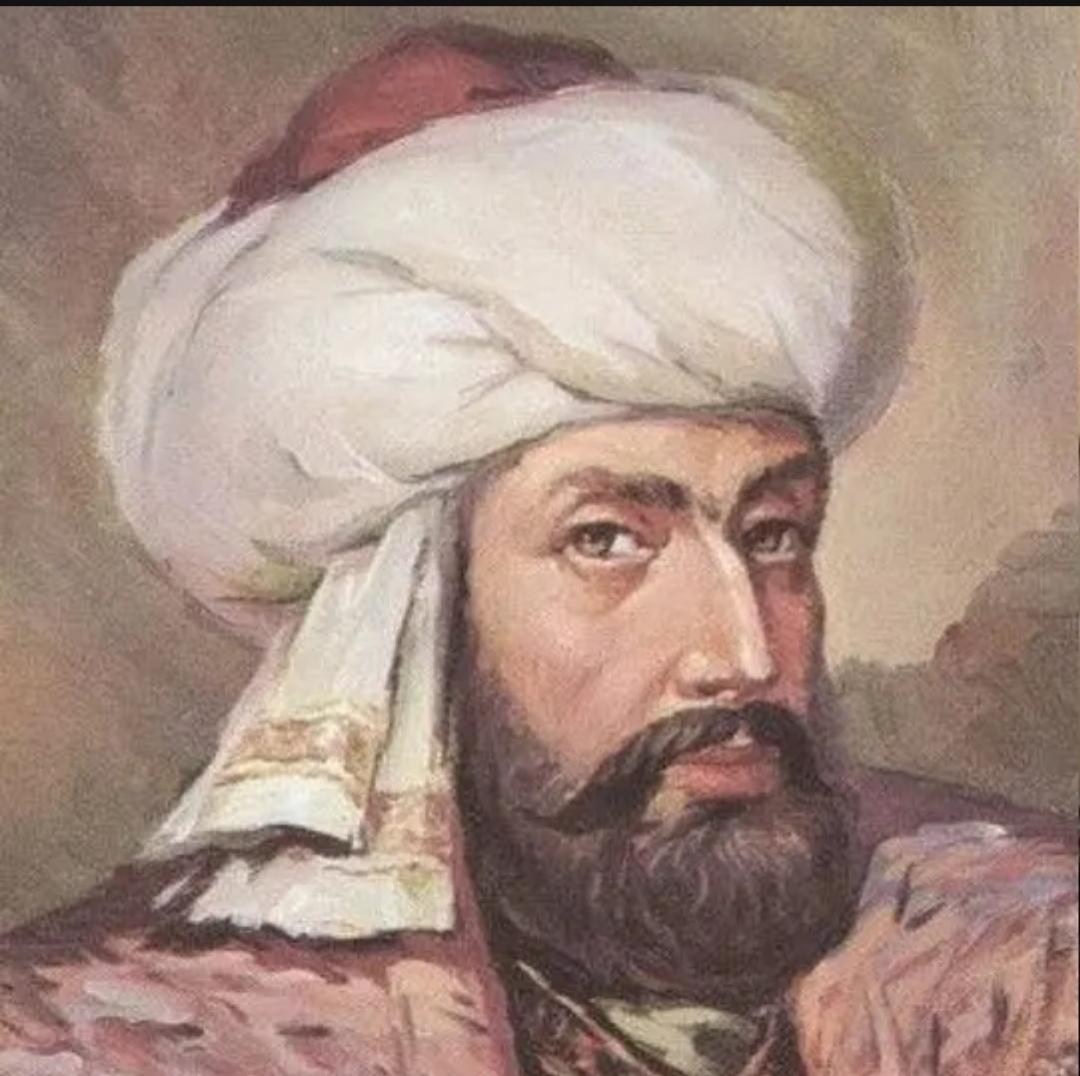
Ertügrul, Uç bey

Post image
9 Upvotes

Usually called Ghazi (sword bearer for Islam), Ertügrul was actually Uç bey (pronounced uch bey) or marcher lord of the Kayi tribe of Turkic people, one of the semi nomadic military generals and warlords who were common in central Asia around the time of Chinggis Xan. In a very real sense he is the one man who is the true father of modern Turkey and the old Ottoman empire but few knew about him until recently.

Ertugrul was the son of Suleyman Shah, the chief of the Kayi tribe and was born around the year 1188 in the region of Söğüt. His mother Hayme Hatun was a major influence in his life, and is known in Turkey as Devlet Ana (state mother). After the death of Suleyman, Ertügrul entered into service of the Sultanate of Rum in 1231, some four years after the generally accepted time of Chinggis Xan's death. He was asked by the Seljuk Sultanate of Rum to settle Anatolia.

As a nomadic warlord, Ertügrul was born on the open steppe, lived in tents and wield a bow while riding almost as soon as he learned to walk. He was also trained by his father in the art of combat and diplomacy by his father. One of the most important battles in his life was the fought at Köse Dağ in 1243. Ertugrul and his troops faced a much larger Mongol army in this battle and won despite the very high odds.

All his life he led many battles against the Mongol hordes in the east and the Byzantine armies in the west, none of whom wanted a Turkic tribal chief to flourish in their neighborhood, and yet he managed to win against both of these major forces of his time and establish his people firmly in Anatolia, a region that was traditionally Christian but became Muslim under the Ottomans.

By the time of his death around 1280, he had laid the groundwork of a settlement. His son Uthman (Osman) went on to be the founder of the empire that bore his name - the Ottoman empire that lasted for six centuries and ruled over vast tracts of land. From tents to palaces, that has been the legacy of Ertügrul bey.


r/ForgottenMen • • Mar 26 '26

Charles Bukowski - blunt and dirty fiction

Post image
34 Upvotes

Bukowski wrote over 2,000 poems, over 200 short stories and 6 novels in his life. He was the face of an artistic movement called ‘dirty realism’ and he influenced new writers with his blunt, stripped down style. He went from being a postal worker to writing full time thanks to the support of John Martin.

Early in his career, his work was featured in Story magazine which made his name known in the 1940s. He also got published in Open City, where he wrote the column Notes of a Dirty Old Man. Another magazine called Nola Express spread his reputation in underground journals.

Bukowski wrote about sex, abuse, drinking, society, loneliness, poverty and the struggles of the working class. In short, he wrote about reality.

In the novel Post Office, Bukowski writes a semi-autobiographical story following a character called Henry Chinaski, Bukowski’s alter ego, who is a postal worker. The book explores bureaucracy, monotony and the grinding abuse of menial labor with brutal honesty and sardonic wit.

Several years later, Bukowski wrote Women. A book about his chaotic relationships and emotional dysfunction.

Bukowski was born in 1920 in Andernach. Which resided in the Weimar Republic of Germany. This existed in a period of time where Germany was a constitutional Republic. His birth name was Heinrich Karl Bukowski.

When he was a toddler, like 2 or 3, his family came to the United States and settled in Los Angeles. The name Heinrich slowly changed to Henry and he called himself that for a long time. Later in his adulthood when he began publishing, he chose Charles Bukowski as a literary name.

Bukowski’s father was often unemployed and he became abusive towards him and his mother. He used to beat him for the smallest offenses. His father beat him with a razor strap three times a week when he was a kid. From ages 6 to 11 years.

Bukowski moved out of the house as soon as he could. He did low-level jobs to escape his environment and when he became a writer he was able to afford a nice apartment. Bukowski wrote in an essay once, “Find what you love and let it kill you.”

When he was a kid he spoke with a heavy German accent that he got bullied for. He was a shy kid and he hid from people even more when he got acne. A friend of his called William introduced him to alcohol and he said drinking would be a tool he would use to help him come to terms with things.

In 1944 during the second world war Bukowski was arrested by FBI agents. They suspected that he was committing draft evasion because he was a German and most likely not loyal to America. The truth was that he had a history of severe acne (cystic acne) which affected his physical condition enough that he was deemed unfit for service. After questioning from the FBI he was released and not drafted.


r/ForgottenMen • • Feb 03 '26

Jean de Brunhoff - author of Babar

Post image
53 Upvotes

Jean was born in 1899 in Paris. His dad was a publisher and his mum used to draw pictures at home. He was the youngest of four siblings.

He was described by people who knew him as gentle, reserved and very patient, with a dry sense of humour. He took childhood very seriously without making it sentimental.

Jean married a woman called Cécile in 1924. Cécile invented the Babar stories. It was a bedtime story that she told to their sons Mathieu and Laurent. It was a story about an elephant who left the jungle for a city like Paris. The boys loved the story so much they wanted their father to make a book and illustrate it. Jean had gone to a professional art school after briefly fighting near the end of World World 1 and he was very good.

He wrote a book called Histoire de Babar, The story of Babar and then five more came after. Before Babar he had worked in advertising and design. He sadly died of tuberculosis at age 37.

Jean’s brother Michel published these last two Babar books that were in black and white in a British newspaper. They're called Babar and His Children and Babar and Father Christmas.


r/ForgottenMen • • Feb 01 '26

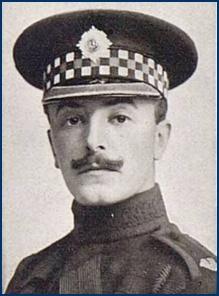
Sir Edward Hulse and the Christmas Truce

Post image
44 Upvotes

Hulse was born in 1889 in Westminster of Britain. His mother was called Lady Hulse and his father was Sir Edward Henry Hulse, 6th Baronet and he was a British Conservative politician. And his mother was Edith Maud Levy-Lawson. Hulse was educated at Eton College and Balliol College, Oxford.

Hulse completed a history degree in 1912 and then began training with the Coldstream guards. After he trained he became an officer in the 1st Battalion of the Scots Guards in 1913. This was a year before the war. And in the year of the war in August, he joined the Western Front

One of my favourite true stories is the historical account of the World War 1 Christmas Truce. Hulse was there when it happened. He wrote letters about it to his mother that were published after his death. He’s one of the reasons we know about this event.

Hulse was serving as an officer with the 2nd Scots Guards along the Western Front when the truce began. One of his letters says that four unarmed German soldiers came out of their trenches and approached the British line. Their spokesman said they wanted to wish them a happy Christmas. Hulse bravely joined the soldiers in no man's land, trusting that they really wanted a truce.

Then Hulse saw British and German soldiers mixing in no man’s land. Just talking, laughing and sharing cigarettes and souvenirs. They talked about their families and sang songs. Hulse gave one soldier a silk scarf. It was the best day of the war.

But eventually Hulse got orders to get the war to resume. The war continued and Hulse never saw another Christmas. He died in March, 1915. He was only 25.


r/ForgottenMen • • Jan 22 '26

Anthony Ashley-Cooper - social reformer

Thumbnail
gallery
44 Upvotes

His name is Anthony but I will refer to him by his title, Lord Shaftesbury. He was a British aristocrat and he was born in 1801 in Mayfair London. He was the eldest son of the 6th Earl of Shaftesbury and Lady Anne Spencer. He became a Tory Member of Parliament as well as a rich aristocrat. And he used his power to make big changes in England.

Lord Shaftesbury learned about the terrible way “lunatics” in the asylums were treated. People in Lunatic Asylums were forced into unsanitary and undignified positions. Like sleeping naked on straw beds and bathing and having to share a single towel between over a hundred people.

You see, British people saw “lunatics” in England as criminals, burdens or curiosities that had to be locked up in private madhouses, workhouses or prisons where it was acceptable to chain them and beat them. These are the same workhouses and prisons that Charles Dickens mentioned in A Christmas Carol. "Many can't go there; and many would rather die."

We don't know for sure if Lord Shaftesbury read the book but we do know that the book was immediately popular when it came out and changed the cultural climate. We do know that he understood what it would take for people to make a better society. “Social reforms, so necessary, so indispensable, require as much of God’s grace as a change of heart.”

Lord Shaftesbury pushed legislation like ‘the Regulation of lunatic Asylums' and 'For the better Care and Treatment of Lunatics in England and Wales’ Acts. He made it so that asylums had to be licensed, regularly inspected and medically supervised. He also tried to teach the public that mental illness is not a moral failure or a sin. It is something that requires care.

Lord Shaftesbury issued the The Ten Hours Act of 1847 which made it illegal for a person under 18 to be made to work more than 10 hours a day. You're probably thinking that this is still pretty bad. And it is, children working 8+ hours is a huge problem. But remember that this was meant to be an incremental change. Before this, many children worked from 12 to 16 hours a day.

He once said. “What is morally right can never be politically wrong, and what is morally wrong can never be politically right.”

Lord Shaftesbury also wanted to do something about the boys who were forced to be chimney sweeps. Being a chimney sweep was torture. The job burned their skin and filled their eyes and lungs with soot. Several bills that were made to end this were voted out and rejected until Lord Shaftesbury passed the Chimney Sweepers Act 1875. Eventually the practice of hiring boys as chimney sweeps was done away with.

Lord Shaftesbury did many other things to help. A final example I'll give: trying to improve urban housing for the poor.

He died peacefully at 85 surrounded by friends and family.


r/ForgottenMen • • Dec 30 '25

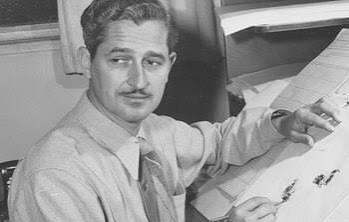
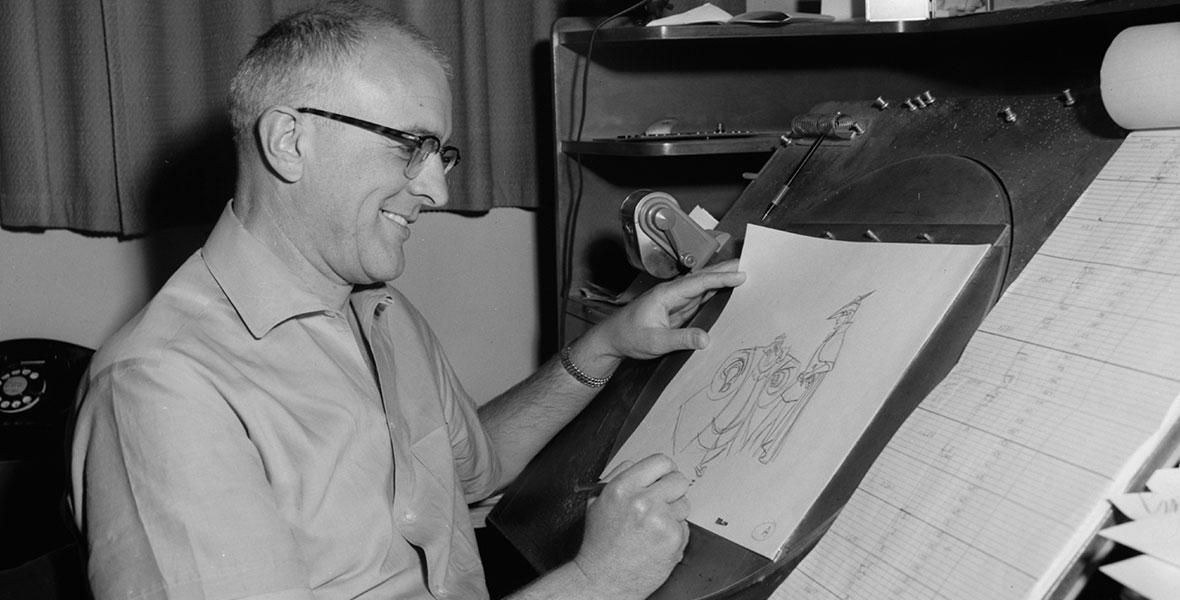
Wolfgang Reitherman - Disney animator

Thumbnail
gallery
116 Upvotes

Reitherman was one of Disney’s famous nine old men. He animated parts of Chernabog in Fantasia, the Headless Horseman in The Adventures of Ichabod and did the combat scene with Phillip and Maleficent in Sleeping Beauty.

He said about animation, “You learn animation by doing it, not by talking about it.” And “I like action. If it doesn’t move, if it doesn’t have energy, I’m not interested.”

Reitherman was born in 1909 in Munich, German Empire. He was the youngest of seven children. His family came to America because of political unrest. When he was a teenager Reitherman daydreamed about becoming a pilot; he later thought about being an aeronautical engineer. He went to the University of Southern California and studied architecture and engineering. This would actually give him the skills he used for animating at Disney. Something about spatial understanding.

He spent his time outdoors when he wasn't in the studio. He loved hunting and fishing.


r/ForgottenMen • • Dec 29 '25

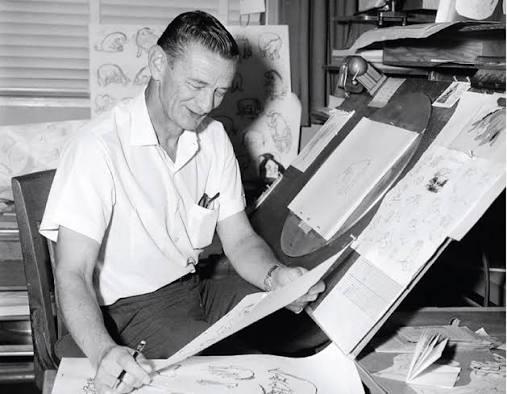
Frank Thomas - Disney animator

Thumbnail
gallery
18 Upvotes

Frank Thomas was one of Disney’s famous nine old men. He animated the evil Queen from Snow White who was Disney’s first frightening villain. And Lady Traimaine from Cinderella. He also animated Gepetto in Pinocchio.

He once said “Appeal is one of the hardest things to define, but one of the easiest to recognize.”

Thomas was born in 1912 in Santa Monica. He loved playing the piano for fun and to also explore the rhythm in films he was working on. When he was in Stanford he worked on a school paper called The Stanford Chaparral with the other Disney animator Ollie Johnston. He also worked on a book called The Illusion of Life with him, which is a professional animation manual.


r/ForgottenMen • • Dec 29 '25

Les Clark - Disney animator

Post image
17 Upvotes

Clark was one of Disney’s famous nine old men. He animated Mickey Mouse in many different shorts and features as well as Donald Duck, Pluto and Goofy. He also drew the White Rabbit in Alice in Wonderland and the Blue Fairy in Pinocchio.

I couldn't find exact quotes from him but our sources tell us that when it came to animation he believed that animation worked when people stopped seeing a drawing and started seeing a thinking person.

Clark was born in 1907 in Ogden, Utah. He had eleven brothers and sisters. While he was in high school he worked at a summer job near the Disney studio. Walt complimented him on his lettering of menus and Clark asked him if he could be an animator. Disney took a look at some of Clark's drawings and hired him when he was 19. His colleagues described him as gentle, disciplined and reserved. He married a woman called Miriam in his early 30s.


r/ForgottenMen • • Dec 27 '25

John Lounsbery - Disney animator

Post image
27 Upvotes

Lounsbery was one of Disney’s famous nine old men. He animated Lady Tremaine in Cinderella, King Hubert in Sleeping Beauty and Captain Hook in Peter Pan.

About animation he said, “The personality of a character is far more important than the exactness of the drawing.”

Lounsbery was born in 1911 in Cincinnati, Ohio. He avoided the public recognition his job could have given him and spent time with close friends. He served in World War 2 and returned with a more serious attitude. They say he worked better under pressure then.


r/ForgottenMen • • Dec 27 '25

Eric Larson - Disney animator

Thumbnail
gallery
18 Upvotes

Larson was one of Disney’s famous nine old men. He animated Peter Pan himself and Mowgli from the jungle book. He worked on many of the old Disney movies like Sleeping Beauty, Melody Time and Alice in Wonderland.

He said, “Animation is giving life to something that isn’t alive” and that the meaning of the movement was the point of the movement. He started an animation training program where many well known creators got their skills from. Like Tim Burton, Don Bluth and John Lasseter.

Larson was born in Cleveland, Utah in 1905. And he lived a simple life with his wife Frances and his two kids.


r/ForgottenMen • • Dec 25 '25

Ollie Johnston - Disney animator

Thumbnail
gallery
12 Upvotes

Johnston was one of Disney’s famous nine old men. He received a National Medal of Arts from George Bush for his contributions. He animated Pinocchio and Geppetto in Pinocchio, Thumper in Bambi and Mr Smee in Peter Pan. I can see the pattern; he does a lot of soft round characters. One last example would be Baloo from the Jungle Book.

He would often say to younger animators, “The audience has to care.” And he also said about animating, “We were actors with pencils.”

Johnston was born in 1912 in Palo Alto California. He was an interesting guy. He spent years building a fully functional miniature railroad in his backyard. And he would let friends, family, fellow Disney artists and a bunch of kids ride on it. The railroad was functional for decades and you can see it today at the Los Angeles Live Steamers Railroad Museum.


r/ForgottenMen • • Dec 24 '25

Marc Davis - Disney animator

Thumbnail
gallery
13 Upvotes

Davis was one of Disney’s famous nine old men. He worked on 101 Dalmatians and did the animation for Cruella de Vil. And he drew Bambi and Faline in Bambi. He also did two of Disney’s most famous princesses Aurora and Cinderella. (As he you can see he also did the villain of Sleeping Beauty.) He also designed many characters for how they would look on Disney rides.

He once said “Animation had been done before but stories were never told.” And that “The essence of animation is acting.”

Davis was born in Bakersfield, California in 1913. He married a woman called Alice Estes that he met at an art school and he enjoyed sailing with her on the coast.


r/ForgottenMen • • Dec 23 '25

Milt Kahl - Disney animator

Post image
18 Upvotes

Kahl was one of Disney's famous nine old men. He animated the more serious characters like Shere Kahl from The Jungle Book and Prince Phillip from Sleeping Beauty.

He once said, “I don’t want to do cute. I want to do believable.” As well as, “We were paid to be good, not fast.”

Kahl was born in 1909 in San Francisco, California. He had three younger sisters. His father was a bartender for a saloon. He used to spend long hours drawing for its own sake studying realistic anatomy and structures. He loved to have long debates and hated small talk.

Kahl helped Brad Bird with his animation skills when he was young. And he was very… intense with his teaching. He used to tear drawings apart without hesitation then explain precisely why they failed. And then Bird too became intolerant of sloppy animation.


r/ForgottenMen • • Dec 22 '25

Ward Kimball - Disney animator

Post image
25 Upvotes

Kimball was one of Disney's famous nine old men. He loved animating the more silly characters in cartoons. He worked on the Mad Hatter and the Cheshire Cat from Alice in Wonderland and Jim Crow from Dumbo.

He said, “I like to do things that nobody else has ever done before.” And also, “You can’t do animation without a sense of humor.”

Kimball was born in 1914, he grew up in Minnesota. He loved jazz and he played the trombone. He was also very interested in railroads. He married a woman called Betty and had three children.

He lived to be 88 years old.


r/ForgottenMen • • Dec 22 '25

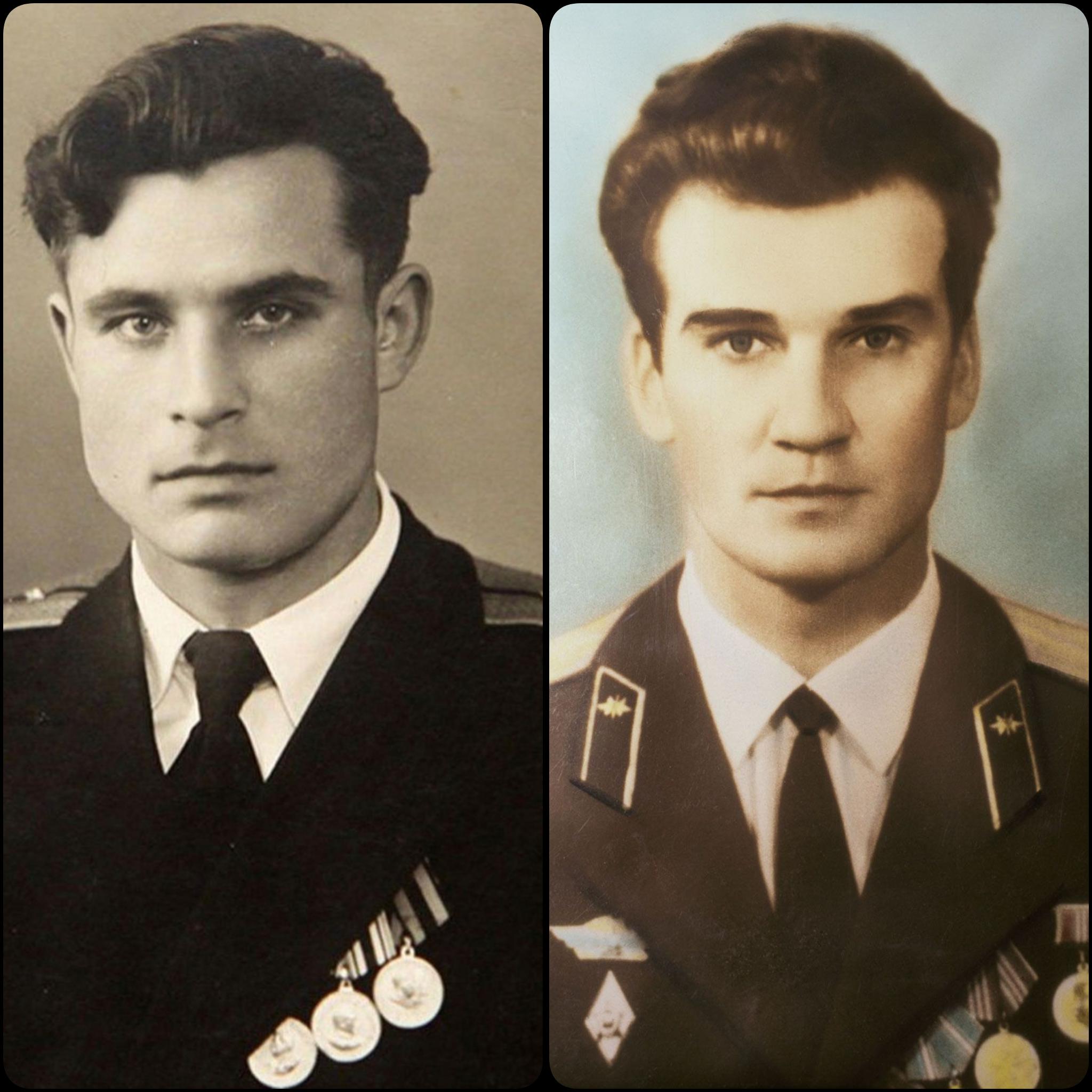
Two men who averted nuclear Armageddon

Post image
803 Upvotes

Both of these men may very well be the reason why all of us still exist today.

On the left, Vasily Arkhipov (Василий Архипов) 1926 - 1998 was a Soviet Navy officer who prevented nuclear war during the Cuban Missile Crisis in 1962. As the chief of staff of the flotilla and second in command of the nuclear submarine B59, he was the only one of the three senior officers who opposed launching a nuclear torpedo. US Navy ships were dropping depth charges to force the submarine to surface, leading the captain and political officer to believe they were under attack, and consider a nuclear strike. Such a launch required the agreement of all three senior officers, so Arkhipov's refusal prevented an action that could have escalated into a full-scale nuclear conflict. He rose to become a vice admiral in the Soviet Navy later.

On the right, Stanislav Yevgrafovich Petrov (Станислав Евграфович Петров) 1939 – 2017, was a Soviet Air Defence Forces lieutenant colonel who averted a potential nuclear war in 1983. On September 26, 1983, while on duty at a secret command center, the Soviet early-warning system indicated a US missile attack. Petrov made the crucial decision to classify the warning as a false alarm, correctly reasoning that a first strike would likely involve hundreds of missiles, not just five. His decision went against protocol, which would have required alerting his superiors, potentially leading to a retaliatory nuclear strike during a period of high Cold War tension. The incident was kept secret by Soviet officials until after the collapse of the Soviet Union. Petrov later received international recognition and awards for his actions and is known as "the man who saved the world"


r/ForgottenMen • • Dec 18 '25

José Carlos do Patrocínio - speaking up

Post image
29 Upvotes

Patrocínio was born in 1854 in the Brazilian city of Campos dos Goytacazes. His father was the vicar and his mother was a freed slave and he grew up to become one of the biggest slave abolitionists in Brazil.

He said (in Portuguese): “Let us break these chains that oppress our brothers… shout to the four winds: Slaves, you are citizens!”

He spoke in public, wrote in the newspaper and co-founded the Confederação Abolicionista. He also played a role in ending the Brazilian Empire and leading Brazil into Republicanism. He wrote a formal motion paper and read it out loud to a formal assembly.


r/ForgottenMen • • Dec 17 '25

John Rabe - a good Nazi?

Post image
43 Upvotes

His full name is John Heinrich Detlef Rabe. He was born in 1882 in Hamburg, Germany. He became a businessman when he was 20 or younger and started working for a company in Mozambique for a few years. He left Hamburg when he was 26 to work in China for Siemens. And he married a woman called Dora Schubert a year later.

During the Second Sino-Japanese War - which later merged into the Second World War - Rabe was living in Nanjing when the Imperial Japanese Army captured the city in December 1937. Soon the Nanjing Massacre began. Japan was allied with Germany then which meant Rabe had some status and power that he used to establish and lead the Nanjing Safety Zone. It amounted to four square kilometres on the western side of Nanjing that were full of university grounds, embassies, hospitals, churches and residential blocks. Rabe used this area to shelter two hundred thousand Chinese civilians.

Rabe was a member of the Nazi party. And he used to wave his swastika flag to make the Japanese think that that area of Nanjing was meant to be protected. (He was a part of the Nazi party for eleven years.) He confronted Japanese soldiers and used Germany’s alliance with Japan to lodge formal protests. He also documented events and atrocities in diaries and letters.

Rabe protected 200,000 to 250,000 Chinese civilians from death and rape. When he returned to Germany he tried telling people what he had witnessed in Nanjing, he showed photographs and written accounts but The Gestapo interrogated him, confiscated his materials and ordered him to stop speaking publicly. Siemens also distanced itself from him and his career was stalled.

He died an unseen hero. He never received any recognition in his life for protecting those people.


r/ForgottenMen • • Dec 16 '25

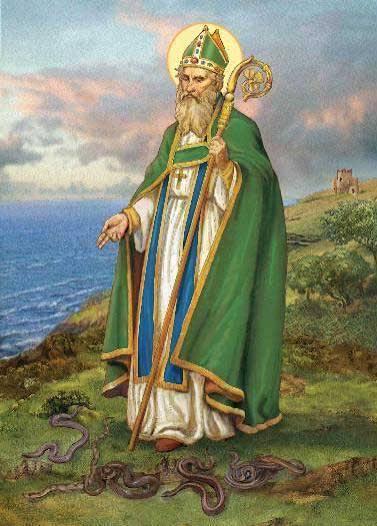
Saint Patrick

Post image
416 Upvotes

There are many myths about St. Patrick. I will only be talking about the facts today.

For over a thousand years, Ireland was broken up politically. You see there were dozens of petty kingdoms scattered across the land. Kingdoms that would consist of nothing but some farmland and a cluster of settlements.

From the years 300 to 700 AD these Irish kings would enslave hundreds of their fellow Irish people. And one of those slaves was called Maewyn Succat. His time of birth is not certain but we do know he was alive during the fifth century. When he was a teenager, Western Irish raiders sailed to his home in England and stole him away back to Ireland. He was forced into grueling farm labour in remote areas where he was isolated and looked after sheep and cattle.

According to his letters, after six years Maewyn felt a divine message telling him it was time to flee. He waited for the right moment during his routine work and ran away. He walked hundreds of kilometers across Ireland. The journey was long and stressful. He had to avoid the Irish authorities, while navigating a land he had never seen before with very little food to keep him going and an aching body. When he finally reached the sea, he snuck on a ship and was brought back to England.

Now reunited with his parents and his old society, he eventually became a priest. When he was confident and understood the faith well enough, he returned to Ireland and negotiated with kings and local leaders and made a difference in their lives. He established churches and schools all over the land. He taught Irish peasants to read for the first time. The lower class was never given a good education until then. His institutions preserved literacy and law and eventually the ordinary folk started producing lovely rich artwork inspired by the church.

Many years after his death, Maewyn Succat was pronunced Saint Patrick by the Catholic Church.

Slavery in Ireland ended centuries later around the twelfth century when Irish power consolidated and slavery was replaced by feudalism.


r/ForgottenMen • • Dec 15 '25

Egill Skallagrímsson - the poet viking

Post image
240 Upvotes

His name Egill means awe or fear. And Skallagrímsson means ‘son of Skalla-Grímr.’ Grímr is a common name tied to masks, hooded figures and the name of Odin himself. Whole Skalla means ‘bald’ or ‘bare skull’.

He was a viking born in 904 AD in Iceland. Based on what we know about him he might have been born with Paget's disease which caused his head to get bigger and his bones to thicken. He was a dangerous violent man ever since he was a boy. When he was seven years old he played a game with the boys in his village and got cheated. So he went home, grabbed an axe and split the skull of the boy who cheated him.

The king of Norway, King Eiríkr, decided that Egill’s brother Thorolf was too powerful and had to be removed. So Thorolf was accused of disloyalty without solid proof and the king’s men attacked and killed him.

Egill became a sworn enemy of the royal household. He started killing the men who attacked his brother or actively enforced the king and queen’s decision afterward. Egill was declared an outlaw and anyone loyal to the crown was permitted or even expected to kill him.

Egill managed to evade them his whole life. While also engaging in all the traditional viking things. He raided and plundered in Norway and the British Isles. He stole goods, livestock and sometimes captives to raise his viking status.

In his 40s and 50s, after the deaths of his sons Böðvarr and Gunnar, Egill started to withdraw from a violent life. Böðvarr, drowned at sea when a sudden storm overturned his boat. And Gunnar died of an illness.

He settled in Iceland and became a farmer. He also wrote many poems. About rage, loyalty and his relationship with power. He also wrote about the sons he lost. The poems are raw and real. At one point he blames the Gods, especially Odin, for betraying him. He lived with his wife Ásgerðr, in peace. Exhausted after the political battle with the Queen and filled with grief.


r/ForgottenMen • • Dec 14 '25

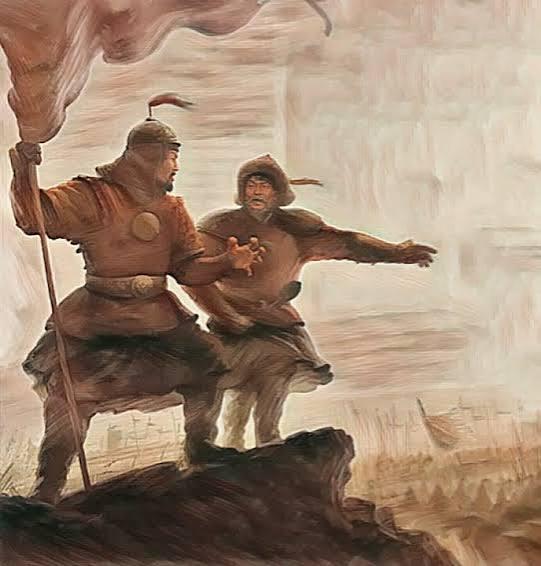
Jamukha - Genghis Khan’s rival

Post image
40 Upvotes

Jamukha was Temüjin’s brother in arms. The man who would eventually be known as Genghis Kahn. The two grew up in the same region of the Mongolian steppes. (Jamukha was born in the Jadaran tribe to be specific.)

Jamukha fought with Temüjin many times. Once to save his brother in arms wife Börte from the Merkit tribe. Their combined armies struck the Merkit camp and made them flee. When Börte was rescued she was pregnant. And with a son that probably wasn't Temüjin’s but he still raised the boy as his own.

Jamukha eventually grew to hate Genghis Khan. They had a rivalry because of their different ideas of leadership. Jamukha represented the established aristocratic elite while Genghis wanted a more merit-based following. This made him more popular than Jamukha.

Jamukha became the head of a coalition whose goal was to destroy Genghis’ rising power. In 1201, hostile tribes elected Jamukha as universal ruler and they fought Genghis for years. In the end Jamukha was defeated and even his own supporters gave him up right into Genghis’ hands.

Jamukha refused to reconcile out of sheer pride. He asked for an honourable death. An aristocratic death without the spilling of blood. Genghis agreed and broke the warlord's back.