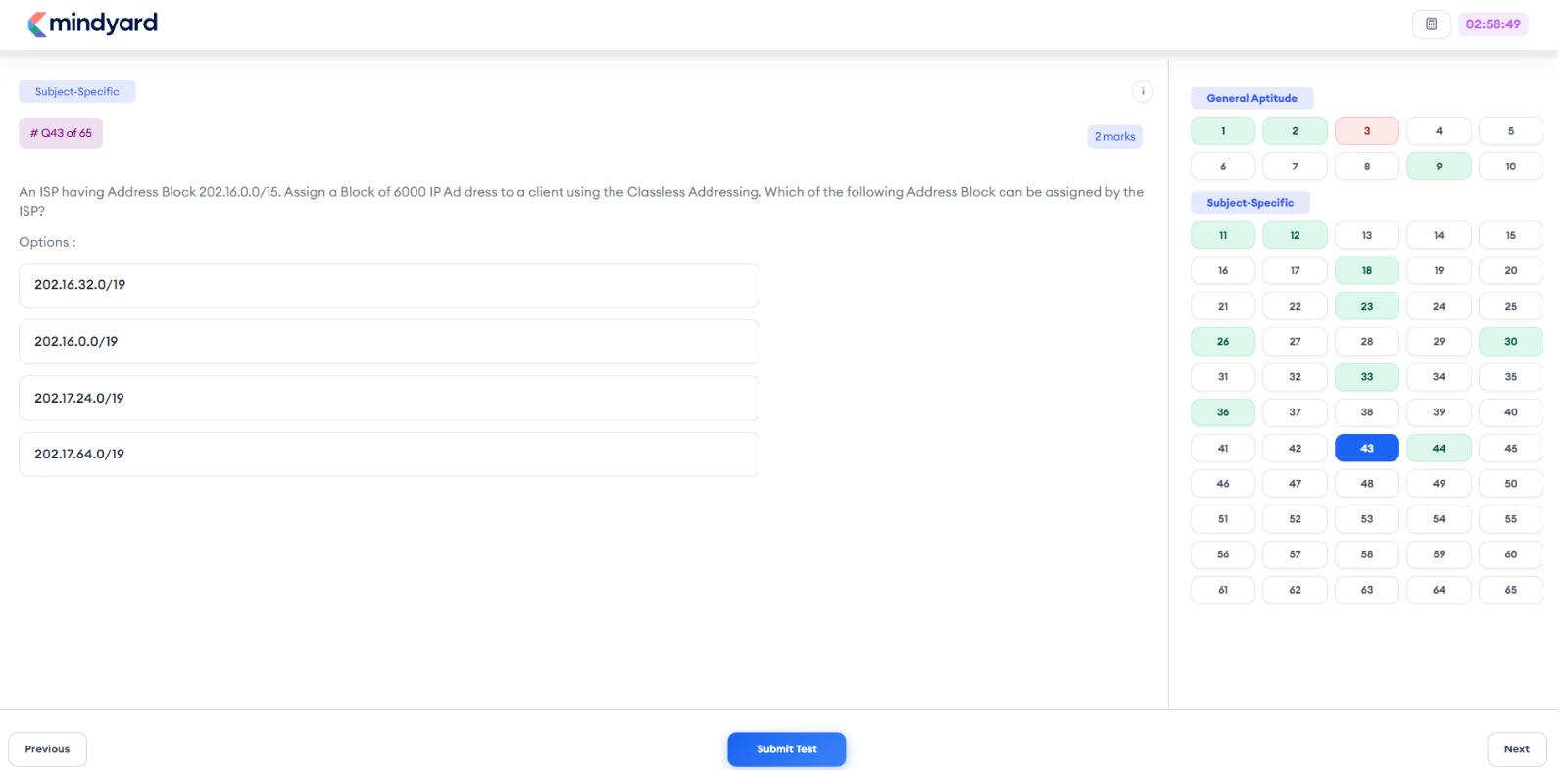
Most aspirants treat mock tests like a scorecard—they take a 3-hour test, check their marks or percentile, feel great or miserable for an hour, and move on to the next one.
If your scores have plateaued, it is rarely a syllabus issue; it is almost always an attempt strategy and analysis issue. A mock test doesn't increase your rank—the 4 hours you spend reviewing it afterwards do.
Here is a simple, repeatable framework to get the maximum ROI out of every single mock you take:
- Before the Mock (Set the Environment) Simulate exam conditions strictly: Sit at a proper desk, keep only a rough pad and pen, put your phone on silent in another room, and take the test in your actual exam time slot. Zero pauses for water, snacks, or notifications.
Set a process goal, not a score goal: Don't sit down thinking "I need 75+ today." Instead, set a behavioral target like "I will not spend more than 2.5 minutes stuck on any single question" or "I will keep calculation errors under 2."
2. During the Mock (The 3-Round Method) Never attempt a paper linearly from Question 1 to the end. Ego-solving a tough question early drains both your clock and your confidence.
Round 1 — The Sprints (First 35–45 mins): Scan the paper and solve only direct, formula-based, or familiar questions you are 100% sure about. Mark lengthy-but-solvable questions for review, and skip bouncers immediately. Locking in easy marks early kills exam panic.
Round 2 — The Grinders (Bulk of your time): Return to the marked questions that require multi-step logic or heavy calculation. Keep a strict cutoff timer per question; if you hit a wall, move on.
Round 3 — Calculated Risks (Last 15–20 mins): Revisit borderline questions only if you can logically eliminate at least 2 options. Avoid blind guessing—protecting your accuracy matters more than inflated attempts.
3. After the Mock (Where Marks Actually Grow) Spend at least 1.5x the exam duration analysing the paper the same day. Go through every single wrong, unattempted, and even guessed-right question, and sort them into four buckets:
Silly Mistakes: Misread "NOT/INCORRECT", unit conversion slip, or marked the wrong bubble.
Fix: Build a habit of re-reading the final line of every question before clicking submit.
Conceptual Gaps: Forgot a formula or didn't understand the underlying topic.
Fix: Open your notes immediately, revise that specific sub-topic, and solve 5–10 practice problems on it.
Time Traps: You knew the concept, took 5 minutes to solve it, or ran out of time before reaching it.
Fix: Check the official solution to see if there was a shorter trick, substitution, or option-elimination method you missed.
Genuine Bouncers: Obscure, unnecessarily lengthy, or out-of-syllabus questions meant to be skipped.
Fix: Ignore them. Toppers don't solve these; they identify and skip them in 15 seconds.
The Golden Rule: Maintain an Error Log Keep one dedicated thin notebook (or spreadsheet) strictly for mock analysis. Record only two things after every test:
Formulas or edge-case concepts you forgot.
Repeated silly mistake patterns.
Read this error log for 15 minutes right before your next mock. You will stop repeating old mistakes, and your score will climb steadily even without learning a single new chapter.
What is the biggest bottleneck in your mocks right now—time management, silly mistakes, or forgetting concepts under pressure?