r/Gemini_Notebook • • 8h ago

Study Tips tried to make 4 AIs teach me linear algebra without just giving me the answer. one folded immediately lol

Thumbnail
reddit.com
0 Upvotes

r/Gemini_Notebook • • 10h ago

Study Tips tried to make 4 AIs teach me linear algebra without just giving me the answer. one folded immediately lol

Thumbnail
reddit.com
1 Upvotes

r/Gemini_Notebook • • 17h ago

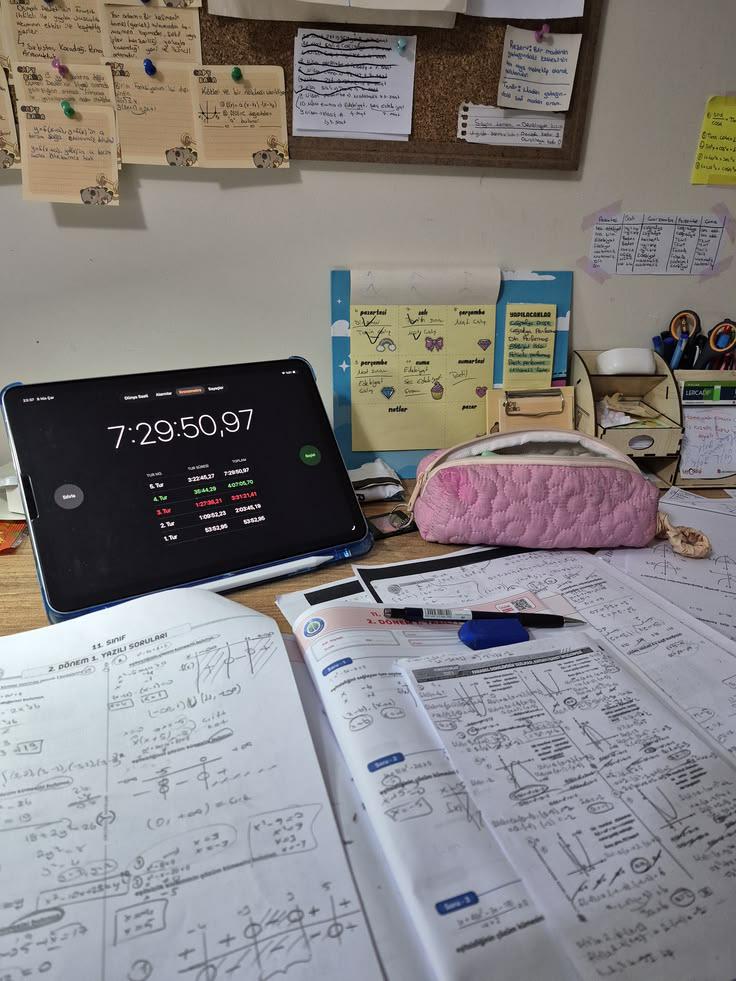
Study Tips i stopped calling myself lazy and started observing what distracted me

Post image
48 Upvotes

i used to blame my lack of discipline whenever a study session went wrong. but after paying attention to my habits, i realized that my distractions weren't always the same. sometimes i couldn't start because the task was unclear; other times, my phone, noisy surroundings, or constant switching between subjects got in the way.

so i started tracking my distractions instead of treating every unproductive day as a personality flaw.

- identify your distraction patterns.

keep a simple log for a few days: when you lost focus, what you were doing, what interrupted you, and how long it took to return. upload the entries and ask your notebook to identify recurring patterns without making psychological diagnoses.

- match each distraction with a practical adjustment.

if you keep switching tasks, prepare one clear objective per study block. if notifications interrupt you, put your phone away. if you procrastinate because you don't know where to start, ask for one specific 15-minute task based on your materials.

- create a realistic focus plan.

ask your notebook to turn your distraction patterns into a daily study plan with manageable tasks, planned breaks, and a clear starting point. review the log again after a week to see whether the adjustments actually helped.

i stopped asking myself why i couldn't just concentrate like everyone else and started asking what was repeatedly getting in the way. that question was considerably more useful.


r/Gemini_Notebook • • 18h ago

General Discussion how I went from 85 to 96 using how Thai’s study

Post image
80 Upvotes

i know that you’ve already of this, so this proves that it works.

i had a habit of obssessing over checking my examination scores, look at the correct answers, and move on. but i noticed that i kept making the same mistakes in different examinations. sometimes it was because i didn't understand the concept, other times it was because i misread the question or rushed my solution.

so i started keeping an error log, a simple record of the questions i got wrong and the reason behind each mistake.

here's how i doit:

-Record every incorrect answer.

write down the topic, the question, your answer, and the correct answer. don't just copy the answer key; make sure you understand why your answer was incorrect.

-Identify the type of mistake.

i usually divide mine into three categories: a. Knowledge gap: i didn't know or remember the concept. b. Misinterpretation: i misunderstood what the question was asking. c. Application error: i knew the concept but couldn't apply it correctly.

-Write the correct reasoning.

explain why the correct answer works and why your original answer doesn't. for problem-solving subjects, include the steps you missed or the formula you used incorrectly.

-Turn repeated mistakes into review questions.

if i keep confusing two theories, i'll make a comparison question. if i keep forgetting a process, i'll try explaining it without looking at my notes.

-Retake the questions later.

revisit the same questions after a few days. don't just memorize the correct answer; make sure you can solve a similar problem or explain the same concept in a different situation.

i like this because my mistakes become part of my reviewer instead of something i simply forget after checking my score..


r/Gemini_Notebook • • 19h ago

General Discussion these academic sites securered the best RRLs for your journals

Post image
27 Upvotes

one of the biggest mistakes i used to make when searching for related literature was relying on google and using whatever articles appeared on the first page. turns out, there are actual academic databases and journal platforms that make finding credible international studies much easier.

here are the websites i usually start with:

  1. Google Scholar - probably the easiest starting point. search using specific keywords, look at related articles, and check the "Cited by" section to find other researchers who have used or referenced the same study.
  2. JSTOR - particularly useful for humanities, social sciences, history, education, and related fields. it provides access to academic journals, books, and primary sources. some materials are freely available, while others require institutional access.
  3. ScienceDirect - useful for scientific, technical, and medical research. you'll find journal articles covering subjects like biology, psychology, medicine, engineering, and social sciences.
  4. SpringerLink - a good place to search for international journal articles, academic books, and book chapters across different disciplines. especially useful when you're looking for more specialized or theoretical literature.
  5. ERIC - especially useful for education majors. it contains research articles, reports, and publications related to teaching, learning, educational policies, and student performance.
  6. PubMed - use this for medicine, biology, physiology, psychology, and other health-related topics. it helps you locate biomedical literature from researchers and institutions around the world.

one more thing: don't just collect articles because their titles look related. check the authors, publication date, methodology, journal, and actual findings. also, being listed on a database doesn't automatically mean every source is peer-reviewed.

my advice is to use these platforms to find relevant international studies, then compare their findings and methodologies instead of simply collecting citations. a good RRL isn't about having the longest reference list; it's about finding studies that actually support, compare, or challenge your research.


r/Gemini_Notebook • • 21h ago

Other Need Help regarding gemini notebook

Thumbnail reddit.com
1 Upvotes

r/Gemini_Notebook • • 22h ago

Study Tips The Kanban Board for Syllabi method helped me organize my priorities

Post image
18 Upvotes

having multiple subjects means having multiple deadlines, activities, readings, and examinations to keep track of. the Kanban Board is a visual method that helps you organize your tasks, monitor your progress, and identify what needs your attention first.

to begin, you have to prepare these three main sections;

Start by setting up your board.

divide your board into three parts:

-To Do: List all upcoming tasks, requirements, readings, and deadlines.

-In Progress: Move the tasks you're currently working on here.

-Done: Transfer completed tasks here to keep track of your progress.

second, how to organize your syllabus.

go through each of your course syllabi and list every requirement, examination, project, and reading assignment. break larger requirements into smaller tasks instead of writing general reminders.

third, and last: how to prioritize.

-Deadline: Identify which tasks are due soonest.

-Importance: Prioritize requirements that need more preparation or have a bigger impact on your grades.

-Workload: Consider how much time and effort each task requires.

-Progress: Avoid putting too many tasks in the In Progress column. finish what you can before taking on another.

review and update your board every week, especially when new requirements and deadlines are announced.

the point of this is to make your workload visible and manageable. you don't have to work on everything at once; you just have to know what needs to be done, when it needs to be done, and what deserves your attention first.


r/Gemini_Notebook • • 1d ago

Productivity I built an open-source bridge so Claude, Cursor and n8n can ask my Gemini Notebook questions — with the cited passages

Thumbnail
reddit.com
1 Upvotes

r/Gemini_Notebook • • 1d ago

General Discussion hand-drawn diagrams over printed ones every single time

Post image
28 Upvotes

when studying subjects with complicated processes, structures, and systems, i prefer drawing my own diagrams instead of simply printing an already completed illustration, because looking at a diagram and actually understanding how it works are two different things.
i use this especially for subjects like anatomy, physiology, biology, and other lessons that involve interconnected concepts.
I always start with a reference diagram- look at your textbook or lecture material first. identify the major parts, labels, processes, and relationships. don't immediately attempt to draw something you haven't understood yet.
Then, I’d recreate it using simple shapes- draw the structure using boxes, arrows, lines, and labels. you don't need artistic skills. focus on getting the arrangement and relationships correct rather than making it aesthetically pleasing.
Add explanations beside the diagram- don't rely on labels alone. write short explanations of what each part does, what happens next, and how the different components interact.
Redraw it without looking- this is my favorite part. cover the reference and try to recreate the diagram from memory. afterward, compare it with the original and correct any missing labels, misplaced parts, or incorrect connections.
Repeat it after a few days- try reconstructing the same diagram again. the parts you keep forgetting are the ones that need more attention.
drawing forces me to organize the information instead of just recognizing an image i've seen before. but i still use printed diagrams as references, especially when the structure is particularly complicated.
do u still make things like this?


r/Gemini_Notebook • • 1d ago

Other I tried building something similar to NotebookLM — would love your honest feedback

Thumbnail
gallery
2 Upvotes

I built a document workspace called Orbst with a similar source-grounded idea to NotebookLM, plus a few differences:

  • Supports digital PDFs, DOCX, PPTX, images, and scanned or handwritten docs (via OCR).
  • Citations highlight the exact matching line in green directly on the source page.
  • Alongside chat, you can make editable A4 docs (export to PDF/DOCX) or interactive HTML artifacts like quizzes and flashcards.
  • You can adjust or switch between 1, 2, or 3 panes depending on what you’re working on.

You can try it free at orbst.com . Since people here use NotebookLM regularly, I’d appreciate any honest feedback on what works, what’s missing, or what feels worse compared to NotebookLM.


r/Gemini_Notebook • • 2d ago

Study Workflow the second-layer revision system helped me recall 80% of my exam material

Post image
57 Upvotes

i realized that my first round of studying was mostly about understanding the lesson. but when exam week arrived, understanding something several days ago didn't necessarily mean i could remember it. so i developed what i call a second-layer revision system, where every topic goes through another round of testing after the initial review.

here's the process:

a. first layer: build your understanding.

read your materials, clarify difficult concepts, and create a concise reviewer. ask your notebook to organize the lesson into key ideas, definitions, processes, and examples. this is your reference layer

b. second layer: remove the reference

ask it to turn your reviewer into questions, incomplete statements, application problems, and explanation prompts. answer everything without looking at your original notes, then compare your responses against the source.

c. reinforce the missing information.

keep a separate list of concepts you failed to recall and revisit only those areas. retest yourself after a delay, then gradually increase the interval for topics you can consistently answer correctly.

i was able to recall roughly 80% on my own follow-up checks. that's my personal result, not a guaranteed retention rate, but the second layer made a noticeable difference in how i prepared for exams.


r/Gemini_Notebook • • 2d ago

Study Tips i study for 6 hours everyday and got a 96% GWA

Post image
90 Upvotes

i used to spend six hours studying without having six hours' worth of actual learning to show for it. i'd jump between subjects, reread familiar chapters, and convince myself that keeping my laptop open counted as productivity. what changed was giving every study block a different purpose instead of doing the same thing for six hours.
here's how i structure my study day:

  • block 1: eat the frog.

start with the most difficult or important topic while your attention is relatively fresh. review the source materials, clarify unfamiliar concepts, then close your notes and use generated questions to test what you understood. record mistakes instead of immediately moving on.

  • block 2: application and problem-solving.

shift from understanding to using the material. work through practice problems, past-paper questions, case scenarios, or essay prompts. use your notebook to generate similar questions when you run out of practice material.

  • block 3: spaced revision.

return to older topics instead of spending the entire day on whatever you studied most recently. use short quizzes and closed-book explanations to check what you still remember, then prioritize the concepts that need another round.
i don't study for six consecutive hours without breaks. i distribute the work across the day and make sure each block has a measurable output. the trick isn't simply studying longer... it's making sure the hours have different jobs.


r/Gemini_Notebook • • 2d ago

General Discussion build a glossary that doesn't sound like a dictionary got a limit

Post image
26 Upvotes

A list of definitions can become pretty useless when every term is written in the same formal language as the textbook. I want definitions that preserve the correct meaning but are simple enough for me to understand quickly, especially when several terms belong to the same topic.

Collect the essential terms from your source. Ask for concise definitions using your course's terminology, then check the wording against the original material. Prioritize terms that are central to the learning objectives or commonly confused with one another.

Add an example and a distinction. For each difficult term, include one example of how it is used and, where relevant, a note explaining how it differs from a similar concept. That makes the glossary more useful than a collection of isolated sentences.

Turn it into two-way practice. Sometimes show the definition and retrieve the term; other times show the term and explain its meaning. Switch the direction and include similar-looking terms so you're learning the concept rather than memorizing one particular sentence.


r/Gemini_Notebook • • 3d ago

Study Tips how to "matter load" like debaters before your exams

6 Upvotes

i learned this term during my senior high school, when a classmate of mine urged me to join the debate team club of our grade level. i refused cause i was scared but then she told me that they’d ‘matter load until they vomit’ so i got curious and looked it up.

i only started using it recently, cause i used to open my study materials only when i was ready to review, which meant spending the first 30 minutes figuring out what was covered, which PDF contained which topic, and whether i had forgotten an entire lecture. i started doing what i call matter loading: preparing and organizing the entire exam coverage in my notebook BEFORE beginning my actual review.

here's how i practiced this:

- load your complete exam coverage.

upload your lecture slides, reading materials, handouts, reviewers, and official syllabus. keep the sources organized by subject or exam coverage so you don't end up mixing unrelated lessons.

- create a coverage map.

ask your notebook to identify the major topics, subtopics, important definitions, processes, and prerequisites. have it organize them into a checklist so you can see which areas you've covered and which ones you've barely touched.

- identify your weak spots before reviewing.

ask it to generate a short diagnostic quiz covering the entire material. use your answers to identify which topics need deeper attention, then prioritize those before moving on to familiar lessons.

the point is to enter exam week with your materials already organized. less time hunting for PDFs, more time actually learning.


r/Gemini_Notebook • • 3d ago

General Discussion swiss study habits that i acquired after studying abroad

Post image
65 Upvotes

one thing i appreciated about studying in switzerland was how much responsibility students had for managing their own learning. instead of relying entirely on classroom lectures, i had to prepare beforehand, organize my revision, and keep track of what i still needed to understand. i brought some of those habits into my study routine when i returned.

here's what stuck with me:

1.) prepare before the lecture, not just after it. use your notebook to create a short briefing from the assigned readings before class. identify unfamiliar terminology, the main arguments, and questions worth raising during the lecture. this makes classroom discussions much easier to follow.

2.) divide your revision into manageable content blocks. instead of assigning an entire afternoon to one subject, separate the material into smaller topics and alternate between related lessons. use a realistic timetable with breaks and buffer time for topics that take longer than expected.

3.) assess your understanding regularly. ask for practice papers based on the learning objectives and use your results to adjust your revision schedule. prioritize the topics where you're struggling rather than giving every chapter the same amount of attention.

what i liked most was the emphasis on independent learning. you aren't expected to wait until someone tells you what to review next. you're responsible for knowing what you understand, what you don't, and what needs to happen before exam day.


r/Gemini_Notebook • • 4d ago

Study Tips How I pull all nighter without relying in caffeine and got 97%

Post image
345 Upvotes

i had an exam approaching, and as a chronic procrastinator, i decided to not do my usual habit, and didn’t drink coffee just to force myself through the night. i focused on organizing the remaining material, using shorter review blocks, and avoiding the temptation to rewrite everything. i eventually scored 97%, but i'm not going to pretend the all-nighter did all the work… so here

here's what i did during that one night review:

-prioritize what you NEED to know instead of attempting to finish everything.

upload your exam coverage and ask your notebook to organize the major topics, important definitions, frequently confused concepts, and foundational material. take a short diagnostic quiz and focus on the gaps that are most important and realistic to address. PRE-TEST IS VERY IMPORTANT!

-replace rereading with closed-book practice.

generate questions from the actual lecture materials and answer them without looking. for difficult topics, request short explanations and another practice question rather than repeatedly reading the same paragraph. keep an error list so you don't revisit everything unnecessarily.

-avoid unnecessary stimulants and protect your recovery.

i didn't keep adding caffeine to push through the night. i took breaks, drank water, ate properly, and tried to avoid turning the final hours into frantic note-taking. most importantly, don't copy the sleep-deprivation part of my experience. getting some sleep is a better plan than deliberately staying awake all night.

please, istg stop the habit of not sleeping at all. cause see where it got me now? terrible memory loss.

my 97% was a personal result, not proof that all-nighters improve exam performance. the study strategy helped me prioritize, but sleep deprivation can impair learning and memory. honestly, i'd rather have started two days earlier.


r/Gemini_Notebook • • 4d ago

General Discussion Is the rag not working anymore?

Thumbnail reddit.com
1 Upvotes

r/Gemini_Notebook • • 6d ago

Productivity 48 hours study session got me 96% on biochem and calculus

Post image
281 Upvotes

i had two major exams a week ago, one in biochemistry and another in calculus, and barely two days to organize my remaining review. i couldn't afford to spend the first half of the available time making notes, so i divided the 48-hour preparation window into focused sessions with different objectives. and no, i wasn't studying for 48 consecutive hours. smh.
here's how i divided it:
first 12 hours: diagnose and organize.
upload the lecture materials, problem sets, and exam coverage. ask for a topic map, then take a diagnostic quiz for both subjects. identify which biochemistry pathways, equations, and calculus concepts you're struggling with before assigning your remaining study blocks.
next 24 hours: targeted practice.
alternate between biochemistry and calculus instead of spending the entire day on one subject. for biochemistry, reconstruct pathways, explain reactions, and test important distinctions. for calculus, solve problems, identify the appropriate methods, and practice variations of questions you've previously missed.
final 12 hours: consolidate and recover.
take timed practice tests, revisit your error lists, and perform closed-book recall. include proper meals, breaks, and a full night's sleep in this window. don't sacrifice the final night trying to memorize an entire textbook.
i managed to score 96% on both exams, but the useful part wasn't the 48-hour review itself. it was having a specific task for every study block instead of panicking over the entire syllabus at once.


r/Gemini_Notebook • • 6d ago

General Discussion Are gems slow for you too ?

4 Upvotes

Hello guys
I usually create gems per subject so that i can put all my course materials in the dedicated gem, but they always get so slow after sometime chatting. In general Gemini gets too slow and i should wait minutes for a simple question
Does this happen to you too ?


r/Gemini_Notebook • • 7d ago

Other How to use gemini notebook for revision?

8 Upvotes

I currently use anki for memorisation but I’m still struggling in exams and I’m thinking i need some exam practice.
My revision notes are always missing key points. Are there anyways to use gemini notebook to get accurate notes.


r/Gemini_Notebook • • 7d ago

Study Tips pro-tip to jump from B- to A+ like students in Beijing

Post image
159 Upvotes

i came across an exam-preparation technique discussed by a beijing education researcher: the error notebook. instead of treating incorrect answers as something to quickly check and forget, students use selected mistakes to build a record of what went wrong and how to solve similar problems. i tried adapting this to my own major subjects.

here’s what i did:

1.) don't record every single mistakes - select questions that expose an important knowledge gap, a recurring calculation error, a confusing formula, or a misleading question. organize them by subject and topic so you can easily identify patterns.

2.) write down the reasoning behind the mistakes - include the original question, your incorrect answer, the correct answer, and exactly why your reasoning failed. ask your notebook to explain the underlying principle and identify the clue you should have noticed.

3.) practice a similar question without looking - generate a fresh problem that tests the same concept but changes the values, wording, or situation. revisit your error notebook after a few days and attempt the original difficult questions again.

the objective isn't to collect a notebook full of wrong answers. it's to make sure an incorrect answer becomes a lesson you don't repeatedly pay for during exams.

i wouldn't claim every student in beijing uses this technique, but the approach has been discussed in chinese gaokao preparation guidance, and it's worth borrowing.


r/Gemini_Notebook • • 7d ago

General Discussion Would you let people know about how you study?

Thumbnail reddit.com
1 Upvotes

r/Gemini_Notebook • • 7d ago

Study Tips study shorter, learn twice as much

Post image
117 Upvotes

i used to believe that spending five hours at my desk automatically meant i'd learned five hours' worth of material. unfortunately, a considerable portion of that time involved rereading familiar paragraphs, switching tabs, and convincing myself that highlighting was a personality trait. i started measuring my study sessions by what i could actually produce instead.

here's the system i use:

1.) give every session one measurable output.

instead of writing "study biology" on your planner, specify something like "explain cellular respiration without notes" or "solve five equilibrium problems." ask your notebook to break a broad topic into small tasks that can realistically fit into your available study time.

2.) follow the input-output approach.

spend the initial part of your session understanding the concept, then devote more time to producing answers. close your notes, explain the topic, solve problems, or complete a short quiz generated from your sources.

3.) eliminate the dead time between sessions.

before taking a break, prepare the next task and the exact source you'll need. when you return, you won't spend another 10 minutes deciding what to study. track how much you actually accomplish instead of counting how many hours you sat there.

the "twice as much" is how i described the difference in useful output from my own sessions, not a guaranteed scientific multiplier. the point is to cut the hours spent looking busy and increase the time spent actually learning.


r/Gemini_Notebook • • 8d ago

General Discussion data tables missing in studio

4 Upvotes

Is it just me? I was using data tables in notebook studio and then the feature disappeared overnight. Where can I find it?


r/Gemini_Notebook • • 8d ago

Study Tips use animedoro Technique for locking in and watch yourself ace most exams

Post image
65 Upvotes

i’ve read somewhere that the reason why people are chronic crammers, or chronically late is that they think that they will always have more time, and they have a detached sense of time from the way their body actually moves or responds.

say for example, you have an essay task that needed 5 citations, and you have 3 days to make it. you won’t do it until the very last minute because YOU THINK THAT YOU CAN DO IT IN 30 MINUTES. u actually can, except, it’s trash.. and it’s not even half the quality of what you could’ve produced if you locked in more 3 days earlier.

wanting to get rid of this age-old habit, i started to use Animedoro technique, it’s a time-management and productivity method that modifies the traditional Pomodoro technique by pairing extended study sessions with a full anime episode as a reward.

how it works is this;

  • Work Block: Focus deeply on studying or tasks for 40 to 60 minutes (often standardized around 45–50 minutes). [
  • Break / Reward Block: Watch one anime episode (roughly 20 minutes long, typically by skipping the opening and ending credits to fit the window).
  • The Cycle: Repeat this work-and-watch loop until you finish your daily goals or study quota

things to remember tho:

  • No Half-Measures: Keep your phone out of reach and eliminate distractions during the work interval.
  • Skip Credits: Trim the intro and outro songs (about 90 seconds each) so the episode stays near a tight 20-minute break.
  • Discipline on Cliffhangers: When the episode ends, you must immediately return to your study block without clicking "next episode".

so yeah, this fits best for those who likes to reward themselves after a bit of work just to feel dopamine. and if u think this won’t work on you, then have feel free to drop it.