r/GreatestWomen • • 1d ago

Helena of Great Britain (1846 - 1923): Overlooked by others
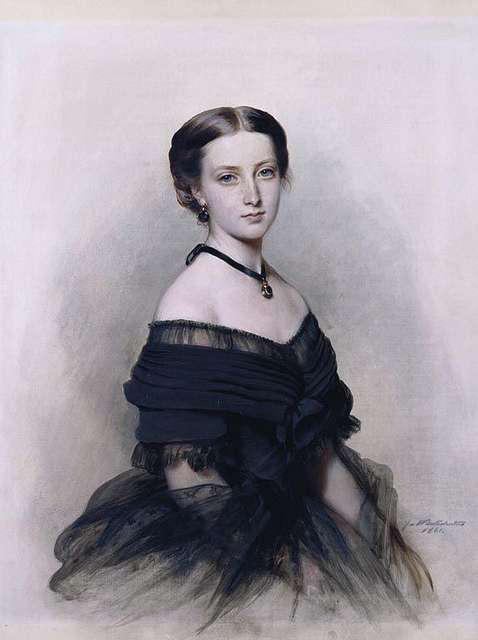
Post image
128 Upvotes

It's hard being the middle middle child of the family. You would never get the responsiblities and sense of leadership like an older sibling, or even be spoiled and given intense tendercare as much as the younger one. And this may be a reason why Princess Helena was often ignored when it comes to the history of Queen Victoria and her family. Yet, it is always a good thing to give others a chance to present themselves, which is what this story will do.

Born on 25th of May 1846 in Buckingham Palace, Princess Helena was the fifth child and third daughter of Queen Victoria and Prince Albert of Saxe-Coburg and Gotha.

Known as Lenchen by her family, the pruncess already showed signs of a prodigy, with her interests being that of science, similar to her father.

When Prince Albert died in 1861, the queen entered into a status of grief. This was felt into her younger children as well, like Helena. This period of sadness made the queen closer to her younger daughters, and after Alice's marriage and move to Hesse, the household needed a new secretary.

Helena was the one given the role, becoming an important person for hee mother as she was traversing her early years of widowhood. As her secretary, Helena was responsible with writing letters for members of household or other ministers.

By 1863, Helena was about to turn 17, which means, it was time for her to find a suitable prince to be her husband. This was made difficult by several factors: first was that Helena was considered the least attractive among the Queen's daughters, and second was a condition the queen put. As she was now emotionally reliant on her daughters, she hoped that they would not depart outside of Britain following their marriages, as was the case for Vicky and Alice.

In the end, she became engaged in 1865 to Prince Christian von Schleswig-Holstein. He was an extended member of the Danish rulling dynasty. However, this match was met with a lot of concern.

First of all, and the most obvious concern, was the age gap. He was fifteen years older that his bethroted. He was pretty much closer to her mother by age, which you might imagine is a bit gross.

But the most concerning thing about their engagement was the dynastic crisis in Denmark.

Christian's older brother, Friedrich, was claiming the rights to the danish throne based on his seniority within the wider rulling dynasty. But his claim was disputed by that of his distant relative, Christian of Glücksburg, who was married to the king's cousin. And since Denmark proper and the duchies of Schleswig and Holstein used different forms succesion, the crisis transformed into a dispute between Denmark and the German Confederation over the duchies.

If you are confused, don't worry, it is precisely why only 3 people were insightful about it. But the important thing to take it from this dispute was that it caused arguments within the British Royal Family, as Alexandra, the princess of Wales, Christian of Glücksburg's daughter, while Queen Victoria's two older daughters were married into german royalty.

But despite the tensions, Queen Victoria allowed for the marriage to continue. And on the 5th of July 1866, their wedding took place at Windsor Castle. The ceremony was not as grand compared to the previous ones, since the Queen was still in the mourning period.

Following the marriage, Helena became formally known as Princess Christian of Schleswig-Holstein, in accordance with the custom by which married royal women were often identified through their husbands' titles.

The couple initially resided at Frogmore House, near Windsor Castle, before establishing their principal residence at Cumberland Lodge in Windsor Great Park.

Unlike many of her sisters, Helena would spend virtually her entire married life in Britain. This was more by design, as Queen Victoria wanted her remaining daughters to remain by her side as she was emotionally reliant on them.

But Helena did not object to this idea. In fact, out of all the daughters, she seemed to be the most loyal to her mother. So for the rest of Queen Victoria's life, she would remain a personal secretary of hers, a duty shared by her younger sister Beatrice. But this was not to be an easy life.

This was due to the fact that Helena's marriage to Christian would produce six children, with only four surviving into adulthoood. The first was Christian Victor, who was born in 1867. The second was Albert, born in 1869. In 1870, Princess Helena Victoria was born, and two years later, her younger sister named Marie Louise.

Though becoming a mother was seen as a good thing for our princess, she now had to balance her duty as a mother and that of being the Queen's trusted daughter. But it seemed she managed to find a good balance.

Her adult life was pretty much quiet and rather uneventful, in comparison to her sisters. This pretty much is the reason why she is not as well known as the others. But that did not mean she was inactive in British Society.

During the 1870s, Helena increasingly became involved in charitable activities, particularly those associated with nursing and the welfare of women. The period witnessed major developments in the professionalization of nursing, influenced by the work of Florence Nightingale and the establishment of organized nursing education. Helena supported these efforts, as well as rights for the women in the Empire, despite her mother's objection to such an idea. From the start, the Princess participated in charitable initiatives connected with the care of wounded soldiers and the improvement of medical services.

In 1872, Helena became associated with the School of Art Needlework, later known as the Royal School of Needlework. The institution aimed to preserve traditional embroidery techniques while providing women with vocational training and opportunities for employment. As its first president, Helena supported the development of an organization that combined artistic education with economic opportunities for women. Her patronage helped establish the school as a respected institution within British society.

Her most important contribution to nursing came in 1887, when she became the first president of the British Nurses' Association. The organization sought to improve professional standards, promote nursing education, and establish a system of registration for qualified nurses. Helena's royal status provided the association with considerable prestige and helped attract public attention to its objectives. In 1893, the organization received a Royal Charter, marking an important achievement in its development. Although disagreements existed within the nursing profession regarding registration, Helena remained committed to promoting professional recognition and improving the status of nurses.

During the final decades of Queen Victoria's reign, Helena remained one of her mother's closest companions and most dependable daughters. Her marriage had allowed her to establish a household of her own, but she continued to assist the Queen with correspondence, social obligations, and domestic responsibilities, something that did not bother her.

Her children also began establishing their own lives around this time. Christian Victor pursued a military career in the british army. However, his career would be short-lived as in 1900, he passed away in South Africa from entretic fever while fighting in the Second Boer War.

As for her daughters, they became increasingly involved in charitable activities. In 1891, Marie Louise married Prince Aribert of Anhalt, although the marriage proved notoriously unhappy and was annulled in 1900. Helena Victoria, on the other hand, remained unmarried and devoted much of her life to philanthropy.

The death of her mother in 1901 and the coronation of her brother as King marked a new era for Helena. Although she continued to participate in royal ceremonies and charitable activities, she was no longer one of the principal companions of the reigning monarch. Nevertheless, she retained her royal status and remained an important figure within the extended royal family, albeit not as visible as the rest of King Edward's inner circle.

This routine remained for the rest of Edward's reign, with Helena being supported by her daughters. Together, they supported the professional development of nurses and the improvement of medical services, contributing to a movement that was gradually transforming nursing into a recognized profession during the reign of Edward and his succesor George V.

The outbreak of the First World War in August 1914 created a difficult situation for the British royal family because of its extensive connections with German dynasties. Helena's husband, Prince Christian, belonged to a German princely family, and their children maintained connections with German aristocratic circles. However, Helena had spent virtually her entire life in Britain and remained closely identified with the British monarchy.

Yet even so, George decided to rebrand his extended family into removing any german-sounding surnames and titles and indentify themselves more as British, as the public became increasingly anti-german. And so, in 1917, George renamed his family's surname into the House of Windsor, and included that to all of his close relatives that were fighting on the Entente side. This did not extend to Helena's last surviving son, Albert, who was by that point serving in the german army, thus being seen as a traitor to the United Kingdom.

On 28 October 1917, Prince Christian died at Schomberg House in London, aged eighty-six. His death was very painful to Helena. The two had maintained a peaceful and happy marriage for over 50 years, maintaining a quiet domestic life.

By the time the war ended, Helena had entered in her final period of her life. The most noteworthy thing about this time was arguing with Commissioners, who tried to turn her out of Schomberg House and Cumberland Lodge because of how expensive it became running her households. But she was able to keep hold of her residence. Her last public appearance was in April of 1923, when she attended the wedding of her great-nephew, Albert the Duke of York (future King George VI) and Lady Elizabeth Bowes-Lyon.

Over a month later, on the 6th of June 1923, Princess Helena of Great Britain died from a heart attack in her residence at Schomberg House. She was 77 years old and had witnesssed three separate reigns. Her funeral was quite a elaborate affair, despite Helena's somewhat private status. She was initially buried in the St George's Chapel alongside the remains of her husband, but five years later, their remains were transfered to the Royal Burial Ground in Frogmore.

Princess Helena, while being not as famous as her sisters, she nevertheless remained active in the victorian society as a social worker for the people, all while remaining devoted to her mother. While she gained a reputation among her contemporaries as being unquestionably loyal to the Queen and not deviating from her, it is unfair to say she had no independent view of her own. Like I said, she was supportive for the rights of women and campaigned for them.

But besides nursing, her other hobby was writing. For years, she would write and translate several works and helped her mother publish letters she wrote to her other daughters. Her first work was a biography about her father, which was noted to treat the subject with a lot of consideration

I guess the conclusion is that Helena remains an important example of how a Victorian princess could use her position to contribute to society while navigating the limitations imposed by royal tradition, an ultimate example of how royals should serve the nation.


r/GreatestWomen • • 3d ago

Nicola de la Haye

Thumbnail
gallery
121 Upvotes

In a quiet corner of the quiet church of St Michael's Church, Swaton, Lincolnshire, lies the effigy of Nicola de la Haye, hereditary constable of Lincoln Castle and Sheriff of Lincolnshire, who died [traditionally] on 20th November 1230.

Twice she held her castle against besiegers.

The first time in 1191 against bad Bishop William Longchamp, King Richard I's regent whilst he was away crusading, and who gave up after a month and restored her titles.

The second time in 1217, shortly after the death of King John, when an army of Prince Louis attempted to take the castle, she held out, until William Marshal and Bishop Peter de Roches came to her aid, and defeated Louis' army at the Second Battle of Lincoln, also known as Lincoln's Fair.

The Annals of Dunstable has: "There, together with Gilbert de Gant and the other barons who were present, they besieged Lincoln Castle, in which a noblewoman named Nicola [de la Haye] defended herself manfully."

Anonymous of Béthune: "Here, however, the castle, which was under the command of a lady, Nichola [de La Haye], who had it by inheritance, held out steadfastly against him."

The History of William Marshal, in verse, is more detailed:

And the Bishop of Winchester
who greatly wished to know their state
went willingly towards the walls
with a great company of crossbowmen.
Then he told them to wait for him there,
or to remain there a little while,
for he would return quickly.
With only one servant
he entered into the castle,
and on entering he met
my lord Geoffrey de Serland,
who had been in great fear.
They saw the walls thrown down and broken,
and greatly lamented them.
The bishop saw the damage
to walls, houses and people,
which the stone-throwing engines
were hurling, casting down and overturning.
Some of those who were inside
warned him, and begged him,
for God’s sake, to draw back
because of mangonels and stone-throwers
which were smashing everything around,
and he entered into the tower.
There he found the good lady,
whom God keep in body and soul,
who was lady of the castle,
and defended it as best she could.
The lady counted herself fortunate,
and greatly rejoiced at his coming,
and he comforted her very well
with the news that he brought.
He stayed there little, I tell you,
by a postern he went out on foot
into the town, for he wished
to see how it stood.


r/GreatestWomen • • 6d ago

Alice Guy-Blaché - first female filmmaker

Post image
491 Upvotes

Not only did Alice direct movies, she was also one of the pioneers who invented the idea of films as storytelling mediums. She was one of the first people to make a fiction film with a narrative. Her first film was called La Fée aux Choux (The Cabbage Fairy) which she produced in 1896. The original film was lost, unfortunately. In 1897 she produced something called Leçon de danse (The Dance lesson). Between 1896 to 1906 she directed over a thousand films. 150 of them survive today. And 22 of those are feature-length (over an hour I presume.) She owned and managed her own studio, The Solax Company. She would direct about three films every week. She did all of this as a mother to two children. A film called Matrimony's Speed Limit that she created in 1913 was selected for preservation in the National Film Registry of the Library of Congress in 2003. Alfred Hitchcock was inspired by her work.

Alice was married to, and eventually divorced, a guy called Herbert Blaché who was also a filmmaker.


r/GreatestWomen • • 11d ago

Did you know this about Babar?

Thumbnail
gallery
99 Upvotes

The story of Babar by Jean de Brunhoff was actually created by his wife Cécile de Brunhoff. She made up stories about a talking elephant for their two sons at bedtime. The story was about a baby elephant whose mother was killed by a hunter. So he escapes the wilderness and discovers human civilization. The boys loved the story and they told their father Jean about it, who decided to turn it into a children's book. Cécile had named the elephant Bébè but it was changed to Babar. And then Jean also expanded the story.


r/GreatestWomen • • 11d ago

Please join r/ForgottenMen

18 Upvotes

I created r/ForgottenMen a year ago I believe. It's just as good as this sub - come check it out.


r/GreatestWomen • • 15d ago

Faye Schulman

Post image
746 Upvotes

Faye Schulman was born in 1919 in Lenin, Eastern Poland, now Belarus, into an Orthodox Jewish family of photographers. By age 16, she had taken over her father’s studio. When Germany invaded, her family was split up, many forced into the Lenin ghetto. Eventually, the Nazis executed nearly all the ghetto’s inhabitants, sparing only a few they considered useful, among them, Faye, the town photographer.

After the massacre, she was ordered to develop photographs the Nazis had taken of the atrocity. While doing so, she recognized the faces of her family members among the dead. Despite her overwhelming grief, she had the presence of mind to secretly make copies, preserving proof of the horror.

A month later, Soviet partisans attacked the camp, and Faye escaped. The guerrillas allowed her to join them due to her skills, not only in photography but also in basic medicine, which she had learned from her brother-in-law, a doctor. She became a full member of the Molotova Brigade, living in the forest as an equal among soldiers, men and women alike.

Faye later returned to her village, recovered her camera equipment, and began documenting the resistance. She buried her photographs to protect them from discovery and destruction.

After the war, she was reunited with her brothers, who had survived in a labor camp. The rest of her family had perished. Faye Schulman’s courage and her remarkable photographs remain enduring testaments to resilience, resistance, and truth.


r/GreatestWomen • • 18d ago

The first voice acting star who didn't get credit

Post image
509 Upvotes

Her name was Adriana Caselotti. She was Italian and Italians were not considered white at the time so Walt did something huge by hiring her. This was hiring a non-white actress for the most culturally relevant film in history. Her father was an immigrant from Udine who became a singing teacher. Her mother sang opera at the Royal Opera in London. And in high school Caselotti got the leading role in a high school musical called The Belle of New York. Her family encouraged her to sing opera. She only sang in one called Verdi’s Rigoletto in 1944.

She said “I did Gilda in Rigoletto three times. First time, I had a cold. Second time, I was scared to death. Third time, I threw up backstage, and said, 'I'm going back to 'Snow White.’”

Caselotti met Walt Disney when she was 18. Disney’s casting director Roy Scott gave her father Guido Caselotti a call. Her father was a singing teacher in Los Angeles. He said he wanted suitable singing voices for an upcoming film called Snow White and the Seven Dwarfs. Caselotti overheard their conversation and said “what about me?” and she was invited to audition at the studio where she met the man in 1934. 150 girls auditioned at the time and Caselotti was chosen in 1935.

A few fun facts: Caselotti’s voice can be heard in It's a Wonderful Life and she's the one singing “Wherefore art thou, Romeo” during the Tinman’s song.


r/GreatestWomen • • 24d ago

The Paper Weapon That Won Women the Vote" · "How 32,000 Women Made New Zealand a World First"

Thumbnail
youtu.be
77 Upvotes

Wellington, 1893. A roll of paper about 270 metres long is unrolled down the floor of Parliament. On it: the names of thousands of New Zealand women who wanted one thing. The vote.


r/GreatestWomen • • 26d ago

Dolores Huerta (1930-2026) fought for farm worker rights in California

120 Upvotes

Dolores Huerta died earlier this week at 96. In central Califormia she worked closely with César Chavez, finding the United Farmworkers of America. Huerta sought unemployment and disability insurance, fought against toxic pesticides, and pushed for forgiveness of illegal/undocumented immigrants. Organizing many strikes thru the 60s and 70s, she was jailed 22 times for her activism. She spoke at Robert Kennedy event shortly before his assassination. In 2012, she received the Presidential Medal of Freedom from Obama. There is a 2017 documentary about her called Dolores. She eventually married Chavez's brother and had 14 children. Earlier this year, she came out and told the press how César Chavez sexually assaulted her.

PBS News Hour -- https://www.youtube.com/watch?v=cR6niCkcVU0 AP News -- https://apnews.com/article/dolores-huerta-dies-255fd49a5346475dbace4a74994b2c62


r/GreatestWomen • • Oct 25 '26 Bravo

Did you know this about the Brooklyn Bridge?

Post image
396 Upvotes

A woman called Emily Warren Roebling stepped up to help finish the Brooklyn Bridge after her father-in-law, John A. Roebling, who had initially designed the bridge passed away. Emily had no experience with engineering before this moment but she learned from her husband who had been working on the bridge. She learned enough information to manage the whole team. Her husband had been left crippled due to an illness he contracted during his work so it was up to her. And she communicated her husband's instructions to the men.

Emily also handled financial and political matters concerning the bridge. There were contractors, construction supplies, labour disputes, bridge officials and the project's governing board to deal with. She handled it all.


r/GreatestWomen • • Oct 24 '26

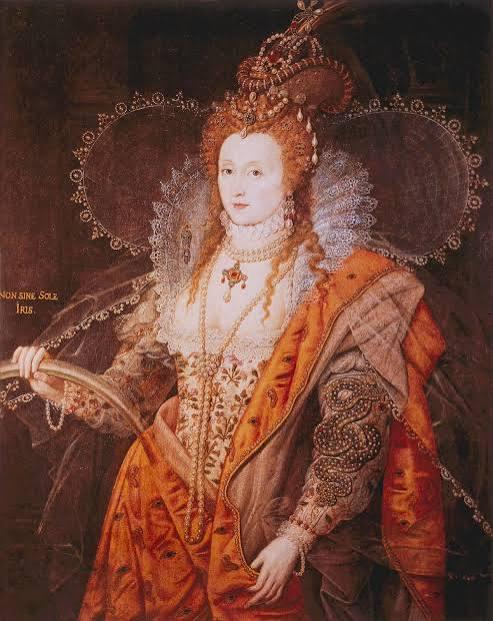
Did you know this about Queen Elizabeth I?

Post image
187 Upvotes

Queen Elizabeth popularized the idea of gingerbread men when she ordered her royal cooks to make cookies that looked like members of the court. If the queen is eating something you know it's going to be a trend.


r/GreatestWomen • • Oct 23 '26

Destination? CAPE TOWN. Progressive Olive Schreiner celebrates her homeland.

Post image
6 Upvotes

In her Thoughts on South Africa, Olive Schreiner writes, “Perhaps one of the finest views in the world is that from the top of the Kloof behind Cape Town.” 

An early advocate for women’s rights who was in contact with leading reformers of her time—including Gandhi—Schreiner wrote influential political pieces and extolled the natural beauty of her homeland. (Her Wikipedia page is worth a read... a persistent woman who fought the good fight!)

Take in the glorious view with Schreiner through this excerpt on Destinationality.


r/GreatestWomen • • Oct 21 '26 Heartwarming

Women who made history: statues at the U.S. Capitol

Thumbnail
gallery
259 Upvotes

During my visit to the Capitol Visitor Center, I came across these statues of women who left an important mark on U.S. history:

• Maria L. Sanford was an educator and one of the first women to hold a college professorship. She also championed women’s rights and promoted adult education.

• Sarah Winnemucca, a member of the Paiute Nation, was an educator, interpreter, and advocate for her people’s rights. Her book is recognized as the first written by a Native American woman.

• Willa Cather was a novelist who won the Pulitzer Prize for One of Ours. Her statue was added to the collection in 2023.

• Jeannette Rankin was the first woman elected to the U.S. Congress. A lifelong advocate for peace, she voted against U.S. entry into both world wars.

I found it meaningful to see their stories represented at the Capitol. These statues remind us that women also helped shape the history of the United States through education, literature, politics, and advocacy for human rights.

Did you know about any of these women?


r/GreatestWomen • • Oct 21 '26

Maria Aleksandrovna of Russia (1853 - 1920): too russian to bear

Post image
73 Upvotes

In the world of royalty, marriages were usually arranged to forge alliances between nations or as a means of ensuring peace. Rarely were they about love. But one rarely mentioned consequence of these matrimonial alliances was that they could introduce new cultural norms and traditions to different societies, sometimes resulting in culture shock and clashes of faith.

So, what happens when an individual refuses to adapt to the standards of their new home? This is exactly what Maria Aleksandrovna, Grand Duchess of Russia by birth and Duchess of Edinburgh by marriage, would discover.

Our story begins on the 17th of October 1853, at the Alexander Palace in the Tsarskoye Selo complex, near Saint Petersburg. It was on that day that Maria Aleksandrovna was born to Tsarevich Aleksandr and his wife, Marie of Hesse-Darmstadt. Her parents were overjoyed at her birth, as they had long wished for another daughter following the death of their firstborn, Aleksandra Aleksandrovna, in 1849. Because Maria was born four years after her sister's death, she grew up knowing only her brothers: the four older ones (Nikolai, Aleksandr, Vladimir, and Aleksei) and the two younger ones (Sergei and Pavel).

In March 1855, when Maria was less than two years old, her grandfather, the autocratic and conservative Tsar Nikolai I, died, making her father the new Tsar and Autocrat of the Russian Empire as Aleksandr II. In addition, he also became King of Poland and Grand Duke of Finland, as these two territories had been under Russian rule since the Napoleonic Wars.

Now the daughter of an emperor, Maria held the title of Grand Duchess, a title she would continue to use for the rest of her life. As a child, she lived in a world where hardship and deprivation seemed almost nonexistent. Her family, the Romanovs, was among the wealthiest royal dynasties in the world, owning numerous residences and country estates, staffed by hundreds of servants and filled with priceless works of art and expensive furniture.

At Tsarskoye Selo, near the pond in the gardens of the Alexander Palace, Maria had her own playhouse, where she could spend time with her brothers. Her parents even had a small farm built for her entertainment. From the very beginning, they adored their daughter and rarely made a habit of denying her anything. Of all his children, Maria was reportedly the Tsar's favourite.

It was said that whenever she became bored, the little Grand Duchess would wander into her father's office to spend time with him, even when he was in the middle of an important meeting. This was not nearly as annoying as you might imagine, as Aleksandr once told a member of his staff that spending time with his little girl made him forget everything unpleasant. Her mother was similarly affectionate. She would take her daughter on trips outside Russia, and the two continued to correspond regularly for many years.

So yes, Maria was a spoiled child. Although I wouldn't say she was quite on the same level as Veruca Salt, considering her behaviour later in life, she certainly came close to fitting that pattern.

Maria also got along well with her brothers, being especially close to her two younger siblings, Sergei and Pavel. As the only surviving daughter of the imperial couple, she adopted some of her brothers' habits, developing a more tomboyish personality and an iron will.

By 1868, Maria had met Alfred, Duke of Edinburgh, for the first time. He was the second son of Queen Victoria and her fourth child overall. By that point, he was serving in the Royal Navy, a career that greatly appealed to him. That year, he travelled to Hesse to visit his sister, Alice. Since Alice's husband was Maria's cousin, the Grand Duchess happened to be there as well.

The two met again in 1871, once more in Hesse, and this time they began to see each other differently. A romantic connection was developing between the lively young Grand Duchess and the shy yet handsome sailor prince. And, as is common with many young lovebirds, they wanted to tie the knot. Unfortunately, they encountered opposition from their parents.

Queen Victoria did not want one of her children to marry a member of the Russian imperial family. At the time, Britain and Russia were engaged in something known as the Great Game, which was essentially a nineteenth-century version of the Cold War. Additionally, Victoria regarded Russians as unfriendly and stubborn.

Maria's parents were also opposed to the match, still remembering Britain's role in Russia's defeat during the Crimean War. Maria's mother, who held strong Pan-Slavist sympathies, did not regard the British particularly highly, believing them to be rather rude.

Consequently, both mothers were eager to marry their children off to other members of the European nobility. However, neither Alfred nor Maria was willing to accept another match. Maria showed no interest whatsoever in the two other suitors recommended by the Tsarina. Realising that she could not reason with her daughter, the Empress eventually agreed to allow her to meet Alfred in Italy as part of the marriage negotiations.

Although the meeting ended abruptly because Maria fell ill, negotiations continued. Eventually, Queen Victoria relented and gave her approval to the match. Her ministers had helped persuade her, believing that the marriage might ease tensions between Russia and Britain.

And so, on the 23rd of January 1874, the twenty-year-old Maria Aleksandrovna married the twenty-nine-year-old Prince Alfred. The wedding took place in Saint Petersburg and was attended by Maria's father and brothers, as well as Alfred's elder brother Bertie, his wife Alexandra, and Alexandra's sister Dagmar, who was also Maria's sister-in-law.

The wedding began with an Orthodox ceremony, followed by a service conducted according to Anglican rites. Throughout the celebrations, Maria's father reportedly felt saddened by the prospect of seeing his favourite child married and soon departing from his household.

The newlyweds spent their wedding night at Tsarskoye Selo, where they also enjoyed a honeymoon lasting approximately a month. Afterwards, they travelled to Britain to settle into their new household. They arrived in England in March of that year, with the Queen herself meeting them at the railway station.

Once they reached London, the Duke of Edinburgh and his new Duchess settled into their principal residence, Clarence House. The building had previously been the home of King William IV and, in more recent times, served as the London residence of Charles III and Camilla before his accession. They also acquired a country estate called Eastwell Park, located near Ashford in Kent.

Although Maria enjoyed considerable wealth and possessed an impressive collection of jewellery, befitting her rank as a member of the royal family, her new surroundings did not entirely satisfy her expectations. The contrast between the Russian imperial court and the British monarchy was particularly striking.

Maria considered British court life comparatively restrained, and she sometimes struggled to adapt to the customs and social expectations of her adopted country.

It was especially difficult for her to adjust to her new position as Duchess of Edinburgh. She believed that her previous title of Grand Duchess of Russia should take precedence, as it technically outranked that of duchess. The Queen, however, was not amused. In her view, Maria was now a member of the British royal family and should therefore be addressed accordingly.

Apart from this disagreement over titles, the relationship between Maria and the Queen was strained by their clashing personalities. Victoria was accustomed to exercising considerable influence over her children and their spouses. Maria, however, had been raised and thoroughly spoiled as the daughter of an autocratic emperor and possessed a strong sense of personal independence. So, as you can imagine, the two women frequently disagreed over seemingly trivial matters because of their differing points of view.

Maria also struggled to get along with her sister-in-law, Princess Alexandra, for similar reasons. She considered it improper that she should rank below the Princess of Wales, because remember, she had been born a Grand Duchess.

Despite their frequent disagreements, Maria maintained the formal courtesies expected of royal relatives in her dealings with her mother-in-law. Their correspondence suggests a relationship far more complicated than a simple personal feud. As her eldest daughter once remarked: "I do not think my mother always found it easy being Queen Victoria's daughter-in-law, though they had great respect for each other."

Speaking of her eldest daughter, during this period, Maria and Alfred were beginning to establish a family of their own, eventually having five children together. Their first child, and only son, was born in late 1874 and named Alfred after his father. He was followed the next year by their first daughter, Marie. Then, in 1876, while Alfred and his wife were stationed in Malta as part of his naval career, they welcomed another daughter, Victoria Melita, better known within the family as Ducky. In 1878, their third daughter, Alexandra, was born.

From the moment Maria became a mother, she decided that she wanted to play an important role in her children's upbringing. In fact, unlike her mother-in-law, the Duchess thoroughly enjoyed motherhood, describing the birth of a child as a "heavenly moment" that "cannot be compared to anything else".

This attitude was further demonstrated by her decision to nurse her children herself. If you remember my post about Alice, you will know that Queen Victoria considered this practice unacceptable among royal women. Naturally, Maria's decision only created further friction between the sovereign and her daughters-in-law.

In 1877, war broke out between Russia and the Ottoman Empire, largely as a result of the political crisis and uprisings in the Balkans. Maria was, of course, supportive of her native country, while Queen Victoria was deeply concerned about a Russian victory and the consequences it might have for British interests. The Queen's opposition to Russian policy, along with the harsh letters she sent condemning Maria's father, came as a considerable shock to the Grand Duchess.

By 1880, Maria was growing increasingly tired of her life in Britain. Apart from her frequent bickering with the Queen, she did not find London particularly appealing. In letters to her mother, Maria complained that British royal residences lacked the opulence of their Russian counterparts and that the people were unpleasant and possessed little sense of elegance.

That year, she had the opportunity to return to Russia for a while to attend her father's silver jubilee. It was one of the few opportunities she had enjoyed in recent years to spend time with her beloved parents. In June, however, Maria's mother, who had been seriously ill for some time, finally passed away. The Empress had suffered from tuberculosis for years, frequently travelling abroad in the hope that a change of climate might improve her health. Eventually, on the 3rd of June 1880, the illness claimed her life at the age of fifty-five.

Less than a year later, in March 1881, Maria's father was mortally wounded when revolutionaries attacked his carriage with bombs as he travelled through Saint Petersburg. He died later that day. Maria was not in the capital at the time and therefore had no opportunity to say goodbye to her beloved father.

She returned to Russia in 1883, this time to attend the coronation of her brother, the new Tsar Aleksandr III. She and Alfred represented the British royal family at the ceremony.

The following year, Maria attended the wedding of her beloved younger brother, Grand Duke Sergei, to Princess Ella of Hesse-Darmstadt, the daughter of Grand Duchess Alice. That same year, Maria gave birth to her youngest child, Beatrice, named after Alfred's youngest sister, with whom Maria enjoyed a good relationship.

Fast-forward to 1886, when Alfred was appointed Commander-in-Chief of the Mediterranean Fleet. As a result, he and his family once again moved to Malta.

By this point, however, Maria's marriage to Alfred had become increasingly strained. He was constantly occupied with his naval career, leaving him with relatively little time to participate in family affairs. Moreover, as he grew older, his drinking became a serious problem, gradually changing his personality for the worse. Maria became increasingly frustrated with her husband's behaviour and often felt more comfortable whenever Alfred was away. Despite this, she continued to maintain the appearance of a stable marriage, partly to avoid causing distress to their children.

In 1887, the family moved once again, this time to the German town of Coburg. You see, Alfred's uncle was Duke Ernst II of Saxe-Coburg and Gotha. He had ruled the duchy since 1844 but had no legitimate children to succeed him. This meant that the duchy would eventually have to be inherited by one of Queen Victoria's sons.

Since Bertie had renounced his succession rights, Alfred was now next in line. Initially, Alfred was somewhat bitter about the prospect, as it meant eventually giving up his beloved naval career. However, he gradually came to accept his future inheritance.

By 1887, as Ernst's health was deteriorating, Alfred and his family decided to establish themselves in Coburg to make the eventual succession smoother. Maria found the duchy to be the perfect retreat. Its extensive woodlands provided excellent opportunities for hunting, while the picturesque landscape greatly appealed to the Grand Duchess.

She wanted her children to become fully integrated into the duchy's society. Since she played the dominant role in their education, Maria encouraged them to learn German and adopt the customs of their future homeland. She even considered having them converted to Lutheranism. However, this proved difficult, as her daughters had inherited much of their mother's independent spirit and were not always willing to accept her plans.

Maria soon began thinking about marrying them off to suitable princes as quickly as possible, believing that they would become increasingly difficult to persuade as they grew older. This was the case with her eldest daughter, Marie, who became engaged to Crown Prince Ferdinand of Romania in 1892. The couple married in January 1893, when Marie was seventeen.

Later that year, Duke Ernst II passed away, making Alfred the new Duke of Saxe-Coburg and Gotha. Despite his initially awkward relationship with the duchy and his English background, Alfred eventually became a popular ruler among the people of Coburg.

As the new Duchess Consort, Maria devoted much of her time to decorating and redesigning the interiors of the numerous residences she and Alfred had inherited. One residence to which she felt particularly attached was a small, three-storey building known as Edinburgh Palace, which had belonged to Alfred since 1865. There, Maria kept her extensive collection of personal possessions and mementoes brought from Russia.

In 1894, her second daughter, Ducky, married Ernst Ludwig, Grand Duke of Hesse and by Rhine, who had succeeded his father, Ludwig IV, in 1892. Their wedding brought together one of the largest gatherings of Queen Victoria's descendants from across Europe.

Later that same year, Maria and Alfred travelled once again to Russia to visit her brother Aleksandr, whose health was rapidly deteriorating. He died in November from kidney disease. The couple remained in Russia to attend the wedding of Maria's nephew, the newly crowned Tsar Nikolai II, to his fiancée, Alix of Hesse, who was also Alfred's niece. Incidentally, it was during Ducky's wedding celebrations that Nikolai and Alix became formally engaged, although their acquaintance and romance had begun years earlier.

In April 1896, Maria's third daughter, Sandra, married Prince Ernst of Hohenlohe-Langenburg. This match was not viewed favourably by Alfred, as the groom was considerably older than Sandra and did not belong to a reigning sovereign house. Maria, however, supported the marriage regardless. Ernst was a grandson of Queen Victoria's half-sister, Feodora, making him and Sandra distant cousins.

Now that her older daughters were married and had moved away from Coburg, Maria's principal concern was her son, Prince Alfred. Known affectionately as Alfie within the family, he had reached adulthood by 1897 but remained unmarried. One possible explanation was that he had developed a rather questionable reputation for a prince, particularly because of his fondness for gambling and his relationships with women.

By this time, however, his health was deteriorating. He had reportedly contracted syphilis, possibly as a result of these relationships. Then, in early 1899, around the time his parents were celebrating their twenty-fifth wedding anniversary, Alfie's condition became critical. On the 6th of February 1899, the young prince was dead.

Although illness may have contributed to his death, the second edition of The Complete Peerage, a major reference work documenting the history of the British aristocracy, suggests that Alfie may actually have committed suicide. The precise circumstances remain uncertain. One popular version of the story claims that Alfie was devastated when his parents refused to allow him to marry the granddaughter of a British nobleman. However, there is little reliable evidence supporting this romantic explanation. But, as we all know, people do seem to enjoy a tragic love story.

What is certain is that his parents were devastated by the loss of their only son. His death also created a succession problem, as Alfred no longer had a surviving son to inherit the duchy. Consequently, another male relative had to be designated as his successor.

In the end, the next heir to Saxe-Coburg and Gotha was Alfred's young nephew, Charles Edward, Duke of Albany. And it was fortunate that the succession had been settled, because Alfred himself was already seriously ill.

By this time, the Duke was suffering from throat cancer, which eventually made speaking and swallowing extremely difficult. He died on the 30th of July 1900, at the age of fifty-five.Maria was at his bedside during his final moments, as was their daughter Sandra.

Now a widow at forty-six, Maria relinquished Clarence House and Eastwell Park and began dividing her time between residences in Germany and Nice. As Dowager Duchess of Saxe-Coburg and Gotha, she continued to take a keen interest in the lives of her daughters.

Sometimes, she was supportive of their personal struggles, as was the case when Ducky divorced her husband in 1901. On other occasions, however, she could be considerably more judgemental about their decisions.

By 1914, with the outbreak of the First World War, Maria found herself in an extraordinarily difficult position. She had recently returned from a visit to King George V of Britain, but now she faced an uncomfortable question: which side should she support, her native Russia or her adopted homeland of Germany? After what must have been a difficult decision, she chose to support Germany.

This placed her on the opposite side of the conflict from two of her daughters: Marie, who became Queen of Romania later that year, and Ducky, who had married into the Russian imperial family. Relations between Maria and these two daughters became increasingly strained. For much of the war, she largely ceased corresponding with them, something that caused both women considerable distress.

But life in wartime Germany proved difficult for Maria herself, particularly as anti-Russian sentiment continued to grow. In 1917, while travelling through Coburg with Sandra and Beatrice, her car was reportedly stopped by an angry crowd, whose members harassed the Dowager Duchess because of her Russian ancestry. Concerned for her safety, her nephew, Duke Karl Eduard, arranged for her to live away from Coburg.

Meanwhile, Maria learned of the tragedies that had befallen her family during the Russian Revolution. Numerous members of the Romanov dynasty were imprisoned or murdered by the Bolsheviks. One of the most heartbreaking losses was that of her younger brother, Grand Duke Pavel, to whom she had always been particularly close. He was executed in January 1919.

Furthermore, much of the personal fortune she had kept in Russia was confiscated by the revolutionary authorities, leaving her in serious financial difficulties.

By the end of the war, Maria Aleksandrovna, once a strong-willed duchess who had lived surrounded by unimaginable luxury, had lost much of her wealth and security. What remained of her fortune consisted largely of personal possessions and jewellery that she had not yet been forced to sell. She was also heartbroken by the collapse of the monarchies in Russia and Germany, two countries that had played such important roles in her life.

Nevertheless, there was one bittersweet consolation: she was able to see Marie and Ducky once more. It was not exactly a complete reconciliation, but after so much death and destruction, simply knowing that her daughters were still alive and well must have brought her some comfort.

On the 24th of October 1920, just seven days after celebrating her sixty-seventh birthday, Maria Aleksandrovna, the last surviving legitimate child of Tsar Aleksandr II, died in her sleep in Zürich, Switzerland. Her health had been declining for some time, and she had reportedly suffered from recurring heart problems. She was buried in the ducal mausoleum in Coburg, beside her husband. Her daughters, who had admired and adored her despite their occasional disagreements, mourned her passing.

Maria's life had certainly been an interesting one. Having lived in three very different worlds, while navigating family drama, dynastic rivalries, personal tragedies, and war, her story was one of both splendour and suffering. But whatever else one might say about Maria Aleksandrovna, her life was certainly never a boring one.


r/GreatestWomen • • Oct 20 '26

Ruxandra Sturdza-Edling (1786-1844) Feminist leader, philanthropist and lady-in-waiting

Post image
118 Upvotes

Roxandra was born in 1786 to Scarlat Sturdza, governour of Bessarabia and Sultana Moruzzi, daugther of prince Constantin Moruzzi. In 1816 she married Albert Cajetan von Edling.

She became the lady-in-waiting to Elizaveta Alexeievna of Russia and accompanied her in a trip to Germany in 1812. She met Goethe and other european personalities there. She also bonded with Ioannis Kapodistrias, both being Philhellenists and Ruxandra became one of the biggest supporters of the greek revolution.

She was a philanthropist giving goods to disadvantaged children, founding schools, charities and orphanages. She also became a feminist leader in Bessarabia and southern part of the Russian Empire, founding the Women's Benevolent Society in 1829. This society saved many lifes during the 1833 Odessa famine. In 1828, together with her brother Alexandru, she also built a church, a house for priests, a hospital and a school in Bessarabia.

Ruxandra also wrote a memoir "Memoires de la contesse Edling, née Stourdza, demoiselle d'honneur de Sa Majesté l'Impératrice Elisabeth Alexeevna". She died on 16th January 1844.


r/GreatestWomen • • Oct 20 '26

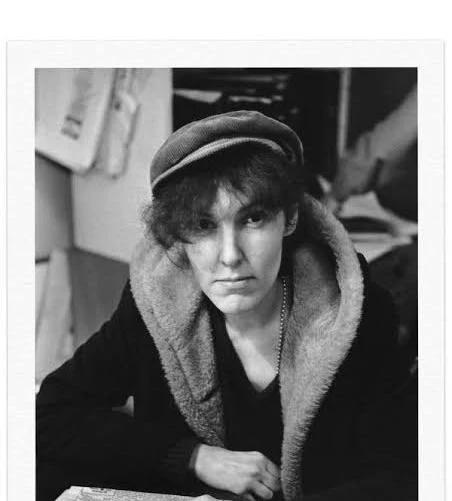
Valerie Solanas - anger and sadness

Post image
141 Upvotes

Solanas was born in Ventnor City, New Jersey in 1936. Her father was a bartender and her mother was a Dental assistant. Her parents were Spanish and Italian. Solanas alleged that her father sexually abused her on a regular basis. Her parents got divorced when she was little and her mother remarried quickly to a man she didn't like at all. She was unkind and rebellious towards her mother. At school she would invent insults for children to say to each other. One time she beat up a girl and punched a nun. Apparently Solanas’ behaviour at home was bad enough that her mother sent her to live with her grandparents in 1949. Her grandfather was an alcoholic who physically abused her.

The violence was so bad that she ran away and lived on the streets. While she was homeless she became pregnant with a son who she couldn't look after. The boy was taken away from her and adopted. His name was David.

Despite her troubled upbringing Solanas was academically gifted. She supported herself financially through University to get a degree in psychology from the University of Maryland. She was also a part of the Psi Chi Honor Society. Solanas managed to be an out lesbian during college despite the conservative culture of the 50s. And she hosted a call-in radio show where she gave women advice on how to combat men.

Solanas eventually went to the University of California, Berkeley for some more courses. This is also the time when she started writing the S.C.U.M Manifesto. A short non-fiction book about how men (or males) are emotionally and physically deficient and lesser than women. Solanas hated men and the patriarchy and fatherhood and the nuclear family. She was filled with so much anger and sadness and you can see it clearly in the text.

In the mid 1960s Solanas moved to New York where she began supporting herself through prostitution. She also worked on a play called Up Your Ass which was about a physically strong lesbian woman called Bongi Perez who was also a prostitute who was rude to men, cynical, abrasive and combative. Bongi considers being a prostitute to be more real and honest than the conventional relationships that women have with men around her. She rejects the idea that heterosexual relationships are romantic, to her they are just transactional.

In 1967 Solanas contacted the artist Andy Warhol and asked him if he would produce Up Your Ass. Andy Warhol thought the title was “wonderful” and he accepted the script for review. But then he apparently lost it. Solanas suspected that he destroyed it or lost it on purpose. She was upset with this but Andy paid her money to perform a role in a film called I, a Man. Later on her relationship with Andy deteriorated though and she got mad again and shot at him. Three times. The first two shots didn't get him but the third shot hit his spleen, stomach, liver, oesophagus and lungs. Shockingly he chose to not press charges. The shooting of Andy Warhol got people to read her Manifesto.

Solanas was sentenced to three years in prison still. She was also diagnosed with paranoid schizophrenia and spent time in psychiatric institutions. When her sentence and time in those institutions was over she was released and began stalking Andy over the phone. She also assaulted and threatened two men. She was sent to Elmhurst Hospital to be mentally examined. They declared that she was mentally ill and charges against her were dropped. She was sent to psychiatric hospital in Manhattan. While she was in there she sent a threatening letter to one of the men she had attacked Barney Rosset, who was a publisher and avant-garde taste maker.

“I'm in the hospital now, but I'll be out soon, + when I get out I'll fix you good. I have a license to kill, you know, + you're one of my candidates. Valerie Solanas.”

In 1973, Solanas escaped from that psychiatric hospital and demanded that she make the Daily News. She also tried to get a job at Grove Press. A man called Jordan who she had been making demands of called the police as Solanas made her way to Grove Press. The police eventually got her back in the mental facility.

During the late 1970s, Solanas had vanished from public consciousness and in the 80s she was homeless. Solanas had gone mad. A police officer said “She definitely needed to be in a mental hospital. She was a danger to herself and others.” She spent her final three years on this earth living in San Francisco. A city that is notorious for its homeless population. She found a single-room-occupancy welfare hotel on the edge of the drug-ridden Tenderloin district and lived there. One time someone caught her typing something up on a typewriter. Whatever happened to the manuscript remains a mystery. Solanas heard of Andy Warhol’s death from an actress called Ultra Violet. She told her that she didn't feel a thing. Solanas would die soon after at the age of 52. Pneumonia got her.

Valerie Solanas is the epitome of that quote: Well behaved women seldom make history.


r/GreatestWomen • • Oct 20 '26

The Betsy Ross House in Philadelphia and the story of the first American flag

Thumbnail
gallery
48 Upvotes

I stopped by the Betsy Ross House in Philadelphia’s Historic District. Betsy Ross was a Philadelphia seamstress and upholsterer who, according to a family story, helped make the first American flag.

The story was first shared publicly by her grandson in 1870, nearly a century after the events it describes, and historians have found no contemporary records confirming that she made the flag. Still, Ross was paid for making flags for Pennsylvania in 1777, and her connection to the Stars and Stripes remains an important part of Philadelphia’s history.

Have you visited the house? What do you think about the story behind the Betsy Ross flag?


r/GreatestWomen • • Oct 19 '26 Bravo

Secret Codes used by the suffragettes to hide their activities and places to act. From the National Archives

Thumbnail
gallery
359 Upvotes

This explains how women organised to meet without the police knowing about and disrupting their activities.


r/GreatestWomen • • Oct 17 '26

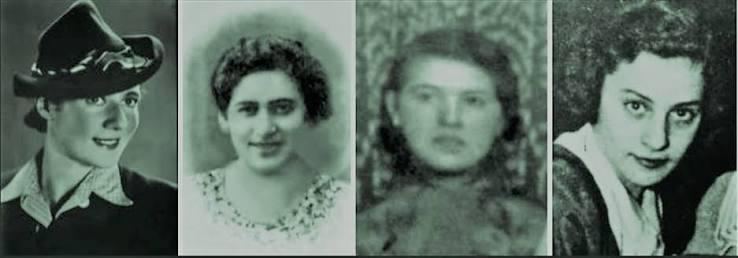
Ester Wajcblum, Ella Gärtner, Regina Safirsztain, and Róza Robota

Post image
231 Upvotes

I have written before about the Auschwitz Sonderkommando uprising. Among those killed was Zalmon Gradowski, whose story is particularly heartbreaking. The Sonderkommando were Jewish prisoners forced to work in the gas chambers, driving people in, stripping the bodies of clothing and valuables, shaving their hair, and feeding them into the crematoria. This was done on an industrial scale, with Auschwitz burning up to 8,000 people a day. Words scarcely capture the horror.

This post is about the uprising itself, and the extraordinary courage of four Jewish women prisoners: Ester Wajcblum, Ella Gärtner, Regina Safirsztain, and Róza Robota.

The Auschwitz killing machine functioned with cold efficiency. Most prisoners were murdered upon arrival, their belongings, including even gold teeth, seized for sorting. The four women had each arrived with their families, all of whom perished in the selection process. They alone were chosen to work, assigned to sort through the possessions of the dead. We’ve all seen the haunting piles of shoes, glasses, and even hair preserved as evidence of this cruelty. This was the environment in which resistance began to take root.

The sorting area was located beside a munitions plant where prisoners were forced to produce weapons for the Germans. Through the Polish underground (the Armia Krajowa, or AK), contact was made with the Sonderkommando working in Crematorium IV, the same unit to which Zalmon Gradowski belonged. The women, led by Róza Robota, began smuggling small amounts of gunpowder out of the munitions plant, hidden in scraps of clothing. Over the course of 18 months, these fragments of powder were collected and passed to the Sonderkommando in preparation for revolt.

When word came that the current Sonderkommando were scheduled for execution, the prisoners knew they could wait no longer. On October 7, 1944, at 3 p.m., the signal was given. The revolt erupted: four guards were killed, some prisoners managed to break through the fences, and Crematorium IV was so badly damaged it was rendered inoperable.

The uprising was ultimately crushed. Those who escaped were recaptured, and nearly all involved were executed. Under brutal interrogation, the names of the four women were revealed. Ester Wajcblum, Ella Gärtner, Regina Safirsztain, and Róza Robota were arrested, tortured, and finally hanged at Auschwitz. None betrayed their comrades. Róza Robota’s final words were: Hazak ve’amatz, “Be strong and of good courage.”

The courage of women in the resistance never ceases to move me. Let us remember and honor:
Ester Wajcblum, Ella Gärtner, Regina Safirsztain, and Róza Robota


r/GreatestWomen • • Oct 16 '26

Annie Moore: The First Immigrant Processed at Ellis Island

Thumbnail
gallery
227 Upvotes

When Ellis Island opened as a federal immigration station on January 1, 1892, Annie Moore, a young Irish immigrant, arrived with her two younger brothers and became the first immigrant processed there. Her arrival marked the beginning of a new chapter for millions of people who came to the United States through Ellis Island. This statue honors Annie and the courage it took to leave home and start a new life. I photographed the statue and its plaque during my visit. Had you heard her story?


r/GreatestWomen • • Oct 17 '26

What does it mean to be great?

20 Upvotes

In the context of this subreddit it means to be well known, appreciated, respected, powerful, to do things that most women don't do. To be remembered and honoured in your life.

Now not all the women in this subreddit are great I must admit. I do write about women who did simple or less impressive things or even evil things. This subreddit was born out of curiosity so I don't exclusively write about good amazing women because those aren't all I'm curious about.

To be great beyond this subreddit I'll say that it means you have accomplished something difficult and incredible.


r/GreatestWomen • • Oct 16 '26

Börte - the first wife of Genghis Khan

Post image
429 Upvotes

Women were very important to Mongolian society and enjoyed more rights than other women of that time period. They were involved in labour such as building and caring for livestock. Married women could own property and divorce when they wanted. They could choose to marry a relative of the husband to keep the family inheritance. And as you might already know women engaged in political warfare.

A good example would be Börte, the first wife of Temüjin who became Genghis Khan. She married him when she was 17. And she would become the head of the first court of Genghis Khan and Grand Empress of his Empire. The two of them had nine children and she assisted him in the conquering of the world.

Börte was born around 1161 AD into the Olkahonud clan of Khongirad. Soon after she married Temüjin she was abducted by the Three Merkit. Temüjin’s family was able to escape except for Börte. Temüjin was horrified by her capture saying that his breast was torn apart. He charged into Barqujin territory, raided the place until the captured Börte came running to his open arms.

Börte was a ruler and an asset to the Mongol Empire. She had her own independent wealth, based on her dowry and a shrew intelligent mind. She oversaw human and animal resources and the economy of the camp. She managed pan-Asian trade routes and was an advisor to the merchants passing there. There are detailed accounts of how she used her power like how she convinced Temüjin to cut ties with a military leader called Jamuqa.

As her husband travelled far across the continent and expanded his empire, Börte remained in their family camp and assisted Temüjin’s brother Temüge in ruling the Mongol homeland. Börte managed her own court there and the Kherlen River was assigned to her. Which was on a land that has belonged to the Tatars. Börte also adopted orphans.

She had a lot of power and she used it in all the ways.


r/GreatestWomen • • Oct 16 '26

The Women’s Rights Pioneers Monument in Central Park honors three trailblazers

Post image
239 Upvotes

This monument in Central Park honors Sojourner Truth, Susan B. Anthony, and Elizabeth Cady Stanton, three influential figures in the fight for women’s rights. Truth was also a powerful abolitionist and speaker.

Created by sculptor Meredith Bergmann, the monument was unveiled in 2020 to mark the centennial of the ratification of the 19th Amendment. It was the first monument in Central Park to depict real women.

Have you seen it during a visit to Central Park?


r/GreatestWomen • • Oct 14 '26

Alice of Great Britain (1843 - 1878): Just being ahead of her time

Post image
261 Upvotes

Alice was born on 25 April 1843 at Buckingham Palace as the third child of Queen Victoria and Prince Albert. Her birth was not exactly met with the same jubilation as that of her brother, Bertie. Nevertheless, Albert was happy to have another healthy child.

Despite Alice being born at Buckingham Palace, the royal couple decided to establish another family residence at Osborne House, believing it would better accommodate their growing family. Like her older sister, Vicky, Alice received an education overseen by her father, who wanted to instil in his children the values of personal liberty, modesty, and compassion for the common people.

As a result of their upbringing, the two sisters would remain close for the rest of their lives. From a very young age, Alice showed an intense curiosity about the world around her. It was not uncommon for her to wander beyond her designated surroundings or chat with the staff working at the royal residences.

During the Crimean War, in which Britain fought against Russia, Alice accompanied her mother on visits to hospitals where wounded soldiers were being treated. The experience revealed her compassionate nature and would have a profound impact on the princess's worldview.

Her compassion was demonstrated again in 1861, when her grandmother, the Duchess of Kent, died. Despite the Duchess's role in the Queen's strict upbringing, Victoria deeply mourned her mother. Alice was there to comfort her, which earned her even greater affection from the Queen.

But our young princess was not going to remain by her mother's side for much longer.

Since 1860, her parents had been searching for a suitable prince to become her husband. What made this difficult was their insistence that Alice should consent to the marriage. The royal couple wanted their children to develop genuine romantic feelings for their spouses rather than simply marrying them off to some random royals, as had been the custom for centuries.

After some short-lived courtship prospects involving the eldest son of the Dutch King and a relative of Vicky's husband, another candidate was suggested: Prince Ludwig of Hesse-Darmstadt.

He was the nephew of Grand Duke Ludwig III of Hesse and by Rhine and of Empress Maria Alexandrovna of Russia. He was recommended as a suitable match by Vicky, who had personally visited Darmstadt to assess him.

Then, in 1860, Ludwig and his younger brother were invited to Windsor Castle to spend a few days with the royal family, providing the perfect opportunity for Ludwig and Alice to get to know each other.

Ludwig made a good impression on the Queen, and he got along well with Alice. Indeed, Alice made it clear that she was attracted to the Hessian prince.

And so, in April 1861, Alice and Ludwig became engaged, with the blessing of her parents.

However, before they could marry, Alice's father died, casting a shadow over the wedding as the royal family entered an extended period of mourning.

When Alice's wedding finally took place on 1 July 1862, her mother had to be shielded from the other guests to preserve her privacy during the ceremony.

This made the wedding seem, in the Queen's own words, "more like a funeral than a wedding."

Despite Alice's enthusiasm about getting married, she had to conceal her happiness. Once the ceremony was over, she changed out of her simple wedding dress and into a black mourning dress.

Now newlyweds, Alice and Ludwig arrived in Hesse in July of that year. When they reached Darmstadt, the people celebrated their arrival. Alice wrote to her mother that the warm reception had left her overjoyed. Despite this, maintaining her popularity among the Hessians would remain a challenge for our princess. For starters, the people opposed spending money on the construction of a new residence for the couple, as Queen Victoria had wished. Secondly, Alice experienced homesickness during her first months in the Grand Duchy, particularly because she remained concerned about her mother's mental state following Albert's death.

In 1863, she travelled to England for the wedding of her older brother, Bertie, to Princess Alexandra of Denmark. That same year, she gave birth to her first child, Victoria, at Windsor Castle. Afterwards, Alice returned to Darmstadt with her daughter and began making a greater effort to integrate herself into the Hessian court.

This period also saw a deterioration in Alice's relationship with her mother. Her infrequent visits to England frustrated the widowed Queen. Not only that, but Alice's apparent happiness in her marriage sometimes made Queen Victoria jealous, as it reminded her of her own married life with the now-deceased Albert.

The relationship between the two women would remain complicated for the rest of Alice's life, although they continued to share moments of genuine affection.

In 1864, at her and Ludwig's private residence in Kranichstein, Alice gave birth to another daughter, Elisabeth, nicknamed Ella by her family. Queen Victoria was appalled to learn that Alice had decided to breastfeed her daughter, as the Queen strongly disapproved of the practice among women of their social standing.

In 1866 came one of the most difficult periods of Alice's life, as war broke out between Austria and Prussia in the summer of that year. Since Hesse joined Austria's side, Alice found herself on the opposing side from Prussia, where her older sister was Crown Princess.

Despite this uncomfortable situation, Alice took on the responsibility of caring for wounded soldiers.

In doing so, she was inspired by her correspondent, the famous nursing reformer Florence Nightingale, whose work had revolutionised nursing during the Crimean War. Drawing on Nightingale's example, Alice began working to improve sanitation in military hospitals and was able to obtain support and funds from England.

In July, Prussian forces approached Darmstadt, leaving the city vulnerable to occupation. In the end, Grand Duke Ludwig III had little choice but to accept Prussia's victory. Fortunately, the Grand Duchy was spared complete annexation, partly because, if you remember, the Grand Duke's sister was married to the Emperor of Russia, and the Prussian court was unwilling to antagonise the Russians.

Unfortunately, however, the peace terms imposed upon Hesse were harsh, at least in Alice's view.

Prussia annexed some Hessian territory, including areas of strategic importance for transport and communications, while also forcing the small state to pay a substantial indemnity to Berlin.

But at least the war was over, and Alice was finally able to reunite with her husband, who had been serving at the front.

During the war, Alice had also given birth to another daughter, Irene. Four more children would follow: Ernst Ludwig in 1868, Friedrich in 1870, Alix in 1872, and Marie in 1874.

Following the conflict, Alice, now more confident in her abilities, continued to support humanitarian causes. For starters, she helped establish the nursing organisation that would lead to the creation of the Alice Hospital in Darmstadt, where patients could receive treatment using modern medical methods. The institution would continue operating into the present day.

Other organisations she supported, such as the Alice Society for Women's Training and Industry, were established to provide women with education and professional opportunities, allowing them to become more independent and economically productive members of society. As these organisations began to bear fruit, Alice became increasingly involved in their administration.

It is safe to say that Alice held views that would have been considered progressive, if not radical, at the time. For instance, she believed that women should be able to make decisions for themselves and that a woman's life should not revolve entirely around marriage and household responsibilities.

This stood in stark contrast to her mother, who held strongly anti-suffragist views.

Additionally, Alice was deeply sympathetic to the hardships faced by the lower classes. Whenever she could, she would travel incognito through the poorest areas of Darmstadt to observe the living and working conditions of ordinary people.

Around this time, Alice also developed a friendship with David Friedrich Strauss. He was a liberal theologian who had stirred considerable controversy during his lifetime thanks to his book *The Life of Jesus Critically Examined*. In it, Strauss argued that many of the miracles attributed to Jesus were myths and imaginative expressions of his teachings developed by his followers. As you can imagine, these arguments were fiercely criticised by many theologians of the time.

But Alice was sympathetic to some of his views and became increasingly interested in questioning conventional religious ideas. She also believed that certain values associated with Victorian society would have been unrecognisable to early Christians.

However, criticising contemporary social and religious standards would soon become the least of Alice's concerns.

In May 1873, her youngest son, Friedrich, affectionately called Frittie by his family, fell from a window while playing with his brother. The fall caused injuries that might not have been fatal to an otherwise healthy child.

But the problem was that Frittie suffered from haemophilia.

This disease prevents the blood from clotting properly, meaning that even relatively minor injuries can result in prolonged bleeding. In Frittie's case, the fall caused a fatal internal haemorrhage. The disease was also hereditary and appeared among several descendants of Queen Victoria, earning it the nickname "the Royal Disease."

Although Victoria and Alice did not suffer from haemophilia themselves, they were carriers of the condition, meaning that they could pass it on to their children.

And because of this, the two-year-old prince died a few hours after his fall, on 29 May 1873.

Alice was devastated by his death, and the tragedy brought her closer to her remaining children, especially Marie, who was born the following year.

On 20 March 1877, Ludwig's father died at the age of 67. Ludwig was already heir presumptive to the Grand Ducal throne, and the death of his father brought another loss to the family. Then, on 13 June, Grand Duke Ludwig III also died. This made Alice's husband the new Grand Duke of Hesse and by Rhine, reigning as Ludwig IV.

For Alice, however, becoming the new Grand Duchess gave her little reason to celebrate.

By this point, her marriage to Ludwig had cooled somewhat. Although she still loved her husband, Alice felt that he did not always meet her intellectual expectations. She considered him less intellectually curious than herself and believed that he struggled to express himself in the complex ways she desired.

For a woman who was intellectually curious and open-minded, Ludwig's personality sometimes left her longing for deeper conversation. She complained of his lack of "opinions, observations and remarks" and craved someone who could understand her on an equal intellectual footing. This helps explain why she valued friendships with people such as Strauss.

Besides her marital difficulties, Alice's popularity in Darmstadt remained unstable.

Some people criticised her refusal to conform to the expectations of court society, particularly her rejection of strict protocols and traditions that conflicted with her personal beliefs.

Eventually, these criticisms developed into rumours portraying her as petty and self-absorbed.

Alice soon began to feel increasingly depressed by the hostility directed towards her.

But Ludwig, surprisingly, managed to lift her spirits, telling her that "the bitterness of the salt water will drive away the bitterness that you still feel against Darmstadt."

Alice found his words touching and became increasingly appreciative of his emotional support.

Although he was not always the intellectual companion she desired, Ludwig was still someone who could brighten her day. Another moment of happiness came during Christmas 1877, when Alice spent the holidays with her husband and their surviving children.

But moments like these were soon to come to an abrupt end for our poor princess. In November 1878, the family was struck by a diphtheria epidemic.

Most members of the household became infected, with the exception of Ella, who had been sent away and was staying with her paternal grandmother.

On 16 November, the youngest child, Marie, died from the disease at the age of four. Alice initially kept her daughter's death a secret from her other children, hoping to spare them further distress while they were still recovering.

But her worries were far from over.

Because she had personally tended to her sick children rather than leaving their care entirely to the household staff, Alice had exposed herself to the disease. In early December, she began showing symptoms of diphtheria, and her condition rapidly deteriorated.

On 14 December 1878, exactly seventeen years after her father's death, the 35-year-old Grand Duchess Alice of Hesse and by Rhine passed away at the Neues Palais in Darmstadt.

She became the first of Queen Victoria's nine children to die. She was buried in the Grand Ducal Mausoleum at Rosenhöhe Park.

News of her death brought a wave of sadness throughout both Hesse and the United Kingdom.

Her relatives were equally heartbroken, with her brother Bertie reportedly exclaiming to his mother, "I wish I had died instead of her."

Even Queen Victoria, despite her occasionally tense relationship with her daughter, was devastated by her passing. She remarked that Alice's death on the same date as that of her late husband was "almost incredible and most mysterious."

As for Vicky, the sibling to whom Alice had been closest, it is safe to say that she did not take the news well. She even went so far as to write a 39-page letter to her mother expressing her profound sorrow.

These reactions demonstrate just how deeply Alice was loved by those who knew her. She truly was a woman whom her relatives were grateful to have as part of their family.

Speaking of her family, Alice's surviving children would go on to play important roles in European royal circles. Her eldest daughter, Victoria, would marry her cousin, Prince Ludwig of Battenberg. Their descendants would become part of the Mountbatten family, which included Alice's great-grandson, Prince Philip, Duke of Edinburgh, consort of Queen Elizabeth II.

Her youngest surviving daughter, Alix, would marry Tsar Nicholas II of Russia and become Empress Alexandra Feodorovna. Her fate, as you may know, was not a happy one. She and her family were murdered in the aftermath of the Russian Revolution, as was her older sister, Ella.

But their stories are for another time.


r/GreatestWomen • • Oct 14 '26

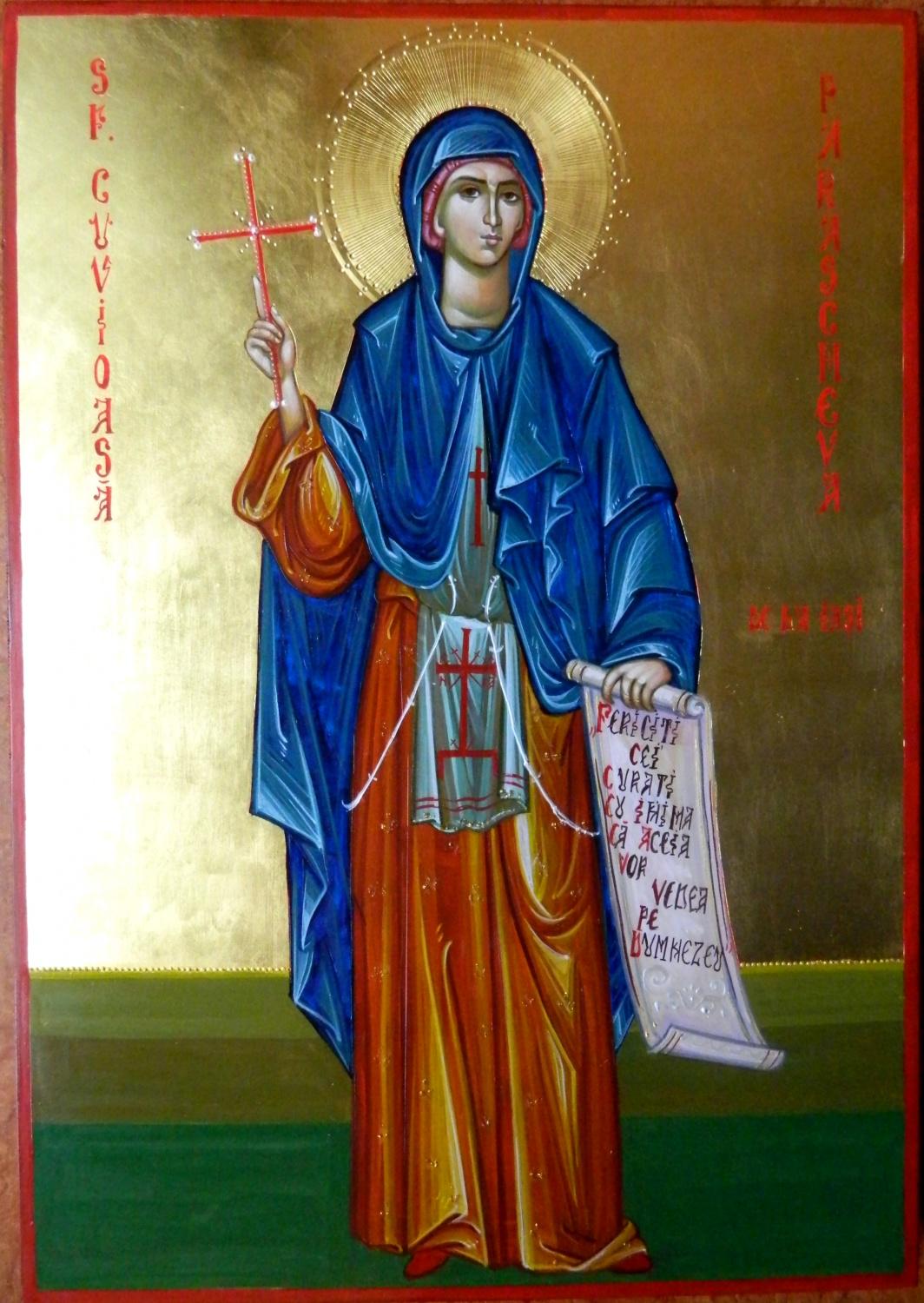
Saint Parascheva of the Balkans: Giver of Miracles

Post image
61 Upvotes

Parascheva was born in the early 11th century, traditionally in Epivates (also called Epibatai), a settlement near Constantinople, on the European shore of the Sea of Marmara. Now we don't have any secular accounts on Parascheva's life. All we know about her comes from church canon and religious traditions

At the time of her birth, the Byzantine Empire was experiencing a period of considerable political and cultural power, particularly under Emperor Basileos II and his immediate successors.

According to Orthodox tradition, Parascheva was born into a prosperous Christian family. Her parents were deeply religious, and her brother, Euthymius, eventually became a monk and bishop. With such a background, it is no surprise the young woman started following a life of piety.

At around the age of 10, the girl was attending a church serevice, when she received the words of Jesus Christ. What He said to her was: "Whoever wishes to come after Me, let him deny himself, take up his cross, and follow Me."

And so Parascheva decided to abandon her material life, gave away her posesions, and sold her money to the ones in need. With this, she began following an ascetic lifetyle, rejecting luxury and living a life of spritual growth and devotion to the faith.

Her parents were troubled by her decision, but being the good parents they were, they seemingly didn't try to stop her.

When she was 15, she traveled to Constantinople, one of the greatest cities in the medieval world and a hub of theological and spiritual movements. One she arrived there she visited churches and religious communities, seeking guidance from monks and spiritual teachers.

Eventually, she traveled to Heraclea Pontica, near the Black Sea, where tradition places her in a religious community at a monastery dedicated to the Virgin Mary, for five years.

But after that, Parascheva decided to go all the way to Jerusalem, so that she can live out the rest of her life in the palce that Christ and His followers lived. She arrived in the Holy Land and choose to make her residence at a monastery for local nuns. The place was situated on the banks of the Jordan River, the place of John the Baptist and Saint Mary of Egypt.

Yet her time on the Holy Land did not last long.

At the age of 25, it was said an angel appeared to Oarascheva in a vision and instructed her to return to her homeland, where she would eventually die. Obeying this message, she returned to the Byzantine Empire. She reportedly visited Constantinople once more before settling in the village of Kallikrateia.

There, she lived quietly, continuing her religious practices without revealing much about her past.

She died while still relatively young, traditionally believed to have been on the 14th of October, when Parascheva was around 27 years old. Because she was apparently unknown to the local community, she was buried as an ordinary woman.

Many years after her death, something happened. According to Orthodox tradition, the body of a sailor washed ashore near . The villagers decided to bury him, but while digging his grave, they discovered the remains of a woman whose body appeared miraculously preserved. Not understanding the significance of the discovery, they buried the sailor nearby.

That night, a local Christian named George reportedly experienced a vision of a radiant woman seated upon a throne. She identified herself as Parascheva and requested that her remains be removed from the neglected grave. Eventually, the local villagers did just that and had her remains exhumed in a local church. This was the first of the miracles that her remains were claimed to have made.

Nearly two centuries, in 1238, the remains of Parascheva were transfered, not to Constantinopole, but to Tarnovo, the capital city of the newly-created Second Bulgarian Empire. By this point, the story and veneration of Saint Parascheva spread across the Balkans and Tsar Ivan Asen II hoped to have her body moved to his city in order to give it religious prestige in the Orthodox World.

And so, the remains Saint Parascheva, also known as Petka Tanrovka, remained in Bulgaria until 1393. That year, the city was taken over by the Ottoman Empire. Consequently, her remains were transferred to another shrine. This time they were sent to the Church in Belgrade at the patronage of Princess Milica, wife of the late prince Lazar Hrebeljanoviç.

Once again, the remains were transfered once the city fell to the ottomans in 1521. As a result, the Patriarch of Constantinopole took the remains under his protection and had them sent to the Ottoman Capital. But finally, the reaims were transferred one more time in 1641 to the city of Iași, the capital of the Principality of Moldavia, then a vassal of the ottomans.

The transfer was made at the behest of its ruler, Prince Vasile Lupu, who had provided crucial fimances to the Patriarch Parthenios I, whose Patriarchate was suffering from financial woes.

And thus, the saint's body was laid to the Monastery of Three Hierachs in Iași, a church that was built on Vasile's orders. It has remained there for over a century, but after the monastery fell victim to a fire in 1888, most of the building was damaged.

But alledgedly, the Gothic Hall, which housed the remains, was hardly affected by the fire. This was considered a miracle by the church leaders and had made Parascheva's remains an important object of veneration.

But still, to make sure they remained safe, the remains were transfered to the newly erected Metropolitan Cathedral in Iași, where they remain to this day.

But the story of her miracles continued after this, especially in 1947. After the end of ww2, the local countryside had been heavily affected by a drought that caused a regional famine. At this time, the church officials decided to make a procession around the affected villages carrying the remains of Saint Parascheva. The people were overjoyed by their arrival and miraculously, rain started to pour at the same time. This moment had solidified the people's veneration of the saint and a lot of wooden crosses were raised in each village to commenorate this event.

In the present, on each day on the 14th of October, a lot of faithful come to the city to pray to the saint and her relics, in order to be granted healing and good life. Her Saint's day is also one of the most important holidays for the city. At the same time, her name has been conflated to that of Saint Vineri, a romanian deity. This confusion was made probably because the name Parascheva means "preparation of the sabbath" which was originally on Friday (which is translated as Vineri in romanian). But this confusion is made not just in Romania, but also in other parts of the Balkans, as the name she is referred to, Petka, also means Friday in Serbian and Bulgarian.

Despite this, Parascheva of the Balkans remains one of the most important saints among the Orthodox people in the region. Several churches and monasteries were made in her honour.

Even though her historical life is not that well documented as those of other saints, it is still interesting. Her story illustrates how an otherwise obscure ascetic woman became a religious symbol connecting the Byzantine, Bulgarian, Serbian, and Romanian Orthodox worlds.

So if you are an Orthodox and are watching this, i wish a good life on St. Parascheva's day, and may you have peace and happiness