r/Hellenismus • • Oct 01 '25

Discussion On Orthopraxic Rituals

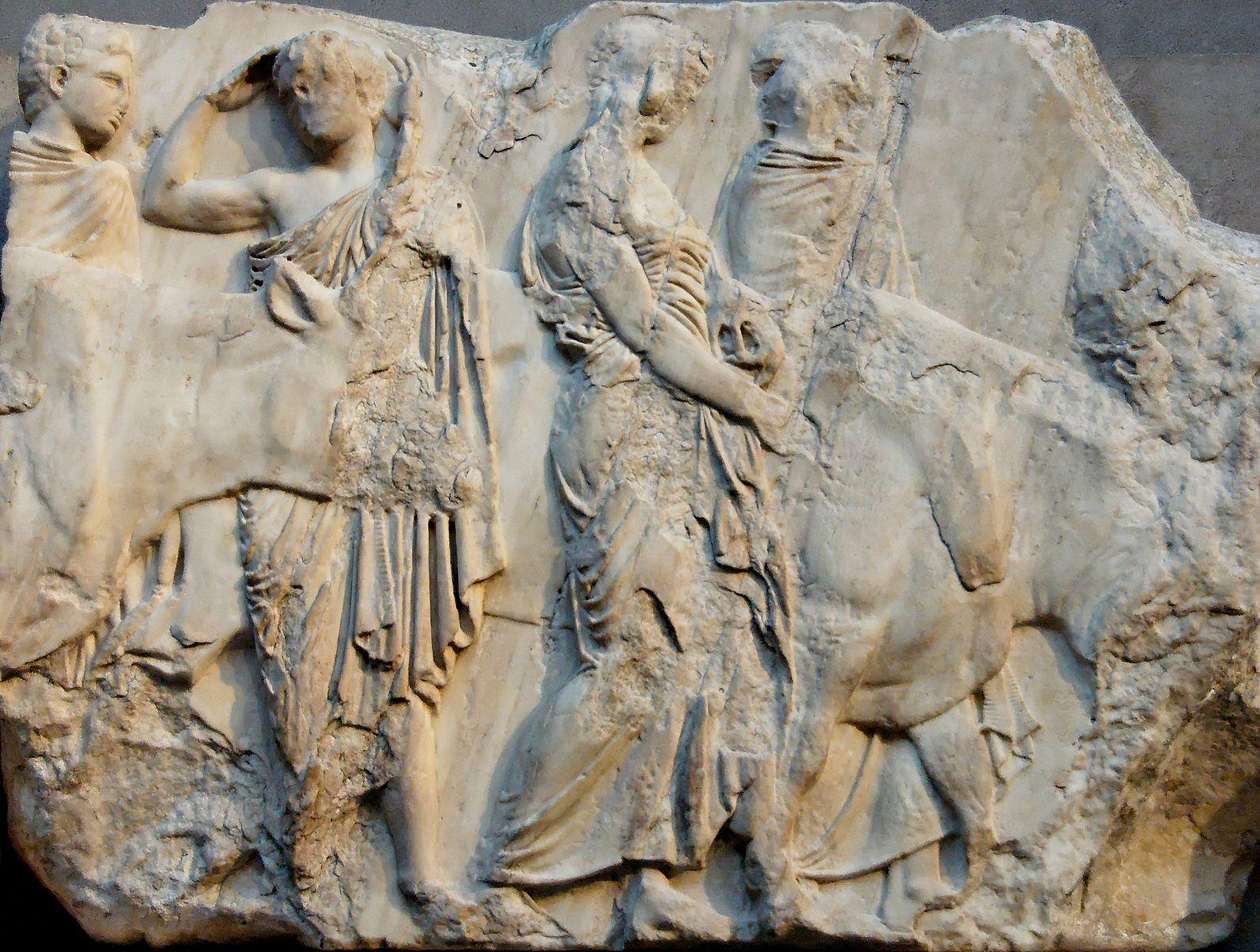
Post image
86 Upvotes

Khairete Eusebeis, for a while I have wanted to remake some of my old posts and update them a bit. In this post, I’ll be combining and improving upon my posts On Orthopraxic Prayer and Offering and On Sacrifice. Here you will read about if we can consume offerings, and on how to pray and offer according to Ancient Tradition.

THE CONSUMPTION OF OFFERINGS

Perhaps the most vital part of Hellenism is the act of sacrifice. Through sacrifice, we build Kharis with the Gods, and this in turn makes the Gods more likely to grant our petitions. Neither the Ancient Greeks and Romans consumed their offerings, and doing this was actually considered an act of Hamartia, an offense against the Gods. That’s because when we offer something, we transfer its ownership to the Gods, but even more importantly, we give up the ability to use/consume it. That is what makes it a sacrifice. Not only would we be taking from the Gods by eating an offering, drinking a libation, or taking a votive; we would be voiding that sacrifice and the Kharis that comes with it. 

RITUAL STRUCTURE

1.     Purification

Before we approach the Gods, we must always purify ourselves of our miasma. Miasma is antithetical to the nature of the Gods and approaching Them while polluted was seen as an offense against Them. Luckily, the pollution is otherwise insignificant and can be easily cleansed.

To purify ourselves, we need to create the lustral water capable of that, sometimes called ‘Khernips’. Water itself wasn’t considered to be inherently purifying, so hellenists would add things like salt water, sulphur, and burnt fragrant and/or sacred herbs which were all believed to have some purifying properties. Rivers and springs were also believed to be purifying if you bathed in it. 

When you have this lustral water, you wash your hands and face, and sprinkle it around the altar and offering too. Now you are ritually pure and ready for the next step.

2.     Posture

Every ritual starts with prayer, but to do that we must assume the appropriate posture for the Gods we want to worship. There exist three categories of Gods: Ouranic (Heavenly), Chthonic (of the Earth), and Einalic (Oceanic). This division is very loose and often changes due to the epithets used.

-       For Ouranic Gods, we open our alms towards the sky with our palms facing up. 

-       For Chthonic Gods we keep our hands down and point our palms at the ground; sometimes the ground would be beat as well to get Their attention

-       For Einalic Gods we spread our arms wide towards the nearest ocean or towards or our altar.

3.     Invocation

If you are following Ancient Greek Hellenism, you start your prayer by invoking Hestia. All worship goes through Her, as She is the Goddess of the Hearth and therefore of Household Worship (as opposed to worship at a Temple with state support). For Roman hellenists Ianus gets invoked first as the God of Liminality and Boundaries, and Vesta last. 

We invoke the Gods by calling out Their names, along with any titles and epithets that you want to use and may apply. Nothing is more powerful than the Gods, so there is no worry of “trickster spirits” (itself a Christian concept). Even if such beings existed that would want to imitate the Gods and “steal Their worship”, they too would be punished for their hubris by the Gods if they attempted it just like us.

You can invoke as many Gods as you want, the only ‘rule’ was that you can’t worship Ouranic and Chthonic Gods at the same time as Their rituals differed slightly. 

Epithets are titles we add on to a God’s name, almost like a surname, which specifies which aspect of Theirs we want to praise or petition. An epithet can change whether a God is considered Ouranic or Chthonic, like Ζεύς Γεωργός (Zeus Georgos, or Zeus who tills the Ground) being Chthonic. 

4.     Reaffirmation of Kharis

After our invocation, we reaffirm our Kharis with the Gods we’re praying to. We do this by reminding Them of previous times we’ve prayed and sacrificed to Them, or when we’ve been exceptionally virtuous. This act is meant to inspire both the worshipper to give more, and the Gods to act out of Kharis, increasing the chances They grant our petitions. 

If this is the first time you are worshipping this God, perhaps use this stage to introduce yourself and state your intentions and motivations for worshipping Them.

5.     Praise 

The next step is praising the Gods, and if you’re only praying and not making an offering, then this is also the final step. If you ask for something, you are to give something in return.

We praise the Gods by reciting hymns and myths, praising their deeds, and even outright complimenting and thanking Them.

6.     Petition

If you want to ask something of the Gods, then this is the time. You are free to ask the Gods whatever you want, but be aware that They can still decide not to grant your wishes. The stronger the Kharis you built with that God is, the more likely They are to grant your petition. If you make any petition at all, make sure to offer something in return, as Hellenic worship centres around reciprocity.

7.     Sacrifice

Finally, you give your offering to the Gods, of which Hestia gets the first share. Offerings can typically be divided into one of three categories: Food, Libation or Votive. Food offerings speak for themselves and were typically burnt or buried. If you are unable to do that, leave it on your altar for a short while, but depose of it before it goes bad. Libations are liquid offerings poured out on the ground. Ouranic Gods would get the first sip poured, while Chthonic Gods required the entire cup/bowl. Votive offerings are offerings you leave on your altar. These will forever belong to the Gods and cannot be taken anymore.

QUESTIONS FOR YOU

- In what language do you pray? Do you want to learn Ancient Greek and/or Latin to be able to pray in the language?

- Do you give more food offerings, libations, or votive offerings? 

- Do you tend to worship more Ouranic or Chthonic Gods/Epithets? Who and which ones?

- Do you have any suggestions for posts or the subreddit?


r/Hellenismus • • Feb 03 '26

Newcomer Question Beginner's Guide to Hellenism

53 Upvotes

Khaire, are you new to Hellenism? This post will answer the most commonly asked questions to help you on your way. If your question isn’t answered in the post, you can comment it down below and other hellenists will help you out.

r/Hellenismus is focused on orthopraxic Hellenism, encompassing both reconstructionist and revivalist Hellenism. If you instead want more eclectic answers, we recommend asking over on r/Hellenism instead.

How do I worship the Gods?

In Hellenism, we worship the Gods through purification, prayer and offering/sacrifice. By doing this, you build Kharis with the Gods, which is a mutual relationship of gratitude between you and the Gods you worship. This may sound intimidating but its quite simple.

How do I purify myself?

Purification is always required before you interact with the Gods, or they won’t be able to hear your prayers. This is due to miasma. To purify yourself, all you need is clean water and some salt. Add this salt to your water, and splash your hands and face with it. You are now ritually pure and ready to pray and offer to the Gods.

What is miasma?

Miasma is a contagious spiritual and metaphysical pollution that humans (and animals too) incur during our lives that make us ritually impure, and therefore unable to interact with the Gods. This pollution is NOT an early explanation for disease, or an equivalent to sin. Think of it closer to a static blocking us from “getting a signal” through to the Gods.

Miasma cannot be avoided, and will be with you for your entire life, except the couple minutes you perform a prayer and offering to the Gods after purifying yourself. It is not bad, and not something you have to stress or worry about.

For a more thorough explanation of miasma, check out this post: "On Miasma"

How do I pray and offer/sacrifice?

Praying is our primary way of interacting and communicating with the Gods. After you have purified yourself, you begin by taking the correct prayer stance. For Ouranic Gods, stretch out your arms forward and up, with your palms open toward the sky. For Chthonic Gods, stretch out your arms down and forward, with your palms open toward the ground. For Einalic Gods, reach and stretch your arms out wide, facing the nearest sea or ocean.

After taking the correct stance, you invoke the Gods through calling out their name (historically it was required to speak it out loud, but it’s possible the Gods still hear us if we pray in our heads) along with any epithets you need.

This is the time to talk to and praise the God you’re praying to, and explaining what you’re offering them if you’re asking them for something. After that you can make your request, and actually give the offering.

For a more thorough explanation of purification, prayer and sacrifice, check out this post: "On Orthopraxic Rituals"

How do I dispose of offerings?

There are two kinds of offerings, perishables and votives. Perishable offerings are things like food and drink, and other things that can go bad. Votive offerings cannot go bad, and are kept on the altar forever. 

To dispose of perishable offerings, tradition is to burn or bury them. That is not always possible, in which case you should throw it away in the trash, or in nature if it’s safe for the local soil, plants and animals. You are not allowed to eat or drink offerings, as this is considered taking from the Gods. They won’t punish you for it, but it can impact your kharis with Them. You wouldn’t give a friend a burger just to rip it out of their hands to eat it yourself, that’s rude towards people and Gods.

Votive offerings should always stay on your altar, or locked away in storage. You cannot use votive offerings yourself anymore, so make sure you really won’t want an item for yourself later if you decide to offer it. Eventually, votive offerings can cause you to run out of room, in which case the only way to get rid of it is to destroy it and then dispose of it through burial or throwing it in the trash.

If you want to read more about disposing of offerings, check out this post: "On Sacrifice"

Do I need an altar?

No, you do not need an altar, though it is useful to have one. In Ancient Greece, altars were large flat stone slabs or tables, or the hearth. At its core, an altar is a ritual workspace, where you store your tools for purification, where you pray and offer, and where you keep your votives. If you are unable to have an altar, you can instead give your offerings outside in nature.

How do I make an altar?

An altar is at its core a ritual workspace. To make one, clear a flat space to work with. Here you store your tools for purification, incense, a bowl for libations, and potentially a plate for food offerings you don’t burn or bury but throw away instead. Decorations and statues are not required, they are there for you and not for the Gods. Candles are also not required, as they cannot serve as the hearth and are often a big fire risk. Look at electric lights or equivalents instead if you want a light to represent Hestia/Vesta.

For more information regarding altars, check out this post: “On Altars”

Can multiple Gods share an altar?

Yes, this was the standard in both Ancient Greece and Rome. Despite the mythological stories, the Gods do not have interpersonal conflicts, and live together in Divine Harmony. Only in temples would altars be separated per God.

How do I decide which God to worship?

The choice is completely up to you, there is no right or wrong choice. The Ancient Greeks and Romans worshipped a wide variety of Gods depending on their circumstances, age and occupation, along with personal interest. There is also no limit on the Gods you can worship. The most logical ones to include would be Hestia/Vesta and Ianus, and Zeus/Iupiter.

For more information regarding picking which Gods to worship, check out this post: "On the Beginning of Worship"

Is this God mad at me?

It’s extremely unlikely for a God to be mad at you. They are not beholden to emotions in the same way we are, and have existed since the universe came into being. They are incredibly patient and forgiving. If you think you have offended the Gods in anyway, you should make sure to purify, pray and offer to the Gods as an apology, just to be sure. You either need to commit hubris or hamartia, which both take conscious effort to commit. You won’t do it accidentally. They will also not be mad at you for your thoughts, and many hellenists believe they don’t or won’t read your mind, even if they can.

Do I need to veil?

No, veiling in Ancient Greece did happen, but it was cultural and misogynist. Veiling was intended to signal to what class a woman belonged and if she was married or not, along with hiding her appearance. Women were not allowed to leave the house without veiling. Religious occassions such as prayer and sacrifice were the only times a woman could be freed of her veil in public. It was actually mandatory to remove the veil in many temples and sanctuaries.

The Romans did veil religiously, covering their head with either the hood of their toga if they were a man, or a veil if they were a woman, but only during worship. This was done to limit their ability to be distracted, as any mistake or distraction in the ritual would invalidate it and cause it to be completely redone.


r/Hellenismus • • 4h ago

Discussion On Priesthood – Περὶ Ἱερωσύνης

11 Upvotes

Χαίρετε φίλοι, we often see people claim the title of priest nowadays, and perhaps even more people asking about what it takes to become one. A lot of these interactions reveal that the conception many people have of Hellenic priesthood is very much coloured by Abrahamic traditions. That’s why today we’ll be discussing how Hellenic priesthood differs from that of other traditions, what it took to become a priest in Antiquity, and what one can do nowadays to claim the title with at least some degree of legitimacy.

The Hellenic conception of priesthood differs quite significantly from the one people might be most familiar with from the Abrahamic faiths. Instead of a counsellor there to represent the god to the community, a Hellenic priest is instead there to take care of a sacred site and represents the community to the God.

Priests, as tradition says, are expert in giving gifts through sacrifices from us to the Gods as the Gods wish them, and in asking for us from the Gods in prayers the acquisition of good things. Platon, Politeia, 290c8-d2

INDEX

  • Becoming a Priest
  • Sanctuaries and Temples
  • Responsibilities
  • Privileges
  • Modern Requirements
  • Questions
  • Glossary

BECOMING A PRIEST

In Ancient Greece there existed no central authority to train, educate, install and look over priests. Priesthood was always local and focused on one God and a respective sacred site. One would not just be a priest, but always “Priest of Zeus Olympios at Dion”, or “Priestess of Artemis at Brauron”.

For the most ancient cults, the priesthood was often inherited within one family. In Athens the Eteoboutadai held the titles of Priest of Erekhtheus-Poseidon and Athena Polias on the Akropolis for centuries. These were typically also the most prestigious and renowned cults, and this in return brought a lot of prestige and renown to these families. These priests would often serve for life.

Other cults were more open, especially those founded in poleis after their turn to democracy, though these were still only open to citizens, who were always in the minority compared to non-citizen freemen and slaves. Especially popular was sortition, where names were randomly picked to keep it fair and virtually in the hands of the Gods. If you were elected as priest you could serve different terms depending on the cult. Some only serve a year, some for a couple of years or festive cycle, and others for life. If you served for just a year, it is likely that that year will be named after you in the local dating system: “In the Year of Diokles…”.

One more option, and the only one available to us today, is to found your own cult to a certain God. You are free to decide for yourself how this position gets inherited; if it stays in your family or becomes elective. Founding your own cult requires a sacred site, which is what we’ll be touching on next.

SANCTUARIES AND TEMPLES

A cult cannot exist without an associated sacred site called a Temenos or sanctuary, dedicated to one or multiple Gods. If multiple Gods shared a sanctuary They would each have an individual priest. These sanctuaries had to be clearly marked, as all inside belongs to the God. Just like with ritual purification, there is a clear demarcation between the profane, everyday matters and the world of the divine, which must stay separate. This Temenos must forever remain pure, and nothing miasmic may enter or happen.

To make sure the Temenos would stay pure, there would be basins outside of the (usually) only entrance full of lustral water. Entrance without purification was not permitted. For this reason sacred sites were often founded around rivers, springs or by the ocean; as water directly from here (as opposed to from other water infrastructure or rainwater) was inherently purifying.

The other core part is the altar, typically a Bomos. The altar of Zeus at Olympia was a giant heap of burnt ash and bone from innumerable previous sacrifices to the King of the Gods. The moment the altar is first set up, it will forever remain there, even if the rest of the sanctuary undergoes changes. As Gods often shared sanctuaries with associated heroes, both Ouranic and Chthonic rites would be practiced in the same holy site; indicating yet again the distinction is ritual rather than some inherent quality of a God.

I’m currently also working on a post On Sanctuaries, where you will be able to learn more about sacred sites. I will be touching on some other important matters I chose not to include today, and expanding on what I wrote here.

RESPONSIBILITIES

A priest has responsibilities of course. Taking care of the sanctuary is the primary one: keep it clean, keep it ritually pure, etc. This also includes taking care of the votive offerings left by worshippers. These must either remain in the sanctuary as is or be destroyed and buried within if there is no room for new votives.

Then the priest has a responsibility to their community. They represent the community that worships there to the God the priest is dedicated to. The community then indeed expects the priest to be familiar with all the standard rituals along with any specific local ones. Without proper performance of ritual there is no worship, and the community relies on the help of these Gods. You would be making regular sacrifices and prayers for your community. When the community comes together to worship this God, you are the one to actually perform the rituals: praying and making the sacrifices.

You would not live in the sanctuary, but you are expected to be there regularly. As priesthood was a concern of the elite, you likely didn’t have other responsibilities. Sometimes laws even specified a minimum number of days a priest ought to be present.

One very important thing to keep in mind is that a priest must shun serious pollution. If one is a priest, they are not allowed to attend funerals or be in the presence of the dead in general. Births too have to be shunned, and only after a set number of days and purification of the home can a priest enter a house where birth or death occurred. Sex too was often forbidden, but not as a lifelong burden. This is because miasma of this kind often has a waiting period before purification is even possible, and a priest should always be able to enter the sanctuary; a polluted priest cannot fulfil their responsibilities to the community and sacred site.

Being a priest to a God doesn’t mean being a mono- or henotheist. Priests were still expected to worship other Gods just like any other person, and go to sanctuaries tended to by priests of other Gods. Everyone had to worship certain Gods depending on Polis, neighbourhood, family, etc. And most Gods have limited areas of activity: Apollon has a lot of things which He can help us with, but for matters like a safe trip at sea one would much rather invoke Poseidon Soter and the Dioskouroi. It’s an extra responsibility towards your community, representing it towards the God you are a priest of, but it’s not a mark of exclusivity.

PRIVILEGES

Of course, priesthood does come with some privileges. While you most likely wouldn’t make much (or even any) money from the position, you would be reserved some of the best shares at Thusiai: A priest would get a special share, called Geras, of most sacrifices. If you sacrifice a cow during Thusiai, you will get some or all of the hides, and some of the best cuts of meat. The rest of the meat would go to the worshippers, while the remaining parts are sacrificed to the Gods. Poleis and cults often had their own rules over who gets which shares.

Depending on where you live, you might also have a special front row seat reserved for you in the local theatre. You’ll also be allowed/obligated to wear a special costume for certain events and festivals, identifying you clearly as a priest.

Outside of that you were expected to support yourself, either through existing wealth or a proper occupation. Even holding a government position is permitted, and sometimes certain government positions also included priestly duties. Most of the benefit one would get from their position was the inherent prestige.

MODERN REQUIREMENTS

If one wants to be a priest today by Hellenic standards, there are some requirements. Perhaps most important of all is that you cannot be a priest without a community to represent. Any priesthood requires an established community that relies on that priest to represent them towards the God they’re devoted to. Solitary worshippers cannot be priests.

Of course, vital too is a sanctuary. A sacred site, demarcated and separated from the mundane. This sanctuary needs to be kept clean and ritually pure; no can enter without purifying themselves. It would be best if one legally owned this land so these rules can actually be enforced. A sanctuary started somewhere random has the chance of being polluted by others. This sanctuary also needs an altar at which the priest can sacrifice to the God, and some way to store and care for the votive offerings left for that God by their community.

Finally, the priest ought to be as knowledgeable as possible about Hellenism. The one representing a community to the God should know the proper rituals to worship that God.

QUESTIONS

  1. Do you have a community with which you worship the Gods?
  2. If so, does that community have a priest/priestess to a certain God?
  3. Do you want to become a priest yourself, or are you one already? To which God, and why?
  4. If so, do you fit all of these criteria?

GLOSSARY

  • Priest              ἱερεύς             Hiereús
  • Priestess         ἱέρεια             Hiéreia
  • Priesthood     ἱερωσύνη       Hierōsúnē
  • Sanctuary       τέμενος          Témenos
  • Sacrifice         θυσία             Thusía
  • Temple           ναός               Nāós

r/Hellenismus • • 1d ago

Question Question regarding statues

6 Upvotes

Here is what I know about statues of the Gods.

  1. They weren't necessarily on altars, they were typically inside the temple and the altar was outside. Also they were in more places than just the temple
  2. There was a view historically, though to my understanding was debated as all things are, that the statues themselves held divine power.

My question is:

What was it about the statues that made them divine? Did they need to be specifically blessed or is it just innate to the Gods image?

I am in the process of putting together an altar for my balconey (side note: yay very excited about that) and am considering whether to prioritise a statue.


r/Hellenismus • • 5d ago

Prayer, Offering, Altars On known people´s genius/lares offerings

6 Upvotes

Some time ago there was one who talked about, i heared it myself, honoring Plato in the day of his birthday, which didn´t seem so far fetched considering that theologically souls were often considered small gods (Ex: Plato´s Timaeus or Cicero´s Scipio´s dream) and that some people were even deemed deserving of worship, like "golden" people´s spirits, which is the category i´d like to point out about.

How would you worship the spirit of Proclus or Iamblichus in a way that is appropriate? Would you do it in house or outside of the house since they would be not technically lares?

And if it was the case for a daimon guarding a house you know the name of? Would you call it just as the title bestowed or also the name itself?


r/Hellenismus • • 18d ago

Mysticism On lost practices and rediscovery

13 Upvotes

In this post I am referring to practices such as divinination, oracles, the Eleusinian Mysteries and other mystical practices which we have limited/incomplete information on how these were performed traditionally.

My question for folks is, do you believe we should try to recreate some of these practices?

Using the Eleusinian Mysteries as an example. Whilst we might not know the full details of how it was performed, we have bits and pieces.

If we use this information and tried to recreate the ritual what is the worst that could happen? Worst case it doesn't work, but maybe in the attempt to try we can discover something that does work.

It would never let us know what actually took place in the past, but even if we find something new that works maybe that is worthwhile.


r/Hellenismus • • 19d ago

Discussion On Oaths - Περὶ Ὅρκων

30 Upvotes

Χαίρετε φίλοι, I hope everyone is doing well. From time to time we get people asking, often in distress, about oaths. People are often afraid they have broken an oath they’ve made to the Gods, and are terrified of the consequences. That’s why I thought it a good idea to write a post on oaths, how we make them, and the consequences of breaking them.

When an oath has been added, a man is more careful, for he guards against two things; the criticism of his friends, and committing a transgression against the Gods. Sophokles, frag. 472

THE IMPORTANCE OF OATHS

Oaths are an incredibly big deal in Ancient Greece: They are solemn promises made with the Gods as both witness and arbiter. Zeus especially is concerned with the keeping of oaths, and can be invoked in that aspect with the epithet Horkios. Similar to violations of Xenia, violating an oath is also an offence against Zeus and the Gods.

Oaths were an everyday occurrence, and the best guarantee one had of proper conduct. Whether it’s a contract, an important occupation, a court case, or a peace treaty; one would be expected to swear an oath in front of the Gods. The word for a peace treaty is the same word as “libation”, as these were always a necessary step for one. There is no system of written documentation, no legal records or the like. Society absolutely relied on oaths.

The Gods were generally believed to not concern Themselves with most human matters unless compelled to do so through worship. By swearing an oath in one’s name, They could make sure the Gods did care about actions They otherwise would not. For example, as a member of a jury, the Gods don’t care if you take bribes, unless you specifically swore an oath in Their name that you would not; in surviving court cases the jurors are often reminded of exactly this oath, which they were made to swear beforehand.

ΟΡΚΩΙ ΜΗ ΧΡΩ

This Delphic Maxim, Ὅρκῳ μὴ χρῶ, survives to us from Stobaios’ collection, and outright means “Do not make use of an oath”. The commonly quoted Maxim Ἐγγύα πάρα δ' Ἄτα is more specific to just contracts: “if you make a guarantee of something in a contract, ruin is near”. The underlying sentiment remains the same though. Despite being incredibly common, the consequences of a broken oath are too dire, and one should exercise significant caution when swearing one.

A broken oath angers and disrespects the Gods as an act of hubris, and invokes Agos. Violating an oath implies that the oathbreaker believes the Gods can’t or won’t punish them for their offence. Hesiod implies the Erinues, those who punish Oathbreakers in this life and the next, are always near an oath. They were already present at the birth of Horkos, Oaths Personified.

Agos means Divine Wrath, and if one is Enages, they are effectively excommunicated: The Gods shun them, and society ought to as well. Often they were killed before they could ever seek atonement, as a common belief among Ancient Greeks was that the Gods had no qualms about destroying an entire city or community through disaster or disease to get just one Enages. This is a separate concept from miasma.

SWEARING AN OATH

I hope the preceding text has appropriately informed you of the gravity and danger of oaths. Luckily, because oaths were so common, we also know of ways to make them work for us. Oaths, like any ritual in Hellenism, are subject to orthopraxy. If not performed correctly, you might as well not have done anything. If you are worried you have sworn an oath, check if you actually performed all these steps. Places in Ancient Greece could have additional requirements for oaths depending on local custom and law, but this is the fundamental baseline.

1.      Purification

As with any Hellenic ritual, purification is required beforehand. The easiest way to do so is sprinkling some salt water (even tap water with a little salt works) over your hands and face. This can be done in less than a minute, and it is okay to store lustral water for a certain amount of time.

2.      Invocation

When ritually pure, you invoke (often multipe) Gods to act as witness and arbiter of your oath. Zeus Horkios and the Erinues are most popular, but even Helios, Apollon, Hera, Demeter, and Poseidon have been invoked in oaths. Most any God can be invoked in an oath, besides Thanatos of course.

3.      Terms of the Oath

This is where you swear the oath. You have to be precise with what you are promising: Do not offer anything impossible. No states of being, like celibacy, or promising to be with someone forever or the like.

The best, safest oaths typically sound like this: If you (the God) do X for me, I will make a sacrifice of X to you in return. This way you are also not obligated to make the offering if the God doesn’t help you in this case. Sailors would typically make oaths like this when they had to face long or dangerous journeys at sea to Poseidon Soter: If you guarantee my safety during my journey, I will set up a dedication in your sanctuary upon my return. We find many such votive inscriptions all throughout the Hellenic World.

Ancient oaths generally also specify the punishment received in case you don’t hold yourself up to your end of the oath, akin to conditionally cursing yourself. These are often quite extreme, such as when Akhilleus declares in the Iliad as he is pouring the libation to finalise the oath: May the brains of whoever is first to violate this oath flow out like this wine. Otherwise, the complete destruction of the oathbreaker and their descendants is typically put forward as the self-curse. An oathbreaker ought to fear the punishment of Zeus Horkios, the Erinues and all the other Gods Their oath was sworn by.

4.      Sacrifice

Finally, to actually finalise the oath, one ought to make a sacrifice. Typically we’d see both an animal sacrifice and a libation, though oaths with just libations also happened. Considering animal sacrifices are unfortunately nigh-impossible for most of us, those will have to do. This is separate from the sacrifice we declare we’ll give if the Gods fulfill Their part of the oath. If you want to know how exactly to pray and make an offering, check out this post.

ADDITIONAL NOTE

The idea that the Gods swear on the Styx is actually a mistakenly shortened form of Hera’s oath. Instead, the Gods swear Their “most terrifying oath” on Gaia (the Earth), Ouranos (the Heavens), and the Waters of the Styx; as can be read in lines 36-38 of Book 15 of the Iliad.


r/Hellenismus • • 22d ago

Question Katadesmoi

7 Upvotes

Does anyone study them, or has anyone studied them? Have you ever done any?


r/Hellenismus • • 26d ago

Theology, Mythology, Philosophy Thumos in women.

6 Upvotes

Hello everyone, please remove this if this is not the correct subreddit for this question but i thought it be best to ask those who more knowledgeable in the historical side of Hellenism. I want to know two things.

  1. Is Thumos an important part of Hellnism? Should it be something we strive for?
  2. Thumos i see from my research is very attached to men with its meaning. But im wondering is there a Thumos that applied to women? Is there a definition for women that we/I follow?

Thank you:)


r/Hellenismus • • 27d ago

Prayer, Offering, Altars Serious Hamartia case towards the chthonic gods.

10 Upvotes

This late afternoon, when the dark was eating the sky and I was prepared with nice clothes and new washed and order in the house to offer to Hermes Chrisorrapes, Chthonic Demeter and Chthonic Artemis to adjust and excuse of past times I offered them badly, I did a series of things which resulted in hamartia.

I go with my preparation, I wash with source water and incense in it, throw my seeds for the consensus of the rite, kneel on the ground where my bowl with earth and charcoal on were, touch the ground with my knuckles to call upon the gods in a not so ordered way (Artemis before Hermes and Demeter) and offer them till the charcoal is fired up, myrrh and storace.

When I finish I did forget to have them dead in the earth where I did it having a garden, and I only remembered about not looking behind the offering and entering home. Then I searched about this very kind of rite and kind of found what would happen would have been very miasmic had the sun touched upon the offered things. So I get outside again, put them into the earth while not looking them straight, fearing that one myrrh or storace might have flew over the earth, and return home with my lustral water or kinda ready to wash my arms, hands, face, mouth, and the shovel I used to bury them.

I´m thinking about going for a new rite again tomorrow night when things have waited a bit, meanwhile I returned in the garden to ward off kakodaimones or other chthonic forces and burnt sulfur on a new charcoal using again that same bowl I did use for the precedent rite.

Really, I fear many things now, not in panic currently, but like seriously, whenever I do things with chthonic gods I always know there will be a misjudgement around the corner jumping me into miasma again, and making me question what should I do to clean all the miasma I´m currently having from offering incorrectly to the chthonic gods in the course of months.. (There had been some SERIOUS cases where I messed up quite a bit and did not yet excuse myself)


r/Hellenismus • • 27d ago

Theology, Mythology, Philosophy Polytheist philisophy

12 Upvotes

Whilst i did study philosophy in uni i focused a lot more on ethics rather than meta physics.

I'm looking for polytheist (ideally hellenist) philosophy focused on the Gods. If anyone has any texts they recommend I'd love to add them to my reading list.


r/Hellenismus • • 27d ago

Prayer, Offering, Altars Tips on maintaining consistency

10 Upvotes

I'm a bit inconsistent. I'm aware that's not necessarily a problem, but I would like to be more consistent in my prayer. Any tips?


r/Hellenismus • • Oct 20 '26

Discussion On the Oneirokritika - Περὶ τῶν Ὀνειροκριτικῶν

Post image
47 Upvotes

Χαίρετε φίλοι, I hope everyone is doing well today. While a lot of you may know me as a sceptic in regards to divination and signs, I have always favoured Ancient Greek methods. Luckily, a most fascinating work survives to us, Artemidoros’ Oneirokritika.

The Oneirokritika is a manual on how to correctly interpret dreams, consisting of 5 books. The first three are written for a man called Cassius Maximus of Tyre, while the latter two are meant for his son, also called Artemidoros, so that he might have an edge over other dream-interpreters. It’s the earliest work of its kind that survives to us intact, though there existed numerous ones before it; which Artemidoros actually used to create his magnum opus. I would love to tell you everything, but that’s impossible. I’ll summarise the sections on the Gods, but I really recommend you get the book for yourself as well.

Of course not all dreams have meaning. If something has been on your mind then it’s just a regular dream. Regular dreams are called Enhupnia (sing. Enhupnion), while predictive dreams are called Oneiroi (sing. Oneiros).

CLASSIFICATION OF THE GODS

Artemidoros divides the Gods into 6 different groups, separate from our standard ritual distinctions. The group a God belongs to has significance by itself, even apart from what the specific God indicates. He classifies Them as: Olympian, Celestial, Terrestrial, Marine, Khthonic, and Outlying.

An important note that Artemidoros provides later on is this: If you see a God without their specific attributes, outside of their sphere of activity, and not dressed correctly, anything and everything they say is false. An example he gives is of a man who dreamt that Pan, dressed in Roman style, including sandals, told him he’d win his trial. He eventually lost the trial, as Pan does not wear shoes or engage with human matters like legal trials. Seeing a God out of place or lacking in some way is always a bad omen.

THE OLYMPIAN GODS - ΘΕΟΙ ΟΛΥΜΠΙΟΙ

Zeus, Hera, and Rhea - Ζεύς, Ἥρα, 'Ρέα

It is almost always auspicious to dream of Zeus. For sick people specifically, it signifies that they will recover from their ailments. It’s best to see Him either seated on his throne, or standing still, and if he moves then only to the East. Zeus moving to West is a bad omen, and if Zeus appears incorrectly (see note above) it means a lack of success at your occupation. The same applies to seeing Hera and Rhea.

Artemis - Ἄρτεμις

To dream of the Goddess Artemis is auspicious if you’re currently afraid of something. This is because the word for “safe and sound” sounds almost the same as the name of the Goddess: Artemis-Artemes (Ἄρτεμις-Ἀρτεμής). Seeing Her is also a good sign if you’re pregnant as Artemis Lokheia, a hunter as Artemis Agrotera, and for fishermen as Artemis Limnatis. It is always a bad omen to see Artemis naked though, as would be expected.

Apollon - Ἀπόλλων

Dreaming of Phoibos is auspicious for musicians and scholars, as Apollon is the source of all literature; and for doctors as Apollon Paieon. So too is Apollon auspicious for philosophers. Seeing Apollon Delphinios specifically prophesies that one will travel abroad or move elsewhere.

Athena - Ἀθηνᾶ

To dream of Athena is only a bad omen for sex workers, cheaters, and women who are getting married; but for a man who wants to get married it means he will find a good wife. Apart from that, dreaming of Athena is a good omen for philosophers, farmers and soldiers, and especially for artisans as Athena Ergane.

Dreaming of the Olympians generally is good for rich and powerful people, whether it’s the God Themselves or a statue of Them.

Aphrodite Ourania - Ἀφροδίτα Οὐρανία

Dreaming of Ouranic Aphrodite is a good omen for marriages, partnerships and procreation. She is also auspicious for married women, farmers, and philosophers; but a bad omen for sex workers and actors.

THE TERRESTRIAL GODS - ΘΕΟΙ ΕΠΙΓΕΙΟΙ

Hekate - Ἑκάτη

Of one dreams of triple-faced Hekate standing on a plinth, it prophesies that you will travel soon, potentially even abroad. This is because She is Hekate Enodia, of Roads. If you dream of Hekate with only one face though, that’s a bad omen for everyone: either a foreign person or land will create problems in your life. Either way, She signifies change in one’s life.

If Hekate is moving or confronts the dreamer, there are numerous different details that determine what the dreams predict. Unfortunately, we cannot know this. Artemidoros doesn’t tell us, as this knowledge requires one to be an initiate in the Hekatean Mystery Cult; and sharing it with others (and learning it without being an initiate yourself) is dangerous and may even cause Agos.

Pan - Πάν

Dreaming of the God Pan is a good omen for herdsmen and huntsmen, while for everyone else it prophesies instability. That which you pride yourself on will not remain. This is because His hooves make Him stand instable as well.

Asklepios - Ἀσκληπιός

To see Asklepios in a dream as a statue in His temple, or standing on His plinth, while one is worshipping Him (in the act of worshipping: during prayer/sacrifice), is always auspicious for everyone. If the God moves, enters or approaches your house, it means you will get sick. If you’re already sick, this instead means you will recover from your ailment. Asklepios, just like His father Apollon, has the epithet Paieon.

The Dioskouroi - οἱ Διόσκουροι

If one sees the Dioskouroi in a dream it can mean two things depending on where you are outside of the dream. If you’re sailing, it signifies the coming of a storm, while for those on land it prophesies war, lawsuits or serious illness. One shouldn’t worry too much, as these Gods are Soteres (sing. Soter: saviour).

Herakles - Ἠρακλῆς

If one dreams of Herakles or a statue of Him, it is a good sign as long as one lives a moral life and obeys the law; especially if you yourself are being wronged. Herakles always defends the victims of injustice. For that same reason, it would be a bad sign to dream of Him like that if you are breaking the law or engaging in immorality. Seeing Herakles in your dreams is also auspicious if you are about to engage in some kind of struggle: A battle, a sports competition, a lawsuit, etc.

If one instead dreams of spending time with Herakles, sharing food with Him, wearing the same clothing, carrying the same weapons, etc. That will be a bad omen. Herakles is sharing His own experience of life with the dreamer, but His life, despite its glorious achievements, was full of hardship and suffering. Artemidoros comments that he himself has long suffered from such dreams and their consequences.

Dionysos - Διόνυσος

Dreaming of this God is good for anyone who cultivates fruits, for bartenders and others who serve alcohol. It is also a good sign if you’re in a tough situation, as Dionysos brings everything to its rightful end. Artemidoros here connects his name with the verb “to finish, complete”: διανύειν.

If you live a life of luxury, especially if you’re still young, dreaming of Dionysos instead prophesies scandals and schemes against you; mimicking Dionysos fate in Orphic myth. He will make sure you won’t die from whatever troubles come your way, as Dionysos too has the epithet Soter. Artemidoros warns explicitly that for anyone traveling by road or sea it means that you will get wounded or even dismembered.

Hermes - Ἑρμῆς

It auspicious for all those whose occupation has Hermes as its Patron God: Athletes, orators, trainers, and anyone working in commerce. Because of Hermes’ ability to fly, He is also a good omen for those who want to travel abroad. It will be a bad omen for others though: For the sick it means they will die, as Hermes brings the souls of the dead to the underworld as Psychopomp.

Aphrodite Pandemos - Ἀφροδίτα Πάνδημος

To dream of Aphrodite Pandemos is auspicious for bartenders, actors and sex workers; but inauspicious for married women. For them She signifies disgrace. It is also a bad dream for men intending to marry, as this means their chosen wife will cheat on them.

Dreaming of any Aphrodite naked completely naked is good only for sex workers, for everyone else it means they will face disgrace. Instead, it is best to see Aphrodite with only Her breasts exposed, but Her waist covered.

Hephaistos - Ἥφαιστος

Dreaming of the Blacksmith of the Gods is auspicious for craftsmen and anyone wanting to get married or engage in some form of partnership: They will work and stay together just like metal is welded together. Seeing Him can also signify the revealing of secrets, specifically regarding adultery.

Tukhe - Τύχη

To dream of Fortune is a good or bad sign depending on the Goddess. If She is reclining, sitting or standing still on a secure surface, it will be a good sign indicating security (not just physical). If instead She is moving or standing on an unstable surface, this indicates bad luck. As the Goddess represents your possessions, it is always best to see Her dressed in full finery.

THE KHTHONIC GODS - ΘΕΟΙ ΧΘΟΝΙΟΙ

Plouton and Persephone - Πλούτων καὶ Περσεφόνη

Dreaming of either the King or Queen of the dead is a good sign for those who live in fear; as the dead have nothing left to be scared of. They’re also auspicious for poor people, as riches come from the earth and the dead have no needs; it signifies an increase in wealth and property. It is also a good omen to see Them if you want to buy land or work in government, as these Gods rule all deceased souls. If the Gods are doing or saying anything that scares the dreamer, it is a bad omen.

Demeter and Kore - Δημήτηρ καὶ Κόρη

Dreaming of these Gods means that one will first suffer from fear or face danger, though in the end the outcome will still be a good one. They’re auspicious for farmers and anyone who wants to buy land. They are also a sign of recovery for the sick and rescue from death, as the earth provides our sustenance, and the dead get none of it.

Dreaming of just Demeter is a good sign if you want to get married, but a bad sign if Kore is still with Her; She will soon be taken by Plouton.

Serapis, Isis, Anubis, and Harpokrates - Σέραπις, Ἶσις, Ἄνουβις, Ἁρποκράτης

Dreaming of these syncretic Graeco-Egyptian Gods prophesies troubles and dangers; though these Gods will save the dreamer from those circumstances when they have lost all hope. These Gods are considered saviours of those all out of hope.

Khthonic Hekate and the Erinues - Ἐκάτη Χθονία καὶ αἱ Ερινύες

To dream of Khthonic Hekate or the Furies is always a terrifying omen for even the best people. For lawbreakers and the immoral it prophesies death.

Ares - Ἄρης

Dreaming of the God of War is auspicious only for generals, soldiers, gladiators, bandits, and gamblers. For everyone else it is a bad omen prophesying conflict and damage, as He is the cause of these things.

APPENDIX

I left out a lot of Gods and even some entire categories of Them because this would become way too big others. Even so, the section on the Gods is only a very small part of the entire book. Artemidoros also writes about the meanings of dreaming about animals, body parts, sex, occupations, names, tools, and so much more. I would really recommend you read this for yourself, though if you have any suggestions I could make another one of these for other categories. If you have any questions about things in your dreams that weren’t just ordinary ones feel free to comment them.

It’s also important to keep in mind that Artemidoros is writing in the Roman Era for someone we presume to be a Middle-Platonist. Some interpretations can be influenced by both the culture and the beliefs of who this was written for, as well as Artemidoros’ own beliefs. The usual warnings for divination and against superstition still apply: most dreams mean nothing even if they contain elements that can be analysed like this.

Also a small disclaimer: I used the Oxford World’s Classics translation of the Oneirokritika in tandem with the original Ancient Greek next to it. A lot of my wording can feel similar or even identical to the Oxford version, though I have tried to avoid that as much as possible. Unfortunately there’s only very little ways to say “this is a good sign for x, and a bad sign for y”.


r/Hellenismus • • Oct 18 '26

Prayer, Offering, Altars Kathiskos household ritual problems

12 Upvotes

For long time I have been offering to the gods, mildly good middle bad, multiple foods and libation offerings, but never did I consacrate my altars to Hestia because of two reasons: one, the house i´m in is directed by a turbulent "friend" who threatens each time me and my mother are late 1-5 days in payment to send us out, so this led us rethought staying in that house for long; the other, instead material, is that my altars are a: more esthetic version of a greco-romano pillar which functions also as a light, not knowing if it has the materials to be considered a true altar, and one in my garden which is basically just a taller version of a trapeza.

But Hestia was not the problem, Zeus Ktesios was, in fact I could not easily find the exact same vase I would need to pour the"ambrosia" into it for a month before recycling and redoing the rite, to guarantee my riches ritually speaking. This and I know it´s a lose lose situation: 1) if it´s not glazed terracotta the vase will stink and the liquid will go bad, not pleasing the high god surely. 2) if I put inside the jar something like a little glass or something I can afford to lose monthly for the drink ill just create a matryoshka, and the god´s action will be disconnected from the vase I think.

Now, maybe in three months I can say I´ll get the rare terracotta, but i´m uncertain if it should be urgent to do the rite now because it would protect the riches and us from kakodaimones, or spiritually more sound to do when i´m in the other house and am put in a better condition.


r/Hellenismus • • Oct 04 '26

Discussion eclecticism and my thoughts

14 Upvotes

This might come from a lack of education and knowledge on the topic, but I don’t really understand eclecticism. At least when it comes to orthopraxy. To me, I don’t quite grasp how you could thoroughly honor these orthopraxies if you use more eclectic practices. In theory, it could work. Say, someone who worships the Greek and Norse pantheon, but still uses khernips or avoids goetia. To me, that makes enough sense. But in practice, I almost never see this sort of thing. It’s not common. Somebody did say once somewhere that ‘just because we have eclectic beliefs doesn’t mean we can ignore the practices or things that are necessary’ which I find quite reasonable.

Often times, I see contradictions in things others will say. Like using Aphrodite for love magic on another person, or not cleansing before prayer at all. Typically, or as I’ve seen it, people who call themselves strictly a Hellenic polytheist don’t exhibit these sorts of contradictions, because it is an orthodoxy. If they do, it’s just because of a lack of knowledge. But with people who either get all of their information from TikTok, or people who consider themselves eclectic pagans, it’s a lot more common.

Don’t get me wrong, I’m in no way discrediting their beliefs or judging. It’s certainly not something I understand or would practice myself, but everyone is entitled to what they believe. I just get extremely confused, is all. From what I’ve learned and been taught, things like performing goetia or praying while miasmic bring us away from the Gods and Their teachings. That’s why it doesn’t make sense to me. I don’t know how one can worship the Gods while directly doing things that is considered offensive to Them.
ESPECIALLY when it comes to miasmic offerings. Don’t even get me started on miasmic offerings……

Anyways, It’s just something I’ve thought about, but never really get to talk about. Especially since there is a lot of people in other subreddits that are eclectic. I just never know how to respond to people who do happen to be eclectic but mention doing or avoiding necessities. Not because I think they’re wrong, I just don’t understand it.

EDIT*: I don’t think it’s eclectic paganism that is the reason for this, I’ve just noticed a correlation between those who call themselves eclectic pagans and those that don’t do ample research.*


r/Hellenismus • • Oct 04 '26

Discussion Dreams, signs, omens: a reasoned discussion

7 Upvotes

I’ve only been visiting these sites for a very short time, but I’ve already come across a whole series of posts along these lines: I saw a dead pigeon – Aphrodite’s out to get me! I think we can all agree that this constant hunt for omens is as pointless as it is harmful. We also know that signs and omens are important in our faith and, in certain cases, ancient sources show us that even a sneeze can be one. Personally, I assess the timing and manner in which the probable sign presents itself before jumping to conclusions. What’s your take on this?


r/Hellenismus • • Oct 04 '26

Discussion Amulets and talismans

18 Upvotes

I’m posting on this subreddit with a question on a subject that is very close to my heart. I should point out that I’m here precisely because this is a strictly reconstructionist forum, and I know I won’t be given answers based on various forms of eclecticism. However, we are well aware that in Greece, as in Rome and throughout the ancient world in general, there were numerous amulets worn by practitioners, as well as apotropaic objects for the protection of the home, newborns and so on. Do you make use of them? If so, which ones? Why?


r/Hellenismus • • Sep 30 '26

Newcomer Question Help understanding attic calendar for the southern hemisphere?

16 Upvotes

Ive searched all previous posts about this but non really answer my questions. Most commonly, I have been encouraged to use atticcalendar.com, and my location is set to Brisbane as that is the closest city to me.

I understand that the days start at sunset and end at sunset instead of midnight.

I understand the month names.

I DONT understand how to use the Lunar calendar. For example it has the new moon symbol, then the day after it says its Hekate's Deipnon, i thought it was supposed to be the same day to ensure it is dark.

I DONT understand why certain days have the God's and Goddess' name on them in certain months.

I DONT understand why one year is 701.2 and then the next is 701.3. also what do the numbers mean??

any help is appreciated, im very very confused 😭


r/Hellenismus • • Sep 24 '26

Theology, Mythology, Philosophy "On the Face Which Appears on the Orb of the Moon," a record of the conversation held by astronomers from all over the ancient Mediterranean world, when they convened in Carthage to view a solar eclipse (most likely the one on 5 January 75 AD), using the Hellenic framework to discuss physics

Thumbnail
youtu.be
13 Upvotes

r/Hellenismus • • Sep 24 '26

Question Is this wrong?

12 Upvotes

(Sorry for the translator's English)

You know, I find it really hard to keep track of Hellenistic holidays or to always be cleaning altars and all that, even though I remember them, even if I don't light them as often as before. They helped me a lot and still do, like Hermes sending signs days before my dad passed away because I asked him for signs, or Aeolus sending signs, Tiresias in dreams, etc. But I don't know, I feel bad for not being more attentive. I don't think this even belongs in this category, but is it necessary to keep up with the holidays? I haven't been into Hellenistics for very long either; I started in January. I also forget to give thanks to Hestia first. I saw so many people saying that you had to do it, that if you didn't, you were wrong, or things like that, so I uninstalled TikTok. Or people telling me that having altars to Odysseus, Tiresias, and Aeolus was wrong. I think I got off-topic, sorry, haha.


r/Hellenismus • • Sep 24 '26

Question Epithets/question/discussion

9 Upvotes

Currently doing a full list of the Gods and Their associations/traditional offerings/holidays, as well as Their epithets. So, I have a question. I see a lot of Latin epithets, and also different epithets based on region. But in prayer, can I use many epithets INCLUDING ones from different regions together, or should I avoid that?

Additionally, do you think praying in Greek would be helpful? I do not speak Greek, but I am pretty apt in learning other languages. If not learning the whole language, would the alphabet be helpful? I try to pray in English but use their Greek names/epithets to invoke them


r/Hellenismus • • Sep 23 '26

Question Honoring Hestia

21 Upvotes

Naturally, Hestia is to get the first and last of each offering and/or libation. I’m having a bit of trouble wrapping my head around how to do it properly.

For example, with Ouranic libations, you pour out half to the god, and you can drink the rest. At least, that’s what I’ve always found in research. So if I do this and include Hestia, would I just split it four ways? One for Hestia, one for the god I’m honoring, and Hestia again, and then for me?

Additionally, if I make a meal and decide to offer some to a Ouranic deity, would I give two to Hestia (first and last) and one for the deity I wanted to in between and THEN save the rest for myself/family, or what? Sorry, I just get confused.


r/Hellenismus • • Sep 08 '26

Prayer, Offering, Altars Making my first ever Greek Alphabet Oracle (Grammatomanteia)

Thumbnail
gallery
65 Upvotes

It’s not finished and it’s definitely not perfect but I like it and I’m proud of how it’s turning out :-) I tried to base the colors on ancient pottery but it’s not the most accurate sadly 💔

Generally, the way that you use a Greek Alphabet Oracle is that each letter is ascribed a meaning, for example Γ (Gamma) means “Gaia will bless you with the fruit of your labors”.

Each letter will be written or carved into something, for example mine is carved into clay. When you use it, you will shake each letter in a bag and ask your question, then pull out a letter without looking and that will be your answer.

I think it’s a really great tool and useful for getting more clear answers on things — it’s clearer than divination tools like Tarot but more detailed than tools like dice or pendulums.

For more info and interpreting the letters’ meanings:
https://www.scribd.com/document/53662034/A-Greek-Alphabet-Oracle


r/Hellenismus • • Sep 06 '26

Prayer, Offering, Altars Altar Space

Thumbnail
gallery
80 Upvotes

I recently put together a general household altar instead of the separate ones I did have. I’m actually very proud of it! I have a plate for offerings, a goblet for libations, and a metal plate for burnt offerings. I also have 3 things for incense. I wanted to keep a few of my votive offerings to still represent the main gods I do worship (the peacock, the moon, the dove, and the cow). But overall, it’s pretty general I think! I also have a table beside my altar with my bowl for khernips and my bottles for water. Incense is inside the drawer. Below that table is a more chthonic altar on a lower shelf. But do you think it’s acceptable and good for general pantheon worship? It’s my first one, and I want to make sure I’m not overlooking anything.


r/Hellenismus • • Sep 05 '26

Prayer, Offering, Altars Prayer is very calming

24 Upvotes

I don't have an altar but I have been doing prayer and libation on our balconey amongst our garden. I've been listening to the bird calls after praying to Artemis today.

Genuinely a deeply peaceful experience.

I would like to make an altar eventually though.