r/HiFiGo • • 7d ago

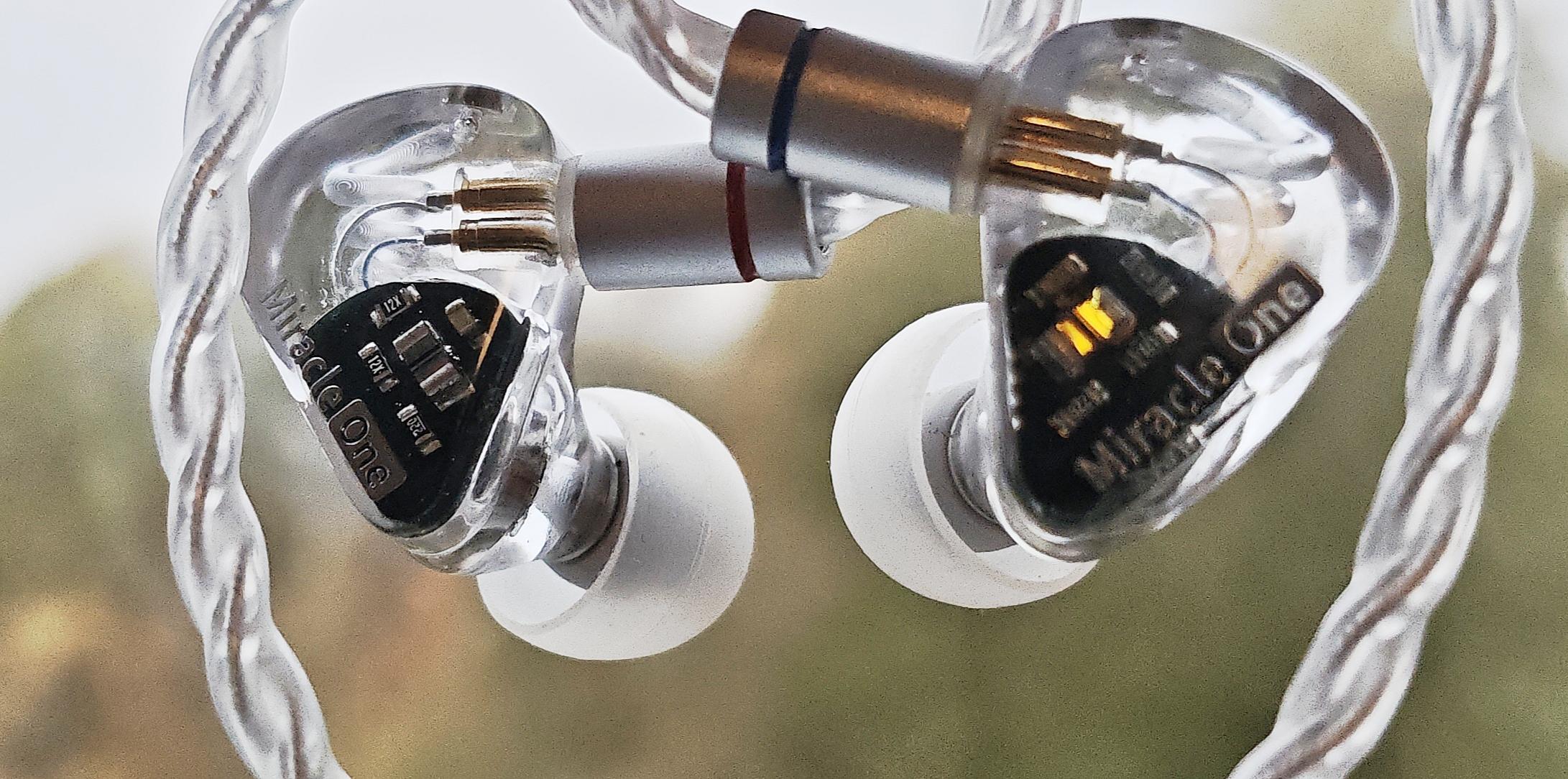
šŸŽ Giveaways HiFiGo Global Giveaway: AFUL MiracleOne | Single Driver, Reimagined

Post image
96 Upvotes

We're celebrating the growth of the HiFiGo community with a special giveaway! One lucky community member will win a AFUL MiracleOne!

Meet AFUL MiracleOne

Built around a Single Dynamic Driver Acoustic System, MiracleOne features a 6mm Liquid Silicone Rubber (LSR) diaphragm and AFUL's SEM acoustic design. It combines the natural, seamless sound of a single dynamic driver with impressive detail, rich vocals and a well-balanced presentation.

šŸŽ Global Giveaway

Prize: 1 Ɨ AFUL MiracleOne

How to Enter:

  1. Join our official community: r/HiFiGo
  2. Upvote this post
  3. Leave a comment below answering this question:

What's your favorite find on HiFiGo?

Is it something you already own, something on your wishlist or a hidden gem you'd recommend to everyone? Tell us why!

šŸ”„ A Little More HiFiGo News!

Our Black Friday & Cyber Monday deals are now live on Amazon! šŸŽ‰

Looking for your next audio upgrade? Come check out our latest deals and find something you'll love!

Giveaway Details:

  • Giveaway Period: November 19–30, 2026.
  • One winner will be randomly selected from eligible entries using RedditRaffler.
  • The winner must contact our official account within 7 days to claim the prize.

Good luck, everyone! We can't wait to hear about your favorite HiFiGo finds! ā¤ļø


r/HiFiGo • • 2d ago

Muse Hifi U3

5 Upvotes

Thanks to the local services, After a long wait I received my Muse Hifi U3. I am so happy to finally have it in my hands. Why? Because it's my first ever customized audio product. After receiving the video of the product getting laser etched with my username I was eagerly awaiting for it to reach me. Also, who doesn't like a new toy right?

Hey anyways now it's with me & I will be making a detailed review of it. See you soon. Till then let the music play.

Thank you to Muse Hifi from the bottom of my heart for the U3 & customisation.


r/HiFiGo • • 2d ago

Juzear Light Shuttle Review - All aboard the hype train

Thumbnail
gallery
6 Upvotes

Pros : What a fun tuning
Great looking faceplate
Bass is well implemented
Great mids with a cohesive tuning
No harsh treble sibilance

Cons : I've heard the shells being called cheap jewellery
The acrylic front of the faceplate can scratch easily
Bassheads will want more impact
Details in both low and high end are lacking

I thought I was a stronger human being but the noise was too much so I bought a Light Shuttle.
Time to see if the hype is real. Of course I may be weak and fall for hype and buy the newest viral IEM but do you necessarily have to be the same? Or can you make an educated choice based on what I write?
Dive in and find out.

Introduction
Juzear is a brand that stayed in my peripheral vision popping up in friends’ collections or in the marketplace but I never really paid too much attention to it till 2 things happened. The Nimbus landed in my lap for a review and that was quite a nicely done set, and everybody went on about the Light Shuttle and the new Render Pro tips, but that comes later. And then to leave longer stories for the music, I got one and I’ve really enjoyed the sound for the past few days.
Juzear seems to release its IEMs (with crazy regularity) in multiple series -
the SWOOP had the Defiant and Fiesta
the POISE series has the very well done Nimbus alongside Clear, Flame, 41T, and Nebula, targeting people looking for reliable daily drivers.
UNVEIL is a mid-tier, focussed on resolution sets that include this IEM, as well as Harrier, Butterfly 61T, Dragonfly 81T
And, the OUTSHINE series which is under development.
Juzear also has a history of collaborating with well known names in this space including Z-Reviews, Squig, and in this case, Mark Ryan from Super Review, who along with Squig.link has played a part in the development of the Light Shuttle. Though this isn’t new information, it’s all out there on the internet with me basically cherry-picking interesting facts.

Unboxing
The Light Shuttle comes in a sizable cardboard box and opening it reveals the shells nestled in some foam and a really nice zippered clam-shell style case made of faux leather. The box includes a nice enough plastic coated cable which is a little stiff at times but is made of 6N OCC/SPC, has 4 cores and a 2-pin termination at one end and a modular 3.5/4.4mm termination on the other. There is an additional usb C termination available in another variant, at a small surcharge. The tips included are 3 sizes of a grey-orange of a narrow-ish bore, 3 sizes of a wider, shallow-fitting tips, and a pair of foam tips. Overall, a nice enough package for its price of about $189 (less now due to Black Friday, etc)

Looks
OMG. These are pretty. From the time you set eyes on them at the unboxing to when you get a closer look at the IEMs, they are striking. The shells are resin and a little larger than the NImbus. There is a little lip and thankfully it’s a little one. They terminate in steel, mesh covered nozzles. The faceplate is where the secret sauce lives. The edges are CNC machined aluminium, and the centre is acrylic or glass and covers a gorgeous multicoloured linear design that somehow reminds me of the patterns of subatomic particles that CERN releases ever so often. There’s also some accoutrements in the form of a little black cubic zirconia nubbin that’s glued on. I fear for it a little. But so far it’s held on. The shells are fairly comfortable though some tip rolling was needed before I got the right seal and seating so I could be comfortable for longer periods of time. This was also made easier by (spoiler alert) the tuning.

Specs and geekery
The Light Shuttle is a tri-brid with 7 drivers. The same DD as the Nimbus - a 10mm MACCD (multi amorphous carbon composite dynamic driver), 4 BA - 2 each for the mids (lower and upper) and 2 microplanars, presumably, for the highs. And then there’s some hocus-pocus that Juzear has done with both the crossover that splits the signal to the 4 sets of drivers and then physical acoustic spirals/tubing that they call a waveguide to further clean the sound up. All this is done in that little shell which also has an impedance of 32 Ohms and a sensitivity of 113 dB, so fairly straight forward to drive via dongle dacs. Juzear has also said that they collaborated with Mark Ryan and Squig.link to get a fair idea of what most people would like to listen to and tuned this IEM according to that data.

Testing Gear
I did try these out with 3 sets of ear tips that Hifigo was kind enough to send - Juzear’s own Render Pro, Dunu S&S Pro, and the Effect Audio SGLRTY Arc Ovals.
Sources - Shanling M5 Ultra, Apos Gremlin, VE Prime/Runabout, Snowsky Disc
Tidal playlist https://tidal.com/playlist/3078c9b9-a1c0-4fde-8ce7-81f0e34b426c and Local Flacs of almost the same tracks.

Sound

TLDR - Fun, musical, mature, non fatiguing, responds to tip rolling and source pairing, vocals are emphasized, I’d like some more detail. Squig says it’s tuned to Super 22 with some low end love.

Bass
The sub bass first comes across while listening to Angel by Massive Attack. The focus is on the rumble and physicality without it being a wall of sound or intensely heavy, like say the Singularity. The sub bass stays in its lane and allows the mid bass to come in with punch and without bloat or flab. Kicks sound impactful and bass guitar notes have a moderate decay. Not too fast or slow. The rhythm section on Don’t Stop Now by Dua Lipa, YYZ by Rush. Tallulah by Jamiroquoi is the foundation that holds up the rest of the tracks, and the Light Shuttle lets us know that there is a solid one, but you can’t see any evidence of it from the facade.
The organic decay has the downside of losing the microdetails in crazy busy tracks - Got a Match by Chick Corea Elektric Band or Anesthetize by Porcupine Tree where double bass pedal hits tend to sound smudged.

Mids
The Light Shuttle advertises itself as a Vocal centric iem and the 4 BA drivers handling the lower and upper mids have actually been very well tuned. I’ve been wary of a BA timbre that creeps in making vocals shouty and Playing God by Polyphia unlistenable. The Light Shuttle does nothing of the sort. Vocals are natural but not rich, lush or pushed overtly forward. Male and female vocals and instruments sit in the mix in a very cohesive manner. I think that may just be the clincher in the tuning. That the mids are tuned to be a part of the music and not either recessed or forward. Detail retrieval in the mids is better than the bass. Orchestral music and Snarky Puppy (What About Me? From the We Like It Here album) sound well detailed and still musical enough to enjoy the song(s). But this is in no way an analytical or a technical set. It stays clearly on the musical side of the fence but does not sacrifice detail or suffer from bloat or muddiness. But there are caveats as we will see in the treble section.

Treble
The treble on the light shuttle is really well implemented in the sense of being safe and not tipping into sibilant territory and this works for someone as intolerant of sibilance as I am. But there are situations when just a touch more bite in the highs would have made the experience a little more engrossing musically. It feels like the microplanars are playing really supporting roles as extras in the final battle of Lord of the Rings. The treble gets a little better or feels a little more open with wide bore tips like the Arc Oval by SGLRTY or the Divinus wide bore. I’m a little cable agnostic for the most part but maybe cable rolling could help with that. Warmer tube/akm sources further the treble response without sacrificing detail, but more the sense of space.

Stage and Technicalities
The Light Shuttle has a moderate soundstage possibly due to the slightly subdued treble. Imaging is better than average though and more on the lateral or left to right rather than front to back. On Take Five by Dave Brubeck Quartet the drums and sax take the front of the stage with the piano and bass taking a backseat till the 2’30ā€ mark where the drums and piano seem equidistant and on either side of middle. Again, the Light shuttle does well on simpler tracks with fewer components to separate, layer or resolve.

Comparisons
This super crowded space has a bunch of competitors each with their own strengths. I have heard the Binary 1900, Sivga Lyrebird, EPZ siblings P40 and P50 recently. The Light Shuttle has a more authoritative bass than all the others. But the P40 does treble and details better and the P50 has a much wider stage. The Sivga is a chameleon that sneaks into any track and insists on sounding very appealing. The Light Shuttle keeps to its philosophy of tuning and musicality across genres and works for pretty much all of them. The binary 1900 probably does details just a little better than the Light Shuttle but lacks in the fun bass that this set has.

Bonus - Tips and Tricks
Hifigo was kind enough to send the Effect Audio SGLRTY Arc Ovals and Dunu S&S Pro tips and I stole a pack of the Render Pro from a friend. The S&S are by far my favourite. They grip the nozzle better than the original S&S, and are less sticky and thus allow for more pressure relief. I got a good seal with their XL size. They do make the bass sound a little more weighty but not bloated.
The Effect Audio SGLRTY Arc Ovals are also fairly comfortable. Not as good as the Dunus for me, but still managed a good seal and the wide bore opens up the stage and the upper mids and makes female vocals sound a little richer. Acoustically they are almost identical to the effect the Divinus Wide Bore has on the sound. I do have the largest size of the Divinus so the seal seems a little better.
The Render Pro somehow never gave me an adequate seal. This despite fooling about with the foam. And I think I have an issue with liquid silicone. Since the softears UC liquid silicone tips gave me the same issue with seal. As a result, trying to figure if the Render Pros work for me is a pointless exercise.
Dunu S&S Pros FTW

Final Thoughts
The Light Shuttle is designed for significant mass appeal. There will always be bassheads unhappy with the kind of bass that this set delivers and treble heads upset with the lack of air and gamers hoping for better imaging. The Light Shuttle doesn’t lie about what it does best. Make music enjoyable. I felt the same about the Juzear Nimbus and possibly the Kefine Loric, considering I like warmer sounds with no bass bloat and above average detail and no sibilance.
The Light Shuttle ticks those boxes off. And looks great. I’d recommend this one.


r/HiFiGo • • 8d ago

MUSE HiFi U3 - plug and play simplicity

Thumbnail
gallery
6 Upvotes

I’ve had my fair share of MUSE HiFi devices, the M5ultra and the M3 which were great for their price and what they were doing but they didn’t really fit into my use case. I don’t really use bluetooth and prefer a dap for that. I also don't like the idea of carrying glass tubes in my pocket. And I have a Gremlin for my desk, so while the idea of a portable tube is a great one and there’s some superb implementations, they are not for me. So when Hifigo decided to send me the Muse U3 dac I was reasonably curious to see what that company had managed to come up with. Time to dive in.

Unboxing, Usability

The unboxing is absolutely basic. There’s the box, there’s a plastic tray where the dac sits and a little card with instructions to download the Walkplay app (more on that later). The dac itself is sleek matte metal. It’s the T shaped dac, the kind like the ddHifi TC44 Pro M3, Snowsky Tiny, Kiwi Coda, and the Kiwi Allegro siblings (mini and bal). The Usb C sits on a little pedestal so allow the dac to fit despite a standard phone case. The front and back say Muse HiFi and the sides have a 4.4 and a 3.5mm port. It is a little thicker than most phones and the Usb C jack is off centre so while using it on a desk the bottom of the phone is lifted off. Not a big deal, but it is what it is.Ā 

The only issue that I could think of was that given the size of most 4.4 plugs there will be a little bit sticking out that can cause strain on the wire if being used with the phone in a pocket. This is something that dongle dacs or dacs that can snap to the back of the phone via a magsafe holster dont have a problem with. But I’m known for edge cases. A Right angled terminal connector solved this problem.Ā 

App woes

The device is extremely plug and play and works effortlessly with android, iOS and MacOS. I don’t have a windows machine to test it on but I’m sure it works. The Walkplay app works on both android and recognizes this device. Mine shipped with the latest firmware and the app allows for EQ adjustment. The default options are just about ok with Movie and Pure working best for me. The custom EQ is fairly straight forward but I did have some glitches especially while trying to download online EQ profiles on Android. The default and custom options worked well enough for this not to be a deal breaker. Given I’m not the biggest fan of EQing anything because I’m lazy this works.Ā 

The app does need a sign in which is incredibly annoying. Also on iOS the app seems to prefer bluetooth to wired connections since the U3 never showed up on the app. This is despite a couple of reinstalls.Ā 

But since I don’t care about EQ as much as the music, the glitches with the app I will largely ignore.Ā 

Music

The first thing that struck me is how clean and neutral the dac is. It lets the recording pass through without any colouration. The background is pitch black for most IEMs but in all honesty I don’t own overly sensitive IEMs. I do own stupidly powerful DACs with a significant noise floor like the VE Devastator Pro Max and the Megatron and this one is absolutely quiet.Ā 

It is touted to toss out a respectable 105 (3.5) to 125 (4.4) mW at 32 Ohms and this is pretty much enough to run most iems except the most demanding of them all. I even threw some normal impedance flatheads at it and it did quite well. Since it is neutral there’s no real IEM synergy that makes things sound better. I tried with most of the IEMs I own and there were no snap crackle pops on track changes and pretty much a seamless experience.Ā 

Final Thoughts

I think the U3 is a great device - it is simple, does its job very well and for the most part has no issues. I mean I can complain about lack of volume buttons, LEDs, Play-pause-skip buttons, but that would make it a DAP. Its fault is landing late in a crowded space. It competes with other T-shaped DACs, dongle dacs (but has the advantage of a 3.5) and other portable DACs (with more power and better app support). Build quality and ease of use and minimal battery drain notwithstanding, Muse Hifi will have to think on how they can get this product to really outshine the competition. Being a no-brainer to use is a great start but I wonder if it will be enough.Ā 


r/HiFiGo • • 9d ago

HiFiGo deals are here!

4 Upvotes

Amazon Black Friday deals are coming November 19-30, with up to 28% off selected IEMs and audio gear.

Full list: https://docs.google.com/spreadsheets/d/173O0ULQ1Bvh83THmC8NaOGe94iFTcRfGFLT4YSvtPxM/edit


r/HiFiGo • • 13d ago

✨ Impressions Binary Apsara: A Faceplate Inspired by a Thousand-Year-Old Mural

Post image
7 Upvotes

The inspiration behind Apsara comes from the Flying Apsaras depicted in the ancient Dunhuang murals.

Their graceful beauty lies not only in their poses, but also in the flowing ribbons that surround them. Those elegant curves seem to bring movement and life to an otherwise still painting.

We translated these ribbon-inspired lines into the IEM faceplate, combining stainless steel with a diffraction grating coloring process. As the light and viewing angle change, subtle iridescent colors emerge and shift across the surface.

In a way, what you're wearing isn't just a painting, but a dance that never quite comes to a stop.

Have you come across other audio products that beautifully blend traditional art with modern design?


r/HiFiGo • • 16d ago

A Fiesta for the Ears, Mostly: JUZEAR x Vivir Digital Fiesta

Thumbnail
gallery
3 Upvotes

I'm a sucker for red and blue IEMs, so the JUZEAR Fiesta already had my attention before I even listened to it. Juzear really knows how to make some good-looking faceplates!

The Fiesta is a $119.99 hybrid IEM made in collaboration with Vivir Digital. It uses a 10mm dynamic driver and three balanced armatures per side. The colorful faceplates are apparently inspired by Latin American festivities.

It also comes with two cables, one 3.5mm and one 4.4mm. Not modular, mind you. Two actual cables.

Anyway, how does it actually sound?

Pros & Cons

āœ… Warm, smooth, and relaxed tuning
āœ… Excellent sub-bass rumble
āœ… Satisfying mid-bass punch
āœ… Thick and lush male vocals
āœ… Natural-sounding instruments
āœ… Smooth, non-fatiguing treble with crisp cymbals
āœ… Beautiful faceplates and matching cables
āœ… Comfortable fit and good seal with SpinFit CP100 eartips

āŒ Female vocals sound slightly recessed
āŒ Narrow soundstage
āŒ Average imaging and directionality
āŒ Instrument separation and detail retrieval aren't impressive
āŒ Stock eartips caused pressure buildup during extended listening

Disclaimer: This unit was loaned to me by HiFiGo as part of a review tour, but all opinions are my own. I'm not an audiophile, and these are just my personal listening impressions.

General Impressions

First off, I'm a fan of how the Fiesta looks. The red faceplates are just beautiful. The shells are 3D-printed resin with CNC-machined faceplates. I can see how the bright colors might not be to everyone's liking, though.

For accessories, you get six pairs of silicone eartips, one pair of foam tips, two cables, a cleaning cloth, and a brown faux-leather carrying case. The case feels quite sturdy, and it matches the Fiesta's colors.

JUZEAR decided to include two separate cables instead of one modular cable. The 3.5mm cable also has an in-line microphone, while the other terminates in 4.4mm balanced. Both look nice and match the IEMs quite well. The cables are also pretty flexible, don't have much memory, and I haven't noticed any microphonics during use. I still would've preferred a modular cable, though, since I switch between 3.5mm and 4.4mm quite often.

Fit is actually pretty good. The shells sit comfortably in my ears, and I get a really good seal with them.

There was one problem, though. Pressure buildup. Even with the smallest stock eartips, I started feeling pressure inside my ears after listening for some time. It got uncomfortable enough that I had to remove the Fiesta and take a break.

I eventually switched to my trusty SpinFit CP100 tips, and that solved the problem for me. No more pressure buildup even after wearing them for extended periods. So yeah, tip rolling definitely helped in my case.

Sound Impressions

Tuning: The Fiesta sounds warm and relaxed, with plenty of bass presence and a nice thickness to vocals and instruments. It's pretty much the kind of tuning I usually enjoy, especially with the smooth treble.

Bass: Sub-bass rumble is excellent and probably my favorite part of the Fiesta. There's plenty of depth and weight to it. Mid-bass is less emphasized, but kick drums still hit really nicely. The bass can muddy up the lower mids a little on busier tracks, though.

Mids: Male vocals sound thick, lush, and full-bodied. Female vocals are a little recessed though, and don't quite have the same presence. Guitars and other string instruments sound natural to me. Piano instrumentals also sound beautiful, with a nice thickness to the notes. Snare drums sound pretty good too.

Treble: The treble is smooth and non-fatiguing, which is always a plus for me since I'm sensitive to sharp treble. Cymbals sound crisp too. I haven't noticed any sibilance or harshness during my listening sessions.

Technicalities: Soundstage feels limited, and imaging is average. I can tell where sounds are coming from, but pinpointing their exact positions is a little difficult. Separation isn't that great either. On "trƤumerei" by LiSA, I had trouble keeping track of individual instruments because they were starting to blend together. Detail retrieval is also rather average to my ears.

Final Thoughts

I really enjoyed listening to the JUZEAR Fiesta, especially the bass. The warm tuning is something I generally prefer, and I like how it handles male vocals, piano, and string instruments.

At $119.99, though, I would've liked better technical performance. Soundstage is narrow, imaging is average, and instrument separation and detail retrieval could be better. Female vocals also sound a little too laid-back for my taste.

The accessories are quite generous. I did experience pressure buildup with the stock eartips, but thankfully, switching to my SpinFit CP100 fixed that problem.

Would I recommend it? I think it's worth considering if you enjoy a warm and relaxed tuning with plenty of sub-bass.

I guess the Fiesta just needed a little tip rolling to get the party going. šŸ˜…

#Juzear #Fiesta #VivirDigital #PortableAudio #IEM #JReqTech


r/HiFiGo • • 16d ago

Roseselsa Photon Pro: Small yet, appealing

Post image
0 Upvotes

Disclaimers.

This was provided by Miss Alex Cheuk and HifiGo, who have given me the opportunity to try The Photon Pro.

Rest assured that these evaluations are entirely my own and uninfluenced by any other factors.

Kiso Compact style.

This format is situational and still a work in progress, but it provides a more convenient style for a quick, comprehensive review from a casual viewpoint..

The sound signature is traditional, prioritizing the bass and treble—a style commonly found in karaoke systems and boomboxes.

The bass is very prominent, with an impressive slam that fits a consumer-friendly tuning. The mid-bass is also evident, lending ample warmth to the vocals. In terms of female vocals it's on the average. They remain clear and can be heard decently. In contrast, male vocals are presented with more depth and clarity.

The Mids is on the hollow side but not that deep, since the instruments can still be heard decently. The overall presentation is average since it lacks some depth and clarity but for casual listening it's tolerable.

The treble or the other term for it is Highs. I am listening at 40-60 volume, and if your ears are very sensitive, then you might feel it uneasy or hot. Since it's very evident and the only remedy that I can think of is to lower the volume and change your source to a more warm sounding one. The example that I can think of is that when ever the letter S is emphasized to much then it can sizzle which is hurting if your sensitive. The presentation of the treble is leaning on the bright side since it's very aggressive.

Kiso's Sound Extraction: Technical Flavor Unleashed!

While watching an Anime called D4DJ, the sound is leaning on a more controlled environmental since the space and layering is not the spacious. In short it's just like a wide classroom. The details are decent since micro can be heard but macro needs improvement..

Pros: šŸ§āœ…

. Can be used for commute

. Microphone Quality is impressive

. Modular since it is detachable you can change the cable of it.

. Impressive eartips

. Has cable clipper

. Lightweight in the ears

. Tuned for casual listeners

. Can be an emergency replacement earphones. ( computer shop perspective)

. Despite being recessed the mids are still presentable

Cons: šŸ§āŒ

. Evident sibillance and peak which can hurt treble sensitive ears

.Needs a lot of source power

.average on gaming side

. No pouch or case (nitpick)

. Needs to Refinement the treble


r/HiFiGo • • 18d ago

Elysian Pilgrim 26 - Off the beaten path

Thumbnail
gallery
2 Upvotes

Every once in a while, an IEM comes along that challenges your listening preferences.

Elysian Pilgrim 26 is one of those IEMs.

At $299.99, it features a 9.2mm dynamic driver, two Knowles midrange BAs and a custom high-frequency BA. I generally prefer warmer tuning, fuller mids and natural vocal body. Pilgrim 26 takes a very different approach. Initially, I found the vocals lean and recessed, with a noticeable mid-bass scoop and elevated treble. But after two or three songs, my ears adjusted and I started enjoying it.

Disclosure: HiFiGo provided Pilgrim 26 for review. All opinions are my own.

As always, I maintain a ranking file covering 180+ audio products and 25+ ear tips. Link in my Reddit profile.

Bass: Excellent Sub-Bass, Missing Mid-Bass

Sub-bass is the star of the show.

There's excellent extension and deep rumble, reminding me somewhat of FATfreq Deuce, although with substantially less quantity. The problem is the broad recession starting around 100Hz and extending through much of the lower mids up to 1000 Hz. Kick drums lose punch, bass guitars lack some texture, and male vocals sound lighter due to the reduced lower-midrange energy.

The upside is a very clean presentation with virtually no bass bleed. It's an interesting approach, but not the bass tuning that normally aligns with my preferences.

Mids / Vocals: Lean but Nicely Tuned

The 1–4kHz region is almost perfect for my ears.

Vocals remain clear, albeit somewhat lean and recessed. Female vocals have a particularly cool, clean character without becoming shouty. Despite the missing lower-midrange body, the upper mids are tastefully controlled. I never encountered the irritating 3kHz emphasis I'm particularly sensitive to. I am used to Hifiman planars so this works for me surprisingly well.

Treble: Energetic but Surprisingly Controlled

Pilgrim 26 has a pronounced rise around 6–8kHz, normally a problematic region for me. Surprisingly, sibilance was quite controlled. Only a few of my usual test tracks occasionally exposed sharpness:

  • Celestial
  • This Is What You Came For
  • Sapphire
  • I'm Alive

Upper-treble air, however, is noticeably limited. There's plenty of lower-treble energy and sparkle, but little of the openness I normally enjoy. The soundstage consequently feels relatively compact, without much perceived extension.

An Unusual Tuning That Somehow Works

Strong sub-bass, recessed lower mids, lean but clear vocals and energetic treble with limited air. I won't try to hide it but this is a combination that usually doesn't work for me. Like SuperMix 4 or the horrible EW300. It's an unusual combination that initially even here felt somewhat disconnected to me.

Yet after a few songs, my perception of the tonal balance changed, and I began enjoying it. I haven't experienced quite the same adjustment with another IEM or headphone. With so many products following familiar Harman, JM-1 or variations of V (U or W) -shaped tuning, I appreciate Elysian trying something different.

Whether that difference works for everyone is another question, but I enjoyed the surprise whereas, other IEMs with similar approaches typically fall flat.

EQ and Tip Rolling

I initially tried a simple PEQ adjustment:

Peak: 250Hz | +4dB | Q 0.5

It restored much of the missing lower-midrange body, but also made Pilgrim 26 sound more conventional. I preferred preserving its distinctive character, so I experimented with tips instead.

  • SpinFit W1: Added some bass body without significantly changing the mids or treble.
  • NICEHCK C04: Surprisingly good. Fuller bass, more forward vocals and reduced 6–8kHz energy.
  • Penon Liqueur Orange: Added bass body and smoothed the treble.
  • Penon Liqueur Black: My favorite. Fuller bass, better vocal presence and less treble fatigue while retaining much of the original character.

After switching back and forth, I settled on Penon Liqueur Black.

Tip rolling is subjective, and repeated swapping can introduce expectation bias. Still, these consistently gave me the presentation I enjoyed most. The aftermarket tips were important to getting Pilgrim 26 where I wanted it, particularly for reducing fatigue without losing its unusual tuning.

Gaming: Great Imaging, Difficult Treble

Gaming was a mixed experience. Unlike Supermix 4 that excelled at gaming, here Pilgrim 26 reminded me more of Explorer or EW300 in terms of being unable to separate sounds when mix gets busy.

Imaging is exceptionally precise. Footsteps are remarkably easy to locate, almost like having wall hacks. Directionality is accurate, and the stage is sufficient for competitive play. Unfortunately, gunfire, explosions, grenades and scorestreaks became fatiguing due to the elevated treble. Even lowering the volume didn't entirely solve it.

If you're less sensitive to this region, you may have a considerably better experience. For me, the fatigue outweighed the excellent positional performance.

Comfort, Build and Accessories

Pilgrim 26 has beautifully machined aluminum shells with an unusual, angular design. Fit is secure and comfortable for normal listening, although lying on my side causes discomfort due to the shell shape. The supplied custom Effect Audio silver-plated copper cable is excellent. I particularly like the white finish.

Accessories are modest for $299:

  • Three pairs of ARC Oval ear tips
  • Cleaning accessories
  • A soft storage pouch rather than a protective case

I ended up using my spare Pellepod case for storage as my box was missing the pouch. The IEM itself feels premium, but I'd have appreciated a more complete accessory package.

Quick Comparisons

Xenns Mangird Top Pro: Pilgrim 26 has a leaner, brighter presentation, while Top Pro offers more bass texture, natural vocal body, smoother treble and better separation.

Fresh Reviews Arete 2: Pilgrim 26 emphasizes deep sub-bass and clean upper mids, while Arete 2 has stronger mid-bass, a larger stage and more comfortable competitive gaming performance.

Kiwi Ears Astral: Pilgrim 26 sounds cooler and more recessed, while Astral has fuller bass, greater resolution and substantially more upper-treble air.

Binary Acoustics 1900: Pilgrim 26 has stronger sub-bass emphasis, while Binary 1900 offers more natural vocal body, a smoother overall balance and greater openness.

Dunu DaVinci Vitruvian: Pilgrim 26 is more unconventional, with a deeper midrange scoop, while Vitruvian has more engaging vocals and a more cohesive tonal balance.

FATfreq Deuce: Pilgrim 26 has considerably less bass quantity and a leaner presentation, while Deuce delivers much greater sub-bass rumble and physicality.

Juzear Light Shuttle: Pilgrim 26 has a more pronounced sub-bass-to-midrange contrast, while Light Shuttle offers fuller mid-bass, better vocal weight and a more relaxed all-round presentation.

Final Thoughts

Elysian Pilgrim 26: 7.5/10 Overall.

This is one of the more unusual IEMs I've reviewed recently. Its strong sub-bass, significantly recessed lower mids and energetic treble create a presentation quite different from what I normally enjoy. Yet after some adjustment and tip rolling, I found myself appreciating it. The excellent imaging, controlled sibilance and distinctive tuning deserve credit.

Limited air, gaming fatigue and modest accessories prevent a higher rating.

If you're looking for something different from the usual tuning approaches around $300, Pilgrim 26 is worth considering.

Sometimes the less familiar path turns out to be an interesting one.


r/HiFiGo • • 21d ago

Muse Hifi M7 Review - Four Tiny Tubes, 3.5W of Power and One Very Large Brick

Thumbnail
gallery
4 Upvotes

I've been using the MUSEHiFi M7 for over a month, connecting almost every headphone and IEM I own. I've tested it over USB, Bluetooth, battery and DC power, comparing it with my FiiO K17 R2R, BTR17 and Snowsky Melody.

It has some frustrating design choices, yet somehow it's become one of my most-used audio devices at home.

At $399.99, there's a lot to discuss.

Disclosure: M7 was provided for review by Hifigo. All impressions are my own.

As always, I maintain a ranking list covering 170+ audio products and 20+ ear tips. Link in my Reddit profile.

First Elephant: Is This Actually Portable?

Let's get this out of the way. M7 is enormous for a portable DAC/amp.

It's bigger than my iPhone 17 Pro Max and reminds me more of my old FiiO K11 R2R than a conventional portable device. I have no interest in carrying a brick around with my phone. For that, I'm perfectly happy with my BTR17 or a small dongle.

But moving between my desk, bedside table and other rooms while having enough power to drive practically everything I own? That's fantastic.

M7 is transportable rather than pocketable, and that's how I've been using it.

Second Elephant: No PEQ

For a $400 device, the absence of parametric EQ is a significant omission. M7 offers eight digital filters, but they aren't a substitute for PEQ.

I tried all eight. F1 and F3 sounded almost identical, I also enjoyed F8, and F5 didn't work particularly well for my ears. Rest of filters were indistinguishable or forgettable. I have provided manual pages that talk about filters in pictures.

For approximately 95% of testing, I stayed on F1 to maintain consistency. I'd genuinely like MUSEHiFi to add PEQ in a future product.

Third Elephant: Design Choices

I love the purple finish, visible tubes and gold volume wheel. But the magnetic glass cover is a fingerprint magnet, and I'd be nervous about dropping it.

The port arrangement is also frustrating for desktop use. With the volume wheel facing me, all the connections, including headphone outputs, are at the back. Swapping equipment becomes unnecessarily awkward. Turn the ports toward yourself and cables clutter the desk while the volume wheel disappears around the back.

I'd much prefer headphone outputs and volume and track controls on the front, with power and data connections at the rear.

And that's the end of my complaints.

Hardware: Quite an Impressive Package

M7 packs a surprising amount into its chassis:

  • DAC: ESS ES9039Q2M
  • Amplification: Two replaceable MUSE01 op-amps and four JAN6418 miniature tubes
  • Power: Up to 1,750mW through 3.5mm and 3,500mW through 4.4mm, rated at 32Ī©
  • Connectivity: USB and Bluetooth 5.4 with aptX Lossless support
  • Battery: Replaceable 3,500mAh 18650 cell
  • Desktop power: External 12V DC input
  • Battery life: Claimed 20 hours in transistor mode and 15 hours in tube mode

M7 isn't a standalone music player. It's a DAC/headphone amplifier that connects to an external source.

It offers two operating modes:

TM (Transistor Mode): Uses the solid-state amplification path.

VT (Vacuum Tube Mode): Engages the four miniature tubes.

Both modes use the same ESS DAC, but their presentation sounds different to my ears.

Sound: TM Is Good, VT Is Fantastic

I generally prefer Cirrus Logic and AKM DAC implementations over ESS. That's based on my listening experiences rather than believing every chip from a manufacturer has a particular sound. I've often found Cirrus-based devices warmer and less fatiguing, while some ESS implementations seem to emphasize sharpness on already bright headphones and IEMs.

My sensitivities around 3–4kHz and 6–10kHz make this particularly noticeable.

There are exceptions, of course. My BTR17 uses dual ESS ES9069Q chips, and I enjoy it. My Snowsky Melody uses dual Cirrus CS43131 chips.

Transistor Mode

TM sounds extremely clean, detailed and precise.

Separation is excellent, and there's no obvious coloration. However, with certain headphones and IEMs, it also highlights the sharpness I'm sensitive to. Nothing fundamentally wrong with the presentation. It simply isn't my preferred sound.

Vacuum Tube Mode

VT is the reason I'd buy M7.

The four JAN6418 tubes add a warmth and smoothness that works beautifully with my preferences.

Vocals become more relaxed, bass feels fuller, and sharper upper frequencies are easier to enjoy. Importantly, I don't feel like I'm sacrificing detail or separation. I spent most of my time on high gain, VT mode and F1 filter.

The closest comparison in my collection is my FiiO K17 R2R, which cost approximately $980. K17 R2R remains my preferred desktop DAC/amp, particularly in NOS mode. It has substantially more functionality, including PEQ.

But in pure listening enjoyment, M7 in VT mode gets remarkably close to what I love about K17 R2R. That's impressive considering its price and battery-powered design.

Power: It Drives Everything I Own

I've connected M7 to my HE1000 Unveiled, Arya Stealth, DCA Aeon Core, Philphone Open and almost my entire IEM collection. I had no difficulty driving any of them to satisfying listening levels.

Its manufacturer-rated 3.5W balanced output at 32Ī© is substantial, although actual available power depends on the device and whether it is in battery or DC mode.

Battery vs DC Power

M7's DualRail system allows it to operate from its replaceable battery or an external 12V power supply. I enjoyed both, but DC power brought a noticeable improvement in bass definition on my planars.

Low-frequency notes felt more controlled, with cleaner decay. I also perceived greater depth and a more holographic presentation, particularly while gaming. This reminds me of why I enjoy K17 R2R in NOS mode.

Soundstage perception varies considerably between listeners, and these are subjective observations rather than controlled measurements. But it's a meaningful part of my enjoyment. To know more about soundstage and thoughts from listener from the headphone show find his article on headphones.com.

Noise and Heat

I encountered no audible hiss with the IEMs I tested, even while regularly using high gain.

Heat was also a non-issue during my sessions. The device remained comfortable to handle, including inside its purple leather case.

How Does It Compare?

FiiO K17 R2R

M7 offers much of the warmth, smoothness and spaciousness I enjoy from K17 R2R, while adding battery-powered flexibility. K17 remains the superior desktop solution for connectivity, controls and PEQ. But M7 gives me a similar kind of musical enjoyment away from my main desk. This is a real value proposition for me.

FiiO BTR17

M7 offers substantially greater amplification capability and a tube presentation I prefer, while BTR17 is far more portable and includes PEQ. For travel, I'd still choose BTR17.

Snowsky Melody

M7 offers more power, flexibility and two distinct amplification modes. Melody is tiny, inexpensive and perfectly adequate for many IEMs. They're designed for very different needs.

FiiO K13 R2R and Other Alternatives

I personally enjoy M7 more than my previous K13 R2R. It also left a stronger impression than some desktop DAC/amps I've auditioned, including Topping DX5 II, although those weren't controlled long-term comparisons. On pure sound quality alone, the VT mode on M7 is superior to K13 R2R NOS mode in terms of clarity and detail retrieval.

Battery Life and Customization

M7 uses a replaceable 3,500mAh 18650 battery, which is an excellent feature for long-term ownership. I consistently got over 12 hours of listening from a charge (could've gone longer as I never fully drained it), only in VT mode. Charging through my laptop took a little over two hours.

I did notice faster battery drain than expected when leaving it unused for several days, although I didn't measure the exact standby consumption. The magnetic cover also provides access to two replaceable MUSE01 op-amps.

I haven't experimented with different op-amps, but I appreciate having that option. The replaceable battery is particularly welcome.

Final Thoughts

After more than a month, M7 has become a regular part of my listening setup.

It sits beside my bed when I'm listening to IEMs before sleeping. I move it to my work desk when I want to enjoy the HE1000 Unveiled between calls.

It gives me much of the experience I love from my K17 R2R without tying me to one location.

At $399.99, I think it's excellent value for the right person. I've also seen discount combinations bringing it closer to $350. The lack of PEQ is frustrating, the port layout needs work, and its size limits its practicality as a truly portable device. But the tube implementation, amplification capability, replaceable components and battery/DC flexibility make it a particularly enjoyable piece of equipment.

Would I buy it with my own money? In a heartbeat.

If you're happy with a small dongle for your IEMs, M7 probably offers more power and bulk than you need. But for someone with a collection of headphones who wants a powerful, great-sounding DAC/amp that can move around the house, M7 deserves serious consideration.

I've included photographs with the various headphones and IEMs I used during testing. For a device I initially considered far too large to be practical, it's become surprisingly difficult to put down.


r/HiFiGo • • 24d ago

Do you believe in miracles? My review of the Aful MiracleOne

Post image
2 Upvotes

Good day, everyone. So here is my review of the new set of IEMs from the brand AFUL, the MiracleOne (1DD). First off, a disclaimer: HiFiGo did provide these to me for review free of charge, and all they asked for was my honest thoughts in the form of an online review, so take this review with as big a grain of salt as you believe that merits. That said, all opinions here are fully my own, and I have made the attempt to review these as if I had bought them with my own personal money. Also keep in mind all of my opinions are based on the price range unless stated otherwise, so when I say excellent, I mean excellent at the price range. These are available on HifiGo for $199.99 currently (I think, they should be released today depending on time zones).

So with that out of the way, I'll continue with the review.

Most of this review was done powering them out of my Fiio BTR11, but I also tested them with both the DTC DACs from DUNU.

TLDR: These are a quite interesting set of items that have some tangible advantages against things in its price range like its size, comfort and smooth tuning, but overall they lack a hook to get me interested in them beyond their on paper design. They aren't bad iems, overall in a vacuum I did enjoy my time with them, and for certain special situations I would recommend them, but for most people there are other iems I would mention first.

Starting from the accessories package, it's very solid and competitive at the price range. The case it comes in is a black metal friction fit pick style case that is branded with the AFUL logo. Its insides are felt lined and it probably is the most protective iem case i've ever interacted with, it feels like you could run it over with a car and the iems inside would be fine. It is on the smaller size so fitting anything beyond the iems, cable and a few loose eartips is out the question, but that makes it compact and can fit in most pockets and handbags. The cable is a very nice silver plated copper braid that splits into 2 twisted cables beyond the y-split. On one hand it finally pairs a cable with no extended 2 pins to a flush socket, making it look neat unlike many other iems even much more expensive ones that don't do so. On the other hand the connection is not interchangeable so it's either 3.5mm or 4.4mm, at this price an interchangeable connector should be standard. That said, the hardware is all metal and well machined, and the chin cinch is on the stiffer side so it's on the set and forget side of that spectrum. The cable is very soft and supple, it has some slight memory but not overly. It also lies quite flat. It also comes with 3 sets of eartips (s,m,l), a fully transparent set that enhances soundstage, a black and blue set that is considered the balanced set, and a transparent and white set that enhances treble clarity. One thing I noticed with these is how tip sensitive these are, so although the tips look almost identical the sound changes very significantly when using them. Having so many options to choose and personalize your sound is greatly appreciated and one of the highpoints of this set.

As for the earpieces themselves, the looks will be divisive. Personally I really enjoy the professional and technical look they have. The body of the iem is a 3d printed resin shell that is transparent all around. The faceplates are clear as well except for the name of the iem, giving a clear view into the PCB and other electronic elements of the iem. The clear resin also allows view into the very interesting acoustic structures that Aful has developed, with a large backspace behind the very small driver (6mm) and the vents that go from it to the nozzle and the large corkscrew shape that leads to the vent hole at the top of the iem. Overall the shell is tiny and very light, even by single DD standards, making them the single most comfortable items I own. The inside face of the iems is in the semi custom moulded style with a prominent wing but given they are so small I had no issues with hotspots and I could sleep with them on perfectly fine (these might be the best sleeping iems I've ever tried, so if that's something that sounds interesting to you then I don't have a better recommendation at literally any price point). The nozzle is average sized and made of metal with a metal grill and a cloth mesh to protect the driver from debris. Overall I think this is the most impressive point of this iem, its comfort and small size, for people with small ear canals or ears these will be amazing. These produce no pressure build up for me and have no issues with driver flex, so long sessions with them on are a breeze, sometimes I even forget they are there.

As stated above I found these to be very tip sensitive, so tip choice will be both very important and quite personal. For my taste profile the best tips were the transparent ones with the white stem. The soundstage tips were genuinely impressive in how wide they made these sound, genuinely one of the widest items I've ever listened to, but for me it was too wide even, making the sound a bit diffuse. The balanced tips made the treble mushier than I would like, missing the definition I want in my upper registers, so the treble clarity tips fixed that even if they did lower the bass a little bit.

Now for sound impressions, keep in mind I would describe myself as an unashamed extreme treblehead, but I will try to make the impressions as tuning agnostic as possible.

These are a very natural sounding set, with a warm leaning neutral tonality. The sound they managed to squeeze out of that tiny 6mm DD is quite impressive. It's very coherent yet it doesn't have any issues with detail or complexity. Its overall sound signature is more on the reserved side, with nothing standing out as exceptionally good or notably bad, it's a jack of all trades master of none sound signature that is lovely for relaxing and kicking back but I would suggest alternatives for critical listening.

Starting from the bass, it's well done and very tasteful in amount. It has a surprising amount of physicality for its size but it isn't one of those subwoofer, rattle your teeth. It has more subbass rumble than midbass punch, but without it going overboard and eating into the mids. It is very well controlled but lacks some authority so it can leave some recordings feeling a bit softer than they should. Overall the bass creates a nice warm presentation that will be sufficient for most people, although for bassheads this will definitely not be the appropriate choice, and if you listen to a lot of music with a lot of deep, authoritative bass these might not be the best choice for you.

The mids are clear and rich. The Warmness of the bass very smoothly gives way to a very musical and enjoyable midrange with special emphasis on the naturalness of the vocals. Instruments are replayed very realistically and they don't feel enhanced nor hidden. Both male and female vocals are replayed faithfully but the warmness of these favors the male vocals a bit more than the female ones, giving them very excellent texture and detail.

The treble is good but overall it lacks behind the rest of the sound signature in quality. It is clear but even with the clarity tips it is a bit undefined and lacks some sparkle and sharpness. It is not wonky but doesn't extend that far into the air regions so it leaves me wanting. On the other hand this means the treble is greatly inoffensive and presents no sibilance or sharpness that could bother the more sensitive of listeners, so if that sounds like you then I can recommend these, but if you are a treble fiend like me there are better options at the price.

As for the technicalities, that's what most impressed me about these, they are quite surprisingly detailed and in terms of soundstage they are genuinely some of the widest IEMs I've ever listened to, both horizontally and in terms of depth, to the point were the soundstage tips made them too wide for me. It also doesn't get jammed and flat in busier recordings, so overall these kill it with metal and non bass dependent electronic music. Microdetail and instrument placement in the giant stage they creat is average and not much to discuss.

Now for the comparison section, I'll try and compare them to things in a similar price range, but sadly I haven't had the opportunity to try every IEM, so some that I have been asked for comparisons for that I haven't tried are the Punch audio Martillo/Portazo, the Truthear Pure White, the Ziigaat Crescent/Arete 2, the CKLVX Lava, the Thieaudio Hype 4, the Kiwiears Astral, the 7 Hertz Diablo/Divine, or the Crinear Reference.

Vs. Ziigaat Odyssey 2: Very different sets of iems, in everything from build to sound. The Ziigaat is all metal with an overly warmed out sound signature, meanwhile the MiracleOne is resin filled and much more natural. Personally I would take the MiracleOne over these.

Vs. the Juzear Fiesta: This is an unapologetic basshead iem, so these are aimed at a different audience. The build on these doesn't feel as well built as the Miracleone, but if you want gigantic, strong bass then that won't matter to you, the Fiesta is a better choice. For a more day to day neutral, do everything IEM would recommend the miracleone.

Vs. the Crinear daybreak: Probably the default recommendation under 200 dollars and this iem doesn't really change that, it's still what I would still vouch for the daybreaks, they don't feel as natural as the miracleone but i enjoy their treble much more without sacrificing anything in the bass or treble.

Vs. the Juzear Light shuttle: I have a full on review of the light shuttle on my page so as to not waste your time, the light shuttle sounds better, but the Miracleone runs figure 8s around it in terms of build and comfort.

In conclusion, the MiracleOnes are competent iems with some really strong advantages in terms of build and sound stage particularly, while doing everything else well. As a jack of all trades master of none IEM it can slot into a generalist or comfort pick in a collection, but there are other options at the price point that I think are better overall buys.

Songs I use to do preliminary tests on IEMs (I listen to much more if I have the time, but these are a minimum before I solidify my opinion.)

ALI WILD SIDE

Tuki HYURURIRAPAPPA

Ski mask the slump god Faucet Failure

Beelzebub's Cathedrals of Mourning

Aliceband Wolf

Fukashigi no carte

An Unkindness Fragments

Big wild City of Sound

Antonio Banderas Canción del Mariachi

Malcura Gerudo Valley

Berlioz deep in it

Thank you guys for your time; I'll be happy to answer any questions or pass on any suggestions to HiFiGo. Good day!


r/HiFiGo • • 27d ago

DUNU DaVinci VITRUVIAN: The Art of Sound Balance

Post image
2 Upvotes

The nameĀ VITRUVIANĀ draws inspiration from Leonardo da Vinci's iconicĀ Vitruvian Man, symbolizing balance, the golden ratio and the harmony between art and science.

Building on the original DaVinci's warm and musical character, VITRUVIAN explores a more balanced, refined and transparent sound, seeking the perfect harmony between acoustic engineering and artistic expression.

What makes an IEM feel ā€œcompleteā€ to you?šŸŽØ


r/HiFiGo • • Oct 27 '26

Build Our HiFi Community!What do you want to see on r/HiFiGo?

2 Upvotes

If you could build the perfect HiFi community from scratch, what would you put in it?

We’re starting from zero here, so let’s make this place together.

Would you want to see more:
šŸŽ§ IEM discoveries & recommendations
šŸŽµ Music & playlist discussions
šŸ”Š DAC/AMP & source talk
šŸ†š Head-to-head comparisons
šŸ“ø Setup & collection posts
šŸ’¬ Hot takes & popular opinions
šŸŽ® Music + gaming audio

Or something completely different?

Drop ONE thing you’d love to see on r/HiFiGo**.**

Let’s see what this community becomes.