Trying to build a hydraulic scale for a tractor loader. Anybody here ever done this?
Hey guys,
We've been messing around with a project we're calling Vosburg Scales. Basically, we're trying to build a hydraulic weighing system for a tractor with a front-end loader, using pressure sensors and an ESP32.
I'll tell you right now, this has turned into a bigger pain in the ass than I expected. Lol.
The biggest problem is that we're doing this on a tractor, not a forklift. A forklift lifts pretty much straight up, but a tractor loader moves in an arc. The angles of the loader arms and hydraulic cylinders keep changing, along with the leverage. You can have the exact same weight in the forks and get different pressure readings depending on how high you lift it.
That's the part we're trying to figure out.
We've bought a bunch of industrial pressure sensors and electronics to see what works best.
Here's what we've actually tested so far:
- Dynisco PT139-2.5M-H12 – 2,500 PSI, millivolt-output sensor. We got some pretty decent readings out of this one.
- Sensotec A-205 – We have two of these, both 3,000 PSI millivolt-output sensors. They worked, but we had more trouble getting the readings calibrated and consistent.
- OMEGA PX605-3KGI – 3,000 PSI, 4–20 mA output. This thing has been the clear winner so far. We've been running it with our ESP32 setup, and the readings have been a lot better than the other sensors we've tried.
We've also got an Ashcroft 5,000 PSI sensor with a 0.5–4.5V output, an OMEGA PX309-300G5V, and some other pressure sensors we haven't gotten around to testing yet.
We've been using ESP32 boards along with HX711, NAU7802, and ADS1115 ADC modules, trying to see what gives us the most stable pressure readings without a bunch of drift.
We even bought an OP-900MS forklift weighing indicator to mess around with. That didn't go so well. We kept getting drifting readings and error codes, so we pretty much gave up on that thing.
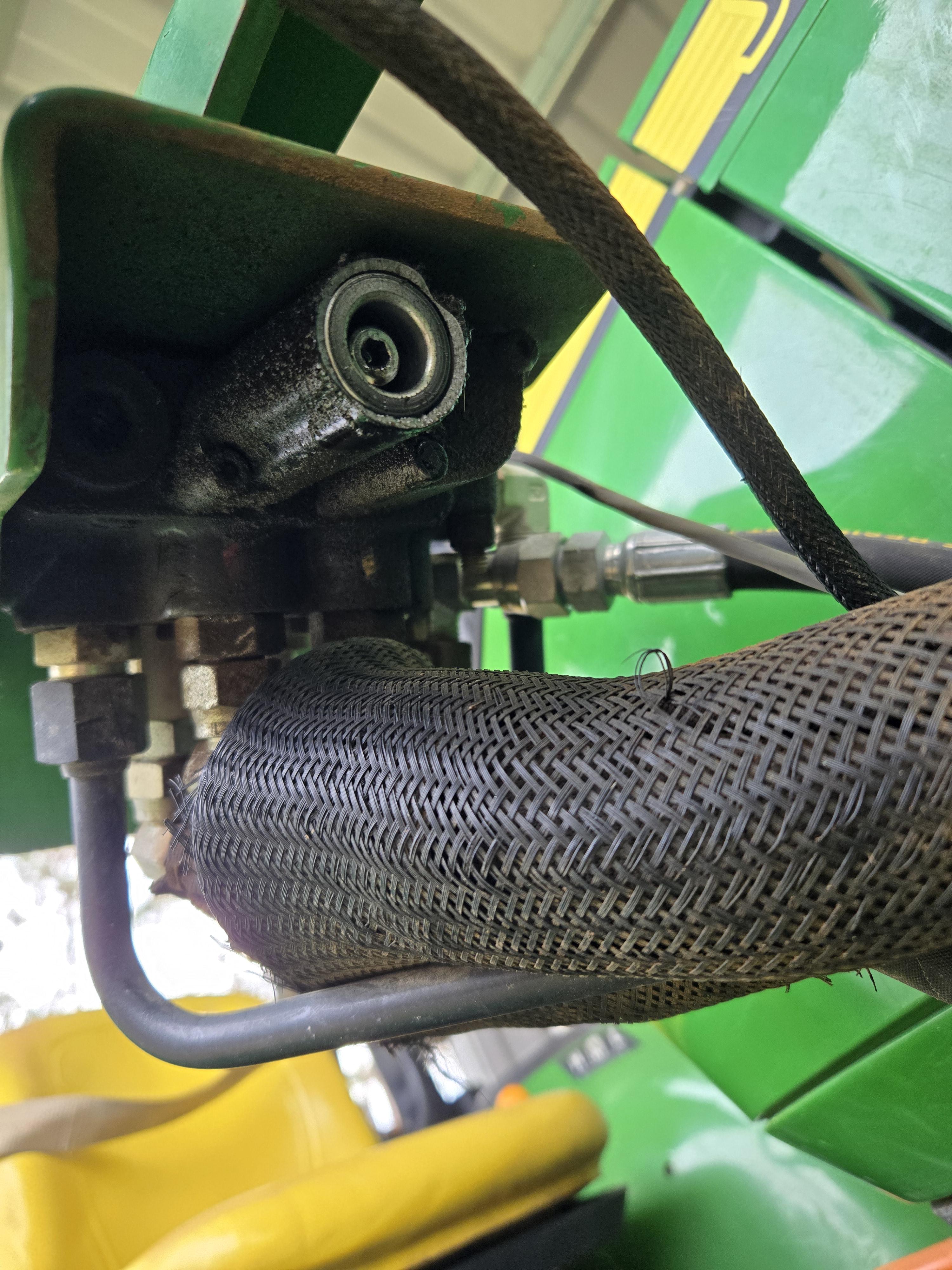
As far as mounting everything goes, we're working with the tractor loader's hydraulic lift circuit, looking at pressure test ports, JIC adapters, short hydraulic hoses, and pressure snubbers. We're trying to figure out the best place to take pressure readings without having to modify a bunch of hydraulic lines.
We're also trying to determine whether we need to measure pressure on both sides of the lift cylinders or if we can get away with one sensor.
The goal is to weigh loads around 0-2,500 pounds. We'd love to get somewhere around 1% accuracy, maybe even within 5 pounds under the right conditions, but I'm starting to realize that's a pretty tall order.
We're considering putting an angle sensor on the loader arms so the ESP32 knows exactly where the loader is positioned. We might also add a hydraulic oil temperature sensor since temperature changes can affect readings.
We know every tractor will need to be calibrated using known weights. We're not expecting one calibration to magically work on every tractor out there.
A few things I'm wondering about:
- Has anybody here actually built or worked on a hydraulic weighing system for a tractor front-end loader?
- How do you compensate for the changing loader-arm angles and cylinder leverage?
- Would one pressure sensor and an angle sensor be enough, or should we be measuring both sides of the lift cylinders?
- Has anybody used the OMEGA PX605 series? Ours has been doing great so far, but I'm curious about long-term stability.
- Would you stick with a 4–20 mA pressure transducer, or is there a good reason to use millivolt sensors with a high-resolution ADC?
- Does anybody have experience using a short hydraulic hose and pressure snubber for this kind of measurement?
- Is it better to weigh while slowly raising the loader through a certain angle or while holding it still?
- What kind of accuracy have you guys actually seen out of tractor loader weighing systems?
We're still experimenting and trying to learn as we go. Not selling anything, just trying to build something that actually works.
I'd appreciate hearing from anybody who's dealt with this kind of stuff, especially the hydraulic guys who work on tractors and loaders every day.
Thanks!