Only few days I realized that even in North India, Karthik deity is celebrated. Our elders used to celebrate 'devathoon'.
Even in Uttar Pradesh, it was recently celebrated as 'Dev Deepawali'.
That's when I saw that, both the events in South and North India could be the same thing but expressed differently.
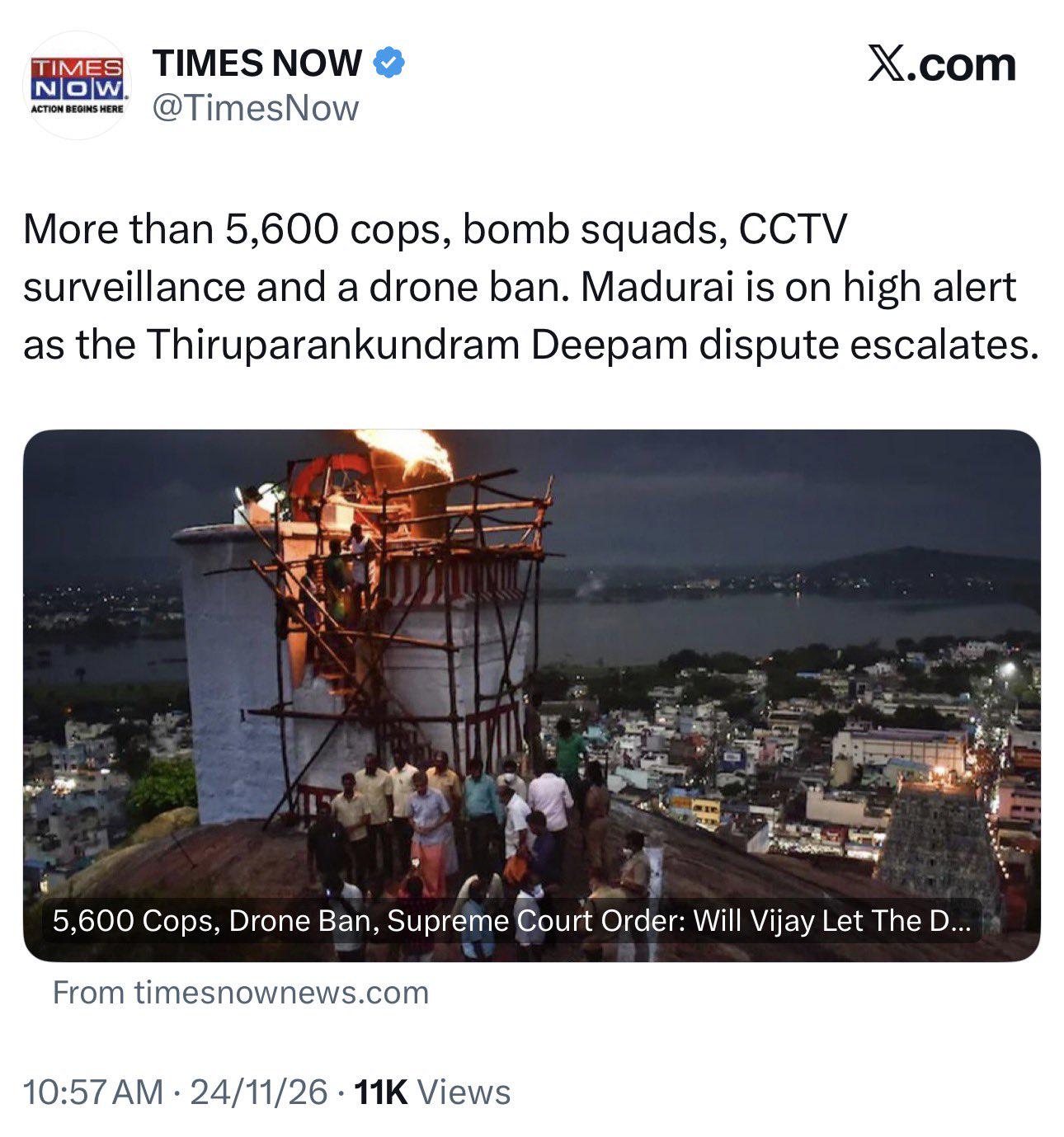
That got me wondering, what's the issue about Deepathoon in Thirupparankundram?
At first brush, the controversy seems simple enough. Hindu place of worship is in controversy, just like Babri Structure, Kashi and Mathura, Bhojraj and umpteen other such places of worship that are under encroachment from religious cultures that are foreign and imported into Bharatha.
In property disputes, the rule is simple. The one having right in prior has the better right. This is at the level of individual rights. When it comes to community rights, the same principle gets extended, but then there might be questions of continuity.
So was the lighting of Deepathoon discontinued at some point of time? If yes, then why? Was it a voluntary decision by the community, or was it a result of forced suppression as was the case during medeival India especially under Islamic rule, where non-Islamic cultures were often seen as inferior, non-divine, unsanctioned by divine law, and therefore fit to be suppressed, changed or eliminated.
Any consequence flowing from force is per se illegal unless it can be justified by Constitution. That's why police can use force when the law sanctioning that force is established, proportional and clear. However, it may be argued that positions changed before the Constitution does not have to honour that Constitutional principle of due process to make a consequence legally valid. Now that's a question that should be solved. That' the heart of the issue as per me. Of course, this prima facie view may change in light of facts.
But assuming the prima facie view above is correct, then it becomes a question of whether we should apply Constitutional principles for things that happened before the Constitution? Congress tried to stop that from happening by legislating the Places of Worship Act, which sought to impose a moratorium on any religious claims over contested sites of worship.
BJP's politics suggest that they do not consider the Congressi legislation as a move that could truly heal this country and bring justice to the Hindus who have been wronged by 1000 years of foreign rule and whose full expression was stalled, obstructed and stunted in this interregnum.