r/LeanManufacturing • • 8h ago

Before you build next year's X-matrix, do the hansei. Here's the review we run on last year's matrix

Post image
1 Upvotes

Quick one for anyone building their X-matrix for next year.

Most "my matrix looks weird" problems come from filling it in the wrong order. What works for us:

  1. 2–3 breakthrough objectives (3–5 years out)
  2. Annual objectives: what must be true by December
  3. Improvement priorities that move those
  4. One KPI per priority, with a baseline
  5. Owners and resources
  6. Correlation dots last, and only where you're confident the link is real

If you start from projects already in flight, you end up reverse-engineering objectives to fit them, and it shows.

Disclosure: I work at Profit.co. Longer walkthrough with examples here if useful: Check out here


r/LeanManufacturing • • 23h ago

How Much Does Manufacturing CMMS Software Cost for 5–20 Users?

1 Upvotes

Manufacturing companies depend on reliable equipment, organized maintenance schedules, and efficient maintenance teams to keep production running. However, managing maintenance through spreadsheets, paper work orders, or outdated software creates challenges as operations grow.

For smaller manufacturers with 5–20 maintenance software users, understanding manufacturing CMMS pricing is an important step before investing in maintenance management software.

CMMS software costs vary depending on the number of users, available features, implementation requirements, training, and vendor pricing models.

A small manufacturing company needs software that supports work order management, preventive maintenance, equipment tracking, and inventory management without unnecessary complexity or excessive implementation costs.

This guide explains how much manufacturing CMMS software costs, what affects pricing, and how to choose affordable CMMS software for a small maintenance team.


r/LeanManufacturing • • 1d ago

Whiteboard counts and kanban cards aren't flagging raw material shortages before the line goes down

7 Upvotes

I'm a lead at a small plant. Raw material counts are on a whiteboard by receiving and we run kanban cards line side.

Cards end up in someone's pocket, the card box doesn't get walked, and the whiteboard number is whatever the last person wrote. We've stopped a line twice in the last couple months because resin ran out and nobody knew it was low.

I tried a card pull twice a shift and smaller bins. It helped for a few weeks and then people stopped doing it.

I'm thinking the cards are fine and the counts need to update when material moves, with a scan at receiving and at the line. Is that how small plants keep counts accurate, and what software are you running for it?


r/LeanManufacturing • • 1d ago

What makes an X-matrix useful vs. one that just looks good on the wall?

0 Upvotes

Most X-matrices I've seen fail the same way. They look complete, every quadrant is filled, and nobody uses them after February.

A few checks I run before a matrix goes live:

  1. Count the breakthrough objectives. More than 3–5 and the plan is a wish list. Each extra objective takes people and attention away from the others.
  2. Look for empty rows and columns in the correlation grid. An improvement priority with no strong link to an annual objective is a pet project. An objective with no project behind it won't move.
  3. Check every priority has one owner and one metric. "Ops team" isn't an owner. If you can't name the KPI that tells you it's working, you'll argue about it at every review.
  4. Use strong / weak correlations honestly. If everything is a strong correlation, the dots don't help anyone decide what to drop.
  5. Decide the review rhythm before you publish. Monthly bowler reviews keep the matrix alive. A quarterly check usually means it's dead by Q2.

We wrote up what a good X-matrix template should include, with a free template:
Free Template

Disclosure: I work at Profit.Co

Curious how others here keep the matrix from going stale. Do you rebuild it yearly or roll it forward?


r/LeanManufacturing • • 1d ago

Metrics are lying to you

Thumbnail
leaddev.com
0 Upvotes

r/LeanManufacturing • • 1d ago

How do you maintain standard work when half your production line is temporary labor?

6 Upvotes

Imagine you're running a production line heading into peak season.

You've brought in temporary workers, production targets haven't changed, and your experienced operators are now expected to train people while keeping everything moving.

The standard work instructions are there. Whether everyone understands the little details that make the process work is another matter.

I think this is one of those situations where the quality of your standard work really gets tested.

If you're relying on someone who's been there for ten years to explain all the things that aren't written down, how standardized is the process really?

For those managing seasonal teams, what's worked best: visual instructions, buddy systems, shorter training sessions, or something else?


r/LeanManufacturing • • 1d ago

X-Matrix Template for Hoshin Kanri: What a Good One Includes

1 Upvotes

Sharing a free X-Matrix template for anyone doing Hoshin Kanri planning. It covers breakthrough and annual objectives, improvement priorities, metrics, correlations, and owners.

(Disclosure: I’m with Profit.co, which made it.)

Link : Template ( note: this is a blog link, inside this you will find your template).

Thank me later.


r/LeanManufacturing • • 1d ago

Nuisance stops on a robot cell were costing us more than the cycle time we gained

Thumbnail reddit.com
2 Upvotes

r/LeanManufacturing • • 2d ago

Could you rebuild last year's Tier II maximum on site from your records alone?

Thumbnail reddit.com
1 Upvotes

r/LeanManufacturing • • 2d ago

What does it take to make AI agents reliable enough for real-world manufacturing?

Post image
0 Upvotes

AI agents are increasingly capable of analysing data, identifying problems and recommending actions. But deploying them in industrial manufacturing environments introduces challenges that go beyond the capabilities of individual AI models.

What happens when production data is incomplete or outdated? How can an agent operate within strict safety and operational constraints? And when should it defer to human operators?

Researchers from VITO and Eindhoven University of Technology have developed the AI-enabled Manufacturing and Maintenance (AIMM) Framework to explore these questions.

The framework takes a systems-engineering approach, focusing on four interconnected layers to support reliable AI deployment in manufacturing.

Using Overall Equipment Effectiveness (OEE) analysis as an example, the research explores how AI agents could support applications such as:

  • Identifying and investigating equipment performance issues
  • Supporting predictive maintenance and production scheduling
  • Improving quality control and operational efficiency
  • Reducing energy consumption and improving resource efficiency

The central argument is that reliable industrial AI depends not only on model performance, but also on data quality, secure infrastructure and clearly defined responsibilities between humans and AI agents.

For those working in manufacturing, industrial automation or AI development: what do you consider the biggest obstacle to deploying AI agents in real production environments? Is it data reliability, system integration, safety or trust?

Article and whitepaper:
https://vito.be/en/news/how-can-ai-agents-be-used-reliably-wide-range-manufacturing-settings-increase-both


r/LeanManufacturing • • 3d ago

Where is AI actually going to move the needle for Aussie manufacturing over the next 5 years?

Thumbnail reddit.com
1 Upvotes

r/LeanManufacturing • • 4d ago

Manufacturing professionals in India: What are the biggest operational problems and sources of wastage in your factory?

Thumbnail reddit.com
1 Upvotes

r/LeanManufacturing • • 4d ago

Has anyone at a small plant gotten AI demand forecasting to work for raw material buys, and what are you using?

2 Upvotes

I plan materials at a small plant. Right now I order raw material off last year's usage, split by month. That worked fine when the same customers ordered about the same amounts every month.

That's not the case anymore. Orders come in lumpy now, a big month then two quiet ones, and I end up short on some steel grades while other stuff sits on the rack for half a year.

Every vendor pitch I sit through says AI forecasting fixes this. I have my doubts. We have a few dozen active customers and a few years of clean history... I'd wager that's not enough data for a model to find much I can't see in a spreadsheet.

My plan is to stop ordering off last year, buy closer to firm POs, and carry safety stock on the handful of materials we can't get quickly.


r/LeanManufacturing • • 4d ago

Malaysian factory owners: What's the first process you would automate in your manufacturing business?

0 Upvotes

I've noticed that when people discuss factory automation, the conversation often jumps straight to expensive machinery, robotics, or replacing entire software systems.

But many manufacturing businesses have smaller operational problems that could be worth solving first.

For example, a factory might receive customer orders through WhatsApp, manually check inventory in Excel, wait for supervisor approval, and then prepare delivery orders and invoices separately.

Each step works individually, but the handovers create delays and additional administrative work.

A more practical starting point might be to map the existing workflow, identify one bottleneck, build a small automation, and test it before expanding.

At FRICTION Sdn Bhd, a Malaysian AI automation and custom software company, this is the approach we're discussing with manufacturers.

Rather than immediately recommending an expensive system replacement, we look at existing operations and where custom software or workflow automation could help.

For example, a pilot project might automate order intake, inventory checks, and approval routing while keeping employees involved in important decisions.

For anyone working in manufacturing or factory operations in Malaysia:

What's currently causing the biggest delays in your business — production reporting, inventory management, purchase orders, delivery orders, or invoicing?

And would you prefer improving your existing systems or replacing them with a complete ERP solution?


r/LeanManufacturing • • 4d ago

Gemba Concepts Discussion: What Makes a Manufacturing Business Successful?

Thumbnail reddit.com
0 Upvotes

r/LeanManufacturing • • 4d ago

Have any of you been able to get all your work out of excel?

3 Upvotes

Anyone had any experience of moving away from Excel to an ERP system? We're a small food brand. We've used Excel to manage our inventory and production, which was okay when we were much smaller but now that we're doing multiple batches per week it's getting out of control. There are 3 different versions of our excel document we're using, constantly getting errors in our inventory.

We know we need something better but I'm scared. We looked into NetSuite but they wanted crazy prices for our sized team. If you've found a cheaper tool, what was it? Was it worth the cost/time or wish you'd just employed someone to help with the spreadsheets?


r/LeanManufacturing • • 5d ago

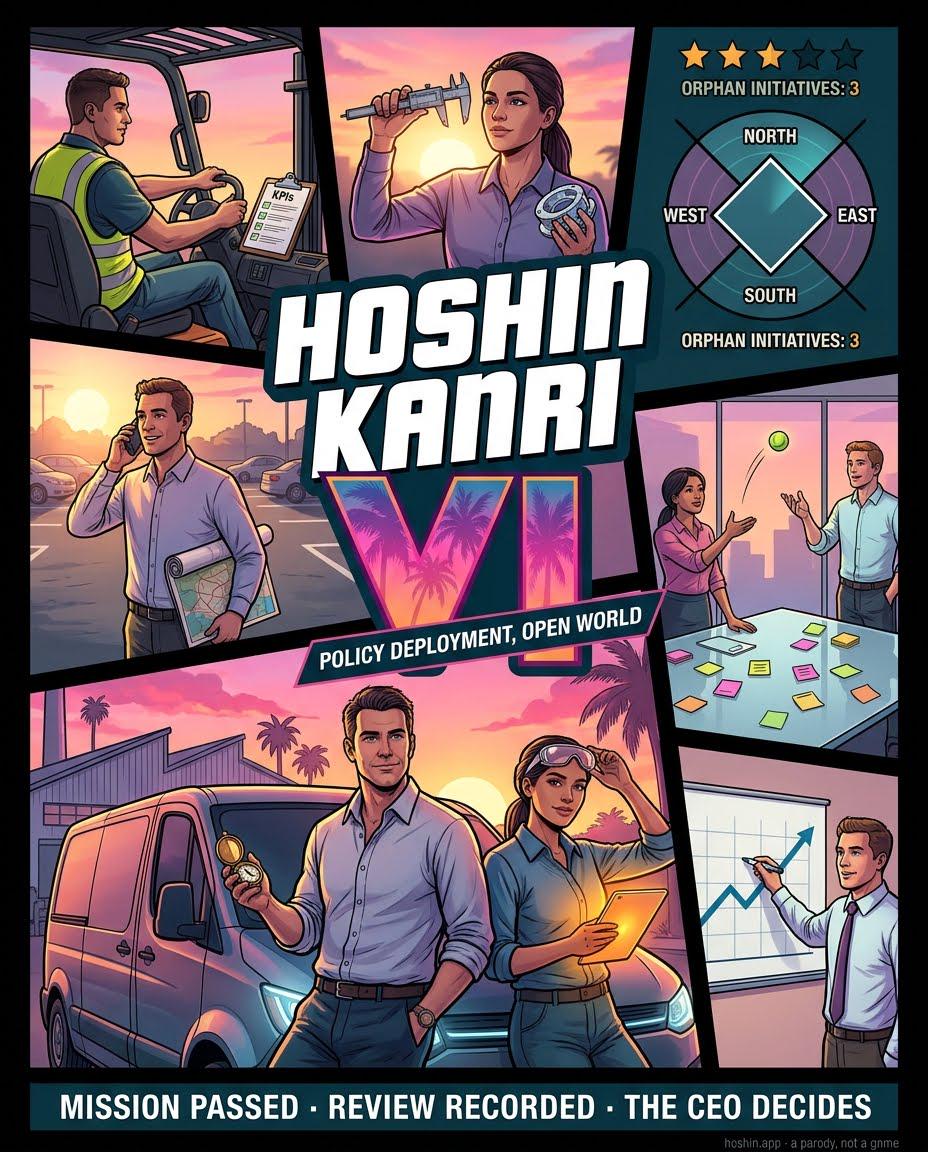
Hoshin Kanri 6

Post image
0 Upvotes

r/LeanManufacturing • • 5d ago

X-Matrix Template for Hoshin Kanri: What a Good One Includes

Thumbnail
reddit.com
1 Upvotes

r/LeanManufacturing • • 5d ago

Who actually owns an AI project in manufacturing once the pilot is over?

5 Upvotes

I've been thinking about how AI projects are managed in manufacturing, especially when more than one department is involved.

IT handles the technology, Operations understands the production process, and Continuous Improvement might have identified the problem in the first place.

That all makes sense during the pilot.

But what happens when the pilot is over and the system needs to become part of everyday operations?

Who makes sure people are actually using it? Who steps in when it's not delivering the expected results? And who decides whether it's still worth running six months later?

My thinking is that Operations should own the outcome, with IT supporting the technical side. But I'm curious how this works in other plants.

Who owns these projects where you work, and has that arrangement actually worked?


r/LeanManufacturing • • 5d ago

Before you retrain the whole team, check where the mistakes happen

2 Upvotes

Here’s a made-up warehouse example. Last week, 12 out of 200 orders had the wrong item picked. The first suggestion was to retrain everyone. Before doing that, I’d look at the 12 errors and a few orders that went right. Are the errors spread across the warehouse, or do they cluster around a couple of items or locations?

Say most of them involve two similar products stored side by side. I’d watch a few picks to see whether the labels are easy to tell apart. Then I’d test moving one product and track wrong picks per 100 orders over the next two weeks. If the rate doesn’t improve, I’d go back and check what I missed.

That’s the part of an A3 I find useful: one page to keep track of what happened, what I checked, and whether the change helped. What would you check first in this example?


r/LeanManufacturing • • 6d ago

Anyone here using AI regularly at their plant?

13 Upvotes

Curious what you use it for day to day, on the floor or in the office. If you tried something for a while and went back to the old way, I’d be interested to hear why.


r/LeanManufacturing • • 6d ago

[Quality Tip of the Week] Does audit trail review mean reading every log entry?

Thumbnail reddit.com
1 Upvotes

r/LeanManufacturing • • 7d ago

Our drive obsolescence list was three years out of date and nobody owned it

Thumbnail reddit.com
1 Upvotes

r/LeanManufacturing • • 7d ago

Universal Manufacturing Goal Strategy

7 Upvotes

Hi Everyone,

I recently took on a new position as Senior Manager of Engineering and my key stakeholders are almost always Quality and Operations.

There has always been friction between these three departments and the root cause is simply working in silos due to non-overlapping goals.

For example:

  • Engineering focuses on innovation, reducing operational costs, driving best practices
  • Quality focuses on internal/ external bouces (rejects). customer satisfaction, overall quality of parts/ lines
  • Operations focuses on productivity. efficiency, out the door delivery

Even though all three departments techincally have overlapping focuses and should depend on each other, we dont have anything on paper to hold accountibility.

I am curious what other manufacturing companies are doing to promote cross functional collabortion or what goals do yall have in place to drive this strategy of collaboration.

Lastly, my initial thoughts are not making this complicated. No crazy metrics or numbers, but simply having all teams work on one project together a year and split cost savings.