The more you examine the microarchitecture, power delivery mechanisms and thermal behaviour of Intel's 11th, 12th and 13th-generation mobile processors, the more apparent AMD Ryzen PRO's engineering advantages become.
Intel's heterogeneous architecture, combining Golden Cove/Raptor Cove performance cores with Gracemont efficiency cores, is theoretically impressive. However, its effectiveness depends heavily on OS-level thread scheduling, Intel Thread Director, workload characteristics and available thermal headroom.
Consider the Core i5-1235U and i5-1335U. Both have a processor base power of 15W but a maximum turbo power of 55W. That's nearly 3.7 times their base power.
Increasing clock frequency often requires increasing operating voltage, resulting in a disproportionate increase in power consumption and thermal dissipation. Once the processor encounters sustained package power limits or thermal constraints, frequency scaling becomes inevitable.
This is where AMD's architectural approach becomes particularly interesting.
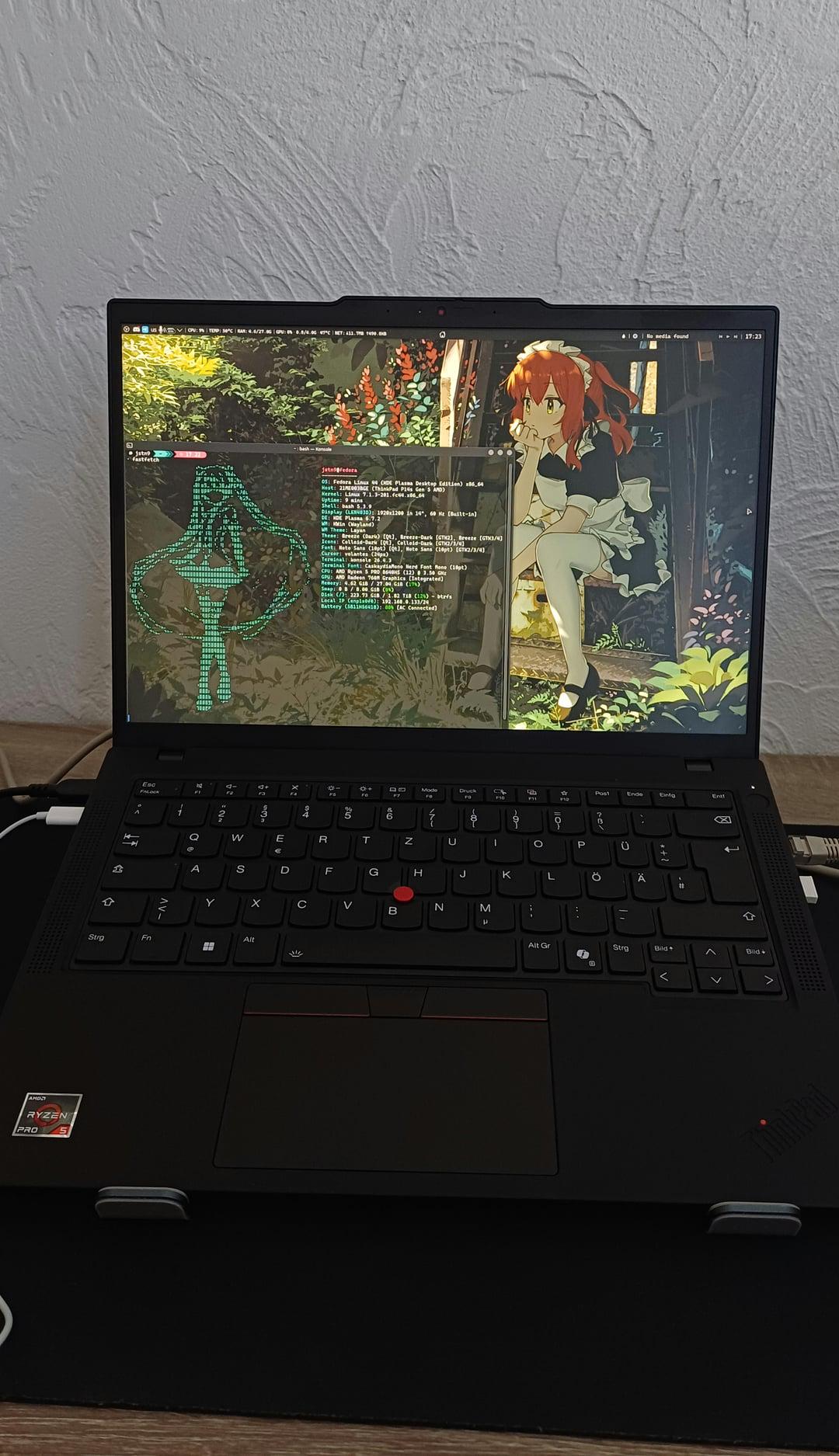
- Ryzen 5 PRO 5650U (Zen 3, 7nm): Six homogeneous cores, twelve threads and a unified 16MB L3 cache, providing excellent sustained multithreaded throughput.
- Ryzen 5 PRO 6650U (Zen 3+, 6nm): Introduces enhanced power gating, granular CPPC controls, improved C-state residency and hardware-assisted sleep-state restoration. AMD documented over 50 new or enhanced efficiency-related features at Hot Chips 34.
- Ryzen 7 PRO 7840U (Zen 4, 4nm): Eight homogeneous cores, sixteen threads, improved IPC, larger L2 caches and RDNA 3 graphics, delivering an impressive balance of computational throughput and energy efficiency.
Independent Notebookcheck testing reinforces this argument. In the ThinkPad L13 Gen 2, the Ryzen 5 PRO 5650U achieved approximately 84% higher sustained Cinebench R15 multicore performance than its Intel i5-1135G7 counterpart.
Similarly, the Ryzen 7 7840U-based Framework Laptop achieved approximately 12.1 hours of web browsing against 8.8 hours on the Intel i7-1370P configuration, despite both having identical battery capacities.
The relevant metrics for mobile computing should be sustained IPC, performance per watt, energy per completed workload, thermal equilibrium and frequency stability — not merely advertised turbo frequencies or aggregate core counts.
Of course, OEM firmware, cooling capacity, DVFS policies and workload characteristics influence both platforms. Hybrid architecture isn't inherently inferior, but its implementation must justify its complexity through measurable efficiency.
For enterprise workloads involving virtualization, compilation, endpoint security and heavy multitasking, AMD's Zen architecture makes it really compelling
Pic is from internet