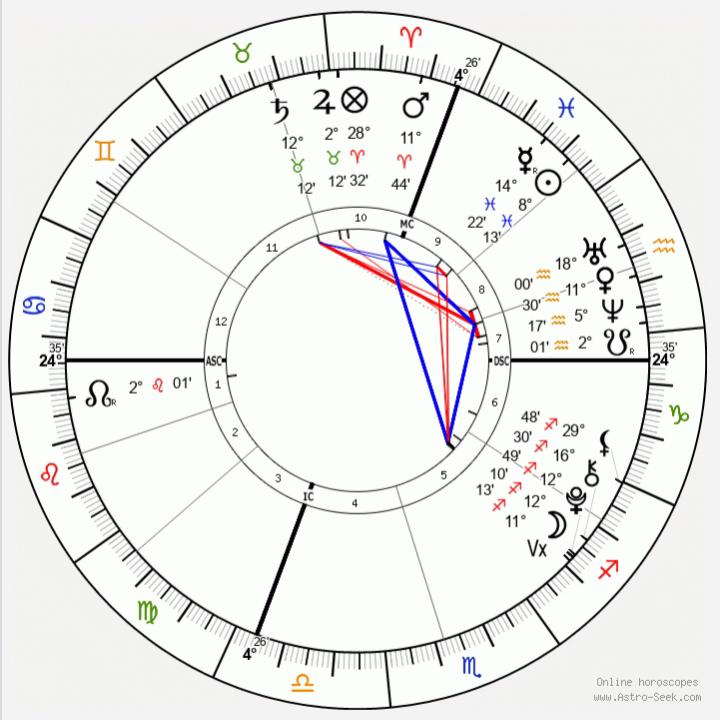
The only planet I have in my 4th house is Sun. Lived in the same childhood home for 21 years before moving into an apartment. My parents moved into a new home the same year.
Uranus has been transiting my 4th sine late 2024. I had to move in 2025. I had hoped I’d be more stationary for a while, but I’m having to move again, and I realized Uranus has been retrograding.
I tried a one-hour range around my birth time, with Placidus houses and the location held fixed. The image shows what changed across 61 one-minute samples.
The Ascendant includes Aquarius and Pisces. Uranus changes between the 12th and 1st, and Mercury and Venus each change between the 7th and 8th. All ten planet signs stay the same in these samples.
This was a deliberate experiment, not an attempt to find a new birth time for myself. It made me think about what the comparison can tell someone whose time really is uncertain.
The comparison identifies which placements depend on the time you enter. But if someone chooses a time because they relate more to its Ascendant or house descriptions, then uses those same descriptions to confirm the time, the reasoning goes in a circle.
Even a placement that stays the same throughout this hour only tells us about this particular range. It doesn't confirm the time or show that the range itself is right.
For people who work with uncertain times, what evidence would you want before narrowing that range? If you use dated events, how do you check the proposed time against events you didn't use to select it? And when would you decide there isn't enough evidence and leave several possibilities open?