r/MedievalHistory • • 19m ago

Murder of Louis, Duke of Orléans

Post image
2 Upvotes

In the first decade of the 15th Century King Henry IV was too busy quashing rebellions against his usurpation of the throne of England to take notice of France.

The French, then, in the absence of the English, started fighting among themselves. It began with a power struggle between Louis, Duke of Orléans, brother of the mentally unstable King Henry VI, and John the Fearless, Duke of Burgundy, Louis and Henry's first cousin.

Things escalated when John the Fearless had Louis assassinated, admitting the crime, and justifying it as the removal of a tyrant. Louis's son Charles then began the thirty-year Armagnac1–Burgundian civil war with John the Fearless. John was assassinated in 1419.

The Life of Charles VI by a Monk of St Denis Volume 3 describes the assassination:

Accordingly, for the space of seventeen days they lay hidden in a certain house near the Barbette courtyard, well suited for an ambush, waiting for a suitable opportunity. On the aforesaid day, therefore, after nightfall, when the duke, having enjoyed a cheerful supper at the queen's residence, was making his way to the royal residence of Saint-Pol accompanied by only five companions, that most wicked enemy, most like Judas the traitor, seeing that the opportunity suited his wishes and that no obstacle remained to what he had previously planned, summoned his partners in wickedness and ordered the deed to be carried out.

O blind mind of mortals, ignorant of the dangers that threaten and of what the next hour may bring! In the middle of the road Louis, Duke of Orléans was suddenly surrounded by seventeen ambushers, worthy of both divine and temporal punishment. At that same moment Raoul, the chief agent of the crime, committing the heinous deed with diabolical audacity, swung an axe and with a single blow cut off the duke's left hand at the wrist, then drove the weapon into his brain, from which wound, alas, came the end of the life of that most illustrious duke. Nor did the bloodstained murderer leave the weapon in the wound, but struck again from behind and, as the duke fell to the ground from the mortal injury, spilled his brains upon the royal roadway. Terrified, his companions fled, except for a certain Fleming who threw himself upon the lifeless body and repeatedly cried, "Spare the Duke of Orléans, the king's brother." Unable to be dragged away from it, he was at last mortally struck down by the swords of those who were lashing out indiscriminately.

Thus, the envious course of fate, hostile to the fortunate, in order more readily to bring their condition to ruin, casts the powerful down and leads them to destruction through hidden and unseen snares, lest, having foreseen what was coming, they should be able to protect themselves by taking precautions. When the foul crime had been committed, a deed which even all barbarous nations would have regarded with horror, the most wicked traitor dragged the corpse ignominiously into the neighbouring filthy mire; and there, by the light of a burning torch of straw, since he had no other light, when he saw that the crime had been accomplished, he returned rejoicing, as though after a deed well done, to the residence of the Duke of Burgundy with his detestable companions, no one pursuing them.

When the crime had been committed, however, a deed more cruel or abominable than any perpetrated against anyone, as the annals relate, the people immediately rushed together in sudden crowds when they heard of the horror of that most savage act; and as everyone flocked from all sides to the execrable spectacle, it was horrifying to behold the body pierced by many mortal wounds and mutilated in one arm. More horrible still was the necessity of gathering and searching for the brain and the left hand in the filthy mire, so that they might be buried with the body.

With the queen, all those of royal blood likewise heard of the enormity of the crime with the greatest displeasure, except only the Duke of Burgundy, who at first did not even believe the traitor when he brought him news of what had happened, until, going with his household as though equipped for war to the church of Saint-Guillaume, he found the body already brought there. From that moment, feigning the appearance of grief and putting on mourning clothes like the others, he joined them without a trace of shame when they carried the body to the church of the Celestines of Paris, where he himself had wished to be buried while still alive. There, after two days had passed, when they had most solemnly performed the bloody funeral rites with much lamentation, they took counsel together, asking one another with bitterness of heart who had been the author of so great a crime.

Note 1. The Armagnac's are named after Charles' father-in-law Bernard VII, Count of Armagnac.

r/MedievalHistory • • 22h ago

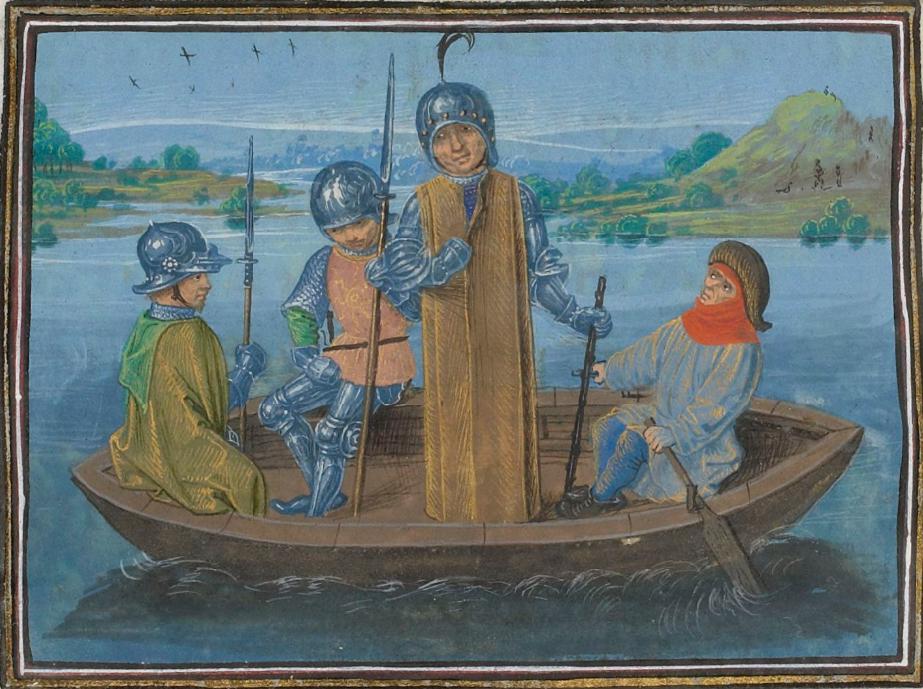
Death of Robert de Vere, Duke or Ireland

Post image
76 Upvotes

On the 22nd November****1 1392 Robert de Vere was fatally 'struck by a wild boar while hunting' [Otterbourne] aged thirty while in exile in Louvain 'in a pitiable state of mental anguish and material poverty' [Walsingham].

A childhood friend of King Richard II, he succeeded as Earl of Oxford aged nine. He married, aged fourteen, Philippa de Coucy, a first cousin of King Richard and granddaughter of King Edward III. Richard continued to favour him making a Marquess, the first creation of the title in England, placing him above all the nobility in the Kingdom excepting the Dukes of the Royal family. A year later he was created Duke of Ireland - the first non-royal Duke.

In 1386 he divorced his wife, and married his mistress Agnes Launcekrona, a Lady of the Bedchamber to Richard's Queen Anne of Bohemia, causing scandal, and the further enmity of the nobility.

De Vere's demise began at the 1387 Battle of Radcot Bridge when the Royal army, commanded by him, were prevented from crossing the River Thames, by the army of the Lord's Appellant, commanded by Henry, Earl of Derby [future King Henry IV]. Being surrounded, many attempted escape, with many drowning in the process. 'Meanwhile, the Duke of Ireland, fleeing, came to a river. When he wished to cross by a bridge, he found it broken. Reaching another bridge, he encountered archers who blocked his passage. Thus, turning away from them and searching for a ford, he urged his horse into the river. There, soon transformed from a rider into a swimmer, he reached the other bank.' [Walsingham]

He escaped England, travelled to the Low Countries, eventually ending up in Louvain where he met his death five years later.

Three years after Richard had his remains returned to England, and buried. Annals of Kings Richard II and Henry IV: "In this year, in the month of September, the King of England had brought from Louvain the body of his former beloved, Robert de Vere, Earl of Oxford, a man who would indeed have been fortunate if he had resolved to keep within his proper bounds, but who through over-great advancement was overcome by misfortune. At the Priory of Colne in Essex, the King caused solemn obsequies to be performed, attending there in person and magnifying the funeral office in whatever ways he could. He had the cypress-wood coffin, in which the body lay embalmed with balsam, opened; he looked upon the face and touched the fingers, which, as is said, were enriched with precious gold rings that were to be buried with the body. And he publicly showed to the dead man the affection which he had formerly bestowed upon him while alive. There were present there, with the King and the mother of the deceased, the Archbishop and several other bishops, together with abbots and priors and other religious men. But few nobles attended, because the hatred which they had conceived against him had not yet been digested."

Note 1. The date of the 22nd November isn't mentioned in any contemporary chronicle. It is mentioned by Wikipedia as the date of his death and his reburial three years later without a source being cited.

The image taken from the Gruthuse manuscript of Froissart's Chroniques, around 1475.


r/MedievalHistory • • 32m ago

An Ancient Coffin in a Famous Church Held the Wrong Body for 1,000 Years. Now We May Know Who’s Inside.

1 Upvotes

r/MedievalHistory • • 1d ago

Richard Neville earl of Warwick was born 22nd November 1428. Known has the king maker he was instrumental in the rise of one king and removal of two others. Died battle of Barnet.

Thumbnail
gallery
28 Upvotes

r/MedievalHistory • • 2d ago

More precise map of the Carolingian Empire, 814

Post image
401 Upvotes

A more precise map of the Carolingian Empire during the final years of Charlemagne’s reign. It also shows Charlemagne’s planned division of the empire, a plan abandoned following the deaths of his sons Charles and Pepin, as well as the major urban centers.

These territories belonged to a single monetary zone, defined by the "denarius" (denier) introduced by Charlemagne, even though the economy of the era remained largely non-monetized (the vast majority of the population almost never used coinage). Notably, the Kingdom of Asturias also fell partially within this monetary zone, a feature of Asturias at the time, as it minted no currency of its own, relying instead heavily on Andalusian coinage.

It should be noted that Benevento, while technically a tributary state, was effectively in rebellion against Charlemagne’s empire; he was never able to bring it fully under his control.

Conversely, the Anglo-Saxon kingdoms, though independent, remained within the empire’s orbit (for instance, Charlemagne arbitrated the succession in Northumbria in 808, and Egbert, King of Wessex, served in his army). The same holds true for the Kingdom of Asturias.

More broadly, with the exception of Benevento, which explicitly rejected Charlemagne’s imperial project all the Christian kingdoms of Western Europe acknowledged his prestige and preeminence. Einhard records that the kings of Ireland sent letters and present to Aachen in which they addressed Charlemagne as "our lord" (dominus noster).


r/MedievalHistory • • 2d ago

Nicola de la Haye

Thumbnail
gallery
112 Upvotes

In a quiet corner of the quiet church of St Michael's Church, Swaton, Lincolnshire, lies the effigy of Nicola de la Haye, hereditary constable of Lincoln Castle and Sheriff of Lincolnshire, who died [traditionally] on 20th November 1230.

Twice she held her castle against besiegers.

The first time in 1191 against bad Bishop William Longchamp, King Richard I's regent whilst he was away crusading, and who gave up after a month and restored her titles.

The second time in 1217, shortly after the death of King John, when an army of Prince Louis attempted to take the castle, she held out, until William Marshal and Bishop Peter de Roches came to her aid, and defeated Louis' army at the Second Battle of Lincoln, also known as Lincoln's Fair.

The Annals of Dunstable has: "There, together with Gilbert de Gant and the other barons who were present, they besieged Lincoln Castle, in which a noblewoman named Nicola [de la Haye] defended herself manfully."

Anonymous of Béthune: "Here, however, the castle, which was under the command of a lady, Nichola [de La Haye], who had it by inheritance, held out steadfastly against him."

The History of William Marshal, in verse, is more detailed:

And the Bishop of Winchester
who greatly wished to know their state
went willingly towards the walls
with a great company of crossbowmen.
Then he told them to wait for him there,
or to remain there a little while,
for he would return quickly.
With only one servant
he entered into the castle,
and on entering he met
my lord Geoffrey de Serland,
who had been in great fear.
They saw the walls thrown down and broken,
and greatly lamented them.
The bishop saw the damage
to walls, houses and people,
which the stone-throwing engines
were hurling, casting down and overturning.
Some of those who were inside
warned him, and begged him,
for God’s sake, to draw back
because of mangonels and stone-throwers
which were smashing everything around,
and he entered into the tower.
There he found the good lady,
whom God keep in body and soul,
who was lady of the castle,
and defended it as best she could.
The lady counted herself fortunate,
and greatly rejoiced at his coming,
and he comforted her very well
with the news that he brought.
He stayed there little, I tell you,
by a postern he went out on foot
into the town, for he wished
to see how it stood.


r/MedievalHistory • • 4d ago

Monument to Nicholas Fitzherbert, 1473

Thumbnail
gallery
201 Upvotes

On 19th November 1473 Nicholas Fitzherbert died aged 73 at Norbury, Derbyshire. He was buried at the Church of St Barlok, Norbury. Finely carved in alabaster from the nearby Fauld quarries. Armour from the Fluted Period; the Wars of the Roses. Fine set of weepers. Note the mail Standard that protects his neck, the lacings on the armour, the Suns and Roses collar, the two piece breastplate. Short hair with no moustache; after 1450, or thereabouts, carved effigies changed from having moustaches to not having. The Clenched Fist Crest unusually left-handed whereas the Fitzherbert crest usually right-handed; probably a mistake by the sculptor since left-hand suggests illegitimacy. Probably carved by Harpur and Moorecock of Burton on Trent.


r/MedievalHistory • • 3d ago

History books

10 Upvotes

I’m looking for medieval history books and armor books from 400-1250. More specifically the life of the people, tales, and legends. Western & Eastern Europe, North Africa, and the Middle East. If anyone can recommend authors and books, I’d greatly appreciate it.


r/MedievalHistory • • 3d ago

When Hungary and Albania stood together in late Medieval Europe: Rediscovering the Hunyadi–Skanderbeg alliance

5 Upvotes

r/MedievalHistory • • 3d ago

unification of england

3 Upvotes

In the show the Last Kingdom, the unification of England under Alfred’s Wessex kinda comes off as fairly straightforward, with Saxons tending to ally with Wessex and having each former English kingdom as well as Danelaw come into Wessex’s control rather easily by piecemeal. However from my limited understanding about the period, the different Saxon kingdoms tended to not be of one mind along with different Viking chieftains and jarls having their own outlooks and ambitions rather than being a unified Danish front (not to mention the varying Gaelic, Pictish, Brittonic and other Celtic kingdoms with their own ambitions). I was just wondering, did the 9th-10th century British Isles see any sort of shifting and brief alliances between kingdoms of different faiths and nationalities (i.e. a Welsh kingdom allying with Mercia against Danes or Vikings allying with Northumbria against Scots, etc)? The political makeup of the time seems almost similar to the taifa period in Spain where different Muslim and Christian kingdoms would ally with each other against other Muslim and Christian kingdoms for mutual interest and gains.

p.s. I know about the battle of Strathclyde being one example of various Saxons battling against an alliance of Irish Vikings, Scots and Britons so I was also wondering if there were similar events to that.


r/MedievalHistory • • 4d ago

I made a model of a Norman Motte & Bailey castle in the game Tiny Glades

Thumbnail
gallery
167 Upvotes

I love medieval history and have just finished re-listening to The Rest is History's multi-part series on 1066, so I decided to channel that into re-creating a Norman Motte in this little town building game i've been futzing around with. I tried to hew as close as possible to the historical evidence within the limits of what this game can do, so forgive me if certain details are not quite right, but I think overall it gives a really good sense of scale and why these constructions would have been so imposing in Anglo-Saxon England.

Let me know what you think, and which kind of castle I should try next!

I used the following references:

  1. https://www.castlesworld.com/tools/motte-and-bailey-castles.php
  2. https://justhistoryposts.com/2019/03/20/the-development-of-castles-in-britain-part-1/
  3. https://encrypted-tbn0.gstatic.com/images?q=tbn:ANd9GcRCpSENCJDD087SAZe405IrZFOypNqf_Yel8rZT1ULy5g&s=10
  4. https://archaeology-travel.com/wp-content/uploads/elementor/thumbs/model-motte-castle-py3o279ntu5vqari07ugnvch2h8cml5416g7c9yxcu.jpg
  5. https://scontent-lga3-3.xx.fbcdn.net/v/t39.30808-6/517387231_24974624765460504_6076635209671149340_n.jpg?stp=dst-jpg_tt6&cstp=mx1242x810&ctp=s1242x810&_nc_cat=100&_nc_map=urlgen_bucketless&ccb=1-7&_nc_sid=aa7b47&_nc_ohc=9c7DEJE_ZakQ7kNvwEkExCe&_nc_oc=Adpez7v7cJmJLid9dKJwS5dRY798-0NUXLjreJmRJo96MXD87vuWdSAmcfVpfEvi4LI&_nc_zt=23&_nc_ht=scontent-lga3-3.xx&_nc_gid=NLa88ehN6HPnjd1iw67aig&_nc_ss=7b2a8&oh=00_AQQG4YjetuWobPdjSqXWOcFvHcTTzOwugM-HrzKq7JjSiA&oe=6B02CCAB
  6. https://outofoblivion.org.uk/wp-content/uploads/2023/09/Castlehaw-reconstruction-MYD3612-c-YDNPA-rotated-aspect-ratio-16-9-2-1600x900.jpg

r/MedievalHistory • • 4d ago

Resources for learning about claims to power/nobility?

7 Upvotes

Hi all!

To provide some context, I enjoy making board games as a hobby, and I had the idea to make a game where a king has died without an heir, and all the players are trying to claim the throne by gaining influence, battling other players, etc.

I know next to nothing about medieval history, and I'd like to try and make things at least somewhat historically accurate, so I'm looking for resources to learn about relevant events.

Thank you in advance!


r/MedievalHistory • • 5d ago

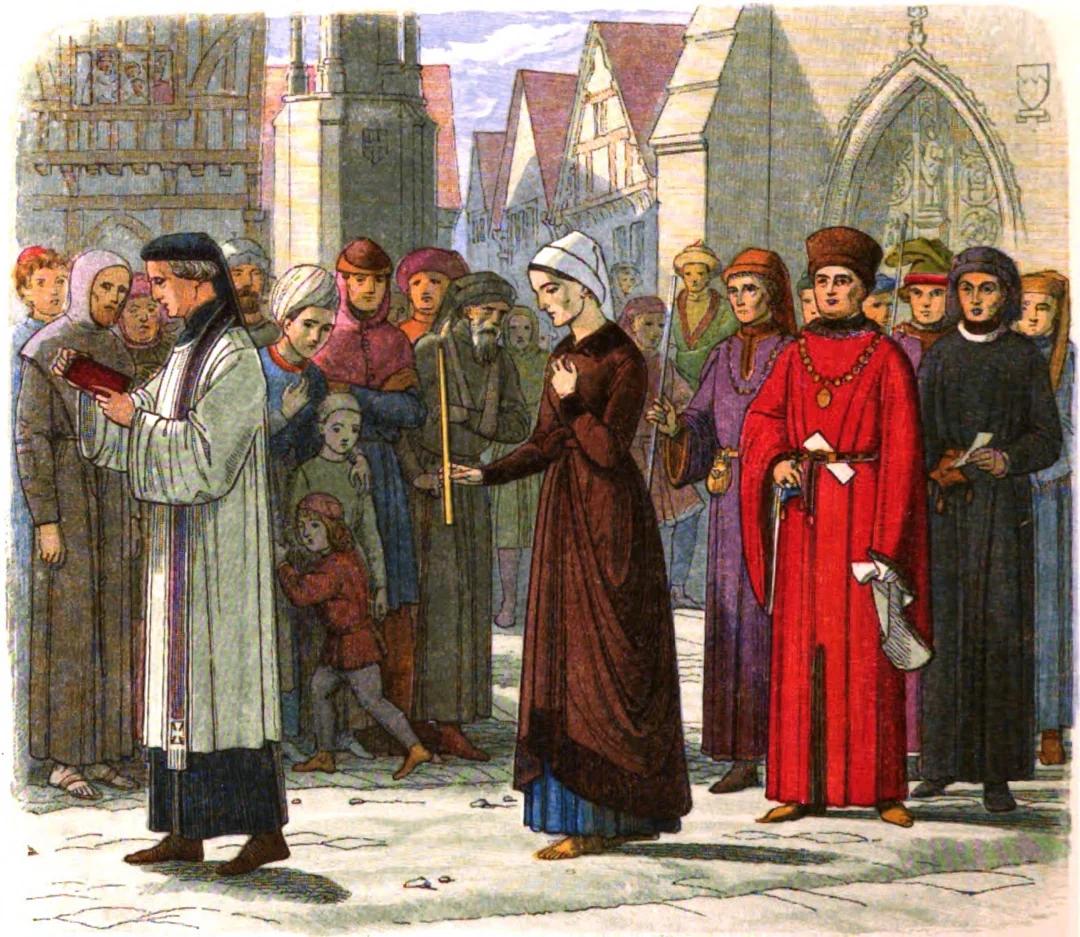
Trial of Eleanor Cobham

24 Upvotes

In 1441 Eleanor Cobham was the wife of the heir presumptive Humphrey of Lancaster, having been Lady in Waiting to his former wife Jacqueline of Wittelsbach. King Henry VI was twenty years old and yet to marry Margaret of Anjou. The Hundred Years War was in its decline.

Why, all of a sudden, was Eleanor accused of having predicted the future of the King? How did Humphrey, second only to the King, allow it to happen, and to allow his wife to be publicly humiliated, divorced and imprisoned? Was it actually an attack on Humphrey, a means of undermining his power.

Two of her co-conspirators were executed, another died in prison before his trial.

On 27th October 1441 Margery Jourdemayne "The Witch of Eye" was burned at the stake at Smithfield.

On 28th October 1441 Thomas Southwell died whilst in the Tower of London one day before his trial was set to begin.

Today, 18th November, the anniversary in 1441 of the brutal execution of her accuser Roger Bolingbroke, as described in number of Chronicles [I have modernised the language for ease of reading]:

Chronicle of William of Worcester: "And a certain very famous cleric, one of those in the whole world in astronomy and the art of necromancy, Master Roger Bolingbroke, was arrested. He was publicly placed in the cemetery of St. Paul's with his necromantic garments and waxen images, and as many other necromantic instruments as possible, sitting on a high throne so that all could see his work. Later, he was drawn, hanged, and quartered [on 18th November 1441], and his head was placed upon London Bridge. This Master Roger was one of the most notable clerics in the whole world, and he was accused because of the aforementioned Lady Eleanor, for whom he was a counsellor in the magical arts. After her death, many lamented excessively."

An English Chronicle: "And the Saturday, the eighteenth day of November next ensuing, Master Roger Bolingbroke at Guildhall at London before the said lords and justices was arraigned of the aforesaid articles of treason against the king's person, and thereof by twelve men of London he was found guilty. Wherefore by the judgement of Sir John Hody, that time Chief Justice of the King's Bench, he was drawn from the Tower of London unto Tyburn; and there he was hanged and let down half alive, and his bowels taken out and burnt, and his head smitten off and set on London Bridge, and his body quartered and sent to certain towns of England, that is to say, Oxford, Cambridge, York and Hereford. And when the said Master Roger should die, he confessed that he was never guilty of any treason against the king's person; but he presumed too far in his cunning, as he said, whereof he cried God mercy; and the justice that gave on him judgement lived not long after."


r/MedievalHistory • • 5d ago

How is Dan Jones The Plantagenets?

60 Upvotes

I found this book in my personal library must have bought it long ago. However, after doing research a lot of communities mention he's a pop historian which is not bad as im not really trying to go into full depth but heard he gets some facts wrongs. Whats yall opinion on him and is there similar books?


r/MedievalHistory • • 5d ago

Did knights and men-at-arms from different places fight in a significantly different way?

27 Upvotes

I mean in a proper "fighting style" sense and not strategy, for instance, would a french and a english knight use significantly different techniques in a straight 1 on 1 duel in the late 14th century? (like about the time manuscripts such as Flos Duellatorum existed)


r/MedievalHistory • • 5d ago

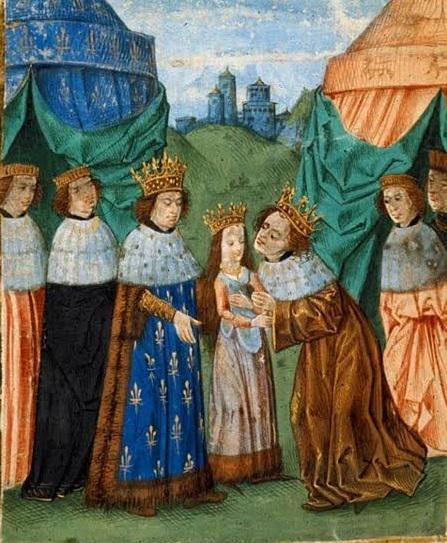
Richard II and the politics of peace – what has common sense to do with it?

Post image
32 Upvotes

The current orthodoxy is so heavily invested in Richard II’s personal weaknesses being the cause of his downfall that it is blind to the obvious question; what role was played in events by his policy of peace with France?

Look at the image used to illustrate this post: Richard II is meeting his wife-to-be Isabella de Valois, not yet seven, in the presence of her father, Charles VI of France. You will be used to reading comments raising eyebrows at this depiction, but it represents politics, not paedophilia.

Richard II’s marriage was an attempt to definitively end the French wars. We can know using common sense alone, and without any particular expertise in late-medieval history whatsoever, that there must have been some kind of resistance to the idea of permanent peace with France within the bosoms of some sections of the English community.

The English nation has not been prepared for the announcement that their sovereign would end 60 years of conflict by marrying an enemy princess. The ‘grass’ had not been ‘rolled’. No PR guru had prepared, let alone shaped, public opinion. Bald proclamations blared by heralds was the primary media for the dissemination of information to the C14th population and we can imagine that many would have been shocked, and many would have been hostile, some actively.

If the question is: did Richard II’s marriage to Isabella de Valois have an effect on the English body politic?, then we can know straightaway, not even requiring a chronicular commentator to confirm it, using common sense alone, or Sherlockian deductive reasoning if it needs dressing up, that the answer must be, has to be, cannot be other than ‘yes’.

Who could disagree that this political marriage would have had an impact?

Recent historians of the period do because it is necessary to their projection of the ‘Richard the mentally unfit and vengeful’ showreel. If there was a political reaction to his marriage gambit, which might show itself in parliament (The Thomas Haxey Affair) and then later in a conspiracy against him (The St Albans Plot), then one might argue that there was a connection. But they don’t because they cannot as it undermines their personality-based thesis.

Here’s the timeline:

October 1396 – marriage of Richard II to Isabella de Valois.

January 1397 – coronation of Isabella as queen in Westminster Abbey

Two weeks later

January 1396 parliament, which includes the Thomas Haxey affair.

July 1396 arrests, subsequent to the St Albans plot.

Is it not surprising that the political fallout from Richard II’s marriage detains historians so little? And it’s not because there is no evidence, because there is copious evidence,  but it’s evidence they don’t approve of.

Yes, it’s Froissart. Some of these historians may take the trouble to explain why they ignore his contribution which is useful as it’s very easy to prove that they are wrong. For them; peace was not a problem; there was no crisis in 1396; Froissart made it up. However, Froissart’s material dovetails very well with what we know from reputable beef-eating English sources when it comes to events from October 1396 to July 1397.

 Froissart’s version fits with what we know happened and Alberto Varvaro – Europe’s greatest philologist – in his masterful edition of Froissart’s Book IV – says that Froissart did not rewrite his history to account for the outcome. Admittedly, a Lancastrian voice gave Froissart a fully-fledged story of events from Henry’s exile to 1401 which is widely inaccurate, though still interesting as it represents an official version given to a well-known Continental historian. Having said that, what Froissart had to say about events 1396-97 was his own, and he had visited England in 1396 and met Richard II and the Duke of Gloucester, amongst many others.

Which of the histories is the more likely: the one in which the marriage made no difference or the one in which it stimulated resistance to Richard II’s peace policy?

------------------

N.B. Isabella’s sister, Jeanne de Valois, was five when she married the heir to the dukedom of Brittany in the autumn of 1396, in parallel with Richard II’s marriage.

1399: The Lancastrian Conquest will be published in January 2027 in the UK and in March 2027 in the USA by Casemate.


r/MedievalHistory • • 6d ago

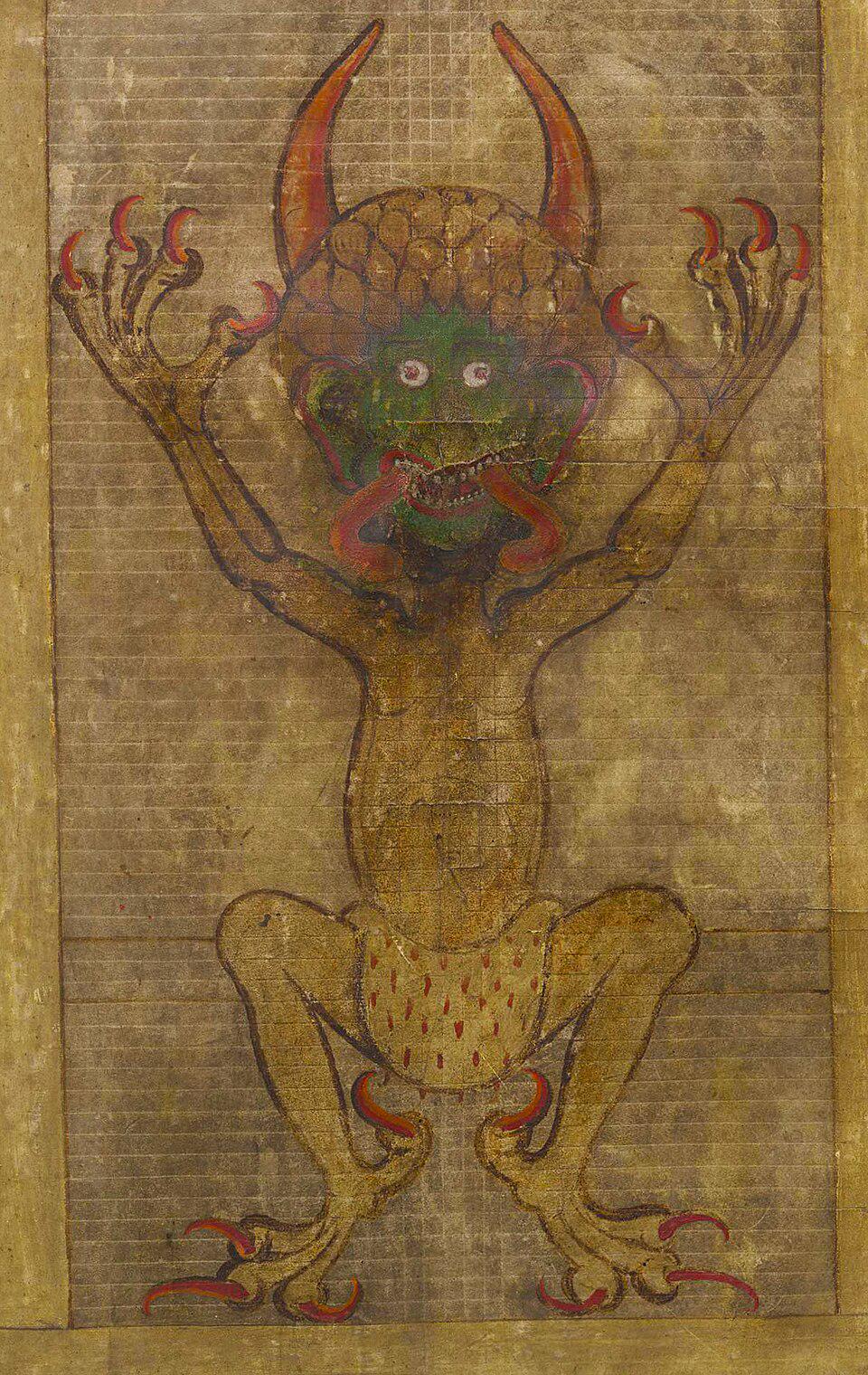
How do historians work out how long it would have taken one scribe to complete the Codex Gigas? I've seen estimates ranging between 5-20 years.

Post image
14 Upvotes

There are over 300 pages of vellum in the Codex Gigas and handwriting analysis suggests that it was one scribe. People who have attempted to replicate it have given estimates of five years plus of continuous writing. Others have given an estimate of twenty years.

Just wondering how they come up with such estimates? Are they assuming the scribe could write a certain number of pages per day and that there was no ruling, illumination or vellum preparation? Also, would those of you who are medievalists think it is most likely that it was just one scribe? Could there have been more people involved?

If anyone can recommend any reading on how much time was spent by scribes in the medieval scriptorium, it would be much appreciated.


r/MedievalHistory • • 6d ago

was there a large ned stark type sword that actually was used back in medieval times?

8 Upvotes

something like this like as a kid, large swords like that was always what was portrayed as the average sword. but now i look it up, and i can't seem to find any swords like that. the most i found is the longsword. but it seems to be much more narrow that what i always pictured. now obviously it could just be i pictured it wrong always. i mean they didn't change history to fit a childrens books drawing or something. but i am wondering if there WERE actually any swords that were that style that was actually used back then


r/MedievalHistory • • 6d ago

What is one detail or lesser known story about a historical figure you’d like to see in a screen adaptation about them?

26 Upvotes

For me, if they ever did something on Richard the lionheart I’d love the added detail that at one point he was a celebrated musician included. (Bring back kings who shred)

with either the legend of Blondel, the trouvere who went castle to castle singing a song only he and Richard knew when he was imprisoned in Austria in order to locate him.

OR the ruthless roasts and manoeuvring by troubadour Bertran de born who lit Richard up in many songs and sowed endless discord and drama between the brothers and their father. ultimately having Bertrans life spared after his lament of the young king moved Henry II to tears. So much so he gave him back his lands and paid him in silver rather than hang him!


r/MedievalHistory • • 8d ago

I'm reconstructing the year 1318 day by day, and built a map to see it

130 Upvotes

I'm trying to reconstruct what happened in Europe in 1318, day by day. At some point a list of facts stopped being enough, so I built a map with a timeline.

artifacture.club

​Right now it covers only April and part of Europe: England, France, Iberia, Italy, the Empire, Bohemia, Poland, Scandinavia and Rus, plus the papal curia, the Golden Horde and Tunis. That's 73 people, 29 letters and about 50 events. The plan is to cover the whole year and add regions month by month.

You press play and watch who was where on each day: kings, popes, envoys, bishops. You also see how news moved. Letters leave Avignon, Windsor, Paris or Venice, travel across the map and arrive.

Every point is either a fact or a reconstruction. A fact means a source gives the exact date and place, for example a royal grant dated at Windsor on 28 April. A reconstruction means the position is logical and nothing contradicts it, but no source states it directly. The two look different on the map. When we simply don't know where someone was, they fade into fog instead of getting an invented route.

Movement follows travel speeds of the period. A courier covers 45–65 km a day, a rider up to 45, a royal court with baggage around 35, and crossing the Alps is 1.5 times slower. So when two documents put the same person in two places, the map shows whether that journey was actually possible. Letters work the same way: the sending date comes from the document, and the arrival is estimated from distance and speed.

The sources are mostly published editions: English royal rolls, papal letters, Habsburg and Danish regesta, chronicles. Every point on the map links to the fact behind it.

What surprised me most is how much was happening at once. On 15 April (my birthday btw) alone, eleven letters were on the road across Europe.

Update: also added a family graph... every kinship and marriage link between the people on the map, each with a source. Turns out both rival kings of Germany, Louis of Bavaria and Frederick the Fair, plus Charles Robert of Hungary and Queen Elizabeth of Bohemia, were all grandchildren of Rudolf I of Habsburg.

another update:

Added a third view.. who had the right to grant what to whom, popes kings and everyone below

the link to the site: artifacture.club


r/MedievalHistory • • 7d ago

A new group for those who enjoy music from the middle ages

15 Upvotes

r/MedievalHistory • • 7d ago

Battle of the Winwaed, 15th November 655. Between Penda of Mercia and Oswiu Of Northumbria. Bede cites this battle the demise of Paganism in Anglo-Saxon England.

Post image
22 Upvotes

Oswiu at the Synod of Whitby linked in worship to the wider Catholic church. The Saxons were very devout and there was less friction with the Pope than the Normans and later kings had.


r/MedievalHistory • • 9d ago

You can explore Medieval era art on this interactive timeline

Post image
156 Upvotes

r/MedievalHistory • • 9d ago

Antique identitication

Thumbnail
gallery
20 Upvotes

What could this be? Im not very well versed in potential medieval artifacts (might be earlier or later im not sure)


r/MedievalHistory • • 9d ago

What was considered the most brutal weapon in the medieval period?

22 Upvotes