r/MilitaryHistory • • Oct 03 '26

Looking for new moderators for r/MilitaryHistory

2 Upvotes

-If you’ve been unsatisfied with the post quality on this forum as of late, we NEED your help-

I’m looking to add a few more moderators to the sub. Currently we have three, including myself but it is getting harder to monitor new posts for rule violations, namely AI

Nothing too serious or formal. I’m mainly looking for people who are active in the subreddit, know the community, and are willing to help keep things running smoothly.

If you’re interested, just DM u/JoltyJob or leave a comment on this thread with a couple words related to:

- How long you’ve been participating in the sub
- How active you are (# of posts / comments per week)
- Your typical Reddit browsing hours i.e (3pm - 8pm PST)
- Any previous Reddit moderation history

No formal application or resume or anything like that.

Just looking for some active members who want to help out.

You would begin with the ability to remove and lock posts, but more permissions can be added down the road if all goes well.

Thanks!


r/MilitaryHistory • • Jul 09 '26

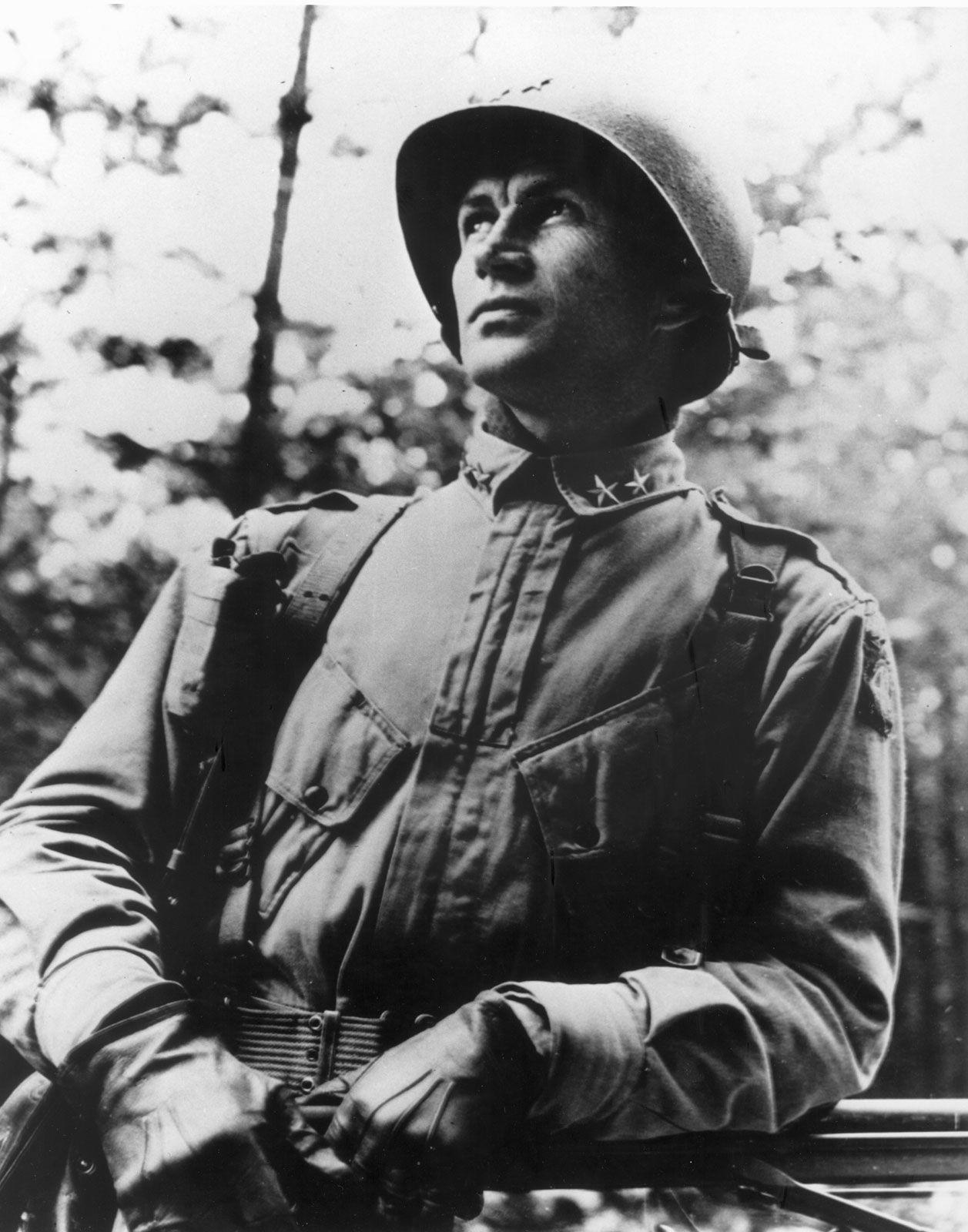
WWII Any recs for books on James Gavin or Operation Market Garden?

Post image
52 Upvotes

I’m a Bostonian who recently visited the Normandy beaches and Sainte-Mère-Église for the first time. While visiting the Paratrooper Museum, I learned about General James Gavin and his legendary career. He also had close ties to Boston. Would love to read more in depth about him. Thanks in advance!


r/MilitaryHistory • • 10h ago

WWI The General who talked to the stars

Thumbnail
gallery
44 Upvotes

His name was Milan Rastislav Štefánik, and he was a French brigadier general. He was also an astronomer, scientist, mathematician, meteorologist, traveller, photographer, pilot, soldier, politician, diplomat, and later the Slovak Minister of War. He was born on July 21, 1880, in the village of Košariská in what is now Slovakia. His father was an Evangelical pastor, and from an early age, he was raised with patriotic values, which was not easy at all for a Slovak at that time. He completed his secondary education at a Hungarian school in Szarvas. During his studies, he refused to celebrate Hungarian holidays and stood by the fact that he was Slovak. His classmates did not like it, and one day they hung him upside down by his legs from a balcony and threatened that if he did not acknowledge the superiority of Hungarians, they would drop him from the balcony. Štefánik refused. Despite all of this, he successfully graduated and afterwards went to study in Prague, where he chose to study civil engineering. The subject did not suit him, so he transferred to Charles University, where he studied astronomy. This angered his father, and he was kicked out of the house. However, Štefánik continued his studies. At Charles University, he attended lectures by Tomáš Garrigue Masaryk, which impressed him so much that he joined his Slovak student association Detvan and wrote for the magazine Hlas (The Voice), which brought together a young generation inspired by Masaryk's ideas of Czech-Slovak cooperation and democratization.

After successfully completing his studies, he moved to France and became an astronomer. Štefánik arrived in France without money and initially lived in great poverty. A turning point came in 1905, when he was accepted by the director of the observatory in Meudon near Paris, the famous astronomer Jules Janssen. Janssen entrusted Štefánik with managing the observatory right at the summit of Mont Blanc. Štefánik undertook several difficult climbs there, conducted spectroscopic observations of the Sun, and studied the solar corona. In 1907, he received an award from the French Astronomical Society for his scientific achievements. After Janssen's death, Štefánik had to leave the observatory in Meudon and began working as an independent scientist commissioned by the French government and the Academy of Sciences. He travelled almost all over the world and particularly fell in love with Tahiti. He spent almost a year in Tahiti, where he built his own observatory and photographed Halley's Comet. The people of Tahiti liked him a lot and began calling him "the man who talks to the stars". In 1913, he travelled to Ecuador and the Galápagos Islands, where he successfully negotiated a concession for the French government to build a network of meteorological and telegraph stations. In 1912, he obtained French citizenship, and in 1914, he was awarded the Legion of Honour for his scientific and diplomatic achievements.

However, he had suffered from serious stomach problems since his school years. Difficult expeditions and lifelong poverty during his youth took a toll on his health. He suffered from severe stomach ulcers, which forced him to undergo a difficult operation in Paris in 1914, and because of this, he was unable to eat any solid food for a time. Just as he was recovering from the operation, the First World War broke out. Štefánik immediately decided to abandon his scientific career, volunteered for the French army, and joined the air force, which marked the beginning of his military and political career. Because of his poor health, the army had initially not wanted to accept him at all. Fortunately, he found a position as a meteorologist and helped forecast the weather for pilots. In the autumn of 1915, he flew to the Serbian front. During the dramatic retreat of the Serbian army through the Albanian mountains in the winter of 1915, he crashed, suffered serious injuries, and was evacuated to Rome and subsequently to Paris with his health weakened.

He met again with Tomáš Garrigue Masaryk and his new colleague Edvard Beneš. Together, they wanted to promote the idea of a free and independent Czechoslovakia. Thanks to his connections in Parisian salons, he arranged a meeting for T. G. Masaryk with French Prime Minister Aristide Briand in February 1916. Together with Edvard Beneš, they then founded the Czechoslovak National Council. Štefánik set himself the goal of uniting the Czechoslovak Legionnaires, who were spread across Italy, Russia, and Romania. He travelled halfway around the world just to build a foreign army out of his fellow Czechoslovak prisoners of war, and for his achievements, he was promoted to the rank of brigadier general in the French army in 1918. When Czechoslovakia was established on October 28, 1918, Štefánik was on his way to Siberia to visit the Czechoslovak Legionnaires, who had become trapped there during the Russian Civil War. He organized their supplies and prepared their evacuation home because their situation had become really difficult. From a distance, he was appointed the first Czechoslovak Minister of War, which he was not very happy about, since there was a Minister of Defence above him, and Štefánik saw it as an attempt to push him into the background. In the spring of 1919, he finally set off back to Europe, where he first negotiated in Paris and Rome about the structure of the new army and the borders of the state.

Štefánik became involved in major disputes with Edvard Beneš, and their original friendship turned into complete hostility. Štefánik was compared to a bird because he was a man of great ambition and freedom, while Beneš was compared to a reptile because he was a man who tirelessly manoeuvred his way around obstacles. They had very different personalities, and this was reflected in their decisions. On May 4, 1919, Štefánik decided to fly back to Slovakia. The peaceful flight turned into a tragedy because Štefánik's aircraft crashed, ending his life. Speculation about what actually happened continues to this day.

Milan Rastislav Štefánik is now considered a Slovak national hero. Without his help, the Czech Republic and Slovakia as we know them today would never have come into existence. Throughout the Czech Republic and Slovakia, there are streets, schools, and other places named after him, and even the observatory on Prague's Petřín Hill bears his name. This article was only a small part of his rather complicated life story. Štefánik has his own burial monument on Bradlo Hill, which both the Nazis and later the Communists were afraid to touch, and so it still stands there to this day.


r/MilitaryHistory • • 3h ago

Suomussalmi, Dec 1939: why two Soviet divisions couldn't just leave the road [map]

Thumbnail
gallery
8 Upvotes

Map key: red = Soviet column on the Raate road, blue = Finnish ski units and roadblock, orange = Finnish winter road over the lakes.

The Soviet plan on paper looked simple: push the 163rd Rifle Division west from the border, take Suomussalmi, drive on to Oulu and cut Finland in half at its narrowest point. On a map it's about 200 km.

The problem is what the map doesn't show. Between the border and Oulu there was almost nothing but forest, frozen marsh and a few logging roads. A road-bound division with trucks, guns and horses can only move where the road goes, while Finnish units on skis could move almost anywhere.

What happened next:
• 7 Dec: the 163rd takes Suomussalmi village.
• By 11 Dec: Siilasvuo's JR 27 cuts the Raate road behind it, so the division is supplied by one thin, exposed line or not at all.
• Late Dec: the 163rd is boxed in around Hulkonniemi and Suomussalmi. Breakout attempts south (24 Dec) and west (25 Dec) fail.
• 27–28 Dec: the Finnish attack goes in and the 163rd collapses. Survivors flee across the ice of Lake Kiantajärvi.
• Meanwhile the 44th Rifle Division, sent down the Raate road to help, is strung out along the road and chopped into isolated pockets (motti) by early January.

The Finns were outnumbered roughly 3 to 1 overall (around 17,000 vs 48,000 by one estimate), but they never had to fight the whole Soviet force at once. Each pocket could be isolated, starved and reduced one at a time. Soviet losses run into the tens of thousands depending on the source, and the haul of captured equipment included 43 tanks, 70 field guns, 278 trucks and 1,170 horses.

The question I keep coming back to: once the road was cut, could the 44th have saved itself by abandoning its vehicles and moving through the forest, or was it doomed the moment it was committed to that road?

Map is from a video I made on the battle; link in the comments if anyone wants the full walkthrough.

r/MilitaryHistory • • 23h ago

WWII This soldier became the symbol of betrayal in Czechoslovakia

Thumbnail
gallery
47 Upvotes

His name was Karel Čurda. He was born on October 10, 1911, in Stará Hlína in South Bohemia. Before the Second World War, he served in the Czechoslovak Army. After the beginning of the Second World War, he first joined the Financial Guard, where he helped Jews and other people wanted by the Germans cross the border. When things started getting serious, he fled across the border himself and joined the Czechoslovak Foreign Army. In Britain, he joined special units that were sent back to the territory of the Protectorate to carry out various sabotage operations, help maintain contact with London, and even carry out assassinations. At that time, there was no reason to doubt Čurda's loyalty because, although he had a tendency to drink alcohol, he was considered a reliable soldier.

Karel Čurda was selected for the Out Distance parachute operation, in which he served together with Ivan Kolařík and their commander Adolf Opálka. The parachute unit jumped out of an aircraft during the night of March 27–28, 1942. However, bad luck followed them from the very beginning, and Ivan Kolařík lost his wallet, in which he had a photograph of his beloved with a personal dedication. It did not take long for the Gestapo to get hold of the wallet. Ivan Kolařík then took his own life using a cyanide capsule. Commander Adolf Opálka broke his leg during the jump. The parachute unit was therefore temporarily disbanded, and each paratrooper had to find his own hiding place.

The objective of Operation Out Distance was an attack on the Škoda factory in Plzeň, where weapons for Germany were manufactured. After Ivan Kolařík's death, Čurda and Opálka met again and, with the help of members of other parachute units, tried to complete their mission. However, they had lost the necessary equipment, so they had no other choice but to light fires at the required locations to guide the British aircraft, which dropped all their explosives into the nearby fields instead of onto the factory.

After the unsuccessful attack, they returned to Prague. Opálka became the commander of all the paratroopers in Prague, and Čurda returned home to his family. However, on May 27, 1942, the assassination of Reinhard Heydrich took place. It was carried out by Jan Kubiš and Josef Gabčík, the same men who had helped with the attack on the Škoda factory in Plzeň. This assassination triggered a period known as the Heydrich Terror, during which countless innocent people were arrested, tortured, and murdered. On June 10, 1942, the village of Lidice was destroyed, which frightened Karel Čurda so much that he decided to make the most tragic decision.

He sent an anonymous letter to a gendarmerie station, in which he wrote about who had carried out the assassination of Heydrich and where their families could be found. The letter received no response, so Čurda went to Prague to try to find his friends who had carried out the assassination. However, they were already hiding in the Church of Saints Cyril and Methodius. Čurda had breakfast at Mrs. Moravec's apartment, where she and her family had helped the resistance. After breakfast, Čurda went straight to the Petschek Palace, where the main Gestapo headquarters was located, and revealed everything he knew. He did not know where his friends were hiding, but he knew who had helped them. After he was interrogated, the Gestapo launched mass arrests and interrogations. It did not take long for the Gestapo to discover where the paratroopers were hiding.

On June 18, 1942, the Gestapo surrounded the Church of Saints Cyril and Methodius, in whose crypt the paratroopers were hiding, and launched an attack. The entire battle for the church lasted eight hours, with 800 SS soldiers fighting against seven poorly armed Czechoslovak paratroopers. After eight hours of fighting, the paratroopers saved their last bullets for themselves and ended the battle without surrendering. Their names were: Adolf Opálka, Jan Kubiš, Josef Gabčík, Josef Valčík, Jan Hrubý, Josef Bublík, and Jaroslav Švarc.

Čurda continued to serve the Gestapo and kept informing on people. He left behind more than two hundred dead and received very large financial rewards. Čurda then accepted German citizenship and changed his name to Karl Jerhot. However, his mental state kept getting worse, and he eventually became addicted to alcohol. Even the Gestapo was no longer interested in him.

Then the end of the war came, and Čurda was arrested and sentenced to death by hanging. He refused to ask for his life, and so he was hanged in the courtyard of Pankrác Prison in 1947. His name became a symbol of betrayal, and to this day, he is spoken of as one of the greatest traitors in Czechoslovak history.


r/MilitaryHistory • • 18h ago

Original 1945 Kaliher White World War 2 79th Infantry Army Europe Pictorial Maps. Authors: Steve Kaliher and Harry D. White. This set of 4 original maps came from an Wonderful Estate. This item was from a relative who was a radio operator during WW 2. His name is written in pencil on the back of one

Thumbnail
gallery
6 Upvotes

r/MilitaryHistory • • 18h ago

ID Request 🔍 I want to identify its age

Thumbnail
gallery
5 Upvotes

A Papakha (From results it is an M1910, maybe a later production or modern production/replica) However I am unsure, the numbers on the cap may also be an indicator for October 8th 1939 or August 10th 1939. Again, I ain't an intelligent man. Unsure what one of the numbers in yellow are either. Clear 27, just can't make out the other one


r/MilitaryHistory • • 1d ago

Hussars, Cuirassiers and Dragoons: How Napoleon Built One of History's Most Feared Cavalry Forces

Post image
25 Upvotes

Napoleon's cavalry had earned a fearsome reputation across the battlefields of Europe. From the flamboyant hussars who scouted enemy positions to the armoured cuirassiers who delivered devastating shock attacks, every cavalry type had a specific role.

But what made French cavalry so effective? How did it compare with British, Russian, Austrian and Prussian cavalry? And why did those same cavalry formations struggle against Wellington's infantry squares at Waterloo?

Which Napoleonic cavalry formation do you think was the most effective?


r/MilitaryHistory • • 1d ago

Desert Storm Battle at Sea. My oil painting on hardboard

Post image
8 Upvotes

r/MilitaryHistory • • 22h ago

GWOT I made a free interactive map where you can learn about the great battles of history

Post image
5 Upvotes

I've always loved history, and I never really knew where the big battles happened or what was going on around them. So I made this map to learn about them in a more visual way. You click a battle and read its story, in context.

👉 https://banzaki.github.io/great-battles/

It's completely free, no sign-up, no ads. I just had a lot of fun making it and wanted to share. Hope you enjoy it!


r/MilitaryHistory • • 18h ago

Korea Lamp made during Korean War

Thumbnail
gallery
2 Upvotes

Left one is original Korean style lamp

And the right is the one which made during Korean War.

It is made with hand grenade and artillery shell case


r/MilitaryHistory • • 1d ago

WWI Liverpool Pals

Thumbnail
gallery
0 Upvotes

Hello!

I am in the beginnings of starting a reenactment and living history group based on the 17th - 20th Battalions of the Liverpool King's Regiment, ie the Liverpool Pals Battalions of the Great War

If anyone is interested in this, please get in touch!

But i have a question for anyone who may know:

The Liverpool Pals famously wore the 'Sans Changer - Eagle and Child' cap badges, as opposed to the White Horse of Hannover badges of the wider Liverpool King's Regiment. My question is, would anyone know if Officers of the Liverpool Pals wore Eagle and Child collar badges, or whether they wore the King's Hannover horse badges on their collars?

Just want to make an accurate impression!

Cheers


r/MilitaryHistory • • 1d ago

WWII Japanese good luck flag ww2

Thumbnail
gallery
5 Upvotes

Guys,

I’m looking to see if the flags real or not. I was told it was, based off the leather and stitching but still not sure.

Also, is anybody able to read what was written? I used ChatGPT but again, I’m skeptical of AI for things like this.

Thanks!


r/MilitaryHistory • • 1d ago

We Nyamazane(You Wild Animal) - ANC Productions

3 Upvotes

r/MilitaryHistory • • 1d ago

Korea Dissolution of Imperial Korean Army

Post image
6 Upvotes

1907.08.01.

Taken in Dongdaemun training area(훈련원), Seoul.

Under strict vigilance of IJA soldiers, disarmed Korean soldiers are entering to the field for dissolution ceremony.

The dissolution were have decided by Japanese Resident-General Ito Hirobumi few days ago.


r/MilitaryHistory • • 2d ago

WWII I excavate German and Soviet aircraft that crashed during World War II

Post image
110 Upvotes

r/MilitaryHistory • • 2d ago

Korea Photos of general Kim Hong-Il

Thumbnail
gallery
14 Upvotes

1898 ~ 1980

He participated in Korean independence movement till he was almost 50. In his 20's he Fought in Siberia against Japan and Russian White movement.

In middle age he furnished bombs to Yoon Bong-Gil and Lee Bong-Chang, the sabotage agents of Korean Provisional Government who attacked Emperor Showa and Japanese general Sirakawa Yoshinori.

He was also a general of Chinese nationalsist army during second Sino-Japanese War. He was one of the few Korean soldiers of that time who have experienced commanding a division. Also he personally look up to chairman Chiang Kai-shek too.

After ww2 ended he returned to Korea and became a general of ROKA. When Korean war started he was a principal of Military Academy, but immediately returned to collapsing frontline.

He formed ROK 1st Corps with the remains of several damaged Korean divisions and defened Han river line for six days. This bought precious time for US Army to come as reinforcements.

He retired as lieutenant general in 1951, and died in 1980. His story is not well known even in Korea.

These photos were taken between 1950 and 51.


r/MilitaryHistory • • 2d ago

Korea Structure diagram of Heijō(Pyongyang) arsenal

Thumbnail
gallery
0 Upvotes

Heijō(Pyongyang) Weapons Factory 평양병기제조소 平壤兵器製造所

Constructed in year 1920, this factory was the very first arsenal that Empire of Japan have built in colonial Korea.

The purpose was to repair and supply weapons for IJA troops in continental Asia locally. During peace period the personnel were just about 200, but in wartime it expanded to 4,000 ~ 5,000.

At first the factory was under control of Tokyo Artillery Arsenal, but in the end it was part of Jinsen Arsenal.

During ww2 it usually produced artillery shells and didn't made small arms. Compared to the arsenals in Japan mainland, this factory was quite smaller.

After war ended, Soviets have occupied the facility and handed over to North Korea. DPRK have changed its name to 'Factory No.65'

During Korean war, this place was heavily bombarded by US air force. The factory was distributed and retreated to underground caves in Chagang province.

Successor facilities are still remaining in Chagang Province. Factory No.65 makes small arms, and Factory No.26 produces artillery shells and Missiles.

I found this diagram in JACAR, Japan Center for Asian Historical Records. It is divided into 4 pieces.


r/MilitaryHistory • • 2d ago

Found a WW2 Ration Booklet at a collectible store, and found the guy who owned it.

Thumbnail
gallery
11 Upvotes

I was shopping at my local collectible store for anything cool and I saw this, it was 20 bucks. Nothing crazy but it was really nice. Anyways, I get home and I take a look at all the insides mostly every page is still there. Some pages have missing tickets but the front pages have the information. His name is Alvin Fred Thies, he was born in 1897 and died in 1980.

Here’s the link to the ancestry I found: https://ancestors.familysearch.org/en/9K47-GW1/alvin-fred-thies-1897-1980


r/MilitaryHistory • • 2d ago

Help identifying missing patches?

Thumbnail
gallery
4 Upvotes

Hello to everyone, I’m trying to identify these missing patches on my friend’s jacket. It’s an Italian Air Force jacket based on the buttons and patch silhouettes plus all of the buttons say “Fimma Italy.” He also said it’s a US Vietnam-era style jacket that the Italians “copied and wore” (his wording, not mine), but he doesn’t know what the actual patches look like. I’m hoping I can at least tell him what the patches are or maybe buy one for him as a gift or something before he moves abroad. We’ll see. Thanks.


r/MilitaryHistory • • 3d ago

Vietnam Vietnam War war era US Navy handout

Thumbnail
gallery
41 Upvotes

This is a handout that was saved by my cousins grandpa from when he served in the Navy during Vietnam, and it is a pamphlet that is discouraging giving gifts to the children of Vietnam to prevent dependency on the soldiers. I have not seen this exact paper posted anywhere so I thought it was pretty cool.