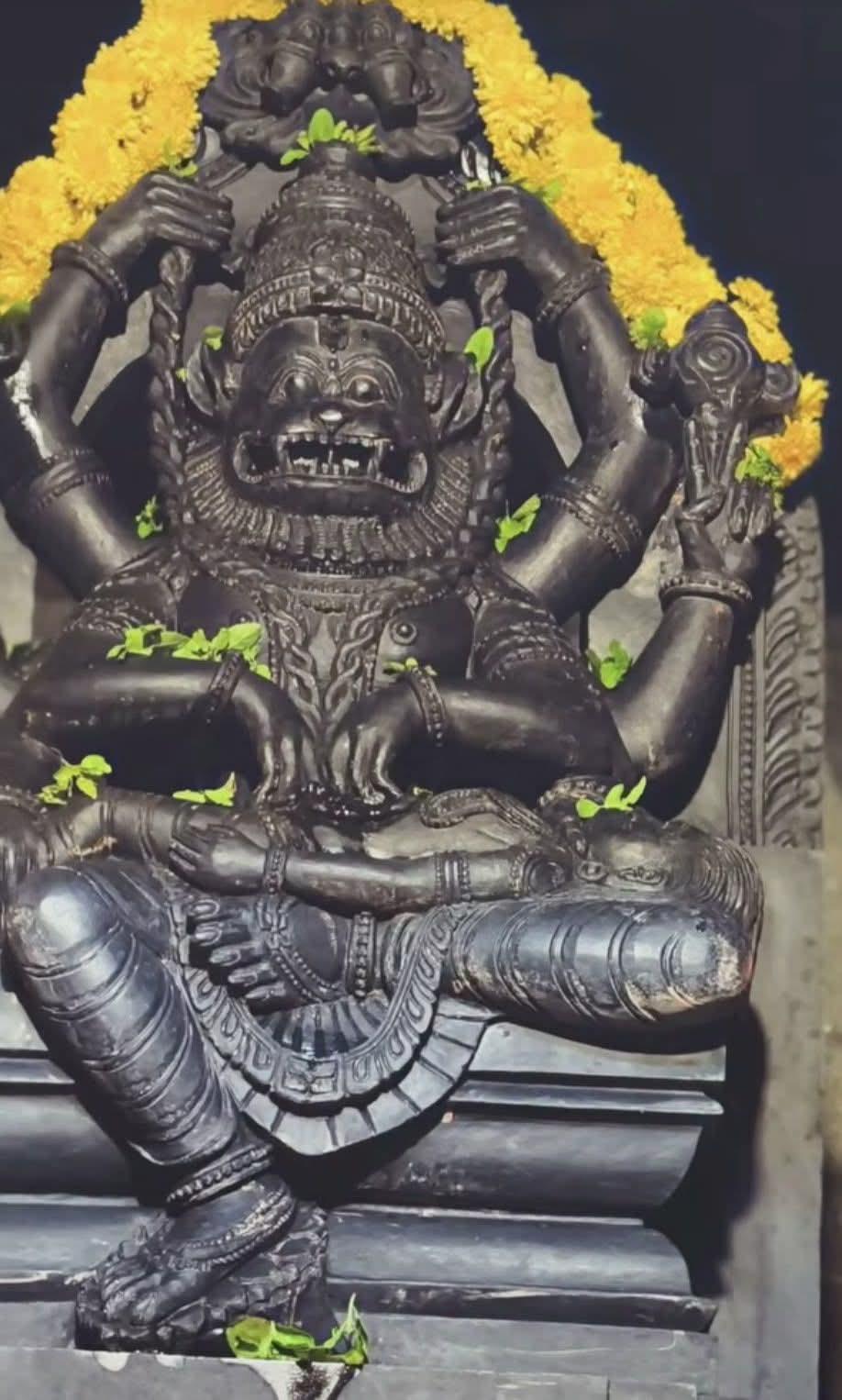
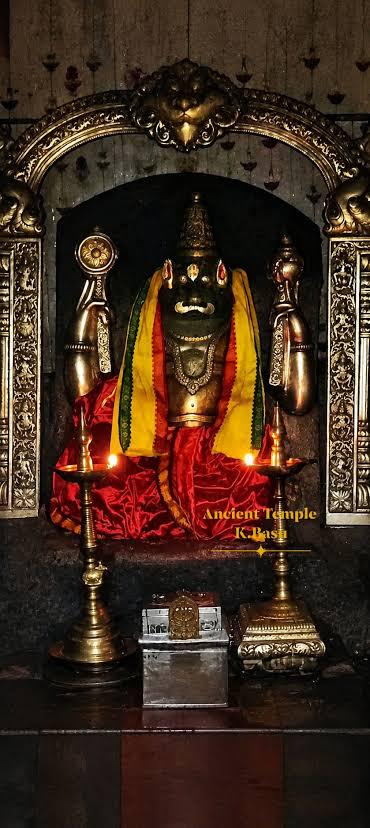
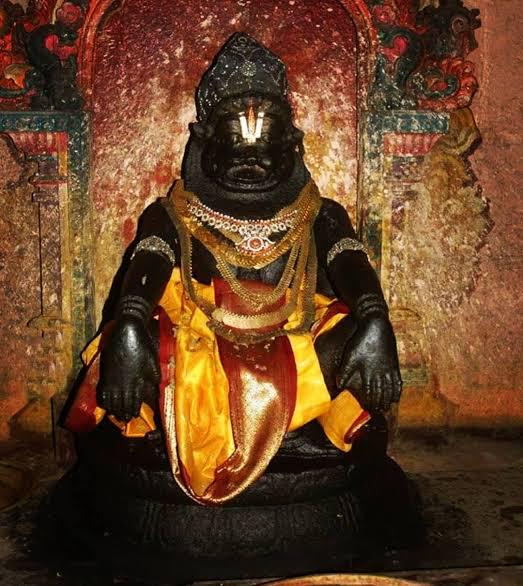
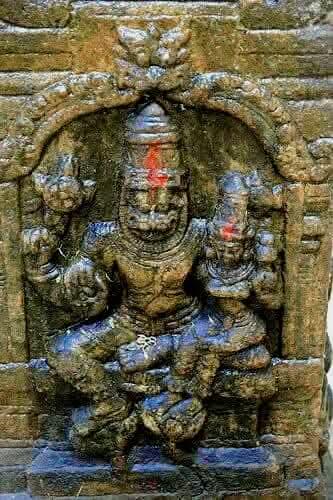
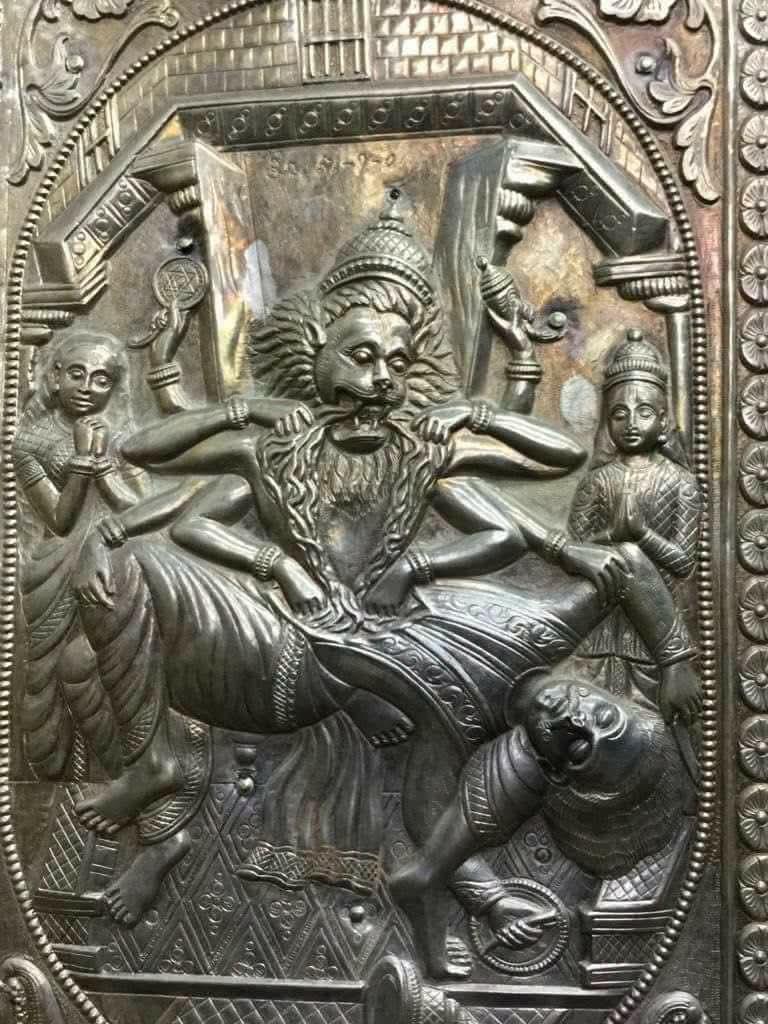
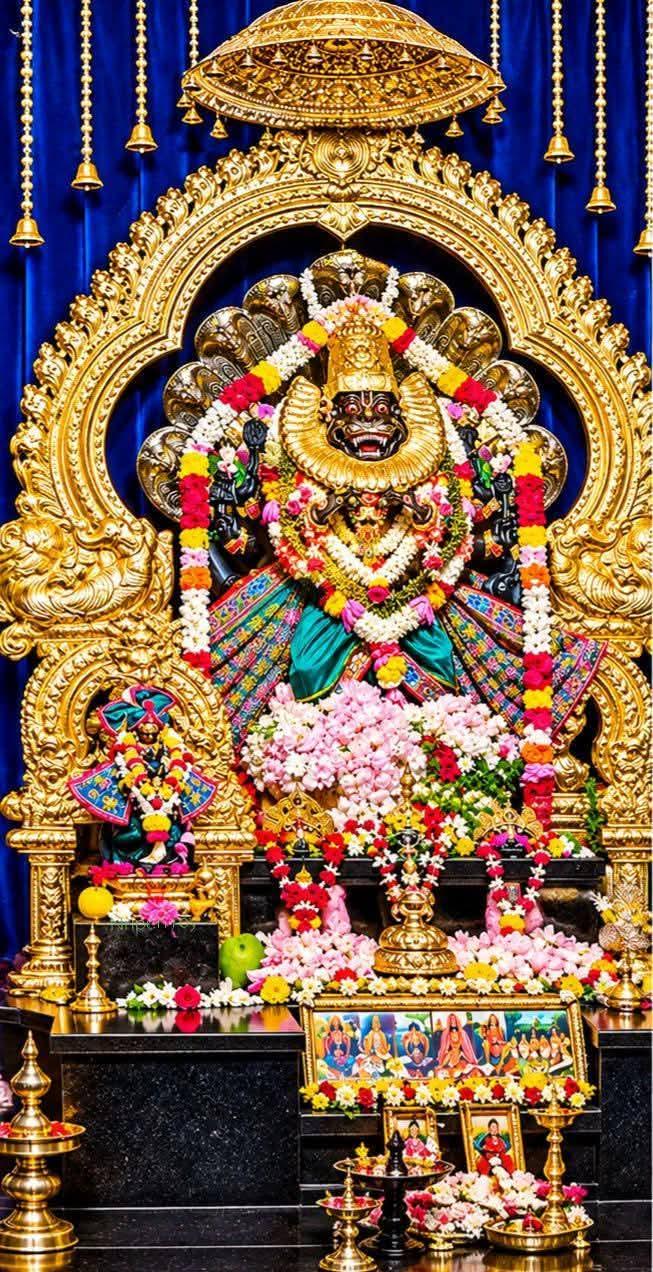
Author: Sir John Woodroofe Book: The Serpent Power Illustration: Veeraswamy Krishnaraj
"Om. The Devas, coming to Śatyaloka, thus spoke to Prajāpati, saying, 'Tell us of the Nārasiṁha 3 Cakras, (to which he replied): There are six Nārasiṁha Cakras. The first and second have each four spokes; the third, five; the fourth, six; the fifth, seven; and the sixth, eight spokes. These six are the Nārasiṁha Cakras. Now, what are their names (that is what you ask). They are Ācakra,4 Sucakra.5 Mahācakra, 6 Sakalaloka-rakṣaṇa-cakra, 7 Dyucakra,8" Asurāntaka-cakra.9 These are their respective names. [1]
Illustration: Veeraswamy Krishnaraj
1.Sarveṣām prāninām shirasi amṛtam asti iti yogamārgena kuṇḍalinīgamane tatratya tatpravāhāplutena yoginārn Īśarasāmyam jāyate iti yogaśāstreṣu prasiddham (Comm. v. 1).
2 Bibliotheca Indica, ed, Asiatic Society (I871). The notes are from the Commentary of Nārāyaṇa,
3 The man-lion incarnation of Viṣṇu,
4 Ānandātmaka; in the self of Ānanda (bliss).
5 Good, perfect.
6 Lustrous (Tejomaya).
7 The Cakra which by the Śaktis of ]ñāna and Kriyā protects all regions (Loka).
8 The Cakra of the path reached by Yoga.
9 The Cakra which is the death of all Asuras, or liars.
THEORETICAL BASES OF THIS YOGA (page 271)
"Now, what are the three circles (Valaya)?
These are inner, middle and outer. 1 The first is Bīja; 2 the second, Nārasiṁha-gāyatri; 3 and the third, or outer, is Mantra.
Now, what is the inner circle?
There are six such (for each Cakra has one); these are the Nārasiṁha, Mahālākṣmya, Sārasvata, Kāmadeva, Praṇava, Krodha-daivata (Bījas), respectively.4 These are the six interior circles of the six Narasimha-Cakras. [2]
"Now, what is the middle circle? There are six such. To each of these belong Nārasiṁhāya, Vidmahe, Vajra-makhāya, Dhīmahi, Tannah, Siṁhah pracodayāt, respectively.5 These are the six circles of the six Nārasiṁha-Cakras. Now, what are the six outer circles? The first is Ānandātmā or Ācakra; the second is Priyātmā or Sucakra; the third is Jyotirātmā or Mahā-Cakra ; the fourth is Māyātmā or Sakala-loka-rakṣaṇa-Cakra; the fifth is Yogātmā or Dyu-Cakra; and the sixth is Samāptātmā or Asurāntaka-Cakra. These are the six outer circles of the six Nārasiṁha -Cakras.6 [3]
1 That is, each Cakra has three divisions-inner, middle, and outer; or Bīja, Nārasiṁha -Gayatri, Mantra.
2 The root Mantra, which in this case are those given in the next note but one.
3 That is, the Mantra. Nārasiṁhāya vidmahe vajranakhāya dhīmahi, tannah siṁhah pracodayāt, (May we contemplate on Nārasiṁha, may we meditate on his Vajra-like claws. May that man-lion direct us.)
4 That is, the following Bījas: Ksauṁ (in Ācakra); Srīṁ, His Śakti (in Sucakra); Aim (in Mahā-Cakra); Klīm (in Sakalaloka-rakṣaṇa-Cakra); Oṁ (in Dyu-Cakra); and Hūṁ (in Asurāntaka-Cakra).
5 That is, to each of them is assigned the several parts of the Nārasiṁha-gāyatri above-mentioned.
6 The Atmā as bliss, love, light or energy, Māyā, Yoga, and the concluding Cakra which is the destruction of all Asuras.
272 THE SIX CENTRES AND THE SERPENT POWER
"Now, where should these be placed? 1 Let the first be placed in the heart; 2 the second in the head; 3 the third at the site of the crown-lock 4 (Śikhāyaṁ); the fourth all over the body; 5 the fifth in all the eyes 6 (Sarveṣu netreṣu) and the sixth in all the regions 7 (Sarveṣu deśeṣu), [4]
"He who does Nyāsa of these Nārasiṁha-Cakras on two limbs becomes skilled Anustubh,8 attains the favour of Lord Nṛsiṁha, success in all regions and amongst all beings, and (at the end) Liberation (Kaivalya). Therefore should this Nyāsa be done. This Nyāsa purifies. By this one is made perfect in worship, is pious, and pleases Nārasiṁha. By the omission thereof, on the other hand, the favour of Nṛsiṁha is not gained nor is strength, worship, nor piety generated. [5]
"He who reads this becomes versed in all Vedas, gains. capacity to officiate as priest at all sacrifices, becomes like one who has bathed in all places of pilgrimage, an adept in all Mantras, and pure both within and without. He becomes the destroyer of all Rākṣasas, Bhūtas, Piśācas, Sākinis, Pretas, and Vetālas, 9 He becomes freed of all fear; therefore should it not be spoken of to an unbeliever." 10 [6]
1 That is, how should Nyāsa be done? That is explained in the text and following notes where the Nyāsa is given.
743.Viśākhāya means “the One who is branched or manifested in many forms,” signifying Narasiṃha as the Lord who manifests through diverse forms and powers while remaining the one Supreme reality.
742.Suśākhāya means “the One with beautiful and auspicious branches,” signifying Narasiṃha as the Lord whose divine manifestations extend throughout creation, offering shelter, strength, and protection to all beings.
741.Vibhavāya means “the All-Pervading Lord of infinite power and glory,” signifying Narasiṃha as the One who manifests in countless forms and possesses boundless divine majesty.
739.Svabhāvāya means “the One who is the inherent nature of all existence,” signifying Narasiṃha as the eternal reality underlying the essential nature of everything.
738.Suprabhāya means “the Auspiciously Radiant One,” signifying Lord Narasimha as the One whose divine brilliance illuminates the universe and dispels all darkness.
736.Śubhrāya means “the Pure and Radiant One,” signifying Lord Narasimha as the One whose divine brilliance is spotless, luminous, and untouched by all impurity.
735.Sudhanvine means “the One who wields the divine bow,” signifying Lord Narasimha as the mighty protector who bears the divine weapon to destroy evil and defend Dharma.
For those sages who enjoy the nectar of His lotus feet, even the exalted positions and splendour of Brahmā, Indra and Rudra are to be regarded as insignificant.
734.Suprabhāya means “the One who is supremely radiant and auspicious,” signifying Lord Narasimha as the divine source of brilliance, whose glorious presence dispels darkness and illuminates all existence.
733.Suranāthāya means “the Lord of the Devas,” signifying Lord Narasimha as the supreme ruler and protector of the celestial beings, commanding divine authority over the heavenly realms.
Namaskar, I'm planning to pay visit and have darshan of Sri Jharni Narsimha Swami at Bidar, on the first weekend of December, which is having Swati Nakshatra.
732.Śubhrāya means “the Radiant and Pure One,” signifying Lord Narasiṃha as the One whose divine brilliance is spotless, luminous, and free from all impurity.
So myself an employee at an IT company. And I have a 5bhk flat, with a separate room to do puja and another one for bhoga cooking(a smaller kitchen, separate from my main kitchen of daily cookings). The reason why I am saying about kitchen is because I am a nonveg for my own health purposes and many people say worshipping Narasimhadeva while consuming nonveg in your day to day life isn't a good thing, it's not even allowed.
I don't understand whether I shall start worshipping Him or not! And where can I get good gurus in Bengal or Mumbai? Most Bengali Narasimha worshippers that I have seen are of ISKCON that follows strict lacto-vegan diet while following pañcharātra for worshipping Him.
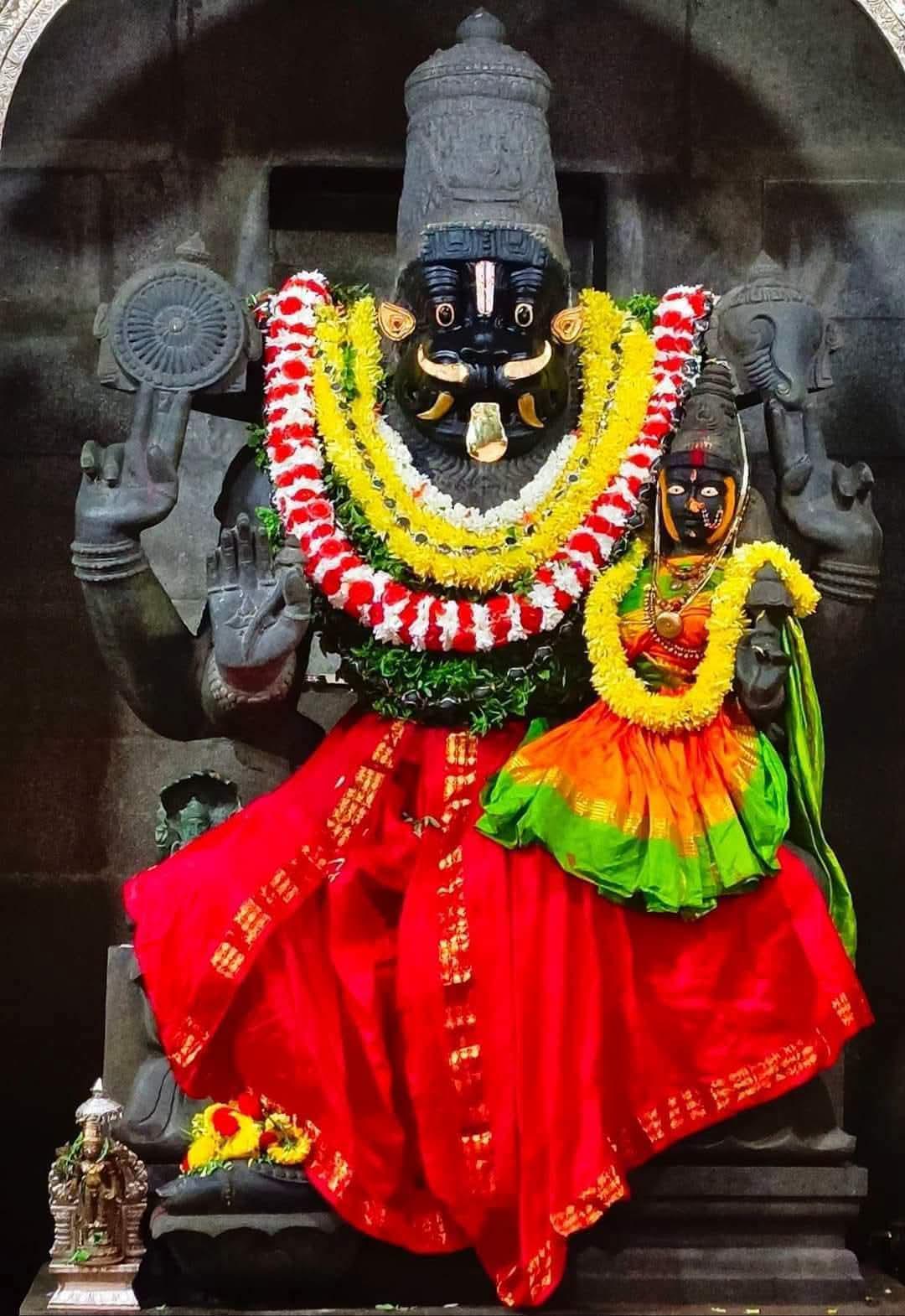
If I can worship Him, while consuming nonveg in daily lifestyle but by maintaining my sūchī in puja room, in what form shall I worship Him? Like Yoga NS, Lakshmi NS, or even Ugra NS is fine? And in what manner, photo or vigraha? And in what way, pañcharātra, kaula, etc?
Just wanna know opinions of the practitioners of Narasimha Tantra here for my own further mental clearance. Kindly do comment below regarding what you think! Had posted this in Tantrasadhaks' community back then, as I didn't knew this community exists.