🔍 Behind Null’s Brawl — Part 1: Understanding the Basics
Hey everyone! 👋
I’ve been interested in Brawl Stars and Null’s Brawl for quite some time.
Over time, I’ve also become interested in the technology behind online games, particularly client-server architecture and how independent game environments operate.
One question has always caught my attention:
🤔 What actually makes Null’s Brawl work, and how can it offer such a similar experience to the original Brawl Stars?
I think many players enjoy Null’s Brawl without necessarily knowing what happens behind the scenes.
So, I’d like to start a small technical discussion series exploring the technology and concepts behind it.
Let’s start with the basics! 🚀
🎮 1. What Exactly Is Null’s Brawl?
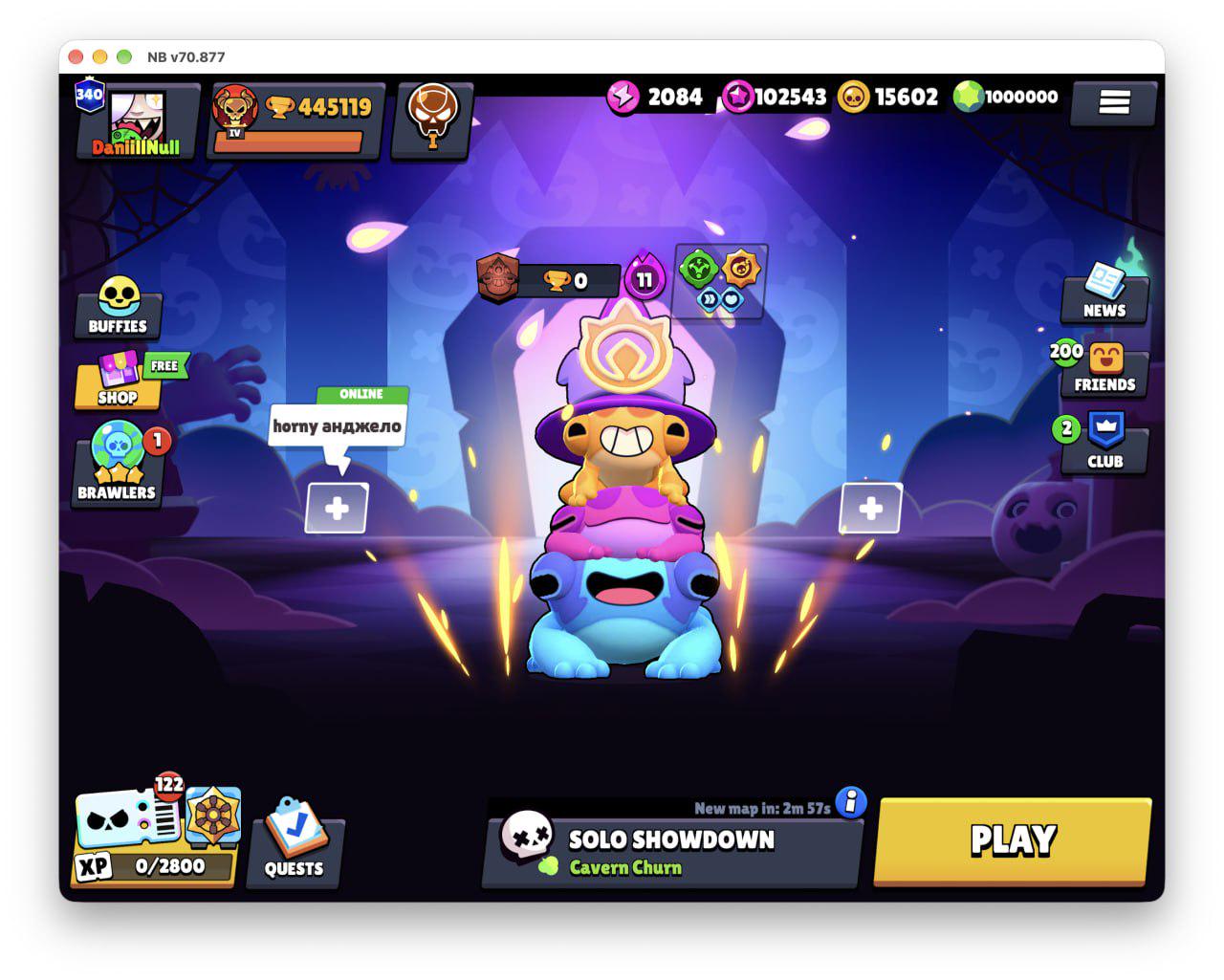
Null’s Brawl is an unofficial private-server project based on the Brawl Stars experience.
It provides a separate game environment with its own progression and gameplay services.
Although it shares many familiar elements with the original game, it should not be confused with Supercell’s official Brawl Stars service.
The two environments operate independently.
For players, this means:
🔹 Game progression is separate.
🔹 Accounts are not shared between the two environments.
🔹 Purchases and in-game resources are independent.
🔹 Matchmaking and online sessions belong to separate environments.
💡 The important distinction: Similar gameplay does not necessarily mean identical infrastructure.
📱 2. Understanding the Client and Server
To understand how a game like this works, we first need to understand two basic terms.
📱 Client — The Game Application
The client is the application running on your device.
It is responsible for presenting much of the game experience, including:
Character models and animations.
Skins and visual effects.
User interface elements.
Maps and environmental assets.
Audio and other game resources.
🖥️ Server — The Online Infrastructure
The server is responsible for handling the online environment.
Depending on the game’s architecture, this can include:
Player accounts and progression.
Matchmaking.
Game sessions.
Game-state management.
Online interactions.
🔗 The client and server work together, but they perform different jobs.
A game can have all the necessary visual resources and still require a compatible backend to support its online features.
This is one of the most important concepts to understand when looking at private-server projects.
🎨 3. Why Does Null’s Look So Similar to Brawl Stars?
This is where things become interesting! 👀
A game’s visual presentation and its online functionality are not necessarily handled by the same component.
For example, a character’s model, animation, or skin is a visual resource.
However, the actual gameplay behavior of that character involves additional game logic.
The same applies to other features:
🎨 A skin needs visual assets to appear correctly.
⚙️ A character needs gameplay logic to function.
🗺️ A game mode needs rules and state management.
📊 Player progression needs data management.
These components need to work together to create a complete experience.
💡 Reproducing the appearance of a game and reproducing its complete functionality are two different engineering challenges.
🆕 4. Why Does This Matter With the November and December Updates?
The latest Brawl Stars updates provide a good example.
The November and December content introduces new characters, skins, gameplay mechanics, and changes to Ranked.
For example:
🐸 Thunder Frogs
🆕 Rey and Ruby
🌆 Brawl Vice
🎄 Brawlidays
⚡ New Buffies and Hypercharges
🏆 Ranked Pick & Ban changes
These additions are not all just visual content.
Some require changes to gameplay behavior, while others involve new systems or adjustments to existing features.
🚀 This is why adapting an update to a separate game environment can involve more than simply adding new assets.
The Null’s development team announced on October 31 that work on version 70 had started, mentioning new character visuals, animations, mechanics, skins, and Ranked changes.
That announcement gives us a real-world example of the work involved in maintaining a separate game environment.
💡 5. My Technical Observation
What interests me most about Null’s Brawl is not simply the additional resources or unlocked content.
It’s the idea that a separate game environment can provide an experience that is so familiar to players of the original game.
From a software engineering perspective, the relationship between the client, server, game logic, and data management is particularly interesting.
Understanding these different components helps explain why a private server is much more than just a modified game application.
Of course, the exact internal implementation of Null’s Brawl is not fully documented publicly, so I don’t want to present assumptions about its internal protocols or infrastructure as confirmed facts.
I’d rather separate what is publicly known from what can reasonably be discussed through general engineering concepts.
💬 Discussion — What Do You Think?
I’d like to hear what other players think:
🤔 Before reading this, did you know the difference between a game client and a game server?
🖥️ What do you think is the most difficult part of maintaining a private-server project?
🔍 Would you be interested in a deeper explanation of how client-server communication works?
🚀 This is only Part 1!
In Part 2, I’ll take a closer look at client-server architecture, backend systems, and how these components work together in an online game.
Thanks for reading!
Disclaimer: Null’s Brawl is an unofficial project and is not affiliated with, endorsed, sponsored, or approved by Supercell.
Made by r/Curtis0x07
11/6/2026