r/OrderOfTheSinkingStar • u/i_hate_drm • 9h ago
General Discussion OOTSS Critique Spoiler
Order of the Sinking Star is a very good game. It's also the the longest game I have played - taking me 200 hours to 100%. It is full of great puzzles and interesting concepts so I never felt bored or disheartened. Some of my favorites were the logic gate puzzles, the doubling beams sailor dungeon, and a few of the designer puzzles. I would easily recomend this game to anyone who enjoys the type of puzzle games born from Braid's design philosophy. But is it an all-timer like The Witness and Baba is You? For me, it sits in a tier below them due to issues I have with the visuals, audio, narrative, and some of its design.
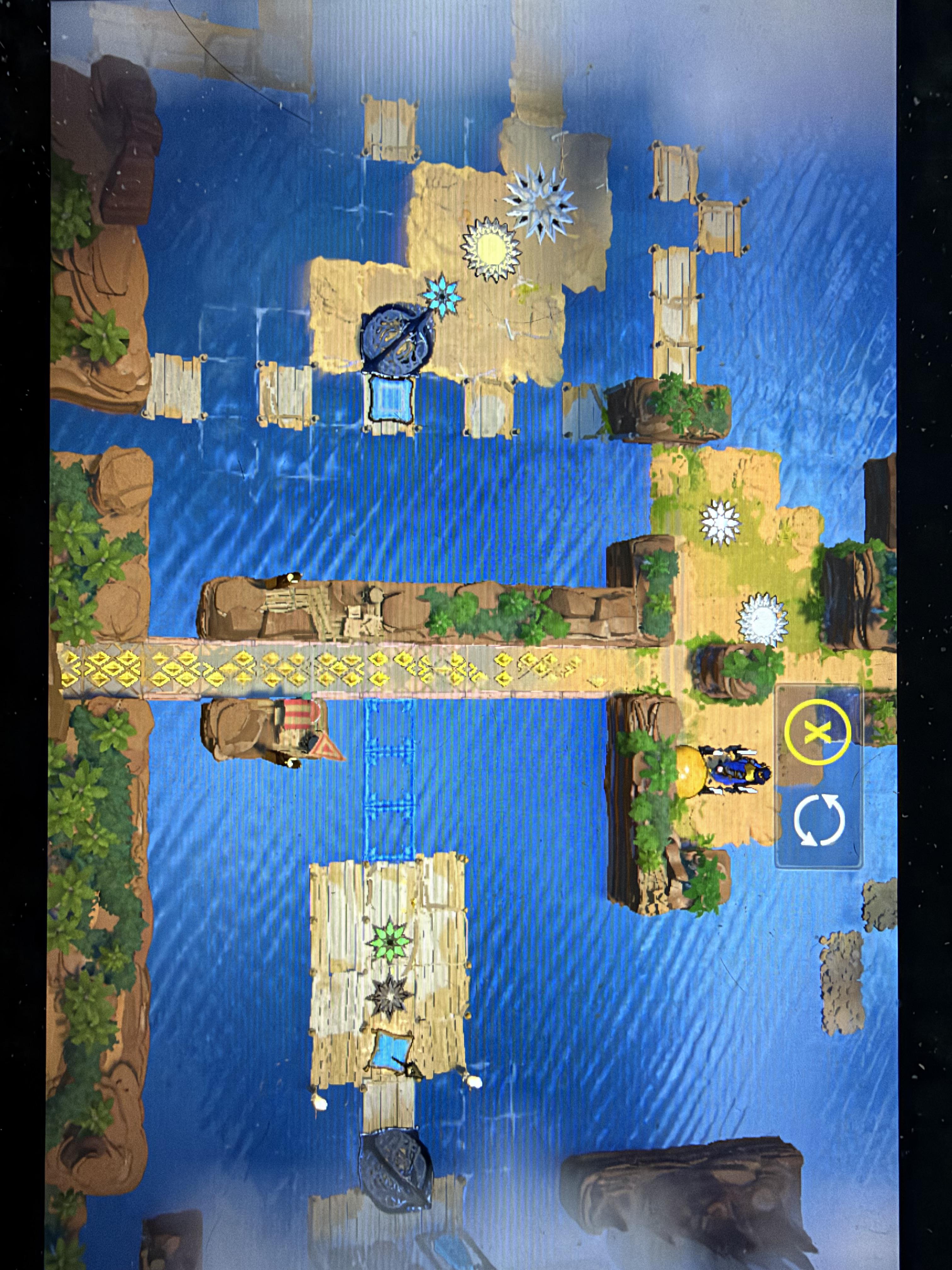
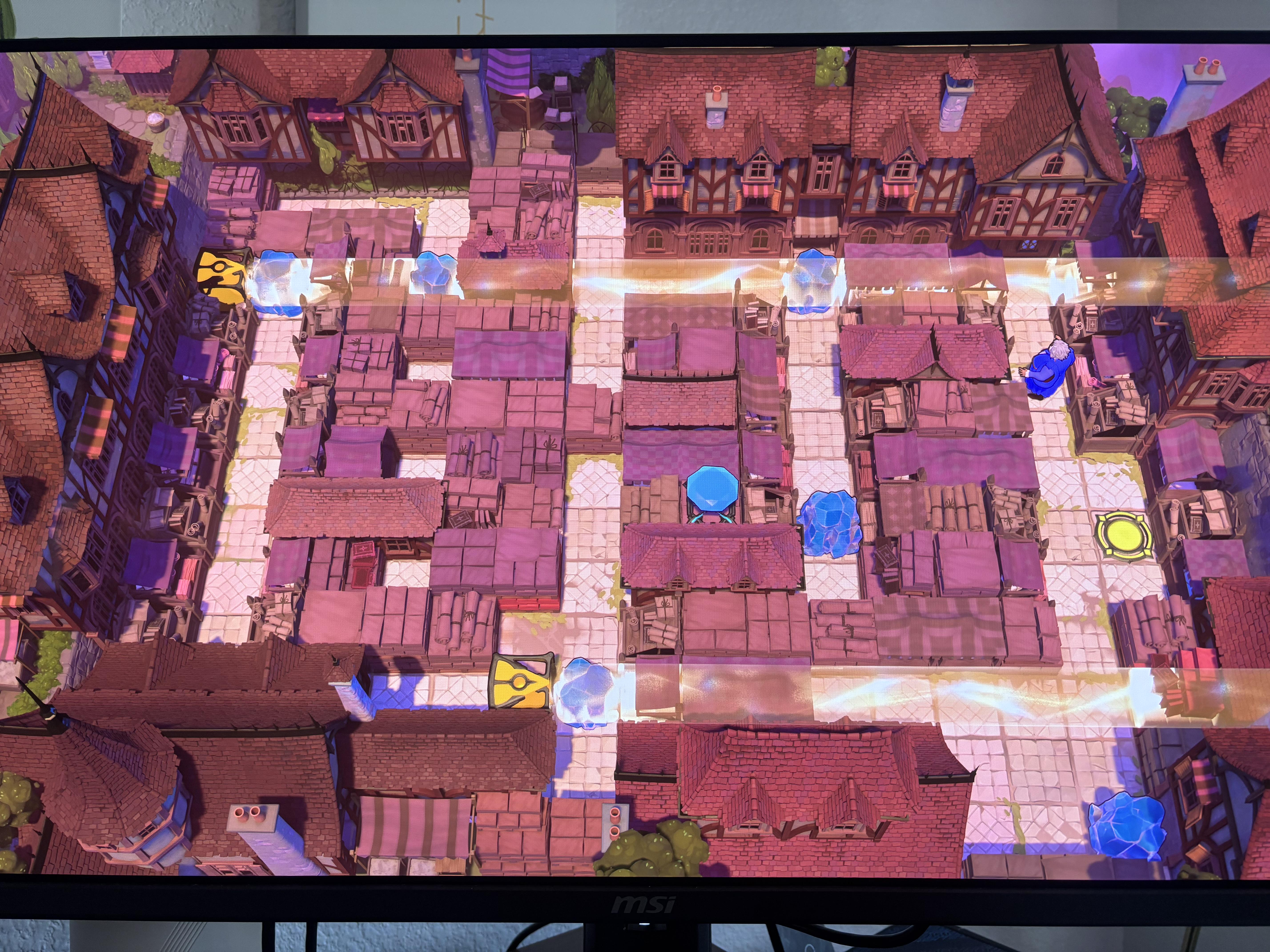
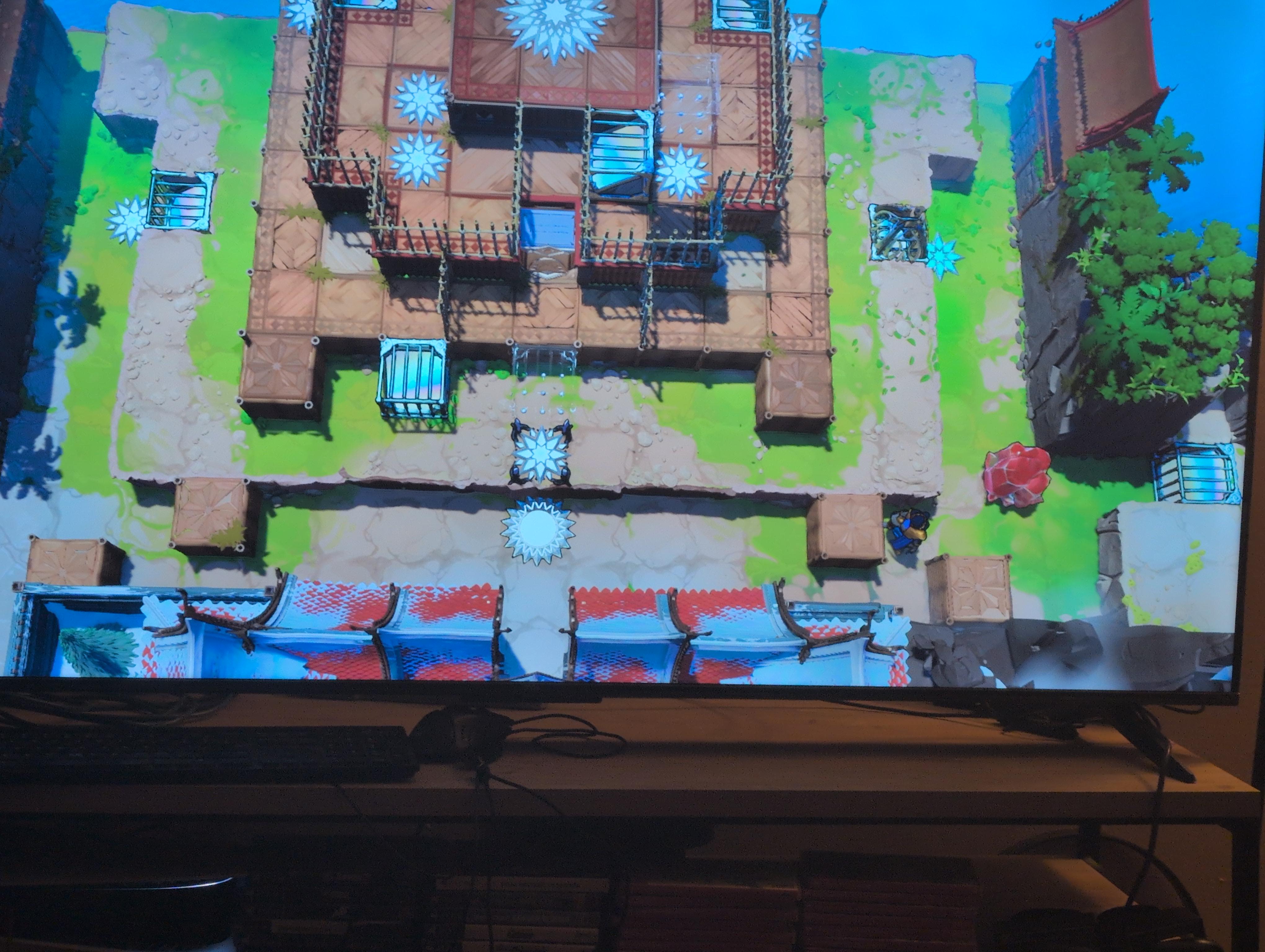
The tilted overhead viewport of 3D scenes does not provide perfect clarity. I would sometimes spend the start of a level just feeling out the environment. This is compounded when you ascend and levels start having height. They introduce a secondary view to compensate, but it's only available in some levels, and it's not always a proper overhead map. Sometimes you are given two maps, and despite having two dedicated buttons for map-views, you have to cycle through them.
UI elements sometimes block important gameplay objects. This is mostly prevalent in the overworld causing some unnecessary deaths, but the worst offender was the beam changer ability - where the UI would hide a deactivated beam-box's color. And so I would hit the beam-box, move away to see its new color, move back and repeat until it was the desired color.
I found the music had started to become overbearing by the midway point. I ended up muting it after 100 hours so I could concentrate. I also didn't like how the audio would quiet down when you stood still to think. The problem came when I touched the controller again and the audio made its triumphant return. Often I hadn't solved the puzzle - I was just reorienting myself, or messing around, or maybe I thought I had the solution but immediately noticed a flaw in my plan. Suddenly, my attention was on the intensifying audio. Wasn't a fan of the bard's dancing effect for similar reasons. The constant shuffling noises were distracting so I would always change characters when I needed to think - if that was an option.
On the gameplay front, there are a lot of arbitrary nuances the player has to keep in mind. For instance, the thief can pull crystals while they skip across water, but the bard cannot. Yet the bard CAN move people/enemies/crystals that are on top of a skipping crystal. The game introduces gravity as a constant downward force, but entering green beams does not cause the character to sink one tile below. Standing on a rock while in a yellow beam does not cause the rock to break. And orange beams do not account for gravity when moving in the four cardinal directions. The destination tile should actually be two tiles below where we end up. This is often inaccessible and so logically we should not move at all. On a separate note, the speed of lilypads and skipping stones varies between levels, and so you can't always solve puzzles through visuals and temporal intuition alone. Some experimentation is necessary to see if you can outrun a skipping stone, for instance.
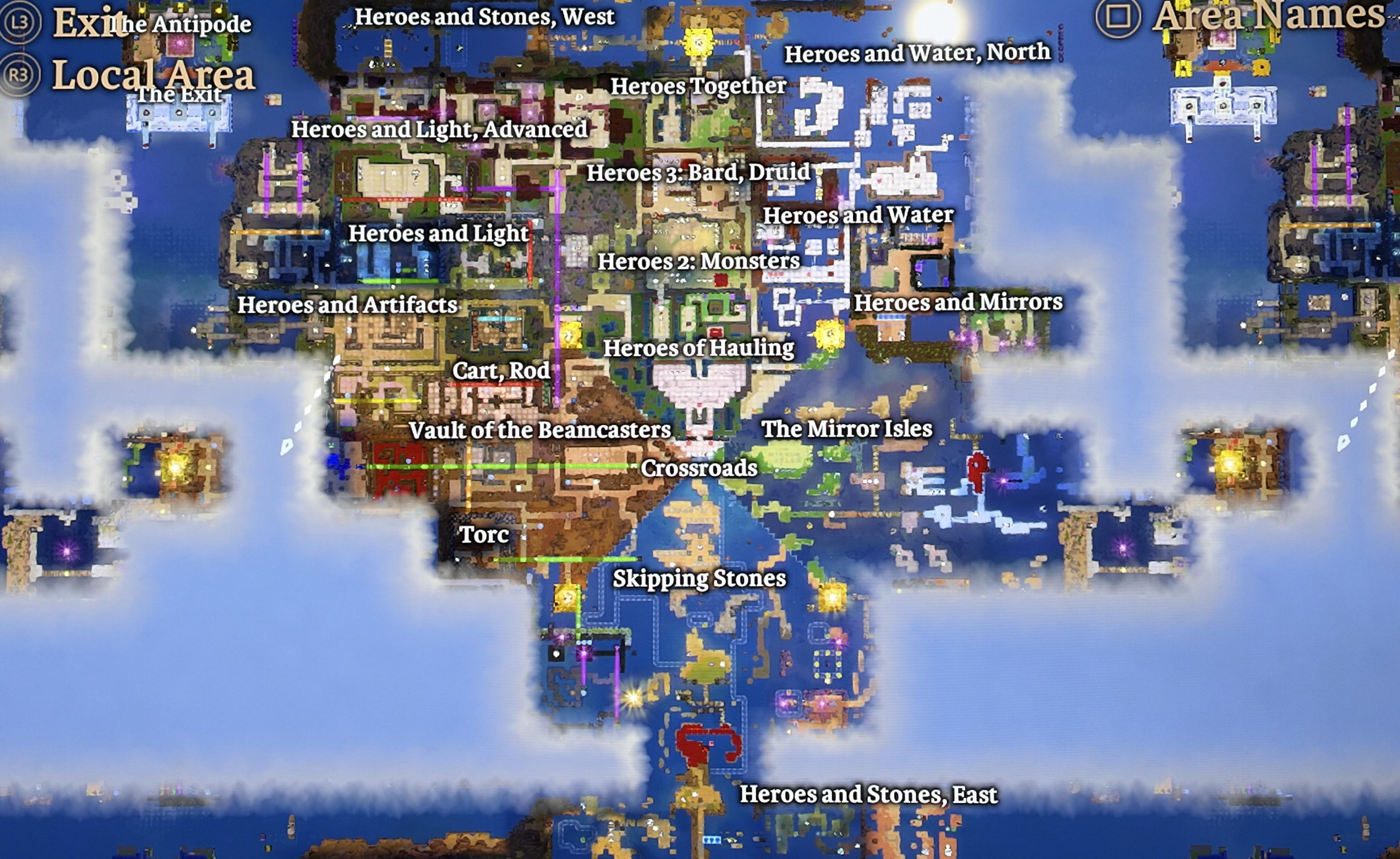
I found the looping overworld a bit disorienting to navigate, especially in the fast-travel system which had no area labels. Zooming out helps, thanks to the "Crossroads" landmark. One trade-off of the overworld being a giant puzzle was that I was often hesitant to move on from an area when stuck on a level.
I'm on the fence whether the third layer (depths) justifies its existence. The second layer introduces height (though technically this was already present in water levels in the first layer). In doing so, it created a strong distinction in terms of visuals. The third layer sets up some expectations that it doesn't live up to. There is no paradigm shift, and it arguably muddies the distinction between the two previous layers. Additionally, there was basically no interaction with the previous layers (barring an extremely brief moment at the end of the game), where-as the second layer had spots you could jump down from to reach entirely new locations in the first overworld.
Moving on to levels. I saw they made towers of hanoi, binary, and even cellular automata into puzzles. The most out of place level to me was the one where you control all characters at once. Felt strange that they would arbitrarily disable character-swapping for a single level. Didn't seem to fit with the core design philosophy of the rest of the game. Another memorable level had five heroes, but only one exit. And so the Hearty Heroes of Hauling are forever encased in crystal... So was that the end of their journey? Surprised there wasn't a follow-up level with four crystals and five exits. I think the game had stopped caring about these characters by this point. I wasn't particularly attached to them myself, but levels like the one where the thief rescues the priestess from the goblin fortress showed how the game could use narrative elements to instill emotional weight and memorability. I had my own memorable character moment when I accidentally discovered orange-beam hovering with the druid. It was a moment of ignorance on my behalf as I would later learn that all characters could do it, but for a brief period I thought I had uncovered something sinister about the druid. Like he was more powerful than he was letting on. Could have been an interesting narrative development...
I wasn't a fan of the narrative. Especially the way it was delivered. There were sometimes mid-level events that would trigger new dialogue to interrupt the current one, and so I would just stand still whenever characters were talking. Of course, I would have much rather been playing the interesting puzzle presented before me. The story went nowhere, and so my restraint was wasted in the end. Personally, it was a relief that characters stopped talking later on, so I could play the puzzles in peace.
While I found the initial story slightly annoying, the second story was utterly pretentious - with a Jon Blow stand-in telling you how important the game is. There were themes of passing the torch and how you could maybe be God's gift to the world like Blow - and it just rubbed me the wrong way. The game in its current state does not have the craftsmanship to be fellating itself like this. I reported 30 bugs and exploits myself. It fell flat when the game was teaching me not to let overworld objects escape their turf - when I had earlier been pushing a red stone around the map. Or how all items in a puzzle should be used - when I had solved puzzles without using key objects, and in one case skipped an entire island.
Despite this, I quite liked the designer puzzles. I thought they were a good demonstration of interactive lessons on game design. An evolution of the material in Braid Anniversary. It's just that the player did not sign up for a lecture in puzzle design, and so it can feel condescending to be lectured by an arrogant hologram using smug phrases like "I'll allow it".
It's surprising the game didn't come with a level editor based on the direction it goes. Maybe the intention was for the player to apply these design philosophies to their own game? Of course, if everyone adopted the same design practices this could lead to stagnation. Perhaps it's best to think of the teachings more as guidelines than rules.
Anyway, OOTSS is my GOTY despite these criticisms. It's a very ambitious game and I really enjoyed my time with it. There are additional positive qualities like the blending of gridlines with the environment, the character animations - like how the thief drags her arm behind her when moving about. I could talk about some of the crazy synergies, like how reflectors work on streams. Maybe theorise what an altered green beam would do. But I think I'll leave it here. Thanks for reading.