r/PLC • u/SuperEagel1 • 5d ago
Homework Project/Excercise ideas
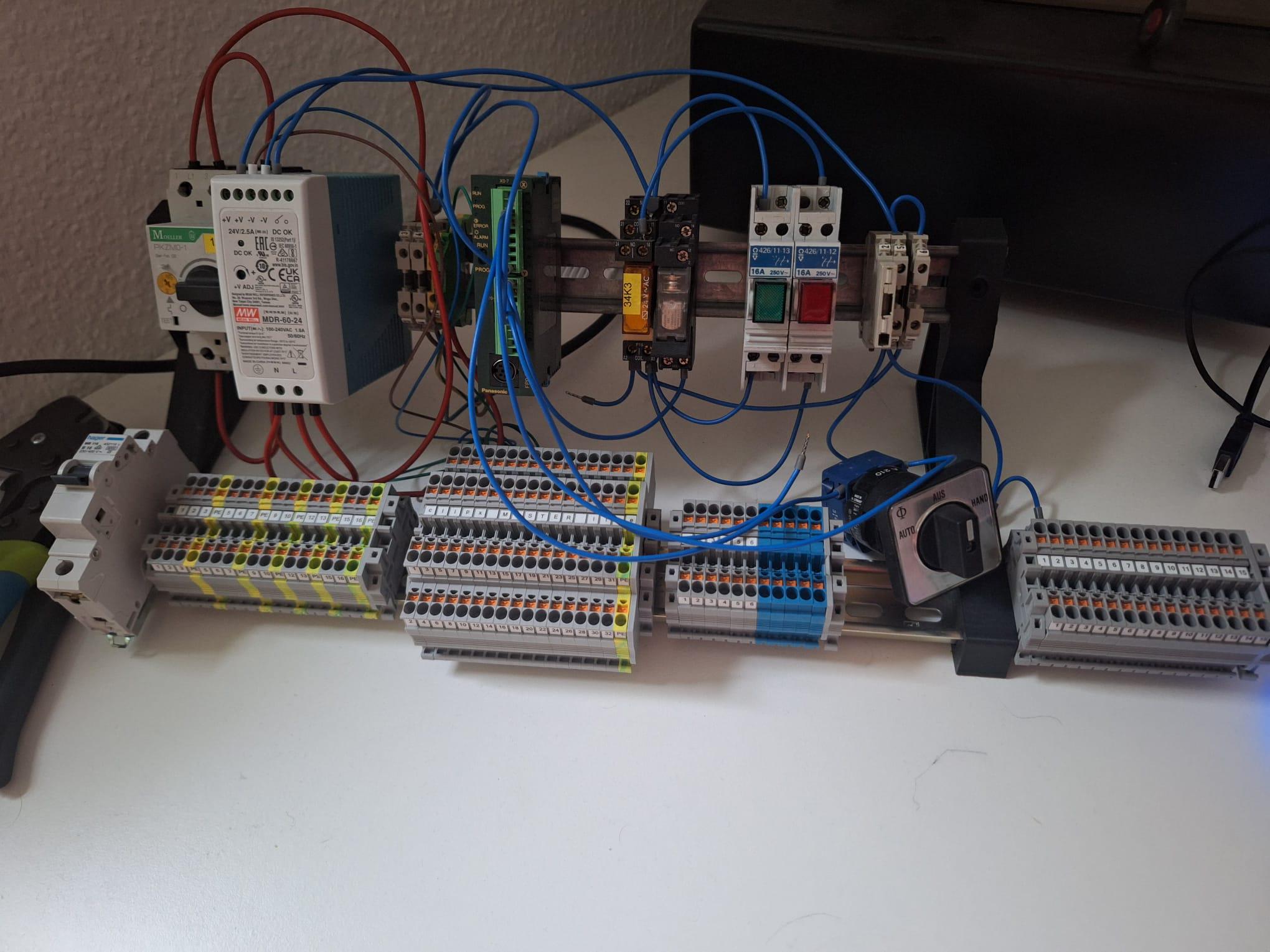
So I build this basic home PLC testbench to learn more about PLCs, Industrial automation and electrics. I already built a basic blinking light setup that uses the 3 point switch to switch between button operation and blinking. At the moment I wired it up for a basic relay latch to get a better idea of relay logic. Do you have some Ideas for Projects or excercises with these Parts?
5
Upvotes
3
u/Hamandcheeseeater 5d ago
Make a flip flop.
2
u/eiboeck88 5d ago
One of my first plc test projects was a 7 segemnt display
2
u/VladRom89 5d ago
Start by building things that people understand and don't need much explanation. Build out an elevator system; you can take it quite far with all the safety checks, interlocks, push buttons, etc. if you're targeting a specific industry, research what they typically have as the process and build out the logic for a skid.
2
u/strong-ele 3d ago
If you want an exercise that mirrors real plant work and is cheap to wire, add a temperature loop. One heater, one thermocouple, one switching element, and you get most of the hard problems in process control in a shoebox.
Concretely: a 500 W cartridge or band heater on a small aluminium block, a K-type thermocouple clamped in a drilled hole, a solid state relay on the heater rail, and whatever analog input the PLC has (or a 4-20 mA transmitter). Program a PID, then measure three things and write them down:
Then add a fault: pull the thermocouple mid-run and make the program drop to a safe output within 2 s. Open-sensor detection is a real commissioning test and teaches more than another blinking light.
2
u/Incident_Unusual 3d ago
2 out of 3 logic with FAULT detection
2
u/thePLCtech 2d ago
A good next step from a latching relay is a two-pump lead/lag with high and low level inputs. Wire two switches as "lead start" and "pump off," and a third as a high-level alarm if you have the spare point. In the program, start the lead pump on the start switch, hold it with a seal-in until the off switch drops out, then swap which pump is lead on the next cycle so they share the run time. If level stays high, start the lag pump. Interlock so a pump cannot run if the off float is already down. That one exercise teaches latching, alternation, and a real fail-safe, and it is the same logic used on lift station panels.
I made a short walkthrough of a lift station pump program with alternation if you want to see how it is put together: https://www.youtube.com/watch?v=L-DVSyylZzc