r/PakDramatica • u/RushZealousideal9767 • 1h ago
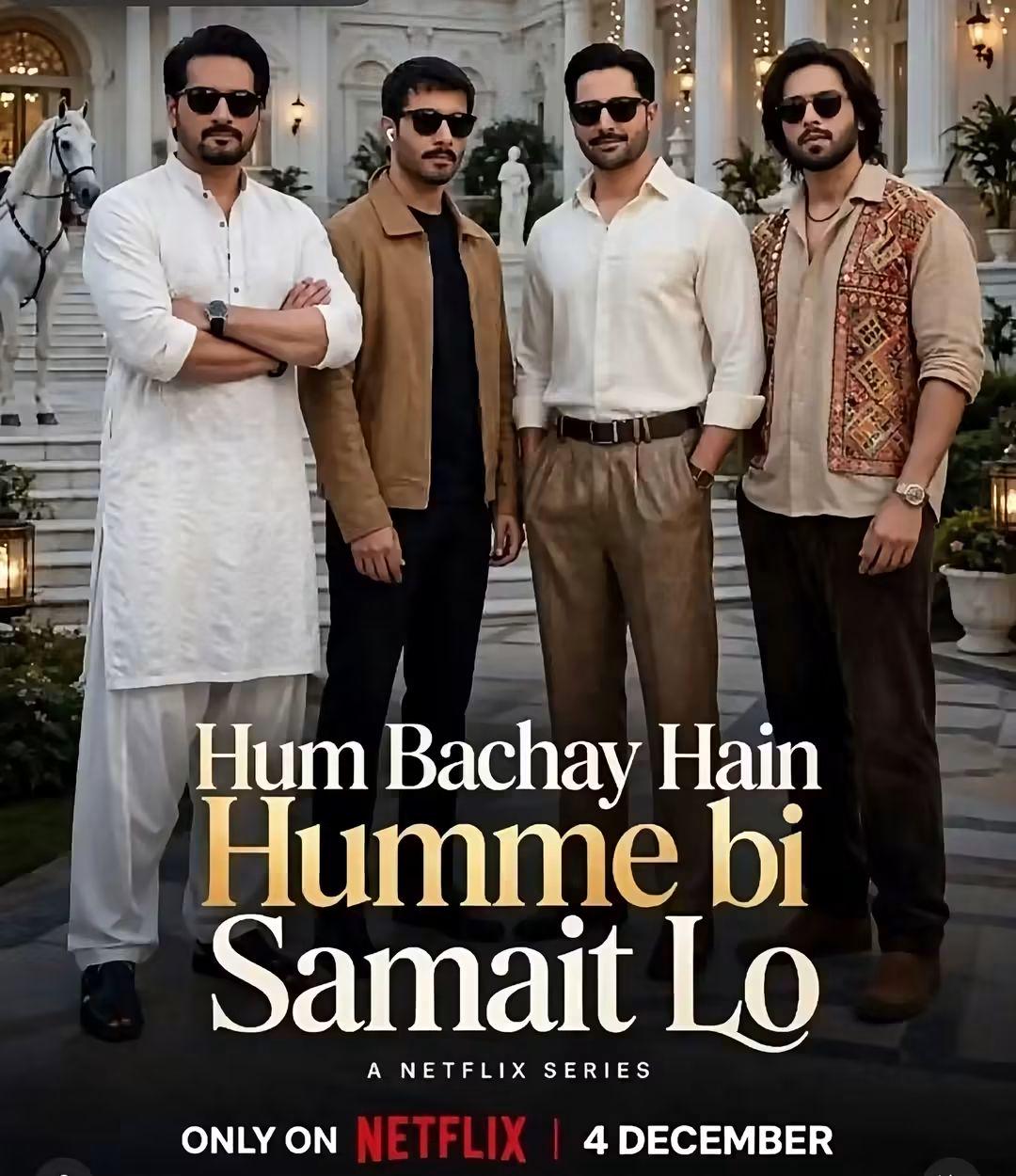
Discussion Humayun Saeed instead of Bilal Ashraf in JBHSSL
reddit.com
1
Upvotes
r/PakDramatica • u/Lucifer_RedditOfc • 1h ago

He certainly knows how to act with his eyes ✨️
r/PakDramatica • u/Mindless_Machine7644 • 6h ago

Idk why I really find sahar cute in zanjeerein also very beautiful,and she's genuinely beautiful, but these kinds of facial expressions just look so weird to me. They don't suit her at all. IMO, Sajal would've absolutely slayed this role.
r/PakDramatica • u/Otherwise_Dig_9668 • 8h ago

Wahan India mein Dar E Nijaat ke peeche par gaye hain ke usay bhi band karo. Ab zahir hai, Pakistani content chori karenge to pata lag jana inki awam ko. 🤡🇮🇳
r/PakDramatica • u/ShadowReign123 • 10h ago
The drama Dar-e-Nijat is presented as a meaningful production that addresses religious and social issues, focusing on concepts such as repentance, personal change, and forgiveness. However, when examining its events, character development, and the way it handles the issues it raises, several contradictions emerge, raising serious questions about how consistent its content really is with the religious discourse it has chosen to adopt.
The issue is not that the characters are imperfect or that they make mistakes; drama naturally explores complex characters with different personalities and flaws. Rather, the problem lies in the way the writer incorporates religion into the story and selectively approaches Islamic rulings. Religious advice and concepts are introduced when they serve the dramatic narrative, while other rulings are overlooked when they conflict with the outcomes the writer wants to achieve.
Therefore, Dar-e-Nijat cannot simply be treated as an ordinary commercial drama. It has chosen to make religion a fundamental part of its identity and messaging, which places a greater responsibility on it to present religious issues and characters who are supposedly meant to represent religious commitment in a consistent manner.
Below are the main contradictions and issues I have identified in the drama.
The story itself is built around a premise that raises several clear concerns, particularly the inconsistency in how certain practices and Islamic rulings are treated.
The grandmother is the only character presented as religious, whereas Zaryab's family embraces a liberal lifestyle and sees nothing wrong with cohabitation and the relationship Zaryab has with Zamil outside marriage. Yet, considerable attention is given to the story of Zaryab's sister, who decides to divorce her husband, and divorce, which is permissible in Islam, is portrayed as a major problem.
This raises an obvious contradiction: How can a practice permitted by Islam be criticized while practices explicitly prohibited by it are not met with the same disapproval? Isn't it strange that divorce becomes a subject of objection, while cohabitation and forbidden relationships pass without a similar response?
2. The Problematic Portrayal of Abu Bakr's Marriage to Zaryab
One of the most problematic aspects of the drama is the way the writer presents Abu Bakr's marriage to Zaryab.
The story is built around the idea that Zaryab's past should have no bearing on Abu Bakr's decision to marry her, as though knowing what happened is irrelevant, or as though accepting someone means overlooking the Islamic rulings associated with their situation.
However, there is a difference between marrying someone without knowing the details of their past and knowing that they have committed zina, particularly because this raises the Islamic ruling concerning marriage to someone who has committed zina before repenting, as mentioned in the Quran:
"The man who commits zina does not marry except a woman who commits zina or a polytheist, and the woman who commits zina is not married except by a man who commits zina or a polytheist, and that has been forbidden to the believers." (Surah An-Nur, 24:3)
A well-known example in this context is the story of Mirthad al-Ghanawi, who asked the Prophet Muhammad ﷺ about marrying a woman who had been involved in prostitution. The verse was revealed in this context, and the Prophet ﷺ informed him of its ruling.
Therefore, the issue cannot be reduced to the idea that a person's past is none of the other party's business. There is a difference between not holding someone accountable for a past sin they have repented from and disregarding Islamic rulings that are directly relevant to the matter.
Even more problematic is that Zaryab's grandmother knew about her granddaughter's zina before the marriage, yet the writer presented her as a model of religious commitment without showing her position on the matter or having her guide Zaryab towards repentance.
The writer also used Abu Bakr's mother's past to pressure and force him into marrying Zaryab. Here, the writer should have demonstrated the ability of a supposedly religious character like Abu Bakr to distinguish between honoring one's mother and obeying her in something that contradicts Islamic teachings. There is no obedience to a created being when it involves disobedience to the Creator.
3. The Contradiction Between Abu Bakr's Actions and His Religious Discourse
Another example is the apartment-renting incident. Abu Bakr was the one who rented the apartment to the couple, thereby helping facilitate their living together without marriage. Yet later, we see him speaking about forbidden relationships, criticizing them, and describing them as empty and meaningless.
How can he personally contribute to facilitating a situation based on a relationship outside marriage, only to later assume the role of a preacher and critic without ever reflecting on his own previous actions?
The problem is not that the character makes mistakes. The problem is that the writer never addresses this contradiction.
4. Why Did the Writer Avoid Calling Zina by Its Name?
Despite the fact that the events are fundamentally built around a relationship outside marriage, the writer never explicitly calls zina by its name. Instead, she resorts to vague expressions such as "she made a mistake," as though it were merely a passing slip rather than one of the major sins in Islam, with its own rulings and serious implications.
I do not find censorship to be a convincing explanation for this avoidance, especially when the drama openly portrayed cohabitation and relationships outside marriage on screen. The writer could have clarified the nature and seriousness of the sin through dialogue without having to turn the drama into lengthy religious lectures.
This raises an important question: Did the drama actually address the characters' past mistakes within the religious framework it chose to adopt, or did it simply present them as a past that should be left behind so the story could move forward?
5. The Story of Repentance Could Have Been Presented in an Entirely Different Way
If the writer's intention was to tell a story about repentance and personal transformation, she could have constructed the events very differently. For instance, Abu Bakr could have been unaware of Zaryab's past, then become someone who helps her repent and begin a new life, if the intention was to create a love story centered on personal change.
Instead, the writer chose to make him fully aware of her past and then portrayed overlooking Islamic rulings as though it were part of tolerance and accepting others.
I am not denying that Zaryab changed some of her behaviors. My objection is to reducing repentance to these outward changes without addressing its actual meaning: acknowledging the sin, feeling genuine remorse, abandoning it, and resolving not to return to it.
Repentance is not simply changing one's appearance or moving on to a new romantic relationship. Nor is it enough to show a character behaving differently and expect the audience to consider that a genuine portrayal of repentance.
6. Where Did the Story of Repentance Go Amid All These Relationships?
One of the biggest ironies is that a drama supposedly centered on repentance and personal transformation devoted considerable screen time to Zaryab and Zamil's relationship and its details, followed by Zaryab's breakdown, and eventually her romantic relationship with Abu Bakr.
Meanwhile, repentance itself never received the attention or depth it deserved, despite supposedly being the central theme of the entire drama.
Where did we actually see the impact of genuine repentance on the characters and their behavior? Where was it reflected in the way they dealt with sins and religious rulings?
Why were romantic relationships given so much attention, while the very issue on which the drama was supposedly built received so little? 🤷
7. The Problem Is Not Portraying Sin, but How It Is Presented and Normalized
I am not demanding that all characters be perfect, nor do I believe that dramas must discuss every Islamic ruling or deliver religious lessons in every episode.
However, there is a difference between portraying someone committing a mistake and presenting that mistake within a religious narrative without clarifying its nature or the appropriate position towards it, then using concepts such as tolerance and personal transformation to overlook contradictions created by the drama itself.
The problem is that the writer deliberately chose a religious tone for the production, incorporated religious advice and rulings, and attempted to present certain characters as examples of religious commitment. Yet, at the same time, she ignored other Islamic rulings whenever they conflicted with the direction of the story.
8. Using Religion to Market a Story That Does Not Remain Consistent With Its Religious Framework
Personally, I see a similarity between the way the writer uses religion and the way she wrote Zamil's character. Zamil used religion to disguise his narcissism and justify his actions, while the writer used religious discourse to present and market her story as a meaningful, purpose-driven drama without actually remaining committed to the religious framework she chose to build it around.
And this is where the irony lies: the drama criticizes characters who use religion to justify their actions, yet it simultaneously employs religious discourse selectively to serve its own dramatic narrative.
Honestly, I find this type of production more problematic than dramas that do not address religion in their content, or simply include it as part of the characters' backgrounds and the surrounding events without presenting themselves as religious productions.
In the first case, the viewer knows they are watching an ordinary fictional story. But when a drama adopts a religious discourse and presents ideas and practices that contradict Islamic rulings as though they are compatible with religion and concepts such as tolerance and personal transformation, it is no longer simply telling a story. It may also contribute to shaping misconceptions about religion, particularly when these ideas are conveyed through characters who are supposedly portrayed as models of religious commitment.
r/PakDramatica • u/Careful-Flamingo-111 • 10h ago

r/PakDramatica • u/Historical_Cod6310 • 10h ago
I'm a huge fan of the drama and have watched it multiply times in past years, but today randomly i had a thought that I should read the actual book and explore the story more deeply, but im concerned if the book has extra material or not or is it even worth reading the book
r/PakDramatica • u/Jumpy-Requirement589 • 11h ago
r/PakDramatica • u/strawberry-whiskeyy • 12h ago
r/PakDramatica • u/i_scarlettt • 14h ago

r/PakDramatica • u/AnyStruggle9411 • 14h ago

r/PakDramatica • u/Particular_Couple836 • 18h ago

If you miss watching KMKT this is a drama review and recommendation. Aanghan was aired nearly 10 years ago. It has a rich cast (Samina Ahmed, Qavi, Waseem Abbas, Noor Hassan, ManSha Pasha) and an exceptional acting by everyone. It has the full package: the drama the romance and the fun (like Suno chanda and chupke chupke but even better) I cannot express how much I enjoyed watching this series.
r/PakDramatica • u/txs2300 • 20h ago
I searched on Youtube, and looks like they call them "natok". Their culture is a little more relaxed compared to Pakistan, does this result in a stronger tv drama industry?
r/PakDramatica • u/javahirkhan • 1d ago

Who styled Faraz for this scene? 😭 The entire outfit is so oversized, from the blazer to the trousers. Did they run out of time, run out of budget, or did nobody bother checking the fitting? 😂
r/PakDramatica
•
u/javahirkhan
•
1d ago

There is something about Hurmat’s mother that makes me so emotional. This scene in episode 16 genuinely made me feel a certain kind of sadness that I can’t quite explain.
Imagine spending your entire life within the four walls of your home, never really experiencing the outside world, never going out, never even allowing yourself to do the simplest things. And then, one day, your daughter takes you out, and suddenly everything feels new.
The way she was hiding her face, looking around with those curious eyes, smiling, enjoying herself, yet still feeling hesitant because she had never done any of this before. When she said she had never gone out with her husband, it broke my heart a little.
I don’t know why, but watching her experience these little things made me so emotional. It’s almost like you’re happy to see her finally enjoying herself, but at the same time, you’re grieving all the years she never got to experience this happiness.
I wonder how many women from older generations have lived lives like hers. Women who never really got to discover the world outside their homes, even if they secretly wanted to.
This scene was both beautiful and heartbreaking.
r/PakDramatica • u/Crafty-Gap-4056 • 1d ago
r/PakDramatica • u/Shot_Drummer4186 • 1d ago
so the trailer has been shown and what do you guys think about it. I personally think it will do well
r/PakDramatica • u/Chippy-Chipmunk • 1d ago
Isnt pinky memsaab also a netflix movie Pakistan had why we keep saying jo bachey hain sang samait lo is first