r/PoliticalDebate • • 18h ago

Discussion Sanders's social goals including Medicare for All should be embedded in a comprehensive, financially sustainable national strategy, agree?

0 Upvotes

The central issue is not whether Sanders' social goals including Medicare for All are desirable. It is whether they are embedded in a comprehensive, financially sustainable national strategy.

A government cannot treat healthcare, taxation, defense, immigration, infrastructure, and economic growth as isolated policy questions. They interact, compete for resources, and sometimes depend on one another. A policy that looks attractive individually may become dangerous when implemented without considering its fiscal and economic consequences.

One may distinguish two approaches:

1. Issue-driven policymaking versus strategic policymaking.

There is the weakness in a politically ambitious but insufficiently integrated program: it can depend on several optimistic assumptions all being correct at the same time.

For example, a universal healthcare expansion might rely on substantial administrative savings, lower drug prices, higher taxes, and efficient implementation. If the savings are smaller than projected, tax revenues disappoint, or costs rise faster than expected, the government could face a serious funding gap.

2. A more sustainable sequence for national reform

A proposed framework can be organized into four stages:

Priority 1

Fiscal stabilization

Reform taxation, control spending growth, reduce waste, and establish a credible path to stabilizing the debt-to-GDP ratio.

Priority 2

Economic and institutional restructuring

Improve productivity, infrastructure, workforce development, defense procurement, and immigration policy. Strengthen the economic foundation that supports future spending.

Priority 3

Healthcare cost restructuring

Negotiate drug prices, reduce administrative duplication, improve payment efficiency, and evaluate actual savings before making major coverage commitments.

Priority 4

Gradual social expansion

Expand Medicaid, Medicare eligibility, and other benefits in stages, with each stage tied to sustainable funding and measurable outcomes.

These stages need not be completely sequential. Some economic and healthcare reforms can proceed simultaneously. The important principle is that expensive commitments should be linked to verified funding and implementation capacity.

3. The most important principle: build in contingencies

A serious long-term plan should answer three questions before launching each major project:

* What if implementation costs are 20% higher than expected?

* What happens if economic growth slows or interest payments rise?

If a program becomes financially unsustainable under moderately adverse conditions, it needs redesign before expansion.

That does not mean avoiding ambitious reforms. It means protecting them from failure. A healthcare reform that collapses under fiscal pressure could damage public confidence in universal healthcare for years.

Ultimately, one could express the argument this way:

A national government should not simply accumulate popular policies. It should construct a coherent long-term development strategy, establish priorities, sequence reforms, secure sustainable funding, and adjust implementation according to actual results.

The distinction is between having an ambitious political agenda and having a credible plan to govern a country. Sanders's social objectives including Medicare for All may deserve serious consideration, but they should be evaluated as part of the entire national economic and fiscal picture—not as a standalone mission.


r/PoliticalDebate • • 18h ago

Ive never heard a good reason against intervention on humanitarian grounds

0 Upvotes

Please provide one but currently putting the people who voluntarily joined the armed forces in harms way isnt cutting it on why Afganistan is how it is.


r/PoliticalDebate • • 9h ago

Are both sides really the same? Why or why not?

Thumbnail reddit.com
0 Upvotes

Why insist both sides are the same?

Because then no matter what ome party does, they can always defend it by saying the other party is just as bad. But doesn't that encourage the one using "both sides" do be as bad as they want knowing they can always blame others for it?


r/PoliticalDebate • • 21h ago

Debate Should a free society ban religion from public life? I think it should, and here's my case

0 Upvotes

I think religion should be banned from public life in this country. That means churches, mosques, temples, public worship services, preaching in public, and religious displays on public property. Every building and piece of land outside of a private home that gets used for religion would be turned into something that serves the whole community instead of one congregation. Nobody gets hurt in this. No violence of any kind, nobody gets locked up, nobody loses food, shelter, or medical care, and anyone can believe whatever they want and pray in their own home as much as they want. I know this would take a constitutional amendment and isn't legal right now. My question is whether it should be.

My reasoning is pretty simple. Religion doesn't stay in people's homes. It goes into the voting booth, into the statehouse, and into laws that everybody has to live under, including people who don't share that religion, and those laws rest on claims that can't be tested or proven.
The clearest examples are places where religion runs the law. In Iran, a 22 year old woman named Mahsa Amini died in 2022 after the morality police arrested her for supposedly not wearing her hijab the way the government required. This year Iran has executed dozens of people over the January protests, often on a charge called moharebeh, which means waging war against God. In Saudi Arabia blogger Raif Badawi was sentenced to 10 years in prison and 1,000 lashes for insulting Islam on a website he created. In Afghanistan girls have been barred from school past sixth grade since 2021 and women from universities since 2022, and the Taliban justify it with their interpretation of Islamic law. Pew found 18 of the 20 countries in the Middle East and North Africa had laws making blasphemy a crime, and 13 outlawed leaving your religion.

9/11 is the most extreme case. In 1998 bin Laden issued a fatwa declaring it was God's decree that every Muslim should kill Americans, military or civilian, anywhere in the world. Three years later the attacks killed 2,977 people and kicked off a war on terror that lasted decades. The vast majority of Muslims reject that completely, but it shows what happens when a small group believes God has given them orders.

This happens in the US as well, in a milder form. Texas passed a law in 2025 requiring a state selected version of the Ten Commandments, drawn from the King James Bible, in every public school classroom, and a federal appeals court upheld it 9 to 8 in April. The posters have been going up in classrooms across a state with about 5.5 million students, and families challenging it have asked the Supreme Court to take the case. Texas also required every school board to vote on adding a daily period of prayer and Bible reading, and the senator who wrote that bill said there's no such thing as separation of church and state in the Constitution. Louisiana's Ten Commandments law was cleared to take effect this year.

The same thing is happening nationally. Trump signed an executive order in February 2025 creating a task force focused specifically on bias against Christians, and the White House Faith Office is led by televangelist Paula White. In 2025 the IRS said in a court filing that churches should be able to endorse candidates and keep their tax exemption (a judge rejected that deal this year, though the IRS has rarely enforced the rule anyway). The Southern Baptist Convention, the largest Protestant denomination in the country, passed a 2025 resolution calling for overturning the ruling that legalized same sex marriage, saying it goes against God's design for marriage. PRRI found about 3 in 10 Americans qualify as Christian nationalism adherents or sympathizers, and among Republicans it's 56 percent.

The example that bothers me most is in Idaho. Parents there who say their faith forbids lifesaving medical care for their children can't be charged with neglect or manslaughter. At least 15 babies and children from one faith healing sect died between 2015 and 2025 from illnesses doctors could have treated, like pneumonia and infections that turned into sepsis. In that case the law treats prayer as a substitute for medicine, and children have died because of it.

My main principle is about evidence. When a company wants to sell a new drug, it has to prove the drug works before anyone is allowed to use it. I think laws should be held to a similar standard. A law should need a reason that can be tested and that doesn't depend on accepting a particular religion as true. Religious claims can't meet that standard, so they shouldn't be shaping laws for people who don't believe them.

People say you can't ban something like this in a free society. A free society already limits plenty of things once they start affecting other people, though. You can smoke in your own house as much as you want, because it's your house and your lungs. Smoke in a restaurant and it ends up in everybody else's lungs, so a lot of cities and states banned smoking in public places, and nobody thinks that ended freedom. I see religion the same way. Practice it at home however you want, but once it moves into public life it ends up in other people's laws, their kids' classrooms, and their marriages.

The 2020 U.S. Religion Census counted about 357,000 congregations in the country. Under my plan, each of those buildings and the land under it would go to the local community and be used for something that serves everyone: schools, clinics, shelters, food banks, libraries, daycares, rec centers, affordable housing, or addiction recovery centers, depending on what the area needs. Places already running food pantries or shelters would keep running them without the religious part. Big buildings would be easy to convert. Lakewood Church in Houston is the old Compaq Center, the arena where the Rockets won two championships in the 90s, it seats 16,800 people, and the city sold it to the church for $7.5 million in 2010. It could go back to being a public arena or convention center. This kind of thing is already happening on its own. Lifeway Research estimates about 4,000 Protestant churches closed in 2024, and closed churches are being turned into affordable housing, community centers, and libraries.

On lawmaking, every law would need a basis in evidence and a reason that doesn't depend on religion. Questions that only come down to religious objections, like banning same sex marriage, wouldn't be allowed on a ballot. Questions where people disagree for secular reasons, like abortion, would still be voted on like normal.
On enforcement, I want nothing to do with what the Soviet Union did. Nobody gets arrested for praying, and everybody keeps their food, home, and medical care. If a group keeps holding public services anyway, they lose extra benefits like tax breaks and government grants, and that's the full extent of it.

The evidence I've seen points the same way. In the 2026 World Happiness Report, Finland ranked happiest for the ninth year in a row, and Nordic countries took five of the top six spots. In Gallup's 2009 world poll, only 17 percent of Swedes and 19 percent of Danes said religion was important in their daily lives. Gallup also found a median of 95 percent in the poorest countries said religion was important, compared to 47 percent in the richest. I know correlation isn't causation, but less religion keeps lining up with better lives.

So here's what I want to debate. Is there a way to keep religion out of the law that actually works, when a 9 to 8 court decision can put the Ten Commandments in every classroom in Texas? Would a ban like this do more harm than the problems I've described? Where do you draw the line between freedom of religion and freedom from it?

r/PoliticalDebate • • 18h ago

Debate Libertarian Social Liberalism

0 Upvotes

Is unironicly the best system of politics, it has its flaws but a semi free market, with social safety nets, that is libertarian socially is by far the best way of governance and best for its citizens. While i may admit ill hear arguments to the contrary, due to some of the draw backs but I whole heartedly believe this.

Feel free to argue back


r/PoliticalDebate • • 21h ago

Discussion Rhetorical Question; Why is Politics and Economy So Complicated?

0 Upvotes

I say its rhetorical because I think its Not complicated.

Politics is, at its fundamental functional core, problem solving among groups of people. Choosing what to do with regard to everyone else.

And economy, fundamentally, is simply about producing and moving things. That's it.

~ ~

Here's an argument:

We live in a physical world.

Physical things have qualities that can be acted upon for reaults; a ball pushed down a hill will roll down the hill. Its a Fact.

We have the ability to empirically observe the physical world. By definition, we use our senses. We can watch the ball roll down the hill after its pushed.

We have the ability to communicate symbolically. Our use of words as symbols to represent these physical things and ongoings allows us to mutually recognise that thing.

Because the world is physical and by and large predictable. Because we can communicate and thus share these predictions mutually. We can discuss which predictions we'd like to see played out.

Because we can discuss this.. all of politics is simply available to us because we have all the relevant information and abilities to make choices at all. Its no more complicated than that.

~ ~

I think it only is more complicated because we are not taught what politics *Is*. We grow up thinking *a politics* already exists *out there*. The realm of politicians and democracy. We say *That* is politics, when it is merely one expansion of the fundamental task. We think its a game of laws and regulations, while still trying to benefit the most from it like its a zero sum game.

~ ~

And we do need to be taught what it *is*, because we are not born with political instincts. Politics is entirely cultural; man made post birth.

So knowing this, I say we should be spending way more time with political philosophy and developing that political consciousness. Or else risk forgetting the fundamental social habits required to upkeep a political system at all.


r/PoliticalDebate • • 17h ago

Political Theory When will we recognize socialism as being a far right movement?

Thumbnail reddit.com
0 Upvotes

r/PoliticalDebate • • 2h ago

Question I hear some people blame the President for the Iran War, but why can't Congress stop the war today if they wanted?

Thumbnail reddit.com
6 Upvotes

r/PoliticalDebate • • 7h ago

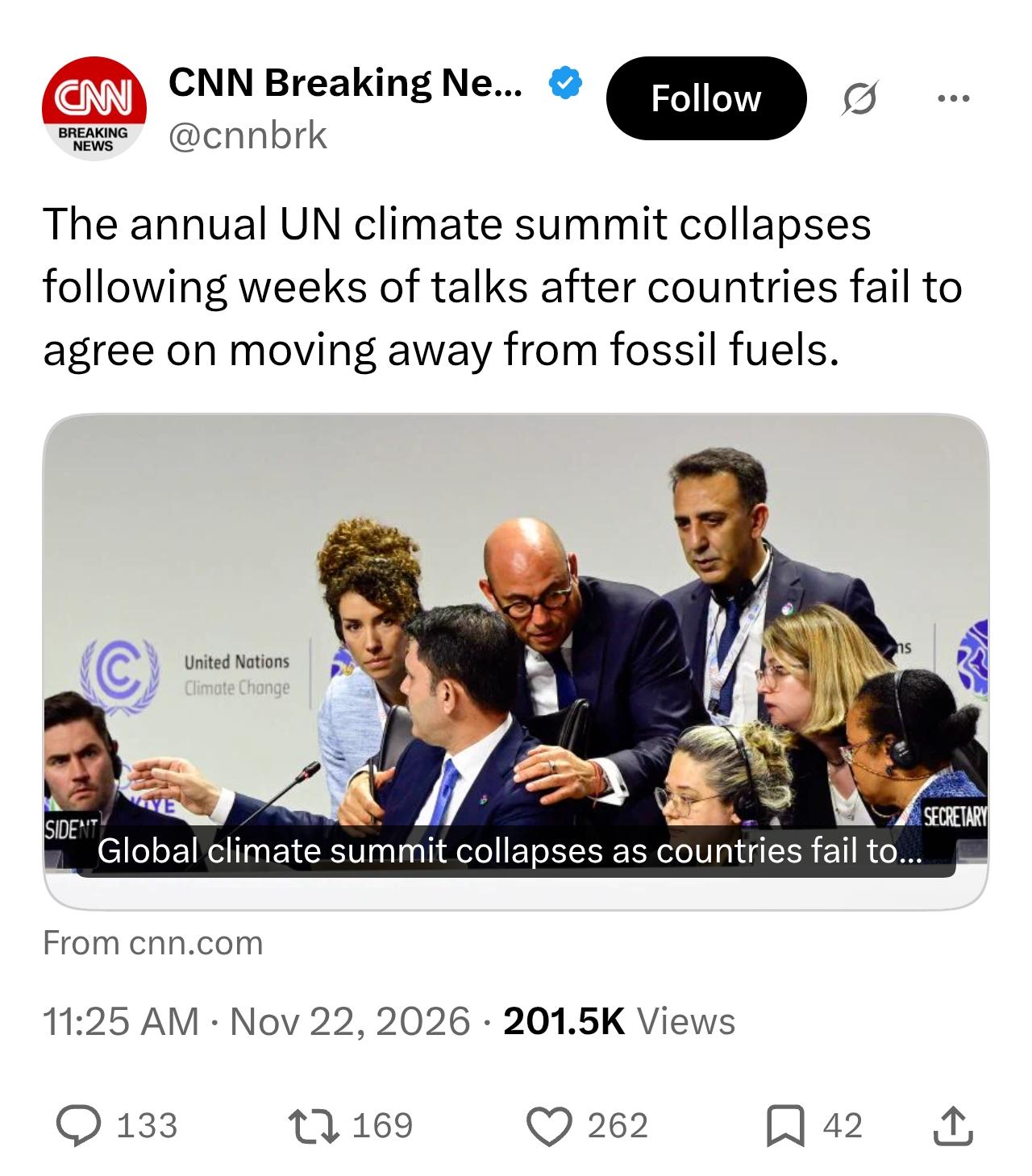
Question Why we fail to move from fussel fuel energy?

Post image
12 Upvotes

During the 2000s-2010s there was a huge movement of move to net Zero, specially in europe, nowdays, seems it failed and main countries that promote it are backing down under the rug.


r/PoliticalDebate • • 8h ago

Are there any powerful businessmen who use politics or philanthropy to hide their true interests?

Thumbnail reddit.com
1 Upvotes