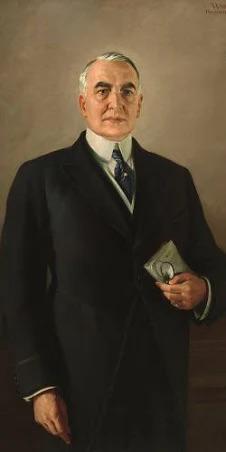
r/Presidents • u/Kennabruh2023 • 6m ago
Discussion What's President Cleveland's historical reputation?
1
Upvotes
What's his legacy?
r/Presidents • u/Fortunes_Faded • 5h ago

Hello to the 250k+ r/Presidents community!
Every year, we put out a survey to get a sense of what the community thinks about the direction of the subreddit. This survey covers questions about the subreddit's rules, ideological and demographic questions, and how you think the mod team is doing as a whole, alongside any feedback or ideas you have to improve this space.
This survey will stay open through the end of the year, and some time afterwards we will release aggregated statistics on the results. Please consider spending a few minutes filling it out as it provides valued insight into how the subreddit is changing and how we move forward. Thank you!
r/Presidents • u/Kennabruh2023 • 6m ago
What's his legacy?
r/Presidents • u/rjidhfntnr • 29m ago

r/Presidents • u/ManfromSalisbury • 29m ago

r/Presidents • u/Medical_Mix3489 • 1h ago

r/Presidents • u/Honest_Picture_6960 • 2h ago

r/Presidents • u/SignificantStyle4958 • 2h ago

r/Presidents • u/Kennabruh2023 • 3h ago
Was he openly mocked or thought less of in anyway?
r/Presidents • u/Kennabruh2023 • 3h ago
Based on his personality and those around him and his campaign platform.
r/Presidents • u/BlueFireFlameThrower • 3h ago

r/Presidents • u/Comet_Hero • 3h ago

r/Presidents • u/zenerat • 4h ago

For those who can’t read that small or if it’s blurry.
Senator Harry Truman, Democrat of Missouri, suggested that the United States help whichever side seems to be losing.
“If we see that Germany is winning we ought to help Russia and if Russia is winning we ought to help Germany and that way let them kill as many as possible, although I don’t want to see Hitler victorious under any circumstances. Neither of them think anything of the pledged word.” June 24, 1941
Would you say this is a holdover from Truman’s experience in WWI? Do you think he’s simply being blasé and not particular serious here?
r/Presidents • u/SignalRelease4562 • 4h ago

Rules:
Pick a President you think does not fit Santa Claus's Personalities or Qualities and have the most upvotes will be eliminated.
Current Placements:
32nd Place: James K. Polk
33rd Place: James Madison
34th Place: Woodrow Wilson
35th Place: James Buchanan
36th Place: Richard Nixon
37th Place: Calvin Coolidge
38th Place: Andrew Jackson
39th Place: William Henry Harrison
40th Place: Franklin Pierce
41st Place: Andrew Johnson
42nd Place: Lyndon B. Johnson
43rd Place: John Tyler (Worst US President Santa Claus)
r/Presidents • u/Prize-Roof-8444 • 5h ago

r/Presidents
•
u/CompetitivePenalty59
•
5h ago

I think one of the most fascinating presidential relationships of the 20th century was that between Lyndon B. Johnson and Richard Nixon. Unfortunately, I feel like their relationship is often overshadowed by their respective relationships with JFK.
What I find particularly interesting is how much these two men had in common despite belonging to opposing political parties, and how they seemed to genuinely like and respect each other despite having considerable reasons not to.
LBJ discovered that Nixon's campaign was interfering with his Vietnam peace negotiations in 1968, yet there is evidence suggesting he may have privately supported Nixon's reelection just four years later. Nixon went out of his way to make Johnson's retirement more comfortable and spoke quite fondly of him years after his death, yet at one point his administration was privately discussing the possibility of blackmailing him.
Were they genuinely friends, politicians who found each other useful, or some combination of the two?
THE SIMILARITIES BETWEEN LBJ AND NIXON
Both came from relatively poor backgrounds, experienced the Great Depression, served as naval officers during WWII, attended relatively obscure undergraduate colleges and rose rapidly through Congress at a relatively young age.
Both had a degree of resentment and rivalry toward the Northeastern liberal establishment. Neither was associated with the intellectual charisma or glamour of JFK, but rather with their political savvy, ambition, work ethic and ability to get things done. Both were formidable politicians capable of being incredibly ruthless toward their opponents.
They even had somewhat similar receding hairlines.
Both served as vice presidents to extremely well-liked presidents and at times felt that they weren't given enough credit or recognition.
Both eventually won some of the largest landslides in American presidential history, with LBJ winning 61.1% of the popular vote in 1964 and Nixon winning 60.7% in 1972. Ironically, neither would serve the additional full term they were eligible for.
Their personalities were also full of contradictions. Both could be vindictive, petty, manipulative and abusive toward their subordinates, while simultaneously having a surprisingly tender and generous side. Both placed enormous importance on loyalty and were concerned with how history would remember them.
I also think their presidencies were far more similar than people generally acknowledge.
Despite Nixon being a Republican, he continued and expanded numerous aspects of the Great Society. Both administrations advanced school desegregation, Social Security, affirmative action, environmental protection, women's rights and Native American rights.
LBJ established Medicare and Medicaid, while Nixon expanded Medicare eligibility and established SSI. LBJ extended federal contractor affirmative action requirements to women, while Nixon signed Title IX. Both signed major environmental legislation and played important roles in shifting federal Native American policy toward tribal self-determination.
Obviously, there were ideological differences between the two, and Nixon attempted to decentralize aspects of the Great Society through his New Federalism. But the extent to which Nixon continued LBJ's domestic policy trajectory is something I find interesting.
Both were staunch anti-communists who were hostile toward elements of the antiwar movement, hippies and the counterculture. Both presided over the most controversial periods of the Vietnam War and expanded the war in different ways. LBJ massively escalated American troop involvement, while Nixon withdrew troops but expanded military operations into Cambodia and Laos.
Both significantly strengthened America's relationship with Israel, particularly around the 1967 and 1973 wars. Interestingly enough, both also had difficult relationships with Indira Gandhi, albeit for different reasons and to different extents.
The similarities extend to the negatives of their presidencies as well. Both used and abused federal intelligence agencies to gather information on political opponents, bugged their opponent’s headquarters, secretly recorded conversations, misled the American public and contributed to the expansion of presidential power. Both also kept extensive tapes of their recordings in the White House.
Both contributed to varying degrees to the development of the War on Drugs, inflationary pressures, increasing federal debt and the enormous decline in trust in the American government during this period.
What I find somewhat tragic about both men is that they had enormous ambitions to change America or the world, accomplished many significant things and ultimately saw much of their legacy overshadowed by their greatest failures.
THE EVOLUTION OF THEIR RELATIONSHIP
The early years (1947-1960)
According to Nixon, one of his earliest interactions with LBJ occurred when Nixon was hospitalized after injuring both of his elbows shortly after entering Congress. Johnson visited him and brought him chili from a nearby restaurant.
Their relationship developed considerably during the Eisenhower years, when Nixon was vice president and LBJ was the Democratic leader in the Senate. Both maintained pragmatic and occasionally tense working relationships with Eisenhower and played important roles in the passage of the Civil Rights Act of 1957.
When LBJ suffered a massive heart attack in 1955, Nixon visited him in the hospital. What was supposed to be a relatively brief visit reportedly lasted over an hour.
When Nixon returned from Venezuela in 1958 after his motorcade was attacked, LBJ warmly embraced him. Two years later, when Nixon was hospitalized during the 1960 presidential campaign, Johnson visited him despite running against him on the Democratic ticket.
Obviously, these gestures alone don't necessarily indicate genuine friendship. Politicians frequently extend these kinds of courtesies to one another. But they are interesting in the context of their later relationship.
LBJ's presidency and the 1968 election
After 1960, their political careers temporarily went in completely different directions. LBJ became vice president and eventually president, while Nixon lost two major elections before making his political comeback.
During LBJ's presidency, Nixon became increasingly critical of Johnson, particularly over his handling of Vietnam. The two even had a public feud during the 1966 midterm elections.
However, their relationship behind the scenes appears to have been considerably better than their public rivalry suggested.
Historian Luke Nichter, drawing on previously inaccessible diaries belonging to Billy Graham, argues that Johnson privately regarded Nixon as the most qualified presidential candidate running in 1968, even though his own vice president, Hubert Humphrey, was also running.
LBJ was becoming increasingly alienated from the antiwar wing of his own party, and Nixon's position on Vietnam was in some respects closer to Johnson's than that of many Democrats.
Nixon also privately communicated through Billy Graham his admiration for Johnson and his desire for Johnson to receive credit for his efforts to end the Vietnam War.
During an August 8, 1968 telephone conversation, LBJ told Nixon:
"We're both supposed to be great political animals, but we both want to do what's best for our country."
Johnson also expressed approval of Nixon's conduct regarding Vietnam and indicated that he would have acted similarly in Nixon's position.
Of course, this makes what happened next even more ironic.
The Chennault affair
In the final weeks of the 1968 election, LBJ was attempting to get South Vietnam to participate in expanded peace negotiations with North Vietnam. However, through Anna Chennault, the Nixon campaign was privately encouraging the South Vietnamese government to delay its participation.
LBJ discovered this through American intelligence and was understandably furious. In a private conversation with Republican Senate leader Everett Dirksen, Johnson went as far as characterizing the interference as treason.
When Johnson confronted Nixon over the phone on November 3, Nixon denied involvement. We now have considerable evidence, including handwritten notes from H. R. Haldeman, indicating that Nixon was personally involved.
What I find arguably even more fascinating than the Chennault affair itself is that it didn't completely destroy their relationship.
Just three days after Nixon won the election, Johnson called him and encouraged him to use his influence with South Vietnam to get them to participate in the negotiations.
Even more interestingly, in a private conversation with Democratic Senator George Smathers on November 21, LBJ said of Nixon:
"He's regarded somewhat like I am by the press, and the same people that are my enemies are his enemies."
Johnson then discussed how Nixon should organize his administration and the importance of having personally loyal people in key positions.
Smathers also recalled Nixon privately telling him that he could get along with Johnson and Humphrey better than some members of his own party.
I find this conversation particularly revealing because neither man was saying these things directly to the other. Just weeks after the Chennault affair, Johnson was privately identifying with Nixon and discussing how Nixon could avoid some of the problems Johnson himself had experienced.
Nixon's presidency and LBJ's retirement
After Johnson left office, Nixon continued providing him with government briefings, which Johnson reportedly greatly appreciated.
On LBJ's 61st birthday in August 1969, Nixon hosted the Johnson family in California and participated in the dedication of Lady Bird Johnson Grove.
What's more interesting than the ceremony itself is what Haldeman privately recorded in his diary that day.
According to Haldeman, Nixon personally planned the occasion, even arranging for a mariachi band to greet Johnson. During the visit, LBJ spent around 45 minutes complaining about his problems in retirement, including funding, staffing, bureaucracy and press leaks.
LBJ also advised Nixon against paying too much attention to his critics, drawing on mistakes he felt he had made during his own presidency.
Another fascinating and somewhat ironic aspect of their relationship is that LBJ may have inadvertently contributed to Nixon's downfall.
According to Haldeman, Nixon initially had Johnson's White House recording equipment removed. However, Johnson later advised through an intermediary that Nixon should maintain recordings of his presidency, believing they would be invaluable when writing his memoirs.
Haldeman credited this advice with helping persuade Nixon to install his own recording system, the very system that would eventually help bring down his presidency.
In May 1971, Nixon attended the dedication of the LBJ Presidential Library, where he spoke fondly of their relationship during the Eisenhower years.
Yet less than a month later, following the publication of the Pentagon Papers, Nixon and Haldeman were privately discussing obtaining potentially damaging information regarding Johnson's 1968 bombing halt. Haldeman explicitly suggested that they could blackmail Johnson to get him to publicly condemn the publication of the papers.
Historian Ken Hughes has argued that Nixon's fear of the Chennault affair being exposed contributed to the events that eventually culminated in Watergate.
It is kind of crazy that within the span of a month Nixon went from honoring Johnson at his presidential library to entertaining the possibility of blackmailing him.
Perhaps even more interesting is the possibility that LBJ privately supported Nixon in the 1972 election.
Although Johnson publicly endorsed George McGovern, Haldeman's private diaries contain reports from John Connally indicating that LBJ was furious with the Democratic ticket, particularly over criticism of his handling of Vietnam.
Nixon later claimed that Johnson had privately expressed support for him to Republican adviser Bryce Harlow but was unwilling to publicly abandon the Democratic Party.
In another diary entry just before the election, Haldeman recorded that Johnson, through his former press secretary George Christian, was reportedly unwilling to revive the Chennault controversy and wanted to maintain the position that Nixon had not personally authorized the interference.
Obviously, that doesn't necessarily mean Johnson actually believed Nixon was innocent, nor do we know with certainty who Johnson voted for.
But the possibility that LBJ privately preferred Nixon in two consecutive presidential elections, despite everything that occurred between them, is fascinating to me.
LBJ's final days
On January 2, 1973, Nixon and Johnson had their final known telephone conversation. They discussed the Vietnam peace negotiations, their families, mutual friends, football and Johnson's heart problems.
On January 20, Nixon was inaugurated for his second term. Two days later, LBJ died at the age of 64.
Just one day after Johnson's death, Nixon announced that an agreement had been reached to end direct American military involvement in Vietnam.
During his address, Nixon paid tribute to Johnson:
"No one would have welcomed this peace more than he."
Interestingly, Nixon later recalled being concerned about whether Johnson knew that an agreement was imminent before he died.
According to Nixon, Kissinger had informed Johnson shortly before his death that Nixon had halted the bombing. Johnson reportedly smiled and said:
"Nixon would never stop that bombing unless he had a deal."
Nixon took comfort in the possibility that Johnson knew an agreement was imminent before he died.
Considering how much Vietnam had consumed both of their presidencies and everything that had occurred between them over the war, I find this a particularly poignant end to their relationship.
WHAT DID THEY ACTUALLY THINK OF EACH OTHER?
In a 1983 interview with Frank Gannon, Nixon was asked what LBJ was like to know personally.
Nixon described him as probably the most effective legislative leader of the 20th century:
"He had all the moves. He knew how to use power. He was ruthless. He was persuasive, mentally, physically, emotionally and every other way."
Nixon also seemed genuinely fascinated by Johnson's personality, recalling everything from his enormous appetite and ability to drink to his enthusiastic mannerisms while introducing foreign dignitaries in the Senate.
When asked whether Johnson was a nice man, Nixon said yes. He acknowledged that LBJ could be brutal toward his White House staff, reducing secretaries to tears over mistakes only to give them enormous gifts the following day.
"He was ruthless, he was tough, but he also had a very, very big heart, in my opinion."
Nixon did acknowledge that others who knew Johnson in a different capacity might have felt differently.
What I find particularly interesting about Nixon's description of Johnson is how much of it could arguably be applied to Nixon himself.
In another interview, Nixon discussed Johnson's expectations of loyalty and the sense of betrayal Johnson experienced when people who had previously supported him began turning against him. Considering what Nixon himself experienced during Watergate, it's hard not to draw parallels.
Interestingly, Nixon also disliked Robert Caro’s first biography of Johnson, The Path to Power. During a commercial break in a 1982 interview with Pat Buchanan, Nixon called it a “terrible book” and remarked, “Shit, it makes him feel like a goddamn animal,” before humorously adding, “Of course he was.” He seemed to object to the overwhelmingly negative portrayal of LBJ while simultaneously acknowledging how ruthless Johnson could be.
Nixon was also somewhat sympathetic toward Johnson’s handling of Vietnam. He felt that historians had been unfair to LBJ and described him as a devoted patriot who genuinely wanted peace. However, he criticized Johnson for trying to pursue the Great Society without fully confronting the costs of Vietnam, placing too much trust in advisers he inherited from Kennedy and pursuing a policy of gradual escalation while misleading the American public. Nixon also recalled Johnson privately telling him that he felt betrayed by some of his advisers.
Nixon also had a sense of humor about Johnson’s enormous ego. During his 1977 interviews with David Frost, Nixon recalled joking with LBJ’s former press secretary George Christian that Johnson would probably be pleased that Nixon was now being called the number-one bomber by his political opponents. Christian responded, “Oh, don’t be too sure, ’cause you know LBJ, he never likes to be number two.”
As for Johnson, I think his private comments about Nixon, particularly his belief that they shared many of the same enemies, indicate that he identified with Nixon to a considerable extent.
George Smathers, who personally knew both men and frequently acted as an intermediary between them, stated quite simply in a 1977 oral history:
"Nixon liked Johnson and Johnson liked him."
Obviously, much of their cooperation can be explained by political pragmatism. Nixon benefited from having a sympathetic Democratic predecessor, while LBJ benefited from having a Republican successor who wasn't intent on dismantling the Great Society or entirely repudiating his Vietnam policy.
I also don't want to romanticize their relationship given the Chennault affair and Nixon's subsequent willingness to potentially blackmail Johnson.
But I don't think genuine personal affection and political opportunism are mutually exclusive, particularly when you're dealing with two men like LBJ and Nixon.
Both rose from relatively humble backgrounds, felt underappreciated as vice presidents, won enormous electoral landslides, accomplished many significant things and ultimately experienced dramatic political downfalls.
Despite their partisan differences, I think they recognized something of themselves in each other. And perhaps that explains why, despite everything that occurred between them, their relationship survived until Johnson's death.
What do you guys think of the relationship between LBJ and Nixon?
SOURCES
Nixon's domestic policy legacy:
https://www.archives.gov/publications/prologue/2012/winter/nixon-homefront
LBJ and Nixon's August 8, 1968 conversation:
https://prde.upress.virginia.edu/conversations/4006028
The Chennault affair:
https://www.lbjlibrary.org/media-kit/chennault-affair
South Vietnam's perspective on the Chennault affair:
https://doi.org/10.1093/dh/dhae055
LBJ's private conversation with George Smathers:
https://prde.upress.virginia.edu/conversations/4006145
Haldeman's diary, August 27, 1969:
https://www.nixonlibrary.gov/research/almanac/august-27-1969
The origins of Nixon's recording system:
https://www.archives.gov/publications/prologue/1988/summer/haldeman.html
Haldeman's diary, August 21, 1972:
https://www.nixonlibrary.gov/research/almanac/august-21-1972
Haldeman's diary, November 3, 1972:
https://www.nixonlibrary.gov/research/almanac/november-3-1972
LBJ and Nixon's final telephone conversation:
https://www.nixonlibrary.gov/white-house-tapes/35/conversation-035-067
Nixon's 1983 interviews with Frank Gannon:
https://ohms.libs.uga.edu/viewer.php?cachefile=media%2Fgannix_0388.xml
https://ohms.libs.uga.edu/viewer.php?cachefile=media%2Fgannix_0396.xml
r/Presidents • u/Clemsonfvr1974 • 5h ago

The use of Atomic weapons in Southeast Asia albeit heavily controversial would free up federal funding to resume the Great Society projects. So despite the initial public reaction being negative I could see him gaining back some goodwill from the American people before November 1968.
r/Presidents • u/No_Evening_7617 • 6h ago
r/Presidents • u/Feelinglucky2 • 6h ago
I am so conflicted with ranking either of them high or low because on one hand they helped America get to where we are today in dramatic proportions, but on the other hand they did horrible things I completely disagree with. For example Polk was a slave owning war monger who practically pushed Mexico into war but got us Texas, New Mexico and California lands which is undeniably a great contribution. Andrew Jackson obviously signed the trail of tears but arguably, that stopped a genocide, so even that was technically helpful to make America move on to the future. Polk also did everything he promised to do when he was elected which is not only a sick fun fact but an extremely rare trait amongst our presidents. Where as Jackson also got rid of the National Debt which is an insane feat but he did it by vetoing infrastructure and selling land which isn't exactly replicatable. So I would like to hear where you all place them and why as I tend to switch back and forth between high mids and low lows. I can't decide! Help!
r/Presidents • u/TheFalconOfAltair • 8h ago
r/Presidents • u/Confident_Range3376 • 9h ago

r/Presidents • u/IMAGOOFYGOOBERRRRR • 13h ago

William Henry Harrisons photograph from 1841? Gone. Rutherford Hayes voice? Gone. Grover Clevelands voice? Gone. James Polk had papers that were lost, and those didn't turn up until the year 1970. Even some more modern presidents like John Kennedy, Lyndon Johnson, Richard Nixon, and even as modern as Bill Clinton who had 2 missing Oval Office tapes! I'm just confused on how we've lost so much from the most important people in the US, hell even the most important people in world! I am fascinated by old stuff from history though, so I do hope that all this stuff is somehow dug up from decades/centuries ago.
r/Presidents • u/GowithGoldwater • 13h ago
r/Presidents • u/BlueFireFlameThrower • 15h ago
r/Presidents • u/Julian81295 • 16h ago