You should really start to worry when some fancy new Big4 consultant starts presenting to them a paid change management project to use a new fancier C++ to replace their legacy Ada codes and propose an AI workflow to reduce the transition cost.
For real why listen to some external consultant about switching to c++ when internally the company already has a dozen fem boys begging to switch it to rust
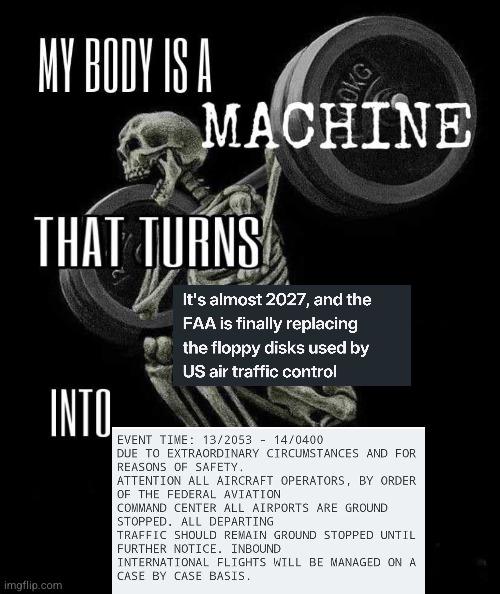
This is a baseless rumor based on the sensationalism around AI. The SMART system, which was being rolled out, is a traffic prediction and planning system that has zero LLM involvement. It's also airgapped from the L3Harris communications network that actually went down, and has pretty much a 0% chance of having contributed to the issue.
This is the first time I’ve read it was air gapped. So the new AI was using a completely separate set of equipment, lines, etc? No shared points of bandwidth limits?
I think it might have been taking in some data, but I don't think there was any way for it to transmit out into the l3harris system. probably not a true air gap (was a bit hyperbolic with my earlier comment) but close enough to rule it out imo. it's literally just a traffic prediction algorithm, basically the same type of tech used to predict weather patterns etc
This is a fun one because there’s absolutely zero evidence regarding what happened so everyone is free to write their own narrative
“It was because the FAA hasn’t upgraded to keep up with growth and the system crashed”
“It was because the FAA upgraded too quickly and the system crashed”
“It was because the FAA is over reliant on legacy systems that can’t do automated load balancing making it too brittle in event of a system failure anywhere”
“It was because the FAA is doing too much new fancy AI automation stuff and it all broke”
Insane that you're getting downvoted for this. There's actually evidence that the SMART rollout wasn't related---it's separate from the system that actually went down, and was just an ML-based traffic prediction system.
So far the only thing the FAA has said is that it was a copper wiring installation failure in their telecommunications centre. They’ve said it has nothing to do with AI, which is only used for predicting future traffic requirements.
I know facts don’t matter in a circlejerk sub though
The newer shit just doesn’t work better than the legacy system. I’m sorry. At my job we moved 70% of the code base off mainframe and onto distributed platform. The distributed side doesn’t work half the time. The mainframe never has issues.
That may very well be true, but modernizing infrastructure ensures you have a living workforce available to fix issues when they arise. The main issue with legacy mainframes is not that they don't work or aren't reliable, but that the people that can maintain them are literally beginning to die of old age, and they aren't being replaced by younger people. You don't want a critical system that can't be fixed because everyone forgot how to. You either spend millions maintaining people trained on obsolete technology or spend millions migrating to cheaper current technology
...Or we can train people on the job like we used to. It is absurd that we try to solve talent and poor succession planning with modernization projects.
Well, there's an easy solution to that problem, at least.
You don't force reliable systems into early retirement by refusing to teach people how to maintain them. It's just a new and unexciting form of planned obsolescence.
If the workforce is dying off, then the solution is to train a new workforce. Sure, it might not be as easy as what they expect, but real-world code never is. Once they know how to maintain it, then the new workforce can work together with the old workforce to modernise whatever's too messy, while still retaining the old core that works.
Technology can die of old age too. The mainframe manufacturing space is pretty much only inhabited by IBM afaik, and any core infrastructure being dominated by a monopoly should concern everyone.
It isn't refusing to teaching them, more like young people not learning those. You can choose to take a Cobol programming class, but they are so low demand that they are difficult to find.
You can start a job with no experience, but without outside assistance or proper training it will quickly turn into a game of telephone and most of the information will be lost.
So you spend millions training people for your specific mainframe or you could use a new system which every 2nd uni graduate could maintain.
Most software engineers would rather be shot than learn COBOL. That's why the legacy systems are being left without maintainers.
They are simply too old, new people don't wanna work on those because it's a dead end on your career, no new systems will ever be built with that tech so you're setting yourself up to be literally unemployable by anyone else.
66
u/kishaloy 12d ago
You should really start to worry when some fancy new Big4 consultant starts presenting to them a paid change management project to use a new fancier C++ to replace their legacy Ada codes and propose an AI workflow to reduce the transition cost.
267
u/Drfoxthefurry 13d ago
I also heard they are testing ai stuff or something like that
109
u/Say_Echelon 12d ago
The newer shit just doesn’t work better than the legacy system. I’m sorry. At my job we moved 70% of the code base off mainframe and onto distributed platform. The distributed side doesn’t work half the time. The mainframe never has issues.