r/Quran • u/quranvisuals • 7h ago
تفسير Tafseer The Meaning of ‘Utull’ and ‘Zaneem’ in the Quran: When Evil Becomes a Person’s Defining Character
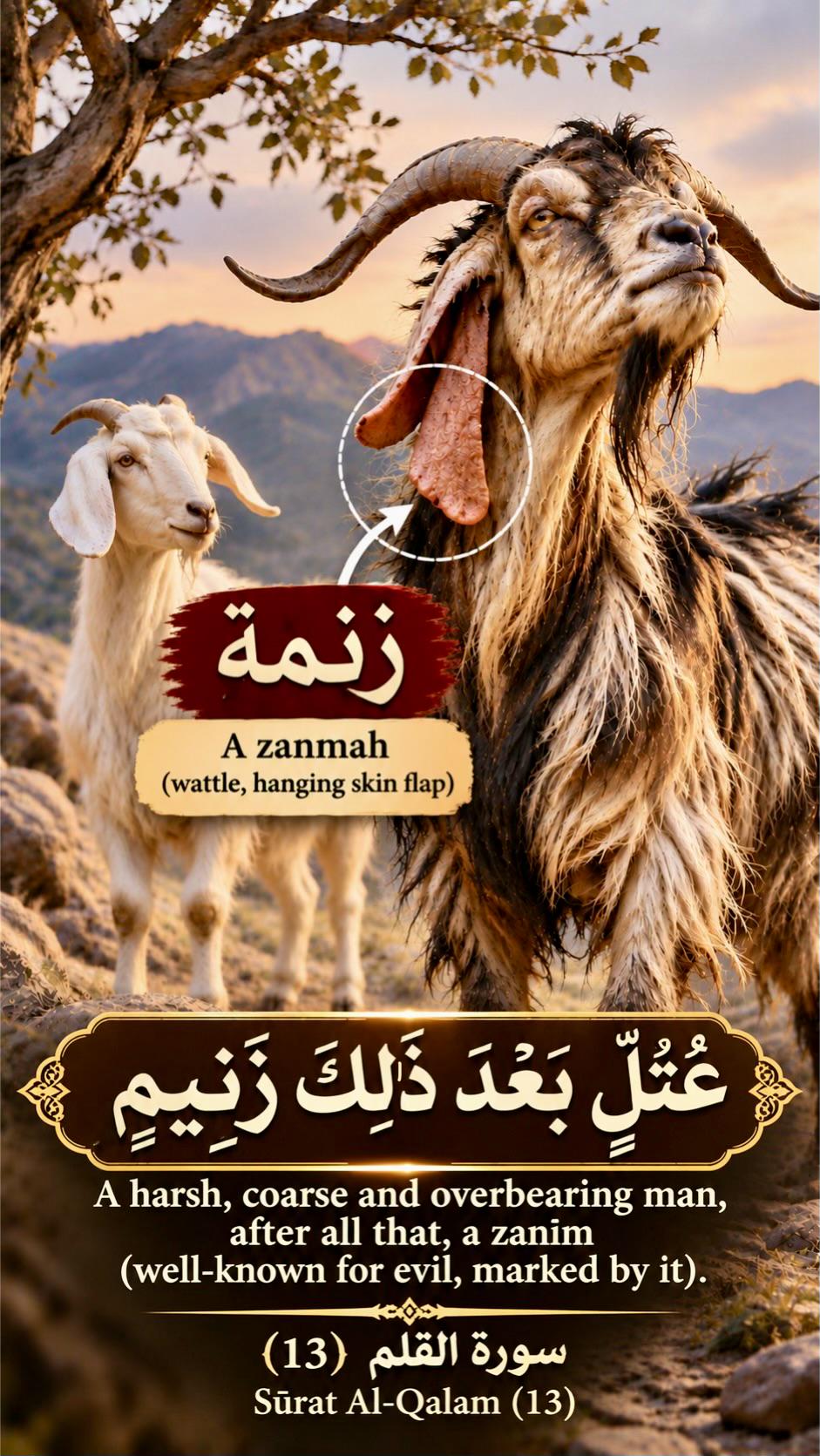
The noble verse describes a type of person in whom various qualities of evil and corruption are combined—in his speech, conduct, character, and attitude toward the truth. Allah says:
﴿عُتُلٍّ بَعْدَ ذَٰلِكَ زَنِيمٍ﴾
The word ʿUtull (عُتُلّ) refers to a harsh, coarse, and ruthless person, someone characterized by extreme cruelty and roughness, who shows neither gentleness nor kindness in dealing with others. Such a person combines a hardened heart with poor treatment of people, in addition to the previously mentioned blameworthy and corrupt qualities.
The phrase ﴿بَعْدَ ذَٰلِكَ﴾ (and, on top of all that) indicates the addition of further negative qualities to those already mentioned. In other words, despite being given to slander and backbiting, withholding good, transgressing, and committing sins, he is also harsh, cruel, and vile, widely known for his evil. It is as though the verse moves from describing his actions and words to describing the evil that has become deeply rooted in his nature and character.
As for the word Zanīm (زَنِيم), one of its original meanings is zanamah (الزَّنَمة), a small piece of hanging skin found near the ear or neck of a goat, which serves as a distinguishing mark by which it is recognized. From this meaning comes the interpretation of zanīm as a person whose evil has become so notorious that it serves as his distinguishing mark, by which people recognize him. In other words, evil is no longer merely a series of actions he commits; it has become an inseparable characteristic of his personality. It has also been interpreted as referring to a vile person whose wickedness is as recognizable as a goat by its distinctive appendage.
Another meaning of zanīm is daʿiyy (الدَّعِيّ), someone falsely attributed to a family or people to whom he does not truly belong. The word can also refer to a vile person who is widely known for his wickedness. Many Quranic commentators have mentioned that these verses were revealed concerning Al-Walid ibn Al-Mughirah, one of the prominent leaders of Quraysh, known for his wealth, status, and numerous children, and for being among the fiercest opponents of the Prophet Muhammad ﷺ and his message.
The Messenger of Allah ﷺ said:
“Shall I not tell you about the people of Paradise? Every humble person who is regarded as weak by others, yet if he were to swear by Allah, Allah would fulfill his oath. Shall I not tell you about the people of Hellfire? Every harsh, arrogant, and conceited person.”
The word Jawwāẓ (جَوَّاظ) in this hadith refers to an arrogant, conceited person, characterized by pride and self-importance.