r/Rojhelat • • Apr 01 '26

Coalition of Political Forces of Iranian Kurdistan

Thumbnail en.wikipedia.org
8 Upvotes

The Coalition of Political Forces of Iranian Kurdistan[a][1] (CPFIK; Kurdish: هاوپەیمانیی هێزە سیاسییەکانی کوردستانی ئێران, romanized: Hevpeymaniya Hêzên Siyasî yên Kurdistana Îranê[2]) is an alliance of major Iranian Kurdish parties. It was formed during the 2025–2026 Iran internal crisis amid rising Kurdish unrest, with the aim of uniting Kurdish forces in Iranian Kurdistan (Eastern Kurdistan) following the 2025–2026 protests and the resulting instability of the Islamic Republic of Iran, as well as the subsequent United States military buildup in the Middle East.[3][4]

History

Background

See also: Kurdish separatism in Iran and federalism in Iran

The alliance was preceded by the Cooperation Center of Iranian Kurdistan's Political Parties, formed in 2018, and the Dialogue Center for Cooperation Among the Parties of Iranian Kurdistan, established in 2023 in the aftermath of the Jina Mahsa Amini protests to jointly advance Kurdish political interests.[5] Since early 2025, the Dialogue Center held monthly meetings, with the chairmanship rotating among participating parties.[6] According to a statement issued after the alliance's formation, the Dialogue Center played a key role in its establishment by facilitating exchanges of opinions and coordination of activities.[7]

Iranian Kurdish groups, part of the Dialogue Center, have been military targets for Iran, including during the September–October 2022 attacks on Iraqi Kurdistan.[8] In 2023, Iraq and Iran signed a security agreement requiring Baghdad to disarm and relocate these groups from border areas following threats by Tehran.[9]

On 5 January 2026, several Iranian Kurdish parties met under the auspices of the Dialogue Center in a high level meeting to coordinate a joint response to the 2025–2026 protests in Iran.[10] Most Iranian Kurdish parties supported the protests and called for strikes.[9] The strikes were observed in most Kurdish cities of Iran, including in Kermanshah Province, Kurdistan Province, and West Azerbaijan Province.[11] During the protests, the Kurdistan Freedom Party (PAK) even claimed responsibility for multiple attacks on the Islamic Revolutionary Guard Corps (IRGC) and stated that it was targeted in retaliatory missile strikes.[8]

On 12 February, seven Iranian Kurdish parties met to ratify a draft agreement and form a coalition of forces. The process was delayed after two parties refused to sign the document. The Dialogue Center decided to postpone the decision but stated that the five parties that had already signed could proceed with establishing the coalition in the coming days if the other two chose not to join.[6]

On 20 February, The Jerusalem Post reported that the Iranian regime could attack Iranian Kurdish parties in the event of a war with the United States.[12]

Founding

Further information: 2026 Kurdish–Iranian crisis

The alliance was founded on 22 February 2026.[3]

In the following days, the Ahwazi Democratic Popular Front,[13] the Broad Solidarity for Freedom and Equality in Iran,[14] the Kurdistan National Congress (KNK),[15] Yehuda Ben Yosef, President of the Jewish Kurdish Community in Israel,[16] and the Democratic Union Party (PYD) congratulated the coalition on its establishment.[17] However, the formation also drew hostile reactions from other groups. The de facto leader of the monarchist opposition, Reza Pahlavi, criticized the alliance, accusing the Kurdish parties of separatism and threatening military action after the fall of the current regime. In response, the alliance reaffirmed its commitment to Kurdish rights and called on "pro-freedom forces" to stand against authoritarianism.[18][19][20]

2026 Iran war

Following the 2026 Iran war, representatives of the coalition stated that they were jointly coordinating political and military decisions and preparing for a new phase, claiming that their forces were "deep inside Iran" and along the Iran–Iraq border, ready to respond as the situation develops.[21] Some members claimed that their forces were already engaged in fighting the Iranian army, while their positions were simultaneously targeted by missile and drone strikes in the Kurdistan Region.[22]

On 2 March 2026, in their first joint statement since its founding, the coalition and its members addressed Iran's armed forces stationed in Kurdish areas, urging them to "separate themselves from the remnants of the Islamic Republic." The statement also called on the population to remain vigilant and coordinated, align political actions with the alliance's guidance, and protect public institutions and service facilities during what it described as a period of potential regime collapse and popular uprising.[23]

On 3 March, intensified attacks in the Kurdish‑majority areas of western Iran, including strikes on border posts along the Iran–Iraq border and other security facilities, were described by some analysts as having "paved the way for a Kurdish advance."[24][25] This coincided with a call between US President Donald Trump and Mustafa Hijri, the leader of the Democratic Party of Iranian Kurdistan (PDKI), a founding member of the coalition.[26]

On 9 March, the alliance's logo was approved.[27]

Members

Its founding members include the five largest Iranian Kurdish parties, most of which are based in exile in the Kurdistan Region of Iraq. These include:[3]

The following party leaders participated in the official press declaration and signed the agreement that formally established the alliance: Mustafa Hijri (PDKI), Hussein Yazdanpanah (PAK), Baba Sheikh Hosseini (Khabat), Viyan Peyman (PJAK), and Reza Kaabi (Komala of the Toilers of Kurdistan).[3]

The Komala Party of Iranian Kurdistan, led by Abdullah Mohtadi, and the Komala Kurdistan's Organization of the Communist Party of Iran (CPI), initially refrained from signing the agreement,[28] even though they had been part of the Dialogue Center.[6] The Komala Party of Iranian Kurdistan did not sign the agreement, citing ambiguities and unclear objectives. However, it acknowledged some positive aspects, welcomed the unity promoted by the alliance, and called for a joint administration during a transitional period in Kurdistan, a unified "Peshmerga force", and coordinated international diplomacy. The party emphasized that it does not oppose the coalition.[29]

Other members include:

Objectives and charter

Primary objectives

The primary objectives of the alliance are "the struggle to bring down the Islamic Republic of Iran, the realization of the Kurdish people's right to self-determination, and the establishment of a national and democratic institution based on the political will of the Kurdish nation in Eastern Kurdistan."[9]

Provisions for Eastern Kurdistan

Provisions for Iran

Other objectives

Strength

It is estimated that all parties in the coalition field between 5,000 and 10,000 fighters, many of whom were battle-hardened during the war against the Islamic State or in previous clashes with Iran.[35][36] It is also believed that several hundred Kurds from the diaspora, particularly from Norway, joined Kurdish parties at the beginning of the 2026 Iran war.[37]

Sources within Kurdish groups state that if they were to cross the border from Iraq into Iran, clandestine networks and supporters inside the Kurdish regions of Iran could join them in securing the area.[35]

See also

Notes

  1.  Also known as Rojhelat Alliance/Coalition, Eastern Kurdistan Alliance/Coalition, Iranian Kurdistan Alliance/Coalition, or just Kurdistan Alliance/Coalition

r/Rojhelat • • 5h ago

Crimes against Kurds Orumiyeh: Concern grows for three Kurdish prisoners on prolonged hunger strike

Thumbnail kurdistanhumanrights.org
3 Upvotes

Bukan prisoners Hamed Maroufi, Hiwa Nouri and Ali Faroughi are in serious condition in Urmia Central Prison. Their hunger strike is now in its second month.


r/Rojhelat • • 5h ago

War Iran launches fresh drone strikes on opposition group in Kurdistan Region

Thumbnail rudaw.net
2 Upvotes

Four Iranian suicide drones hit positions of PJAK's armed wing YRK east of Sulaimani on Tuesday. The strike came a day after drones hit KDPI camps.


r/Rojhelat • • 4h ago

War Iran crosses border to target Kurdish PJAK in Slemani

Thumbnail theamargi.com
1 Upvotes

On November 24, Iran launched fresh drone strikes against the Kurdistan Free Life Party’s (PJAK) positions in Penjwen, Slemani in Iraqi Kurdistan, according to PJAK’s military wing. Separately, a local source told The Amargi that two Islamic Revolutionary Guard Corps (IRGC) members were killed in clashes with Kurdish guerrillas near Mariwan in Iranian Kurdistan.

The Eastern Kurdistan Defense Units (YRK), PJAK’s military wing, reported four drone strikes in a row: “The Iranian regime once again targeted our forces’ positions in the Penjwen area,” a statement said on Tuesday. The statement did not mention the clash in Mariwan.

The local source said the clash occurred in the Biakara IRGC base near Mariwan and involved YRK fighters. He said that YRK fighters attacked with drone on the IRGC base. Other reports attributed the attacks to PJAK and reported additional IRGC personnel wounded. The reported casualties and PJAK’s involvement have not been independently confirmed by The Amargi.

The events follow renewed clashes between IRGC and YRK guerrilla fighters in the mountainous Iran-Iraq border region: In October, Iran increased military operations against PJAK, as tensions with Washington persisted following the start of the US-Israeli war against Iran.

Renewed operations in Mariwan and Sardasht

Two days before the Penjwen strikes, Iranian forces targeted the Sarchor area near Mariwan with drones and mortars. The YRK press center stated on November 22 that these attacks were a continuation of previous IRGC operations in the region.

The YRK reported no casualties or material losses but said the attacks damaged the local environment. The group also accused Iran of preparing a larger operation in Sardasht, in West Azerbaijan province, and of imposing movement restrictions on residents.

On November 11, Iranian forces targeted the mountains near the villages of Gagel, Hana Sheikhan, and Qamishela close to Mariwan. Sources told The Amargi that shelling and drone strikes damaged orchards and farmlands.

On November 17, the YRK press center reported that its forces conducted operations against the IRGC in Sardasht and Baneh on November 15 and 16. YRK described these actions as retaliation for the death of PJAK fighter Dersim Bahar in Sardasht. PJAK said every attack against its forces will be met with a response and that its military activity is based on the principle of self-defense. PJAK’s military wing’s claims regarding Iranian military casualties have not been independently verified and not reported by Iran’s domestic outlets. 

In a statement dated November 17, PJAK’s council confirmed Iranian drone and mortar attacks on its positions in Penjwen and reported no casualties or material losses. It also tied the escalation to the authorities crackdown on recent protests in Abadan, in Ilam province.

“The council said these attacks would have the opposite effect, arguing that Tehran’s military operations would only strengthen the Kurdish movement’s determination to pursue its political objectives.” 

Confrontations since the US-Israeli war

Several other Iranian Kurdish opposition parties like PDKI, PAK, and Komala maintain members in established camps in the Kurdistan Region of Iraq. PJAK differs by keeping an armed presence across the mountainous Iran-Iraq border, with part of its force operating inside Iranian Kurdistan. When US-Israeli war against Iran broke out, PJAK held to what it calls its “third line,” refusing to side with either side in the war.

In a statement issued on June 30, the YRK command said its forces stayed independent throughout the war. “We did not take sides with any force,” it said, accusing the IRGC of launching operations against its guerrillas anyway.

In a later statement, PJAK’s council said Tehran used the pause in hostilities with Washington to intensify military operations and domestic repression. The party cited Iranian attacks on its forces in Mariwan, Baneh, Mahabad, and Sardasht. Fighting flared up again in October. On October 18, the YRK command warned that its guerrillas would respond if Iran kept up its military operations in the Shaho mountains.

On October 19, the YRK press center reported Iranian drone and mortar attacks near Mariwan, stating that the shelling damaged farmland and orchards belonging to residents. On October 21, the YRK command announced that its forces had responded to Iranian attacks in the Kosalan area, citing the “principle of legitimate self-defense.”

A source close to the YRK command has previously told The Amargi that Tehran worries Kurdish armed groups could expand their activities inside Iran if the United States and Israel resume large-scale military operations against the country.

The source rejected claims that PJAK intended to join a campaign led by foreign powers, saying the group’s military activity is defensive.

Iranian military authorities, for their part, describe their operations against PJAK as efforts to protect the country’s western borders. On November 12, Iran’s Mehr News Agency reported that the IRGC’s Hamzeh Seyyed al-Shohada Headquarters had announced the elimination of a PJAK unit near Sardasht, accusing its members of trying to carry out “sabotage and terrorist activities.”

PJAK later confirmed Bahar’s death but did not back up the IRGC’s full account of the clash.

The Penjwen strikes indicate that Iran’s military operations are extending beyond its western borders. As of November 25, Iranian authorities had not confirmed the reported casualties in Mariwan. The YRK had not claimed responsibility for the attack, and it is unclear whether the two incidents are related.

--

Kawe Fatehi is a journalist and translator, based in Berlin, with a Master's degree in English Literature and Language. He has written for multiple Kurdish and Persian media outlets, covering topics related to the Kurdish community in Iran, Iraq, Turkey, and Syria. In addition to his journalism work, he is a social worker.


r/Rojhelat • • 1d ago

War Drone attack hit Azadi and Jazhnikan camps in Kurdistan Region

4 Upvotes

Azadi Camp in Koya and the Jazhnikan (Cêjnîkan) refugee camp near Baharke were hit by drones on Tuesday, November 24, 2026. Both camps are in Iraq’s Kurdistan Region. Initial reports said no one was killed or injured in either attack.


r/Rojhelat • • 1d ago

War Tehran’s dismantling of Iranian Kurdish societies in Iraqi Kurdistan

Thumbnail theamargi.com
2 Upvotes

Drone strikes have emptied camps housing Iranian Kurdish parties and families, as critics say attrition is achieving what no official order has.


r/Rojhelat • • 1d ago

Crimes against Kurds At Least 26 Arrests Reported After Abdanan Bus Crash and Protests

Post image
1 Upvotes

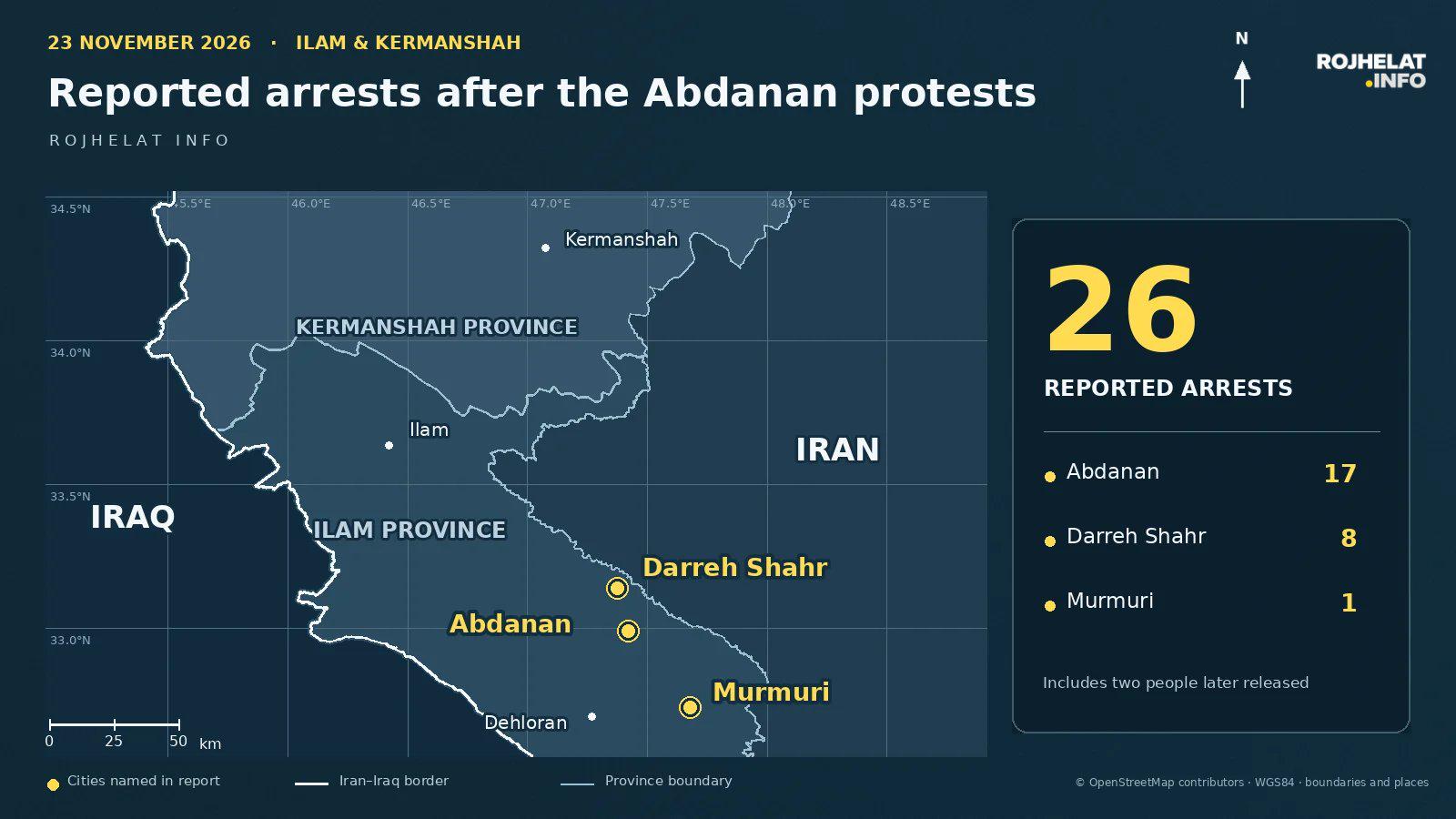
At least 26 people have been arrested in Abdanan, Darreh Shahr, and Murmuri in the days following a deadly bus crash and the protests it sparked.

This figure brings together reports from human rights organizations: 17 arrests in Abdanan, 8 in Darreh Shahr, and one in Murmuri.

The bus was carrying workers from the Dehloran oil and gas project when it overturned on 14 November, killing 13 people. Three days later, residents of Abdanan gathered to demand answers about the crash and the safety of the roads used by workers.

Human rights organizations reported that security forces used tear gas against protesters and continued making arrests in the following days.

In Abdanan, the 17 people reported arrested are:
Sina Darvishi, Iraj Heydari, Saeed Abdollahi, Asghar Akbari, Armin Soleimani, Behnam Moradi, Peyman Karimzadeh, Shahram Javidaneh, Meysam Nazari, Mohammad Hossein Kaviani, Hossein Alizadeh, Hamidreza Shahmohammadi, Seyed Hamzeh Hashemi, Ali Hosseini, Shayan Mardani, Soroush Gilani, and Mohsen Bavir.

Darvishi, who is 15, and Bavir were released after several hours. Nazari, a healthcare worker at Abdanan’s Rasoul Akram Hospital, was reportedly arrested at work on 19 November. The figure of 17 counts everyone reported arrested; it does not mean all 17 remain in custody.

In Darreh Shahr, eight people were reported arrested:
Mohammad Mirzaei, Mohammad Amin Amraei, Mohammad Owlad, Arian Imani, Amir Garavand, Ali Vali, Hamidreza Mirzaei, and Erfan Esmaeili.

In Murmuri, Heydar Molaei was arrested on 20 November during a gathering in support of those detained in Abdanan. He was reportedly taken to an undisclosed location.

The whereabouts, possible charges, and legal status of many of those arrested remain unclear. Families are still seeking information about them.

https://x.com/RojhelatInfo_En/status/2124995893053026654


r/Rojhelat • • 1d ago

Crimes against Kurds Ilam Province: Security forces arrest at least 11 Kurds in Ilam Province

Thumbnail kurdistanhumanrights.org
1 Upvotes

Iranian forces detained at least 11 Kurds in Abdanan and Darreh Shahr between 17 and 21 November, after the bus-crash protests. They were taken to undisclosed locations.


r/Rojhelat • • 2d ago

Iranian female singer lashed 74 times for performing without hijab

Post image
13 Upvotes

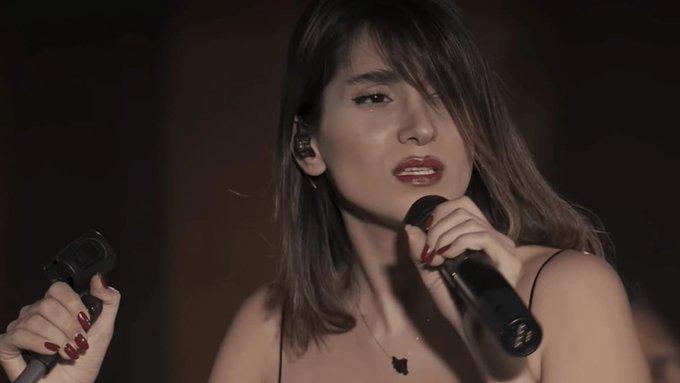
Iranian singer Parastoo Ahmadi was given 74 lashes on Monday for performing without a hijab, along with four members of her production team, her lawyer said, nearly two years after her online concert went viral and triggered a judicial crackdown.

Prominent human rights lawyer Mustafa Nili told Iranian newspaper Emtedad on Monday that the flogging sentences were carried out at the Qom prosecutor’s office.

“The flogging sentences against five of those convicted were carried out today,” Nili said.

The four others were identified as Soheil Faqih-Nasiri, Amin Taheri, Amirali Pirnia and Mohsen Lashkari, each of whom also received 74 lashes.

The case dates back to Ahmadi’s December 11, 2024 performance at the historic Deir-e Gachin caravanserai in Qom, which was streamed on her YouTube channel.

The concert, which featured Ahmadi singing without the mandatory Islamic headscarf alongside male musicians, attracted widespread attention and became known as the “Imaginary Concert.”

Ahmadi’s performance came two years after the September 2022 Woman, Life, Freedom protests, sparked by the death of Kurdish woman Jina (Mahsa) Amini in police custody. Although Iranian authorities have since relaxed enforcement of mandatory hijab rules in some public spaces, the law remains in force, and women continue to face prosecution for defying it.

Iranian authorities subsequently launched legal proceedings against the performers, accusing them of “offending public decency through the production and publication of vulgar and immoral content online.”

Branch 122 of Qom's Criminal Court handed down the draconian sentences, including 74 lashes each, a two-year ban on artistic and musical activities and a two-year travel ban. The sentences were upheld by Branch 16 of the provincial appeals court.

Ahmadi was briefly detained in December 2024 after the concert drew widespread attention.

Under the Islamic Republic's strict regulations, women are prohibited from singing solo publicly before mixed audiences and must observe mandatory hijab rules.

The flogging comes months after Iranian authorities carried out similar punishments against two Kurdish women detained during January's nationwide anti-government protests.

In August, Iranian authorities administered 31 lashes each to Neda Dadejani and Setayesh (Behnoush) Sarabi, two female activists from Qorveh in Kurdistan province, before transferring them to Sanandaj central prison in Kurdistan province, according to Oslo-based Hengaw Organization for Human Rights.

The women were convicted of “disrupting public order and tranquility” for participating in the protests and sentenced to imprisonment and two years of internal exile to Sistan and Baluchestan province, more than 1,800 kilometers from their hometown.

https://rudaw.net/english/categories/iran/1080277


r/Rojhelat • • 2d ago

War Photographer and journalist Valentina Sinis spent two weeks documenting the lives of members of an all-female Kurdish military group; she called the resulting photo series “Lost Butterflies.”

8 Upvotes

“I had no desire whatsoever to present a romanticized image of a fighter; I only wanted to portray the people behind the headlines—the women.”

Earlier this year, photographer and journalist Valentina Sinis spent two weeks documenting the lives of members of an all-female Kurdish military group; she called the resulting photo series “Lost Butterflies.”

Sinis explains the group’s purpose: “Their goal is to liberate Rojhelat, the part of Kurdistan located in Iran, and to free women from patriarchal structures.”

They call one another “heval,” a word that, according to Sinis, expresses a bond of sisterhood. The governments of Iran and Turkey consider the group terrorist.

Sinis recounts how she was taken from an undisclosed location to a cave where the women fighters had made their home.

According to her, many of these women have left behind ordinary lives, friends, families, and education to work toward freedom for future generations.

Valentina Sinis won the 2026 Leica Oskar Barnack Award (LOBA) Special Prize for Women for her “Lost Butterflies” project. She intends to use the prize money to continue the project and document the lives the Kurdish women fighters have left behind.

https://x.com/MuradyDiako/status/2124686153919992254


r/Rojhelat • • 2d ago

Crimes against Kurds Sardasht: IRGC intelligence forces arrest Kurdish artist in Sardasht

Thumbnail kurdistanhumanrights.org
4 Upvotes

IRGC intelligence raided Shoresh Aboubakri's Sardasht home without a warrant and took him to an unknown location. He was last detained in October over his artistic activities.


r/Rojhelat • • 4d ago

Crimes against Kurds Femicide in Iran: When patriarchy becomes state law

Thumbnail theamargi.com
4 Upvotes

An average of one woman a day was reportedly killed by male relatives in Iran over 10 days in November. Rojin Mukriyan examines how Iran’s penal code shapes accountability for femicide.

--

Over the past 10 days, an average of one woman a day has reportedly been killed by male family members in Iran, raising renewed concerns about femicide and the legal and social structures that perpetuate violence against women.

The recent killings reflect a wider pattern documented earlier this year. Between March 21 and October 13, at least 84 women were killed in Iran, according to the Human Rights Activists News Agency. In 75 of those cases, the perpetrator was someone known to the victim, while in 45 cases, a current or former husband or intimate partner was identified as the perpetrator. Twelve victims were under 18, eight of whom were killed by their fathers, brothers or other blood relatives.

Among the most recent cases is that of Sogand Sayadi, a 16-year-old Kurdish schoolgirl from Kermanshah, whose death has sparked outrage and raised troubling questions about the responsibility of families, schools and the state to protect girls from violence.

Sogand reportedly feared what would happen if her father learned about her romantic life, as she was said to be in a relationship with another girl at her school. According to accounts from her classmates, she warned that going home could cost her life after school authorities summoned her father on November 14. “If I go home, my father will kill me,” she told her friends.

Instead of finding safety, Sogand faced violence while at school. Human rights organizations reported that her father severely beat her in front of classmates and school officials before taking her home. Shortly afterward, she fell from the fifth floor of the family’s residential building and died.

One of Sogand’s schoolmates said in a video that one of her friends witnessed Sogand being thrown against a window. Her father and the school principal have reportedly been arrested as part of the investigation. Sogand’s father denied the allegation that he pushed her out of a window.

Whether or not her father admits responsibility, Iranian law effectively grants fathers special protection from punishment for killing their own children. Under Iranian law, a father who kills his daughter is exempt from qisas (retaliatory punishment) – although he may still face other criminal penalties – raising serious questions about accountability.

Why is femicide rising in Iran?

Femicide is not new in Iran, but reports of women being killed by male family members have increased in recent years. Thanks to advances in information and communication technology, particularly social media, cases that might once have remained hidden within families and communities can now be made public.

Experts and human rights observers point to three primary drivers behind the apparent rise in femicide in Iran: the Islamic Republic’s Sharia-based legal system, a violent backlash against women’s resistance, and the absence of mediating institutions.

Sharia-based legal system

The establishment of the Islamic Republic in 1979 consolidated heteropatriarchy and gave it greater institutional and legal power. Patriarchal norms were not merely preserved within society; they were institutionalized through a state legal system based on the Twelver Shia interpretation of Islamic law.

Under this system, womanhood is defined and regulated through a masculine and religious gaze. The ideal of a “good” and “honorable” woman is shaped by the state’s interpretation of the life of Fatemeh, the daughter of the Prophet Muhammad and wife of Imam Ali, the first Shia Imam. Women are expected to model their behavior, appearance and morality on an ideal of femininity associated with obedience, modesty, sacrifice and devotion to the family.

Child marriage, polygamy, male guardianship over marriage and unequal access to divorce have all been institutionalized or maintained within the Islamic Republic’s legal framework. Women have been reduced, in many aspects of family law, to individuals whose autonomy is subordinated to the authority of fathers, paternal grandfathers and husbands. Their bodies, feelings, sexuality and personal choices are treated as matters of family honor rather than individual rights.

In this patriarchal framework, a woman’s body becomes a symbol of the family’s reputation, and her sexuality becomes something that male family members are expected to control and protect. Her choice of whom to love, whom to marry, how to dress and how to live can be viewed as a challenge not only to family authority but also to the moral order promoted by the state.

This gender hierarchy is directly reflected in how Iran’s penal code treats fathers who kill their own children.

Article 301 of Iran’s Islamic Penal Code establishes that qisas, or retaliatory punishment for intentional killing, applies only when the perpetrator is not the victim’s father or paternal grandfather. This means that if a father intentionally kills his daughter, he is exempt from qisas, the punishment that would ordinarily apply to intentional murder, though he can receive a prison sentence of three to 10 years when specified public-order conditions are met.

The law provides another exemption for husbands. Article 630 of the Islamic Penal Code permits a husband, under narrowly defined circumstances, to kill his wife and the man with whom he personally witnesses her engaging in consensual sexual intercourse. This provision does not apply merely because a husband suspects his wife of infidelity.

These legal exemptions have serious implications for women’s right to life. They create a system in which the punishment for intentional killing can depend on the relationship between the perpetrator and the victim.

Femicide as violent backlash against women’s resistance

Another factor behind the rise in femicide is women’s growing resistance to patriarchal authority. According to Somayeh Rostampour, a Paris-based sociologist and postdoctoral researcher at the University of Lille, femicide should not be understood merely as isolated acts of violence but also in relation to women’s struggles for freedom and their challenges to existing power structures.

Drawing parallels with Latin America, Rostampour argued that women’s increasing empowerment can provoke stronger patriarchal backlash. “The more women become empowered, the more they resist, and the more they push for change, the stronger the backlash against them can become,” she told The Amargi.

This dynamic, she argued, is particularly relevant to Iran and Kurdistan following the Woman, Life, Freedom (Jin, Jiyan, Azadi) movement, which has challenged established gender hierarchies. As more women refuse to submit to patriarchal authority, their demands for autonomy can be met with increasingly violent resistance from men unwilling to relinquish control.

Absence of mediating institutions

Equally significant is the disappearance of institutions capable of mediating between women’s demands for freedom and patriarchal resistance, Rostampour argued.

These intermediary structures, including women’s associations, independent organizations, legal protections and collective mechanisms, can help prevent social conflicts from escalating into extreme violence. Under the Islamic Republic, many have been dismantled, restricted or severely weakened.

Describing two increasingly opposing positions, Rostampour said women refuse to retreat from their demands for autonomy, even at great personal risk, and men refuse to accept those demands – leaving “almost nothing” in between.

Without effective intermediary institutions, conflicts become increasingly individualized. Women are left to confront patriarchal authority alone, without collective organizations capable of transforming individual resistance into broader social and political struggles.

These mediating institutions act as “a kind of brake on social conflict,” Rostampour said, arguing that their absence increases the risk of confrontations escalating into extreme physical violence. “Women are forced to resist individually, to confront patriarchal power individually, and often to bear the consequences individually, even when the cost is their own bodies or lives.”

For Rostampour, this absence of mediation is essential to understanding femicide in Iran and Kurdistan: women’s resistance is growing, but the institutions that could protect them and channel their demands into collective action remain severely weakened.

--

Rojin Mukriyan has PhD in the Department of Government and Politics at University College Cork, Ireland. Rojin’s main research areas are in political theory, feminist and decolonial theory, and Middle Eastern politics, especially Kurdish politics. She has published articles in the Journal of International Political Theory, Philosophy and Social Criticism, and Theoria. Her research has thus far focused on the areas of Kurdish liberty, Kurdish statehood, and Kurdish political friendship. She has published many think tank commentaries and reports on recent political developments in eastern Kurdistan (Rojhelat), or north-western Iran. She has also frequently appeared on a variety of Kurdish and Persian language news channels. X account: u/RojinMukriyan


r/Rojhelat • • 5d ago

War Why Iraq’s Shiite Factions May Be Willing to Sacrifice Militia Power to Preserve the State

Thumbnail gallery
6 Upvotes

The confrontation between Iraq’s government and Kataib Hezbollah, the Iran-backed armed faction that has controlled Jurf al-Sakhar in northern Babil province since 2014, offers a revealing glimpse into a much larger strategic debate taking place within Iraq’s Shiite political establishment and, crucially, in Iran itself.

After days of threats and military deployments around the district ahead of a 20 November deadline set by Prime Minister Ali al-Zaidi, an agreement was reported on 19 November under which Kataib Hezbollah would relinquish control of Jurf al-Sakhar to Iraqi government forces and relocate its fighters elsewhere. The agreement followed mediation involving senior Shiite figures and Esmail Qaani, commander of the Islamic Revolutionary Guard Corps’ Quds Force.

Although the confrontation appeared dramatic, its resolution illustrates a wider calculation increasingly evident among influential Shiite actors: giving up some power today may be necessary to preserve, and potentially strengthen, their collective position tomorrow.

The debate concerns how best to preserve the political order that emerged in Iraq after 2003, in which Shiite parties became dominant, while safeguarding Iran’s strategic position amid the enormous regional pressures unleashed since October 7, 2023, and intensified by the 2026 Iran war. Both sides of it remain closely tied to Tehran.

The fundamental question is whether independent armed factions, once essential to projecting Iranian influence, have increasingly become a liability to the very political order they were established to protect.

During the Iran war, conversations with figures from Asaib Ahl al-Haq, the faction led by Qais al-Khazali, and the Badr Organisation, led by Hadi al-Amiri, revealed a deliberate strategic calculation. Their argument, which kept Iraq firmly within the resistance camp, was that an internationally recognised, economically functioning and militarily capable Iraqi state, governed by political forces with close ties to Tehran, could be considerably more valuable to Iran than a collection of independent armed groups capable of launching missiles and drones.

Their reasoning is straightforward. Militia attacks can expose Iraq to American retaliation, sanctions and diplomatic isolation, weakening the state, damaging an open economy from which Iran itself benefits, and potentially threatening the Shiite political establishment itself. A weakened Iraq, in turn, becomes less capable of protecting interests that Baghdad and Tehran regard as strategically important.

The Kurdistan Region illustrates this reasoning most clearly. During the 2026 war, Iranian Kurdish opposition organisations based in the region explored the possibility of launching cross-border operations against Iran, reportedly with American support. Although the KRG denied involvement, the possibility of opening a ground front against Iran exposed a vulnerability that Iraqi Shiite leaders had long considered significant.

Their calculation is that a stronger Baghdad, enjoying greater international legitimacy and possessing more effective security institutions, would be better positioned to exercise federal authority over Iraq’s borders and prevent its territory from being used for attacks against neighbouring states.

From Tehran’s perspective, preventing a potentially serious ground threat from Iraqi territory could be strategically more consequential than the limited military contribution of individual Iraqi militias during a regional war.

This also explains why some Shiite factions connect the question of militia integration to the wider struggle over federal authority, border security and Baghdad’s relationship with Erbil, which they see as able to pursue its own contacts with Washington and Israel while the federal government remains weak. The aim, from their perspective, is to give the state the capacity to enforce policies they believe protect both Iraqi and Iranian interests.

There is an important institutional dimension to this calculation. Integrating militia personnel into the regular security establishment does not necessarily eliminate their political or ideological loyalties. Badr’s decades-long influence within Iraq’s Interior Ministry, including the Federal Police, offers a historical example of how an armed organisation can exchange formal autonomy for enduring influence within the state. Absorbing militia personnel into security forces whose ranks are already predominantly Shiite would also deepen the weight of factions close to Tehran inside them.

For these factions, therefore, surrendering independent military structures may not amount to surrendering power. It may represent the conversion of factional military influence into institutional power, backed by the resources, legal authority and international recognition of the Iraqi government.

Tehran appears to share this thinking. There are good reasons to believe that important Iranian decision-makers regard it as serving their own strategic objectives, even as they keep their position deliberately ambiguous.

In a 2023 meeting reported at the time, Asaib leader Qais al-Khazali asked Iran’s then-supreme leader Ali Khamenei whether the priority should be building the Iraqi state or preserving the resistance. Khamenei avoided giving a definitive answer, while stressing Iraqi national interests, Shiite unity and the importance of respecting Najaf’s religious authority.

That ambiguity reflects Iran’s actual policy. It allows Tehran to support the strengthening of the state while leaving allied factions room to manoeuvre and keeping Washington uncertain about how far its demands are being met. Iran’s relationships with Iraqi Shiite factions have never been adequately explained by a simple patron-client model in which Tehran issues instructions and local actors merely implement them.

These relationships are deeply rooted in religious solidarity, decades of political cooperation, personal networks, shared experiences of persecution and exile, and reciprocal obligations. Iraqi factions possess considerable agency and pursue their own organisational interests. Tehran has generally tolerated such differences, partly because factional competition is a familiar feature of Iran’s own political system, intervening more directly when disputes threaten broader strategic interests.

The influence exercised by Qassem Soleimani, the Quds Force commander killed in a US strike in Baghdad in 2020, exemplified this system. His relationships with Iraqi Kurdish and Shiite leaders were not based exclusively on formal command structures but also on trust, personal obligations and an ability to negotiate among competing centres of power.

This helps explain why disagreements between Iraqi Shiite factions do not automatically represent strategic ruptures. Competition over ministries, economic resources, military positions and territorial control can be genuine, even intense, without undermining their shared commitment to preserving the wider political order. Even armed infighting between factions would not, in this reading, pose an existential threat to that order.

There is also a religious and historical dimension that purely geopolitical interpretations often overlook. For many influential Iraqi Shiite leaders, Iran is not simply a neighbouring state or an external sponsor. Their political identities were shaped by Saddam Hussein’s persecution of Shiites, years of exile in Iran, the post-2003 sectarian conflicts and the existential threat posed by ISIS. They view the security of Iraq’s Shiite political establishment and the survival of Iran’s Islamic Republic as deeply interconnected, notwithstanding important differences between Najaf and Tehran.

Why Iraq's Shiite Factions May Be Willing to Sacrifice Militia Power to Preserve the State - The National Context
r/Rojhelat • • 5d ago

Informative پارێزگاری سنە: ناوە رەسەنە کوردییەکان دەگەڕێندرێنەوە سەر گوندەکان

Thumbnail rudaw.net
4 Upvotes

Sanandaj's governor says Kurdish names will be restored to villages that were given meaningless or translated names. Committees with language experts will review them, and village signs will be bilingual.


r/Rojhelat • • 5d ago

Crimes against Kurds Baneh: Iran border guards shoot dead kolbar in Baneh

Thumbnail kurdistanhumanrights.org
4 Upvotes

Iranian border guards killed Bahman Khedri, a 34-year-old kolbar and father of two, near his village of Malateh in Baneh. Rudaw says it is the area's second kolbar killing this week.


r/Rojhelat • • 5d ago

War Insurgents in Iran’s Borderlands Are Becoming a Bigger Challenge for the Regime

Thumbnail wsj.com
3 Upvotes

In Rojhelat (Eastern Kurdsitan/Kurdish areas of Iran), new groups with names such as the Patriotic Youth of Kurdistan and the Kurdistan Martyrs’ Revenge Teams have emerged. Statements they have issued show their priority isn’t so much to solve ethnic grievances as to avenge those killed in the protests and bring down Iran’s government.


r/Rojhelat • • 6d ago

Politics نەتەوە یەکگرتووەکان بڕیارنامەیەکی دژ بە پێشێلکردنی مافەکانی مرۆڤ لە ئێران پەسەند کرد

Thumbnail zagros24.net
3 Upvotes

The UN General Assembly's Third Committee passed a resolution on Iran's human-rights violations


r/Rojhelat • • 6d ago

پەنابەرێکی سیاسیی کورد لە تورکیا مەترسیی دیپۆرتکردنەوەی بۆ ئێران لەسەرە

Thumbnail rudaw.net
2 Upvotes

رووداو دیجیتاڵ

پەنابەرێکی سیاسیی کوردی خەڵکی تکاب، لە تورکیا دەستبەسەرکراوە و مەترسیی ئەوە هەیە لە رێگەی وشکانییەوە رادەستی ئێران بکرێتەوە.

ئەمڕۆ پێنجشەممە 19ی تشرینی دووەمی 2026، ئەژین حوسێنی، چالاکڤانی مافی مرۆڤ لە ئەڵمانیا، بە تۆڕی میدیایی رووداوی راگەیاند: "کەیهان جەوانمەردی ( ناسراو بە لاوان)، پەنابەری سیاسیی خەڵکی شاری تیکاب لە پارێزگای ورمێ، کە بۆ ماوەی نزیکەی 10 ساڵ لە هەرێمی کوردستان چالاکی سیاسیی هەبووە، سێ مانگە لە تورکیا دەستبەسەرکراوە و مەترسیی دیپۆرتکردنەوەی لە سەرە."

بە گوتەی ئەو چالاکڤانەی مافی مرۆڤ، کەیهان جەوانمەردی، دوای ئەوە لە تۆڕە کۆمەڵایەتییەکان بەهۆی چالاکییە سیاسییەکانی هەڕەشەی لێکراوە، هەرێمی کوردستانی بەجێهێشتووە بە مەبەستی گەیشتن بە ئەوروپا، لە سنووری نێوان تورکیا و یۆنان دەستبەسەرکراوە؛ سەرەتا بۆ کەمپی ئەدیرنە و پاشان بۆ کەمپی پەهلەوان کووی گواستراوەتەوە.

ئەژین حوسێنی دەشڵێت: کەیهان جەوانمەردی پارێزەری هەیە و لە رێگەی پارێزەرەکەی داوای لە نەتەوە یەکگرتووەکان کردووە رێگری بکەن لە رادەستکردنەوەی بۆ ئێران بەڵام داواکەی رەتکراوەتەوە.

ئەژین حوسێنی هۆشداری لە دۆخی کەمپەکانی تورکیا دەدات بەتایبەت کەمپی پەهلەوان کووی، بە "زۆر خراپ" وەسف کرد کە گوشارێکی زۆر لە پەنابەران دەکەن بۆ ئەوەی بە ناچار واژۆ لەسەر گەڕانەوەی خۆبەخشانە بکەن.

ئەو چالاکڤانەی مافی مرۆڤ داوای لە نەتەوە یەکگرتووەکان، ناوەند و رێکخراوە نێودەوڵەتییەکانی مافی مرۆڤ و پاراستنی پەنابەران کرد، هەرچی زووە هەڵوێست بنوێنن و رێگری لە دیپۆرتکردنەوەی تاهیرە رەحیمی زادە بۆ ئێران بکەن.


r/Rojhelat • • 7d ago

بۆکان؛ گواستنەوەی دیار حاجی ڕەسووڵپوور بۆ بەندیخانەی بۆکان بە مەبەستی جێبەجێکردنی حوکمی شەش مانگ بەندکران

Thumbnail kurdpa.net
2 Upvotes

ڕۆژی یەکشەممە ٢٤ی خەزەڵوەری ١٤٠٥، دیار حاجی ڕەسووڵپوور، لاوی خەڵکی بۆکان بە مەبەستی جێبەجێکردنی حوکمی شەش مانگ بەندکرانی داسەپاو، بۆ بەندیخانەی ئەو شارە گواسترایەوە.

بە وتەی سەرچاوەیەکی ئاگادار، ئەم هاووڵاتییە کوردە هاوینی ١٤٠٥ لەلایەن دادگای ئینقلابی بۆکانەوە بە تۆمەتی «پڕوپاگەندە دژی نیزام» سزای هەشت مانگ بەندکرانی داسەپاوی بەسەردا سەپێنرابوو و دوای تەسلیمبوون بە بڕیارەکە، حوکمەکەی بۆ شەش مانگ بەندکرانی داسەپاو کەم کرابووەوە.

ئەم لاوە کوردە بەرەبەیانیی ڕۆژی هەینی ١٤ی سەرماوەزی ١٤٠٤، بەبێ نیشاندانی بڕیاری دادوەری و بە بەکارهێنانی توندوتیژی لەلایەن هێزە ئەمنییەکانەوە دەسبەسەر کرابوو و ڕۆژی سێشەممە ٩ی بەفرانباری ١٤٠٤، دوای ٢٦ ڕۆژ دەسبەسەرکرانی سەرەڕۆیانە، بە دانانی بارمتەی ٦٠٠ میلیۆن تمەنی بە شێوەی کاتی ئازاد کرابوو.


r/Rojhelat • • 7d ago

ئاودانان/ ئیلام؛ ١٢ کوژراو و ١٨ بریندار لە ڕووداوی وەرگەڕانی ئوتوبووسی پێترۆپالایش

Thumbnail kurdpa.net
2 Upvotes

ئێوارەی ڕۆژی شەممە، ٢٣ی خەزەڵوەری ١٤٠٥، لە ئەنجامی وەرگەڕانی ئوتوبووسی هاتوچۆی کارمەندان و کرێکارانی کۆمپانیای پێترۆپالایش دێهلوڕان (پڕۆژەی NGL 3100)، لە کیلۆمەتری ١٠ی ڕێگای دەشت عەباس ـ موورمووری، لە ڕێگای لاوەکیی گوندی سێگەر و نزیک بیرە نەوتەکانی ناوچەی دێهلوڕان، ١٢ کەس گیانیان لەدەست دا و ١٨ کەسی دیکەش بریندار بوون. باری تەندروستیی دوو لە بریندارەکان ناجێگیر ڕاگەیەندراوە و لە بەشی چاودێریی چڕ خەوێندراون.

بە وتەی سەرچاوەیەکی ئاگاداری کوردپا، زۆربەی قوربانییەکان خەڵکی شاری ئاودانان و گوندەکانی دەوروبەرین. ئوتوبووسە وەرگەڕاوەکە پاسی گواستنەوەی ئەم کارمەند و کرێکارانە بووە و ڕووداوەکە لە کاتی گەڕانەوەیان بۆ شوێنی نیشتەجێبوونیان ڕووی داوە. 

ناوی ١٢ قوربانییەکە بەم شێوەیەی خوارەوەیە:

١. ڕۆحوڵڵا عەلیجانی، خەڵکی موورمووری، لە هۆزی «کایەخوردە»

٢. ئەندازیار محەممەد ڕەحیمی، خەڵکی سەراوباخ، لە هۆزی «دەشتی»

 ٣. ئەندازیار مووسا ڕەحیمی، خەڵکی سەراوباخ، لە هۆزی «دەشتی»

 ٤. ئەندازیار سەجاد نەسروڵڵاهی، خەڵکی ژیوەر، لە هۆزی «زەرگوش»

 ٥. لوتفوڵڵا مورادی، کوڕی کەرەمەلی، خەڵکی موورمووری، لە هۆزی «کایەخوردە»

 ٦. ئەندازیار فەریبورز هادیزادە، لە هۆزی «زەرگوش»

 ٧. ئەندازیار بەهرام تەهماسبی، لە هۆزی «مەمووس»

 ٨. ئەندازیار ئەمین محەممەدوەلی، لە هۆزی «تووشماڵ»

 ٩. ئەندازیار محەممەدڕەزا محەممەدی، لە هۆزی «خەلیل ئیبراهیمی»

 ١٠. ئەندازیار سەعید غوڵامی، لە هۆزی «تووشماڵ دۆستعەلیوەند» ١١. ئەندازیار ئەیووب حەسەنوەند، لە هۆزی «حەسەنوەند»

 ١٢. ئەندازیار نوورمحەممەد تەقیزادە، لە هۆزی «جابری» 

ناوی ١٨ بریندارەکە کە لە نەخۆشخانەکانی ڕەسووڵی ئەکرەمی ئاودانان و گەنجەوییانی دێزفوول خەوێندراون، بەم شێوەیەیە:

نەخۆشخانەی ڕەسووڵی ئەکرەمی ئاودانان:

١. تەوەکول خەستوانە ٢. مەهدی کەریمزادە ٣. مەهدی نەزەرزادە ٤. ئومید هادیزادە ٥. محەممەد پوورساعێدی

نەخۆشخانەی گەنجەوییانی دێزفوول:

 ٦. سامان هێمەتی ٧. ئیسماعیل موحتەشەمییان ٨. عیسا کەرەمی ٩. کامران نەورۆزی ١٠. نەعیم محەممەدوەلی (خەوێندراو لە بەشی چاودێریی چڕ) ١١. مەهدی دوردانە ١٢. ئێحسان دانیالی ١٣. موراد ئەکبەریزاد ١٤. نوورمحەممەد سەفا ١٥. عەلی دانیالی ١٦. ئارەش بابایی ١٧. حوسێن محەممەدی ئەرشەد ١٨. مەجید فەیلی (خەوێندراو لە بەشی چاودێریی چڕ)

لە کۆی ١٨ بریندارەکە، ١٣ کەسیان بۆ نەخۆشخانەی گەنجەوییانی دێزفوول گواستراونەتەوە. بە وتەی سەرچاوە ئاگادارەکان، نەبوونی نەخۆشخانە و کەرەستەی پزیشکیی پێشکەوتوو لە پارێزگای ئیلام، یەکێک لە هۆکارەکانی گواستنەوەی بریندارەکان بووە بۆ دێزفوول.

لە دوای ئەم ڕووداوە دڵتەزێنە، ژمارەیەکی زۆر لە هاووڵاتییانی ئاودانان لە بەردەم نەخۆشخانەی ڕەسووڵی ئەکرەمی ئەم شارە کۆ بوونەوە. ئەو وێنانەی بە دەستی کوردپا گەیشتوون، کۆبوونەوەی خەڵک لە حەوشەی نەخۆشخانەکە نیشان دەدەن.

میدیاکانی کۆماری ئیسلامیی ئێرانیش گیانلەدەستدانی ١٢ کەسیان لەم ڕووداوەدا پشتڕاست کردووەتەوە. ئەم میدیایانە لە ڕاپۆرتەکانیاندا بە شێوەیەکی سەرەکی تیشکیان خستووەتە سەر پرۆسەی فریاگوزاری، گواستنەوەی بریندارەکان بۆ دێزفوول، پەیامی سەرەخۆشیی بەرپرسان، ڕاگەیاندنی ڕۆژێک ماتەمینیی گشتی لە پارێزگای ئیلام و دوو ڕۆژ ماتەمینیی گشتی لە ئاودانان و فەرمانی پشکنینی تەکنیکیی پاسەکە؛ بەڵام هیچ ئاماژەیەکیان بە دۆخی نائەمن و ناستانداردی ڕێگاوبانەکانی ناوچەکە نەکردووە کە خەڵک وەک «ڕێگاکانی مەرگ» ناویان دەبەن. هەروەها لەم ڕاپۆرتانەدا هیچ باسێک لە بێبەشیی ژێرخانیی پارێزگای ئیلام و کەمیی پێداویستییە تەندروستییەکانی نەکراوە.

بە وتەی سەرچاوەیەکی ئاگاداری کوردپا، مەودای هاتوچۆی ڕۆژانەی ئەم کارمەندانە نزیکەی ١٥٠ کیلۆمەتر لە ڕێگا نائەمنەکاندا بووە. ئەوان هەموو ڕۆژێک کاتژمێر چواری بەیانی لە ماڵ دەردەچوون و ئێواران بە هەمان ڕێگاکاندا دەگەڕانەوە شوێنی نیشتەجێبوونیان. ئەم سەرچاوەیە بە ئاماژەدان بە هاتوچۆی ڕۆژانە و درێژخایەنی کارمەندان لە ڕێگا نائەمنەکاندا دەڵێت، کۆمپانیاکە دەیتوانی بەشەناوخۆیی (خەوتنگە) بۆ کارمەندان دروست بکات تا ناچار نەبن ئەو مەودا زۆرە لە ڕێگا مەترسیدارەکاندا ببڕن و ئەگەری ڕوودانی کارەساتی لەم شێوەیە کەم ببێتەوە.

بەکارهێنەرانی تۆڕە کۆمەڵایەتییەکان، بەتایبەت لە ئیلام، لە دوای ڕووداوەکە تیشکیان خستووەتە سەر دۆخی نائەمنی ڕێگاوبانەکان و بێبەشیی ژێرخانیی پارێزگاکە. ژمارەیەکیان بە ئاماژەدان بە هەبوونی سەرچاوەکانی نەوت و گاز لە ناوچەکەدا، ڕەخنەیان لە بێبەشبوونی خەڵک لە ئیمکانات و ژێرخانی گونجاو لەگەڵ ئەو سامانە و کەوتنەمەترسیی گیان و ئاسایشیان گرتووە.

هەندێک لە بەکارهێنەران هەروەها باسیان لە نەبوونی ساردخانە لە ئاودانان بۆ ڕاگرتنی تەرمی قوربانییەکان کردووە. یەکێک لە بەکارهێنەران لەمبارەیەوە نووسیویەتی: «زۆر خراپە لێرە تەنانەت بۆ تەرمەکانیش ساردخانەمان نییە». ژمارەیەکی دیکە لە بەکارهێنەرانیش بە توندی ڕەخنەیان لە کارکردی بەرپرسان و کەمتەرخەمییان بەرانبەر بە گیان و ئاسایشی خەڵک گرتووە.

پارێزگای ئیلام و دێهلوڕان سەرەڕای ئەوەی خاوەنی سەرچاوەی گەورەی نەوت و گازن (لەوانە پێترۆپالایشی NGL 3100)، بەرزترین ڕێژەی «پێوەری نەهامەتی» و بێبەشییان تێدایە. هاتوچۆی ڕۆژانەی کرێکاران لە ڕێگا نائەمن، تەسک و کوشندەکانی باشووری پارێزگاکە (ڕێگای دەشتعەباس ـ مۆرمۆری) و کۆنی و شڕیی ئۆتۆمبێلەکانی گواستنەوە، بووە هۆی کارەساتی خوێناویی وەرگەڕانی پاسەکە و گیانلەدەستدانی ١٢ کرێکار.

نەبوونی نەخۆشخانەی پێشکەوتوو، ناوەندی پسپۆڕیی ترۆما و تەنانەت ساردخانە لە ئاودانان و دێهلوڕان، بریندارەکانی ناچار بە گواستنەوەی دوورودرێژ بۆ دێزفوول کرد و «کاتی زێڕین»ـی چارەسەری لەناو برد. داواکاریی سەرەکیی هاووڵاتییان و کرێکاران، تەرخانکردنی دادپەروەرانەی داهاتە زەبەلاحەکانی نەوت و گازی ناوچەکەیە بۆ سەلامەتکردنی ڕێگاوبانەکان، نوێکردنەوەی کەرتی گواستنەوەی کرێکاران و دابینکردنی پێداویستی بۆ ناوەندە تەندروستییەکان.

لە ڕوانگەی مافی نێودەوڵەتییەوە، ئەم کارەساتە نموونەیەکی زەقی «پێشێلکردنی مافی ژیان بەهۆی کەمتەرخەمیی پێکهاتەیی» (ماددەی ٦ی پەیماننامەی مافە مەدەنی و سیاسییەکان)، «پێشێلکردنی مافی کارکردن لە هەلومەرجی سەلامەتدا» (ماددەی ٧ی پەیماننامەی مافە ئابووری و کۆمەڵایەتییەکان)، «پێشێلکردنی مافی تەندروستی» (ماددەی ١٢) و «جیاکاریی پێکهاتەیی لە دابەشکردنی سامان و ئیمکاناتدا» (ماددەی ٢٦) هەژمار دەکرێت.


r/Rojhelat • • 7d ago

Crimes against Kurds Mahabad: Kurdish activist sent to prison to serve five-month sentence

Thumbnail kurdistanhumanrights.org
2 Upvotes

Mahabad civil rights activist Kamal Masoudi was sent to the city's prison on 17 November to serve a five-month sentence.


r/Rojhelat • • 7d ago

War Iran strikes PJAK positions with drone in Sulaimani province

Thumbnail rudaw.net
2 Upvotes

Iran launched a suicide drone at Kurdistan Free Life Party (PJAK) positions in Sulaimani province on Tuesday, the latest Iranian strike on Iranian Kurdish opposition groups inside the Kurdistan Region.


r/Rojhelat • • 7d ago

کامێران؛ ٤ ڕۆژ دەسبەسەرکردنی سەرەڕۆیانەی ئارمان مەردانی و گواستنەوەی بۆ بەندیخانەی ناوەندیی سنە/ ناوبراو تووشبووی نەخۆشیی ئێم ئێس (MS)ـە و پلاتین لە قاچیدایە

Thumbnail kurdpa.net
1 Upvotes

٢٤ی خەزەڵوەری ١٤٠٥؛ ئارمان مەردانی، هاووڵاتیی تەمەن ٣٦ ساڵی خەڵکی کامێران، کە بۆ ماوەی سێ ڕۆژ لە شوێنێکی نادیار و لەژێر دەسبەسەریی ئیدارەی ئیتلاعاتی سنەدا بوو، ڕۆژی ڕابردوو لە ڕێگەی پەیوەندییەکی تلفۆنییەوە لەگەڵ کەسوکارەکەی، هەواڵی گواستنەوەی خۆی بۆ بەندیخانەی ناوەندیی سنە ڕاگەیاندووە. ناوبراو تووشبووی نەخۆشیی ئێم ئێس (MS)ـە و پلاتین لە قاچیدایە. ئارمان مەردانی لە ماوەی دەسبەسەربوونیدا لە مافی دەستڕاگەیشتن بە پارێزەر و چاوپێکەوتن لەگەڵ بنەماڵەکەی بێبەش بووە. هەروەها شێوازی جێگەی نیگەرانیی پەیوەندییەکەی لەگەڵ خوشکەکەی و ماڵاواییکردن بەو ناوەڕۆکەی کە بۆ هەمیشە ماڵاوایی لێ دەکات، بووەتە هۆی گوشاری دەروونیی توند لەسەر خوشکەکەی و لە کۆتاییدا گواستنەوەی بۆ نەخۆشخانەی لێکەوتووەتەوە. خوشکی ئارمان مەردانیش تووشبووی نەخۆشیی ئێم ئێس (MS) و خاوەن پێداویستیی تایبەتی جووڵەیە و کورسیی کەمئەندامی (ویلچێر) بەکار دەهێنێت.

بە وتەی سەرچاوەیەکی ئاگاداری کوردپا؛ «ئارمان مەردانی»، کوڕی عەلی، ڕۆژی پێنجشەممە ٢١ی خەزەڵوەری ١٤٠٥ پاش بانگکردنی تلفۆنی بۆ ئیدارەی ئیتلاعات، دەسبەسەر کرا و بۆ شوێنێکی نادیار گواسترایەوە. ناوبراو ڕۆژی شەممە ٢٣ی خەزەڵوەر، پاش چەند ڕۆژ بێهەواڵی، ڕێگەی پێدرا پەیوەندییەکی کورت لەگەڵ کەسوکارەکەی بگرێت. ئەو لەم پەیوەندییەدا ڕایگەیاند کە لە گرتنگەی ئیدارەی ئیتلاعاتی سنە ڕاگیراوە و بڕیارە بۆ زیندانی ناوەندیی سنە بگوازرێتەوە. ناوبراو لە کۆتایی پەیوەندییەکەدا ماڵاوایی لە کەسوکارەکەی کرد و وتی کە ئەم ماڵاواییکردنە بۆ هەمیشەیە.

بە وتەی ئەم سەرچاوەیە، پەیوەندییەکەی مەردانی لەگەڵ خوشکەکەی ئەنجام درابوو کە ویلچێر بەکار دەهێنێت، کەمئەندامی جووڵەیە و تووشبووی نەخۆشیی ئێم ئێس (MS)ـە. ئاواز و شێوازی ماڵاواییکردنەکەی گوشارێکی دەروونیی توندی خستووەتە سەر خوشکەکەی و بووەتە هۆی تێکچوونی دۆخی جەستەیی و گواستنەوەی بۆ نەخۆشخانە. 

ئارمان مەردانی لە ساڵی ١٤٠١ و لە میانەی ناڕەزایەتییەکانی ئەو ساڵەدا لە ئێران چووە دەرەوە و پەیوەندیی بە یەکێک لە حیزبە ئۆپۆزسیۆنەکانی کوردستانی ئێرانەوە کرد. ناوبراو پاش تێپەڕبوونی زیاتر لە دوو ساڵ، لە ساڵی ١٤٠٣ بە وەرگرتنی «ئەماننامە» گەڕایەوە ئێران؛ بەڵام پاش گەڕانەوەی، لە سنووری «باشماخ»ـی مەریوان لەلایەن هێزە ئەمنییەکانی مەریوانەوە دەستبەسەر کرا و پاشان بۆ ئیدارەی ئیتلاعاتی کامێران گواسترایەوە.

بە وتەی سەرچاوە ئاگادارەکە، بە لەبەرچاوگرتنی هەبوونی پلاتین لە قاچی مەردانیدا و تووشبوونی بە نەخۆشیی ئێم ئێس (MS)، ناوبراو بە پابەندی ئێلێکترۆنی بۆ ماوەی شەش مانگ ئازاد کرا و لەم ماوەیەدا ئەرکدار بوو هەموو ڕۆژێک خۆی بناسێنێت و واژۆ بکات. سەرەڕای ئەوەش، پاش ئازادبوونی لە پابەند، هەر ماوەیەک جارێک بانگی ناوەندە ئەمنییەکان دەکرا و بۆ ماوەی چەند کاتژمێر تا یەک ڕۆژ لێپرسینەوەی لێ دەکرا. ناوبراو لە ماوەی دوو ساڵی ڕابردوودا زیاتر لە ٩ جار بانگی ناوەندە ئەمنییەکان کراوە و لێپرسینەوەی لێ کراوە.

هەتا کاتی بڵاوبوونەوەی ئەم هەواڵە، هۆکارەکانی دەسبەسەرکردنی ئەم هاووڵاتییە کوردە ڕوون نەبووەتەوە و هێزە ئەمنییەکانیش هیچ ڕوونکردنەوەیەکیان لەمبارەیەوە نەداوە. ئارمان مەردانی لە کاتی دەسبەسەرکردنییەوە تا ئێستا لە مافی دەستڕاگەیشتن بە پارێزەر و چاوپێکەوتن لەگەڵ بنەماڵەکەی بێبەش بووە. بە لەبەرچاوگرتنی تووشبوونی بە نەخۆشیی ئێم ئێس (MS) و هەبوونی پلاتین لە قاچیدا، دۆخی تەندروستیی ناوبراو لە ماوەی دەسبەسەربووندا جێگەی نیگەرانییە و هەر جۆرە پێڕانەگەیشتنێکی پزیشکی نموونەیەکی زەقی پێشێلکردنی مافەکانیەتی.


r/Rojhelat • • 7d ago

شنۆ؛ گواستنەوەی سلێمان ڕەسووڵی لە چالاکانی ژینگەپارێز بۆ بەندیخانەی نەغەدە دوای ٢٥ ڕۆژ دەسبەسەری / تێکچوونی بینایی هەر دوو چاوی بەهۆی ئەشکەنجەوە

Thumbnail kurdpa.net
1 Upvotes

٢٥ی خەزەڵوەری ١٤٠٥؛ لە ماوەی ڕۆژانی ڕابردوودا، «سلێمان ڕەسووڵی»، هاووڵاتیی خەڵکی شنۆ و یەکێک لە چالاکانی ژینگەپارێز، پاش ٢٥ ڕۆژ دەسبەسەرکردنی سەرەڕۆیانە و لێپرسینەوە لە شوێنێکی نادیار، بۆ بەندیخانەی ناوەندیی نەغەدە گواستراوەتەوە. ئەمە لەکاتێکدایە کە ناوبراو لە کاتی لێپرسینەوە و بەهۆی لێدانی زەبر لە سەری، تووشی کێشەی بینایی لە هەردوو چاویدا بووە و تا ئێستا لە دەستڕاگەیشتن بە خزمەتگوزارییە پزیشکییەکان بێبەش کراوە. هەروەها ناوبراو لە مافی دەستڕاگەیشتن بە پارێزەر و چاوپێکەوتن لەگەڵ بنەماڵەکەی بێبەش بووە و تا ئێستا دەرفەتی ئازادکردنی کاتیی بۆ نەڕەخساوە.

سەرچاوەیەکی ئاگادار وێڕای پشتڕاستکردنەوەی ئەم هەواڵە بە کوردپای ڕاگەیاند کە ڕۆژی پێنجشەممە ٢١ی خەزەڵوەری ١٤٠٥، «سلێمان ڕەسووڵی»، چالاکی ژینگەپارێزی خەڵکی شنۆ، پاش ٢٥ ڕۆژ دەسبەسەرکردنی سەرەڕۆیانە و لێپرسینەوە لە شوێنێکی نادیار، بۆ بەندیخانەی ناوەندیی نەغەدە گواستراوەتەوە. بە وتەی ئەم سەرچاوەیە، ناوبراو لە ماوەی دەسبەسەربوون و لێپرسینەوەدا کەوتووەتە بەر ئەشکەنجەی جەستەیی و بەهۆی ئەو لێدانانەی بەر سەری کەوتوون، بینایی هەردوو چاوی تێکچووە؛ بە شێوەیەک کە بەپێی ئەم ڕاپۆرتە، چاوەکانی «وەرگەڕاون». سەرەڕای ئەوەش، ناوبراو تا ئێستا لە دەستڕاگەیشتن بە چارەسەری پزیشکی بێبەش کراوە.

ڕۆژی دووشەممە ٢٧ی ڕەزبەری ١٤٠٥، «سلێمان ڕەسووڵی» بەبێ نیشاندانی مۆڵەتی دادوەری لەلایەن هێزە ئەمنییەکانی ئیدارەی ئیتلاعاتەوە دەسبەسەر کرا و بۆ شوێنێکی نادیار گواسترایەوە. ناوبراو لە ماوەی ٢٥ ڕۆژ دەسبەسەربوون و لێپرسینەوە لە شوێنێکی نادیاردا، لە هەر جۆرە دەستڕاگەیشتنێک بە پارێزەر، چاوپێکەوتن و پەیوەندی لەگەڵ بنەماڵەکەی بێبەش بووە. پاش گواستنەوەشی بۆ زیندانی ناوەندیی نەغەدە، ئەم بێبەشکردنانە بەردەوام بوون و هێشتا لە دەستڕاگەیشتن بە پارێزەر، چاوپێکەوتن لەگەڵ بنەماڵەکەی و پێڕاگەیشتنی پزیشکی بێبەشە.

هەتا کاتی بڵاوبوونەوەی ئەم ڕاپۆرتە، هیچ زانیارییەک لەبارەی هۆکارەکانی دەسبەسەرکردنی ئەم چالاکە ژینگەپارێزە لەبەر دەستدا نییە و هێزە ئەمنییەکانیش هیچ ڕوونکردنەوەیەکیان لەمبارەیەوە نەداوە.

«سلێمان ڕەسووڵی» یەکێک لە چالاکانی بواری ژینگەپارێزی لە شاری شنۆیە.


r/Rojhelat • • 8d ago

War IRGC casualties reported after attack on two military posts in Sardasht

Thumbnail gallery
6 Upvotes

Several members of Iran’s Islamic Revolutionary Guard Corps (IRGC) were reportedly killed or wounded when two military posts in the Sardasht area came under attack on Sunday, 15 November. The attack was attributed to the Kurdistan Free Life Party (PJAK).

A follow-up report identified IRGC member Arsalan Bakhshi as one of those killed. It said his unit had been involved in the death of Pouyan Karimi, also known as Dêrsîm Behar. Karimi was a member of the East Kurdistan Defense Units (YRK) and died a few days earlier in the mountains near Sardasht.

The report did not say exactly how many people were killed or wounded.

https://x.com/RojhelatInfo_En/status/2122310175277068709