r/SakisanNoBashitsu • • 1d ago

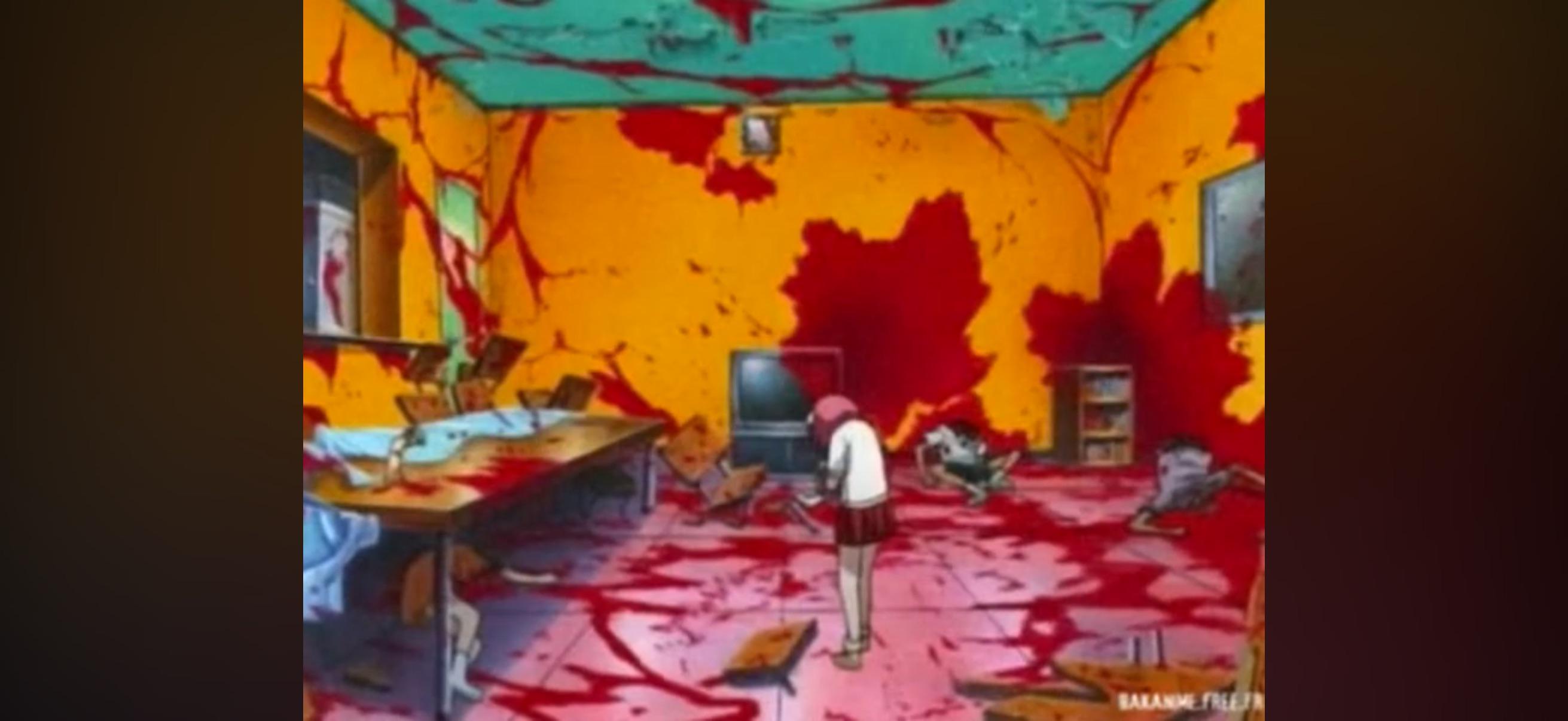
Fanwork Saki Sanobashi text quest

Post image
9 Upvotes

Hey everyone!

I took part in a game jam and created a short text quest based on Saki Sanobashi. It has several endings, but it is still relatively short and can be beaten in 10-15 minutes.

It may be raw and a bit rough around the edges, but I poured all of my twisted imagination into this :P

I'm sorry if it's somehow inaccurate based on what's considered canon today, but I tried my best to make it as authentic as possible.

You're an ordinary sicko hanging out on your computer all the time, consuming illegal and half-legal content on the Internet.

Also, you’re obsessed with Lost Media—media that is no longer available on the Internet and in physical storage. Well, which is lost. Obviously. What caught your attention most is Saki Sanobashi, a legend of an extremely brutal lost anime.

You couldn’t even believe where this relatively harmless hobby led you…

https://marrit.itch.io/saki-sanobashi


r/SakisanNoBashitsu • • 19h ago

Theory This series was very obviously always a fake hoax or joke. It makes no sense that it could ever be real

0 Upvotes

I don't know squat about the "Dark Web" or "Deep Web". But I do know about anime, especially horror anime. And this entire story never passed the sniff test.

Some points of interest:

  • Some say it was an anime banned for being too gorey or gross. Excuse me, but that does not really happen. There are a lot of extreme anime out there. This is especially so when it comes to OVAs and other niche anime often not aired on TV. Stuff like Elfen Lied, Higurashi, Umineko, Another, Perfect Blue, Jin-Roh: The Wolf Brigade... literal lol-icon and shot-acon hentai, ero-guro, scat, etc. The concept of it being an "illegal anime" is laughable. There's not much that is illegal when it comes to animation in Japan.
  • Even if it was banned in Japan, if it got an international release online, it was likely not banned everywhere. In the US, fiction is basically all legal with little exception. Someone must have archived it then.
  • OP was an English speaker who saw it on an English site. Iirc, wasn't it also fan subbed? That means it is available online. It had a fan subber too. Those don't just exist out of nowhere.
  • Does anyone in Japan even believe this story? This lost media search seems like mainly an English language venture.
  • It's unlikely to be a niche old anime with little release. Japanese fans generally keep good records of old anime. They are mentioned in magazines, archived in databases online, etc. MAL has a list of almost every anime released since the 70s, even niche home releases.
  • In my opinion, horror, guro, and ero-guro fans keep especially good record of such anime and manga since they're so niche.

From what I've heard, it's also impossible to stream anime on the Deep Web or Dark Web or whatever the heck. It doesn't have the bandwidth for stuff like that. If it was on a normal streaming piracy site, that's not Deep Web at all. That's basic surface level web.

TLDR; this is just a spooky anime rumor. Not remotely real.


r/SakisanNoBashitsu • • 2d ago

Discussion Can we discuss what would actually count as GFaP?

12 Upvotes

Basically just the title.

The last couple of months have made it quite clear that some of us have very different ideas and criteria for what we'd actually consider to be a successful discovery of Go For a Punch. So rather than just guessing in the dark, I think it'd be helpful to have some sort of consensus on what would be valid.

For example, for me personally, I think it needs to be:
-animated
-violent and bloody
-majority of characters are female
-(mostly) set in an enclosed space
-not focused on sex (I'd be skeptical if there was any sex in it to be honest)

So Saw doesn't fit it for me. Neither does Euphoria.
To be transparent; I'm investigating a lead that I think is what inspired/affected oop. And, to jump the gun, when I finish I expect I'm probably going to conclude something like there's 2 separate things (which I've theorised before). If it wasn't for the fact that oop was so clear about his (or her) description and what it was, I'm pretty sure I'd argue that he saw a few things and conflated them. And one of those things had the story associated (girls trapped in a room killing themselves), and the other things had the other elements he described (artstyle, bathroom with no doors, bright-haired girl etc etc). But he wasn't vague in what he remembered. So either he was trolling (possible), there are 2 separate animations with roughly the same plot (explaining why his account is so different to every subsequent account) or everyone who claims to have seen it other than oop is a liar (also possible).
And even though oop was very clear, he also said some questionable things like how he cried himself to sleep after watching - which imply he was trolling, exaggerating (in which case the other things he was clear about might not be so reliable (like the exact number of girls in the bathroom)), or very young/sheltered when he saw it.

So yeah, that's where I'm at at the moment.


r/SakisanNoBashitsu • • 3d ago

Fanwork Update on RPG project

Thumbnail
gallery
34 Upvotes

r/SakisanNoBashitsu • • 7d ago

Discussion Is Go for a Punch even attainable anymore ?

9 Upvotes

Honestly so much time has passed since it was first brought up and I think that Go for a punch or Saki sonobashi has been burned and permanently erased, or maybe only one person has the film/anime and is probably dead by now ,has anyone tried searching through the deep or dark web at all?


r/SakisanNoBashitsu • • 8d ago

Discussion Tsui No Sora OVA (2002)

Post image
111 Upvotes

Don't think this would get any attention at this point, as I'm quite demotivated when seeing this sub's progression as well. But I just wanna state what we've found so far. And maybe... we might have found one of the closest candidates.

If you remember an early post from my buddy OppositePower (who is actually now a deleted user on Reddit), he gave a couple of reasons why Girls Garden by Takeshi Abo could have been GFAP all along.

Despite having a very similar premise, with girls entering concrete-walled rooms and some of them killing themselves, people were enraged to hear that this was officially GFAP all along.

Link to my post when I first brought it up:

https://www.reddit.com/r/SakisanNoBashitsu/s/3UqLbQyRnV

Just to clarify, no, we haven't confirmed that GFAP has been found. I'll acknowledge that it was a small mistake to officially say, "Yup, that's the one."

I know some people would say it doesn't make sense since the novel is from 2014 and OP claimed to have watched GFAP in 2010, but that's beside the point. We only claimed that he could have seen a review somewhere about this light novel, or he could have read it himself. If we consider that he's a big otaku or someone who's into obscure stuff, it's possible, especially since I doubt Girls Garden was a particularly popular work in Japan.

We thought GFAP could have been a fever dream of his after reading the book, and so on.

But that's out of the way for now.

Let's just get right into it.

Tsui No Sora OVA (2002)

Probably one of the worst OVAs ever made, and possibly one of the poorest visual novel adaptations ever produced.

Tsui No Sora (1999) is an obscure psychological horror visual novel.

Plot: High schooler Yukito Minakami and his childhood friend Kotomi Wakatsuki learn that their classmate Zakuro Takashima has died by suicide.

Following Zakuro's death, rumors begin circulating about the end of the world. Takuji Mamiya, previously a bullied loner, undergoes a radical transformation, casts himself as a messiah, and draws most of his classmates into a religious cult centered around suicidal and apocalyptic beliefs.

Yeah, pretty weird plot, but let's get into the OVA itself.

In the OVA, there's a scene where a couple of girls are naked in a greenish, tiled room that somewhat resembles a bathroom. It also matches descriptions given by some of the previous "Saki witnesses."

Link to my old post outlining the similarities in red:

https://www.reddit.com/r/SakisanNoBashitsu/s/CtMXdRUnpL

And there are other things happening in the specific scene, but you may already be able to guess what they are, so I'm not going to mention them.

In the scene, there's also a guy in uniform who punches another naked guy lying on the floor. In theory, the character could be mistaken for a girl because of his prominent eyelashes, although, in my opinion, he looks like Shinji Ikari in some scenes, lol.

(I tried pasting the image of the punch scene and the guy on the floor but it just won't let me post it)

The possibility of someone mistaking a character's gender could also be supported by the Clock Man OP, who remembered seeing a boy when, in reality, it was a girl. So that's another possibility.

The guy literally goes for a punch in the scene, and if that's what OP remembered, along with the Japanese characters, then it could have been something like:

Go for a punch 終ノ空(ついのそら)

Now, I know this might be a stretch. I'm just throwing my thoughts out there.

Another thought of mine is that if GFAP was an anime rather than a Flash animation, it could have had similarly poor production quality to the Tsui No Sora OVA. It looks extremely cheap and poorly made.

Another theory of mine, which I personally don't think is that crazy, is this:

OP did watch GFAP, but he was trolling for the sake of mocking the animation, making it sound scary when, in reality, it was actually funny. He could have been doing this while deliberately keeping the title to himself.

Come on, it's 4chan. He definitely could have done something like that. I don't think we need to dig any deeper into this idea, since, in my opinion, it's quite likely.

In my opinion, and for a long time now, I don't think we're necessarily trying to find the exact same animation described by OP. If it was all a hoax, then something must have inspired it in the first place.

So I guess we're searching for the closest thing possible. Hopefully, we can gather enough people to finally find the head-bashing GIF soon enough. I'll try my best as well, but it would be nice to know that other people are helping with the search too.

We can only hope.

Until then, peace out, guys.


r/SakisanNoBashitsu • • 8d ago

Investigation Maybe it's a clue

Post image
4 Upvotes

Found in a YouTube video from 2009


r/SakisanNoBashitsu • • 8d ago

Discussion Monster high

Post image
0 Upvotes

r/SakisanNoBashitsu • • 8d ago

Discussion Monster High

Post image
0 Upvotes

r/SakisanNoBashitsu • • 10d ago

Investigation Saki Sanobashi is a hoax.

0 Upvotes

Till this date,I cannot beleive that there are few people who hold onto their goal of uncovering this anime for once in and all,that shows their dedication so I respect that!

In this post I'll be debunking everything from  scratch-to begin w, Saki Sanobashi wasn't the original name the OP mentioned in the 4chan post back in February 2015. OP described about the infamous "bathroom scene"  and how "I cried myself to sleep at night" - I ask everybody reading this post to ignore the bathroom scene for the time being  and simply  focus on the remaining half of this post "Looked 80ish in quality (audio too).Japanese dub.English subs.Lasted for about 30 minutes.No credits,but it seemed ripped."

So apparently OP claimed to have seen some video which he didn't describe where and when but even so, keeping that information in mind he wasn't sure about the title of the video he was consuming. So now we'll search for animes that have some resonance with the storyline of Saki Sanobashi.

  1. Gakuken Nanafushi

In this show,group of teenagers solve mysteries  related to their high school (7 wonders supposedly)

This show has 41 episodes but doesn't exceed any limit to relate it directly with Saki Sanobashi.

2.Hontou ni atta gakkou kaidan

In this show three elementary school students investigate supernatural events occurring at their school. Fake screenshots about Saki allegedly belong to this anime.

A youtuber has uploaded it's rip off on YouTube-so if you are interested,you can watch it by yourself.

3. Gakuo no Yurrei

This show consists of 6 episodes w independent storylines so might as well call them Ovas,each ova is approx 32 minutes long which is ironic-it has the reminiscent bathroom scene but it isn't close to what happens according to OP in his version of 'Saki Sanobashi'. According to the Wikipedia page of Saki Sanobashi-several screenshots are said to be taken from Devilman Ova : The apocalypse of Devilman,for someone who has watched all versions of devilman I can confirm that Devilman isn't dropping random Saki lore even by mistake!

Ik after few years,a person claimed himself/herself to be OP,but none believed him. But considering all the other information and all the similar media,I've came to a conclusion that Saki Sanobashi is not a lost media- lost media can only be proven if there were past evidence about it's existence-the fact that Saki Sanobashi really existed has no proof. Acc to Wikipedia-it is a lost hentei-I also cross checked hentei sites that post henteis that were 20 years old-the fact that OP said that the quality was 80ish and the fact that all the animes I've listed here are all dating back to the 19s. Either this is a collective memory of animes such as above,w add ons of feast of the fallen angels,euphoria (which isn't even a 19s anime to begin w)-some gore/hentei type shyt which OP watched apparently,but the fact that this is all a hoax and straight up troll is quite believable too.


r/SakisanNoBashitsu • • 12d ago

Investigation Comiket Is Woefully Underexplored

36 Upvotes

Hello all, it's my first time posting here but I recently remembered how fascinating and weird this search is so I've been reading the past several years of posts. And I think a huge blind spot here is how little exploration I've seen of old Comiket catalogues and listings, there's very few mentions of Comiket on this subreddit which I find surprising. Comiket, for those who don't know, is a massive doujin event, one of the world's largest conventions, and it takes place biannually. Doujin can mean fan-made manga or fanfiction but it can also mean indie works made for an otaku audience, and "doujin circles" refer to indie teams who make these works. And original amateur animations made specifically for the convention is uncommon, but isn't unheard of.

I got thinking about this avenue because I was rewatching an older video by one of my favorite youtubers, Hazel, about a similar nearly-lost anime OVA called Arisa Good Luck, which was produced to be sold at its year's fall Comiket, didn't hit the deadline, and became a forgotten relic.

https://www.youtube.com/watch?v=T4yyD7G5SUs

In the video at about 24:50, Hazel also explains the fleeting nature of these original doujin works and how works made for a specific Comiket are made for just that Comiket and aren't really expected to be archived or remembered. Due to this, they can become lost, difficult to track down, and hard to research.

If there's anywhere I expect Go For A Punch to be found, or even just traces of its existence, it would be in old records for what was available at various Comikets over the years. It's a somewhat extreme, bleak and gory work with niche appeal, allegedly had poor or amateurish animation, voice acting, and video fidelity, and doesn't seem to have had any official or documented release. All of it takes place in one setting, which could speak to a low budget- one can save time and money by not having to draw as many backgrounds. Sounds like something that was made with a shoestring budget, would appeal to the otaku crowd rather than general audiences, and was most likely an underground release.

I posit that Go For A Punch (or whatever it was really titled) was an amateur OVA created by a doujin circle to be sold at Comiket, and very few copies circulated. At least one copy ended up with someone who posted it online, which was then since deleted, and it hasn't surfaced online since.

So the trouble now would be actually looking through archives of available works at past Comikets... The convention began in 1975 and runs twice a year, and with it being unclear what era GFAP came from, the only way to narrow such a search would be if it predates the original 4chan post. It would be a massive undertaking, and it would mean checking absolutely every possible archive and every possible work that would have even the slightest chance of being GFAP.

On the bright side, it would probably help to solve some other anime/manga-related lost media mysteries along the way.

EDIT: Also, we should consider pouring through old Usenet archives, particularly rec.arts.anime, for evidence that GFAP exists/existed


r/SakisanNoBashitsu • • 12d ago

Discussion Sasaki and Peeps Season 2 Episode 6 turns Elsa's welcome party into a chaotic night with Shizuka's unexpected demand

Post image
0 Upvotes

r/SakisanNoBashitsu • • 14d ago

Discussion Anywhere else to keep up with the community/search?

8 Upvotes

Recently stumbled upon this subject through some videos whilst doing assignments, gotta say it’s utterly captivated me. The idea of it is so unique combined with the search and dedication of this community is so cool, was just wondering is there any place such as a server or a document to keep up with changes/developments in the overall search? (besides this sub ofc). Also to hopefully connect with other people interested in it!!


r/SakisanNoBashitsu • • 20d ago

Investigation Going for a Punch or The possible origin of name GFAP (even if it's always been a joke)

18 Upvotes

In my previous post I've presented a possibility of the movie "Eko Eko Azarak: Wizard of Darkenss" (1995) being a possible lead as a source of OOP's inspiration due to multiple details matching the 4chan description, which then led to the discovery of a sound novel based on the movie's plot. But for today's topic, we won't discuss their content too much outside of them just being the possible leads, today we're gonna talk about their title: "Eko Eko Azarak", or, perhaps, I should write it like "エコエコアザラク"

Not gonna drag things out and state the final hypothesis right now:

Flawed machine translation of the katakana-written Japanese title of "Eko Eko Azarak" may serve the origin of the title "Go for a Punch", proposed by 4chan OOP and can possibly explain the structure of the filename, described in the same post. The proposed explanation does not depend on the probability of GFAP being an intended lewd joke by OOP.

And before we will hop right to step-by-step derivation, let's say the following: for now you may think that I've just cherry-picked some random assumptions, but no, every key take will be backed with evidence, as well as yes, I know that in the same previous post I've stated that the title "Go for a Punch" under my belief is the definitive marker of 4chan post being a trolling. This solution doesn't contradict that statement, furthermore, it can aslo work for the opposite statement, being technically the actual real title which OOP has seen. Enough talking, enjoy the reading!

Chapter 1. How we even got there?

At first, let's look and read the title itself. "Eko-Eko-Azarak"... Sounds... like something exclamatory, right? And it's not a baseless assumption, since "Eko Eko Azarak!" are not just some creepy-sounding words made up specifically for the title of the horror franchise.

This line actually comes from real life and has a religious meaning for the Wiccans, neo-pagans, dedicated to worshipping the powers of nature, where it serves as the beginning of their prayers. And before you begin to ask obvious questions, no, of course we're not here to discuss religion or try to decode the meaning of the original phrase and claim it's the basis of everything.

All we need for now - establish out first fact. This is not a native Japanese, but an exclamatory-sounding speech. This is also a reason of why the title is written using katakana - while hiragana and kanji are used to write native Japanese words, katakana is used specifically to transliterate foreign one into Japanese spelling. But what will happen if we plug the katakana-written title into the translator?

Chapter 2. Translators of the past.

For those, who have already tried the most common translation services, that honestly returned the prefectly transliterated result, do not put the downvote yet. Of course, all modern machine learning-based translators are fully capable of recognising the semantical context of the input, so their reaction to some katakana, which's spelling is similar to a known religious term is pretty predictable.

But Saki Sanobashi both emerged and was said to be seen by OOP during absolutely different times, because the first ML-based translators were developed and implemented only at the end of the 2016, but during 2011-2015 totally different algorithm was used, the Statistical Machine Transaltor, or shortly, SMT [4].

The mechanism of a statistical machine translator relies on two core elements:

  1. Language Model (P(E)), which uses n-gram modeling based on the Markov assumption to estimate the probability of the next word in the output string E matching the natural structure of the target language.
  2. Translation Model (P(F|E)), which calculates the probability of obtaining the input string F if it's assumed translation is the output string E.

The system's architecture can be divided into two major stages: model training and actual translation.

Training stage:

  1. Parallel Corpus - a collection of source-language texts and their corresponding translations in the target language. The system uses these aligned examples to learn statistical translation patterns.
  2. Word Alignment Algorithm (e.g. GIZA++) - establishes probable statistical correspondences between individual words in the source and target sentences. It does not directly extract complete phrase translations. Instead, its output is used by subsequent training steps. The word alignment algorithm is used during model training, not every time a user submits a translation request
  3. Phrase Extraction and Phrase Table - based on the word alignments, the system extracts pairs of corresponding contiguous sequences of words (phrases) and calculates statistical scores for each pair. The resulting Phrase Table becomes the main source of translation candidates during decoding.
  4. Language Model - trained separately, usually using a large corpus of target-language text. It learns the statistical probability of word sequences and helps the system produce fluent output.

Translation stage:

  1. Decoder - the component responsible for finding the most probable translation. It accesses the pre-generated Phrase Table, considers possible segmentations of the input, retrieves candidate phrase translations, and evaluates alternative combinations using the translation model, language model, and other scoring features.

The translation process in a phrase-based SMT system can be illustrated as follows:

  1. The input string F is split into individual segments and passed to the decoder.
  2. The decoder considers possible segmentations of F and looks up candidate translations for the corresponding fragments in the Phrase Table.
  3. Multiple translation hypotheses are generated by combining available phrase translations.
  4. The Language Model evaluates the probability and fluency of the resulting target-language sequences, while the Translation Model contributes scores describing how well the proposed phrases correspond to the source input.
  5. The decoder combines these scores, taking into account additional features such as phrase reordering, and retains the most promising hypotheses.
  6. This process continues until complete translation candidates have been generated. The decoder then selects the highest-scoring final hypothesis and returns it as the output E.

Once again, don't worry, actually, all these definitions are the key to every statement I've made at the beginning of this post. And here is where the main fun begins...

Chapter 3. Splitting the katakana, or why this is a pain in the ass

The original title is written as:

"エコエコアザラク"

Japanese normally doesn't use spaces between words, so a machine translator has to work out where one word ends and another begins. Katakana makes this trickier: it is primarily phonetic and is used for loanwords, names, sound effects, and other expressions whose meaning may not be obvious from their spelling.

This was already a recognized NLP problem around the period we're interested in. In Splitting Katakana Noun Compounds by Paraphrasing and Back-transliteration, Kaji and Kitsuregawa discuss the difficulty of segmenting katakana compounds, which are productive and often missing from existing dictionaries [1]. Their paper was received in June 2011 and revised in October 2011, so this wasn't some issue discovered years later.

The authors weren't studying this particular title, and their paper doesn't prove that a translator would misread it. It does establish that katakana segmentation was a real challenge for language-processing systems of the time. An older engine receiving the inscription without context might recognize a name or incantation - or split it into fragments that seemed statistically plausible. We simply don't know which.

Chapter 4. How a bad alignment can lead to a bad translation

We've already covered how phrase-based SMT works, so there's no need to repeat the whole explanation. The question here is narrower: how could a mistake made during training affect a translation produced later?

A word aligner examines pairs of Japanese and English sentences and estimates which words correspond. It doesn't understand those links as a human would; it infers them from patterns in the training data. And those estimates can be wrong.

Two kinds of errors matter here. A sentence-alignment error happens when a Japanese sentence is paired with the wrong English sentence. A word-alignment error happens when the sentence pair is valid, but the aligner connects some of the words incorrectly. Either can introduce misleading information into the training process.

Why does that matter? Because word alignments are used by the next step - phrase extraction. The system uses those links to decide which continuous fragments can be treated as translations of one another. The resulting pairs are stored in the Phrase Table with statistical scores. A bad alignment can therefore produce a bad phrase pair, which may remain in the trained model and later be considered by the decoder.

This relationship has been studied directly. Liang and his co-authors examine how alignment quality affects phrase extraction and translation quality [2]. Goutte, Carpuat, and Foster investigate the effect of incorrectly matched sentences in parallel corpora [3]. Their results also provide an important caveat: SMT systems can tolerate some noise; a few bad examples don't automatically make the whole system collapse.

So let's not overstate the claim. One random alignment error cannot magically turn any Japanese word into any English phrase. But an incorrect correspondence - caused by a bad sentence pair, a faulty word alignment, or both - could enter the Phrase Table and later be selected for an unusual input [2][3][4].

That's the specific possibility we're considering. We don't need to imagine a translator inventing a sentence out of thin air; we need to ask whether the input could have matched an already learned, but incorrect, translation candidate.

And with that out of the way, let's finally feed some fragments into a translator.

Chapter 5. Alright, enough theory. Where's the Punch dam'it?

I know, that's quite a bit of theory before getting to the actual experiment. But this is Lost Media research, and I'd rather show why the proposed error is technically possible than just throw out a loud guess.

For the practical part, I'll use Microsoft Translator. It's obviously not a reconstruction of a 2011 SMT engine; we're not using it to reproduce the historical result, but to see how a current service handles the individual fragments.

Let's start with one working assumption. Suppose the original inscription was split like this:

["エコ"] ["エコ"] ["アザ"] ["ラク"]

I'm not claiming this was the actual segmentation used by the old translator. We have no way of knowing that. It's simply a convenient way to examine the pieces separately.

5.1. "エコエコ" vs. "イコイコ"

When I enter "エコエコ", Microsoft Translator returns "Eko Eko". A single "エコ" can also prompt the familiar association with "eco" or "ecology".

Now, let's make a ti-i-i-ny change: replace "エ" with "イ" in the repeated fragment, we will get "イコイコ".

And Microsoft Translator suddenly gives us... "Let's go"...

Wait, what?

The result is consistent with the reading "いこいこ" and one possible kanji spelling, "行こ行こ", a casual shortened form associated with "行こう行こう" ("いこういこう") - roughly, "Let's go", "let's go"!

That does not mean that "エコ" is equivalent to "行こう", nor am I claiming that an old translator literally changed one kana into another. The point is more modest: two similar-looking katakana sequences can lead the current translator to completely different outputs.

InputMicrosoft Translator
"エコエコ""Eko Eko"
"イコイコ""Let's go"

It's a comparison, not proof of a direct linguistic connection. Still, it's more concrete than simply guessing what an old system might have done.

5.2. "アザ" and "ラク"

Entered separately, "アザ" gives us "Scar", while "ラク" produces "Easy". These results have recognizable Japanese associations: "アザ" can correspond to "痣", a mark or discoloration on the skin, bruise or a birthmark, while "ラク" can correspond to "楽", associated with ease, comfort, or relief. "Scar" isn't an exact translation of "痣" in every context, but the association is understandable.

Put the two fragments together as "アザラク", however, and Microsoft Translator returns "Azarak" - a transliteration rather than a combination of the individual meanings.

I also tried longer combinations and versions with spaces to encourage segmentation. They still tended to produce transliterations. That's worth mentioning rather than hiding: we can't take "Let's go", "Scar", and "Easy", throw them into a blender, and claim we've reconstructed "Go for a Punch". That would be cherry-picking, but you can obviously see, what themming the whole result has...

What the experiment does show is that the service's treatment of these strings changes with the amount of context it receives. Individual fragments can trigger semantic translations, while a longer combination can be treated as a name and transliterated.

5.3. So, does this get us any closer to "Go for a Punch"

Not directly. The current Microsoft Translator does not turn the full inscription into "Go for a Punch", and I'm not going to pretend it does.

But we're not testing whether today's service behaves exactly like a hypothetical 2011 engine. We're looking at how similar inputs can be interpreted differently, and whether a modern word-by-word reconstruction is even a reliable way to infer what an older statistical system might have done. The experiment doesn't establish the historical path, but it gives us a useful comparison before returning to the main hypothesis.

Chapter 6. How could "Go for a Punch" have appeared?

There are two broad possibilities.

Scenario A. One bad correspondence for the entire inscription

The translator may have treated the whole string as one phrase and selected an incorrect English candidate for it:

Japanese inputHypothetical English correspondence
"エコエコアザラク""Go for a Punch"

We haven't found this pair in an actual historical Phrase Table. It's an illustration of the kind of correspondence that would be needed. If such a pair had entered the model during training, the decoder could potentially select it later without recognizing the title or understanding the incantation.

Scenario B. A bad segmentation followed by phrase composition

Alternatively, the translator could have split the inscription into smaller fragments:

"エコエコアザラク"
↓
["エコ"] ["エコ"] ["アザ"] ["ラク"]

It could then retrieve candidate translations for those fragments and combine them into an English output. Our Microsoft experiment is relevant only as an illustration of how nearby katakana strings and isolated fragments can receive different interpretations. It does not show that an old SMT system mapped "エコ" to "Let's go", or that "Scar" became Punch.

For that reason, a larger incorrect phrase correspondence is easier to defend as a possible mechanism than a neat word-by-word derivation. Phrase-based SMT could use multiword fragments, so the actual route - if there was one - may not be recoverable by adding together today's translations of individual pieces.

Chapter 7. The filename structure

Now let's return to another detail from OOP's description: the filename. According to the post, it contained a short Japanese inscription, an English translation of that inscription, a longer Japanese text, and finally a DL suffix.

That structure is interesting because the English phrase may not have been part of the original work's title at all. It could have been inserted automatically, perhaps by a naming tool or a download listing that translated a short Japanese title or caption and then appended the longer Japanese description.

If the short inscription was "エコエコアザラク", this could explain why the Japanese text and a strange English rendering appeared together. Furthermore, it gives even more smooth possibility of "エコエコ" suddenly becoming "イコイコ" without complex text aligning and phrase table mismatches. See this: kana エ is very similar to kana イ, especially it it's not a strict typographical font. If the Japanese title wasn't copied manually, but automatically extracted from the cover image using an OCR, the mistake could've already be here before proceeding the translation! It is possible that OOP wasn't quoting the title of a movie or a game at all. He may have encountered the name of a torrent release connected with "Eko Eko Azarak" - perhaps the 1995 movie, the sound novel, or another piece of media carrying that title - with an automatically generated English gloss inserted into the filename.

That would explain why OOP remembered the mixed-language structure: he may simply have copied the filename as it appeared on a tracker or download page, without knowing that its English component was a mistranslation. But this is still a reconstruction, not an identification. We don't have the original filename, a .torrent file, or a tracker page to establish what the release contained or which service generated the wording.

So the torrent-release idea is a possible explanation for both the English phrase and the filename format - not proof that the file was specifically the 1995 movie or the sound novel.

Chapter 8. What do we actually have?

Let's take stock.

  • Katakana segmentation was a recognized NLP problem around 2011 [1].
  • Phrase-based SMT learned translation correspondences from parallel corpora and word alignments; errors could affect the Phrase Table [2].
  • Research on noisy corpora shows that SMT could tolerate some alignment errors, though sufficiently severe corruption could damage translation quality [3].
  • Microsoft Translator gives different results for similar katakana strings: "エコエコ" becomes "Eko Eko", while "イコイコ" becomes "Let's go". The isolated fragments "アザ" and "ラク" produce "Scar" and "Easy", but together "アザラク" becomes "Azarak".
  • The filename structure OOP described is compatible with an automated process that inserts an English translation between Japanese metadata fields.

What we don't know is just as important. We haven't identified the translation service, its 2011 architecture, the original segmentation, or the software that assembled the filename. We also don't have the historical Phrase Table, and we haven't reproduced "Go for a Punch" using an actual historical engine.

So this isn't a solved mystery. It's a technically plausible explanation with a possible lead on the source material - not a demonstrated chain of events.

Chapter 9. Does this mean "Go for a Punch" was the real title?

Not necessarily. In my previous post, I argued that "Go for a Punch" could be one of the signs that the original 4chan story was a troll. I don't think this hypothesis contradicts that.

There are two possibilities worth keeping separate:

1) OOP deliberately reshaped a vaguely remembered title into a joke.

He may have remembered the general idea of a strange translated phrase consisting of the general idea of action and injuries, and deliberately worded it as "Go for a Punch" - or as the lewd joke "Go fap".

2) OOP genuinely encountered a filename containing the exact phrase.

In that case, "Go for a Punch" may have been the actual machine-generated English field in a torrent filename, which OOP remembered from 2011.

These possibilities can coexist: a real mistranslation could have been used in a fabricated story. The translation hypothesis concerns where the wording may have originated; it doesn't establish whether the 4chan account itself was genuine.

Conclusion

I think we may have found a plausible source for the wording "Go for a Punch": the katakana title "エコエコアザラク", possibly passed through an older statistical translation system and rendered incorrectly. We haven't reproduced the exact phrase or identified the historical translator, but the proposed mechanism is compatible with what we know about katakana segmentation, phrase extraction, and alignment errors.

The filename structure adds another piece to the picture. OOP may have encountered a Japanese torrent release connected with "Eko Eko Azarak", where the short Japanese title was followed by an automatically generated English gloss, a longer Japanese title or description, and a DL marker. If so, "Go for a Punch" wasn't necessarily the title of the work at all - it may simply have been the translation field in the release filename. We still don't know whether the release contained the 1995 movie, the sound novel, or something else entirely.

So perhaps we've identified not the lost work itself, but a possible source of the name OOP remembered - and a reason why he described the filename in that peculiar mixed-language format. It could have been a genuine torrent filename, a real mistranslation later used in a hoax, or a phrase OOP deliberately reshaped. We can't settle his intentions without the original listing, but the lead is now more concrete than a random guess that he pulled the words out of thin air.

What should we do next? I guess trying to look for torrents of "Eko Eko Azarak" movie and sound novel definitely worth it, because obtaining the 2011 legacy translator seems to be way more difficult and achievable task than looking for old Japanese torrent trackes in my opinion.

Reference

[1] Nobuhiro Kaji and Masaru Kitsuregawa. Splitting Katakana Noun Compounds by Paraphrasing and Back-transliteration. Information and Media Technologies, Volume 9, Issue 4, 2014, pp. 790-813. DOI: 10.11185/imt.9.790.\
https://www.jstage.jst.go.jp/article/imt/9/4/9_790/_article/-char/en

[2] Liang Tian, Derek F. Wong, Lidia S. Chao, and Francisco Oliveira. A Relationship: Word Alignment, Phrase Table, and Translation Quality. The Scientific World Journal, 2014. DOI: 10.1155/2014/438106.\
https://pmc.ncbi.nlm.nih.gov/articles/PMC4030493/

[3] Cyril Goutte, Marine Carpuat, and George Foster. The Impact of Sentence Alignment Errors on Phrase-Based Machine Translation Performance. Proceedings of the 10th Conference of the Association for Machine Translation in the Americas, 2012.\
https://aclanthology.org/2012.amta-papers.7/

[4] Philipp Koehn. Statistical Machine Translation. Cambridge University Press, 2010.\
https://www.cambridge.org/9780521874151


r/SakisanNoBashitsu • • 22d ago

Discussion Saki sanobashi may be just guro compilation?

16 Upvotes

I don't know if it was discussed before, but what if Saki was just mashup of gore scenes in anime? Ryona and gore edgy edits were popular some time ago, and 80s anime doesnt held back in the matter of bloody scenes. And this is very likely that this type of compilation will find a spot in deep web (and clear web too)


r/SakisanNoBashitsu • • 23d ago

Investigation [LEAD] Where did this image come from!

Post image
46 Upvotes

i cant find the original source but it matches the testimonys of some witnesses of Saki Sanobashi. Please try and actually give me answers and not dismiss me as a troll. it very well could be from Saki Sanobashi, the captions roughly translate to “my lover“ or ”my beloved“


r/SakisanNoBashitsu • • 24d ago

Investigation Brief, but pretty major update regarding my latest post

Thumbnail reddit.com
30 Upvotes

Almost right after I've finished writing his post, I've discovered that the movie Eko Eko Azarak: The Wizard of Darkness (1995) actually has a visual novel adaptation for PS1, which adapts exact story I've mentioned in the post. I guess we definitely need to invastigate this lead at least for narrative and visual clues


r/SakisanNoBashitsu • • 24d ago

Discussion I think I know what we should look for

29 Upvotes

Is Saki a hoax made on purpose of mocking an anon asking about Deep Web? Is it yet undiscovered OVA from the 90's? Or maybe it's a chaotic jigsaw puzzle pieced of multiple media featuring the plot of confinement, mass psychosis and deaths?

My answer is... All of these. At once.

And before you gonna hit the downvote button and assume me being a delusional, let me explain everything step-by-step:

Chapter One. Go For a Punch

The original 4chan post is indeed a troll posting. Unfortunately, we have to accept this. And the reason is not a famous "confession" of so-called "OP" due to it's legit inconsistencies, nor the argument of "we've still not found any strong lead". Go For a Punch is.

The original message features blatant overreacting, depicting everything as cliche as possible. The OP was notoriously shocked that he couldn't sleep at night and the title was "Go For a Punch" or something like that. Yeah, "go fap", the common humour of 4chan for the sake of mocking googleplex+1'st user asking about "spooky scary deep web".

But did the OP just write the random gibberish out of their mind after they briefly thought about how would typical deep web creepypasta look like? Well, I don't think so.

Chapter Two. The sources of inspiration

While it's pretty obvious that the original post of 2015 is a hoax, it's also obvious that there's too much effort put in the story: the screaming SFX, detailed and consistent description of the plot, character designs and general atmosphere. Philosophical debates about no needs of escaping the confinement, mass psychosis and the bloody aftermath. OP must at least be a decent writer on their own, or, perhaps, they had a source of inspiration? And they definitely had, as well as it doesn't have to be only an OVA:

Saw (2004). The beginning of the worldwide horror classic starts in abandoned bathroom featuring two fellow victims of the Jigsaw Killer, chained to the pipes by their legs and a dead body at the center of the room. During the movie we see how both of the victims try to get along with each other, look for the clues for their salvation, bringing up the topics of sense of life, their fate and general casual talk about each other. The climax of the movie is horrific: being threatened with the death of his family, on of the victims, Dr. Gordon, begins violently screaming unable to reach the ringing telephone eventually cutting his own foot off with a hacksaw, while another victim, Adam, brutally smashes the supposed villain's head with a toilet tank lid. But this doesn't lead (pun intended) to his salvation, and the only he can do now is scream in pure agony while being left to rot in this room until slow and painful death. His scream can still be heard even during the final credits... Sounds familiar?

Long casual dialogs, eventual psychosis and murders. Yes, it' definitaly not an anime, but this is the first thing which came to my mind after I've learned about Saki phenomenon. I believe that this is the main source of inspiration of the story. Not Euphoria, not Kazuo Umezu, not any gruesome guro hentai OVA from the depth of the Internet. Saw (2004) is. But before you'll dismiss this post entirely and call me crazy, let me present you the "anime" element of the mystery all of us were looking for:

The GIF. Mentioned by many people, completely out of the topic of the search, there was a horrific anime GIF of a girl, smashing her head against the sink circulating on Tumblr. And while many testimonies went out to be a troll posting, the GIF lead seems to be legit. Especially when paired with Hispachan testimony. Say this. The Youtube of 2010's was full of explicit anime gore montages, especially in the form of AMVs. During the popularity of Ghostemane - Mercury, one single search request would lead you to a bloody montage of anime people being shred in the factory blender. And I'm not mentioning the myriad of Hellsing compilations of London being destroyed by Nazi zombies. No matter if the GIF is a cutout from the actual OVA or not, or even if there's no anime media matching the plot on 100%, the GIF is what needs to be pursued at the first place, and the second one are AMV's. Not the actual titles, because there are no a single title like Saki.

Chapter Three. The pieces put together

Now I wish to present you a lead, which I've never seen popping anywhere outside of Russian Lost Media community a few years ago. And the lead is Eko Eko Azarak. And not the famous horror manga series and not even an OVA. But the movie Eko Eko Azarak: the Wizard of Darkness (1995). Lasting for almost an hour and a half, there are shockingly a lot of similarities to the original decription: a group of schoolgirls being trapped inside the school facility, the mass panic, and the main reasons I list it here — the infamous scene of a girl drowning in the toilet, as well as a character slitting their own throat. And... You get the thought, right? No, there's no such a mythical unfound OVA based on the plot of the movie (there's no such), but the original post was never telling about a solid piece of media. It was always an instance of multiple source of inspiration serving a ground for a troll post. Some of which are a genuine lost media, waiting for being found.

Conclusion.

The story of Saki is a unique case where the obvious hoax and actual lost media coexist at one, and this is what truly fanscinates me and doesn't allow to claim it's all fake and people looking for Saki are delusionals. Yes, Internet likes to create hoaxes, but it's never said that they can't have a solid ground. And in the case of Saki, we should't look for one single media with 100% match, we have to look for multiple solid pieces, and I'm convinced that the GIF is the main thing we should focus on. While it can both be standalone animation or unravel the actual anime inspiration (which can even match the plot on 100%, who knows), the main key of actually finding the truth about Saki is not falling no neither both of the extremas. Presented to the users of Web as a hoax, it's built on multiple pieces from various types of visual media, some of which may seem to be a real legit lost media. And these pieces — is what we need to investigate.


r/SakisanNoBashitsu • • 25d ago

Found [FOUND] Saki Sanobashi

Thumbnail
reddit.com
0 Upvotes

r/SakisanNoBashitsu • • 26d ago

Discussion I have a hypothesis

Post image
37 Upvotes

I have a theory that could very likely be true. It might be the solution to this extremely difficult mystery. At the same time, it could also be the biggest disappointment, but not for the reason you might think. Just hear me out.

The theory is that this anime may have been made for just one person, a few people, or a small, highly specialized shop or exhibition room for people who enjoy gore in a particular area.

It could have been a small local exhibition room specializing in gore that paid an unofficial team, most likely, to create an anime with their own plot and story. They made it and showed it only once. After that, its VHS copy was lost in a second-hand store. Then, someone found it, uploaded it to a website, and it was deleted.

I also saw a post on Pixiv by someone who draws gore and has a very disturbing concept. They draw manga on request, and anyone who wants the link can ask me, and I will send it to them.

Anyway, if my theory is correct, it means we are looking for a needle in a haystack, because it would mean that there is only one copy in the entire world, and we have to find it. This makes the search much harder. Also, the exhibition room it was made for may have closed down, or its owners may have passed away.

However, one thing I am sure of is that the people who commissioned it were wealthy. Why?

Because they were able to cover the production costs.

Thank you, and I hope I have contributed something useful to the community.


r/SakisanNoBashitsu • • 27d ago

Investigation Possible lead website

Thumbnail
gallery
29 Upvotes

So there was this website " gurochan.org " that existed since 2004. It was a Japanese website where people post videos and images of animated gore.

On March 14 2014 one year before the saki sanobashi story, The original website got down permanently and a new backup site was create in April 2014 by completely new recruits , during this , almost entirely of the database of the older website got deleted and lost forever.


r/SakisanNoBashitsu • • 27d ago

Theory Saki Sanobashi may not be an anime

22 Upvotes

Even if there's a slight chance that the op actually saw something like that , it is highly possible that it was probably an independent animation made by a single guy and uploaded to a random website before it got deleted and the anime got lost forever

There's are countless amount of such websites that existed between 1986 to 2015


r/SakisanNoBashitsu • • 28d ago

Question What happened to team saki?

9 Upvotes

I remember following most of their socials after hearing about them and their plan to make a series/movie about saki, but they haven't posted on their instagram or anywhere else in a long time. Did they disband? Do we even know?