r/SaturatedFat • u/exfatloss • 5h ago
Fat Loss leads to No Fat Loss?

4
Upvotes
r/SaturatedFat • u/insidesecrets21 • Aug 21 '25
Just made a video. 🙈 Why do Low Protein Diets Work for Weight Loss? (Sugar Diet, Rice Diet etc) https://youtu.be/PzbGzs0fBus
r/SaturatedFat • u/fire_inabottle • Aug 12 '25

I made a quick video response to recent videos and appearances suggesting that maybe seed oils are fine after all. The argument goes like this:
Here's what causes diabetes. The conversion of linoleic acid to arachidonic acid by an enzyme called D6D. This probably has to do with how oxygen is apportioned intracellularly - that's my opinion. With that in mind, argument number 2 is a red herring. Argument 1 is expected behavior. When you are converting linoleic acid to arachidonic acid, blood levels of linoleic acid drop.
That is NOT consistent with the message that it is fine to consume seed oils. One way to increase flow through D6D is to consume linoleic acid.
r/SaturatedFat • u/Miserable_Banana_571 • 7h ago
Anybody know why NP switched its pumpkin sees and flax granola fpr coconut oil? Adds a buch of saturated fat. Good product but I am not sure now. Purchased at Costco and just saw the (warning) label on it
r/SaturatedFat • u/MistakeGreen3883 • 1d ago
Just curious to see if anybody here has experimented with the idea of the MTHFR gene polymorphism.
If you have tried was it beneficial to anything including weight?
r/SaturatedFat • u/coolguyisepic • 2d ago
this is splitting hairs, but i’m also curious on the mechanisms behind what i’m asking:
is the saturated fat content (and low MUFA) in coconut oil, or the stearic acid content in tallow/cacao butter (both of which contain quite a bit of MUFA) more optimal for metabolic rate / mitochondria / fat loss ?
Obviously pufa is biggest concern, and this is likely a tiny difference if even noticeable. But i’m wondering which cooking fat is most optimal for when i cook. I would think coconut products would help change the fatty acid composition of your cells toward what they would ideally be, since i have a life of pufa eating behind me.
Because the trade off is low mufa but no stearic acid, vs moderate mufa with stearic acid. & I know mufa in meat and animal fat is fine but ya im curious
r/SaturatedFat • • 5d ago

r/SaturatedFat • u/Relevant-Historian18 • 7d ago
Hi there,
since a few people have asked how much suet we will get from the slaughtered bull: It has been 10.6 kg (23.4 lbs). But I don't know (and don't care) if there are other fat parts in it (e. g. from the back). The whole sack has cost me 15 Euros, for the extra work of the butcher. As stated in previous post, I want to render tallow from it.

r/SaturatedFat • u/DnyLnd • 8d ago
r/SaturatedFat • u/greg_barton • 9d ago

r/SaturatedFat • u/Oraculek • 8d ago
Apart from rancidness, genes, and current body fat composition variables...
In other words, if one assumes a limit of 5% LA of TDEE and calculator shows 2000 cals baseline, if then one increases caloric intake and maintains on, e.g., 3000 cals - does the hypothetical LA limit remain as 5% of 2000 cals or does it increase towards 3000 cals?
Or maybe it must forever remain, here, the 5% of 2000 to allow for higher metabolic adaptability, like the 3000 with maintenance and so no long-term gain?
r/SaturatedFat • • 9d ago

r/SaturatedFat • u/Working-Potato-3892 • 10d ago
r/SaturatedFat • u/Fognox • 11d ago
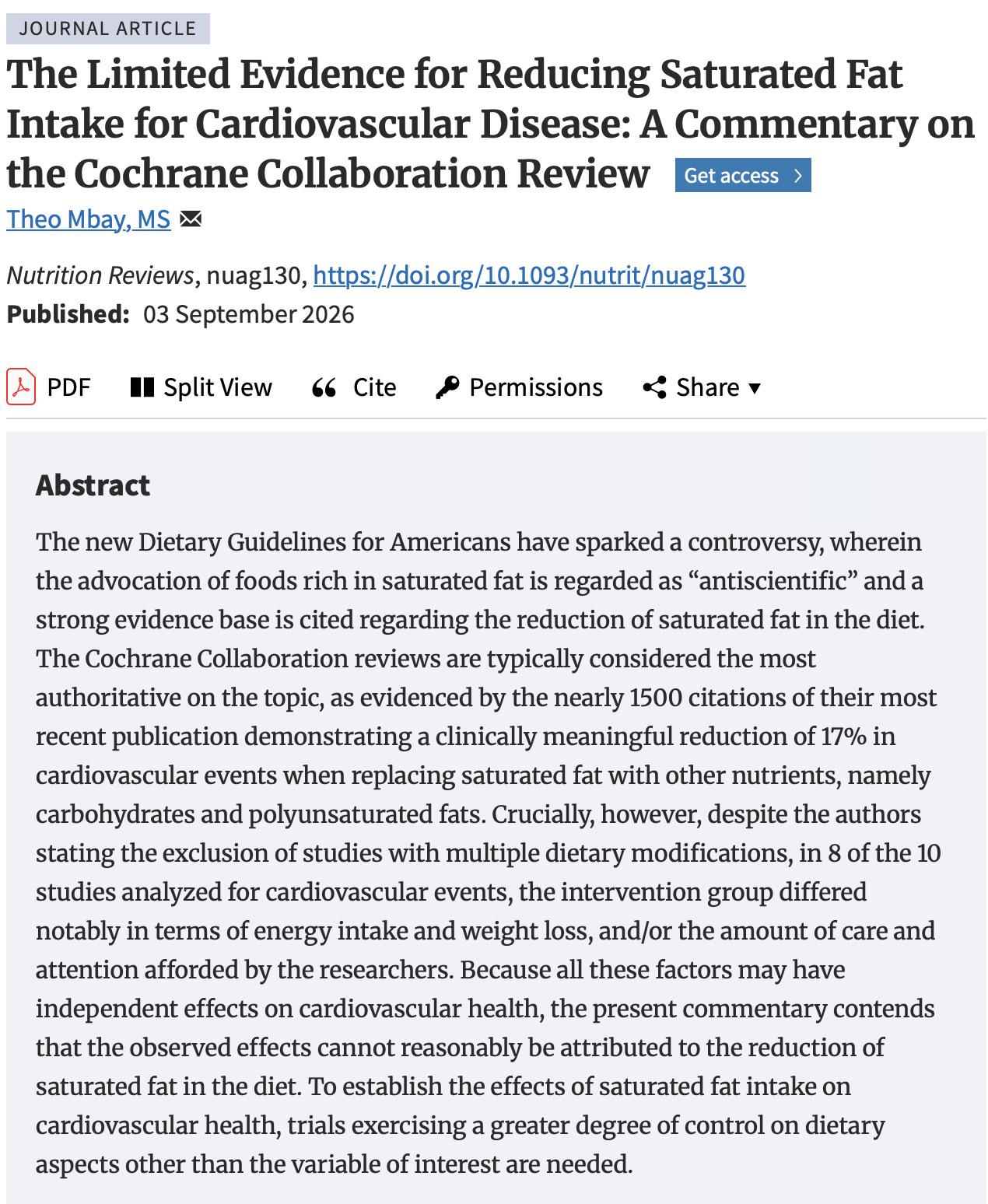
I've mentioned on here before that I consume them as part of my low-LA diet, sometimes in significant meal-replacement quantities. I don't think they're doing a damn thing and might even be beneficial somehow.
For context, over the last year and a half I've lost 60lbs, with a good portion of that happening while sedentary, and I wasn't even that overweight to begin with (about 15lb over the BMI overweight cutoff). Most recently, I lost around 5lbs while suddenly switching to being sedentary, while I'm already at an absurdly low weight, and with peanuts as a part of my diet. Clear fat loss, too -- belt size went down a notch and the rest of my abs finally appeared. I did finally cut pork fat out, which might be why -- as low as my intake was, it's still way higher in LA than anything else in my diet.
In any case, a couple things I know or have noticed about peanuts:
Like everything else, I do avoid added oil. Cocktail peanuts have a bunch of it for some reason, as do some varieties of flavored peanuts. Hyperpalatability with high salt yields or added flavor doesn't seem to have an effect. I'm wary of natural peanut butter -- the oil does leak out, and definitely gets exposed to light since those jars are all transparent, so you end up with concentrated and/or oxidized LA-rich oil, with the antioxidants degrading as well. Peanuts themselves that are rancid are disgusting and easy to avoid.
As mentioned, I do go through peanut-free cycles. The only effect there seems to be less food volume, for obvious reasons.
I'll also caveat this entire post with "n=1". Peanuts work for me, but might not for you. Like everything else.
r/SaturatedFat • u/Working-Potato-3892 • 11d ago

The article presents research suggesting that CO₂ may play an important role in ageing and longevity. It highlights studies showing that CO₂ exposure activated the PGC-1 pathway in rats, increasing mitochondrial activity and reducing tumour volume by 48%. It also explains how CO₂ supports peroxisomes, which help burn fatty acids and produce catalase, an enzyme that neutralises harmful free radicals. The article further points to queen bees, which live 10–12 times longer than worker bees, and termite queens, which can live up to 20–50 years, suggesting a possible connection between high-CO₂ environments, reduced oxidative damage and longevity. It also discusses how low CO₂ may impair circulation, oxygen delivery and cellular energy production. The central theory is that maintaining sufficient CO₂ may help protect cells from oxidative stress and support a longer lifespan.
r/SaturatedFat • u/mmiller9913 • 12d ago

r/SaturatedFat • u/CaptnMeowMix • 14d ago

Bird enters torpor and becomes obese on natural high PUFA carnivore diet. Lol
r/SaturatedFat • u/GiantTrenchIsopod • 14d ago
Started the cream diet and so far it's doable and there aren't any issues with hunger or crackhead level cravings. The only thing is that I mainly have access to light cream instead of heavy cream, is that going to be a problem that can screw over the diet?
r/SaturatedFat • u/jeyoor • 14d ago
Hi friends, I have recently been exploring high saturated fat diets. I am enjoying both heavy cream and unsalted butter. Other than less water content with butter, I don’t see much difference in flavor or metabolic results. Where I live, unsalted butter is meaningfully cheaper per calorie than heavy cream (I estimate roughly 0.0010 USD per kcal butter and roughly 0.0014 USD per kcal heavy cream, or over 30% cheaper). I ask those who are willing to share their experiences. Have you tried both butter and heavy cream in a high SFA diet? What did you observe? Thank you for reading this!
r/SaturatedFat • u/coolguyisepic • 14d ago
i’m in a stearic acid rabbit hole and can’t find what the current consensus is. if someone could summarize before i go buy some cacao wafers i would appreciate that :)
r/SaturatedFat • u/mainstem1 • 15d ago
I've been listening to these interesting podcasts (start at episode 1) from Buteyko breathing method trainers. There seem to be some dots wanting to be connected between their ideas and the interests of this forum.
In Brad Marshall's (u/fire_inabottle) last theoretical post circa 2025 he was writing about how our biochemical PUFA machinery has something to do with hypoxia, that the enzymatic processes used to process pufas consume oxygen and deprive the mitochondria of it, "closing the damper" on mitochondrial respiration and making the cell more anaerobic/growthy/anabolic.
The Buteyko folks would seem to agree that hypoxia and anaerobic metabolism is a problem, but their frame of reference is that over-breathing reduces CO2 levels in the blood, which reduces oxygen's dissociation rate from hemoglobin via the Bohr Effect, creating a hypoxic cellular environment.
The Buteyko solution to this problem is to push CO2 levels up through the power of will, via volitional breath-holds and shallow breathing.
Many thousands of people appear to have been trained in this method over decades going back to its origin in Russia and they get all kinds of interesting results as you can get a feel for on Martha Roe's Youtube channel.
Maybe they're onto something? I wonder if breath-holding could supply enough oxygen to overcome Brad's pufa-induced cellular hypoxia and push cells back into aerobic metabolism?
------
Armchair Biochemistry Speculation
When discussing the question of WHY is almost everyone over-breathing, apparently more and more as time goes on, the Buteyko folks don't seem to have a compelling answer.
Could it be due to increase in dietary pufas?
So there is a potential relationship: anaerobic metabolism increases breathing rate. Perhaps it has to do with the body having to blow off CO2 in order to defend its desired pH level in the face of extra sources of acidic pressure from lactic acid.
This suggests the following model.
The last step in that model, Lowered Bodily CO2 Levels -> Disease, is something I have never heard before encountering these podcasts. This seems to have been Buteyko's main discovery.
Based on a cursory exposure to the idea, to me it seems to be plausible. CO2 takes many forms in the body and is involved in probably hundreds of thousands of processes so I don't know how you would start tackling that argument if you wanted to. But the Buteyko folks have proposed paths from CO2 deficiency to asthma, angina, constipation, arthritis, high blood pressure, eczema, anxiety, diabetes, MS, Parkinsons, Alzheimer's, etc.
This model would help explain why pufas are able to evade the blame for the chronic diseases I think a lot of us suspect them of being at fault for. Their action is hidden behind multiple layers of non-intuitive causal mediation.
It seems Buteyko had opinions about food, but the main one I've heard mentioned is to avoid eating chicken, based on the observation that people that ate lots of chicken had difficulty increasing their breath-hold times. Interesting! Another thing relevant to discussions here is that they recommend against eating high protein meals, also due to their effect on breath-hold times (u/exfatloss).
Anyhow the details of all these mechanisms are wickedly complex and there are feedback loops and paradoxes involved and who knows what but it seems like fertile ground for exploration and research by anyone interested.
r/SaturatedFat • u/coolguyisepic • 15d ago
i just discovered the whole stearic acid world and was wondering if i use shea butter / tallow for a moisturizer, would i receive the stearic acid from it and its benefits? obviously on my face it’s only a small amount but then on the rest of my body maybe that’s about a tablespoon of product.
i currently use jojoba oil but thinking about switching bc pufa
r/SaturatedFat • u/ZestyLimeToday • 17d ago
I've been keeping detailed health logs for the last year, alongside tracking my glucose with a CGM and doing monthly fasting insulin/lipids/liver tests. I've experimented with a lot of dietary changes, cooking methods, and my latest test is consuming only hot foods/hot water and it has worked quite well. Before these changes my fasting insulin has never dropped below 13 mIU/L (though I might not have been testing during the "good" states. I recall looking at my CGM previously and thinking some periods looked abnormally good no matter what I ate).
When I've been doing these tests over the last year fasting insulin could be as high as 20 or as low as 5, I've never seen such variability before, studies seem to indicate more modest within individual variation. All measurements were taken during the follicular phase to be consistent.
I think I'm finally starting to understand some of what's going on, although there are still quite a few things I can't explain.
Oh and I've avoided PUFAs for over three years now. Lots of health improvements as I've detailed in my previous posts and for the first time my yearly dental check up detected no new cavities/fillings required, a first since childhood. But anyway that's a tangent.
Basically, I seem to have two states.
Bad state:
My average glucose is around 6.0 - 7.0 mmol/L, and my fasting insulin is always above 13 mIU/L.
My post-meal glucose can look horrific. Sometimes I get these staircase-like peaks, where each peak is higher than the previous one, and it can take up to six hours for my glucose to come down. Other times I just get very high peaks, sometimes above 10 mmol/L. My fasting glucose is often above 5.0.
And the peaks don't seem to correspond to what I've actually eaten. I might have perfectly good glucose after one meal, then suddenly have horrific glucose after the next meal, regardless of what I've eaten. Sometimes this continues for one or two meals, and then my glucose looks great again, even if I eat a truckload of carbs.
But the worst part is the hunger. I constantly feel like I could eat more, even immediately after finishing a large meal. I also get brain fog, fatigue, and sometimes this horrible pounding or strained feeling in my heart, almost like it's working extra hard. I may also have a sore throat and other reflux-like symptoms.
My weight loss stalls, or I start gaining weight.

Good state:
My average glucose is around 4.9-5.4 mmol/L, and my fasting insulin can be as low as 5 mIU/L.
Post-meal peaks generally correspond to what I've eaten (i.e. higher carb meals produces higher peaks), stay below 10, similar peaks for all three meals, and come down within about three hours. My fasting glucose is consistently below 5.0, often averaging around 4.5-4.9.
The difference in satiety is incredible. About 30 minutes after I start eating, I begin to feel full, and eventually I hit this brick wall where I just can't eat any more. I might have a little discomfort between meals, but I can usually settle it with some hot water. I can delay eating without feeling desperately hungry.
And my weight drops like crazy. The last time I was in the good state, I lost around 3 kg in a month, despite eating a pretty balanced mix of carbs, fat and protein. I wasn't doing anything particularly extreme.
There's something else I've noticed that's really strange. In the bad state, sitting down after eating seems to make my glucose worse. It either stays elevated or continues rising. But in the good state, moving around can actually increase my glucose slightly, and then it comes down quite quickly when I stop moving.
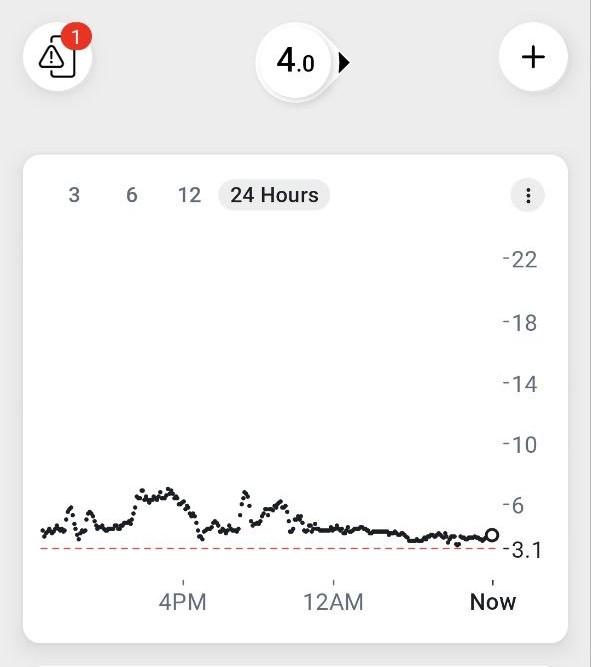
Transition states: There's often a transition period of 1-3 days in between. 3 to get from bad to good, but only 1 to go from good to bad.
One of the clearest signs that I'm entering the bad state is when my post-meal glucose peaks stop making any sense in relation to what I've eaten (see part about glucose peaks jumping around for hours afterwards). And also the other clear sign is that glucose peaks get worse and worse as the day goes on (probably because my delayed gastric emptying gets worse as day goes on and is best first thing in the morning as my stomach is empty).
Going into the good state: Day 1 or 2 of cycle I suddenly don't feel so hungry any more but it still takes about 3 days for blood sugar to get better.

So what have I found that actually helps?
I've managed to stay in the good state for much more of my menstrual cycle recently, although I still don't know how to get into the good state during the luteal phase and during my period.
One of my biggest suspicions is that I have some degree of functional dyspepsia or delayed gastric emptying. My CGM sometimes shows multiple peaks over several hours after eating (sometimes the peaks get larger, not smaller and taking 4-6 hours to resolve).
What seems to have helped the most is drinking hot water and changing the way I eat. The inspiration for all of this comes from my grandmother, who had horrible IBS starting from her 30s, was a medical doctor who experimented with her eating and came up with a pattern of eating that basically removed all her symptoms. I had an aha moment where I thought hey what if my symptoms were less to do with hunger from insulin resistance and more to do with some gut issue.
I've been drinking hot water between meals, generally waiting at least 30 minutes after eating and avoiding drinking much during the 30 minutes before a meal. My thinking is that reducing the volume in my stomach during meals might help, especially if gastric emptying is part of the problem.
I've also been eating much more slowly. Around 40 minutes to an hour seems to work well for me, although taking even longer doesn't necessarily seem better.
Food texture and digestibility might matter too. I seem to do particularly well with "wet" foods like congee. Freshly cooked carbohydrates also often seem to agree with me better than refrigerated or reheated ones, which is interesting because it goes against the usual advice about cooling starch to increase resistant starch.
I suspect my gut doesn't tolerate certain fermentable fibres particularly well. The simpler and more easily digested the food, the better I often seem to feel. But I've also had good glucose responses to refrigerated starches, so that relationship isn't straightforward.
I'm also wondering whether I need to stay somewhere in the middle with fat intake. Very low-fat meals sometimes don't feel particularly satisfying or settling, but high-fat foods can aggravate my stomach too. My HCLF experiment didn't actually produce the improvement in fasting insulin that I had hoped for.
There are a few things I seem particularly sensitive to.
What's interesting is that my food tolerance itself seems to depend on which state I'm in. In the good state, I can tolerate quite a lot. In the bad state, certain foods, particularly some FODMAPs, can cause significant bloating and diarrhoea, even when I would normally tolerate them.
I'm increasingly wondering whether the underlying physiological state determines how well I tolerate foods, rather than individual foods being the main reason I enter that state.
Things that help summary (I've named the "grandma protocol", it is essentially what my grandma did minus the physillium husk):
Eating slowly (but not too slowly) 40min to an hour seems best for me.
Drinking only hot water
Eating congee and other wet foods
Cooking carbs fresh rather than reheating from fridge or frozen (due to resistant starch)
Trying to eat low fiber foods
Having physillium husk in hot water 30min before meal (which seems to dampen the glucose peak(s)) This is a fiber but less fermentable than the others I've mentioned above and doesn't seem to bother me.
Things I measured summary:
Blood glucose via CGM
Wake time
Quality of sleep
BBT
Stress
Periods
Post-meal feeling
Hunger level (when you start to feel hungry)
Blood pressure (I didn't reliably measure this)
My latest bloods (this was a good state, I also have bloods from when I was in the bad state earlier in the year if anyone is interested):
Cholesterol and Lipids
Glucose and Insulin
Liver Function
Serum Proteins
So when do I go into the bad state?
Seems strongly correlated to hormones. The final three or four days of the luteal phase and the first few days of my period can be particularly bad.
Most cycles aren't too terrible. I might become hungrier, more fatigued, and have slightly worse glucose regulation.
But occasionally something seems to go completely haywire. Recently I had a particularly awful episode with unbearable hunger, visual migraines, fatigue, reflux symptoms and terrible glucose regulation. When that happens, nothing I do seems to make much difference. I just have to wait it out.
Around ovulation I consistently get insomnia in the two days following ovulation and I also get very hungry early pregnancy.
Disclaimer:
I should also clarify that I don't think drinking hot water is some magic solution that's going to dramatically improve everyone's metabolic health. For me, I think the main benefit is that it settles the uncomfortable, gnawing feeling in my stomach, so I don't feel the need to keep eating to relieve it.
My suspicion is that overeating makes my gastric emptying problems worse, which then leads to prolonged glucose elevations and possibly contributes to higher insulin levels. So the hot water might be helping indirectly, by allowing me to feel comfortable eating less, rather than having some direct effect on glucose or insulin.
GI symptoms and insomnia:
Another thing I've been wondering about is whether I actually have two partly independent patterns going on.
One involves hunger, satiety, glucose regulation and gastrointestinal symptoms. When this is bad, I tend to eat more, feel awful after meals, and have higher fasting insulin.
The other involves feeling wired or adrenaline-like, difficulty sleeping, waking early, stress and sometimes losing weight more easily.
What's odd is that some of my best fasting insulin results have occurred during periods when my sleep and stress levels were actually quite bad. In January, my fasting insulin was 5.2 despite lots of broken sleep. In April, it was around 9 despite terrible sleep and gastrointestinal symptoms. In July, it was around 8 during a period of severe stress and short sleep.
So my best metabolic periods don't necessarily correspond to feeling healthy in every other respect.
I've also wondered whether the wired/adrenaline state could sometimes follow a period of negative energy balance. But that's just another hypothesis at this point.
Summary:
I used to think that if I could identify all my food sensitivities, I'd eventually solve the problem. Now I'm less convinced.
There are too many occasions when I can eat practically the same things on two different days and have completely different glucose and satiety responses.
I know what the good state feels like, and I know my body is capable of getting there. I just don't know how to stay there all the time. That being said, I seem to be able to reliably eat swampy (a combination of carbs,protein, fat, similar to how most normal people eat except I lean higher carb) while maintaining a good weight. And I am cautiously optimistic I can stay in the good state most of the time and feel reasonably normal with satiety which is more than I could've asked for. Cautiously optimistic because I thought of the hot water quite late into this "testing regime" but so far it has helped enormously and I am in the good state most of the time.
Welcome any thoughts/insights or suggestions for blood tests.
r/SaturatedFat • u/mercyjusticehumble • 17d ago
Hi everyone looking to add a bit more variety to my starch based eating which is mainly veggies potatoes oatmeal bread and some chicken. Wondering if it's better to add some more fats in dairy (probably cheese)or go higher sugar/carbs with some fruit/dried fruit. Has anyone got any experiences. Hoping to not gain or lose just keep balanced. Thanks.