r/SerinaSeedWorld • • 5h ago

Discussion One of Serina's strangest examples of convergent evolution: birds turning their wings into mandibles

Thumbnail
gallery
66 Upvotes

i wonder if it's possible for a non-metamorph bird to converge on a similar wing jaw structure


r/SerinaSeedWorld • • 2d ago

What if serina species from different times where all on the same planet

6 Upvotes

Like womblers and trunkos , tyrant serins and gravediggers etc.


r/SerinaSeedWorld • • 3d ago

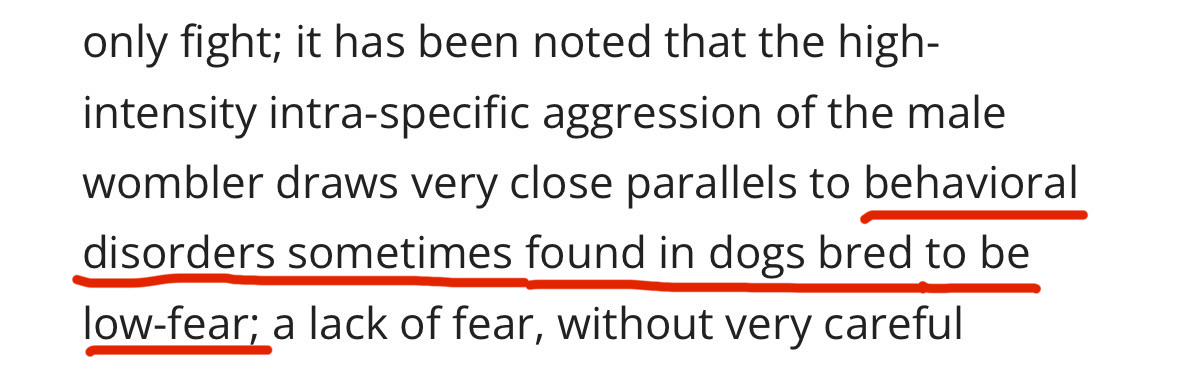
Question What is this sentence talking about?

Post image
8 Upvotes

Photo from The Wombler Passage in Central Anciskan Floodplains in Hypostecene.
I’ve tried looking for any papers discussing this, but I’m almost certain it’s a misconception or something of the like. Still I‘m kinda curious what this is referencing, and if anyone knows then I’d love to know as well.


r/SerinaSeedWorld • • 4d ago

Discussion Can we just talk about the fact that there are tripedal birds now?

Thumbnail
gallery
230 Upvotes

It's always fun when non-metamorph birds get really nutty with their physiology without resorting to some borderline esoteric metamorphosis shenanigans. Like what do you mean, there are terrestrial dolfinches and sparrowgulls that acts like wasps now???

On a side note, can someone commission a few handfish species in the Hothouse age already? The dawning nodder deserves some justice


r/SerinaSeedWorld • • 5d ago

What's the most underrated Serina clade in the Ultimocene

Thumbnail
gallery
108 Upvotes

For me it's either dancing trees

Or Avimanders


r/SerinaSeedWorld • • 5d ago

Considering how I made Starscream for my crossover project turn into a Drakevulture, should I make the other Seekers the other Aukvulture species?

Thumbnail
gallery
20 Upvotes

In Specific:

  • Stormshadow Skywarp
  • Awegull Thundercracker

r/SerinaSeedWorld • • 5d ago

Question What is your favorite kind of Metamorph

Thumbnail
gallery
124 Upvotes

these are some of mine


r/SerinaSeedWorld • • 6d ago

Discussion What will happen after the Serina project ends?

7 Upvotes

Serina appeared 11 years ago, and it still exists, and new posts keep appearing. But with each new post, we’re getting closer and closer to the end of the story. Be that as it may, Serina will end eventually — but when? That’s the first question that has been bothering me for a long time: how much longer can Serina keep going? Will it last until 2030 and even beyond? But that’s not the main thing — what matters more is what happens after it ends: will Dylan Baida start a new project, will Serina get a second part, and even more interestingly, how will it all end… What do you think about this?


r/SerinaSeedWorld • • 10d ago

New Serina Post New serina post: Fluvial Squaboon

Post image
67 Upvotes

r/SerinaSeedWorld • • 10d ago

make opium bird biologically plausible

Thumbnail reddit.com
7 Upvotes

r/SerinaSeedWorld • • 11d ago

My favorite moment

Post image
95 Upvotes

Peakpeakpeak tickles my autism in just the right way


r/SerinaSeedWorld • • 12d ago

Fanart/Fanworks Serina Fancast part 6

Thumbnail
gallery
15 Upvotes

Hello! Sorry it’s been a while! This is a continuation of my fancast of the sophont characters of Serina. Enjoy!

Churi: Victoria Grace

Tioran: Sean Chiplock

Crown Rikri: Laura Doddington

Sprig: Harry Collett

Vress: Thomas Ridgewell/Tomska

Tsweetri: Zeno Robinson

Intirrus: Lizzie Freeman

Perhiha: Chester Rushing

Niurie: Michaela Laws

Argus: Erica Lindbeck


r/SerinaSeedWorld • • 12d ago

Fanart/Fanworks Whitecrown’s Demise

Post image
57 Upvotes

Based on the descriptions from “When All Falls Apart”


r/SerinaSeedWorld • • 12d ago

New Serina Post Sea Snagglejaw (295 Million Years PE) By Sheather888

Post image
109 Upvotes

North Polar Ocean


The hothouse age comes to an end as the excessive greenhouse gases that were released into the atmosphere during the great thaw are lost. Some gas is lost to space, a quantity that is growing larger each year as the magnetic fields of Serina now grows exceedingly weak - it is cooling, volcanism is extinct, and Serina's core is no longer molten. Atmosphere thinning means oxygen levels are declining, and water, too, is escaping this way, contributing to a rapid fall in sea levels and reduction in precipitation over most of the land, which becomes arid. Additional impact comes from carbon dioxide released during early volcanic events and widespread burning of ancient coal beds across Serinarcta finally being locked away again far below ground as a result of being captured by trees that then decomposed or become buried in sediments over millions of years. As forests proliferated in the later hothouse, this effect hastened compared to in the early hothouse, and so the warm era ends almost as suddenly as it began. By 291 million years P.E, the once warm and tropical polar regions are again subject to prolonged winter freezing, snow, and ice, leading to mass die-offs of their endemic flora and exodus of their large animals that must migrate south to find food. Though it takes a little longer for equatorial regions to feel the worst of the changes to come, they too begin to turn hotter and drier. Coastal regions in temperate climates, neither too southerly nor too northern, will become the main sanctuaries of life in the final stretch, and it is here that survivors begin to congregate, including animals like the sea snagglejaw.

Descendants of intelligent arctic snagglejaws were forced to migrate out of the polar basin as it became increasingly cold, killing off their herbivorous prey species who began to starve to death. Down the wide rivers that drained into the basin they went, to places they'd never seen or known. The lucky ones navigated all the way to the sea coasts, where they faced powerful storms, great rolling waves, and unfamiliar prey. But they were adaptable, clever, and strong, and they adapted to the conditions. To withstand more turbulent waters and to bring down greater sized animals to eat, they grew bigger too - 6,000 lbs and over 30 feet in length. They retained their strong arms and grappling claws, but were eventually too heavy to walk upright and on land could only move with a sprawling posture like a seal. They fed on anything they could catch, from whelicans to dolfinches, whiskerwhales to burdles, and even on small seabirds and tribbfishers at the edges of their large nesting colonies. To take down the biggest prey in the ocean took teamwork, and their ancient social instincts that were of lessened practical use in the hothouse returned in full force: these marine hunters have now become cooperative, tightly-bonded pack animals. Their hunting strategies are complex, varied, and always changing. Around nesting sites they may disperse to snatch small animals singly, eating as many as possible where they are available, but still regrouping at day's end to share the spoils with individuals who may have had less success, feeding each other through mouth to mouth regurgitation, the same way they tend to their offspring. Though snagglejaw pups can swim the day they are born, they have little endurance or tolerance for rough waves, and will be kept near shore for several months in the spring and summer as they become stronger and more skilled swimmers. In calm nursery bays, they can float in gentle waters and cling to the backs of their parents, and at this time of year families will be seen more often resting hauled out upon the beaches. When young are older, they may still hold onto adults to sleep with their heads out of water, but mature animals are able to sleep in increments whilst just below the surface, holding their breath; a few rest as others always keep watch.

Family units form the base of each pack, but bonds are extended beyond parents and young to include grandparents, cousins and other relatives - small packs thus continue to meet with and maintain bonds with much larger groups of kin. And when only big game is available, as many as twenty five smaller packs, those that live together day in and day out, may assemble together into massive clans of two hundred or more animals, tied together by the extended relationships of their members and so allied as one force even as most individuals do not know every other individual specifically. In such coordinated numbers, these animals can take down most any animal that shares their northern seas, ripping with their recurved claws and tearing with powerful shearing teeth to tear bloody, gaping wounds. They are ruthless yet not intentionally cruel predators, with a clear goal in finishing the job as swiftly as can be done, which also reduces the risk of it injuring them. Their main method of killing is to drown their quarry, for most of what they eat is air-breathing, and their bites and scratches ultimately serve to pull it below the surface long enough for it to succumb - they do not typically eat it alive, and will forgo immediate gratification - stopping to eat a bite of the dying animal as others continue the kill - to keep dragging the animal under as a team until it ceases to struggle. Only then will all members of the group will feast together. The sea snagglejaw is one of the only animals capable of this degree of social cohesion with each other, which matches that of the most social sapient species such as the sylvanspark, and at times seems to exceed it (as snagglejaws do not, typically, go to war against one another and instead seem to know to concentrate their efforts against only other enemies.) Sea snagglejaws may no longer be able to walk - they can only pull themselves flat along on their bellies - but they have become highly streamlined, fast and strong swimmers. Propulsion of their hind legs, again a tail, is their main source of power but their arms too are used and so they retain large lobed front digits. Their center hind toe is much reduced in size, no longer needed to bear weight on land and likely to vanish in the future as the outer toes expand into flukes, the most hydrodynamic shape for the tail to take on for an entirely marine lifestyle. Ears are small and can close underwater, as can the large nostrils set high on the sleek, sloping snout. A muscular hump on the upper back, to which the arms anchor, has become tall and narrow as a stabilizer to help the animal stay upright even during fast turns when chasing food (and becomes a handle for young to grasp to keep up with the quicker adults.)

Far from their isolated inland ancestor, sea snagglejaws are extremely wide-ranging today and found across all northern temperate waters. They can cover thousands of miles in a year, and individual have at times crossed the Unbroken Ocean east to west, spending months without touching land. Only the warmer equatorial seas limit them; with temperatures too warm and food too scarce at such latitudes, it is a barrier none has crossed successfully, a natural border fence that means the northern and southern oceans by now have evolved into distorted mirror versions of each other, sharing few species between them, almost as if they were entirely different worlds.

These animals are true travelers, wanderers, and explorers, searching for food but perhaps also for the sheer sake of it, to see what's out there. They are creatures capable of complex thoughts and actions which is evidenced by their hunting behavior and social lives, but unlike others do not seem dragged down by a need to be any more than this. They use very few tools day to day, probably due to lack of need, though are known to use their strong arms and grasping hands to throw rocks at smaller, quicker animals on shore and in this way can catch even terrestrial food they could never run down otherwise. They show a diverse range of vocalizations, dialects, and culturally transmitted behaviors, but much less tendency to view those with differences to their own cultures as rivals, instead taking great interest in one another. Sea snagglejaws indeed seem specifically drawn to seek mates which are highly distinct from themselves, which often results in the merging of clans and the formation of new, "pidgin" dialects that combine the traits of both group's "speech." This is likely an effective way to completely avoid inbreeding, but also serves to maintain a nearly species-wide alliance of snagglejaws and makes conflict between groups rare and of no benefit to them, as the well-being of any one member of a wider clan becomes that of the entire group - they are strongest working as one. Their remarkable solidarity has let these once unlikely animals become the apex predator of all the waters that they now roam. At a time of great change when many species suffer losses or vanish entirely, the sea snagglejaw is in the dawn of a new, prosperous era, and for now its future seems bright.

r/SerinaSeedWorld • • 14d ago

New Serina Post [NEW MEGAPOST!] The Major Whisperwings - 300 MPE (Civilization Age)

Thumbnail
gallery
85 Upvotes

Holy shit, there are so much to dig in. There's literally way too much images for me to cram in the individual characters except for one.

Glory to the Whisperwing Empire(s)


r/SerinaSeedWorld • • 14d ago

New Serina Post DUDE THE BIRDS ARE HERE

6 Upvotes

r/SerinaSeedWorld • • 14d ago

New Serina Post The Borderlander (Now in the Leucrocotta Page | 300 Million Years PE) By Sheather888

Post image
34 Upvotes

Borderlander as defined by the Kir refers to both first-generation mixed-race leucrocottas of eastern and central nomad descent regardless of where they live, and to a broader, older ethnic group of continental leucrocottas who have more ancient shared ancestry from those two groups. The latter group is considered a natural intergrade population, linking the central nomads of the greenbelt and the eastern leucrocotta of Fortune River Valley. The Kir do not assign the borderlander as a specific subspecies, in practice lumping them with foreigner nomad groups. In turn, those nomads typically lump them as being Eastern leucrocottas. Prone to being lumped as "the other" by both of their ancestral people, a distinct identity is often recognized only amongst themselves.

Such nomads (both borderlanders and others) by far make up the largest leucrocotta minority group within Fortune River Valley, but still comprise only around 2% of its leucrocotta population. They are often viewed as lower class than ethnically Kir leucrocottas within their nation, may be denied entry to more strict establishments, can have difficulty gaining full citizenship, and do not hold political power as a rule. Even individuals born into Kir culture from at least one ethnically native citizen and who speaks the local language fluently may experience these biases, which are very ingrained in the Kir's culture which places their own race as the highest position in taxonomic hierarchy that has little basis in anything but ideology. Bias is primarily based on appearance, and borderlanders tend to have highly distinct, darkly striped appearance from both their parent groups. This is a result of their mixed ancestry, especially in first generation borderlanders, and the absence of recessive coat color genes that are typically expressed in both central nomads and eastern leucrocottas that often means they end up with more continental-like patterns of black bands or spots absent in most ethnic Kir (who are red and lack black melanin markings) and central nomads (who are often of solid, unstriped color.) Borderlanders with recessive red coats, or with minimal enough dark patterns that they can be masked with make-up, are more accepted in Kir society, though their facial proportions such as a more bulbous snout may still be a sign of their mixed race status.

Borderlanders often group up with valley leucrocottas where the two meet, as this culture is generally the least discerning of appearance. There are a number of valley diaspora within the nation-states of the greenbelt region, and likewise many nomad-descended leucrocotta who have settled within craterlands. Some districts in the greenbelt are primarily inhabited by these valley-nomad mixes which also have Kir ancestry, and these are some of the most genetically diverse and phenotypically variable of all leucrocotta populations.


r/SerinaSeedWorld • • 15d ago

Discussion r/SerinaSeedWorld is looking for new mods

15 Upvotes

One and only mod here. To be honest, I didn’t think the subreddit would get as big as it did, considering this is a sub for a niche spec evo project, and it was having a couple hundred or so visits every week. But recently the sub has been plagued with off topic spam, and as such, we’re gonna need more people to clean up this mess.

If you want to be mod, leave a comment.

a) Make sure to have profile open so I know if you’re actually a human and not a bot.

b) Generally, don’t be a fucking dick, don’t abuse power, that sort of thing.


r/SerinaSeedWorld • • 15d ago

Opinons on the Myrmecophytes (Ant-Tree symbionts )

8 Upvotes

Just your thoughts and any cool ideas for them.


r/SerinaSeedWorld • • 15d ago

Discussion Where are the mods?

14 Upvotes

Firstly, there is random nonsense on this subreddit, and I was wondering, aren’t mods supposed to take down content that is not Serina related?

Also, there are leak content that are in this subreddit too before on the website, which is sure disrespectful.


r/SerinaSeedWorld • • 17d ago

Discussion How do you think serina sophonts would treat humans?

Post image
77 Upvotes

Spoiler warning for Termonarch

From this picture you can guess their simplified relationships toward other Serina sophonts which maybe can help you figure out whether they would ally with humanity or not.


r/SerinaSeedWorld • • 17d ago

Fanart/Fanworks My First Ever Serina Fanart

Post image
93 Upvotes

https://www.pixiv.net/en/artworks/97582792

It feels so long ago that it's unreal.


r/SerinaSeedWorld • • 22d ago

Question Where can I find unlabeled maps?

4 Upvotes

Hello there, I wanted to find unlabeled maps for Serina for a personal project and I wanted to know if it exists somewhere ?
Maps from every period, if possible...


r/SerinaSeedWorld • • 23d ago

New Serina Post Ringbilled Dibble (Middle Pangeacene:240 Million Years PE) By Sheather888

Post image
173 Upvotes

Wetlands (Temperate North Anciska)


Spending its days dabbling in shallow marshes and streams of the late Pangeacene we find the carefree creature called the ringbilled dibble, identifiable by its trademark bill marking as well as an equally prominent white band around its neck. Dibbles are a subgroup of bumblebadgers which diverged ten million years ago and have acquired semi-aquatic adaptations including webbed hind toes and slightly flattened paddle-like forearms. These traits now make them excellent swimmers, though they still nest in burrows and are quite capable of traveling over dry land to find new waterways. They feed on small animals and occasionally seeds and tubers in freshwater with what may seem like a bird-like bill, but these animals do not have true beaks; their snouts are soft, fleshy, and have movable lips, while their gums are lined with rows of small keratin teeth that surround a bony core attached directly to their jaw bones. With nostrils at the end of their snouts they have a strong sense of smell when foraging in damp soil along the water's edge, but they also have the ability to locate food by scent even underwater by holding air bubbles in their noses, allowing scent particles to infiltrate them, then inhaling the air back into their sinus. Many dibbles eat a range of food, from insects to small fish fry to certain plant foods. The ancestral characteristic of this group is a narrow fleshy snout like an echidna, which they probe into the dirt or shallow water to find food - poking holes into soil like this, usually in the context of planting seeds, is what the word "dibble" indeed means. Some more derived species, though, have evolved very wide platypus-like snouts that let them consume large mouthfuls of almost anything they find in the marsh and these species no longer feed by probing, and are often more strongly aquatic and rarely feed on shore. Ringbilled dibbles however are one of the more carnivorous species in their clade, and are much more selective feeders. With a snout that has remained quite narrow, while its "teeth" are particularly large and conical, it now feeds mostly on small fish captured in fast underwater dives, but also actively hunts smaller juvenile birds and mudwickets out of water (it does not typically eat any plants at all).

Some dibbles are gregarious, forming colonies of relatives, some with highly complex, cooperative social behavior that borders on eusocial (think meerkats.) Ringbills though are members of a genus that diverged earlier and are still quite solitary, coming together only to breed, and communicate primarily with scent markings left along riverbanks with glands under their tails. Males can detect when a female is receptive to breed by scent cues, often raising his upper lip in a flehman response as he does so, and will then track her down and court her rather aggressively. Males of this species are bigger than females by about 25%, but females are more agile. The encounter often seems very aggressive, but occurs with clear purpose. A female will test a male by playing very hard to get and seeming to try to escape him, only allowing mating if he succeeds in catching up to her, which proves he is fast and highly fit, meaning any young she has with him will be good hunters and able to escape their own enemies. If she really does not want to mate, she will not allow him, instead raising a row of backwards-facing spiny plumage on her spine to prevent him from mounting her, lowering spines on her tailfeathers to block her cloaca, and snapping fiercely at him with her sharp jaws. The spiny defensive quills in this species are less prominent than in other bumblets in their lineage but still effective in deterring unwanted attention, both from their own kind and other predatory animals.

Only females raise litters of two to four young for about 6 months, tending to them in a nest accessible only through a submerged entrance. Chicks are born featherless and about as big as golf balls; they are entirely dependent on her care for about a month, then are feathered and strong enough to swim and follow their parent outside the nest and learn to find food for themselves, with the mother still initially feeding them morsels she collects but gradually reducing this to encourage their independence. Though highly protective of their own young, mother ringbilled dibbles do not show any maternal behavior to unrelated young and will often kill lost chicks they encounter and feed them to their own brood, which is also what they do when they catch young of other dibble species or indeed any type of smaller, easily overpowered bird at all. Their own young, in turn, are sometimes stolen by larger hunters like storkshrieks (a threskike is pictured above; this migratory species, which summers in Borea, sometimes takes dibble chicks, but this one is occupied trying to swallow a large freshwater snark.) Mother ringbilled dibbles are ornery and will fight animals much bigger than themselves to protect their children, which means most successful attacks come from flying birds that can swoop down and carry off an infant before the mother can react, or from large fish which do the same but underwater. Despite her best efforts, though, only around one in four chicks typically reaches adulthood, as they are quite small and vulnerable in their first few months of life and do not yet have the defensive quills of the adults or a strong enough bite to deter predators from snatching them.

r/SerinaSeedWorld • • 24d ago

New Serina Post Snaggletooth Spotlight Snark (Early Pangeacene:210 Million Years PE) By Sheather888

Post image
148 Upvotes

Coastal Seas

The oceans of the Pangeacene quickly become among the most biodiverse of any time so far. Now, joining old standbys - the bony fishes and the birds and the crustaceans - come new lineages, including marine tribbets who return to their ancient aquatic origins in search of new resources in a changed oceanic landscape. They join something else that is entirely new here. Snarks are the descendants of predatory bottom-feeders which diverged in the Cryocene era, but which have only returned to the ocean since the Thermocene-Pangeacene boundary. They are snails, but have become unrecognizable from their relatives, having highly reduced or completely internalized shells, extremely modified body shapes, and uncommonly high intelligence, allowing for problem solving and tool using behaviors. They are all live-bearing, giving birth to large, precocial offspring which hatch internally, staying safe from predators until they can escape them. Some continue to grow inside their mother's womb for longer, developing to a larger size than would otherwise be possible with a placental connection to her body mirroring some mammals and, among other Serinan species, certain metamorph birds and the bumblets. Ancestral pond snails were air-breathers, but readily re-developed a gill several times in different lineages from their mantle cavities to respire underwater, allowing them to colonize deep water environments like lakes and rivers. They developed sharp teeth on their radulas to subdue their prey, and burrowed into the sand both to hunt and avoid their own enemies. From here a group evolved which hunted as ambush predators; they became dorso-ventrally compressed, with their eyes resting on stalks at the top of their bodies so that they could keep watch for food crawling on the sediment while the rest of their body was hidden. Their shells reduced so that they were no longer able to retract their large, flattened bodies, but they no longer needed to do so as they spent most of their time hidden in the sand. The left and right sides of their foot became flattened and fin-like and by undulating their edges, the snail could now also move quickly over the bottom of the sea bed in the manner of a stingray, letting them flee from threats or pursue small prey actively in addition to ambush hunting; as their feeding techniques became more active, they became more intelligent, with well-developed brains that would give them an edge in locating and subduing prey. Their radulas split in the front to form a pair of "jaws" which became larger and able to be extended outside the mouth as a snapping pair of chitinous blades lined with calcified "teeth"; in some species, they are now so big that they can no longer retract internally and must remain external at all times. As some species spent more time out of the sand and swimming along the sand, they made use of chromatophores to alter their skin patterns in order to camouflage, as do cephalopods on Earth, a group to which they have converged in many ways, except one: all snarks, until the Pangeacene, were restricted to freshwater exclusively.

Cephalopods, in contrast, have no freshwater species at all. In both cases, a difficulty in maintaining their sodium levels when these differ from surrounding water conditions is partly to blame, something that molluscs are naturally more challenged by than vertebrates like fish. Pond snails belong to an ancient lineage of molluscs which successfully colonized freshwater in a time where fewer competitors and predators existed, and once they did so, they spent hundreds of millions of years there, seemingly prevented from ever acquiring new adaptations to allow for salt tolerance again by a myriad of other competing animal groups including their relatives which never left the oceans. That was until the world almost ended, and practically every living animal in the seas perished. When the dust settled, snarks - who survived the extinction event in their fortunate riverine habitats near the south pole - had their first opportunity to take to the seas. This time, with more chances to try and fewer obstacles to block them, they made that great leap into saltwater successfully, evolving a functional "salt pump" cells in their kidneys which let them navigate down rivers to where they meet the sea. The first Pangeacene sea snarks were euryhaline, needing to adjust to changing salinity day to day as they moved up or downstream rapidly as active, energetic hunters seeking food. Thus unlike their ancient snail ancestors - who being slow-moving never had this problem - the snarks as a whole would remain capable of switching back and forth between stream and sea. Now both worlds of water would be their domain, and they would rule the seas in tandem with the fishes, no longer below them but equal players in the game of life.

Snarks differed from most snails before them in that they were visual hunters. Evolved in clear rivers, large eyes and acute eyesight were the best tools to spot a meal, and their vision became extremely acute, well attuned to both color and movement, with a struture closely resembling the vertebrate eye in appearance and ability. Visual signs also became useful for communication with their con-specifics; males developed elaborate, colorful threat and courtship displays, and the ability to switch between them in an instant by altering the chromatophores in their tissues; such abilities also let them instantly hide by matching their surroundings. Some snarks evolved to live in turbid murky water, and these were often plain in color. These forms evolved other mechanisms to detect prey, including electro-reception to detect the muscle movements of nearby animals and strike them in near-darkness, but not even these lost their eyesight, save for a few which lived in the darkest, deepest jungle rivers where no light ever reached. Typical "ray-like" snarks, the ancestors of all Pangeacene species, were highly abundant by the beginning of the Thermocene and spread across Serina's freshwater from pole to pole, only truly absent from the most isolated waterways with no connection to any other river or lake. Most of these animals have few means to travel far over land, and as live-bearers they cannot lay eggs like some fish can to be carried unknowingly on the legs of birds from one pond to another. Though some Thermocene snarks independently evolved fusiform (fish-like) body shapes for active swimming in open water, none survived the end of the Thermocene. That bodyplan reappeared almost immediately thereafter from unrelated survivors, though, especially those which moved for the first time out into the seas.

The snaggletooth spotlight snark is a fast, agile fusiform marine predator now common to coastal waters worldwide, known for its complex social behavior. Living in the water column it has traded its benthic ray-like bodyplan for a swifter and sleeker shark-like one, and has become among the most hydrodynamic of all snarks, even evolving a dorsal fin from the mantle. Its shell is completely internal, providing a solid calcified support for the fin just under its surface, which is the only "bone" in its body otherwise hydrostatic, or supported by fluid and the water it lives in. Their radular jaws, opening horizontally like vicious serrated shears when feeding, lock neatly together beneath a long, fleshy snout when swimming; the snout's soft tissues seal over the blades of their jaws, smoothing the outline, and so their sharp mouths do not cause drag to slow them down. Their teeth are a complex composite of calcium and iron overlaid on a chitin "jawbone"; the iron comes from their flesh diet, and provides extra strength to this species when feeding on larger prey animals, while also providing a bright red color to the tips of the teeth.

These 7 foot long, 200 lb snarks live in clear water where the sun shines down for a long distance from the surface, providing excellent conditions to find food by sight and also to communicate visually: this species has a well-maintained ability to rapidly shift its skin patterns from spots to stripes to a plain blue-green background as needed to match different conditions or to "speak" to others of its species, which it does as a cooperative hunter. Such sunny seas are also vegetated ones, and the snaggletooth spotlight snark often hunts within "forests" of marine algae that grow clung to coastal rocks or floating freely in the surf, as this habitat both feeds and shelters abundant prey ranging from fish and sea-tribbets, to seabirds, to crabs, shrimp, and other snarks. They favor vertebrates, as their strong iron-fortified teeth make them extra effective at cutting apart bones or hard integuments like fish scales, and most of their diet is large plant-eating fishes (some of which can weigh over 1,000 lbs), which they catch via coordinated ambush techniques most similar to those of large land predators like lions. Most often two individuals will stalk a school of prey, picking out a target on the edges, which they will then chase suddenly on either side to drive it into a waiting ambush from two or three other individuals who cut off all of its escape routes. The snaggletooth spotlight snark is one of only a few species which is not only able to change color, but is able to emit bioluminescence.

Symbiotic, light-producing dinoflagellates which feed on the mucous coating on its skin naturally grow along six to eight small patches on each side of its body where this mucous is produced through glands. They produce a flash of light when disturbed as a defensive behavior, and are related closely to free-swimming species which in high numbers can also light up the oceans at night (not only on Serina, but on Earth, too.) The spotlight snark's flashing lights can be hidden or revealed by sudden muscular contractions of the skin immediately beneath each colony which effectively startle them into emitting a brief flash of light. By producing contractions in patterns, spotlight snarks can "talk" to each other with an instinctive set of mutually understood codes which tell one another which way they will each go during the hunt, and whether they will be chasers that pursue prey or catchers which ambush it. Often hunting at night when their own prey's vision is less acute, each snark's light may only flash for a fraction of a second, and easily be missed by the fish they stalk whose eyes have a much slower refresh rate. Snarks have among the most keen eyes in the animal kingdom, and these ones can detect the briefest flickers from their fellows, coordinating their attacks with a language almost invisible to all other species.

Only after the hunt do these hunters stimulate all of their lights at once, flashing brightly and unmistakably as a way to clearly show their body sizes and compare against each other. Bigger individuals always eat before smaller ones, and in this way a social hierarchy is instantly established without physical conflict. This is necessary because snaggletooth spotlight snarks do not live in permanent packs of familiar individuals, but instead are nomadic and group up with each other as needed. They use a specific light pattern and a shimmering "dance" to approach and ask others if they're hungry and want to join a hunt, and as they gather temporary packmates will work together to continue seeking out others to others until they have amassed five or six animals - enough to take down any prey they might find. Juveniles are born in single litters in thickly vegetated nursery lagoons, and though this is a very small litter size, each is born about 25% adult size and fully capable of defending itself. Spotlight snarks don't directly care for their own young, but are not cannibalistic. Since they don't much like eating snarks, the babies are safe from the adults, though cannot capture large prey until adulthood and so form groups with other infants around their own size, which hunt otherwise exactly the same way as the big ones do.

The Pangeacene will be a long era, and the spotlight snark is only an early form of new, marine snark, but it already shows a combination of many highly successful and most unique physical and behavioral attributes which are likely to lend these new sea creatures great evolutionary success in the eons to come, whether or not they are its direct descendants.