r/SoilScience • • 5d ago

Soil Science and Artificial Intelligence

0 Upvotes

I am impressed with how artificial intelligence has facilitated my understanding of soil and helped me complete some research done by a staff of one - me - in my kitchen. I am trying to come to grips with how artificial intelligence has impacted my results and would like YOUR views- how you feel about my collaboration expressed in a reasonable way resulting in constructive discussion.

I am not a soil scientist. I do have a deep interest in soils. Over my many decades I have farmed (dairy / forage production), worked in various positions in a large regional ag input coop, and lastly, for one of those federal agencies involved with agriculture, farm programs and soil conservation. I have an advanced degree from a Big Ten university and have a good understanding of the scientific method.

I am retired now with too much time on my hands. I volunteer with Master Gardeners Association in the mid-Atlantic region. In my retirement I have taken a deep dive into soil science. Where I once only had an economist's understanding of the importance of soil structure and fertility I am now a little deeper into it.

As a Master Gardner I needed to understand soil amendments like compost and the other bags of product labelled some kind of soil, potting soil or mix, garden soil, topsoil. I went to the local big box store and purchased 9 bags in a variety of brands and types with the intention to examine, test, and compare each.

I only recently discovered AI and have used it, favorably in my opinion, to facilitate my journey of discovery. When I started the collaboration I had no idea how to use it or what kind of response I would get.

In summary, it has saved me weeks (or months) of time from beginning to end and has prompted me to dig deeper to places I could not have gone with my limited knowledge. This all started mid-September and came to a conclusion at the end of October when AI generated and 8-page beautifully formatted and precisely worded output. Many of the words were mine but polished in a way, embarrassingly in my opinion, to make me look a lot smarter than I think I am and I'm not saying it embellished (maybe), but I wouldn't have taken the time to make it look so professional. I'd share the eight pages but I doubt you want to read all of that. Fr purposes here let's assume the information it supplied was unimpeachable. We did go back and forth on a couple issues but that's a debate for another time.

I would value your reaction to my admittedly brief inquiry.


r/SoilScience • • 12d ago

Water Testing Resources

0 Upvotes

Protecting water resources start with understanding them.

From wastewater monitoring to environmental compliance accurate water analysis plays an important role in protecting our communities and natural resources.

Midwest Laboratories supports businesses, municipalities, and environmental professionals with analytical testing services that help inform operational decisions and monitoring programs.

Because environmental stewardship requires more than good intentions. It requires reliable information.

Learn how our environmental testing team can support your needs at https://hubs.li/Q04DczvP0


r/SoilScience • • 15d ago

New Soil Enthusiast — I need help researching

0 Upvotes

Hi folks,

I’m on a mission: To create a bioactive safe soil for indoor house plants. Typically, you see these soils for terrariums, but I found that this soil could be extremely beneficial for indoor house plants. It contains all the nutrients a house plant would need, but some of it is insoluble or requires soil microbes/crustacea to help with decomposing and structuring the soil.

Over the last few months, I’ve been more interested in soil science than ever before. It started with wanting a better home for my ball python, but I quickly became infactuated with how biodiverse our soil really is. It is full of organisms that survive in a world completely different than ours, yet contributed the most to ours. I’ve been reading about soil through James Nardi on Life in the Soil, based off a recommendation from a professor I got in contact with through UFL/IFAS. I’m amazed at how every creature plays a crucial role in decomposing, recycling, structuring, and breaking down nutrients in the soil. I’ve also learned soil is essentially made with a lot of poop over the entire earth’s history, which is uh, interesting to say the least. I just wish it didn’t smell so bad.

Anyways, my goal is to create a top dress that drains soluble, plant-ready nutrients to the microbes that feed the plant. Where I am struggling is I don’t know what I don’t know, and I’m trying everything I can to research these things. I don’t have a formal biology background. I’m a business guy who just happens to love animals/plants/environment. I live in a sustainability focused community, and I want to give back to it in the form of healthy house plants with healthy microbes that do their job.

So far, here’s what I’ve done:
I created an ABG style mix. It’s very chunky/springy in structure and the bottom soil layer (just above my drainage barrier) has good moisture retention. It contains worm castings, coco coir, bark, charcoal, and moss. I have been examining the soil in my bioactive terrarium (“wCuC” = with CuC) and my indoor potted plants (“nCuC” = no CuC). The soil in my terrarium is about 3inches thick. I topped it off this morning because the LED/UVB lights surprisingly dry it out at 80 degrees Fahrenheit. Topping it off with a bit more coco coir thickens it up a bit, and I may need to do it again if I sense the heat lamps (not currently installed) dries it out significantly faster.

My CuC right now consists of Dwarf White Isopods and White Springtails. They are only in the terrarium, for now, but I’m thinking about experimenting them in a potted plant. No lid, just a pot and soil. I have a feeling the subterranean isopods will stay in there happily, and the springtails may avoid climates that are too dry or cold. These guys are quite easy to support, so I don’t have any issues here. My only concern is that they are not enough.

My too dress is made from worm castings, spores, frass, and kelp meal. It’s not shelf stable. Learned that pretty quickly. I’ll need to dry out the castings before mixing them together. The purpose of my indoor top dress is to do what it does outside: create a soluble soil barrier that drains nutrients to the microbes below. So far, I’ve only been able to observe ectotrophic hyphae. Cool, at least I know it is sustainable for life; however, it doesn’t really tell me what it’s doing below the surface. My monstera doesn’t show any signs of new growth after a month of the soil. The nerve plant, my fittonia, however, seems to really enjoy the chunky and mosture retention of the soil. Within a week of repotting, it was slowly straightening itself out.

Where I need Help
Soil Testing Lits — What would you recommend in terms of quality, affordability, and lasts a while with consistent use?

Microscopes — Watching Elaine Ingham’s lectures on youtube, she mentioned a microscope. I’ll go back and find out what she recommended, but I wanted to know if anyone here had a good recommendation for my specific use-case. Anything that meets the requirements to help me learn and grow in my understanding of soil?

Nutrients — What’s the biggest reason why people buy synthetic fertilizers? I just feel like it’s poisonous to us, too, and we’re willing to adopt it just because we’re afraid of bugs?

Book Recommendations — Any additional book recommendations would be appreciated. I’m just your average joe with a growing interest in this field, and I want something that can help me really understand it further.

Full Transparency
Yes, I want to start a small business at some point, focusing on soil that supports indoor house plants and terrariums, an emphasis on environmental conservation, and to be honest, I kinda want to go around people’s business/homes asking if I can plant something for them (inside, outside, or terrarium). Plants are awesome, and the science below is even cooler. If someone is already out there doing this, then they aren’t in my area — otherwise I would have discovered them by now. That is why, as a reptile keeper and plant lover, I want to do something that appeals to a wider market of people who just want to know their soil is healthy, safe, and alive.


r/SoilScience • • 16d ago

How to tell the difference between saprolite and weathered parent material?

2 Upvotes

I’m fairly new to the soil science world and I’ve been learning more about saprolite recently. From my understanding saprolite is chemically weathered bedrock that retains the original rock structure but I’m not sure of the exact difference between this and weathered parent material in general. I’m also wondering how you can identify this in soil pits? And how can you tell if it would be in the C, Cr, or R horizon?
Thank you for your help!!


r/SoilScience • • 18d ago

[VIDEO] Intro to practical applications of soil DNA testing for crop advisors

Post image
1 Upvotes

I was recently invited to prepare this video presentation about practical uses of soil DNA testing for a conference (R-Soil 2026). I think it would be of interest to many here, as DNA testing for agriculture is still young and rapidly developing. Soil bio has been difficult to measure and therefore to manage. I think soil genomics is a significant advancement in this respect.

For context, I have an MS in agricultural science where my thesis focused on rhizobia and utilized DNA sequencing. I work now at a soil DNA testing company that was a sponsor to the conference. My goal is to inform folks of new tools in their tool kit and educate them to use them effectively.

I've posted a few other explainers and demos to the same YouTube channel, and contributed some info-dense webinars on the company channel.

Feel free to send questions or constructive criticism. Have a good one!


r/SoilScience • • 19d ago

Adding coco coir to native garden beds

Thumbnail reddit.com
1 Upvotes

r/SoilScience • • 22d ago

Field Monitoring of Soil Salinity and Sodicity Under Commercial Furrow Irrigation: A Case Study from the Lower Burdekin Delta, AustraliaSoil Systems (MDPI), Vol 10, Issue 11, Article 132, published October 22, 2026

Thumbnail mdpi.com
1 Upvotes

r/SoilScience • • 22d ago

I want pottery clay from where do I take soil from help me out

Thumbnail reddit.com
1 Upvotes

r/SoilScience • • 26d ago

Soil Simulants/Surrogates

2 Upvotes

Hello! The company I work for received a limited amount of soil for a project and needs a simulant that could be used in its place. Is there anyone who can make simulants that we can order from? What should I consider when making my own? Any advice is helpful. I’m new to the field and just don’t know where to start.


r/SoilScience • • 29d ago

Making fertilizers from oil, I assume incorporates other elements like nitrogen and potassium. What's the balance therefore between increased plants adsorbing CO2 and releasing it.

Thumbnail reddit.com
1 Upvotes

r/SoilScience • • Oct 23 '26

DIY budget soil mix, chocolate mint

Thumbnail reddit.com
1 Upvotes

r/SoilScience • • Oct 22 '26

Interesting Soil topics...?

Thumbnail reddit.com
1 Upvotes

r/SoilScience • • Oct 21 '26

Soil Chemistry and Skin Contact

14 Upvotes

Hello, I'd like to ask for some help.

I create earrings using rescued subsoil (min 60cm below surface) discarded by groundwork companies. The earrings have recycled silver and recycled gold ear wires, and the earth hangs from there. There is no direct skin contact on normal usage. However, I do this in Coventry, UK, which has a history of heavy industry, WWII bombing and rebuilding.

It came to my attention that the subsoil I am using could potentially be carrying heavy metals and other harmful pollutants. I contacted a few labs to ask if they could test a sample, but their reply is that it would cost a fortune to test for every possible heavy metal and offered smaller packages:

Basic Metals Screen including big three of lead, mercury and arsenic - £100

Standard Contamination Suite including heavy metals, hydrocarbons and asbestos - £250

Creosote Creep including polycyclic aromatic hydrocarbons (PAHs), phenols, arsenic and copper - £200

Forever Chemicals Suite covering PFOS and PFOA - £325

PCBs (Poly-Chlorinated Biphenyls) - £150

Urban Fire Residue Screen including lithium and TCE - £350

I ask for advice on:

Which tests are recommended and how do I judge the results?
Do I test every time I collect from a different location?
Are there any UK Guidelines I need to know about?
Do I also test the finished pieces?

A bit of context: I was inspired by rammed earth buildings and decided to replicate the technique in a smaller scale. I love the idea of utilising clay that was not taken from nature by big industries and was on its way to the dump.

My pieces don't go in the kiln, and I use lime as stabiliser, so when people don't want their earrings anymore, they could bury it in their own garden after removing the recycled ear wires, and the soil will reclaim the clay and the sand, and lime will go back to being limestone. I seal them with raw linseed oil, which is biodegradable.

The pieces take ages to dry (and don't even get me started on how difficult it is to get stony, wet subsoil and transform it into fine clay powder) BUT I love my material, my story, my process, my pieces and I want to do everything I can to be able to continue, so I appreciate any help you can provide.


r/SoilScience • • Oct 21 '26

My soil tests

Thumbnail reddit.com
1 Upvotes

r/SoilScience • • Oct 20 '26

Thoughts?

Thumbnail reddit.com
0 Upvotes

r/SoilScience • • Oct 20 '26

How to identify clay films?

5 Upvotes

Can someone explain how to identify the clay films? Have been a little difficult to figure out what is a clay film and what not. Very confusing, if someone have a picture or a tip to know what is a clay film will be really appreciate thanks!


r/SoilScience • • Oct 19 '26

Adapting Bugbee’s updated soilless mix in Europe – fertilizer recommendations and feedback wanted

Thumbnail reddit.com
1 Upvotes

r/SoilScience • • Oct 15 '26

Soil-Transmitted Helminths Identification

Thumbnail gallery
8 Upvotes

I'm a biology student conducting an undergrad thesis on Soil-Transmitted Helminths (STH). In need of help identifying recovered helminth eggs from school soil samples.


r/SoilScience • • Oct 13 '26

Help with article

1 Upvotes

Hi everyone, I need some help with this article; could you help me get it, please?

Title: Role of Root Exudates on the Soil Microbial Diversity and Biogeochemistry of Heavy Metals

DOI: https://doi.org/10.1007/s12010-023-04465-2


r/SoilScience • • Oct 13 '26

Help with article

Thumbnail reddit.com
1 Upvotes

r/SoilScience • • Oct 11 '26

Soil Jar Test Results

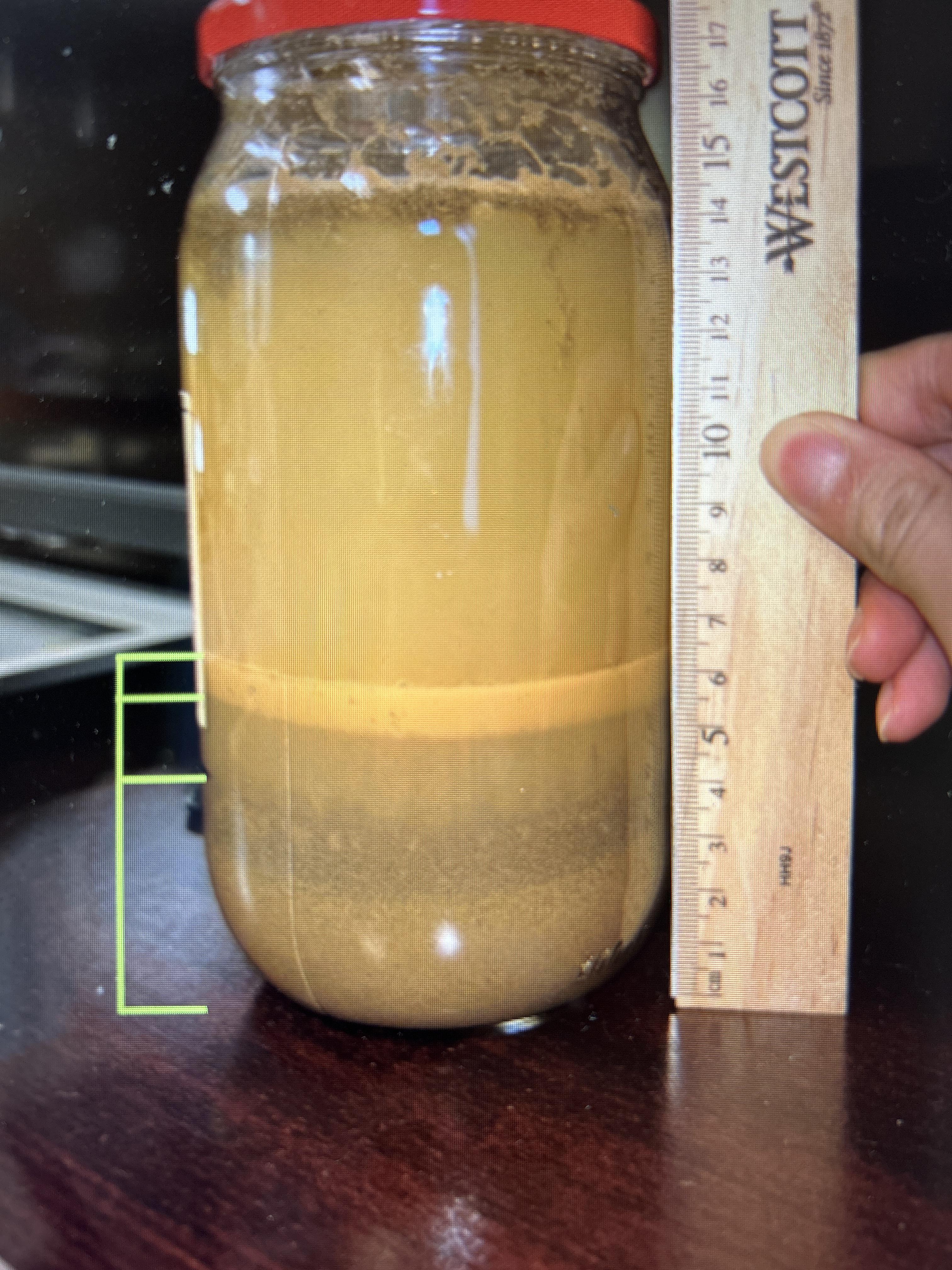
Post image
2 Upvotes

r/SoilScience • • Oct 10 '26

Soil-Transmitted Helminths

2 Upvotes

I'm a biology student conducting an undergrad thesis on Soil-Transmitted Helminths (STH). I need technical advice in performing the laboratory component of this study from anyone who has expertise in soil research.

So, here's the summary of the procedure:

- collect samples and air-dry for 24 hours.

- sieve through 2.0 mm and 0.125 mm pore size to get 2g.

- place 2g soil in a centrifuge tube and add 10 mL 0.05% polysorbate-80 solution (used to unclump sample).

- centrifuge (1,800 rpm, 10 min)

- discard supernatant

- add 8 mL of prepared 1.20 SG sucrose solution (we used commercially available/market refined white sugar [I was wondering if this was okay]).

- vortex.

- centrifuge (1,800 rpm, 10 min).

- add prepared 1.30 SG sucrose solution to the brim until a meniscus forms.

- place coverslip and wait for eggs to adhere for 5 min.

- add 1 drop lugol's iodine on glass slide.

- place wet underside of coverslip facing down to the glass slide.

- view under microscope.

We performed a trial on this protocol before going to perform it on a larger sample. We observed the following:

- no helminths recovered in collected sample (site = household).

- bubbles found in specimen.


r/SoilScience • • Oct 09 '26

Seeking Guidance on My Research

2 Upvotes

Hi everyone, I’m a research student in the UK working on soil stabilisation using bioenzymes. I’m looking to connect with people experienced in this field who could offer technical advice, share relevant research papers, or provide guidance on experimental methods, laboratory testing, and data analysis.
Any help or insights would be greatly appreciated. Thank you!


r/SoilScience • • Oct 09 '26

What kind of soil do I have? Tool.

0 Upvotes

Hi guys! I am obsessed about foundation quality here in Austin so I (more like AI) built a tool for my clients to check soil composition in the Austin Metro area. LMK what you think. https://ezrailson1.github.io/bedrock-soil-tool/