r/SpeculativeEvolution • • 18h ago

Question/Discussion How do I create a planet a biosphere which could exist in real life?

3 Upvotes

I would like to create a planet and biosphere which could exist in real life how I do not know where to start.


r/SpeculativeEvolution • • 12h ago Popcorn

Southbound [SOUTHBOUND] Basking Owls

Thumbnail
gallery
75 Upvotes

r/SpeculativeEvolution • • 53m ago

Alien Life [OC] Invasive Lifeforms: Sky squids (Gigantokremnos gluttonis)

Thumbnail
gallery
15 Upvotes

The photo above shows a mature Sky squid attacking an African elephant. Figure 2 shows a profile illustration of a Sky squid.

Gigantokremnos gluttonis, commonly known as Sky squids, originate from the dimension Threa. Sky squids are a more recent Threan species, with sightings dating as far back as the late 70s, and becoming more common over the years. Sky squids can be found in varying quantities all around the globe, but are most common in densely populated areas.

Sky squids are arguably one of the most alien of all Threan organisms in terms of appearance, with a shape pulled straight out of a H.P Lovecraft novel. Adult Sky squids reach around 14 meters in length, but tissue analysis of "fully grown" Sky squids indicate a larger possible size, but none have been recorded, as they typically are found and killed before they grow any larger. The only feature of the Sky squids that is more striking than their size is their ability to stay airborne despite their immense size. An adult weighs around 5 tons, with the tentacles contributing to 80% of that weight. The giant purple sac above their eyes is filled with hydrogen gas, with multiple internal compartments. There are also hydrogen sacs inside the base helping increase lift. The sac's membrane is thick enough to withstand extreme weather or high velocity objects, but it is absolutely vulnerable to high caliber firearms; in which case the sac will violently explode and kill the Sky squid.

The yellow spheres are often mistaken for eyes, but they are additional hydrogen sacs adorned with markings thought to deter predators native to it's dimension (the likes of which we hope never arrive here). Above these "eyes" are sensory tentacles with filaments that pick up scent and vibrations. Each tentacle (both the grabbing and sensory tentacles) have a singular eye at each end like a starfish's. The Sky squid's mouth is located at the base beneath all of the tentacles, equipped with multiple muscular tentacles with serrated teeth that slice and crush it's prey. The underside of each muscular tentacle is lined with smaller thin muscular filaments that allow the Sky squid to grip smaller objects and prey.

Sky squids are extremely territorial, with territories spanning thousands of square miles, and in the circumstance two same-sex individuals approach each other, they will fight until one dies or forfeits. In some occasions they may even rip small trees out of the ground to use as weapons in fights. Sky squids will consume just about anything that moves, preferring larger prey such as elephants or prey in large quantities such as humans- cattle. Sky squids will often stretch their muscular filaments into a net and capture entire flocks of birds to shove into their mouths. The estimated lifespan of a Sky squid is around 100 years, yet the oldest Sky squid ever recorded was estimated to be only 50 years old. Sky squids reach sexually maturity at around 20 years of age, at that point of time they will seek out a mate. Shortly after mating, female Sky squid will detonate their hydrogen gas sacs and expel millions of resilient fireproof eggs each the size of a grain of sand that will be carried by the wind and hatch into a new Sky squid. These young will often be consumed by birds, bats, and other insectivores as they climb up the food chain and continue the cycle. Males will continue to live on after the female dies, and will mate with multiple females in their lifespan, but in the event that they die or explode, they will also release millions of eggs with genes from their most recent mate.

While most Sky squids are killed before they can become a threat, many slip under the radar and take countless human lives. They are incredibly intelligent, and since each tentacle has it's own brain and eye, they can insert multiple tentacles into buildings through windows and doors and sweep people like an anteater. Despite their vulnerability to firearms, it is illegal to shoot or attempt to kill a Sky squid in any fashion. The reason for this is because the death of any Sky squid, even a premature individual will explode and release countless eggs upon death (premature individuals release clones). Instead, immediately report Sky squid sightings to the local authorities and allow the A.C.A (Anomaly Control Agency) to handle the issue.

If you have any questions regarding Sky squids or Threa, please ask as I attempt to fill the gaps of information regarding this creature.


r/SpeculativeEvolution • • 3h ago

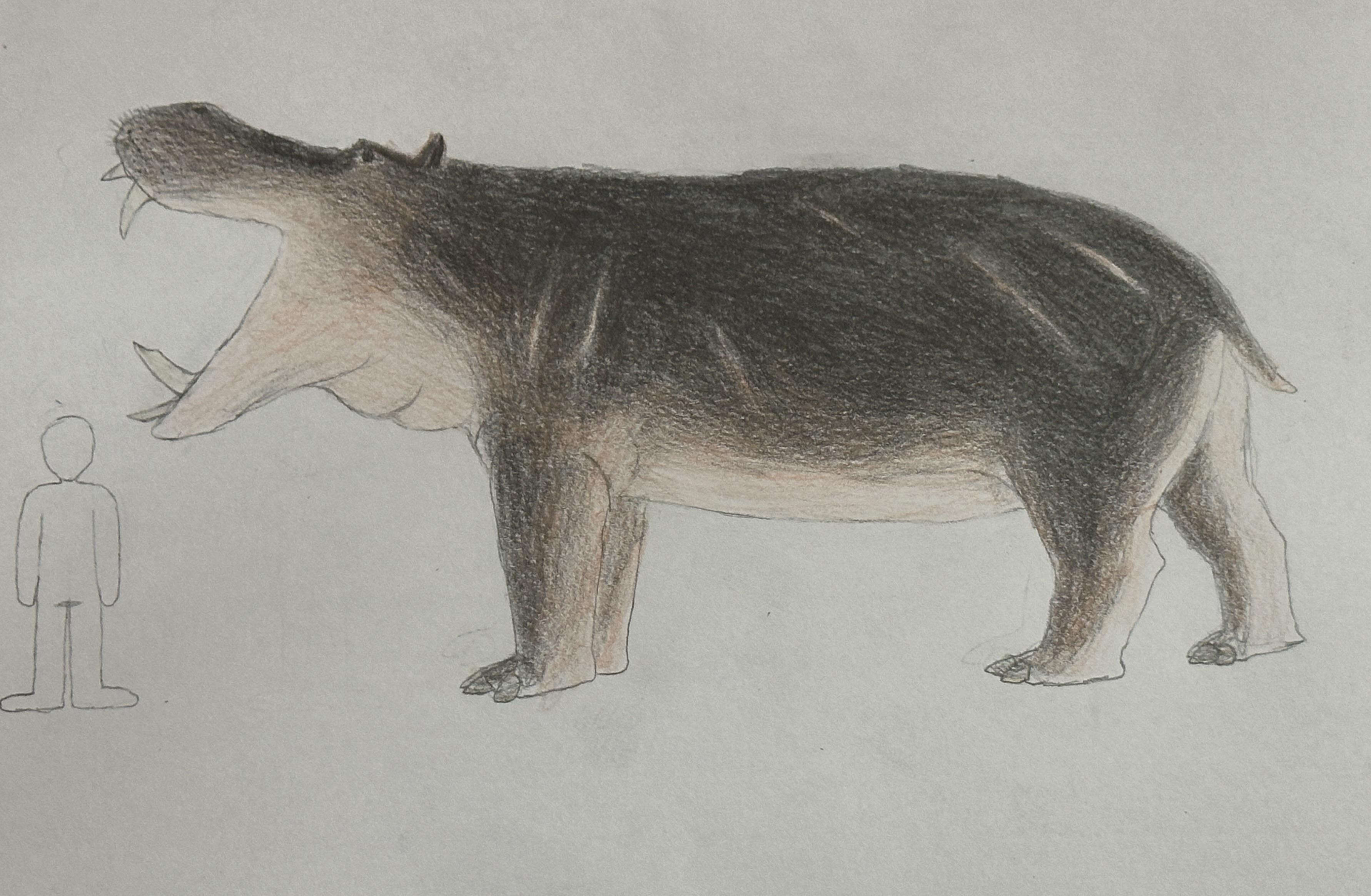
Fantasy/Folklore [OC] Kaho Guba, Behemoth of the Wetlands

Post image
30 Upvotes

The common hippopotamus (Hippopotamus amphibius) is among the most aggressive animals on Earth, killing about 500 people per year. While the same is true on Zaikane, where it is one of the dominant wetland herbivores, there is a much larger species that beats it both in terms of size and aggression.

Morphology + Phylogeny: The Kaho Guba (Hippopotamus behemot), is the largest hippopotamid to evolve on Earth or Zaikane, with bulls weighing about as much as an African bush elephant and females being about half as large. It is a direct descendant of Hippopotamus gorgops that have been transported to Zaikane from the Early-Middle Pleistocene alongside the ancestor of the Jhohun hippo, Hippopotamus antiquus. In a competitive wetland environment south of the Cho’Tali savanna inhabited by large dinosaurs, the behemoth was forced to increase in size to deter both competitors and predators.

Behavior + Ecology: Due to its massive size, thick skin, and terrifyingly high aggression, adult Kaho Guba has virtually no natural predators, with only the apex predators of the ecosystem, the Halungaru (Fluviodrakon abzu) and the occasional wandering Oguro’Qadar, even daring to approach them. However, calves are vulnerable to predation by crocodilians, water panthers, freshwater mosasaurs, terror birds, and swamp-dwelling theropods, so mothers are fiercely protective of their offspring and will attack anything that comes close to them. Male hippos are particularly aggressive to each other, often engaging in fights-to-the-death that leave the loser dead and the winner covered with battle scars that demonstrate his strength. The older the bull, the more battle scars cover his thick skin.
Like its cousins, the Kaho Guba is a mostly herbivorous animal that gets most of its food from vegetation like grasses and water plants. To reduce competition with the common hippopotamus, the river behemoth spends more of its time in deeper water. The Kaho Guba shares its habitat with many smaller wetland herbivores, including but not limited to the aforementioned common hippos, manateest, semi-aquatic ceratopsians, river sloths, toxodonts, water buffalo, and Thescelosaurs. However, by far the largest of these wetland herbivores is the Kaho Aru (Dracopotamus insulamimus), an immense deinocheirid ornithomimosaur that has evolved to be so large as a result of the absence of sauropods in its ecosystem that it grows entire ecosystems on its back. More detail regarding this river giant will be explored in a future post dedicated to it.

Relationship with Humans + Others: Due to its sheer aggression, the Kaho Guba is considered to be one of the most feared animals of the wetlands, having been recorded on several occasions killing people. In fact, more human deaths were caused by this creature than any predator or even the common hippo. As a result of this aggression and might, one tribe of native people of the wetlands, the Chatuja, revere a god of war and death named Jahui Qojaga (translating to “he who rampages”) who can shapeshift into a giant hippo. Heavily associated with this war deity is the Qojagan Ajobuko Auba (translating to ”Rampaging Beast of Death“), a mythical creature resembling a giant, many-horned hippopotamus that is covered in glowing red scars, breathes fire, and shakes the ground with its footsteps.

————————————————————————————————————————————————————————————

Zaikane is a planet in a distant solar system characterized by waves of life harvested from Earth at various points in its geological history, ranging from the Cambrian to the Holocene, and set free to evolve along evolutionary paths independent from those taken by their Earth ancestors. A godlike interdimensional entity, known as the Allmother by the people who live there, is what is responsible for creating the portals that abduct Terran life and deposits them on Zaikane. Because the asteroid that ended the Mesozoic never collided with Zaikane, dinosaurs continue to dominate the planet’s ecosystems as its dominant terrestrial megafauna, though mammals are still doing very well and, in some cases, are even thriving.


r/SpeculativeEvolution • • 3h ago Bravo

Future Evolution [OC] Flosos Oukigua (yt vid attached)

Thumbnail
gallery
123 Upvotes

The Flosos Oukigua belongs to a family that has gradually mastered the art of deception, the krinocadinae. The neck and head of early species that belong to this family resemble vines–their body below their shoulders (or technically their hips) is much thicker and serves primarily to plant the body in place, most species utilizing their tail as a third limb in a tripod-like manner. These species would patiently wait for a small animal to scurry on by, at which point they would then lunge at it and grab it before quickly swallowing it and returning to hiding. They use their little metabolic trick mentioned earlier here, slowing their metabolism while awaiting a prey item.
As time moved forward, different species would specialize, gradually shifting from vine-like heads and necks to mouths that resemble flowers, as their prey items were commonly pollinators and those that prey on them. The Flosos Oukigua itself mimics roseacea lilies, a large, pink, 5-petaled flower common in the territory where the Oukigua lives.
https://youtu.be/-Nx_mCCOLLk?si=flvvBv34846IBkXc


r/SpeculativeEvolution • • 3h ago

Alternate Evolution [OC] Terrors In The Brush: Chapter XI, Massacre

Thumbnail
gallery
2 Upvotes

This is the climax of a speculative paleo-fiction project which blends family drama with a fantastical yet grounded prehistoric atmosphere, showing raptors and other lost creatures fighting to stay alive in a brutal ecosystem.

An ecosystem doesn't just die; it rots from within.

The calm at the oasis was never meant to last. While Long Tail and her sons struggle to hold their fractured family together alongside their armored companion Big Green, the Dinopithecus troop across the water tears itself apart in a brutal struggle for dominance.

Worse still, the chaos on the shore wakes what has been waiting patiently beneath the waves. Giant, starving aquatic hunters erupt from the depths, set to turn a desperate refuge into a frenzy of snapping jaws, trampling herds, and cannibalistic bloodlust.

When the water turns red, only the ruthless—or the loyal—walk away.

Read Chapter XI Now.


r/SpeculativeEvolution • • 3h ago Bravo

Fan Art/Redesign [OC] [Media: Pokemon] Two more Pokemon designs

Thumbnail
gallery
16 Upvotes

Attached below are two species of Pokemon redesigned into being plausible but fantastical creatures inhabiting an alternate “Earth”.

Ferroseed is depicted here as a type of terrestrial echinoderm covered in an incredibly dense test to defend itself from various predators in its environment.

Porygon 2 is depicted as a Johto species of Porygon, which are depicted as aquatic ornithomimosaurs (which were chosen because idk what to do with their big tails)

Enjoy and I will post more as they are finished!


r/SpeculativeEvolution • • 4h ago

Question/Discussion Could a lizard evolve to ride on birds for transport?

4 Upvotes

Perhaps it initially starts off as a kleptotherm or something, and then evolves a way to stay on the bird for long periods of time. It could potentially use the bird to transport itself long distances and avoid cold seasons.
Interesting, right??


r/SpeculativeEvolution • • 4h ago

Question/Discussion [Credit: Wikipedia, OC] (image in body text) does a 'lineage' section in the taxonomic rank make sense?

1 Upvotes

idk how else to ask but does this make sense it would be something that is alive then the lineage being in my planet that there are 3 LUCAs that began in different places under different conditions then the rest is still the same is the name going to be confusing does this already exist. also, if you need more info please ask.


r/SpeculativeEvolution • • 4h ago Bravo

Alternate Evolution [OC] I’ve found a mechanism to produce fire. The dragon is nearing completion.

Post image
38 Upvotes

I am making a dragon that not only looks and feels like a dragon from movie and myth, but acts like one too. Through utilizing my knowledge of physics, biology, chemistry, and evolutionary history, and consulting with experts, the resulting creature will be so real that it would function perfectly in reality without chemical or physical laws hindering its existence. Functionally the only barrier between it and being real would be evolutionary circumstance.

With the help of another creator (will be credited after I prove the chemistry works), I have found a possible mechanism through which the creature can produce fire by means of Acetone integrated fatty acids and an oxidation reaction using a form of iron sulfide. I will experiment with this idea irl and take recordings and measurements of the materials, their conditions, and the resulting reactions. Afterward I will attempt to make a replica of the internal biological structure that would store the substances and produce the flames.

When I’m done I will create a long form documentary style video diving into the creature’s biology, ecology, history, and tackle adjacent topics such as weight distribution and aerodynamics. Its goal would be entertainment, education, and creativity inspiration.

Despite this idea being promising, there is no guarantee this proposed reaction will succeed. So if anyone has liquid fuel based fire spitting proposal ideas, let me know. I’m open to all suggestions


r/SpeculativeEvolution • • 5h ago

Question/Discussion How would a worm that formed a pseudo skeleton work?

2 Upvotes

Recently got the idea to make a spec evo of the death worm and I was wondering on how a internal structure would work with muscle, I got how it gained it and what it's made of ( it is a chitin parallel with a base of iron). I feel like I'm alone in this concept


r/SpeculativeEvolution • • 5h ago

Seed World Apterra mini update: Squamifaunation is now underway

1 Upvotes

Squamifaunation is the event currently sweeping Apterra. For the first 18 million years post-abandonment, the lizards of this world (descended from the critically endangered crested gecko) have been isolated to one region, an island continent called Aglirium. A giant raft of floating algae and vegetation has just arrived from the south, forming a “land”-bridge that allows organisms to cross both ways, to and from the mainland.

The articles in this series operate on a logarithmic timescale. The first one deals with the first ten years of the interchange, the second covers the ensuing century, the third covers an entire millennium, etc., with the final planned entry taking place a million years after the first.

We haven’t had a detailed look at Apterra’s reptile fauna since the Early Arthrocene, over ten million years before the time of Squamifaunation. Now it’s time to see who lives and who goes extinct in the face of the wider world.

Today’s update includes writings on:
- The Southern Kelpway
- The Last Correton
- Some of the Aglirian Glires

The next update will finish out the Glires article, most of the Diversity of Small Geckos, and add illustrations to all four, before we move on to the major updates after 100,000 and 1 million years.


r/SpeculativeEvolution • • 8h ago

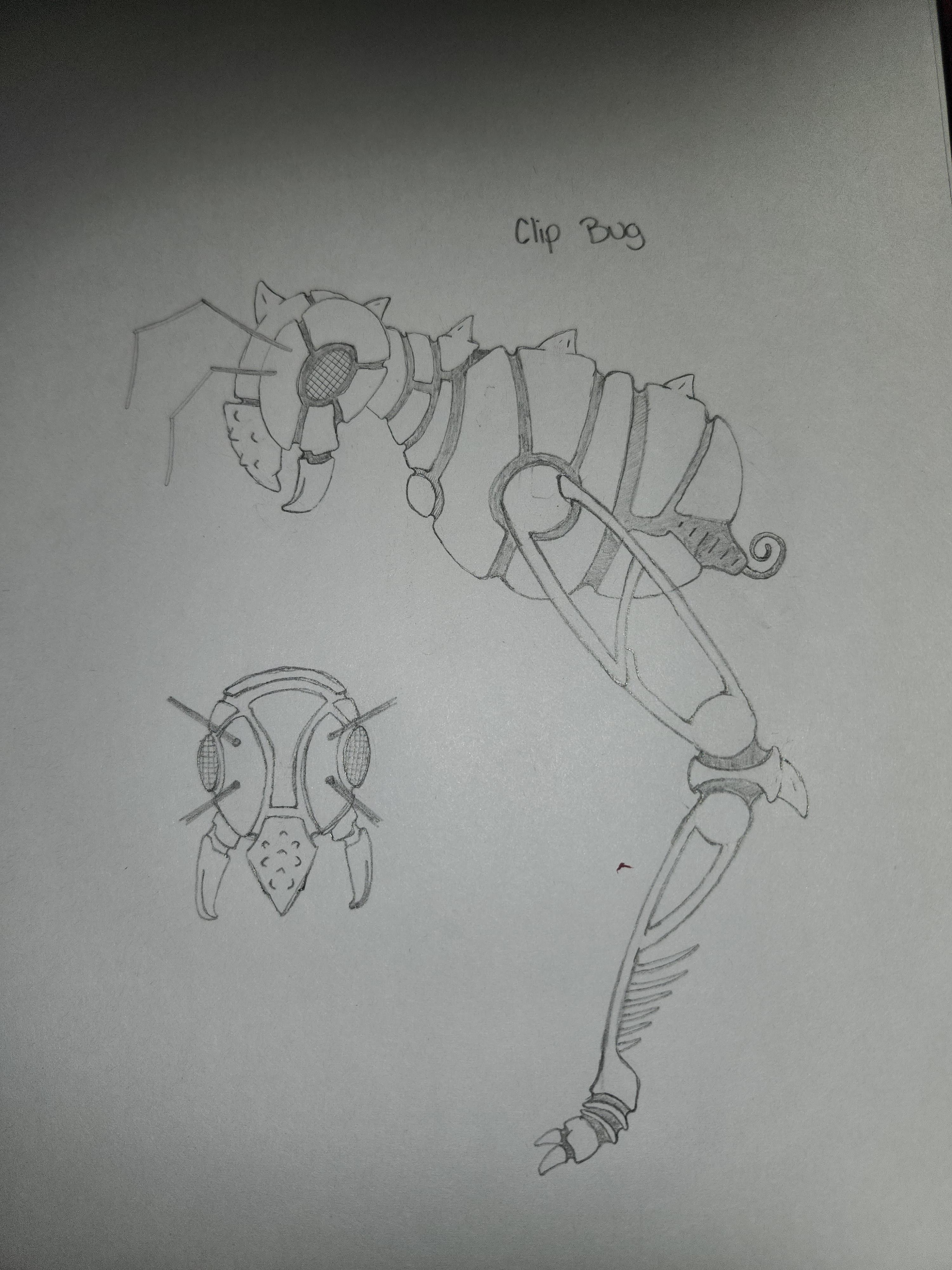
Alien Life [OC] Clip Bugs : Castoria III

Post image
20 Upvotes

Another interesting find from the Swamps of Castoria III. Clipbugs can be found perched at the edge of waterways, hunting for small fish and slug-like invertebrate. They lay their eggs at the edge of the water, covered in a toxic mucus to keep predators away. When escaping danger, they use the tension of their bent legs to jump several meters at a time. They are often predated upon by pygmy vore, heron vore, cone snails and more. Voracious predators, they prefer hunting water based organisms, using their 4 antennae as a lure to mimic insects and organisms which stand on the waters surface.


r/SpeculativeEvolution • • 9h ago

Uncategorized Speculative Biology [OC] Sophoncember's Prompts (Monthly Challenge)

Post image
5 Upvotes
  1. First Spark – (A nod to the Spectember 2025 opener, "First Steps") The initial spark of intelligence and self-awareness; an early intelligent species that uses primitive tools or has become conscious of fire and the natural world.
  2. Look Ma, No Hands! – A species capable of complex engineering without the use of hands or opposable thumbs (masters of beaks, probosces, tentacles, or tails).
  3. Talk to the Tentacle – A communication system that allows for philosophical discourse without the need for vocal cords (utilizing color changes, bioluminescence, pheromones, or seismic dances).
  4. We Are Legion – A hive or colony intelligence where an individual is simple-minded, but thousands combined form a single, genius-level collective mind.
  5. Under the Sea (No Fire Allowed) – An aquatic intelligence that has built a civilization in an underwater environment where kindling fire or smelting metal is impossible.
  6. Brains All the Way Down – A decentralized mind that lacks a single, central brain within a skull, instead thinking through a network of neural nodes distributed throughout the entire body.
  7. Tools That Bite Back – A civilization that, rather than using inanimate stone or metal, employs "living technology"—shaping other living animals and plants through artificial selection.
  8. Smells Like History – A culture that records its history not through stone or paper, but through complex, long-lasting archives of scents and chemical traces that persist across generations.
  9. Sky-High Society – An airborne species that has established a civilization in the skies, navigating the constraints of lightweight bones and limited energy reserves while retaining the ability to fly.
  10. Daredevil Architects – A species that lacks the sense of sight entirely; Blind architects who "see" the world entirely through sonar, touch, or magnetic fields, and who construct massive cities.
  11. The Gentle Giant (or Apex) - A species that evolved from a fearsome predator at the top of the food chain, but—thanks to its intelligence—has transformed into a peaceful or agrarian culture.
  12. Symbiotic Odd Couple - A single civilization formed through an obligatory partnership between two entirely different species, with one providing physical strength and the other providing intelligence.
  13. Party of One - Reclusive geniuses who do not form herds or tribes, living their entire lives in complete solitude, yet still managing to accumulate knowledge.
  14. Thinking Rocks - A non-biological, geological form of consciousness that thinks through the vibrations of crystal lattices rather than carbon-based structures or nerve cells.
  15. City on Legs - A nomadic civilization that, due to harsh climatic conditions, lives on the backs of colossal creatures or within mobile convoys rather than in stationary cities.
  16. Puberty Hits Different - A species that, throughout its life cycle, undergoes radical transformations—akin to a caterpillar turning into a butterfly—passing through entirely distinct stages of intelligence and social caste.
  17. Good Vibrations – Acoustic engineers who "hear" the world around them—and each other—by weaving vast webs or vibrating strands.
  18. Live Fast, Think Faster – Short-lived intelligences with lifespans of only a few months or years, yet capable of building massive civilizations through genetic memory or hyper-rapid communication.
  19. A Century Per Sentence – Colossal, slow-moving sages who live for centuries and take days to construct a single sentence.
  20. Down Is Just an Opinion – Space-dwelling natives who evolved in zero-gravity environments or asteroid belts, and for whom the concepts of "up" and "down" do not exist.
  21. The Longest Night – (Winter Solstice Special) A civilization that has developed collective hibernation or specialized rituals to survive the months-long darkness of their planet’s winter.
  22. Wood-Wide Web – A collective plant-fungal intelligence that has emerged over millions of years within a vast forest, with organisms interconnected via their roots or mycelial networks.
  23. Recycling Grandma – A culture that, rather than burying its dead, actively repurposes the skeletons or shells of its ancestors as tools, armor, or architectural elements.
  24. Ant-Sized Einstein – A miniature civilization where insect-sized individuals coordinate to operate machinery and tools many times larger than themselves.
  25. Shocking Personality – A species whose nervous systems interact directly with external electric fields, allowing them to "communicate" via living cables and energy conduits.
  26. Too Cute to Survive – A civilization that underwent self-domestication, losing its aggression but becoming physically, and critically, fragile in the process.
  27. One Planet, One Mind – A planetary super-intelligence that encompasses the entire world as a single organism, with no concept of the individual. 28. Back to Monke Qera-A species that once established an interstellar civilization but, thousands of years ago, lost its intelligence and techology, regressing (de evolving) back into a wild, primitive state.
  28. Back to Monke (Feral) – A species that once established an interstellar civilization but lost its intelligence and technology thousands of years ago, reverting to a wild, "de-evolved" state.
  29. Touchy-Feely Art – A culture that has no knowledge of visual arts (such as painting or sculpture), instead creating art based on touch, temperature fluctuations, or taste.
  30. What's a Sky? – A civilization that evolved within subterranean cave systems—due to radiation or extreme cold on the surface—and is entirely unaware of the existence of stars.
  31. First Contact (The Parade) – (A nod to the classic Spectember finale, "Parade of Lifeforms") The moment when two or many different species you designed throughout the month for Sophoncember encounter one another for the first time!

▪▪▪▪▪▪▪▪▪▪▪

November hasn’t ended yet; in any case, wait until Tuesday, December 1st—let’s start only after that day.

Anyway, this is my final post regarding Sophoncember for now—at least until December 1st.


r/SpeculativeEvolution • • 9h ago

Question/Discussion Plant biomass limits?

5 Upvotes

Hi, speculating an ecosystem with much larger predators/prey than exist on earth, and potentially in larger quantities also (picture the old American bison herds, but if all the bison were the size of a humpback and being hunted by equally massive predator populations) my justification is that the plants are just whatever the photosynthetic equivalent of the gigachad is, utilising fat more of the available sunlight and growing so fast and in such great quantities that herbivores just don't run out of food. My question is how would a plant have to be adapted to be able to act in this way/what would the limiting physical factor on plant biomass be in this case?


r/SpeculativeEvolution • • 9h ago Bravo

Fan Art/Redesign [OC][Media: Godzilla] My design of Ziz (The Giant Condor) and his lore for my spec evo project :D

Thumbnail
gallery
34 Upvotes

Howdy yall ^w^

Back again with the third member of our beastly trinity, finishing off Behemoth and Leviathan's group with Ziz (AKA the giant condor)

If any of you guys read the bios for Behemoth and Leviathan, this is the undecided bird kaiju that participates in the battle at the end. Buuuuut enough yap, Ill get to the lore now ;}

A rarer case for the happenings of this world, this MUTO was actually born on the surface, not native of course, its predeccesors moved up from the Hollow Earth during the Xo Zla Halawas massacre just before the Titan War. Born in the Siren Isle Archipelago, where most of the surface dwelling members of his species remain, which he left after reaching adulthood. On the search for new new territory it flew through many areas, sparking legends everywhere it went, and having many homes it stay at briefly. In 1952, it flew over london, its massive wingbeats mixed with a change in weather resulting in smoke getting caught down lower, causing the Great Smog of London. Years later, after the formation of monarch, it would be spotted attacking Godzilla off the coast of Letchi Island, fleeing the brief fight and letting Godzilla feed on the car sized Lobsters in the waters. After this fight, Ziz lived peacefully on this island, being watched by monarch after they shut down and chased off the emerging ecoterrorist group. After several quiet decades, Ziz attacked the nearby islands, spurred on by Ghidorahs mass awakening, afterwhich he returned to his own island. After some more years of peace, Godzilla called all MUTOs into war after he mutated into the XZH state, and Ziz followed his orders. Arriving at Godzillas posistion at the same time as Behemoth and Leviathan, the three watched as godzilla finished off methusulah. Leviathan and Ziz were ordered to kill Behemoth, who was outraged by Godzillas actions and was going in for the kill. The three fought, killing each other as Godzilla watched, with Behemoth being the last one standing, bleeding out next to Leviathan.

Hope you guys liked the art and the story :D

Any suggestions or constructive criticism are welcome, so lmk what yall wanna see next.


r/SpeculativeEvolution • • 13h ago Bravo

Uncategorized Speculative Biology [OC] Olgoi Khorkoi P2

Post image
7 Upvotes

{This is the most known Death Worm}:Vermoraptoriales crastinus itself is a large predator native to deserts and canyons. It grows up to 12-16m length, 7-10 tons in weight and has a biteforce at the beak of 20k newtons but possesses a PSI of 5-7k. Vermoraptoriales are ectothermic and live upwards of 200-250 years. However their caloric limit is based on their lifestyle and movement, as sand is very dense. To help with that, Vermoraptoriales and all other Death worms can feast on rock if it is melted by their acid Vermoraptoriales are coapex predators and only suffer predation in youth and from Carcharodontosuchus. They can comfortably feed on anything they can tackle, by opening their ginormous mouths filled with razor sharp teeth and forcing prey down through the throat, where the beak lies.These giant animals are hermaphrodites and lay hundreds of thousands of eggs, guaranteeing at least some will survive. Often filter feeding death worms and middle sized animal devastate the majority. To distract them, they lay bigger unfertilized eggs too which can also serve as nutrition to juveniles. Vermoraptoriales have excellent smell and eyesight but poor hearing. They can also track animals using their electric tentacles. But their intelligence falls short. They can swim in the sand at 8-9km/h cruising or 17-20km/h in ambushes. They also need a absurdly low 25-30kg of food daily


r/SpeculativeEvolution • • 13h ago

Uncategorized Speculative Biology [OC] Olgoi Khorkoi?

1 Upvotes

Olgokhorkoidea or the Death Worms are a rich and diverse superfamily of Reptoriales organisms hailing from sand and ice deserts.

{GENEALOGY: Reptoriales-Vermiformes which brings us to 2 superfamilies which have the Olgokhorkoidea and its close relatives such as Charybdis or Bahamut. The Olgoikhorkoidea has the Albovermidae, having the animals Cryovermis(gladiator or nordicus, growing at 50-70cm length), Albovermis(imperator, macrocephalus and populator growing at 75-110cm) and Vermodon albae at around 60-80cm in length, all of them being omnivores. The second family is the Vermicetidae, having as most important animals Vermicetus(mammuthus, irritator, globidens growing at 8,5-11m), Saurovermis(dinocephalus and microcephalus, at 6-8m) and Globivermus deserticus at 1-5m in length. They are disposed in 8 genuses and either filter feed or are herbivores. The 3rd family and the most common are the Vermoraptorialidae, carnivorous and herbivorous animals. The most important are Vermoraptoriales crastinus at 12-16m, Sarcovermis laniator at 7-9m and Vermoides clicostoma at 0,2-3m. All Olgoikhorkoidea possess a mouth divided in 5 parts, a fringe with 4 lobes possessing either razor sharp teeth or fanons and an additional set of fanons or a sharp beak. All have 3 eyes with a stalk one being 2 fused and they all possess acid producing glands and electric organs, although only some can fire it. They mainly use acid to slowly chip through rock.}


r/SpeculativeEvolution • • 13h ago

Question/Discussion Bipedal Body plan for maxium strength?

2 Upvotes

What should i consider when trying to design a animal that is bipedal because they can uses tools but evolved for maxium strength for their size


r/SpeculativeEvolution • • 16h ago Bravo

Alternate Evolution [OC] Hypothesis III - Walking reef

Thumbnail
gallery
61 Upvotes

I have given up on trying to make my beast swim, this was a futile venture from the beginning. The bones provide no evidence for such a lifestyle and I have been a fool for thinking otherwise. Science however is done by fools who do not give up trying, so I have come up with a new hypothesis.

The creature could have once trudged on the seabed of shallow waters. The length of its neck could have either served for breathing (since I have not found proof of this thing possessing gills) or for coral and vegetation to grow in a sort of a symbiotic relationship. The raised elevation of its head and neck would have meant more light reaching any plant perched on them. I myself must admit this to be a stretch of imagination, but during yesterday's examination I have noticed some nodules on the bones that I find inexplicable otherwise. There has also been some unidentified plant matter fossilised alongside the skeleton, which could further support this flabby hypothesis of mine.

Oh, and the best of news, I have finally arranged for the fossil to be transported to my study. I know not how I shall fit it here, but where is a will, there is always a way. If all goes well, I'll manage to string it together to study it as a whole, not just a pile of misplaced bones.

//Here you can see previous hypotheses: https://www.instagram.com/it_came_from_the_crypt/