r/Splunk • • 1d ago

Splunk Enterprise Issues with Heavy Forwarders

4 Upvotes

We have 3 HFs receiving data from UFs and sending them to Splunk Cloud.

At this point, 1 of the HFs is working as intended but the other two aren't.

The first issue was that the splunk service needed to be restarted on both HFs so that it would start listening on ports 9997 and 8000.

I re-downloaded the UF cloud app and re-installed it on each HF. After that I did see some data from one of the HFs.

I checked again this morning and no data was coming from one of the HFs at all.

I decided to troubleshoot just one UF to see if I could find an issue. The UF had the spkunk service running. The network firewall showed traffic over 8089 to the deployment server and 9997 to the HF. I used tnc to try to connect to port 9997 on the HF but it failed. I checked the HF and it wasn't listening on port 9997. I checked the inputs.conf file and it had the reference to splunktcp:9997. I restarted the Splunk service again on the HF and it started listening on port 9997. I tried the tnc command again from the UF and it still failed. I checked the Windows firewall on the HF and it allowed port 9997. As a test, I disabled the windows firewall and later re-enabled it and allowed all traffic but tnc still failed over port 9997.

Yes...I know...I should look at log files at this point but any idea why the HF won't let me connect to port 9997?

r/Splunk • • 1d ago

[Hiring] Senior Observability Platform Engineers | Bengaluru | Purely Hands-on Engineering Roles

7 Upvotes

Hi folks,

I'm helping a friend who is building a global Observability & Reliability Engineering practice at a large multinational enterprise. They are looking for exceptionally good, hands-on engineers who are passionate about technology and solving complex engineering challenges.

Looking for deep, demonstrable technical expertise in at least TWO of the following technologies:

- Splunk (Enterprise, Cloud, ITSI, Observability Cloud)

- Cribl

- ELK / Elastic Stack

- Grafana

- OpenTelemetry (OTel)

- SolarWinds

- Cisco ThousandEyes

What they are looking for:

- Engineers who can independently architect, build, deploy, configure, integrate, administer, upgrade, optimize and troubleshoot these platforms.

- Strong understanding of telemetry pipelines, logs, metrics, traces and distributed systems.

- Experience engineering and scaling complex, large-scale enterprise deployments.

- Strong technical troubleshooting and problem-solving capabilities.

- Passion for automation, platform engineering and eliminating manual operational dependencies.

- Curiosity and willingness to explore emerging technologies in the observability ecosystem.

Who should NOT apply:

- Professionals primarily engaged in managerial, supervisory or coordination-oriented roles.

- Engineers predominantly involved in BAU operations, L1/L2 support, dashboard monitoring, alert handling, incident coordination or ticket management, without substantial platform engineering experience.

- Professionals who are consumers of observability platforms rather than builders and technical owners of these platforms.

- Certification-heavy profiles without demonstrable hands-on engineering expertise.

To be clear, these are core platform engineering roles, NOT conventional monitoring or operational support roles.

These are senior individual contributor positions with an opportunity to build, modernize and shape the future of observability across a complex global technology landscape.

If you are someone who prefers getting your hands dirty with technology, enjoys solving complex technical problems and wants to continue growing as an engineer rather than moving into management, this could be an excellent opportunity.

If interested, please DM me with the following details:

- Core technical expertise (tools and proficiency)

- Total years of experience

- Relevant hands-on platform engineering experience

- Current CTC

- Expected CTC

- Current location

- Notice period

- A brief description of an interesting or technically challenging observability solution you have personally built or implemented

Happy to connect suitable candidates directly with the hiring team. All information shared privately will be treated confidentially.

Referrals to exceptional engineers are equally welcome!


r/Splunk • • 1d ago

SOAR handling recurring benign alerts without suppressing them in Splunk SOAR

1 Upvotes

say the same detection keeps opening cases for a user doing something that's been investigated before and marked benign.

suppressing it completely seems risky since the context could change, but adding another playbook branch for every recurring exception isn't ideal either.

looking at Mate and Prophet alongside Splunk SOAR, one interesting question is whether previous investigation findings should live in SOAR itself or in a separate context layer.

how are you reusing previous findings without automatically treating every new occurrence as benign?


r/Splunk • • 2d ago

Enterprise Security Retired our 600-line AD exclusion CSV today. Anyone else moved from Kerberoasting baselines to deception-based alerting?

30 Upvotes

This morning I finally deleted the 600-line lookup CSV behind our 2023 lateral movement correlation search in Splunk ES. Nobody wanted to touch it, and for almost three years it fed a rule on Event IDs 4769 and 4624 that made up a big share of my morning notable queue: backup jobs, new developer service accounts, patch Tuesday jump box reboots.

The statistical baseline approach looked good on paper, but in practice every workflow change from IT ops meant a new exclusion or a round of "did you mistype your password over VPN at 3am?" messages to people in finance.

We replaced it with deception: AD honey accounts and agentless honeytokens (we're using Acalvio) feeding Splunk. Since no legitimate user has a reason to touch those accounts, the alerts are close to binary, and the ingest impact is small. It's early, so I can't say yet how it holds up against a determined attacker who recognizes lures.

For other Splunk engineers and hunters: what are you using to catch Kerberoasting and stolen credentials without maintaining giant exclusion tables? Tuned baselines, other deception tooling, something built on 4769 ticket encryption types? And if you've run honeytokens for a while, what went wrong?


r/Splunk • • 2d ago

SOAR how much playbook maintenance is too much??

4 Upvotes

at what point does adding more branches to SOAR playbooks stop being worth it??

you cover the common alerts, add enrichment, handle the weird edge cases, then a new detection comes along and you're back changing things again.

been wondering where the line is between keeping everything deterministic in Splunk SOAR, using something like Tines for the workflows, or moving the less predictable investigations to AI SOC tools like mate.
for people who've tried different approaches, what parts would you absolutely keep as traditional playbooks?


r/Splunk • • 2d ago

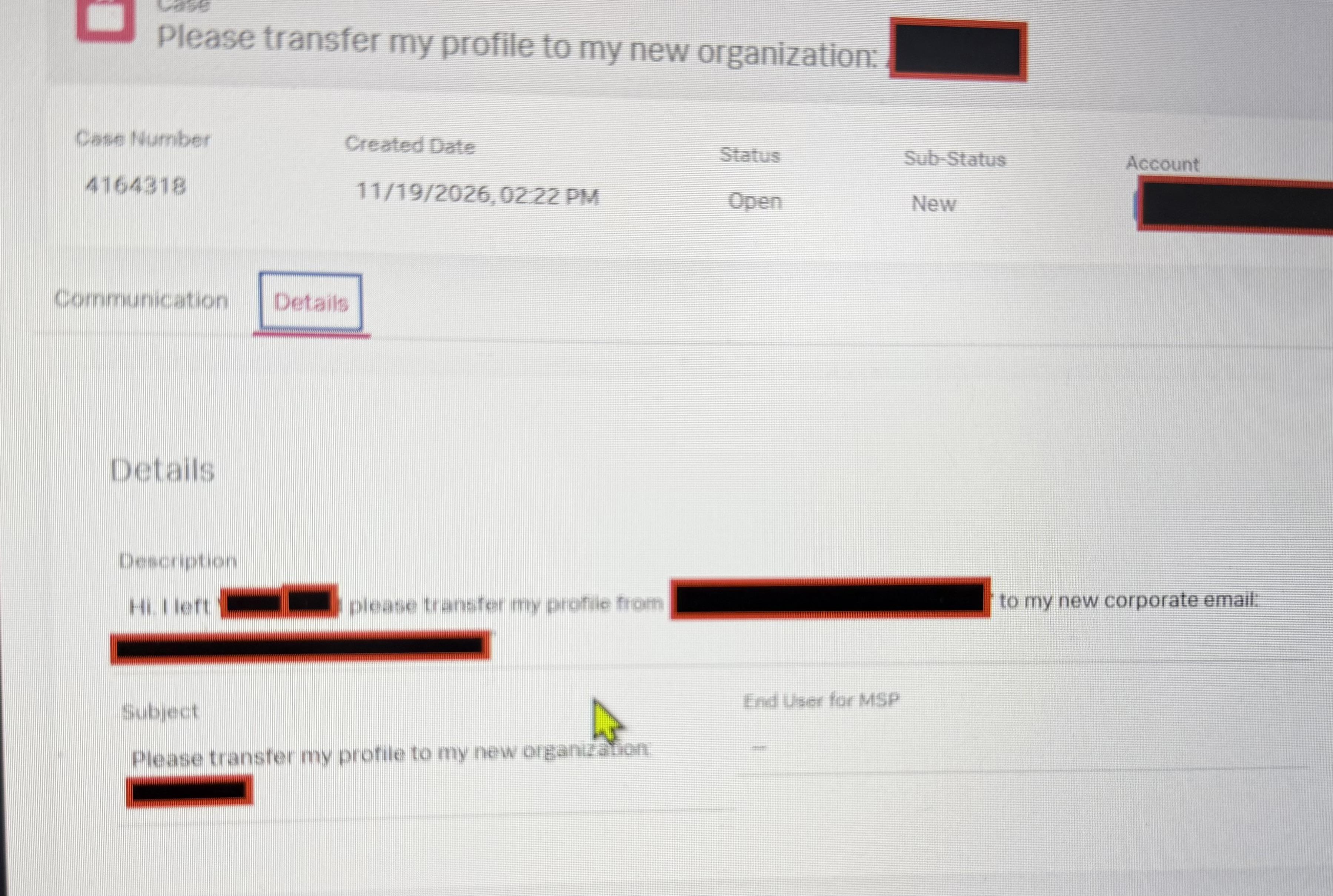
Does support pickup cases/requests like these?

Post image
8 Upvotes

i transferred to a new org and wanted to update my profile instead of creating a new one. i did this way way way way back and just sent an email. it was successful. i raised this ticket a few days ago and hasn’t been picked up yet.


r/Splunk • • 2d ago

Technical Support Why does testing a new detection take longer than writing it?

2 Upvotes

I work in detection engineering, and the rule itself is rarely what eats the time. It’s getting a test host into the right state, running the technique, then tracing the event through EDR and SIEM to work out why the alert did or didn’t fire.

Atomic Red Team is fine when I’m checking one thing. The problem is when I have a batch of rules to validate, or I need to rerun them after an EDR or parser change. By the time I reset the host, rerun the behavior and chase missing fields, half a day can disappear. Is it worth adding AttackIQ or Cymulate for this kind of repeat testing? I’m trying to stop every retest from turning into another setup job.

For people doing this regularly, what actually saved you time?


r/Splunk • • 3d ago

CI/CD

17 Upvotes

Not sure how other people are doing this but I just thought I would put forward the approach that I am taking with my team towards our Splunk Environment... my previous managers came from a Network/Infrastructure background so would do everything via CLI. As we were growing our environment all of the .conf files were done in /system/local/ - this was before we had a deployment server, cluster manager and search head cluster deployer.

All of our custom JS applications were built on a standalone search head and we are now migrating these across into the search head cluster, so I am curious about the approaches others have used...

We are using Gitlab, and here is my structure

Splunk

- CI Templates

-- ds.yml (deployment server /deployment-apps)

-- shcd.yml (search head cluster manager /shcbundle)

- DS Apps

-- (individual splunk apps containing .conf files, scripts and relevant JS for indexers, HFs and UFs)

- SHC Apps

-- (custom JS applications containing .conf files, appserver/static/css, js and image files)

All applications include a .yml file that references the relevant CI template where I am looking to introduce:

- When my developers create a branch and commit then as part of the template yml files the updates are applied to the standalone search head, triggering a reload of the app via API.

- When they request a merge to main and it is approved, this then triggers the updates to the relevant DS or SHCD, triggering a push via API.

Where passwords are required in the .conf files, I hash the passwords in gitlab and then replace the passwords when the apps are pushed out. We are also using 'rsync' and gitlab runners installed on the DS, SHDC and the standalone search head.

Curious what approaches other people are using with CI/CD and if others are using an IaC approach for their environment with Ansible or any other automation platform?


r/Splunk • • 9d ago

I need someone to help me

0 Upvotes

This is my issue , and the i am sure the ip is correct and the key also is correct , but I do not know what was happening?

Could not contact manager. Check that the manager is up, the manager_uri=https:// and secret are specified correctly.


r/Splunk • • 9d ago

In Schema battle: CIM > UDM

10 Upvotes

I will not elaborate further. 🥴


r/Splunk • • 13d ago

splunk admin exam

1 Upvotes

I have obtained the Power User certification and have now been assigned to complete the Admin certification. Could you advise on the best way to prepare for the Admin exam? Additionally, how much preparation time should I expect, and is the Admin exam significantly more challenging than the Power User exam?


r/Splunk • • 13d ago

Aws firewalls

11 Upvotes

I want opinions on whether people would agree that our SIEM Splunk cloud should be ingesting firewall flow logs.

Currently we only receive firewall alert logs which basically only tell us when something is blocked but flow logs in my opinion is more important.

Ive tried raising this with the business but they don’t seem to agree its importance as they’re worried about its cost and the logs are in aws.

Whats everyone’s thoughts?


r/Splunk • • 16d ago

Help with splunk search

5 Upvotes

Hi

I've been asked to provide a report of logons to endpoint in our environment, which uses AD. Would that be event codes 4624 from Microsoft? Are there any apps that provide this info in a report already?


r/Splunk • • 16d ago

Looking for cybersecurity pros in NYC for YouTube

0 Upvotes

We're producing YouTube videos to bring entertaining content to the world of cybersecurity.

We're currently casting cybersecurity experts in NYC to be subjects in one or more of our videos. This will include clearly explaining cybersecurity concepts, reacting to different videos or stories, and offering thoughts and advice. You will be compensated for your participation and we will ensure you have a fun day on set!

If this seems of interest to you, please fill out the Google Form below. If you are a good fit, we will reach out for a follow-up call.

Deadline: EOD Tuesday, November 10, 2026

Talent Interest Form


r/Splunk • • 19d ago

Copilot logs

18 Upvotes

Was anyone able to ingest their copilot logs into their Splunk instance? If so how did you do it?

Ex: I’m looking to ingest the prompt info (query and response), agent interactions with Apps, audit logs


r/Splunk • • 21d ago

Technical Support Detection drift after Sysmon config change

6 Upvotes

We rolled out a tighter Sysmon config to cut log volume. Worked, bill went down. Problem is a handful of our Splunk ES correlation searches went silent at the same time and nobody noticed for a while.

Some events still show up in search, but the Sysmon event types those searches depend on aren't all getting collected anymore. We replayed the behaviour with Caldera so we had known-bad activity to test against, and that confirmed which searches stopped firing.

What I don't have is a way to re run that after every config change without someone doing it by hand. Picus and Cymulate both came up while looking at ways to test SIEM rules against simulated attacks.

Anyone using either of those, or something else, to catch detection drift after logging changes? Just want to know how many other searches are quietly broken.


r/Splunk • • 21d ago

SPL Anyone using backtesting with Anvilogic, Mars or Vega? Real-world experiences

4 Upvotes

My company is evaluating whether to actually validate detection rules against our own telemetry before they reach the SIEM, and I'd love to hear from anyone who's actually tried it with Mars, Anvilogic or Vega.

A few things I'm curious about:
Native backtesting, detection as code pipeline, or manual replay?
What are you actually using it for, and has a rule ever looked clean in backtest but behaved differently in prod?
Do you backtest everything or just the data sources the rule touches?
Any pushback from SOC or leadership about trusting backtest numbers?
If you've used more than one, how did the backtesting compare?

Appreciate any lessons learned, good or bad. Thanks!


r/Splunk • • 21d ago

Sharper ES Detections, Agentic AI Integrations, Smarter Workload Management, and More from Splunk Lantern

12 Upvotes

Splunk Lantern is Splunk’s customer success center that provides practical guidance from Splunk experts on key use cases for Security, Observability, Industries, AI, and Cisco. We also host valuable data source and data type libraries, Getting Started Guides for all major products, tips on managing data more effectively within the Splunk platform, and many more expert-written guides to help you achieve more with Splunk.

This month, we’re starting with four new security articles that help you get more out of Splunk Enterprise Security and Federated Search, from loading your own threat intelligence feeds to spotting specific users behaving unusually. Next, we’re looking at how AI agents and assistants can work directly with your Splunk platform data, through Cisco Cloud Control, Google Antigravity, and an AI-powered approach to anti-money laundering triage. And finally, we’ve got two articles to help Splunk Cloud Platform admins diagnose performance problems and get comfortable with the new Workload dashboard before the legacy one goes away. Let’s get into it! 

Sharper Detection and Investigation for Security Teams

Good security work depends on having the right data in the right place, whether that’s threat intelligence from a vendor that doesn’t speak STIX, or flow logs that are too big to ingest. This month’s security articles tackle both problems, along with a couple more.

  • Automating local threat intelligence feeds in Enterprise Security with a scripted input is for teams whose intel vendor only offers a REST API, such as the Palo Alto Networks Threat Vault API or Recorded Future Connect API. It gives you a complete custom app: a Python scripted input that reads its API key from credential storage rather than a file, a saved search that maps vendor fields to the description, ip, and weight headers that Local IP Intel expects, and threatlist settings that load the indicators into ES hourly and age out stale ones after seven days.
  • Setting up a Google Workspace abuse mailbox asset in Enterprise Security using the G Suite for Gmail... connects a user-reported phishing mailbox to Automated Threat Analysis in ES Premier 8.5, so every reported email is analyzed automatically, with forensics, screenshots, and sandbox results surfaced as findings in Splunk Mission Control. It covers every step across the Google Cloud console, the Google Admin console, and ES, with a table explaining exactly which OAuth scopes you need and a handy troubleshooting list for the errors you’re most likely to hit.
  • Detecting per-entity security anomalies with the Cisco Deep Time Series Model moves on from asking “is something wrong?” to asking “which account?” It tracks each user’s web request volume against their own hourly baseline, so 200 requests at 2am stands out even if it’s normal at 2pm. Tested against a population of around 20,000 users, it shows how to pick which users you can model, how to tune the multiplier by counting flagged users rather than eyeballing charts, and why the output works best as a risk contribution for risk-based alerting.
  • Investigating suspicious outbound traffic from Azure workloads with Federated Search in Splunk Cloud... keeps Azure VNet flow logs in Azure Blob Storage and searches them with SPL2 when you need them. Seven connected searches take you from top outbound talkers to beaconing patterns, risky ports such as 3389 and 445, and denied connection attempts, with tips on partition-aware filtering to keep the amount of scanned data down.

Putting AI Agents to Work on Your Splunk Platform Data

An AI agent is only as useful as the context it can reach, and for many organizations, a lot of that context already lives in the Splunk platform. Three new articles show different ways to put that data to work with AI.

  • Integrating Splunk Cloud Platform with Cisco Cloud Control and AI Canvas explains what joint Cisco and Splunk customers get from connecting the two: single sign-on, cross-launch between platforms, and AI Canvas, a shared workspace where human operators and AI agents investigate cross-domain issues together. Inside AI Canvas, agents can generate and explain SPL and answer questions about the Splunk platform, and Splunk AI Assistant capabilities show up in the Cisco Unified AI Assistant too. The article lists the prerequisites, including Splunk Cloud Platform 10.5 or later on an AWS US Commercial stack, and the admin and end-user steps to get connected.
  • Connecting Google Antigravity to the Splunk MCP server for governed AI agent access uses the OAuth 2.1 support that arrived for the Splunk MCP Server in Splunk Cloud Platform 10.6. It covers creating a Splunk OAuth client, editing Antigravity’s mcp_config.json, and completing the OAuth handshake, then builds up from simple prompts to a multi-system workflow that checks whether yesterday’s deployment caused a latency spike and drafts the incident ticket. Throughout, the agent acts only with the permissions of the user who authenticated, so your RBAC and guardrails stay in charge.
  • And for financial services teams, Automating wire and payment remittance AML triage with the Splunk platform and Jev tackles the free-text payment memos that keyword rules struggle with. A lunch order on Cuba Street in Wellington shouldn’t trigger a sanctions alert, but “dual-use centrifugal pump parts” probably should. Using the jev search command from the Jev for Splunk app, a single scheduled search scores each wire for sanctions and AML risk, redacts account numbers before anything leaves your environment, and sorts every transfer into one of four triage tiers.

Keeping Splunk Cloud Platform Workloads Healthy

Spinning dashboards and skipped alerts often look like a capacity problem, but they’re more often down to unoptimized searches, concurrency contention, or a pile of cron schedules all firing at the top of the hour. Our two workload articles this month help you find the cause and keep an eye on usage.

  • Troubleshooting Splunk Cloud Platform search performance and preventing recurrence with workload man... shares the approach that Splunk’s Technical Assistance Center uses on critical escalations. It starts with a symptom table that maps problems like logs arriving 45 minutes late or a frozen search head UI to the right page in the Cloud Monitoring Console, then works through four diagnostic steps, from establishing baselines to finding the user behind a runaway index=* search. From there, it shows how to stop the same problems coming back with workload management. Admission rules act as “the Bouncer”, workload pools are “the Traffic Lanes”, and runtime rules play “the Traffic Cop and Sniper”, with example predicates and messages you can adapt for each.
  • Transitioning from the legacy Workload dashboard to the new Workload dashboard in the Cloud Monitori... is your heads-up that navigation links to the legacy dashboard disappear in CMC 4.10 on November 10, 2026, with full deprecation following in CMC 4.11 on December 8. The new dashboard gives you everything the old one did, plus indexer and search head CPU and memory utilization and indexer cache churn, and your workload data and SVC entitlement aren’t affected.

What Else is New?

We’ve also published three more articles this month, covering network observability and upcoming platform changes:

We hope these new resources help you get even more out of the Splunk platform this month. Thanks for reading!


r/Splunk • • 23d ago

KVStore / Mongod version in 9.4.17

10 Upvotes

I see that they released a new minor patch on the 9.4 branch.

Does anyone know if it updates mongod to bring in newer security updates.

Splunk is being their annoying selves by not releasing full release notes until a couple weeks later.


r/Splunk • • 24d ago

Unofficial/Rumor The new Splunk support emails spam

36 Upvotes

It's driving me crazy. The new support case management system generated so much spam, emails and comments in the ticket.


r/Splunk • • 24d ago

Move into security role

12 Upvotes

I have a long 10+ history with Splunk. I'm looking to branch out into a security role. A skill set and use case I have not been exposed to in my past. What have you all benefitted most from when building skills set and experience in a security role? Education? Certification? Home lab setup? Etc?


r/Splunk • • 26d ago

Employment Stick with Splunk Admin role or find an alternative

20 Upvotes

I've been working as a Splunk Admin for almost 4 years now. Lately, I've been searching for new opportunities, but I'm barely seeing any openings specifically for Splunk Admins, especially in reputed companies.

I'm at a point where I need to make a decision about my career. Should I continue with Splunk or move into a different role?

I have two options in mind:

  1. DevOps / AWS: I have a decent understanding of AWS and hands-on experience with a few AWS services. I'm interested in moving towards DevOps or Cloud Engineering.
  2. SOC / Cybersecurity: Most SOC roles seem to require Splunk knowledge, so I feel my current experience could be an advantage here.

Which path would you recommend considering long-term career growth and salary prospects?

Also, regarding Splunk Admin openings, are there genuinely very few opportunities in the market, or is it just a bad time to look for jobs?

Would love to hear from people working in these domains or those who have made a similar transition.


r/Splunk • • 26d ago

Enterprise Security Coding agent enforcement logs in the SIEM, useful detections or just more noise?

7 Upvotes

Curious if anyone's actually getting value out of this.

Coding agents are running shell commands, accessing files, calling MCP tools. Feels like stuff security teams should have visibility into. But dumping every raw tool call into Splunk or Sentinel sounds like a lot of noise.

Been looking at Zenity and Bay. My read is that Zenity handles the audit log streaming, while Bay is making allow/deny decisions at the endpoint before the action executes. If Bay is already blocking the bad stuff, what is the actual value of the telemetry it produces?

If you run Bay, do its decision records feed into your SIEM in a way that catches anything useful? Or is the value just that you don't get the alert because the endpoint enforcement killed the action


r/Splunk • • 28d ago

Enterprise Security Connecting cloud and endpoint logs during a hunt

12 Upvotes

When suspicious cloud activity leads back to an endpoint, how are you piecing the timeline together? Would like to hear how teams handle this with Sentinel or Splunk, especially when some logs sit elsewhere. Also curious about mars has anyone used it for this kind of investigation? What still required going back to the source tools.


r/Splunk • • Oct 26 '26

We released Monitoring macOS: your Macs in Splunk (free developer license for homelabs)

25 Upvotes

Disclosure: It is me again, and that is the last app, that we were planning to release this year. Now we are going back to support and research (and we actually have a few ideas that we are planning to probably open source, hope early next year). I am outcoldman, Co-founder of Outcold Solutions.

Today we released Monitoring macOS, a new Splunk app, and Collectord for macOS, the agent for Apple Silicon Macs with macOS 14 and later. We run it first on our own Macs: the laptops, and a Mac Pro that runs our CI.

What Collectord sends:

  • Stats to a Splunk metrics index: CPU per core and cluster with frequencies, memory pressure, GPU and Neural Engine, power, thermals and fans, batteries, disks, network, processes, virtual machines, launchd services, Xcode, security posture and pending updates
  • Events to an events index: the unified log through log packs (it is too big to forward as is, so there is a rate cap and a noise sampler), crash, hang, jetsam and kernel panic summaries, logins, account and setting changes, connections by application

The app opens on a Fleet Overview: which Macs went silent, run hot, have FileVault off, updates pending or a volume nearly full. From there, Power and Thermals, Virtual Machines, Xcode and CI, Crashes and Panics, Updates and Posture, Compliance (macOS Security Compliance Project results), Security and more. Alerts you pick from an Alert Catalog of 42 templates, and CIM mappings for Enterprise Security.

Install with a signed and notarized pkg, with your MDM and a configuration profile, or with Homebrew:

brew install --cask outcoldsolutions/tap/collectorformacos

It needs no Full Disk Access and there is no privacy prompt. It never reads the app in front, per-app usage time, Wi-Fi network names or location, and every source that names people or programs has its own switch.

For home use: we give a free developer license for homelabs, learning and personal projects, 180 days and renewable: https://www.outcoldsolutions.com/trial/request-dev/

Splunk Enterprise 9.2 and later, or Splunk Cloud

Splunkbase: https://splunkbase.splunk.com/app/10093
Docs: https://www.outcoldsolutions.com/docs/monitoring-macos/

Happy to answer questions here!