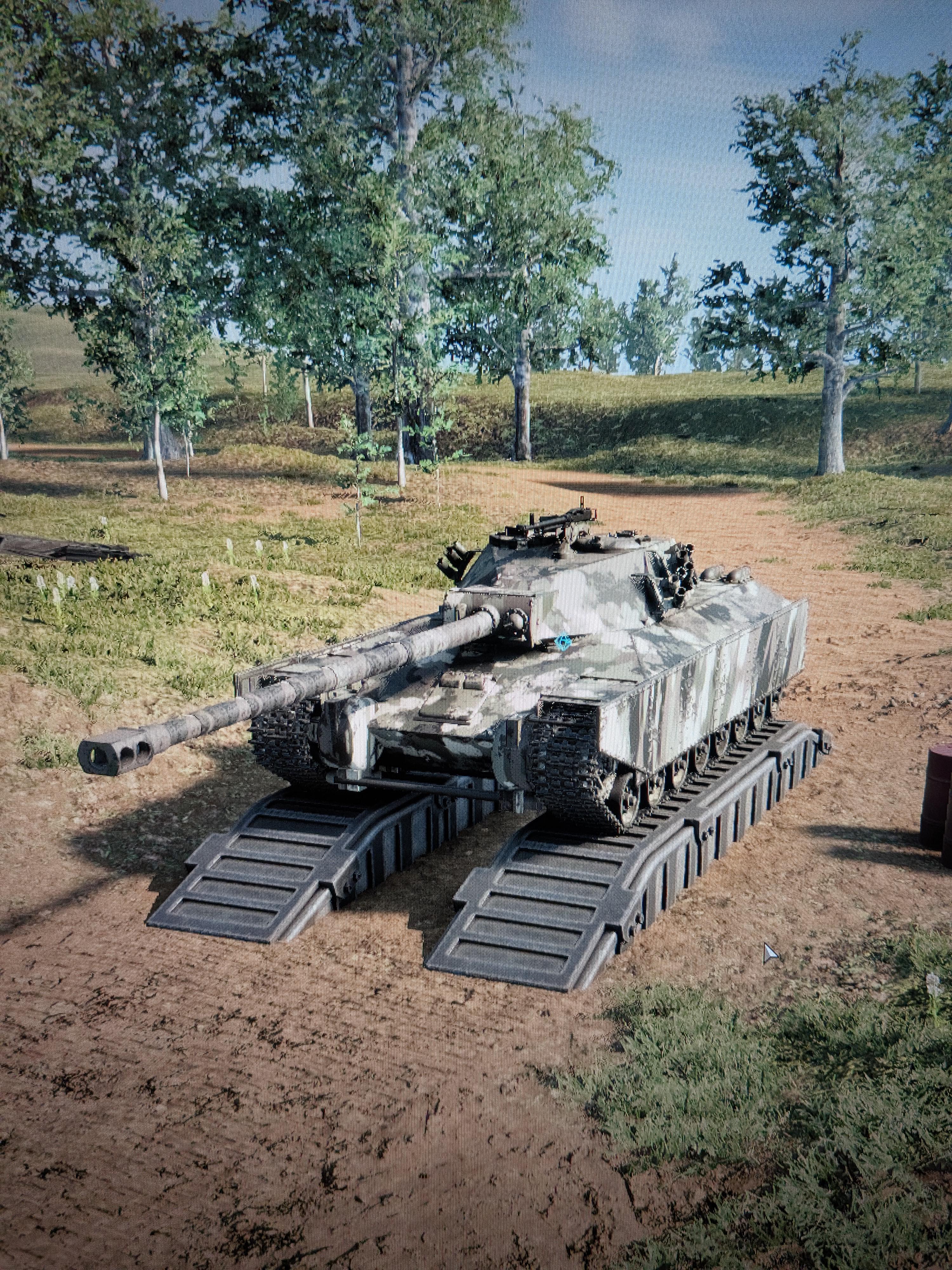
The first information about German assault artillery came from France. During the summer of 1940, Soviet agents working under commercial cover in occupied Paris and Vichy sent messages about a new German armored vehicle spotted at railway stations and in the rear areas. The reports went through Switzerland and Stockholm and reached the GABTU at an unusual speed. The Germans built a machine that wasn't a tank: a low silhouette, a powerful gun in a casemate, and a profile that barely rose above a hedge. The conclusions of the intelligence reports were unequivocal: the Red Army needed a similar vehicle, and it needed it urgently.
The T-50 was chosen as the base. The torsion bar suspension and wide 400-mm tracks provided stability and maneuverability, while the V-2 diesel engine made it possible to carry a heavier wheelhouse without loss of mobility. The requirement was formulated bluntly: to fit the armament of the T-34 tank (F-34 tank cannon and machine gun) into a hull no taller than a human chest and keep the crew operational.
The fighting compartment turned out to be only 1,300 mm high, and the roof of the casemate rose about 1,700 mm above the ground - lower than the German StuG III with a margin, and even lower than the later Jagdpanzer IV. The gun was mounted in the center of the front armor plate, and the driver was seated on the left. The unexpected thing was that the crew felt comfortable. The internal volume was small, but the layout turned out to be rational.
The first prototype was shown to the GABTU in the spring of 1941, but it did not reach the series - the war began. The combat debut of the machine came under the most difficult circumstances: the Battle for Moscow in December 1941, where several pre-production vehicles were sent as part of the 1st Shock Army, and the defense of Leningrad, where the Kirov Plant produced a small batch under siege and sent it directly to the front line. The crews noted that the low silhouette made the self-propelled gun almost invisible in the snow, and the gun's power was more than enough to fight German infantry strongpoints and any armored vehicles.
Later, in 1943, the designers tried to install an 85-mm cannon in the same casemate. It didn't fit. But the fighting compartment was too short - the breech would rest against the gunner and commander's seats, and the recoil protection devices would require a complete redesign of the front plate. The project was closed, and instead the machine received sub-calibre and HEAT projectiles for the F-34, which improved its anti-tank capabilities without replacing the gun.
The abandonment of the 85-mm cannon turned out to be a solution that allowed the SPG to remain simple and technologically advanced. Several factories were engaged to production, and by the end of 1942, the machine began to enter the army en masse - in thousands, like the real SU-76, but with a better reputation among the crews. Her low silhouette, stability on the move and the convenience of the crew did their job: in reports from the front, she was increasingly referred to as the "regimental artillery on tracks," which did not lag behind the infantry and was not afraid of MGs and even artillery fire - the frontal armor was 45 mm at 60 degrees - the same as the irl T-34's - which gave the crew protection against German 37-mm and 50-mm anti-tank guns at normal combat ranges. The sides were 35 mm, enough to stop 20-mm autocannons and shell fragments, but the crew knew better than to expose them to anti-tank guns.
Sorry for the translation, English isn't my native