r/StableDiffusion • • 4d ago

Resource - Update Not diffusion: a strong language model paints in oil, stroke by stroke, in an open-source painting simulator, a Python easel for LLMs

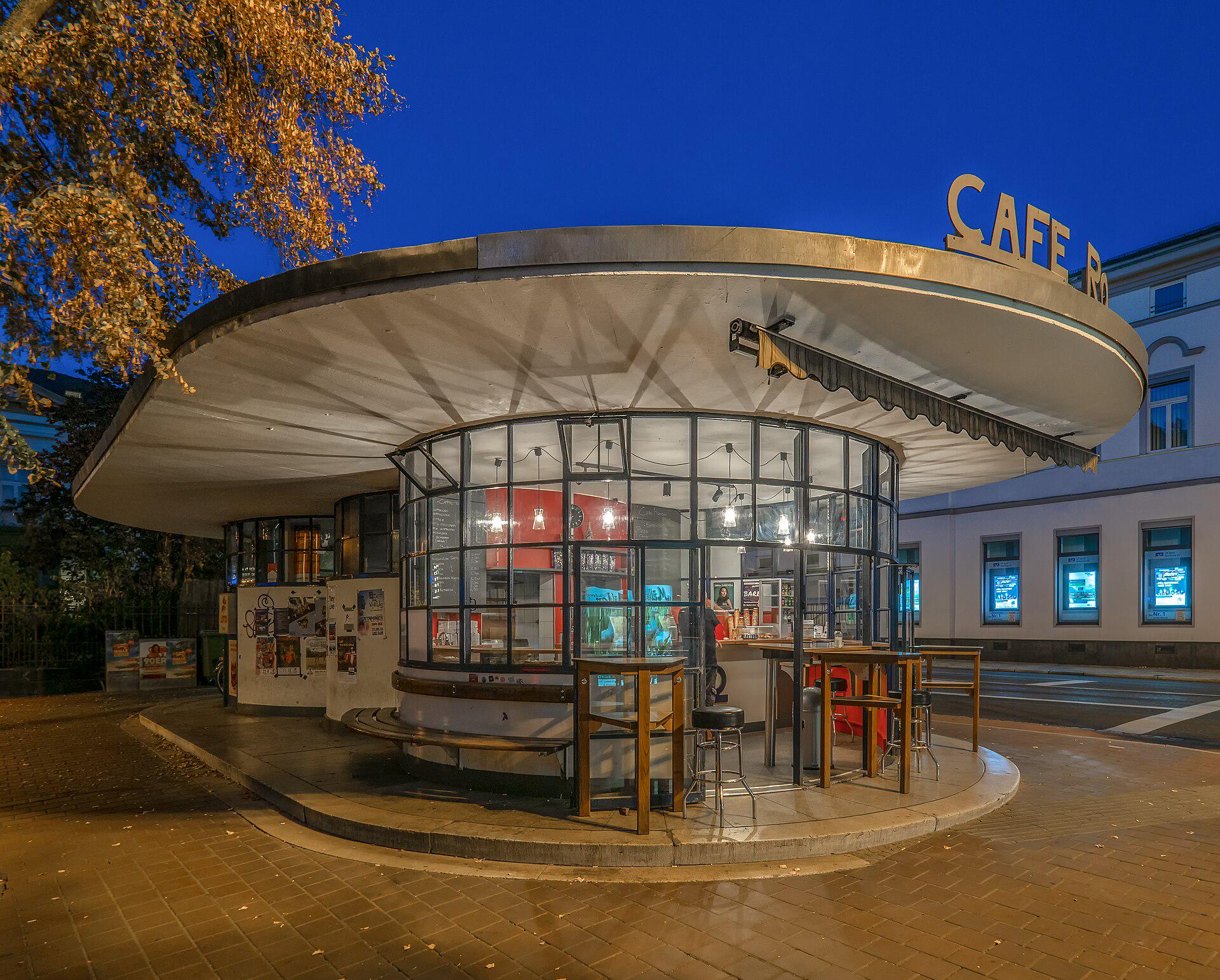
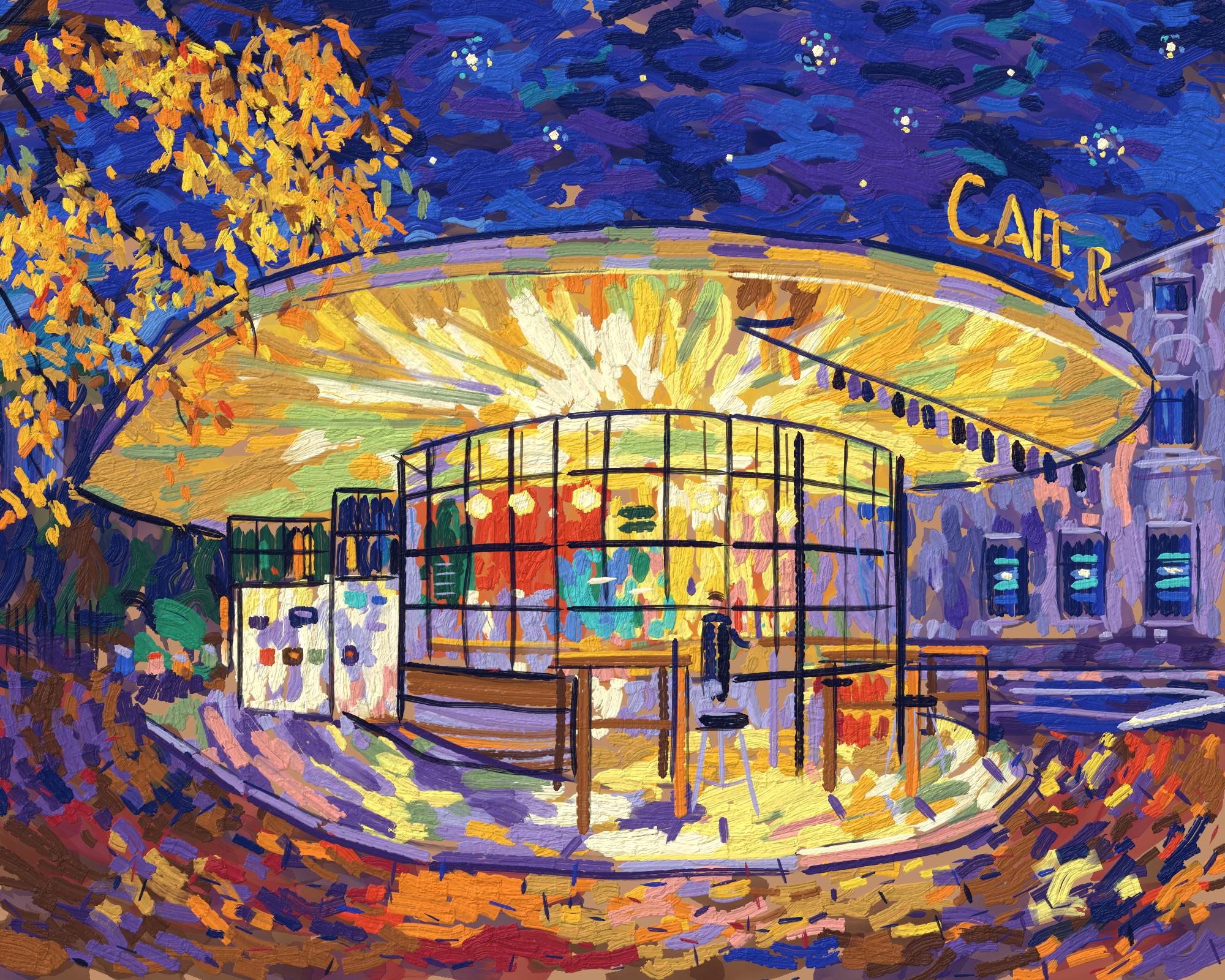
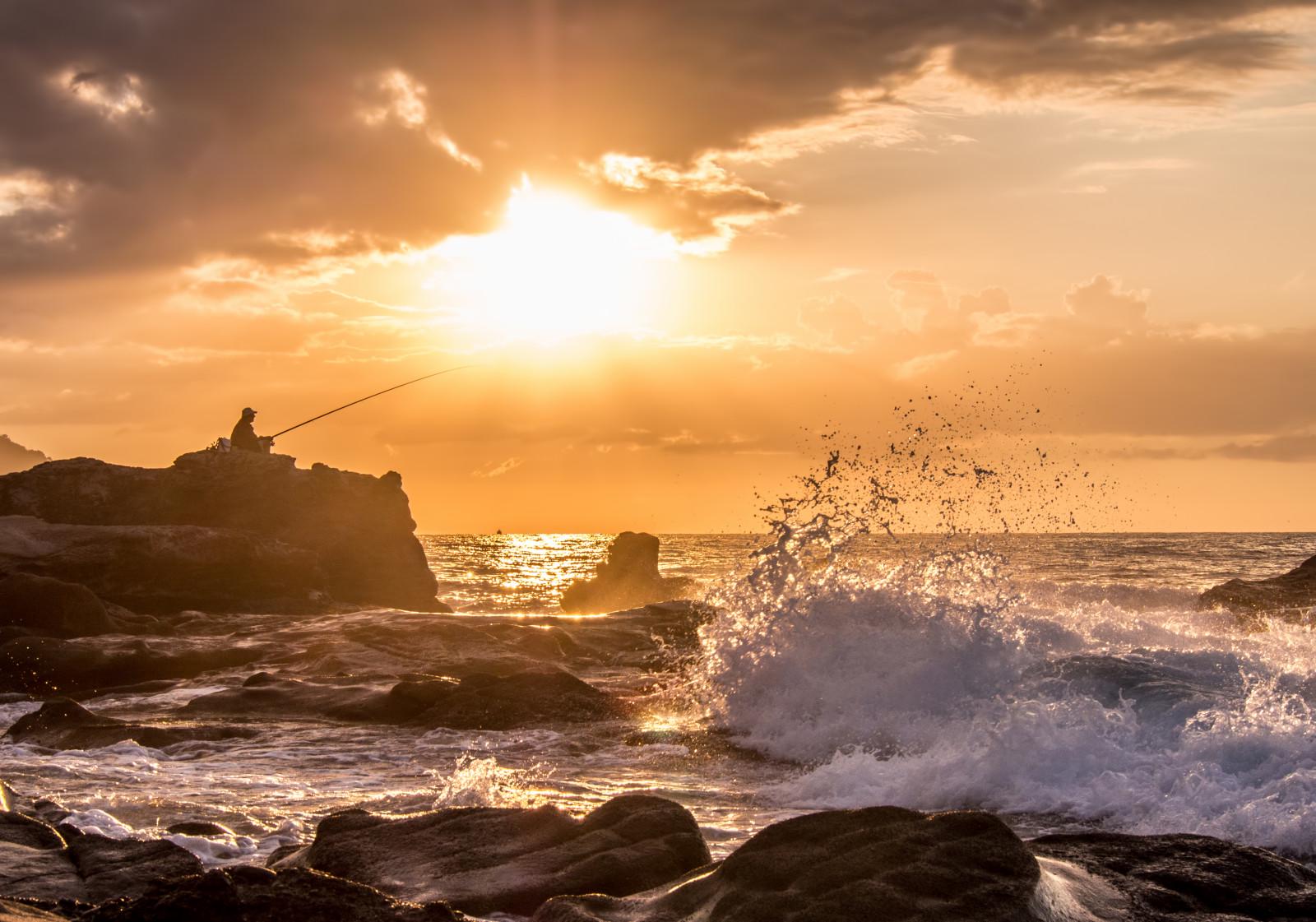
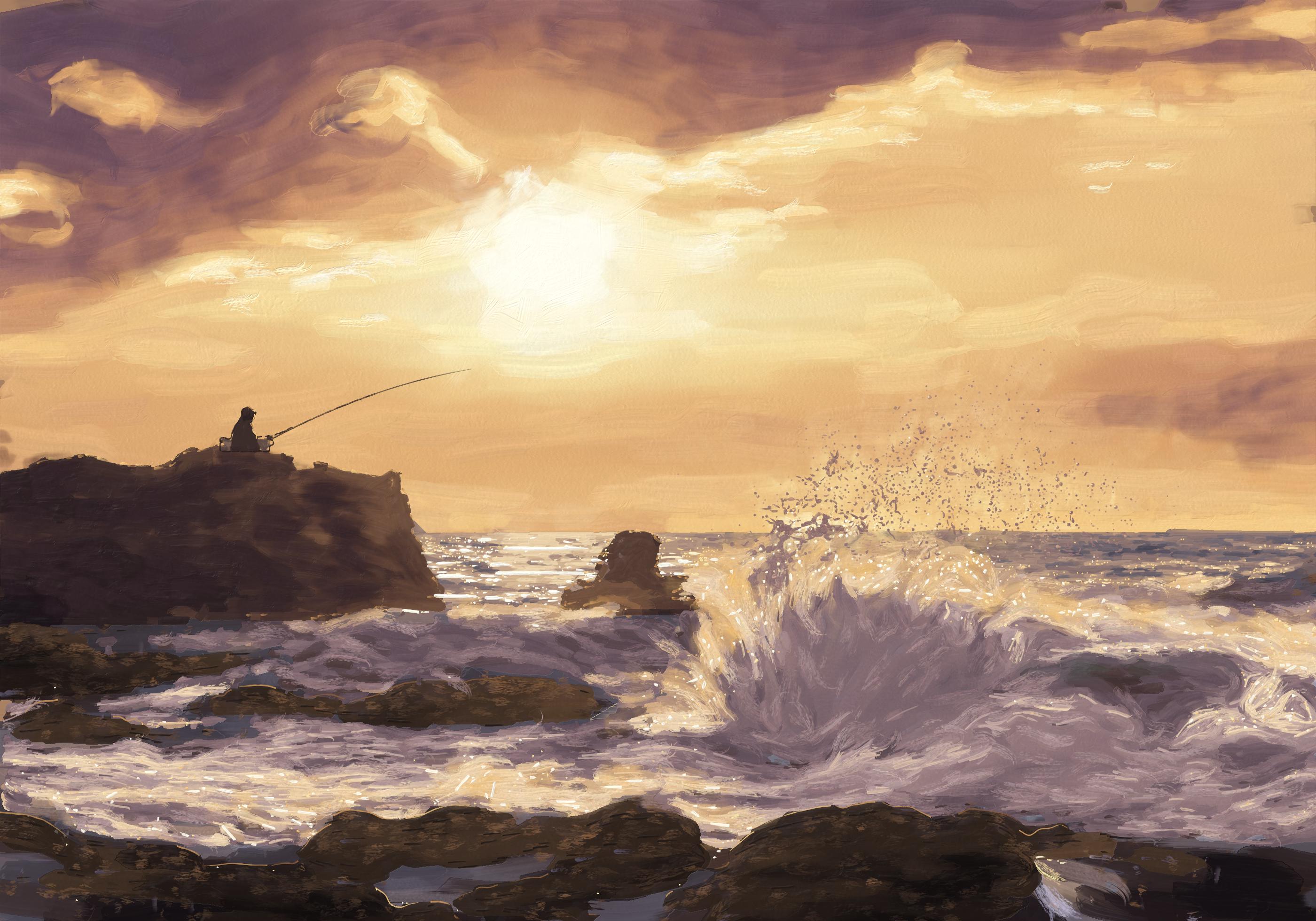
Almost everything in this subreddit is about diffusion, so I want to show a different path to a picture. aibrush is an open-source oil-painting simulator in Python. Think of it as a Python easel built specifically for strong language models to work with. There’s no generative model inside and no GPU needed. The picture is painted by a language model (I’ve been using Claude): it lays strokes with code, looks at the result with code, and decides what to do next, like an artist at an easel, except it does everything in code (that’s what’s comfortable for it).

How it differs from generation. Generated “paintings” look like paintings only from a distance. Up close they fall apart: you can’t follow a single stroke, the texture is the same across the whole canvas, the “brush marks” don’t follow the form, the light behaves strangely, the paint never runs out, and so on. In aibrush, every stroke is computed from individual brush hairs: pressure, paint that runs out and gets dirty, wet paint mixing into wet, paint thickness with light on the relief, canvas grain, drying layers, spectral color mixing. There are tools like the palette knife and masking tape, different brush shapes and ways of using them, and more. No pixels come from a reference or a network: everything on the canvas comes from paint, brush and the work of the AI artist, like at a real easel.

What you get besides the picture (which looks strikingly different from generation):

  1. A stroke journal. Replaying it gives the same canvas, you can ask the model to fix a single stroke or a group of strokes, or build a timelapse.
  2. A height map of the paint relief in millimetres, even for 3D printing.
  3. The model’s decisions in words. In my runs it writes down its plan before the first stroke and an honest list of weak spots at the end. You can give the model full autonomy with a one-shot prompt, or stand at the AI artist’s shoulder and correct every step.
  4. It plays well with generation. For example, your SD image can be the input: a sketch or reference that the model paints as a real oil painting.

How to try it. Free, no account: https://github.com/neokrasav4ik/aibrush. Give the model a link to the repo, or drop the archive into a chat where it can run Python, or git clone and pip install -r requirements.txt. Then in your own words: “Read README.md and paintin oil.”

The best results so far come from strong models at the level of Claude Opus and Fable. The API names and docs are in Russian, but that doesn’t bother the model.

430 Upvotes

101 comments sorted by

44

u/Formal-Exam-8767 4d ago

Ingenious! Thanks for sharing.

I suppose those images pass AI art detector?

59

u/FotoRe_store 4d ago

18

u/emveor 4d ago

i also tried, and they passed different sites

1

u/pente5 1d ago

It's so over

31

u/Elvarien2 4d ago

you mean the magic 8 ball test?

The random dice roll test?

The scam test ?

1

u/VenshiKibes 3d ago

interesting, i'm not sure what your position on them is, based on the comment

33

u/Altruistic-String891 4d ago

There’s no generative model inside and no GPU needed. The picture is painted by a language model (I’ve been using Claude)

But a LLM is a generative model. "no GPU needed" because you're using a sub; you wouldn't need a gpu if you sub to or pay for cloud services hosting diffusion/flow models either.

Otherwise, nice work.

14

u/FotoRe_store 4d ago

Fair, I worded that badly. What I meant: no image-generating model inside. The LLM is generative, but it generates decisions and code, not pixels. Every pixel comes from the paint simulation. And "no GPU" was about the engine itself: the hairs, paint, mixing and relief are all computed on a regular CPU with NumPy, so the canvas side runs on any laptop. The painter can be a subscription model in the cloud or a local LLM. Thanks!

13

u/Nonyabizzy123 4d ago

Diffusion is the word you're looking for, there's no diffusion model needed 😊

8

u/Ireallydonedidit 4d ago

How is the token usage on something like this? Does it continuously make screenshots to look at the result?
I remember someone making something like this but physical and it was very expensive

21

u/FotoRe_store 4d ago

It's not screenshot-every-stroke either. The model writes code that lays a whole batch of strokes at once, then looks. And "looking" is mostly numbers: every stroke returns a short text report (color, coverage, width, edge hard or soft), and there are tone and difference maps against the target. Images come in only when it needs the eye: a crop of one area at 1:1 or a small view of the whole sheet, not a full screenshot every time.

For scale: a painting averages around 10M tokens, but most of that is cache. In practice, one painting I did with Opus took about an hour and used roughly 20% of the 5-hour limit and 2% of the weekly limit on a $22/month subscription. So it can be quite cheap. It all depends on the request: you can also spend a week polishing a single painting. You control it yourself: ask for fewer strokes, a smaller canvas, or check in at each stage instead of letting it run.

15

u/Enshitification 4d ago

I bet a distillation training could teach a local model to do the same thing.

1

u/FotoRe_store 4d ago

Depends what you'd distill. If you mean the painter, yes, and that's a nice idea. Note that it would be distilling the painter, not the picture: a small local LLM learning to drive the brush the way Claude does, writing the same stroke code and reading the same reports. The output still goes through the engine stroke by stroke, so it stays real paint, not generation. Every painting already leaves the data for that: the full stroke journal, the model's plan in words, and its code stage by stage.

If you mean a LoRA of an artist, that's a different thing: A LoRA gives you images that look like the artist. Here you give the model two or three paintings, it studies the manner with the engine's own tools (stroke length, width, direction, palette), and then paints one picture where each stroke agrees with the others in form, color and the overall idea. You can step in at any stage. Generation is for playing with seeds across many images; aibrush is for slowly working on one.

4

u/Enshitification 4d ago

Yeah, I was referring to the LLM painter side of it to eliminate dependence on a remote API model.

3

u/FotoRe_store 4d ago

Got it, that makes sense. It's doable in principle: every run leaves a full trace (the code, the per-stroke reports, the crops the model looked at, its plan in words), which is exactly the kind of data you'd fine-tune a local model on. It already runs with strong open models, so the cleanest path would be collecting traces from an open model and distilling into a smaller one. I haven't tried training yet.

4

u/FotoRe_store 4d ago

The image features a table lamp, a window, and the caption “Claude,” and it was accompanied only by a text prompt: “Draw a self‑portrait that reflects your inner world.” Fable 5.2

71

u/Enshitification 4d ago

Up until now, I've said that the only artists that were actually threatened by generative art were digital artists. Add a robot arm and some additional controller software, and more traditional canvas artists are going to go apeshit too.

5

u/Hazy-Halo 4d ago

why though. can't you spend your time making an arm that does the dishes for everyone instead and then you'd have free time to paint something yourself or do something else actually fulfilling 🥴

23

u/Enshitification 4d ago

I already have a robot that washes dishes. It's called a dishwasher.

2

u/Hazy-Halo 4d ago

you still have to put them in there and anyone who lives with roommates knows nobody fucking wants to do that

11

u/Enshitification 4d ago

If that is something you want to work on, then go for it.

5

u/Hazy-Halo 4d ago

i just think it's dumb that so many people seem to have a chip on their shoulder about actual artists. I also think it's dumb to spend resources and time on stuff like this instead of the drudgery no one actually wants to do. like why celebrate this. and this is coming from someone who uses AI a lot, I don't hate it but I don't understand the boner for destroying the leisurely and fulfilling human activities over making chores and dumb crap everyone hates doing automated instead. Then everyone could have more time to pursue hobbies. But it's like everything came in reverse. I really don't understand.

15

u/Enshitification 4d ago

Nothing about a robot arm making oil paintings stops anyone else from doing the same. You act as if the very idea that a machine can do something completely invalidates it as a hobby.

-4

u/Hazy-Halo 4d ago

I mean digital art, graphic design, writing, video game small fry, all dead. it's a witch hunt any time someone posts something digital. won't be long before the same happens to analog. it's not a positive thing. sorry but your un is so apt lol. people are so paranoid and demoralized. why can't people just leave it in the digital world instead of spreading the enshittification to physical art endeavors too. these paintings from the photos really suck ass btw, but I'm sure they'll be just as good as something chatgpt spits out in time, which I still don't have a problem with. But a robot arm to make physical paintings? really? why? and why would anyone ever spend money on something they could just prompt themselves anyway

13

u/Pyros-SD-Models 4d ago

lol bro is crashing out in real time

4

u/VenshiKibes 3d ago

happens thousands of times a day, on this site alone

9

u/Django_McFly 3d ago

I don't hate it but I don't understand the boner for destroying the leisurely and fulfilling human activities

if you like painting, how on Earth would something like this make you hate painting? how has this in any way destroyed anyone's ability to paint for leisure and fulfillment? i never understand this part of the anti-AI argument. the idea that like human creativity will be outlawed and nobody will be allowed to be creative. all from it being easier to create.

3

u/pilibitti 3d ago

 But it's like everything came in reverse. I really don't understand.

it's not that hard. I can do the dishes, I just don't like doing it.

I can't paint on a canvas to save my life.

people like technology that enables them to do things they are otherwise not able to do.

0

u/imnotabot303 3d ago

You're not painting on canvas though. It's more like you're asking a painter to paint you a picture then deluding yourself that you're the one that painted the picture.

Then on top of that it's not even a real painter it's something imitating a painter. It's like generating an image that looks like a photo and thinking you're doing photography.

3

u/pilibitti 3d ago

no I'm not deluding myself that I'm the one that painted the picture. of course depending on how much trouble I went through the process. there is always ways to add personal touch to some steps. anyways, it is about the resulting object: which is the canvas with paint on it which is in the end mine and I didn't have to ask anyone else for it. didn't need to explain anyone what I wanted, didn't have to ask for revisions, possibly didn't even have to pay for it.

0

u/imnotabot303 3d ago

But you didn't paint anything.

The most you can say would be, here is a painting that AI made for me based on my ideas.

This is the problem a lot of people have with AI. People use it then go around telling everyone about the thing they made when in reality they didn't make anything they just had an idea.

In no other situation would people do this unless they were being purposely dishonest. You wouldn't ask an artist to draw you a picture of something and then say to everyone here's some art I made.

That's the delusion, you are essentially commissioning AI in the same way you would commission an artist.

→ More replies

3

u/Nonyabizzy123 4d ago

And it takes what 5 minutes? To train a robot to do that in your kitchen would require a team of engineers to come and measure your kitchen to the millimeter, and then program the robot to do it. It would take months and cost millions. Humanoid robots are bad.

0

u/VenshiKibes 3d ago

To train a robot to do that in your kitchen would require a team of engineers to come and measure your kitchen to the millimeter, and then program the robot to do it

no, no it wouldn't be like that at all. maybe in the 90s

1

u/Nonyabizzy123 3d ago

Yes actually. You can't just buy a humanoid robot, turn it on, and say load the dishwasher. That is not something that it can do.

0

u/VenshiKibes 2d ago

you don't know what you're talking about, but tell me more if you'd like

2

u/Responsible_Buy_7999 2d ago

My wife's a painter, there is a fair bit of painting that is drudgery, but the drudgery is part of the joy of the experience.

Also a great deal of art is not the application of the paint, but also extremely fine handwork in the application of the stroke.

I'm sure some joyless nerd will figure out a way to try to take that away insteaed of, say, making a robot that can peel an onion and mince it or dust and mop my house without breaking things.

6

u/VenshiKibes 3d ago

this guy gets it

it's liberating to just accept that humans are not going to be the best at human things anymore, then you can start to appreciate the golden age peaking over the horizon

1

u/OvergaardWagari70 4d ago

wouldnt you just 3d print the millimeter relief map OP mentioned and paint over that instead of dealing with a whole robot arm

11

u/Enshitification 4d ago

You could, but it wouldn't pass any sort of authenticity check as being real layers of brushed paint. A similar process has been used for a long time now of making a mold from an original painting to cast a relief map on a canvas which is then painted over with cheap paints. They were sold as "original oil paintings" at shady traveling art sales events across the US.

1

u/2this4u 3d ago

It's not the ability to replicate a technique that separates human from artificial art. It's the intent and narrative behind it. 

Beyond initial novelty, people remain more interested in art a person has made more than art AI has made. How many AI art exhibitions do you think people are paying to see despite the quality being there to be comparable. 

There's also the matter that some of the best art uses the worst techniques. It's the authorial intent that little are awed by generally, rarely the technique itself. 

3

u/Enshitification 3d ago

Cool, then what's the problem with AI-assisted art since, as you say, traditional human art cannot be replaced?

3

u/LEGROSJAMBONDEV 1d ago

Exactly... they all say "ooo but the soul of the painting isnt the same" or some mumbojumbo... in the end they are just afraid to be obsolete. For me if i like what i see Ai or Human its the same... (and tbh AI art is slowly getting more impressive than human). Slap a robot arm with a brush in front of AI and let it rip. And dont disclose until its accepted i guess or they will probably burn it in real life.

just as an example... somebody posted on twitter a painting of Monet but saying it was an original generated by AI... and 100s of pplz just shat on it....
https://www.reddit.com/r/SlopcoreCirclejerk/comments/1y2y2ik/the_most_revered_art_of_alltime_is_slop_if_they/

0

u/Individual_Holiday_9 2d ago

I think you could probably find a decent business model around AI hardware pumping out oil paintings of traditional photos for folks who want a portrait of their family in oil in their house

Like submit family photo -> cleaned up with qwen edit or whatever (or dropped into fancy / funny templates) -> hand painted by a robot on canvas -> mailed to customer and they have it mounted locally

It’s not a bad idea

-11

u/imnotabot303 4d ago

Yep only a matter of time before nobody cares about any art because it will all be digital factory produced. Even real art will become worthless because nobody will know if it's actually real.

Can't wait for that timeline...

9

u/Enshitification 4d ago

People will still like what they like. People will still care about the art they like. What people will probably care less about is the artists and whatever bullshit backstory lore they put on artist statement plates in galleries.

1

u/imnotabot303 4d ago

How will you know what art is human made and what has been pumped out by an AI while someone was sleeping or taking a dump.

The point is nobody will know anymore so everything loses meaning and value. It will all just be pretty pictures that anyone can produce. Meaning nobody will care about anyone elses AI pictures or art.

6

u/Enshitification 4d ago

An artist can create an image, but it is the viewer that gives it meaning. It doesn't matter if the artist was human or otherwise.

3

u/Elegant_Room_1904 4d ago

Yes, it does matter, that's why handmade items sell for a much higher price than industrially produced ones (even considering the savings in producing large quantities of an object).

3

u/Enshitification 4d ago

Then I'm sure you will continue to pay artists for their original works on the original media. Like you do currently, right?

1

u/imnotabot303 4d ago

That's not how industry works though. Eventually those mass produced goods price almost everyone out of the market. Unfortunately the world has far more people that care about cost and convenience over everything else. That in turn raises prices for non factory produced goods because there's less people buying it. It's happened to almost every industry over the years. However that doesn't make it a good thing.

1

u/VenshiKibes 3d ago

you must be an economist

2

u/imnotabot303 3d ago

Nope just someone with common sense.

→ More replies

1

u/VenshiKibes 3d ago

so everything loses meaning and value

that's your idea/fear, not an inevitable (or even likely) outcome

3

u/imnotabot303 3d ago

Yes that's how things work in an economy. Skills and labour are what people get paid for. When the bar gets lowered for that then more people can do it therefore those skills and the labour required are worth less. When everyone can do something that thing is no longer valuable.

You should look into what the luddites stood for because all this has happened before but people unfortunately rarely learn from history. Uniformed people think they were against progress or technology but they were not, they were against all the things we are going to see happening through AI.

The loss of artisan skills over time, mass job losses and wage cuts because the people still in jobs are just doing less and it requires less skill.

6

u/Bitlovin 4d ago edited 4d ago

That’s what people said when cameras were invented, but instead it just led to more creativity in painting styles. The real impact is that painters lost a big chunk of their income, which was portraits. The same will be true now for graphic artists since so much boilerplate advert and branding can be easily automated.

There’s nothing novel about the impact that advent of tech is having on art right now. We’ve seen the same paradigm play out many times.

6

u/imnotabot303 4d ago

No they didn't.

When cameras were invented not one person would have thought a photo could be mistaken for a painting. It was that they thought people would just buy photos instead of paintings. That's completely different and not at all what I was talking about.

My point was that we will eventually reach a time where you won't be able trust anything you see. Everything will just be presumed to be fake and made with AI by default. Once robotics is good enough even physical art won't be safe. Unless you physically see someone creating something in real life it all could be fake.

Like music for example, you won't even know if a band or artist is real anymore unless they do live performances.

All art and creativity will essentially become worthless and meaningless unless you can see it being created in real-time.

6

u/_supert_ 4d ago

they thought people would just buy photos instead of paintings

They do. Almost nobody sits for a portrait now.

2

u/imnotabot303 3d ago

Almost nobody sits for portraits with professional photographers anymore either. Cheap good digital cameras for everyone mostly killed that industry.

1

u/VenshiKibes 3d ago

lmao, true

and why is that, do you think?

2

u/VenshiKibes 3d ago

people will stop caring about these "source" distinctions within a generation or two, at most

2

u/imnotabot303 3d ago

That will happen but that's not good imo.

That's just normalising something by it being forced upon people. You are correct though, the younger generations are much more accepting of all the AI slop filling up every platform. It's probably because they've grown up with the modern internet and social media trash. Anyone who is brought up on TikTok for example is going to be way more accepting of slop content because it's already normalised for them.

Smart phones have turned a lot of the population into content consuming zombies.

-12

u/Bitlovin 4d ago

And then we can ask them why they only care when automation threatens privileged classes like artists and why they didn’t care when it decimated working class jobs.

11

u/Mr_Nobodies_0 4d ago

privileged?? artists?????

3

u/DelinquentTuna 4d ago

Generated “paintings” look like paintings only from a distance. Up close they fall apart: you can’t follow a single stroke, the texture is the same across the whole canvas, the “brush marks” don’t follow the form, the light behaves strangely, the paint never runs out, and so on.

There's no reason it must be so.

which looks strikingly different from generation

And again, no reason it must be so.

I don't read Russian, but I expect your harness probably already has most of what you'd need to setup a perceptual anchor to train a dit to very nicely mimic your outputs. Honestly, even the height maps alone are possibly sufficient.

2

u/FotoRe_store 4d ago

Fair, that's how today's generators tend to look, not a law. With enough aibrush outputs and height maps, a DiT could probably learn to mimic the look.

But it would learn what the result looks like, not how it was made. A generator gives you an image of a painting. aibrush gives you the process of painting it: a journal of every stroke you can replay or edit, a relief that comes from the paint that was actually laid, and a painter you can stop at any stage and say "redo the sky with longer strokes, keep everything else". Every stroke is there for a reason: form, light, the plan for the whole canvas. Different tools for different jobs. And if someone does train that DiT, aibrush becomes its data source, which I'd take as a compliment.

6

u/KriosXVII 4d ago

This is a great idea and will likely create much better results that the current approach.

5

u/bigman11 3d ago

I did extensive testing for the past day. The results are not at all better than what Kroma (Krea 2) or GPT-image can make. The detail is significantly worse.

However what is interesting is that the paintings absolutely look human made, for whatever that is worth.

1

u/FotoRe_store 3d ago

starter prompt template/example:

TASK Paint an oil painting in aibrush: [subject]. Format: [size, orientation]. References: [photo / sketch / description / none]. Style models: [artists or paintings]. What to take from them: [color, light, brushwork, composition…]. Mood: [2–3 words]. Focus of the painting: [object or area].

BEFORE YOU START Study the engine documentation and the style models. Write a short plan: the idea, the palette, the order of work, where the paint is thick and where it is thin, where edges are hard and where they are soft, and what stays generalized. Ask all your questions now.

A PAINTING, NOT IMAGE PROCESSING
The reference gives you the motif, the drawing and the light. Color, tone, selection and brushwork are your decisions.
Do not fit the canvas to the reference: do not take the color of each stroke from it, and do not place strokes by the difference between the canvas and the reference.
Paint with a limited palette of your own mixes.
Strokes follow the form of the object. Choose the brush for the task, from wide to narrow.
Put detail into the focus; generalize what is secondary. Detail means drawn objects, not tiny strokes.
Do not repeat one move on a grid: vary length, angle, pressure, tone and rhythm.

WORKFLOW
A small study of the whole canvas. Show it and wait for my answer.
One finished fragment of the hardest area. Show it and wait for my answer.
Then work autonomously: from general to specific, from far to near. After each major stage, show the whole canvas and several 1:1 crops. Test every new technique on a fragment first, in two or three variants.

PAINT
Cover the whole canvas from the first layer; neighboring areas overlap.
Plan paint thickness from the start: unwanted relief is hard to remove later.
Use texture where the idea needs it; keep the rest calm.

CHECK AFTER EVERY STAGE Look at the whole canvas and at 1:1, with lighting and without it. Measure gaps and relief with the engine’s own tools. Look for: ground or lower layers showing through, ripple, repeating patterns, seams and mask borders, flat empty areas, drawing and perspective errors, accidental color, inconsistent handling. Fix what you find before the next stage.

CORRECTIONS
Repair in place, with a before/after test.
Do not repaint what already works. Restart the whole canvas only with my consent.
Keep every version I have seen.
DELIVERY Deliver when a repeated check finds nothing left to improve. Include a list of weak points: what did not work and what was not checked.

TECHNICAL Use no more than [N] CPU cores; memory: [no limit]. Save the canvas state and the journal after every stage. Run long jobs so that an app crash does not kill them. Look up difficult techniques from artists who work in real oil paint, not in digital painting.

9

u/lostinspaz 4d ago

neat technique.

fyi for those who don’t know, this kind of thing was also done algorithmically before the ai era though.

for example,

https://www.researchgate.net/publication/216813528_From_Image_Parsing_to_Painterly_Rendering

and various other programs.

6

u/rychan 3d ago

You can go back another decade to find the earlier works in this vein from Pete Litwinowicz and Aaron Hertzmann. The first paper doesn't look visually too impressive but it was refined into the basis of the special effects in "What Dreams May Come" which won an academy award.

https://www.cs.princeton.edu/courses/archive/fall00/cs597b/papers/litwinowicz97.pdf

https://mrl.cs.nyu.edu/publications/painterly98/hertzmann-siggraph98.pdf

https://faculty.cc.gatech.edu/~hays/papers/IVBPA_Final.pdf

4

u/Ghostwoods 4d ago

Extremely clever.

3

u/Altruistic_Heat_9531 4d ago

Do Monet lmao

2

u/shroddy 4d ago

How well can smaller local models do it?

2

u/Hexxxer 4d ago

Ill piss around with this tonight. Looks fun

2

u/Loonsive 4d ago

alright its happening

2

u/sp3zmustfry 2d ago

I was eagerly waiting for the release of this.

Qwen painted me Saturn.

2

u/Uncensored4488 4d ago

Thank you for sharing

2

u/whatever462672 4d ago

This is really interesting. Nice work, thank you for sharing! 

2

u/herr-tibalt 4d ago

Take my upvote although the sub is wrong😀

1

u/Stepfunction 4d ago

This is really neat.

1

u/StableLlama 4d ago

Sou nds interesting, especially when you could make a video of how it is done, how the empty canvas turns to the image stroke by stroke.

Bob Ross anyone? Where are the little accidents?

1

u/Deep-Sprinkles-3970 4d ago

I have no idea how this works for now, but I have given it to GPT to remind me to try later. I love the way it looks!

1

u/ResearcherSuitable45 4d ago

This is very cool, how does the cost compare with respect to the generation models?

1

u/TizocWarrior 3d ago

This is scary, thanks.

1

u/FinAdda 3d ago

Do you need to have an image of the painting? or can you describe the painting?

1

u/PoleRacers 3d ago

Super interesting. I'd love to see a timelapse of the stroke log!

1

u/namitynamenamey 3d ago

Can this be used with local models? As in, can they use it at all, technically speaking?

1

u/mastaquake 2d ago

How long does it take to generate an image. 

1

u/NoYogurtcloset4090 16h ago

The painters were left truly speechless. I believe that one day, it will be possible to produce a solution to the Riemann Hypothesis that is easy for humans to read and understand.

-1

u/detailteufel 4d ago

We've had this 15 years ago it was called Dynamic Auto Painter and the results are just as bad now as they were back then

0

u/Artistic-Chain-4708 1d ago

yeah, this goy reimplemented the wheel. This repo is basically what llms what doing since 2025

17

u/answerguru 4d ago

Glad to see this reposted as you got slaughtered jn the Claude sub. I think this is brilliant work.

Would love to see this not only connected to robot arm and vision system, but also see how quickly an algorithm could be tuned to mix the paints on demand which isn’t an intuitive process.

8

u/FotoRe_store 4d ago

Thank you, that means a lot, especially after the Claude sub :)

The robot arm is the dream, honestly: the stroke journal already says where each stroke goes, with which brush, how hard and with what paint, so it's the natural format to feed a plotter or an arm. On mixing, you're right that it's not intuitive, which is why the engine mixes pigments spectrally rather than as RGB averages: blue and yellow make green, not grey. The model can also pull a palette of n mixes from a reference before it starts. What it doesn't do yet is turn those into real tube recipes ("this much ultramarine to this much white"). That would be the bridge to a physical setup, and it's a great idea.

2

u/runlocalmodels 1d ago

I hope you don't let them get you down. I think this is cool as hell. Thank you for sharing.

5

u/Either-Complex11 4d ago

Curious why this would be poorly received over there?

12

u/answerguru 4d ago

They totally crapped all over the concept as “AI slop / art”. “why would anyone need this?? We already have image generation”

I seriously think the concept was completely missed by most early commenters. Looks like he got some support later on.

Here’s the thread:

https://www.reddit.com/r/ClaudeAI/s/jMiAtPRbK5